What’s the use of politics?

Politics is worthless many people agree. For that reason, the use of politicians may need some clarification. Humans became the dominant animal species because they cooperate in large numbers in a flexible way. This makes us unique in the animal world. Some animals such as ants and bees can cooperate in large numbers, but they are not flexible in the ways they do that. Their cooperation is based on their genetic code. Social animals like chimpanzees, elephants, wolves and dolphins can cooperate more flexibly, but not in very large numbers. Cooperation in a chimpanzee band, an elephant band or a wolf pack is based on the intimate familiarity of the band members.1

Language is a tool for human cooperation. Animals have languages too. Animals can communicate about the whereabouts of food or enemies. Only, human language is used for many more things. Most notably, humans gossip and talk about what other people are doing and thinking. This gives them better information about other people in the group so that they can develop more sophisticated ways of cooperating. Apes like chimpanzees, baboons and gorillas all show interest in social information, but they have trouble gossiping because their languages don’t allow for that.1

The truly unique feature of human language is not gossip, but its ability to transmit information about imaginary things. All forms of large-scale human cooperation, such as nation-states, churches, cities and corporations, are rooted in fictions that exist only in the collective imagination of human beings. Myths, like the existence of gods, laws, corporations and nation-states, gave humans the unprecedented ability to cooperate flexibly in very large numbers. For example, churches are based on common religious beliefs. Religious beliefs make it possible that Christians who never met before can do things together like going on a crusade or building a hospital.1

Religions and ideologies have a lot in common. You could call them myths or models of reality. Religions as well as ideologies maintain there is a superhuman order of universal laws that govern the world, which should guide human actions. For example, Buddhists believe that the law of nature was discovered by Siddhartha Gautama. Communists believe that the laws of nature were discovered by Karl Marx. Like other religions, Communism had its holy scriptures and prophetic books such as Das Kapital, which prophesied that history would soon end with the inevitable victory of the proletariat over the capitalist system.1

So what does this have to do with politics? In democracies, people can decide about what needs to be done and determine who should do what. Politics involves discussing collective imaginations such as laws, nation-states, religions and ideologies to determine what course of action should be taken as well as gossip to determine who should do what, for instance, who is going to be the leader of a political party or a nation. Many people nowadays believe that democracy is the best political system, even though democracy has disadvantages too.

Politicians may not do what they promised their voters to do. There might be an intense political struggle. And politics might result in poor decisions when voters don’t like the measures that need to be taken. In times of upheaval, people might opt for someone who promises to take drastic action, for instance when the economy has collapsed or when insurgents and criminals wreak havoc. The most notorious example in history was the rise of Adolf Hitler. The suffering of the Germans during the Great Depression and the inability of politicians to relieve their plight helped Hitler to grab power.

Even in stable and established democracies, citizens may have little faith in politicians. The politicians in parliament do not represent the makeup of the population at large. People who like to talk, like lawyers and teachers tend to be overrepresented. Engineers who know how systems work tend to be underrepresented, which may explain why laws often fail to meet the intended objectives. The same applies to poor people and people with little education, which may explain why their interests are often neglected. Perhaps giving citizens more responsibility via direct democracy can help to solve these issues.

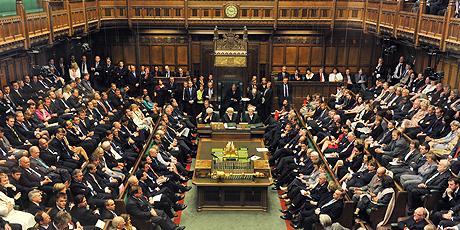
Featured image: House Of Commons in the United Kingdom. Parliament.uk. [link]

1. A Brief History Of Humankind. Yuval Noah Harari (2014). Harvil Secker.
Simulation Argument

Is this world real?

Already in ancient times philosophers found out that there is no way of telling that the world around us is real or that other people have a mind of their own. Perhaps I am the only being that is real while the rest of the world exists only in my imagination. This could all be a dream. On the other hand, some major religions claim that gods created this universe, and that we are like these gods. For instance, in the first chapter of the Bible God allegedly said: “Let us make mankind in our image, in our likeness.”

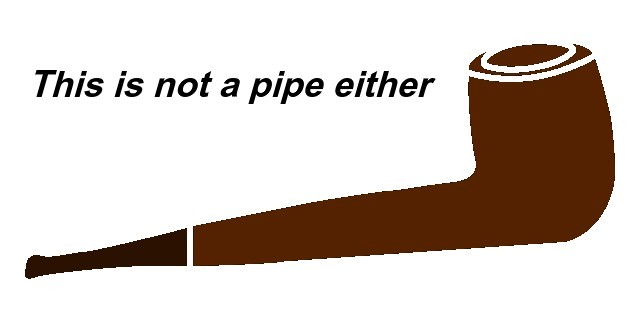
For a long time it was impossible to clarify why this world might not be real or how the gods might have created it. More recently that became possible due to advances in technology. This universe could be a virtual reality created by an advanced civilisation. We could all be a characters in a virtual reality controlled by a computer programme. That may give you an uneasy feeling for we are inclined to think that what our senses register, is real. For instance, we may think we see a pipe when there is only an image of a pipe. The caption of the picture reads ‘this is not a pipe.’

Do we live inside a computer simulation?

The idea that we could be simulated beings inside a computer first came up in 1964 in the book Simulacron-3. In 1977 a science fiction writer named Philip K. Dick (funny name) was the first to really claim that our reality is made up by a computer. He did this after experiencing a psychosis. The philosopher Nick Bostrom formalised the idea twenty-five years later in the simulation argument. He argued that we might be living inside a virtual reality. There could be many different human civilisations. The humans in those civilisations may enhance themselves with bio-technology and information technology, live very long and have capabilities ordinary humans don’t have. For those reasons these beings aren’t humans any more, henceforth they are called post-humans.

Bostrom now asserts that these post-humans may run virtual realities of human civilisations. An obvious reason for doing this is entertainment. And so we could be living in a virtual reality ourselves. The difference between a real (non-virtual) universe and a virtual reality is that a real universe is not created by intent, while a virtual civilisation is. Given sufficiently advanced technology, it seems possible to represent a universe in a meaningful way, including simulated human consciousnesses. Current developments in information technology suggest that our civilisation may be able to create virtual reality universes in the not-too-distant future.

Bostrom thinks that one of the following three options must be true: (1) nearly all human civilisations end before they can build virtual realities resembling human civilisations, (2) when human civilisations or post-human civilisations can build virtual realities of human civilisations, they will not do so or only make a small number of them or (3) we are almost certainly living inside a virtual reality as there will be a large number of virtual universes for every real universe. The hidden assumption behind the simulation argument is that this technology is feasible and can be made cheap.1

How likely is it?

It is not possible to calculate the probability of us living in a virtual reality. There are a lot of uncertainties in the simulation argument. For example, our civilisation could be the only human civilisation and we could go extinct. Or perhaps post-humans develop ethical objections against building virtual realities of humans. And even though humans like to write stories and use virtual realities for research or entertainment, they may alter themselves so that post-humans do not have these desires. Still, there is a good chance that live in a virtual reality ourselves.

That is because we humans see ourselves as special and unique. Religions make use of this trick too. The Bible says that we are made in the image of God and that humans are ordained to rule all other living creatures. So if we have the means to perpetuate our delusions, we will not give up on them. On the contrary, as soon as it is possible to make our imagination become reality, we will not hesitate to do so. Hence, when humans transform themselves to become post-humans, they will probably cling to their human essence, and let their imagination run free. And their imagination may become their new life as Scott Adams, the creator of Dilbert noted:

For those of you who only watched the ‘old’ Star Trek, the holodeck can create simulated worlds that look and feel just like the real thing. The characters on Star Trek use the holodeck for recreation during breaks from work. This is somewhat unrealistic. If I had a holodeck, I’d close the door and never come out until I died of exhaustion. It would be hard to convince me I should be anywhere but in the holodeck, getting my oil massage from Cindy Crawford and her simulated twin sister. Holodecks would be very addicting. If there weren’t enough holodecks to go around, I’d get the names of all the people who had reservations ahead of me and beam them into concrete walls. I’d feel tense about it, but that’s exactly why I’d need a massage. I’m afraid the holodeck will be society’s last invention.2

Processing and memory constraints

Even though the advanced civilisation will may have enormous processing and memory capacity, there may be processing and memory constraints for individual simulations as they may run billions of simulations. There may be ways to overcome these limitations like rendering only observed reality and running a predetermined script. Free will may simply be too expensive.

The idea of this universe being a virtual reality is popularised in the 1999 film The Matrix. The film speculates about us having an existence outside this world. That doesn’t need to be. We may just be virtual reality characters inside a computer simulation. So why did Neo’s passport expire on 11 September 2001, the date of the terrorist attacks? Perhaps it is just a coincidence. Or perhaps this universe is a form of entertainment.

matrix_passport
Neo’s passport expirin on 11 September 2001

Featured image: The Treachery of Images. René Magritte (1928). [copyright info]

1. Are You Living In a Computer Simulation? Nick Bostrom (2003). Philosophical Quarterly (2003) Vol. 53, No. 211, pp. 243-255. [link]
2. The Dilbert Future. Scott Adams (1997). Harper Business.