
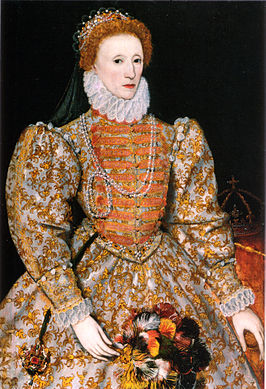
God can become an ordinary person to play a role in Her story. Several well-known women in history may have been avatars of God. This is the second episode. The first episode can be found via the following link: History is Her story part 1.
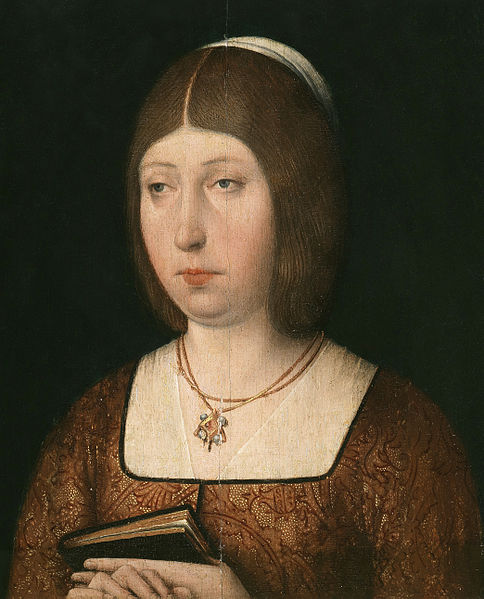
Isabella I of Castile
We learned who discovered America, but not the person behind the scenes who financed his mission and made it happen. And by the way, the same person who sent Columbus on his journey also created Spain. Queen Isabella I (1451-1504) was Queen of Castile and one of the most influential historical figures. She was the second child of King John II of Castile. At the time, two countries, Castile and Aragon, dominated the area. Isabella’s half-brother, Henry, was the heir to the throne.
Isabella became a pawn in Henry’s political ambitions. He forced Isabella into several betrothals and attempted to marry Her to King Alfonso V of Portugal. Later, as part of an agreement to restore peace after a rebellion, Isabella was to be betrothed to Pedro Giron, Master of the Military Order of Calatrava. Isabella prayed that the marriage would not take place. Don Pedro suddenly fell ill and died on his way to meet Isabella. That prayer worked better than voodoo.
Henry didn’t have a male heir. Isabella made Henry sign an agreement, making Her his successor to the throne. Henry made another effort to arrange a marriage, but Isabella refused and secretly arranged a wedding with Ferdinand of Aragon. In doing so, Isabella created Spain by uniting both kingdoms. After Isabella secured the throne, She initiated several successful reforms in government, finance, legal code, and policing.
Isabella’s actions had a lasting impact on world history. Her political manoeuvring in dynastic politics created Spain. Isabella sponsored Christopher Columbus’s mission to reach the Indies by sailing west. On his way, Columbus bumped into America. A film about this event is titled 1492: Conquest of Paradise. That is noteworthy for two reasons. First, there is the word Paradise. And second, the number 1492 refers to the initials and possibly the birthday of this peculiar Lady. That might be a clue.
Katharina von Bora
Katharina von Bora (1499-1552) was the wife of Martin Luther, who initiated the Protestant Reformation. Katharina had several suitors, but none of them became Her husband. She told Luther’s friend and fellow reformer, Nikolaus von Amsdorf, that She would be willing to marry only Luther or von Amsdorf. Luther was unsure whether he should marry at all. A woman who wanted him made him change his mind. As Roman Catholic priests were celibate, their marriage set a precedent for Protestant family life and clerical marriage.
Von Bora had been a nun interested in the Protestant Reformation and dissatisfied with cloistered life. Conspiring with several other sisters, Von Bora contacted Luther. They asked for his assistance. Luther sent a merchant who regularly delivered herring to the convent. The nuns escaped by hiding in his covered wagon among the fish barrels.
Von Bora bred and sold cattle and ran a brewery to provide for their family, the numerous students who boarded with them, and her husband’s visitors. During epidemics, she operated a hospital with a staff of nurses. Luther called her ‘Boss of Zulsdorf’ after the farm they owned. Based on Luther’s descriptions, his wife, whom he nicknamed ‘Herr Käthe’, exerted control over his life like a master.
After Martin Luther died in 1546, Von Bora’s fortunes turned sour. Wars destroyed Her property, and She became impoverished. She fled due to war, the Black Death, and crop failures. During Her last flight, she was thrown from her cart into a watery ditch and fell ill. She reportedly said on her deathbed, ‘I will stick to Christ as a burr to cloth.’ Does it mean, ‘See you again in the next life?’
Many Protestants and Germans consider Martin Luther a prophet. And prophets might be married to God. The book The Virtual Universe discusses the assassination of Martin Luther King on 4 April 1968 as part of an elaborate coincidence scheme that includes the Lincoln and Kennedy assassinations. King’s last name might imply that Martin Luther was a king like Jesus, thus a prophet of great importance.

Elizabeth I
Queen Elizabeth I of England (1533-1603) was one of the most successful monarchs in history. Her reign laid the foundation for the Anglo-Saxon world domination. She depended on trusted advisers like William Cecil. She also established the Church of England, a Protestant Church with Catholic elements, of which She became the supreme governor. Elizabeth was moderate and religiously tolerant.
Great Britain became a great power. Elizabeth was cautious in foreign politics, tried to avoid conflict, and half-heartedly committed to the wars England fought. In 1585, England could no longer avoid war with Spain because it had supported the Dutch in their fight for independence from Spanish rule. In 1588, the English defeated the Spanish Armada, and the remainder of the fleet sank in a storm, marking the end of Spanish dominance over the seas and paving the way for British supremacy.
A curious sequence of events led to Elisabeth becoming Queen of England. Upon hearing of Her accession to the throne, She reportedly quoted the twenty-third line of the 118th Psalm: ‘It is the Lord’s doing, and it is marvellous in our eyes.’ Elizabeth’s unmarried status inspired a cult of virginity. She said She was married to England like God was married to Israel. Some poetry and portraits depicted Elisabeth as a virgin goddess.

During a walk in 2009, I pondered whether or not Elizabeth had been an avatar of God. When I returned home, there was a copy of the weekly magazine Computable in the letterbox. The front page featured an article about a distributed database system called Armada. That might be another hint.
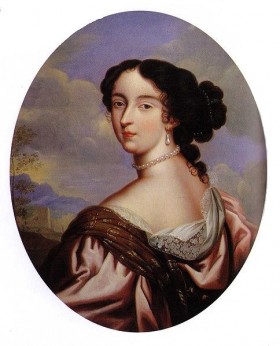
Françoise d’Aubigné
Françoise d’Aubigné (1635-1719) was the second wife of King Louis XIV, also known as the Sun King. He was vain and waged numerous wars. His lavish Palace of Versailles had no equal. Louis’ magnificence was over-the-top and equally unparalleled. His reign lasted over 72 years, the longest of any sovereign in recorded history. During his first marriage, he had several mistresses.
Louis was more faithful to his second wife, Françoise d’Aubigné. Françoise never became queen, but She had considerable clout in the royal court. Louis was also pious. He saw himself as the protector of the Catholic Church. He made his devotions daily regardless of where he was. Under Françoise’s influence, Louis became even more religious.
Louis XIV was the epitome of the divine right of kings. This doctrine states that the king is appointed by God and, therefore, not accountable to anyone except God. That doctrine might come in handy for the Messiah in the end times. A quote attributed to Louis is, ‘The state, that is me.’
As a teenager, I was a member of the School Council. The school bureaucrats had lengthy discussions after the Financial Commission had overstepped its bounds. One of them argued that it was a the-state-that-is-me situation. It could be a hint that Louis was God’s husband. I doubted it, and tossed a coin, and Françoise made it to the list. Another toss of a coin eliminated Catherina the Great from the list.
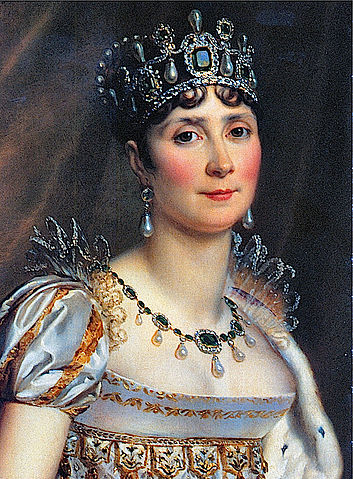
Joséphine de Beauharnais
Joséphine de Beauharnais (1763-1814) was the first wife of Napoleon Bonaparte. She was his greatest love. After the execution of Her first husband during the French Revolution, She had affairs with several leading political figures. Napoleon, who was six years younger, fell in love with Her and sent Her many love letters. Napoleon’s love for Joséphine cooled somewhat after discovering She had a lover on the side. He then began affairs with other women but remained in love with Joséphine and married Her.
Napoleon Bonaparte’s lasting legacies include the civil registries with first and last names, the metric system (metres, grammes, and litres), and legal reform, embodied in the Napoleonic Code. The well-structured and accessible law code was a milestone, replacing a patchwork of feudal laws. It has influenced the whole world. The Napoleonic Code is the most widely adopted legal system. About 120 countries use it, but not Great Britain, which also rejected the metric system.
Napoleon was not a favourite of the British, or perhaps it was a British conservative attachment to incoherence and feudal institutions, so they held on to their lords, laws, miles and pints. Unlike the rest of Europe, the British now drive on the wrong side of the road and have left the European Union to rid themselves of David Cameron. He later returned as Minister of Foreign Affairs, so Brexit failed. Napoleon tried to unite Europe, and that project appeared close to succeeding.
Through the children from Her first marriage, Josephine became the grandmother of Napoleon III and the great-grandmother of Swedish and Danish kings and queens. The reigning houses of Belgium, Norway and Luxembourg also descend from Josephine. She, however, didn’t give Napoleon any children. Napoleon believed he needed an heir, so they divorced. Napoleon then married Marie Louise, an Austrian archduchess. It was not love that drove him, but calculation. Marie Louise bore him a son who died at the age of 21. His family line died out, so the divorce proved pointless. Her family line lived on. Napoleon’s last words on his deathbed were, ‘France, the army, the head of the army, Josephine.’
There are some remarkable parallels between Napoleon Bonaparte and Adolf Hitler. Napoleon Bonaparte was born on the island of Corsica, which became part of France. Later, Napoleon Bonaparte became the leader of France. Adolf Hitler was born in Austria, a country that became part of Germany. And Adolf Hitler became the leader of Germany. Both men were involved in a coup on 9 November (9/11 in European notation). Both started a military campaign in Russia that led to their downfall. That emboldened the current leadership in Russia, leading them to think they are safe in Moscow.
Napoleon Bonaparte and Adolf Hitler both came to power by a coup, ending an unstable republic. They both turned Europe into a battlefield. Both ventured into Africa, and both faced defeat in Egypt. They both waged war on two fronts because they attacked Russia after failing to defeat England. These parallels are intriguing as if Hitler were Napoleon’s reincarnation. Their wives were noteworthy as well. Concerning Josephine de Beauharnais, I didn’t receive a hint, but the thought isn’t far-fetched. Informed deduction is impossible anyway, leaving me with guessing the obvious.

Lucretia Garfield
Lucretia Garfield (1832-1918) was the wife of US President James A. Garfield. A disgruntled public office seeker assassinated him in 1881, shortly after he took office. He lingered in the Twilight Zone for two and a half months before dying. Lucretia stayed at his bedside and received public sympathy, which might be ill-deserved, as it now turns out. They were both 26 when they married on 11 November 1858, referencing 11:11. During the Civil War, James Garfield had an affair as a general.
He later confessed it to his wife, who seemingly forgave him. On 12 January 2010, a previously unknown $10,000 life insurance policy on President Garfield’s life surfaced in a family scrapbook.1 Lucretia Garfield had opened it 45 days before the assassination of Her husband. It is a most notable coincidence that might indicate foreknowledge.
My son was fond of the comic character Garfield. In 2006, a mysterious parcel addressed to him was delivered to us by mail. It contained some Garfield items, including a coffee cup with the lettering ‘It is good to be king.’ The sender of the parcel was unknown. We made several enquiries, but nobody conceded to having sent it. Until today, the sender remains unknown. That might be a clue.
Eurocentrism
This list is Eurocentric. Most people on the list come from Europe. Eurocentrism emphasises European culture or Western ideas and theories without much regard for other cultures. That can offend people from different cultures and the Woke. For the last 500 years, most of the action has centred in Europe, and today’s world is so profoundly affected by European ideas and culture that you might call the world European. Those who oppose Eurocentrism propose eccentric ideas like the knowledge of indigenous peoples being on equal footing with science invented in the West. They suggest that if you have AIDS or cancer, you don’t need to take the treatments invented by science, but you might as well consult your local witch doctor.
As a cultural relativist, I don’t believe Western culture is superior. It set in motion a process that is about to end human civilisation. That is also what the tale of the Fall says. We would have been better off running naked in the jungle. If it had been up to me, the list would have been more diverse, but I don’t make the decisions. After watching the Netflix documentary about Queen Nzinga of Ndongo and Matamba and reading her life story on Wikipedia, I found her to be a worthy candidate for being an avatar of God and better suited than some of the women on the list. Nzinga could fill a gap between Queen Elizabeth I and Françoise d’Aubigné. And I tried to fill in the gaps on the list.
More than filling a hole is required to qualify. Nzinga’s life story didn’t provide clues to work with, like Queen Isabella I, who prayed that her marriage would not come to pass, and then her suitor died. Nor did a noteworthy coincidence happen, like with Queen Elizabeth I, when a magazine featured an article about a database system called Armada. Again, I tossed a coin, which was my favourite way of resolving such matters, but the outcome suggested God didn’t want me to think that Queen Nzinga had been Her avatar. Catherine the Great would also have made a proficient gap filler. She also didn’t make it to the list.
Latest revision: 15 July 2025
Featured image: The “Darnley Portrait” of Elizabeth I. Wikipedia. Public Domain.
1. https://commons.wikimedia.org/wiki/File:Garfieldlifeinsurancepolicyback.jpg
 The Plan For The Future
