
Nearly every Sunday, we went to our grandparents. For most of the afternoon, we visited my father’s parents near Vragender, a village close to Winterswijk. They lived on a remote farm with my father’s youngest brother, Paul, my uncle, who had continued and greatly expanded it. On our way home, we went to my mother’s parents for an hour and a half. In 1976, they sold their remote farm near Beltrum, another village nearby, and moved to a small apartment for seniors in Eibergen. And to stress the remoteness, the Dutch call this area De Achterhoek (The Rear Corner). Winterswijk is at the rear of that area. Thus, a farm outside a village near Winterswijk is as remote as it can get in the Netherlands, at least if you look at the words. We live inside a story, so you should. The Netherlands is a tiny country, so De Achterhoek is not as remote as the desert of Algeria, the mountains of Chile, or the taiga of Siberia. Enschede is only 25 kilometres away, and Amsterdam is 125.
The atmosphere at both venues couldn’t be more different. My father’s family was noisy and outgoing, while my mother’s was quiet and withdrawn. If we visited my father’s parents, all the aunts, uncles, and cousins were there. The men played cards in the living room and blamed their mates vociferously for each other’s mistakes. A dense smoke of cigarettes filled the room, so I often went outside with my cousins to play and get some fresh air. It was always fun to be there. At my mother’s parents, there were never aunts, uncles or cousins. Most people my grandparents knew were old too and gradually dying. They discussed diseases like tumours, heart attacks and strokes, hospitals, treatments, mostly failing, and funerals, so my sister and I went outside together to escape the gloom.
Part of the local folklore in De Achterhoek is the rock band Normaal. Their greatest hit was Oerend Hard (Bloody Fast). It is about speeding on motorbikes and the accidents that come from that. They also made a song Ik ben maor een eenvoudige boerenlul (I’m just a simple farm prick). The wording reveals the mood in De Achterhoek. The local tradition is not one of pretence and elevated taste. If you asked the locals what Normaal is about, the answer would be høken, which is having fun by excessive drinking and being rough. I was not a fan of Normaal, but they were popular in De Achterhoek and adjacent Twente.
For those who don’t like to say they live on the edge of civilisation, De Achterhoek has yet another name: De Graafschap (The Shire). That is also the name of a place where an imaginary tale about Hobbits started. That is noteworthy because my life’s story begins here, and the character Frodo in the film looks like me when I was young. It illustrates how much effort has gone into this story. And the name Vragender might relate to questions about gender. My father’s youngest brother, Paul, lived there with my grandparents.
He was a kind man, and we could get along very well. It began when I was five. He praised my calculation skills and made me do sums on his lap while I became interested in his farm. And so I stayed with my grandparents quite often during the holidays. My uncle bred pigs. I fed the pigs, saw piglets being born and pigs going to the slaughterhouse, witnessed the artificial inseminating of sows dubbed KI, and saw tails being cut from piglets because they would otherwise injure each other by biting them off. It made me familiar with his business operations. Paul greatly expanded the farm to achieve economies of scale. He focused on efficiency. The farm was clean because the manure fell through a grate, and the pigs lived in confined spaces.
Sows that didn’t give birth to as many piglets as the others went to the slaughterhouse. Paul selected sows based on the number of nipples for his breeding to improve his pedigree. A sow with twelve nipples could raise more piglets than one with ten. From his piglets, he chose the best sows. The others, including the boars, went to the slaughterhouse after being fattened. It was a necessity. His business could only survive with efficiency and economies of scale. Humans slaughtered pigs since time immemorial. Little has changed since then, except for the scale and efficiency. Paul was my favourite uncle.
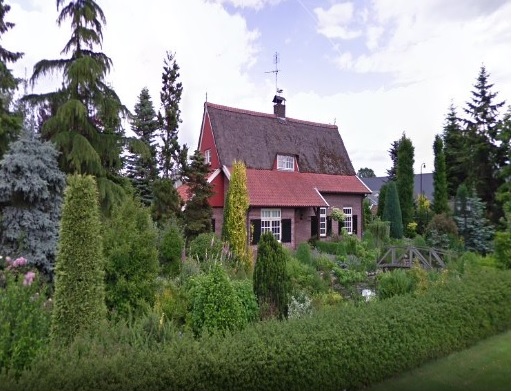
Paul’s work never stopped. If there was an emergency, like a sow in agony, he set the alarm clock to check on it in the middle of the night. My father worked hard, but Paul worked even harder. There always loomed dangers so that Paul could fret. An infectious disease could erase his pedigree. And the price of pigs fluctuated wildly. He had years with high profits and years with massive losses. But overall, his business went well. The old farm was from the 1930s and poorly constructed. When he married in 1977, he had it demolished and a new farm built. The new farm was in traditional style and an eye-catcher. It was huge and included a home for my grandparents. He had spent 500,000 guilders on it, more than three times the average home price, or so I heard. People came to the farm to take a picture of it. It was indeed exceptional. You can ask yourself, how many pigs died for it? But that is not only Paul’s fault because most of us eat meat.
Latest revision: 5 February 2025
Featured image: the farm that belonged to my uncle. Google Streetview. [copyright info]
 The Plan For The Future