Satan has always been God’s trustworthy servant. Some experts on the matter say he began his career as a serpent in Eden and later took charge of the furnaces that burn the evildoers for eternity. Others disagree and claim he is a fallen angel named Lucifer who didn’t do any grovelling in Eden. His task was to make God look good. We like to believe God cares for us, but prayers often remain unanswered while bad things transpire, such as misfortune and unpleasant neighbours. How can an almighty, good God allow this to happen? The obvious answer is that there is no god, or God doesn’t care. That is not what we like to hear. Once the Israelites had done away with Baal, Astarte and the others and switched to monotheism, they had to address this uncomfortable issue.
Suddenly, they had no one to blame for their misfortune except themselves. How could that happen? After all, the Israelites were God’s chosen people. Did they do something wrong? So, if things went wrong, it was time to repent, prophets like Isaiah and Jeremiah claimed. There usually was some idolatry or depravity occurring in their midst. That must have made God angry, the prophets proposed. But even when the Israelites prayed relentlessly, lived according to the Ten Commandments, and did all the prescribed rituals and offerings, things often didn’t improve. Why? It was a tricky question.
The Israelites dedicated an entire book, the Book of Job, to the issue, dubbed the problem of evil. Job was a particularly pious and virtuous man who was doing well. But on a fateful day, Satan challenged God by claiming that Job’s devoutness was due to his prosperity. His belief was insincere, Satan argued. God could not allow the mere possibility of insincerity and agreed to test Job and let Satan ruin Job. Even after the loss of his possessions, his children, and finally, his health, Job still refused to curse God. Job did everything God could expect of a faithful servant and more, or so it seemed.
Job’s friends tried to comfort him and figure out why he was suffering and what he could do about it. They suggested Job might have done something wrong. But Job proclaimed his innocence and complained about his fate. In the end, God showed up, telling him to shut up. His sin was hubris because he thought he didn’t deserve to suffer. Everything happens for a reason. It wasn’t entirely satisfactory, so Satan’s role gradually enlarged over time, and he came to do the dirty work so God’s hands remained clean. Still, in the Bible, God killed millions, while Satan only murdered a dozen. And nothing ever happens without God willing it, so God is responsible for Satan’s mischief also. The problem of evil remains unresolved and continues to boggle many minds today. How can a good God let evil happen or even do evil? That we are mere amusement was something few could think of, let alone accept.
The Quran says Satan is a fallen angel named Lucifer (Iblis) who, unlike the other angels, refused to bow to Adam. It alludes to Isaiah, where the morning star fell from heaven (Isaiah 14:12-14). Isaiah probably referred to a Babylonian king, but Luke says that Jesus saw Satan falling from heaven (Luke 10:8). A scribe probably noticed the similar phrasing and had his eureka moment. He could explain how Satan popped up and couldn’t resist sharing his findings with the other scribes, so it became the Christian interpretation of Isaiah’s words, which Islam took over. Also, Satan’s unwillingness to bow to Adam comes from an obscure Christian source. The Quran notes, ‘The angels prostrated themselves, all together. Except for Satan. He refused to be among those who prostrated themselves.’ (Quran 15:30-31) Then follows a conversation between God and Satan (Quran 15:32-42),
God said, ‘O Satan, what kept you from being among those who prostrated themselves?’
Satan said, ‘I am not about to prostrate myself before a human being, whom You created from clay, from moulded mud.’
God said, ‘Then get out of here, for you are an outcast. And the curse will be upon you until the Day of Judgment.’
Satan said, ‘My Lord, reprieve me until the Day they are resurrected.’
God said, ‘You are of those reprieved until the Day of the time appointed.’
Satan said, ‘My Lord, since You have lured me away, I will glamorise for them on earth, and I will lure them all away except for Your sincere servants among them.’
God said, ‘This is a right way with Me. Over My servants you have no authority, except for the sinners who follow you. And Hell is the meeting-place for them all.’
Like in the Book of Job, God and Satan appear to be on speaking terms, or even better, work together on a grand scheme and discuss what to do. Many Jews see Satan as an agent of God who tempts us into sinning so that he may accuse us in the heavenly court. That is also what the Quran says. A Christian might ask why the angels should have prostrated themselves before Adam. Jesus was the second Adam, so God made Jesus, the firstborn of the world, superior to the angels and made the angels worship Him (Hebrews 1:1-7). Satan is an imaginary character like Spike or Suzy. Satan is not the only red herring. The End Times are another. Suppose there will come an End Times. What can we know about it? So, what is the worth of the prophecies in the Bible and the Quran?
The book ‘The Virtual Universe’ addresses the consequences of predestination. A prophecy is like a premonition. Why can fortune-tellers sometimes make accurate predictions? And why are their predictions unreliable at the same time? The answer is that the scriptwriter knows the future, but we don’t. And so, the script can make predictions come true to the point that we notice that something is off, while the proof of foreknowledge remains elusive. Furthermore, and that is a warning, a God who wrote the script is far more powerful than one who can merely send plagues and smite us for being ungrateful or disobedient or for any other frivolous reason. It is indeed next level.
We can’t know the future because our knowing will alter it. If I know I will have a car accident tomorrow, I will stay home, and the accident will not happen. If I am to have that accident, then I shouldn’t know. I may pass a sign saying, ‘You will have a car accident tomorrow’ and laugh about it, and the next day, I will find out it was a sign. As long as I don’t believe it is a sign, it can be precise.
And so, the prophecies of the ancient Greek oracles only made sense in hindsight. In 1914, no one could have guessed that the licence plate number on Franz Ferdinand’s car, in which he was assassinated, referred to the end date of the upcoming world war triggered by that same assassination. The prophecy in Revelation can’t be accurate because too many people take it too seriously. If many people expect the End Times, they can’t know the specifics about that event. And no one knows the hour, not even Jesus knew. The specifics mentioned in the Bible may turn out to be correct in unsuspected ways, such as the prophecies of the Greek oracles. But we will only know in hindsight.
Latest revision: 10 February 2026
Featured image: Photo of a sign in Hell, Norway, taken by Matthew Mayer in 2001, released under GFDL. ‘Gods’ means cargo or freight in Norwegian, while the old spelling of ‘expedition’ has since become ‘ekspedisjon’. God’s Expedition, however, is a popular reading with English-speaking tourists.
The motto of the French Revolution was, ‘Liberty, equality, brotherhood.’ We should all be free and equal, as brothers and sisters. More than two centuries later, it has yet to happen. We quarrel and fight because we establish social hierarchies and compete for resources. Equality can come at the expense of liberty. And we find it difficult to relate to people we don’t know. It takes a juggler to keep all three balls of freedom, equality, and brotherhood in the air. Then, there is a fourth ball named prosperity and a fifth called peace. It may be too much for us simple humans.
Critical Theory, sometimes called Cultural Marxism, examines and criticises society and culture using the social sciences and the humanities. Marx believed that society results from unenlightened self-interest, our willingness to accept the stories of the elites, and our unwillingness to accept facts. Max Horkheimer described Critical Theory as seeking to liberate human beings from the circumstances that enslave them. You can free yourself from your thoughts, for instance, the belief that your position in society is natural or divinely ordained. And you can free yourself and your group from the oppression by another. Critical Theory examines power structures, societal roles, cultures and their alternatives.
You can ask yourself why most members of parliament are men. Is it the consequence of culture, human nature, or power structures? Critical Theory is pointless if it tries to liberate us from human nature. The theorists, however, suspect a conspiracy of those in power. They think men keep women out of positions of power. Men being in power has consequences. Some men sexually abuse women. If men are in control, men may get away with abuse. How societies deal with the issue varies. Muslim women cover their hair or wear full-body covering with eyeholes, to prevent rape, while liberal women want to dress as they like and expect men not to behave like dicks. And that led to disappointment, so they started the Metoo movement.
The question of rape has elements of nature, culture, and power structures. Evolutionary success is about spreading your genes, and rape is a method to spread your genes. A culture affects how people look at rape. If we consider rape disgraceful, fewer men will do it. And power structures affect whether you can do as you please or not. If women have more power, fewer men will get away with rape.
The abolition of slavery has been another issue of social justice. Our nature makes us pursue social status, not only for ourselves as individuals but also for the groups we belong to. This can explain why raising blacks to equality with whites aroused strong negative sentiments. In the past, most people considered slavery normal or natural, but our values, thus our culture, have changed. Societies have entrenched interests, thus power structures that can block change. Slave owners were wealthy people with power.
Over 1,000 years to end slavery
Ending slavery and serfdom in Western Europe took nearly 1,000 years. Around 600 AD, the opposition to enslaving Christians began in Europe when the Pope prohibited Jews from owning Christian slaves. In 1102, the Council of London banned the infamous business, prevalent in England, of selling men like animals. Around 1220, the Sachsenspiegel, a most influential German law code, condemned slavery as a violation of man’s likeness to God. The argument for abolishing slavery thus was a Christian view on human dignity. By 1500 AD, slavery and serfdom had become rare in Western Europe.
By then, slavery had taken off in the colonies. Non-Christians could still become enslaved. A similar historical process unfolded that would officially end slavery more than three centuries later. Shortly after 1500, Spain banned the slavery of Native Americans but allowed unpaid forced labour or corvée called Encomienda. The natives became serfs on paper but enslaved in practice as the corvée extended. The natives were physically strong and died of diseases brought by the Europeans.
European plantation owners needed more labourers, strong and sturdy ones. European slave traders brought the enslaved from Africa in ships and crammed them into cargo holds in chains and with little room to move. Unhygienic conditions, dehydration, dysentery, and scurvy led to an average mortality rate of 15% during the voyage. Between 1526 and 1860, slave traders put an estimated 12.5 million Africans on ships in Africa, and 10.7 million survived the trip to the Americas. Slave traders did not see them as humans.
The cruelty of the treatment of enslaved by their masters is hard to imagine for us. Likewise, if you have not been in a concentration camp during World War II, you might find it hard to understand what happened there. Eyewitness accounts provide us with some insights. In his diaries published in The Voyage Of The Beagle, Charles Darwin wrote that enslaved received beatings or torture for insignificant offences, mistakes or for no reason at all. Public opinion in Great Britain shifted, and Britain was about to abolish slavery in its colonies. The Industrial Revolution had taken off in earnest, and the British economy didn’t depend as much on slave labour as it did in the past.
History of blacks in the United States
Slavery caused a civil war in the United States. The Northern states had abolished slavery soon after the American Revolution. They didn’t depend on slave labour. That was different in the South. The invention of the cotton gin was a boon to the cotton industry and even increased the demand for slave labour. Slave plantations in the United States produced two-thirds of the global cotton supply by 1860. Remarkable efficiency improvements came from record-keeping by tracking each person’s output and harshly punishing those who didn’t meet their assigned production targets.
The dispute leading to the Civil War was about whether or not to allow slavery in the new territories in the West. The controversy came to a head when Abraham Lincoln, who opposed slavery’s expansion, became president, and Southern states seceded. Lincoln, hoping to reunite the country, didn’t plan to abolish slavery at first. That changed when a peace deal remained out of sight, and the North needed more soldiers to fight the war. Lincoln then signed the Emancipation Declaration of 1 January 1863, which freed the enslaved and allowed them to enter the army of the North. Many enslaved escaped and fled from the South to obtain their freedom and to join the Northern Army.
At the time, Frederick Douglass was an influential black writer. He complained about the unequal pay of black soldiers, who earned less than white privates. The North’s weak response to the cruel treatment of black prisoners of war by the South also angered him. He forced himself into President Lincoln’s office, and the two men learned to know each other. It was a learning experience for both. Lincoln learned how slavery affected black people, while Douglass came to understand the political reality. Whites didn’t accept the equality of blacks. John Wilkes Booth assassinated Lincoln for promising blacks suffrage.
After the Civil War, whites regained control in the South. Paramilitary groups, such as the Ku Klux Klan and the White Man’s League, disrupted political campaigning, ran officeholders out of town, lynched black voters, and committed voter fraud. The federal government didn’t stop it. Voting became more restrictive, for instance, with literacy requirements and underfunding or closing black schools. States and counties introduced laws to enforce racial segregation, the so-called Jim Crow laws. Successful blacks faced violence and destruction of their businesses and were killed, for instance, during the Tulsa massacre of 1921.
Racial segregation officially ended in the 1960s after the civil rights movement took on the issue. The non-violent resistance under the leadership of Martin Luther King was successful because of television, as scenes of police violence highlighted the oppression of blacks and damaged the credibility of the United States. It forced President Kennedy to act. And one century after Lincoln signed the Emancipation Declaration, he signed the Civil Rights Act. Since then, everyone in the United States has been equal before the law, but whites and blacks in the United States still don’t mingle often but go their separate ways.
Something went wrong somewhere
In December 1992, I was on holiday in Florida and visited Miami. My travelling agent had advised me not to enter a quarter where blacks lived. I accidentally drove into that district and tried to book a hotel room. The black lady behind the counter was kind enough to talk me out of it. She said, ‘Folks like you shouldn’t come here, you know.’ Whites weren’t welcome. A few months earlier, a jury had acquitted four Los Angeles policemen of the beating of Rodney King, a black taxi driver, even though the evidence was clear. Fury erupted, incited by grievances about racial and economic inequality. The city burned.
Something went wrong somewhere. The something and the somewhere are not as straightforward as in the past. Multicultural societies in Europe face similar issues as the success of immigrants often relates to their ethnicity. Most immigrants do better than blacks who have lived in the US for generations. Is white racism causing this? Is it a historical legacy coming from poverty and the underfunding of schools? Are many US blacks poorly adapted to mainstream society?
Jews also faced discrimination and violence, but they did much better than blacks. Education is part of their cultural heritage. Education didn’t matter much to enslaved blacks in the United States. Later on, during the Jim Crow years, their education was wilfully neglected. Another factor contributing to the persistence of racial inequality in the United States is that the black family disintegrated from the 1960s onwards. In 1965, Senator Daniel Moynihan warned the rise of out-of-wedlock births among blacks would cause a disaster.
There might be a relationship between the strength of communities and families and success. Asians do well in US society. You have an advantage when you grow up in a stable environment with married parents. Married parents can invest more time in raising children and providing for them. It doesn’t explain why Muslims from North Africa perform poorly in European societies. There is more to the issue of success in society than family and community alone. Attitudes towards society and education may also matter. Blacks and North Africans often feel resentment and think society is not theirs. Blacks may say it is a white man’s world, so it is not theirs. And if you don’t believe you are part of society, you are less likely to participate.
Rodney King speeded on the highway and refused to stop. The police pursued him in a chase. After they had stopped him, police officers kicked him and beat him with batons, causing severe injuries. King had been on parole for robbery. There are similar cases. In 2013, the acquittal of a neighbourhood watch in the fatal shooting of the 17-year-old Trayvon Martin gave rise to the Black Lives Matter movement. Martin had no convictions. The police had once found jewellery in his possession but couldn’t prove he had stolen it. The death of George Floyd in 2020 is another noteworthy case. A police officer knelt on Floyd’s neck for over nine minutes while Floyd was handcuffed and lying face-down in the street, leading to his death. Floyd allegedly had used a counterfeit twenty-dollar bill. He had served eight jail terms on petty crimes. Young black men fill US prisons. If the police violence stops, that will remain so.
Historical perspective
We view things from today’s perspective and look at the past with today’s values. It doesn’t help to understand history or social progress. Darwin wrote about a slave owner, ‘I was present when a kind-hearted man was on the point of separating forever the men, women, and little children of a large number of families who had long lived together.’ He was a kind man but didn’t see the enslaved as people. Among the Nazis were family men who cared for their wives and children. They only didn’t see Jews as people, either.
Most of us eat meat and hardly think of animal suffering in the meat industry. Or we buy clothes made by children in Bangladesh. Many people in Europe and the United States condone the cruel treatment of immigrants because they think there are too many. Future generations may view our conduct as appalling as we view slavery today. Seeing the abolition of slavery as a historical process and acknowledging the limits of our compassion helps us understand why it took so long. It doesn’t take that much for us to become cruel.
Abolishing slavery took 1,500 years. Slavery was common in most traditional and ancient societies but had ended in Western Europe by 1,500 AD. Europeans then turned the slavery of blacks from Africa into a commercial enterprise of unprecedented scale and brutality. The trade and exploitation of enslaved people became a pillar of the European capitalist economy in the following centuries. European Christians engaged in the slave trade, but Christianity also contributed to its end. Most Christian churches approved of slavery and benefited from it, but they also tried to convert indigenous peoples.
These conversions were often brute, but in doing so, European Christians admitted indigenous peoples were humans worthy of conversion. And if they were Christians, enslaving them conflicted with Christian principles. The ideal of equality in the West has its roots in Christendom. Europeans gradually began to apply the principle of equality to the enslaved, regardless of race. Meanwhile, the Industrial Revolution became the engine of economic growth, so slavery contributed less to the economy. Factory workers were cheap, so businesses’ bottom line didn’t suffer from abolishing slavery, except in the South of the United States.
The cruel treatment of the enslaved made more and more people believe slavery should end. The economics were favourable. The importance of slave exploitation to the European economy had declined. Had that not been the case, ending slavery could have taken longer or not have happened at all. People asked, ‘How can you be a Christian, keep slaves and treat them cruelly?’ The slaveholders were used to slavery and saw it as necessary or natural. Some do-gooders wanted to end an institution that existed since time immemorial. The end of slavery was a successful revolution. Once slavery had ended, a counter-revolution in the form of the segregation and Jim Crow era commenced.
Segregation ended with the Civil Rights Act, yet another successful revolution, but resentment between blacks and whites in the United States remains. Contrary to many European nation-states, the United States was an immigrant society with a significant black minority. Society was fragmented. American values are more about individual achievement than European values. However, due to mass migration, similar issues arose in Western Europe, and societies became more fragmented, often along ethnic lines. Human nature goes a long way in explaining what happened:
We grow up in a social order and usually accept it. Without order, there is chaos, so we often resist change as it can cause mayhem and bloodshed.
We value social status. It is our rank in the social hierarchy. Raising the rank of blacks to equals angered many whites as it was a degradation to them.
Humans are xenophobic. It protects us from harm but can cause brutality. Many whites thought blackness was an infectious disease.
Cultural differences make living together uneasy. Blacks and whites in the US often have different life experiences, conduct, and values.
The black community in the US is weak. Blacks couldn’t defend themselves against white paramilitary groups. Today, the black family man is the exception, not the rule.
Change doesn’t come easy and requires activism. Once you solve an issue, new ones emerge. At some point, social struggle fails to produce meaningful improvement. It seems the law of diminishing returns on investments is also present here. Black Lives Matter makes less sense than the Civil Rights Movement. Mischaracterising police brutality as if it is racist and directed against blacks is not helpful. The US police are 100 times as lethal as their British counterparts, which is a shocking number. However, if you account for crime rates, they don’t excessively target blacks. The data suggest the opposite. Blacks are three times as likely to be killed by the police but eight times as likely to commit murder. BLM makes no issue of gang violence that kills many blacks.
Do black lives matter to BLM? Or is BLM an expression of anger and frustration in a group lacking self-reflection? It is time for blacks to consider their contribution to the problem. BLM doesn’t differ much from MAGA, which is the expression of white anger and frustration. Most arguments have been made and settled in most reasonable people’s minds. There is still widespread bigotry and discrimination, but mischaracterising issues makes it harder to solve them. Police brutality doesn’t stand on itself, either. In the US, people have different attitudes regarding violence and the use of guns than in Britain. A US police officer knows that a suspect can pull a gun anytime. A British police officer doesn’t have to worry about that. Progress from here on will be slow or remain elusive unless we identify as one humanity, join hands and work on a better future.
Latest update: 24 July 2024
Featured image: Storming of the Bastille and arrest of Governor M. de Launay on 14 July 1789. Public domain.
We live in a virtual world, a computer-simulated environment. Virtual worlds, such as computer games, can have numerous users who create personalised avatars, engage in activities, and interact with others. If you are familiar with computer games, you know what an avatar is. Once you enter a game, you become a character inside that game, your avatar, and you have an existence apart from your regular life. Inside the game, you are your avatar, not yourself. Alternatively, you could start a virtual world where you are God and make your dreams come true. In this world, you can also become someone else, a character in your story.
Virtual worlds have rules that may draw from reality or fantasy worlds. Rules can include gravity, methods of procreation, and types of communication. In virtual reality, you can change the rules. You can do away with planets and stars and create a flat surface. Or there is no surface at all. You can eliminate gravity and let everyone float. You can do away with procreation and let individuals emerge from thin air. You can invent species that communicate via light signals or not have species but individuals with random features.
This world might look like the original. Our experiences shape our imagination and influence the options we consider. If we write stories and produce films, most are about humans and their feelings and actions. Only a few are about animals. And the animals we imagine in our tales are like humans. Ed, the talking horse, is more human than a horse. Tales and motion pictures about imaginary beings, such as The Lord of the Rings or the Star Trek series, are rare compared to series about humans. And the fictitious beings in our stories, such as Star Trek, look and act like humans. They usually have two legs and two arms and walk upright. Extraterrestrials in Star Trek feature males and females.
The Holodeck is a virtual reality room available in the Starship Enterprise in Star Trek. Using holograms, it creates a realistic, interactive simulation of the physical world. On the Holodeck, you can make a personalised environment with objects and people, interact with them, or write a story and play a role in it. With the help of artificial intelligence, we might soon create simulations of humans and the world. If the technology becomes cheap, we could make billions of virtual universes. If we do that, it likely happened long ago, and we live inside a virtual world ourselves.1
We are about to do so, so this world is probably a simulation. But can we find out? Most philosophers and scientists think we can’t. They have overlooked the obvious. There is an elephant in the room: the things science can’t explain. It begins with establishing that these phenomena aren’t subjective, so there must be multiple credible witnesses or verifiable evidence. Then, you need to certify that it is not due to randomness or a natural phenomenon. To say that the simulation causes these phenomena upends the knowledge we currently believe we have. And so, we must be thorough. Answering the question begins with investigating what we can or cannot know. That is the domain of knowledge theory, a branch of philosophy which deals with the nature of knowledge.
Latest revision: 18 July 2025
1. Are You Living In a Computer Simulation? Nick Bostrom (2003). Philosophical Quarterly (2003) Vol. 53, No. 211, pp. 243-255.
In the 2000s, it struck me that nearly all the empty cigarette packages littering the streets were Marlboro Reds. I began to pay attention. There were one or two Camels and a few others, but almost all were Marlboro Red. Marlboro Red is the most popular brand. Its market share in the Netherlands is nearly 30%. The second-largest brand has a market share of under 10%. But if you had to make a guess based on discarded empty packages, you would think Marlboro Red had a market share of 95%. It was not scientific research, but my observation and my wife’s. We made jokes about it. We didn’t make tallies, but it was like that. Cultural differences are a big issue, as I had already learned as a student. Marlboro Red smokers often dumped their garbage on the spot, while other smokers rarely did. So, if you’re looking for a jerk, check who’s smoking Marlboro Reds.
You might think that littering isn’t that bad if you compare it to the horrors of warfare, dumping chemicals, the abuses in the meat and dairy industries, and the cutting down of rainforests. Still, disrespect for God’s Creation begins with littering. It is a matter of upbringing, hence culture. Some countries are clean, while others are a total mess because people dispose of their garbage wherever they see fit. It’s pretty easy to spot jerks. Those who litter are. Jerkdom is part of a culture of not caring. We buy the products of corporations that dump chemicals in the ocean and then complain about the poisoned fish we eat. There are worse offences. But it starts with littering. Next comes graffiti, which only those who make it consider art. I know art is personal expression, so do it inside your home so that only you can see it. Then comes destroying property. If you want to cause even more harm, you might consider buying the latest fashion.
Now, if 30% of the people dump 95% of the garbage, the remaining 70% is responsible for only 5% of the garbage. And you can calculate that Marlboro Red smokers were 44 times as likely to dump their trash on the street as other smokers ((95/30) / (5/70) = 44), a striking find. The sample was large enough to make the finding statistically significant. The sample may have issues, but these issues can’t fully explain the difference. It is more complicated to do the same investigation today. You still find cigarette packages on the street, but it is hard to identify the brand name among the scary pictures of cancers and other horrible diseases you get from smoking. Marlboro Red smokers differ from other cigarette smokers. You can call it culture. Culture can explain the deviant behaviour of groups of people who share common characteristics, such as smoking Marlboro Red. It is politically incorrect, but culture explains a lot about behavioural differences between groups.
The Marlboro Man embodies careless living in a consumerist society, which apparently includes discarding one’s garbage on the spot. Our brand choices reveal a great deal about our personalities, so marketers have done their jobs very well indeed. A politically correct person would say I am stigmatising Marlboro Red users. There could be something wrong with my sample. The sample may have flaws, as I live near a train station where young people gather, but I have also noticed this elsewhere. The difference is so stark that it can’t merely be an error in the sample. But even if the sample correctly reflects reality, perhaps only 0.1% of smokers discard their cigarette packages on the street, so only a tiny minority of 4.4% of Marlboro Red smokers might do so. Perhaps that is correct, or perhaps not, but 44 times as much is an eye-popping difference.
If you intend to tackle the problem of litter from cigarette packages and have a limited budget, you may target Marlboro Red users to achieve the greatest impact. Otherwise, you are wasting money. And who wants to waste money? Okay, stupid question. People buy cigarettes. I think of Marlboro Red smokers as jerks who don’t care, thus people who might piss through your letter box, or throw fireworks in it. It is what I imagine, and I know that it isn’t true for all of them. Many are people like you and me, who might be friendly, own a dog, have a job, and look after their neighbours. And reality never ceases to surprise me.
If I meet an individual, this person often doesn’t conform to all my prejudices about the groups to which he or she belongs. A group consists of individuals, and although they share common traits on aggregate, each individual is different. There are behaviours like littering that occur more in certain groups than others. Our prejudices about groups often have a basis in reality. Still, our prejudices aren’t reality. If you only see Marlboro Red packages on the ground, you may think that Marlboro Red smokers are all littering jerks, while it might be a small minority of them.
Can I trust my dentist?
How do cultures emerge and develop? History and circumstances go a long way in explaining that, as the following example illustrates. I trust my general practitioner, but not my dentist. That is because of my experiences and those of others. General practitioners and dentists are similar medical professions. In the Netherlands, a general practitioner doesn’t benefit from the advised treatments, while a dentist does. You have to trust medical professionals because your health depends on them, but you can’t trust them in a market. That is why healthcare for profit turns into a scam where doctors prey on desperate people and sell treatments for which there is no scientific proof. That ranges from magic potions to revolutionary cancer treatments. If you buy it, they sell it.
To prevent dental professionals from taking advantage of me too much, I see the dentist once a year rather than twice. So what made me so distrustful? As a child, I had the same dentist for over fifteen years, an old-fashioned one for peasants like me. He didn’t propose treatments unless they were necessary. He once told me that I could wear braces, but added that it wasn’t necessary for my teeth’s health. Not caring about looking perfect, I still live with the consequences that have never bothered me.
After leaving my parental home and moving to Groningen, I selected a new dentist. The first thing he did was take X-ray pictures. He said a cavity was developing underneath one of the fillings. Well, what a coincidence. The other dentist had never seen it. Then the dentist showed me the picture and pointed at a dark spot. There was another filling with a dark area beneath it, and I said, ‘You can see a similar blot here.’ He replied, ‘That is something different.’ I am unqualified to evaluate these X-rays, but both areas were similar, so the dentist lied. Had he not shown me the photograph, I would have believed him. It made me suspicious and very critical of what dentists were doing.
Before he could treat my tooth for the supposed cavity, I came up with a lame excuse and selected another dentist. A few years later, I had a colleague who had married a dentist. She previously had lived in the same neighbourhood. Her husband was in training at the time. And so, she had been seeing another dentist, who happened to be that one. She told me she had had a row with him, so I wasn’t the only one who had smelled a rat there. Her husband was a dentist-in-training, so she probably had valid reasons for quarrelling.
That was a noteworthy coincidence indeed, and there have been many in my life. What are the odds that she had the same dentist, they had an altercation about malpractice, and her husband was a dentist in training, which would provide me with evidence to support my suspicions? Thirty years later, the tooth and the filling were still in place. Later, I moved to Sneek and found an old-fashioned dentist. He was like my first dentist, so I trusted him. He often performed dental cleaning. That usually took 10 minutes and cost €21. After ten years, he joined a practice with some other dentists. Shortly after that, he retired.
My next dentist didn’t perform the dental cleaning. Instead, he sent me to a dental hygienist. That treatment lasted twenty-five minutes and was a lot more expensive. Instead of €21, I paid €62. Standards do change, but I doubted the sudden need for 150% more cleaning. But if my dentist advises the treatment, who am I to disagree? After all, he is the expert. It is best to accept the assessment of medical professionals unless you have proof they are wrong. Otherwise, you endanger your health.
Since then, I have worked harder on brushing and cleaning my teeth, but the cleaning always took 25 minutes, no matter how hard I tried. After eight years, my dentist said my teeth were in good shape and clean. There was a tiny bit of tartar, so he advised me to see the dental hygienist anyway. The dental hygienist could have stopped after ten minutes, but she went on to arrive at twenty-five, so she could bill me for that, or so it seemed. The treatment was always twenty-five minutes, regardless of the condition of the teeth. I found that dubious and looked for another dentist.
It would only get worse, even though not at the beginning. A new guideline stated that dental hygienists could do the periodic dental check-up. The following year, the dental hygienist combined the check-up with dental cleaning, making the most of the allotted time financially. I was there for thirty minutes. She billed me for thirty minutes of dental cleaning and also charged me for the check-up. A decent check-up lasts ten minutes, so you might expect a check-up and twenty minutes of dental cleaning if you are there for thirty minutes. I was surprised and wasn’t sure. Had I checked the clock correctly?
The following year, she did it again. Additionally, she charged me for taking X-rays and evaluating them. How can you do all that in thirty minutes if you already spend thirty minutes on dental cleaning? It doesn’t add up. The dentists had decided to take pictures every 3 years instead of every 5, which means even more money for them. And she was double-charging me. Dental cleaning was €160 per hour at the time, which was nearly what I brought home after a day of work and paying taxes. Many people work longer for that money. To charge that per hour wasn’t enough for her, which is particularly nefarious.
After returning home, I emailed her to request clarification. She didn’t respond, so I filed a complaint with the Dutch Association of Dentists and looked for another dentist. In the complaint letter, I protested against the double-charging and noted that questionable ethics have become customary in dental care. A few decades ago, there were no dental hygienists. My wife once said, ‘The dental hygienist is a new profession created out of thin air.’ She had left a dentist because he required her to see the dental hygienist before examining her teeth to determine whether that was necessary. She went to another, who also began maximising profits at the expense of clients, so she left again. I have heard several stories from others of dentists overcharging or doing unnecessary treatments.
My next dentist also advised dental cleaning. And this time, I was with the dental hygienist for forty minutes, and she billed me accordingly for €119. Over the past fifteen years, the time spent on dental cleaning has increased by 300%, and the cost has risen by 467%. I take much better care of my teeth than I did twenty years ago, and began using toothpicks, but it doesn’t show up in the dental cleaning cost. It can’t be that all these dentists and dental hygienists are lying. My teeth accumulate tartar no matter how well I clean them, so the cleaning is necessary, but the amount remains questionable, to say the least. I put up the ante once again, brushing my teeth three times a day, and it finally showed in a somewhat reduced dental cleaning time in the years that followed.
The parabolic rise in dentist costs is partly due to changing standards. Dental cleaning improves the health of teeth. At some point, the benefits of increased cleaning and more photographs become minimal while the costs escalate. The precise border between higher and scamming will always be elusive, and you can’t prove it from individual cases like mine. Still, we have, without any doubt, entered scamming territory, but no one puts a halt to it. In 2026, a Tubantia newspaper headline said, ‘Eight minutes in the chair, pay 200 euros: more and more patients feel like ‘cash cows’ at the dentist.’ And the article goes on to say, ‘Three minutes of polishing for €480 per hour. Half-cent cotton rolls billed for €10. A €1,600 treatment plan that disappears after a second opinion. Hundreds of readers contact us after reading articles about dental fraud. And research by Zilveren Kruis shows that in six out of ten cases investigated, there was indeed overbilling.’
Again, I have to be politically correct and say that the number of complaints about treatments is less than 1% of the total number of treatments. People only complain if they think something is wrong, so that 60% of complaints are justified doesn’t mean 60% of dentists are overbilling. Undoubtedly, much also goes unnoticed. My wife has switched twice after being scammed, and never filed a complaint. I switched three times and complained only once. And so the percentage of fraudulent dentists is likely significantly higher than 1%, but probably it is a minority, and there is a grey area between changing standards and overtreatment. Still, the consequence is that more and more people can’t afford dental care, and their teeth’s health suffers. So, while the number of treatments increases, the quality of dental healthcare in the Netherlands declines, which seems to be a systemic problem in healthcare-for-profit. General practitioners don’t benefit from the treatments they recommend, leading to better care at lower cost.
The same trend is visible in veterinary practices. Douwe, our late cat, suffered from kidney failure. We had spent hundreds of euros on tests, but the vets found nothing. And we had seen several vets, because we suspected that the other vet was scamming us, but they all did it. We spent hundreds of euros more on special diets sold by these vets, but Douwe’s condition only deteriorated. We finally visited an old-fashioned vet. He examined Douwe by feeling with his hand. He found the kidney failure and euthanised Douwe. That cost us only €30. Modern veterinarians often don’t physically inspect the animals but perform tests, charging over 1000% more. Physical examinations are bad for business.
My father has spent over €5,000 on surgery for the leg of his dog. An old-fashioned vet would have amputated the leg, as the animal could still walk on three legs. But that is, of course, much cheaper and generates far fewer profits. The surgery failed, so the poor animal had to undergo a second surgery. After that, the ailment returned, so a third surgery followed. And it is not that if the treatment fails, you get the next one for free. Not even a discount, unless you are, like my father, insistent on a discount and somewhat unpleasant. The dog didn’t recover. My father had his dog euthanised because it was in pain.
The market works so that unnecessary treatments proliferate because the rich desire them. They would rather spend €10,000 on unnecessary treatments for their dogs than on feeding children in Africa. We are all like that. I don’t give all my money to charities either, so it is a most serious issue that we can only fix with unthinkably brutal measures like taxing the rich. These treatments have become the norm, so the vets sell them to the poor as well, telling them every pet deserves these treatments, even when their owners can’t afford them.
You can’t blame only the vets and dentists for the cost explosion. We view our pets as family members and want the best for them, just as we do for our children. Modern veterinary outfits look like hospitals and make investments that need to bring in a return. And we want perfect teeth, not just healthy ones. Not everyone can afford them, and healthy teeth are more important than perfect teeth. Vets make tons of money. They now retire early, purchase luxury mansions and travel around the world. It has become so lucrative that vulture capitalists are buying up veterinary practices, so scams will proliferate like cancer until the entire sector has become a scam.
Group culture can be a problem. Most veterinary and dental care professionals think they are doing a good job. Dutch politicians are catching up and proposing a law to ban profit maximisation at the expense of pet owners, but, as usual, nothing will change. It reflects the mood in society, where we see greed as good, so that dental care professionals and vets may be unaware of the damage their culture and professional values cause to society. And that is precisely the problem with many other cultures, whether they are professional groups or ethnic groups.
The politically incorrect
It is okay to say that, but once you apply the reasoning to ethnicity, you step into a minefield. But hey, let’s begin with kicking in an open door. White Europeans have caused the most trouble. And now we can move on, and also discuss the problems others cause. These differences can be an excuse for racism and discrimination. Racism is widespread, and discrimination is even more so. Typically, stereotypes are rooted in reality, which complicates the issue. Racism and bigotry are undesirable, but if you have reason to have grudges against specific groups, these grudges might express themselves as racism. You might as well hate Marlboro Red smokers and dentists. The standard politically correct answer is that most people from minorities are good people, just like most Marlboro Red smokers and dentists are. Additionally, the ethnic group to which you belong can also cause trouble for other groups. Whites caused the most trouble in history.
Usually, a minority in that group causes trouble, but that minority can make a neighbourhood unsafe. And people from a group don’t rat out each other, so that they can be part of the problem. There has been growing negativity surrounding immigration recently. That is not only because of the numbers, but also because of the crime. However, the image you get from the evidence you see is not reality itself. If most suspects of burglary have a particular skin colour, you might think they are all criminals, while it is usually a minority. Even when differences are relatively small, the groups in question pose a problem. If the percentage of criminals in the population rises from 1% to 2%, you need twice as many police, courts and prisons. And if you can’t discuss these issues, you also can’t discuss the problems the majority causes.
Usually, a minority in that group causes trouble, but that minority can make a neighbourhood unsafe. And people from a group don’t rat out each other, so that they can be part of the problem. There has been growing negativity surrounding immigration recently. That is not only because of the numbers, but also because of the crime. However, the image you get from the evidence you see is not reality itself. If most suspects of burglary have a particular skin colour, you might think they are all criminals, while it is usually a minority. Even when differences are relatively small, the groups in question pose a problem. If the percentage of criminals in the population rises from 1% to 2%, you need twice as many police, courts and prisons. And if you can’t discuss these issues, you also can’t discuss the problems the majority causes.
It works two ways. Host societies have varying ways of dealing with immigrants. The gang violence among immigrants is worse in Sweden than elsewhere. The Swedes tend to keep to themselves, and it isn’t always easy for foreigners to integrate into Swedish society. Many countries have volunteers who care for asylum seekers and help them settle. It is probably not a coincidence that my worst hitch-hiking experience as a youth occurred in Sweden, where my cousin and I waited for over seven hours for a lift despite the heavy traffic. Nowhere else had I waited for much more than an hour, and I have hitch-hiked in seven countries. Whatever the cause may be, these gangsters commit these crimes, not the Swedes who allowed them into their country. Still, there must be a reason why the gang violence in Sweden among immigrants is worse than elsewhere.
When harmful conduct relates to culture, the politically correct response is often that only a minority is involved in it. Why do mass shootings occur far more often in the United States than elsewhere? The politically correct gun lobby would argue that only a tiny fraction of Americans go on a shooting spree. The image you get is not reality itself. If there are mass shootings in the United States nearly every day, you might think Americans are gun-obsessed nutters, while it is a small minority. Still, there are mass shootings all the time, so it sets the United States apart from other countries. The problem is not gun ownership. Liberals might think that stricter gun laws will solve the problem. More stringent gun laws will never happen because the problem is not gun ownership but gun culture.
When there is no gun culture, gun ownership wouldn’t pose such a problem. European countries, such as Finland and Switzerland, also have widespread gun ownership. Still, random mass shootings are a typical American phenomenon. America has a gun culture and a belief that guns are a preferred way to solve problems. American police are over 60 times as lethal as their British counterparts (33 versus 0.5 fatalities per 10 million inhabitants in 2022), which is an appalling statistic. Still, several countries have far more violent police forces. These numbers relate not only to the amount of violent crime. Compared to films from other countries, American films overflow with excessive violence, including gory details like bullets penetrating bodies and tearing flesh apart, which Americans somehow seem to be particularly interested in. The hidden suggestion is that killing other people is business as usual.
Ethnic groups have cultures. We picture Americans, Chinese, Germans and Arabs like we picture lawyers and construction workers. Our prejudices may accurately identify group characteristics, but will often fail us in individual cases. Suppose all the cookies are gone on Sesame Street, and you must find suspects. Would you not select the big-mouthed, blue-haired ones with a taste for cookies? That is also profiling. But perhaps it was one of Ernie’s pranks. If you did not think of that, you are prejudiced. We base our prejudices on experience and facts, as well as fiction and rumours. Only the facts do not base themselves on our prejudices. We often forget about that. Not all dentists are greedy money-grabbers, likely not even most. Although some minority groups cause more trouble than others, most individuals within these groups probably do well. Still, cultures and societies are Big Things, even though you can’t precisely define or measure them.
Intentions and arguments
In multicultural societies, people from certain ethnic groups often face greater difficulties and cause more problems than others. That undermines the fabric of society as much as racism and discrimination. It is one of the reasons why right-wing populism is on the rise. Culture often coincides with ethnicity, so the resentment can express itself as racism, which allows racists and bigots to have their say. That was the reason for having political correctness. Policymakers have long hoped that maintaining a friendly atmosphere and helping disadvantaged groups would help to reduce these problems over time.
The validity of an argument doesn’t depend on the intentions of the person making it. That said, there is a wide array of possibilities for misrepresenting the facts, so intent usually matters for the quality of the argument. Activists are cherry-picking incidents to present a picture of a group causing trouble. I could have photographed discarded, empty Marlboro Red cigarette packages on the street to illustrate that Marlboro Red smokers are littering jerks. Although there is some truth to it, it is not the truth itself.
Our cultures and values play a crucial role in how we view society. Groups that pose problems often share a belief that the society in which they live is not their own. ‘It is a white man’s world,’ a black man might say. You may become angry or frustrated when you fail in society due to circumstances you believe are outside your control. You may not understand the unwritten rules or know the right people to get ahead. Even when we are equal before the law, we are not in reality. It is not always easy to determine to what degree you can blame society, the individual, or the groups to which individuals belong.
Ethnic profiling
Cultural differences are why authorities engage in ethnic profiling. Culture coincides with ethnicity. In the Netherlands, crime rates vary by ethnic group. Criminals are a minority in every group, but the differences are significant. People of Antillian, Moroccan, Surinamese and Turkish descent are, on average, three times more likely (2.4%) to be crime suspects than native Dutch (0.8%). It has a magnifying effect, as it influences how the native Dutch think of these people. When you see pictures of crime suspects, they often have, as the Dutch call it, a tinted skin, meaning they aren’t white. It can give you the impression non-whites are all criminals, just like you can get the impression that all Americans are gun-wielding nutters or that Marlboro Red smokers are jerks. It can make you distrust people who aren’t white, most notably when you hardly know them.
The relationship between ethnicity and crime can be misleading. There is a coincidence between income and crime. And these minorities have relatively low incomes. A good question is why people from certain ethnic groups have low incomes. That relates to culture, but it is not the only explanation. Many immigrants came to Western Europe for low-paid jobs that required little education. Their parents had little education. Education was not a high priority for them, so their children often ended up with little education. Even when income explains crime rates better than culture, culture still plays a significant role in income, most notably through attitudes towards education and work. It is something we can’t ignore as specific types of conduct relate to particular groups.
Diversity policies, such as hiring persons from disadvantaged groups, can help improve society. However, the result can be that better-qualified people don’t get the job because of their skin colour or gender, which is discrimination. And, if you don’t hire the best people for the job, the quality of your product or service can come under pressure. On the other hand, without diversity policies, talent may go to waste. You can train talented people when they lack education. The Dutch government invested in the education of minorities rather than promoting diversity in hiring. Equalising opportunities with education seems a better approach than lowering standards.
Ethnic profiling is controversial. It has undesirable consequences, as the following example demonstrates. Suppose a country consists of two ethnic groups, which are Group A, 2/3 of the population, and Group B, 1/3. Assume further that people in Groups A and B are each responsible for 50% of Fraud X. Hence, people in Group B are twice as likely to commit Fraud X as people in Group A. To combat fraud effectively, you can only verify individuals from Group B to achieve the maximum result. You could apprehend twice as many fraudsters with the same effort. But now comes the catch. You don’t check on people from Group A, so only people from Group B end up in prison. While responsible for 50% of the fraud, Group B receives 100% of the punishment. That is discrimination.
Some call it racist, but the reason for ethnic profiling can be a risk assessment related to cultural characteristics, not ethnicity. In this hypothetical case, it is the likelihood of committing Fraud X. Also, in that case, ethnic profiling can be racist. People from Group A might dislike those from Group B and elect a leader who allows the authorities to investigate the crimes of Group B while disregarding the crimes of Group A. You can end up with a situation where the authorities prosecute Fraud X and only check on people in Group B, supposedly because they are doing it more frequently while doing nothing about Fraud Y, which members of Group A commit twice as often as those from Group B.
If your job is combating Fraud X, and you dedicate only 50% of your resources to Group B, that seems reasonable because people from Group B are responsible for 50% of Fraud X. In that case, people from Group B are still twice as likely to get punished because Group B is half the size of Group A, but receives the same amount of checking. And because people in Group B are twice as likely to commit Fraud X, people from Group B end up in prison four times as likely as those from Group A. While responsible for 50% of the fraud, Group B accounts for 67% of the prison population. If people from Group B claim that the authorities discriminate against them and punish them more, they are right.
People from ethnic minorities often get harsher punishment for the same crimes. A Dutch study showed that people from other ethnic groups are up to 30% more likely to receive a prison sentence for the same crime than native Dutch. The reason might be discrimination, but more likely, it is cultural. If you share the same culture with the judge, you know what to say to sway the judge’s opinion. Consequently, the judge might think the migrant is a jerk and the Dutchman is reasonable.
If the problem is severe enough, the end may justify the means. Ethnic profiling can undermine the trust of minorities in the authorities, because these groups may feel they are the target of police harassment. Still, if authorities don’t act on culturally related crime, we might end up with lawless ghettos. In several Western European multicultural societies, males of North African descent are overrepresented in the prison populations. In the United States, it is black males. On average, they commit more crimes than the general population. And if the police engage in ethnic profiling, people from these groups receive more punishment for the same crimes than others.
Ethnic profiling to check on people is one thing, but it becomes much worse when you use it to punish people without proof. The Netherlands has benefits with advance payments for medical expenses, rent and childcare. The tax service administers these benefits. These advance payments can bring people into trouble when it later turns out they aren’t qualified and must refund the money received. The rules were complex and prone to errors, as well as to fraud. Most irregularities occurred in areas where poor people lived, often ethnic minorities, so the tax service checked these individuals more closely. It remains unclear whether the tax service did ethnic profiling. Whether these were errors or fraud is often impossible to say, but he tax service didn’t need proof to label you as a fraudster and demand repayment.
Criteria can help identify potential fraud, but they don’t prove that someone committed fraud, nor can they distinguish between honest mistakes and intentional embezzlement. Suppose 5% of the people who used the childcare arrangement committed fraud. Assume also that there were criteria to select the 20% doing 80% of the embezzlement. In that case, 20% of that selection commits fraud, and 80% do not. There was a political climate that promoted harsh treatment of ethnic minorities. A decade later, thousands of people were in financial and emotional ruin. Complex regulations lead to errors and encourage fraud.
Officially, there is no ethnic profiling in the Netherlands, but it does happen. The Dutch government conducts an offensive against ‘undermining crime’ in selected poor neighbourhoods. In Zaandam East, it led to the surveillance of suspicious individuals and manhunts, sometimes based on hunches rather than evidence. The area is known for the window-cleaning gangs that divide up territories and use violence against the competition. It has been hard to crack down on these gangs, and Dutch authorities fear that criminals are undermining Dutch society. Zaandam East is one of the twenty areas targeted by the National Programme for Liveability and Safety, a drastic approach to ‘clean up’ city districts. The people living there are mostly foreigners, often from Bulgaria and Turkey. The methods the authorities use may not always be lawful, and critics ask whether the fraud and crimes committed by native Dutch receive similar scrutiny.1 Still, fighting organised crime requires intrusive methods. Zaandam-East is a crime-infested neighbourhood, but the majority of people living there aren’t criminals. I have known two Turks who lived in Zaandam. They were ordinary people with jobs.
Discrimination everywhere
Municipal officials from ethnic minorities experience discrimination and racism by colleagues, a 2023 survey in the Netherlands revealed. Civil servants participating in the survey reported facing discrimination, such as receiving criticism when another member of their ethnic group misbehaved. Those who spoke out against those remarks faced bullying and exclusion, so others kept their mouths shut out of fear of losing their job or being labelled a problematic case. Many municipal officials from ethnic minorities left their jobs due to racism and also because they had fewer chances of promotion, the report said.
Discrimination is not a trivial issue, but there are two sides. Those who make the remarks may think they are funny and that their jokes are harmless. They don’t think of the consequences. Bullying and exclusion can cause long-lasting trauma. Some complainers might have displayed unacceptable behaviour or taken offence at issues a Dutch person wouldn’t. We have no footage to establish what happened. In many cases, attributing the problem to discrimination based on ethnicity only scratches the surface. Bullying and exclusion happen for many reasons. It has to do with how humans behave in groups.
In workplaces, a pecking order often exists, with leaders, followers, and outcasts. Humans desire to establish social hierarchies. Some want to be the boss. To be a leader, you must demonstrate strength and confidence. A low-risk approach is attacking the weak or those who are different. There is also a group culture that defines how you should behave. Causing problems for the group and not fitting in are reasons for bullying. These issues may relate to skin colour, sexual preference or political views. Angry responses demonstrate your weakness. Reporting incidents makes you a rat.
Workplaces should be safe, but that is not always the case. In a properly functioning group, members respect each other, do not exploit each other’s weaknesses, and resolve their differences. For some reason, people can’t always get along. In a job environment, it can be performance on the job. I have worked in a Java team for over a decade. Due to our responsibilities, we couldn’t afford to have underperforming individuals on our team. There was no bullying, but three people had to leave the team because they weren’t performing adequately. These situations were unpleasant.
It is often difficult to pinpoint the exact reasons why people encounter difficulties at work. They may experience discrimination, but the underlying cause may be something else. What makes the outsiders different is usually the point of attack for the bully, making it appear to be a form of discrimination. Employers seek to select individuals who fit in with the team. They are in business to make money, not to settle disputes. Cultural differences can be a source of trouble, and discrimination is often subtle, as employers may have reasons to discriminate.
Once, I had a colleague from Suriname. He was a temporary hire who worked for a software agency. His uncle was his boss. He also came from Suriname. Out of the blue, he told me that he was the only Surinamese working for the agency. His uncle preferred Dutchmen because he could depend on them. They did as asked and kept their agreements. People from Suriname are more relaxed and often come up with excuses as to why they fail to meet their schedules, he seemed to imply by saying that. Customer satisfaction is key to business success, so it matters who you hire. His uncle was a businessman, not a philanthropist. It might have been better if he had hired a few more Surinamese and taught them to take their jobs more seriously and meet appointments. That would have been a diversity policy that could have helped to reduce the issue.
Minorities also discriminate. We are all human, after all. If people from an ethnic minority discriminate, it may seem less damaging than when the majority does it, as minorities usually have fewer favours to dispense. That is probably why liberals looked the other way. Jews are an exception. They have amassed so much wealth and power that their favouring of Jews has become extremely harmful. But few dare to speak out about Jews. Discrimination by minorities undermines society as much as discrimination by the majority. When I was on holiday in the United States, I once wanted to book a hotel room in a black neighbourhood in Miami. The lady behind the reception was kind enough to advise me not to. But if a white man can’t safely sleep in a hotel room in a black neighbourhood, how can blacks expect whites to stop discriminating against them?
One of the most disgraced minorities in the Netherlands is Moroccans because of the troubles caused by young males from this group. Many of them look down on compatriots who have done well in Dutch society. Had the mayor of Rotterdam, a Muslim of Moroccan descent, wished to run for Prime Minister, he would have stood a good chance. But on the message board for Moroccans I regularly visited, there were no words of praise. Several posters saw him as a defector. Also, the Moroccan lady who made it to the speaker of the house received few regards. They see themselves as ‘us’ and the Dutch as ‘them’. Discrimination works both ways. You will never become part of society if you think like that.
What is the matter with me?
I once asked myself the following question. Suppose I had room to let, and two men applied, one a white man from Bulgaria and the other a black man from Suriname. Both had similar jobs, and both gave a favourable impression. Who would get the room? Probably, I would choose the man for Suriname. Suriname has been a Dutch colony, and most people from Suriname living in the Netherlands are nearly as Dutch as the Dutch themselves. I have a prejudice that Surinamese are relaxed people who seldom cause trouble. About Bulgarians, I know far less, and I have never spoken to one. For the same reason, I would have selected a Dutchman if he had made a similar impression.
So, where did I get the idea from that Surinamese are okay? The people I have met? Television? It is unclear. Knowing I am biased, I would still choose the man from Suriname. Surinamese are culturally closer to the Dutch than Bulgarians, and I know more about them. And here we arrive at the heart of the matter, something overlooked in debates about racism and discrimination. About Bulgarians, I know very little. And Bulgarians differ more from native Dutch than Surinamese. When I rent out a room, I don’t want trouble. Judging native Dutch is hard enough already, let alone people from other cultures.
I discriminate and have prejudices like most people. Otherwise, I wouldn’t have opinions about liberals, conservatives, Muslims, Chinese, Germans, dentists and Marlboro Red smokers. I may not always be aware of my biases, but I am not s racist. Otherwise, I would have selected the white guy. It is better to diagnose my condition as xenophobia. I know more about Suriname and Surinamese. That is not to say there is no racism or that it is not widespread, but the underlying issues are often unfamiliarity and cultural differences. And so, identifying the issue as racism only scratches the surface. If you intend to solve the problem, that kind of simplicity doesn’t get you very far.
Those who are different face exclusion and violence. And I am different, so I know what it means that others pick you out for special treatment for no other reason than who I am. It makes you doubt yourself and ask, ‘What’s the matter with me?’ By the time I had become a student, I had become an emotional wreck, mired in self-doubt. But it is how groups of humans deal with deviant behaviour and press for conformity. Even people who think they are open-minded and cherish diversity do it because they don’t tolerate those who disagree. That is what Woke people do. Cooperating in groups requires conformism, so cultural differences and unfamiliarity cause trouble and uncertainty.
It begins with basic things, such as appointments. That made the Surinamese employer not hire his fellow Surinamese. I had a friend who was always late when we went out. He didn’t do that at work, of course. He married a lady from Africa. When she came with him, they were even later. Their marriage worked well because they shared a view on keeping schedules. It wouldn’t have worked with me. It might seem a minor issue, but a foundation of modern civilisation is maintaining schedules. In a business, it is a matter of survival due to competition. The solution, however, might not be for Africans and Surinamese to join the rat race but rather to end the system that drives us to destruction. That is why we must first identify what the future requires of us before we demand that people fit in.
The requirement of fitting in still allows for diversity in traditions as long as they don’t cause harm to nature or other people. Everything is interconnected, so not only do crimes like shoplifting and selling drugs do damage, but also, when there is no direct causal relationship between actions and consequences, such as dumping garbage or spreading hatred, and dying animals and terrorism. The same is true for discrimination. There may be good reasons to discriminate, but there can also be better reasons not to, or to help individuals from disadvantaged groups. Think of the benefits in the long run and the long-forgotten words of Martin Luther King,
I have a dream that my four little children will one day live in a nation where they will not be judged by the colour of their skin but by the content of their character.
Today, King’s dream seems like a distant memory of the past. We are not there yet. It might testify to the stubbornness of the issue. The recent rise of fascism in the West, however, masks the progress beneath the surface. There may be a lack of willpower, but above all, there is a lack of self-criticism among all those involved, as existing traditions and cultures hinder progress. Perhaps it was too much in the 1960s. The colour of your skin can say something about your character, as there is a relationship between ethnicity and culture. Different cultures pose different problems. Throughout history, multiculturalism has been a tool employed by emperors to manage culturally diverse empires. And so it will be for the coming messiah if he is to unite the world. Multiculturalism is the proverbial One Ring and the road to closer integration. If God’s Paradise endures, cultures will lose significance, and the world will be one.
Latest revision: 18 July 2025
Featured image: Black and white sheep. Jesus Solana (2008). Wikimedia Commons.
Solar is the cheapest source of energy, but only when it is available. When the Sun doesn’t shine, there is nothing. And there can be more than needed. Electricity prices in the Netherlands go below zero for most of the day during sunny and windy summer weekends. When solar panels and windmills produce the most, it costs their owners money to bring that power to the grid. In 2023, electricity prices reached a negative € 0.40 per kilowatt-hour on a few occasions. Taxes and delivery costs were € 0,15, so people with a dynamic energy contract could make money using electricity in those instances. As one energy expert put it, ‘This is nuts.’1 Since then, shutting down solar and wind farms during peak hours has helped keep prices in check.
The Netherlands has a massive solar and wind capacity, often-changing weather, a lack of battery storage, and a stressed power grid. In 2022, 40% of the Netherlands’ electricity and 15% of its total energy consumption came from renewable sources. It could be just the beginning if the Netherlands intends to become climate-neutral. There are plans for more wind and solar farms. To manage all that, you need large batteries and hydrogen to store electric energy, as well as more nuclear power plants or plants that run on fossil fuels to bridge periods with little sun and wind. It will be costly, which is why investors have second thoughts. The Dutch might be better off becoming climate neutral by curbing their energy use. Only that would be a capital sin in our religion of economic growth.
In the drive to reduce carbon emissions, households are increasingly electrifying their energy consumption, using electric heating and electric cars, resulting in higher electricity demand in the winter and further stress on the grid. There is only so much shifting of energy demand that flexible pricing can achieve. Power outages during peak hours become increasingly likely. Further down the road, the Dutch might end up shutting down energy-intensive industries in times of a lack of renewable energy. Did no one see that coming? Policymakers have ignored this massive problem. In any case, the costs of halting climate change will be staggering, so some say renewable energy is a religion.
Critics had a field day in 2023 when the Dutch Climate Minister said that the proposed measures to combat climate change would cost € 28 billion over seven years, or € 222 per person per year, and reduce global temperatures by only 0.00036 degrees Celsius. ‘This is nuts,’ they said. No one will notice the difference. And in 2025, a new figure emerged to shake the climate plans. The required infrastructure for new wind farms in the North Sea could cost € 88 billion over fifteen years, or € 326 per person per year, leading to significantly higher energy bills for the Dutch. Something has to give. The climate is heating up, but the costs become prohibitive. That is because we believe economic growth should fund them. In other words, we think that the problem is the solution.
Sri Lanka’s Organic Farming Disaster
In the spring of 2021, Sri Lankan farmers went organic overnight. It was not their choice. The government had banned synthetic fertilisers and pesticides, a move intended to save Sri Lanka $ 400 million a year and protect Sri Lankans from the adverse health and environmental impacts of these substances. The savings were the true motive, so the Shri Lankan government planners hadn’t spent much thought on the consequences. The ban led to a 20% fall in rice and tea production. The price of rice rose by 30%, and vegetables like tomatoes and carrots by 400%. It became another blow to an economy at a time when the coronavirus pandemic had devastated the tourism industry. After five months, the government made a U-turn and reduced the restrictions. By mid-2022, the economy had gone into free fall. Inflation was above 50%, with 90% of Sri Lankans missing at least one meal per day.2 It was a total disaster. Some say organic farming is a religion.
Synthetic fertilisers make crops grow faster. Pesticides control insect infestations and diseases that destroy crops. Their adoption since the 1960s, known as the Green Revolution, has helped lift countries like Sri Lanka out of poverty. In Sri Lanka, rice yields tripled. Synthetic fertilisers and pesticides, however, ruin our health and the environment. Soil degradation endangers our food supplies. Still, discontinuing the use of fertilisers and pesticides can lead to famine. So, can organic farming feed the world?
There is also the issue of agricultural subsidies. In developed countries, governments subsidise farmers to purchase fertilisers and fuel their tractors. Of the total energy in maize produced in high-input agriculture, about 70% comes from fossil fuels. The manufacture of chemical fertilisers takes more than 30% of this energy. Cleaning the groundwater from excess fertiliser nitrates may be so costly that it will be impossible.3 When these subsidies disappear, less intensive farming methods become more economical. That will make food more expensive, and poor people can barely afford to pay for food already.
Organic farming requires twice as much land for the same output. There could be ten billion people by 2050, so the world’s farmers may need to increase their production even further. That is, unless we change our diets. Livestock takes up nearly 80% of global agricultural land, while it produces less than 20% of our calories.4 Holy cow! Meat and dairy are also a religion. By reducing our meat and dairy consumption and finding alternative ways to obtain the nutrients found in these foods, we may be able to feed the world through sustainable or organic farming methods.
Goodbye, fossil fuels?
Fossil fuels provide 80% of the world’s energy needs. Perhaps you have heard fairy tales from fantasy land about phasing out fossil fuels, that solar is the cheapest source of energy, and that it will all be nice and dandy with solar and wind. A 2021 International Energy Agency (IEA) projection of future energy use tells a different story. The IEA expects a 30% increase in world energy use between 2020 and 2050. Renewable energy will not even fully cover that increase.5 We don’t hear much about it, but that’s why Big Oil keeps drilling. Saying goodbye to fossil fuels and switching to renewable energy begins with reducing global energy consumption by 30 to 50%, requiring drastic lifestyle changes.
The IEA concludes that the pledges by governments to date—even if fully achieved—fall well short of what is required to bring global energy-related carbon dioxide emissions to net zero by 2050 and give the world a 50% chance of limiting the global temperature rise to 1.5 °C.6 In plain language, we either face doom or are among the survivors of a climate disaster. The IEA presented a plan to achieve net-zero carbon emissions by 2050. It bets on cheaper solar energy and technology to store it. The problem with these plans is that achieving 50% renewable energy usage may be feasible, but beyond that, the costs will likely become prohibitive. And we are about to find out.
A global power grid could make switching to renewable energy feasible when combined with drastic reductions in energy consumption. It is possible because we don’t need most of the things we produce and consume. Long-distance electricity transport incurs limited losses (26% per 10,000 kilometres), and solar is the cheapest energy source. It might become profitable to transport electricity over thousands of kilometres from locations where solar energy is available to places where it is not. It further requires a global government due to the political risks posed by the interests of nation-states.
We may have already surpassed the 1.5 °C global temperature rise, at which point things supposedly become critical. We don’t know that, of course, but it is the best guess scientists can come up with. Scientists have been wrong often, but have been right even more often. Modest lifestyles are the way out. Forget about air travel, cars, central heating, and other luxuries that make our lives comfortable. When we have fewer children, future generations will face fewer stark choices. As long as we have enough, our lives need not be miserable. Still, the change demands sacrifice like a war effort. We don’t know the future, so our choices are a matter of faith.
The future is not ours to see
We are religious creatures who live by stories. These stories help us survive. Our beliefs enable us to collaborate on shared interests. Humans have always lived in groups on territories that they had to defend against other groups. It is how humans have lived for ages, so it is a natural behaviour to allow more strangers in to strengthen our group or to see strangers as a threat. To make us act, we need a fairy tale like the multicultural society being wonderful and its opponents being evil racists or the replacement conspiracy theory that alleges that the evil elites plan to replace white populations with non-whites in Europe and North America through mass migration and lowering the birth rate of whites. The adherents of the replacement theory use terms like ‘white genocide’ and call immigrants ‘invaders who come to rape and pillage.’
The theory is so flimsy that it may seem strange that rational people would believe it. Most immigrants flee from a miserable situation and want to live in peace and have a job. But not everyone succeeds. However, mass migration is not without problems as the immigrants come from areas with different norms and values. There is a proliferation of violent gangs, and more people feel unsafe. The rationality of a belief comes not from its correctness but from our survival. If another tribe entered your territory, it often meant death and destruction, so these feelings are natural. The primary reason for these views to become more common is not racism, which has always been there, but a growing sense of uneasiness about the number of immigrants and the trouble that they can cause.
In most cases, these fears are overdone, but not always. Crime levels among immigrants are higher. Since the 1960s, the ethnic makeup of several Western countries has undergone profound changes. If I look out the front window of my home, I can’t always tell which country I live in by looking at the people walking there. I don’t live in Amsterdam, but in a small regional centre in a rural area. I live close to an asylum seeker centre, but not all those people live there. Migrants risk their lives by leaving their homes to find a better future elsewhere, so I don’t harbour any ill-will towards them. I see people of different ethnicities mixing, mostly in good spirits. That doesn’t happen everywhere, but what I observe indicates that it could be that way.
Most immigrants aren’t asylum seekers, but people who do manual labour the Dutch don’t like to do or those who do jobs in tech corporations the Dutch can’t do. The pace of immigration causes distress among the Dutch, so the anti-immigration party has gained followers. Over the last twenty-five years, approximately 3.5 million people have migrated to the Netherlands. The people who have come to the Netherlands since 1960, along with their descendants, now comprise about 25% of the population.
The underlying problem, however is, and that truth is so politically incorrect, that no one says it, is that many immigrants don’t like live on a sustainable consumption level like they did, but desire to become excessive consumers like the Dutch, whose Earth overshoot day around the first of April, so that the Dutch consume four times as much as is sustainable. Had that not been the case, there wouldn’t have been that much immigration. And many Dutch feel poor already with that excessive lifestyle, so they don’t want to share it with foreigners, nor do they want immigrants, nor do they want to fund development aid.
There is a shortage of homes because the Netherlands has shifted from socialist building projects based on projected needs to a market-driven approach, leading to a significant drop in construction and an explosion in rents. Later, a court ruling halted construction projects because nitrogen emissions were harming the environment. Many Dutch people can’t find a home. And immigration makes it worse. Immigrants also have more children than the indigenous Dutch on average. And so, the replacement is in full progress. If the current trend persists, the descendants of the original Dutch will be a minority in the Netherlands by the end of the century. It can work out fine, but also when it does, mass migration can erode societal cohesion, making people feel less connected to each other.
We usually benefit from peace and cooperation, including migration. We welcome foreigners as they can strengthen our tribe. We also fight tribal wars, so foreigners can become a threat when they become disloyal. We don’t know the future, and it’s better to be safe than sorry. We often act on hunches. We are that way because the genes of those who survived spread. That includes the genes of those who committed genocide. The genes of their victims died out. And so, our choices are a matter of faith, especially on the issue of migration, as it is about who we can trust. Those who don’t worry about mass migration are naive. Science can’t predict tomorrow’s headlines, let alone what happens a few decades from now. And what seems rational depends on the future you expect.
Had the Native North American tribes in 1650 rallied around a strong leader who claimed whites were an evil race with nefarious inclinations, not humans, but subhuman trolls from a dark place where the Sun never shines who were planning to take their land, and united to eliminate these pale abominations, they might have fared better in the following centuries. So, if you see people giving the Hitler salute, think of the fate of Native North Americans. It helps you understand why they do it. Hitler led his people to destruction. And so did the Native American leaders who violently opposed white immigration into their lands. But had the natives succeeded in killing the whites and prospered in the following centuries, critics might later have argued that it had been unnecessarily cruel to genocide these pale-faced ones.
The rear-view mirror pundits are a particularly annoying species. They can predict the past with uncanny precision. And that makes them think they are so smart. We can’t foresee the long-term consequences of migration. It can lead to civil war, but so can divisive politics. In Bosnia, Eastern Orthodox people, Catholics and Muslims have lived relatively peacefully alongside each other for five centuries until the 1990s, when they fought a bloody civil war. The Bosnians shared the same ethnicity, culture, and language, differing only in their religion. Nationalist and religious politics plunged them into war. But had they not lived together, the war would also not have occurred.
Nationalists like to stress what goes wrong, while multiculturalists want to point out what goes right. The replacement theory can incite violence, but so can multiculturalism. In 2002, a left-wing extremist assassinated a Dutch anti-immigration politician after another had been permanently handicapped in a previous attack sixteen years earlier. In 2011, a Norwegian right-wing terrorist assassinated 77 people in a bid to prevent a ‘European cultural suicide’. There are plenty of examples of far-left and far-right violence.
The modern version of multiculturalism is also a myth. Multicultural societies supposedly comprise people of different races, ethnicities, and nationalities living together in the same community, where individuals retain, pass down, celebrate, and share their unique cultural ways of life, languages, art, traditions, and behaviours, or so we are told. It is often not a reality. Ethnic groups frequently reside in separate quarters in large cities. Cultural differences can lead to conflict. Chicago has separate neighbourhoods for whites, Mexicans, blacks, Poles, Koreans, Jews, Indians, Italians, Greeks, and they all have their neighbourhood grocery stores. The purpose of the multicultural fairy tale is to provide a story that maintains the peace long enough for us to work out our differences. Most immigrants find a place in society, so there is as much reason to believe in multiculturalism as in the replacement theory.
The underlying causes of mass migration are political and economic, such as poor governance in low-income countries, and ‘value-adding’ activities in high-income countries that drain the labour pool. If more people make money through lawsuits, advertising beauty products on social media, or trading crypto, you’ll need to bring in people to do the cleaning and work the fields. The current system creates a global competition of everyone against everyone in many essential activities like agriculture, so that it is hard to make a living outside areas with value-added bullshit. You may make more cleaning hotel rooms in Miami than carpentering or working on the land in El Salvador.
It is the social and political arrangement of nation-states and modern capitalism, creating concentrations of ‘value-adding’ nonsense activities that drive migration because that is where the money is. Everywhere else, there is a race to the bottom. Mass migration is undesirable simply because misery drives it. Ending it requires a world government and eliminating competition in essentials, thereby severely limiting global trade in essential items that people can produce locally. Replacing money with barter and solidarity is a way to make that happen, but that would also end civilisation as we know it. Taxing long-distance trade and financial transactions rather than labour is a less radical alternative.
What is our religion?
Once we have accepted a myth, it becomes a matter of faith, and we ignore evidence to the contrary or interpret facts to make them fit our beliefs. In this way, we develop tunnel vision and see only one way out. When the Dutch began electrifying their energy consumption, few foresaw that they might end up needing more power plants rather than fewer, just in case there was no solar and wind energy, which might happen during winter when energy demand is the highest. So far, the consequences have remained limited. The Sri Lankans suffered much more from their sudden switch to organic farming. But we might accept the consequences if we believe these choices are the right ones.
Your future and your children’s are on the line, so making the right choices is a matter of survival. And so, it is natural to have strong feelings about matters like renewable energy, organic farming or migration, and rally around stories that can generate the collective action you think is needed. We believe in stories such as nationalism, multiculturalism, progress, collapse, science, and Christianity. Whether it is the truth or a myth doesn’t always matter. We don’t know the future, so our choices are a matter of faith. Past generations believed in progress and that the future would be better. Still, material wealth and new technologies didn’t bring happiness.
In the Middle Ages, most Europeans were dirt poor. Their houses were mere sheds. Still, they built magnificent cathedrals. Rich people spent their money on cathedrals rather than investing it for profit. God was more important to them. Were they right, or were they wrong? Today, money is our religion. Whether to switch to renewable energy or organic farming has become an economic calculation. But can you serve both God and Mammon? Renewable energy, organic agriculture, and a global multicultural society are choices of faith, but so are the alternatives. They can go wrong as well, and probably will. We can never be sure that we make the right choices. We can only do the best we can using the information we have. And if God has written the script, we can only play our role in it.
Latest revision: 22 August 2025
Featured image: The Lady Chapel of Exeter Cathedral. User Diliff. Wikimedia Commons.
1. ‘This is nuts:’ European power prices go negative as springtime renewables soar. Joshua S Hill (2023). Renew Economy. [link] 2. Sri Lanka’s organic farming disaster, explained. Kenny Torrella (2022). VOX. [link] 3. Can conventional agriculture feed the world? Pablo Tittonell. Wageningen University. 5. How much of the world’s land would we need in order to feed the global population with the average diet of a given country? Hannah Ritchie (2017). Our World In Data. [link] 5. EIA projects nearly 50% increase in world energy use by 2050, led by growth in renewables. EIA (2021). [link] 6. Net Zero by 2050: A Roadmap for the Global Energy Sector. IEA (2021). [link]


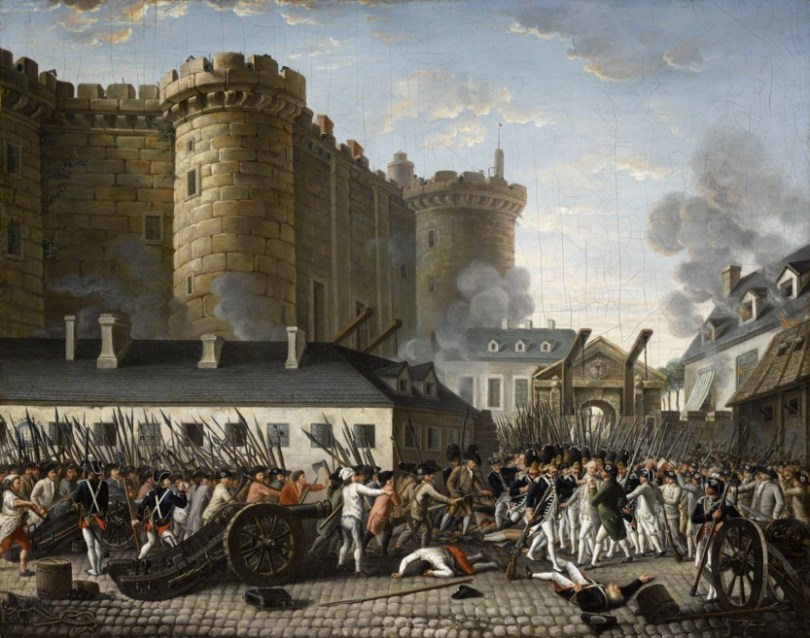
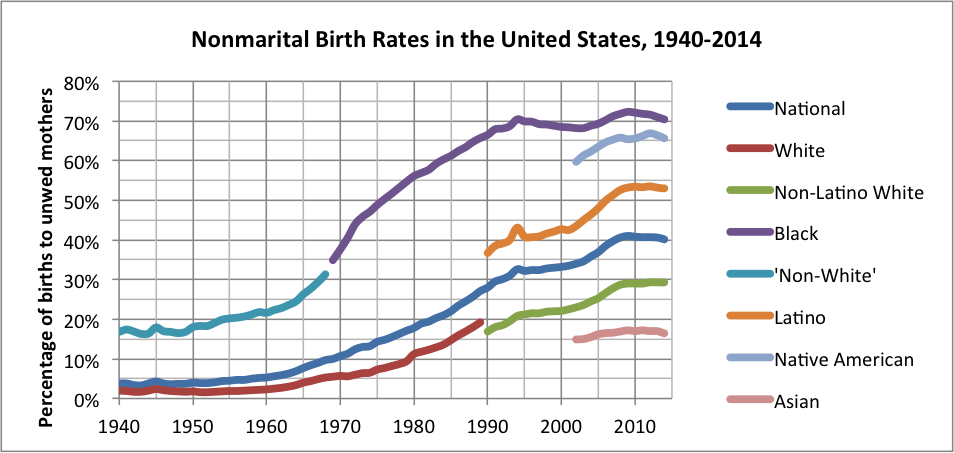



 The Plan For The Future