Jokers on Files.

Joking Jokers

In 2002, I began working as an Oracle database administrator at a government agency. Most people in the Netherlands know about the agency because it processes traffic fines. Therefore, it isn’t popular with the general public, just as the Internal Revenue Service isn’t. If someone asked who my employer was, I kept it vague and said the government or the Department of Justice. It didn’t take long before something went seriously wrong. On my second day on the job, one of the production systems crashed after running the batch jobs, leaving the database corrupt. In hindsight, that was a bit peculiar. After three days of searching, which included a weekend, I still hadn’t found the exact cause. When the operator restored the backup of the previous evening, which was still valid, and ran the batch jobs, the database became corrupt again. It was probably a software bug, so I advised restoring the backup from the previous evening and upgrading the database software to see if that would solve the issue. Instead, the IT director declared a crisis and set up a multidisciplinary task force to address it.

The head of the task force was a corpulent project leader who decided we should find the cause, which I hadn’t uncovered. I just wanted to fix the problem. Every day at 10 AM, there was a meeting to discuss the state of affairs. Every day, I proposed to upgrade the database software to see if it would help. And every day, my proposal was brushed aside. I would have done it myself, but I was a brand-new hire and didn’t have sufficient access rights. And the agency used VAX VMS, an unfamiliar operating system, so I couldn’t install software or restore backups myself. Two weeks later, after the experts had weighed in and after hiring a database corruption expert from Oracle, the cause remained elusive, and managers were getting desperate. Finally, they were willing to consider my suggestion. And it solved the problem. It was a harbinger of things yet to come. During the review, they grilled me for not being interested in researching the cause. I was not a team player and said solving a crisis was more important because it was a production system, so the users needed it to work. And the upgrade demonstrated that it was a software bug.

If you had prejudices about the government, my employer didn’t dispel them. You expect red tape, risk-avoidance, rule-following, and the like. It was all there. One department excelled. If you made the request incorrectly, they would do nothing, even when it was clear what they had to do. You couldn’t disturb them between 10 and 11 AM when they were discussing the work. They didn’t seem to do much, so what did they discuss for 1 hour a day? Some colleagues may remember my so-called crusade against bureaucracy. I often made jokes about bureaucracy and solved problems while ignoring red tape. Still, we perform our job effectively and efficiently, as traffic offenders would agree. And results matter most. Governments are bureaucratic because they implement rules.

Everywhere you go, some people work hard, while others take it easy. I have seen people doing little in corporations for profit as well. At my first project at Cap Volmac, we did nothing for months. Still, I have the impression that the pace of work in the government bureaucracy is, on average, slower than in the private sector. It is hard to put a number on it, but there is a difference. There is less pressure. Decisions take time and require more meetings. This is not a representative picture of the entire public sector. Police officers and teachers may experience stress. But most bureaucrats live calm lives. The hours you work for your employer are working hours. Cap Volmac required me to invest private time in education and corporate meetings. Finally, government employment is more secure.

When I came to work there, another database administrator, Dirk-Jan, a senior who had done several other jobs and hadn’t been a database administrator for long, was already there. After two months, Kees arrived, and from then on, we were three. Kees had a technical background. A few years later, Rene also joined the team. The agency also hired a security officer, a guy in a suit who soon began to make our work harder with unnecessary procedures. For instance, we had to lock up our Oracle manuals in a secure location after work and bring the keys to the porter’s lodge. But our manuals were public information like Windows manuals. Today, you can find this information on the Internet.

At the same time, the system that processed traffic fines had a superuser named after the system itself, with a password equal to the system’s name. Several other systems had the same issue, so the superuser and its password were the system’s name. I notified the security officer, but, being a true bureaucrat, he had more important things to do, such as attending meetings, inventing procedures, and preparing management reports. He added the issue to his list. But an issue like that called for immediate action. And so, I contacted a few senior programmers, and together we fixed that problem.

There were other issues with access rights as well. As they would say in the Professional Skills course, ‘There was room for improvement.’ If a new employee came in, the service desk made a ticket stating, ‘Create user account X as a copy of account Y,’ and sent it from one department to another. Usually, it took two weeks for the ticket to pass through all our departments, and system administrators made errors along the way. Hence, account X was rarely identical to account Y. If people switched departments or left, the defunct access rights were usually not deleted. Perhaps the audit department had figured this out, as our management soon launched a role-based access rights (RBAC) project.

RBAC works like so. You have a role in a department. In ordinary language, it is your job. For your job, you need access to an array of systems. Your job description determines which rights you need, for instance, to read specific data or change it. As a rule, employees should not receive more access rights than necessary to perform their tasks. RBAC is about the rights an employee in a specific job role needs. Business consultants came in and defined job roles and access requirements. A programmer then built an administrative database. However, the database didn’t connect to our systems, so there was no guarantee that the access rights in our systems matched the administration. And if you know how things fare in practice, you know that the administration would soon become stale and pointless. People are lazy, prone to errors, and forgetful. That would change once the administration and our systems are connected. If the administration was wrong, people couldn’t do their jobs properly, so it had to be accurate.

In 2004, I began building DBB, an account administration system, using Designer/2000, while keeping the bureaucrats out of the loop because they would likely stand in the way and make it harder for me. Only my manager and a few colleagues knew about it. DBB automated granting and revoking access rights in our systems, the RBAC way. It took me nine months, as I also had to do my regular work as a database administrator. But when I was ready to implement DBB on the production databases, bureaucrats became aware of what was happening and tried to block it. In their eyes, this was wildcat development. There had been no meetings, nor were there piles of reports to justify it. In early 2005, I introduced it sneakily with the help of the people from the service desk who wanted to use it. They installed the DBB client programmes on their personal computers. And I was a database administrator, so I could install anything I wanted on any database.

The results exceeded anyone’s expectations, including mine. The service desk created the accounts, so the tickets didn’t have to pass through all those departments. We could issue accounts in one day instead of two weeks. The service desk could reset passwords on the spot instead of relaying the request to a department, reducing the time to reset passwords from hours to seconds. And the access rights accurately reflected job roles. So, once DBB was operational, the opposition crumbled, and DBB became a regular application, even though not an official one, which was an essential distinction for bureaucrats. And so, we had RBAC fully implemented.

The DBB logo was a drawing by my wife. She had made it for another purpose. It features several jokers grinning at a set of file folders. To me, these folders symbolised bureaucracy. DBB joked with the bureaucrats, who considered it a rogue system. Supposedly, I was one of those jokers, so I made one of them my avatar on the Internet. DBB was my love child, just like Fokker once was Jürgen Schrempp’s, and for a while, I was overly attached to it. I ensured DBB could survive if I left my employer by producing design documents and manuals. I also built DBB in accordance with accepted Designer/2000 practices. We employed Designer/2000 programmers to maintain DBB. However, I hadn’t followed the proper procedures when building and implementing it, so it never became official. If something went wrong, it was not a mere incident, as would be the case with an official system, but a reason to replace DBB. That is bureaucratic reasoning at its finest. Something went wrong once, which allowed a high-ranking bureaucrat to block further development of DBB.

There have been two projects to replace DBB. In 2006, the first effort stalled because the planners had underestimated the complexity of the matter. They might have thought, ‘If one guy can do it, how difficult can it be?’ In 2016, a new project team realised it was pointless to replace DBB, as it was doing fine, while doing so would have been costly. The newer Java systems ran on Postgres databases and used web access. They did not use DBB. Our management planned to decommission the old Designer/2000 systems so DBB could retire by then. By 2024, DBB finally retired after nearly twenty years of service.

Bureaucrats have a unique way of doing things. In the case of serious incidents, they began filling out a ticket in the incident administration and discussing who should do what, while I pursued the issue. And sometimes, I had fixed it before others had finished filling in their forms. And I didn’t bother filling in forms. The system for which uptime was the most critical went down the most often. The solution was to reboot the system, but the operators hesitated and waited for a management decision. I said, ‘Just do it!’ And then they did. If it went wrong, they could blame me. I didn’t have the rank to make the decision for them and would have received a grilling if it went badly. But time was of the essence. The database was on an Oracle RAC cluster, a cutting-edge technology that had yet to mature. And that was so for a reason. It had to be operational at all times.

American software corporations like Oracle usually launch their products fast and aggressively market them. If customers buy them, they use the sales proceeds to improve these products and make them work properly. That gave American software corporations the lead over their European counterparts because Europeans believed you needed a good product before you could sell it. That was quite naive. Long before their product was good enough, the Americans owned the market and had the budget to make it better than the European product. In this way, Americans discarded failed products without investing much in them, saving costs. So, Oracle RAC on VAX VMS was not a great idea because RAC was in its infancy. At the same time, VMS was an exotic operating system with few customers, making fixing RAC bugs on VAX VMS a low priority for Oracle.

Not surprisingly, the system regularly malfunctioned, preventing users from accessing it. RAC is a cluster of machines accessing the same database. The idea behind RAC was that if one of those machines crashed, the others would remain operational and the database would remain accessible. In reality, the machines often went down in unison because of communication errors caused by the RAC software. And because the whole point of Oracle RAC was to have less downtime, you could do better without it. The crash corrupted the machine’s memory, and looking for the cause was pointless because it was a bug in Oracle software for which there was no fix. The only thing we could do was reboot these machines, which meant shutting them down and restarting them. That would wipe the memory clean, and the system would work again. I figured that out after one time, so the next time, when the symptoms were the same, I didn’t hesitate. The system was critical. It had to be up always. That was why it was our only RAC system. Otherwise, the police might not identify criminals. It was a database with the records of criminals dubbed Reference Index Persons, and the Dutch acronym was VIP, so the Very Important Persons for the Department of Justice.

Bureaucrats often seem to value rules over outcomes, which made me wonder what they were thinking. It could be something like, ‘If I mess things up, no one can blame me if I stick to the rulebook. But if I do the right thing but do not follow procedure and something goes wrong, my job is on the line.’ If something goes wrong, the government hires consultants to investigate the issue and propose changes to the procedures to prevent it from happening again. Consultants thus write piles of reports and make a lot of money on government contracts. Sadly, the next time, the situation may be different, and then it goes wrong again. Over time, the proliferating rules grow unwieldy.

It might make you think it is better to do away with procedures, but that is not a good idea. The proliferation of rules reflects the increasing complexity of society. It is not a problem that you should see in isolation. When a large apartment building burns out, you see once again why there are strict building regulations concerning these skyscrapers. If you aim for fewer regulations, you build these things in the first place. The government’s task is to provide and enforce these rules. There may be room for improvement. It begins with not creating the problem that gave rise to the regulation. Our office processes traffic fines. If we stopped driving cars, most of our work would be redundant. And perhaps, we should give people more responsibilities, but that means accepting that things sometimes go wrong. The result may be that fewer things go wrong.

DBB not only joked with the bureaucrats, but also with me. In June 2010, I received a highly unusual request from a system administrator to manually drop a user account. That hadn’t happened for several years. DBB usually handled that, but it failed to drop this particular account for an unknown reason. The username was ELVELVEN. If you read that aloud, you say eleven elevens in Dutch, referencing the 11:11 time-prompt phenomenon that had once haunted me for a while. Usernames consisted of the first one or two characters of the employee’s first name, followed by the employee’s last name. In this case, the user’s last name was Velven. I don’t remember the first name, but it wasn’t Elvis. To me, 11:11 signals a combination of two related unlikely events. And indeed, the joke had a part two, and it was even more peculiar.

In 2014, during testing of an improvement to DBB, the test indicated that an unauthorised account had infiltrated our systems. The username was the first character of the first name, followed by the last name of the Lady from the Dormitory. Had She been employed by us, this would have been Her username. Her name isn’t common, so this was unnerving, especially since it was the only username that popped up in this list of sneakily inserted accounts. It couldn’t be Her, or could it? It turned out that a guy with the same last name as Hers had worked for us. His first name began with an A as well. And the account wasn’t illegal. I had mixed data from two different dates in the test, which made it appear that this account had sneaked in illegally. But imagine the odds of only this account popping up on that list.

In 2005, after completing DBB, my manager wanted to give me a promotion, and he only wanted to give it to me. My colleague Kees was a tech genius, and he set up the RAC system while I made DBB, so I said he was better than me. My manager responded with the prophetic words, ‘You have the right vision and make it happen despite the opposition. That is far more important than technical skills.’ DBB solved pressing problems using proven technology, while the RAC system only created problems. We used to reduce system downtime, but it produced system crashes, resulting in more downtime. Somehow, I had become his favourite, and that wasn’t because he was such a good manager. He seemed the type of career guy who never stays long in one job. You know the type. He says he will clean up the mess his predecessor left behind and then hares off after a year or two towards his next challenge, claiming he has put things on track, only for the next manager to come in and claim he will clean up the mess.

He never put his promise in writing, despite my repeatedly requesting that he do so. Just before he left, I pressed him again. As the promotion had not yet come through, he wrote that there would only be a minor wage increase, then filed it with the human resources department for processing. A few weeks later, they summoned me to the human resources department. A personnel officer had raised a technicality. It wasn’t against the rules, but against their policies. And so, I couldn’t even keep the minor wage increase. That was a breach of contract, plain and simple, but to a bureaucrat like a personnel officer, only rules and procedures count. It would have been possible to fix this within the rules, but there was also a thing called policy, so they didn’t. My previous manager had already left, and they blamed him for not following proper procedure. His temporary replacement didn’t care, as he was also on his way to another job. After putting a lot of effort into getting it in writing and with my manager already fobbing me off with a minor wage increase, they gave me nothing. I was angry and walked out of the meeting.

After arriving home, my wife told me that a freelance agency had offered me a job. It was the first offer of this kind in years and the first time since working for the CJIB. I was already considering leaving. That made me make a rash decision and resign. In hindsight, it was a noteworthy coincidence that the freelance agency had called me on this particular day. It didn’t take long before I did get second thoughts. Out of the blue, a strong feeling emerged that the decision was wrong. I can rationalise it by saying there weren’t many jobs for database administrators near home. The issues with my son didn’t allow me to work far away from home, while my physical condition didn’t allow for long travels. That may all be true, but these considerations were not the real reason. And I had done freelance work before, so it was not fear of being self-employed. And a government job didn’t seem right for me. But the feeling grew so strong that there was no choice but to reverse course and try to undo my resignation.

Pride is a poor counsel, so I reversed course. There was a new manager, Geert, and he accepted my change of mind. He pledged to do his best to restore my confidence in my employer. He seemed trustworthy, but actions matter more than words. A year later, he promoted Kees, but not me. Due to a bureaucratic technicality, there was only one position. And perhaps also because Kees was his favourite. That didn’t restore my confidence, so I began to distrust him. Geert was still planning to promote me. He gave me financial compensation, so the situation didn’t result in a financial loss. And after several years of bureaucratic wrangling, the promotion finally came through.

Latest revision: 2 December 2025

Slums in Jakarta

Extreme living

Overdoing things

In 1994, Princess, a friend from the United States, visited me in Groningen, where I lived at the time. Before we went out to the supermarket in the local mall, I took a shopping bag with me. Princess remarked on the shopping bag as if it were something peculiar. You could get a new one at the supermarket, she said. I answered that it was wasteful to fetch a new bag from the shop. She then called me an environmental extremist. I had no car and travelled by train, so that might have made her think this. I already believed that Americans are wasteful consumers, so her remark confirmed my prejudice. Taking a shopping bag with you is a minor inconvenience, but where does it stop? In other words, what will life be like after the apocalypse?

Perhaps Princess was right. Most of my clothes are over twenty years old. Some come from a thrift shop. There are holes in my underwear. My excuse is that no one sees my underwear. Sometimes I take a bath when there is plenty of solar and wind energy. I have an electric heater to heat the water. When the sun doesn’t shine, I sometimes warm up a litre of water and take a washcloth to wash myself. Compared to taking a shower, it saves over 95% in energy and water. Now and then, I succumb to temptation and take a shower or a bath. And I can’t help but eat scraps others leave behind, or when my son still lived with us, use paper towels he had discarded after hardly using them.

Waste and spillage unnerve me. I had a poorly insulated old home. It caused distress, making me anxiously oversee my natural gas consumption. I could easily pay the bill, so it wasn’t that. Insulating my house and only heating the living room resolved my emotional issues. As a side benefit, I reduced my energy bill by 70%. Still, I can’t stop brooding over new ways to lower my energy consumption even further. I do office work and can work at 17 degrees Celsius with warm clothes and gloves. My mother once said that I overdo things. Buying second-hand is what poor people do. My parents were raised in poverty and had worked hard, so they could buy new things and enjoy luxuries.

I don’t want to upset others, so I try to act inconspicuously. Everyone should live a simple life, but for a long time, my argument was, ‘Who am I to tell others what to do?’ Later, the excuse became, ‘Who is going to believe me?’ It is not always possible to guess what disturbs others. Or I might forget. Once, I wore worn-out clothes to a family party. My father was not amused. That was an oversight. My father thinks it is disrespectful to the hosts. They don’t take offence, and I don’t take offence at my family’s excessive consumption. That has been their upbringing. They must know they turn our planet into a wasteland. But everyone else lives the good life, so what is the point?

What is normal?

Who is an extremist depends on what we consider normal. Today, we think it is normal to live at the expense of poor people and future generations. It is normal to aspire to a luxury yacht and extravagant living. You may not be able to afford it, but you can dream of it. That is the American Dream. My life is rather ordinary, albeit with a few luxuries. I don’t engage in extreme measures like turning off the heating or getting rid of my car. I might have done so if I had lived alone, but my wife doesn’t want it. It is not enough, but there is no point in scrapping comfort if you are the only one doing it. What is the point of living without comfort if others go on driving SUVs and taking holidays by aeroplane?

The only way to do it is to do it together. Wasteful lifestyles can’t remain the norm much longer, so if we don’t change, disaster is likely. We can manage. My great-grandparents hardly left the village they lived in. They had no car, no television, and probably had never been to Germany. That seems like extreme living now. But it is not as hard as it appears. The 80/20 rule states that, for many outcomes, roughly 80% of the consequences come from 20% of the causes. It means that for those who aren’t poor, an 80% reduction in consumption would reduce their well-being by 20%.

The Netherlands has a mild climate. Winters have become significantly milder in recent decades, so there is hardly any frost. Cuts in energy use will cause discomfort but little suffering. In many other locations, the situation is quite different. I once read a story of a guy in rural Ohio who had lived off the grid for one winter and shared his experience on a message board. He woke up to a harsh reality. Things freeze and break down. You can easily get injured and incapacitated. He will not do it again. And he couldn’t do without a car. More experienced people gave him tips. One commenter suggested that he should move to a warmer location. Alaska has its version of the 15-minute city, Whittier, where all 200 residents live in one building, complete with necessities like a shop and a church.

Time is money or convenience

In 2002, when I was unemployed for a few months, I tried my hand at an allotment garden. It was a lot of work. It got me a few vegetables I could buy cheaply at the supermarket. Once I had a job again, I gave it up. Not so long ago, most people grew their food because they were poor. They had no other job, so they had the time. There were no agricultural machines, so it was manual labour. Today, home-grown food is uneconomical. Working 1 hour at the office might buy the food that takes 40 hours of work if you grow it yourself. It is an economic calculation. If I could earn more by producing food than working at the office, I would quit my job and grow food. That is why few people grow their own food.

You can save money by cooking your own meals instead of eating out or ordering takeout. Alternatively, you could work more, and if you make more money than you save by cooking, eating out is economically optimal. Usually, you don’t make these calculations. I never go to the canteen at work. I spread my bread before going to work instead. Many people take the convenience to save time, often because they have no time due to their work commitments. They say that time is money. So, time equates to money or convenience. People who work in restaurants have jobs that wouldn’t exist if we cooked our own food. Many of these jobs are bullshit jobs.

The consumerist economy is about squandering resources and energy to make money. Advertisements tell us how easy a product is and how much time or trouble it saves us. They don’t tell us how many hours we work for it. Eating out is convenient, but you have to work longer hours to pay for it. You could work less when you cook your meals yourself. If you forego ease, you can have more time. In the past, people had time to grow their food or mend their clothes. That is a lot of work, but food and clothes were more expensive, or incomes were lower. Buying new clothes meant more work than mending the old ones, because they had to work more hours to afford them. It was economically efficient to mend clothes and grow food because they were poor.

Wealth and poverty

My closet still features clothes from forty years ago. My mother bought them when I was a teenager. Most clothes don’t last that long. The fashion industry is the second-largest polluter. It generates, among others, mountains of waste, including landfills of unsold clothes, 20% of the world’s water pollution, and 10% of global carbon emissions. The economy is about selling more stuff to generate profits. The latest trend is fast fashion, so clothes that fall apart after you have worn them a few times. Your clothes won’t last a season, and new ones are cheap, so you can always stay fashionable.

The world’s largest waste producer, China, is making new clothes affordable for everyone, including the poorest. New clothes from China have become cheaper than second-hand from Europe. Africans can now buy new clothes. And so, Africa is now finally becoming economically developed, thus consumerist and wasteful like the rest of the world. Today, many Africans have newer clothes than I have.

Who is rich and who is poor? To me, wealth is how long you can survive on your capital. So, if your expenses halve, and your capital remains the same, you are twice as rich. The wealth of humanity is how long we can sustain our lifestyles. At present, human consumption levels are unsustainable because they exceed the planet’s capacity. If we could consider this planet ours, which we can’t, we are eating up our capital. We are poor but could be rich and live off the interest of our capital if we reduce our consumption to sustainable levels. And if you have a capitalist spirit like me, and think ahead, you are willing to save and invest in the future.

Living without a car

Many car owners work one day per week to pay for their car. Using public transport may take longer, but without a car, you can skip one working day each week or retire earlier. And you can think further. Why should you make that trip? In the past, people hardly ever left their village. If your aunt celebrated her birthday and lived thirty kilometres away, you didn’t go. And no one was offended. You didn’t go anywhere. There were festivals in your village that you could attend. Once or twice a year, there was some entertainment. For the rest of the time, you had to entertain yourself or bore yourself. That is extreme living.

For many years, I didn’t have a car, despite having a job that required one. I lived in a remote city. My job was there, or at least 200 kilometres from home, so I had to stay in a hotel. In that case, I took a train to a station nearby and parked my bicycle there. In either case, I went to my work by bike, either from my home or from the hotel. Using public transport requires planning, extra time, and sometimes considerable sacrifice. I remember taking a thirty-minute walk through the snow to reach an office outside the city centre, as buses only went there during rush hour. And then there was all that waiting at train stations. It saved me money, allowing me to buy a house. After all, time is money.

After I met my wife, we could borrow her mother’s car if we needed one, or we rented one. When her mother’s car fell apart in 2003, I bought my own, a second-hand 1998 Opel Astra, which has now survived over 320,000 kilometres. But I still go to work by public transport. And I use public transport for trips, if it is not too much trouble. Later, I began thinking about ways to reduce energy consumption. One way was combining trips. So, if I visited my sister, I also visited my father. That saved 200 kilometres of driving. We went to the forest nearly weekly, a 60-kilometre round trip to see some trees. There are parks near home. And so, we walk in these parks instead.

Turning down the heating

My grandparents had no central heating. It was cold inside their home, and it could even freeze. They warmed themselves at the stove in the living room, the only warm place. Central heating is a luxury we can do without. In 2022, Vlad the Empire Builder decided to launch a special military operation in Ukraine, leading to the termination of cheap Russian gas supplies to Europe. Natural gas prices skyrocketed for a while. To save energy, many people resorted to extreme measures, such as turning down the heating or only heating the living room. Some even turned off the heating entirely and put on a warm vest or a coat. You may not want to go that far, but heating only the living room makes sense.

Newspapers in the Netherlands featured a series about people who cut their energy use. Take, for example, Adri from Yerseke and his wife, who heat the living room of their 1906 home with a modern AC unit. They have insulated the walls, installed high-efficiency windows, and installed solar panels on the property. They consume 2,400 kWh of electricity and generate 3,000 kWh per year. Their natural gas use is nearly zero, as they shower only occasionally and wash themselves with a washcloth. Switching from central heating to an AC in the living room is probably what generates the most savings.

In our living room, the winter temperature is 19°C. I also made some changes in recent years, such as insulating poorly isolated rooms. An AC is now the primary source of heating. Only if the AC can’t maintain the temperature does the central heating come into play. As a result, the remainder of the house remains barely heated, which is where most of the cost savings come from. I work in a small room in the attic with an electric heater. When working there in the winter, I may wear warm clothes and gloves, and put an electric pillow on my lap. When you choose to do these things, it feels much better than when you must because you can’t afford the energy bill. But it is how we should live.

Growing your own food or local farming

Growing food is a lot of work. I had an allotment garden for one season. Sneek had clay soil, which is sturdy, thus not easy to till. The cost savings were negligible, probably less than the plot’s rent. Vegetables and potatoes in the supermarket are affordable, so the allotment garden wasn’t worth the hassle. I suspect we will live simpler lives in the future, yet I don’t foresee 90% of the population working in agriculture, as was the case in the Middle Ages. In wealthy countries, that number might rise, but not above 10% I suspect.

We will still have much more energy than we had for most of history. We will discontinue unnecessary economic activities and allocate a greater share of our resources to agriculture. And so, agriculture will probably remain largely mechanised and carried out by professional farmers. Today, farmers sell their produce to national and even global markets. European wine ends up in the United States, and California wine ends up in Europe. That is resource inefficient.

High energy prices may revive diversified farming for local and regional markets, as well as growing crops in their respective seasons. That was also the case in the past. Today, we have supermarkets. Selling local products may require a separate distribution channel, such as a person collecting produce from farmers and selling it to local customers. Several foods require centralised industrial processing for safety reasons, but a wide range of foodstuffs is suitable for local production and consumption.

Not throwing away

Recycling costs energy and doesn’t fully recover all the waste. So, what about not throwing things away in the first place? You can recycle glass by dumping it in a glass container, but turning it into new glass costs energy. And there is so much packaging. You go to a shop, buy a bottle, and throw away the old one when it is empty. That is normal. An outlandish suggestion is to have a tank in the supermarket where we can refill our reusable bottles. And we could bring bags with us for bread and fruit.

There are some considerations. It might not be a good idea for perishable foodstuffs. It is also advisable not to mix skin care products with detergents. It is best to use separate bottles designed for each substance to prevent accidental mixing. The hardest part is that we have to bring these bottles and bags to the shop. We have to plan and take the bottles and bags with us. That is an inconvenience that modern consumers might consider outrageous.

Finally, there are a few extreme ideas that might get you out of your comfort zone. You can save energy and water by showering or bathing less frequently and using a washcloth instead of a shower or a bath. You warm a bit of water, add some soap, and there you are. Some people change clothes daily. Once or twice a week can be enough in many cases. You can also switch to less frequent underwear changes, such as every other day instead of daily. Washing your clothes less frequently saves energy and extends their lifespan.

Latest revision: 29 November 2025

1. Welcome To Whittier, Alaska, A Community Under One Roof. NPR (2015).

Life in Vragender in 1949

From Community To Society

The time we live in

We can’t choose the time we live in, but when and where we live determines our options. If you lived in Germany in 1620, you couldn’t go on vacation by aeroplane to Spain, watch television, or post about your life on Instagram. And you didn’t know what happened in China. Look at all the choices we have today. There are shampoos for every type of hair and from several brands. And that is just shampoo. In 1620, you washed your hair with water or not at all. Today, countless products are on the market to cater for every possible desire. Everything has been made easy. But despite the infinite options and comfort, we have no choice but to live in a civilisation heading for collapse.

My life has always been comfortable. We had a car, television and central heating. But life hasn’t always been like that. My parents had a very different childhood. It was the life most people led since time immemorial. My grandparents were subsistence farmers. They grew most of their crops themselves. They had a few animals they could slaughter. The winters were cold. There was only one stove. At first, they had no electricity, telephone, car, radio or television. And that was just two decades before I was born. My son grew up with computers, the Internet and smartphones.

My father loves to talk about the old times. Before he went to school, he milked the cows. There were lots of chores. My mother’s childhood had also been like that, but she rarely discussed it. My mother’s family was reticent, while my father’s family was outgoing. Their lives completely changed in two decades. Not so long ago, most people lived in villages and worked with their hands using their judgment. Nowadays, many of us live in cities, sitting behind screens, watching graphs and checking parameters. Our lives are very different from those of our grandparents. People in the past depended on family and community. Today, many of us rely on the market and the state.

My father’s life

My father grew up on a remote farm near Vragender, a small village in a rural area. They had no machines and relied on horses to do the heavy work. My mother grew up on an even more remote farm near Beltrum in the same region. They were Catholics. My mother had three sisters and three brothers. My father had two brothers and two sisters. My parents’ parents grew a few crops. They had a horse, a few cows, pigs, and chickens. Neighbours were important. If a farmer fell ill, they would step in and run the farm. Shortly after World War II, my father’s father erected a windmill with batteries. Electricity from the grid came in 1952.

My father recalled that the local shop owner came by and showed them a radio. My grandfather didn’t like to spend money on a luxury item, so the shop owner said he could try the radio a month for free. After a month, my grandmother and aunt discovered a radio show and wanted to keep it. And so, they pressed my grandfather into buying a radio. In the same fashion, a television came in a decade later. My father recalled when he saw a car for the first time. He was biking with his father and said, ‘When I grow up I want to have a car too.’ My grandfather tried to teach him some realism, ‘You will never own a car. Only the physician, the notary and the mayor have cars.’

In the 1960s, the Netherlands had become wealthy. I was born in 1968 and have never known poverty. It may be easy to forget that most people in history have been poor and that many people today still are. But my father often reminded me of how his life was. Our comfortable lives come from hard work. We shouldn’t take it for granted. My father worked long hours as a manager of a road construction company. ‘To give us a good life,’ he said. He truly loved his job.

My father is an outdoorsman and a hunter, and he knows how to slaughter animals. He is well aware of what happens in nature, such as the struggle for survival in the animal kingdom. Most people nowadays go to the supermarket to buy their food. At best, they have a vague notion of farmers, crops, and livestock. My father grew up on a farm, so he finds it hard to accept that city people are concerned about farm animals’ living conditions. ‘They know nothing about farm life or nature,’ he says.

My father is politically conservative, innovation-minded, and interested in improving things and new technologies. He often talks about his career at the road construction corporation, where he had worked most of his life. He started as a foreman, later became regional manager, and ended up on the board. He worked hard to get ahead. He studied while others watched television.

As a manager, he was keen on learning the newest management techniques from Japan, such as giving people in the workplace more responsibility to manage their affairs. He believed in progress. When the first home computers became available, he bought one for me. ‘Computers will be the future, so you must learn about them,’ he told me in 1984.

My father worked hard. But what good did it bring? Resources are running out because we made poor choices like building roads and driving cars. My father sees other problems. There are too many regulations, frauds with public funds, immigrants, big corporations not paying taxes, dictators starting wars, people obstructing building projects with litigation, and greedy managers. Somehow, things didn’t get better. But why? With technological change came changes in how we live. Our forbears lived in communities. Today, we live in societies.

Modernisation

Modernisation is not primarily about technological change. It is about the dramatic changes in how we live and organise ourselves. You can order a pizza with your smartphone. No one did that a century ago. Not cooking your meal is a lifestyle change. It requires organisation. The ingredients must be present at the pizza restaurant, and employees must be present at opening hours to prepare and deliver the meals. Everything has to work like clockwork.

Thus, a crucial change was living by the clock. Our forebears didn’t have clocks, agendas, or appointments. It began with the Industrial Revolution. Operating a factory requires workers to be present when the factory is in operation. Employers and employees agreed on working hours. Time became money. Being late was costly. Trains had to run on schedule to bring people to work and appointments.

Another crucial change was the transition from communities to societies. Not long ago, most people lived in villages with their families and didn’t work for corporations. Their social life happened within the family and the community. The Industrial Revolution changed that. Large-scale production requires large markets, the free movement of labour and capital, and communication between strangers.

People who had previously lived in villages moved to towns to work in factories. Nation-states and national languages replaced local governments and local dialects. Nation-states set up schools to turn people into citizens who could play their role in a larger-scale society. Individuals learned to identify with nation-states rather than villages. It changed how people lived and looked at themselves,

Consider a young peasant, Hans, who grew up in a small village in Saxony. Hans lived a fixed life in the village. He lived in the same house as his parents and grandparents. He was engaged to a girl whom his parents found acceptable. The local priest had baptised him. And he planned to continue working on the same plot of land as his father. Hans never asked himself, ‘Who am I?’ The people around him already had answered that question for him. Then he heard that opportunities were opening up in the rapidly industrialising Ruhr valley, so he travelled to Düsseldorf to get a job in a steel factory there.

Hans is now living in a dormitory with hundreds of young men like himself, coming from all over northwestern Germany. People speak different dialects. Some of the people he meets are not German at all but Dutch or French. He is no longer under the thumb of his parents and local priest and finds people with different religious affiliations than those in his village. He is still committed to marrying his fiancée, but some local women have caught his interest. He feels a bracing sense of freedom in his life.

At the same time, Hans is troubled. Back in his village, friends and relatives surrounded him. They knew him and would support him during sickness or a poor harvest. He does not have that kind of certainty about the new friends and acquaintances he has made and is wondering if his new employer, a big corporation, will look after his interests. He heard that Communist agitators were pushing to create a trade union in his factory, but he has heard bad things about them and does not trust them either. His part of Germany had become part of a large empire, of which he can feel proud, but it is barrelling forward to an uncertain future. He feels lonely, disconnected and nostalgic for his village, but for the first time, Hans can choose how to live his life.

Hans’ story characterises the transition from community to society. Industrialisation made millions of Europeans move from their villages to the cities in the nineteenth and twentieth centuries. Today, the same happens in countries like India and China. Hans didn’t think, ‘Who am I?’ Nevertheless, his view of himself changed. He had more choices than in the village. Did he become happier? That remains unclear. In areas where there is little industrialisation, cities also grew. In 1800, only 7% of the world’s population lived in cities. In 2023, it was nearly 60%.

Once traditional values become optional, you experience freedom. Or you may feel confusion and a longing for the clarity of the tradition once provided. Society, rather than your community, now answers the question of who you are and what group you belong to. Hans was no longer a villager in Saxony who was his father’s son and would inherit his farm, but a Protestant from Germany. Nationality, ideology and religion came to define us.

Twenty-first-century consumerist societies have a variety of identity groups, and the Internet makes it easier for like-minded people to find each other. Identity has become a choice like buying products in a supermarket. You can identify yourself as a Madonna fan, a supporter of a soccer club, or a prepper. Marketers use these identities to sell us their merchandise. In the case of preppers, canned foods to survive the coming apocalypse.

Larger scale

Societies are communities on a larger scale. Communities provide solidarity between individuals who know each other. In a community, there is social control. Shared values keep a community together. If the community is supportive, others help you, and you come to their aid. Not all communities are like that. And even if you live in a supportive community, life is not great if you don’t fit in. So we shouldn’t have romantic views about communities. They are a way of organising like states and markets, with benefits and drawbacks.

What was informal as a tacit agreement in communities became formalised as law in societies because people don’t know each other personally. Instead of neighbours helping each other, societies provide welfare. Bureaucratic controls replace social controls. If adequately applied, bureaucratic rules are less arbitrary because the support you get from your community may depend on the cohesion within your community and how much others like you. On the other hand, some people misuse bureaucratic systems and cheat on taxes and benefits.

The people living in a society must identify themselves with it and share its values. Otherwise, they might commit acts of violence, engage in crime, cheat on taxes, or misuse welfare. It helps when everyone identifies with that society. Societies coincide with nation-states, so nationalism has often been a way to achieve that. Sharing a culture and a language creates a common identity. A strong society with responsible citizens makes a difference because markets and governments can’t create agreeable societies alone. Sharing a culture and a language helps, but it isn’t required. A shared ideology or religion can achieve the same.

We will not gracefully return to villages and subsistence farming when civilisation breaks down. Communities have given way to societies where people rely on markets and governments rather than neighbours and family. They go to the supermarket for groceries and don’t grow food themselves, nor do they make or mend their clothes. They expect to buy what they need on the market and the government to care for them when they can’t. They won’t survive an electricity failure that lasts more than a month. What drove us into this corner? It is competition and the benefit of scale. We can’t compete in the market without specialising and innovating, and the promise of wealth lures us into leaving communities to enter societies. And so, lifestyles have entirely changed. And it may happen again in the coming decades.

Latest revision: 21 August 2024

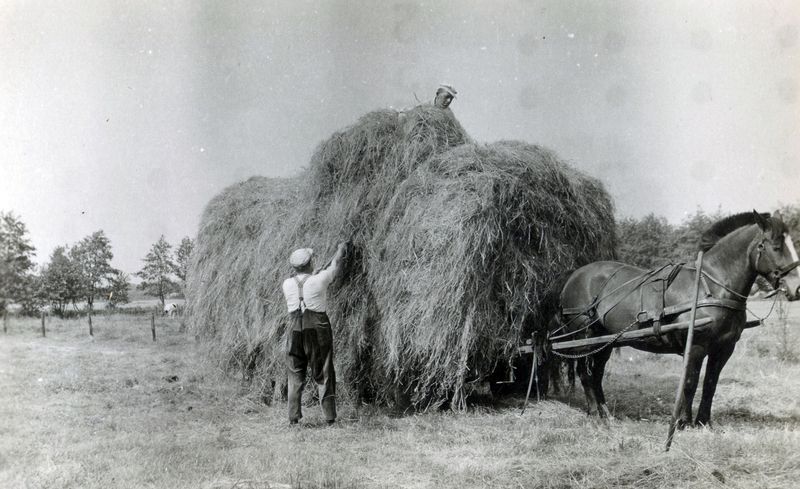
Featured image: Picture from Vragender where my father came from (1949). http://www.oudvragender.nl.

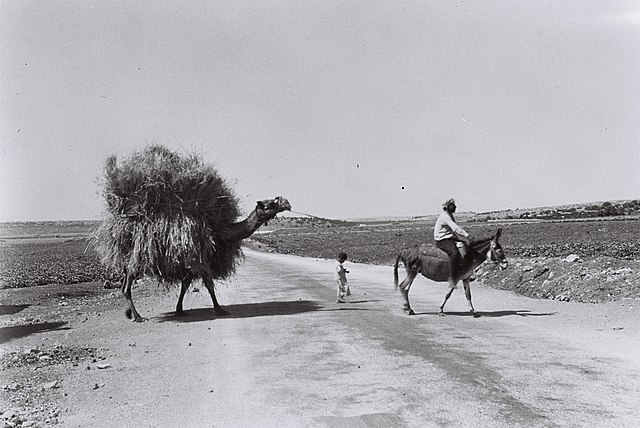
Arab farmer taking straw to his farm. Public domain.

Clutching at a straw

I read The Limits of Growth in my late teens. Perhaps, I was twenty already. I was young and hoped to live for another sixty years or so. And suddenly, a computer told me that I would live to see the end. The evidence and the logic were convincing. For a long time, I had hardly thought about the impending doom. As a child, I sometimes feared the future when hearing the disturbing song Vluchten Kan Niet Meer or Fleeing Is No Longer Possible on the radio. It unnerved me profoundly as it painted a dismal time ahead where nature would be gone. But that faded once I went to secondary school. After finishing my studies, I became an environmentalist and joined a local Friends of the Earth group in Groningen in 1993.

Friends of the Earth is an international environmental organisation known in the Netherlands as Mileudefensie. They had local groups of activists, most notably in student towns like Groningen. The organisation researches environmental issues and tries to convince people they should change their lifestyles. Friends of the Earth also lobbies with politicians and pressures corporations. Our group was a hodgepodge of students, people with a job, unemployed, activists and ordinary people led by a woman in her thirties, who acted as an Akela at the boy scouts. A 22-year-old student was her boyfriend.

We were not militant like Greenpeace, but sometimes we protested. One day we blocked the entrance of Groningen Airport to protest against the government subsidies for the airport. The police came and told us to leave, which we did. I then concluded that activism would not help. We will not give up our comfortable lifestyles and vote out politicians if they are serious about solutions. And businesses will go bankrupt if they do more to save the environment than others. Their products would be more expensive, and we wouldn’t buy them. And so there were underlying economic and political issues to address. We organised ourselves around themes, for instance, vegetarianism, air pollution, and economic issues. And these caught my interest.

We were short of money, but that changed when I became the treasurer. I took measures to make expenses match income, but I also had some luck. Every year, we obtained a small grant of 2,500 guilders from both the Groningen province and the Groningen municipality. But when I became treasurer, the provincial administration had just denied the allowance we had received the previous years. And so I wrote an appeal to the Appeals Commission. I then went to the Provincial House to discuss the issue with the official responsible for the grant. He explained that it was because we had been late filing our request, and the money jar was already empty. And so, I asked him whether there was any point to the appeal. He said no. It was a done deal. Then I received an invitation for a hearing at the Appeals Commission. I decided not to waste my time by going there, so a commissioner called me that evening, asking me why I hadn’t shown up. And I told him. That probably touched a nerve, as I gave him the impression that no one took the Appeals Commission seriously. And so, our appeal was granted, and we received the subsidy. As I had made a budget that did not anticipate this money and had implemented budgetary discipline, we ended up with income exceeding expenses.

Once over a cliff, a cartoon character can only clutch at a straw. And only in animation pictures the straw holds. The Dutch saying clutching to a straw means grasping to your last hope. On economic issues, our local group worked together with Strohalm, or more precisely, Rinke. He lived in Groningen and was actively engaged in Strohalm and their ideology. As I remember, he was on social benefits, and working for Strohalm and Friends of the Earth was his job. He was serious about it and worked hard. The meaning of the Dutch word strohalm is straw. According to Strohalm, the economy must grow because of interest, and that’s destroying our planet. It is ‘grow-or-die’ because interest rates need to be positive. Interest charges also cause escalating debts, poverty and financial instability. And in the end, the scheme will collapse because the interest adds to the principal until infinity. Any solution begins with ending that, they believed. And as you may have inferred already, I was into sound accounting, so this made me think. Strohalm aimed to ban interest and charge a fee on money, as Silvio Gesell had proposed. You didn’t have to pay the fee on money lent. In this way, it could be attractive to lend money without interest.

In those days, Strohalm started a LETS (Local Exchange Trading System) in Groningen. We exchanged goods and services using fictitious currency. We had a camp to train our persuading skills as environmentalists. Rinke was one of the organisers. He praised me several times and called me an example for others. That was not because of my social skills but because I knew what other people thought and how they would react. My parents and some friends frowned upon me joining the environmentalist movement.

I soon realised that there were serious issues. If you can receive interest elsewhere then why would you lend out money without interest? And if you can borrow money at an interest rate of zero, you would borrow as much as you can and put it in a bank account at interest. Therefore, interest-free money with a holding tax would not work. Only, that wasn’t particularly satisfactory. If you accept doom then you might as well commit suicide. If interest is the root of many social and environmental problems, and can destroy human civilisation, you should make it work. And perhaps it could work. During the Great Depression, it had been tried in a small Austrian village and it was a stunning success.

I am concerned about the planet. For years, I used public transport. And I still do it for work. But at some point, I realised it was pointless. More and more people started driving SUVs. They didn’t care about the planet. So if I saved petrol by taking a train, there was only more for those people. It didn’t matter what I did. A car makes your life comfortable, and I didn’t aspire to higher moral standards than others. So, I bought a car in 2003.

In 1998, I became a freelance IT specialist. I worked for a small bureau named Betamax, led by Martien, a retired manager. I made lots of money, so I had some capital to invest. My first investments were small and unprofitable, as I believed that profits matter. At the time, loss-making internet startups did very well in the stock market, while profitable corporations did poorly. But I had trouble understanding it. And so I thought I had to stay informed about the financial markets. In 2000, I joined the investment message board Iex.nl. At the time, I still said occasionally, ‘With SuperBart,’ when taking up the phone. That was fun and it sometimes caused hilarious moments, for instance, once I expected a call from Ingrid, but it turned out to be Martien. And so, I chose this name as my avatar.

Later I changed my avatar into niphtrique after someone noted that SuperBart sounded arrogant. And since then, I never took up the phone anymore saying, ‘With SuperBart.’ I didn’t need that to feel better anymore. A strange thing about avatars is that you somehow become this person, SuperBart, on the Internet because people do not know you. And so, I introduced a few other avatars to be someone else and have some fun. Most avatars didn’t last long, except dikkevettebeer, or plumpy fat bear, who believed the stock market would crash to zero and the gold price would rise to infinity.

A colourful investment fund manager, Michael Kraland, ran the message board. He also wrote commentaries about his investments. At the time, he rode the hype of the internet and telecom bubbles. His strategy was risky and not sound advice to inexperienced investors. And because he was a bit of a boaster, he received nasty negative comments on the message board, including unproven accusations of wrongdoing. And perhaps also because he was a Jew, which might not be accidental, as he worked in finance. And even though, as far as I know, he never did anything illegal, I nevertheless found him a dubious character.

After some time, a day trader named Cees joined the message board and began sharing conspiracy theories with us. He found them on US message boards and websites. If the markets were about to collapse, a secret group called Plunge Protection Team would come to the rescue. A stock market crash could undermine confidence in the financial system run by Wall Street, so they didn’t allow that to happen. Many readers first ridiculed Cees. But after the internet bubble had popped, and even more so after 9/11, markets often miraculously recovered when they were about to crash. And so, his credibility gradually rose. And the gold price regularly cratered because of sudden selling at peculiar times when most markets were closed. Cees believed central banks were behind this to promote confidence in their currencies. He wrote that if the gold price were to rise, the public would lose trust in our money. When there is little trade, you can sell a bit of gold to make the price drop. The trick was to break a trend. Trend traders, called technical traders, would then join the bandwagon by selling more gold, bringing down the price even further.

That was new to me, and perhaps it wasn’t all true, but there was ample reason to be suspicious. I had already bought some gold for other reasons. I didn’t trust financial markets and those operating them. Those people make a living from your money, so these stories intrigued me. They might be pulling out all the tricks to keep the Ponzi scheme of interest-bearing debt going. After all, debts continued to grow, as did interest payments, so there could soon be a day of reckoning. And I had read The Limits of Growth, so I feared collapse was inevitable. And if the sky has come down on you once, you worry it might happen a second time. Hence, I was constantly on edge concerning my investments, which was not helpful for profits. And I was not good at picking stocks. And so, I bought gold as a long-term investment. I also hoped that gold ownership could help me weather a financial collapse.

I bought my first gold in 1999 before I joined Iex.nl when I learned on the news that the gold price had reached historic lows. And so, I went to my bank to open a gold account. They sent an investment advisor to talk me out of it. He said, ‘No one does that anymore. I know a man who has a silver account with us for two decades. And silver has gone nowhere all that time. Gold mines are making losses because the price of gold is only going down. You should invest in the stock market instead.’ I smelled apathy concerning the precious metals and concluded it could be the beginning of a long-term trend of rising gold and silver prices that might run for decades, which indeed has happened. And so, I pressed on and opened a gold account. Perhaps, they had a good laugh that day at my bank office.

In 2001, after the Internet bubble had popped, I pitched the idea of interest-free money on the message board of Iex.nl. My lack of knowledge of the financial system didn’t deter me. Everyone can participate in a debate on a message board, and you can exchange thoughts with people you would never meet otherwise. Others rebutted me time after time, but I didn’t give up. Lengthy discussions followed, and they took several years. As these discussions proceeded, my knowledge of the financial system increased. And with the benefit of hindsight, debates on the Internet can be more fruitful than academic debates, which often occur in closed circles, because you get more perspectives.

In theory, interest-free money is a sound idea because fixed-interest payments destabilise the financial system. But practical issues stood in the way. The supporters of interest-free currencies didn’t address them. And economists never took interest-free money seriously because if you can receive interest elsewhere, you will not accept interest-free money. Via gold websites, I became familiar with the Austrian School of Economics and their adherents. They question money creation by banks and the need for central banks and point at the inflation caused by money creation. Some hoped to limit money creation or to return to a gold standard. Usually, they were libertarians who saw the government as the root of all evil. And unlike St. Paul, they saw sound money and free markets as the root of all blessings. They were a most peculiar and fanatic bunch, and even though they were on the opposite side of the political spectrum, a comparison with communists is most apt.

Both ideologies are like religions. Like the communists have their prophets, such as Marx, Lenin and Engels, libertarians have them, like Mises, Hayek, and Rand. And both religions have holy books. Communists have Marx’ Das Kapital or the Communist Manifesto, and libertarians have Rand’s Atlas Unshrugged or Ludwig von Mises’s book The Theory of Money and Credit. If their ideology fails, communists blame the capitalists, while libertarians blame the government. They appear to see money as a goal, not a tool. If you held alternative views like me, they might accuse you f being Keynesian, which seemed worse than being Satan himself. To me, these people seemed misers obsessed with money. Perhaps it is not a coincidence that their hero, after which they named their website, is Ludwig von Mises. So Mises for misers, if you didn’t get it already. And even though Wall Street is much eviler than they are, they represent the worship of Mammon in its purest form. They believed they were always right, so they tried hard to convince me I was wrong with my ideas about interest. And so, I learned as much from the Austrians as I learned from Strohalm. And if you come to think of it, perhaps it is also not a coincidence that the miracle of Wörgl happened in Austria.

Two opposing fringe ideas, interest-free money with a holding tax and the Austrian School view of hard money, challenged each other in my mind. It is how Hegelian Dialectic is supposed to work. It was not so that I was constantly brooding on this issue, but I also couldn’t let it go. In 2008 this resulted in a synthesis, Natural Money. In a gold standard, you need positive interest rates to get the economy going. As a result, you end up with unsustainable debt levels that you can never repay in gold, so you must leave the gold standard. But when you do that, the sky is the limit, and debts can escalate to infinity. But limiting the interest rate to zero can curb money creation too, and stop irresponsible lending. If the money supply is stable and the economy grows, prices drop, including the gold price. And so, a well-managed currency with a holding fee could be stronger than gold. As the economy can do better without interest, interest-free money can give better returns. That was the beginning. In the following decade, I produced a more comprehensive theory with the help of modern monetary economics.

Latest revision: 30 January 2023

Featured image: Roadrunner and Wile E. Coyote. Warner Bros. [copyright info]

Master of my own destiny?

It’s a miracle

In early 1993, I started to look for a job. My first application was for an IT traineeship at Cap Gemini. They had sixteen vacancies. Some 1,600 people applied, of which they selected 200 for a series of tests. I was one of them. Before these tests began, other applicants told stories about assessments and job interviews they had gone through. The economy fared poorly, so there weren’t a lot of jobs. Many graduates were already searching for a long time. It was discouraging, so I expected to remain unemployed for quite a while.

That was not meant to be. The tests went well, and they invited me for an interview and some more psychological tests. On my way to the appointment, a guy I knew from dormitory Witbreuksweg 389-2 came sitting on the opposite seat on the train. He asked me why I was wearing a suit. I told him about the interview. Then he started to laugh loudly. ‘Your tie is a mess,’ he said, ‘Let me fix it for you.’ He then arranged the tie correctly.

If this event, which appeared accidental at the time, hadn’t happened, they may not have hired me. The interview and the tests went well. My misfortune because of not fitting in during my student years made me investigate cultures and cultural differences. It wasn’t hard for me to translate the expectations of Cap Gemini concerning its employees into test answers. And so, the test results made it appear as if I fitted perfectly into the corporate culture of Cap Gemini. Cap Gemini stressed I was the master of my own destiny. It was one of their company slogans.

They hired me and sent me to a junior programming class to prepare for my first assignment. My self-confidence was low as I had manipulated the test. Perhaps, I didn’t fit in. And it was shortly after the encounter with Suzanne. I was afraid to turn up because I felt unfit for the job. These feelings receded once the class had started. We learned about programming. I was often joking about a programme I was planning to write. I nicknamed it DoEverything as it was supposed to do everything, which is noteworthy because we may be part of such a programme.

My classmates often discussed what car they would choose once they were on the job. I was the only one planning to use public transport. Not surprisingly, I was not a model employee. One classmate, a cheerful guy from the Eindhoven area named Ad, expressed his amazement about the fact that I passed all the tests. ‘There were 1,600 applicants. And they picked you? It’s a miracle! How could that happen?’ Ad and I had a good laugh about it. His last name referred to Burgundy. In the Netherlands, a Burgundian lifestyle denotes enjoyment of life and good food, most often found in the vicinity of Eindhoven. And Ad radiated this lifestyle. He seemed the personification of it. His first name and the region he came from make another peculiar coincidence in light of later developments.

With regard to the work that awaits us

My first assignment was on a project at the Groningen office of Cap Gemini. I became part of a team of six with a few colourful personalities. Our customer had hired us but didn’t come up with work. For months we had nothing to do, but we had a lot of fun. And I had more fun than I ever had during my student years. Our project manager was ambitious. He organised project meetings and demanded progress reports he could present to senior management even though we did nothing. One of us was a graduated linguist, so he used his skills to produce eloquently written progress reports. For instance, he wrote, ‘With regard to the work that awaits us, we can only assume a wait-and-see attitude.’

Another guy was a hippie and had been part of the squatters’ movement. He always wore the same orange sweater. Perhaps, he had two orange sweaters, but I am not sure. He was the type of guy who might wear the same sweater for months. He often made fun of the project leader and his ambitions. At the time, Windows was gradually becoming the standard operating system. It had new features like WAF files for sounds. Some team members played around with these features, so if I started my computer, it sometimes made an unexpected noise. I had so much time on my hands that I familiarised myself with database administration. After a few months, the work came in, so the project manager was busy managing our work. He constantly demanded progress updates.

We soon realised we would miss our deadline at the end of July. Before the project manager went on a holiday, he discussed the situation with our customer and arranged a new deadline date at the end of August. Once he was gone, things suddenly went smoothly, so we met the original deadline date in July, possibly because the project manager stopped managing us. When he returned, the programmes were already running at the customer’s site. His superiors praised him for delivering a month ahead of schedule. He was on his way to a great career. Perhaps he received a bonus too.

There is room for improvement

The next job was restructuring a database at a telecommunications company. I had some database knowledge. And my managers were impressed that I had familiarised myself with database administration. And so, I did get that job. The company doubted the capabilities of their database administrator, so they hired me to reorganise one of their databases. They took this delicate task out of the hands of their own database administrator and gave it to me, a novice with little experience. And so, their database administrator didn’t like me from the start. And I didn’t follow his advice because he was a bungler. After all, that was the reason they hired me. And he was showing off his expertise by using incomprehensible language, so I often had no clue what he was talking about.

It was a highly political environment. The telecommunications company had been a government operation for a long time, but the government had just privatised it and put its shares on the stock market. The board wanted to purge the old-fashioned government bureaucrats from management positions. And the department I worked for was led by a risk-averse bureaucrat fearing for his job. If something went wrong, his head might roll. And the database administrator might have felt that his position was on the line too. He often complained about me to his manager. And the manager passed on these complaints to Cap Gemini. I also had a team leader who knew the situation and gave a more accurate depiction of what I was doing to his manager and my account manager. That is why they didn’t take me off the job.

And I caused a major accident. To reorganise the database, I needed a list of the tables in the production database and their sizes. Production is the database that matters. The data in the production database is precious. For that reason, I had no access to the production database. There are also databases for development and testing. But I needed production data, so I prepared a file named tablelist.sql containing a query that delivered the necessary data. And for once, they allowed me to access the production database using a tool called SQL Plus. I could start the script by typing @tablelist and pressing enter. I started typing @t. The system didn’t respond, so I pressed enter to see if there was any response at all. And then, I saw the system respond with table dropped, table dropped, table dropped. I cancelled it, but it was already too late. Some precious data was already gone. The operators restored a backup of the previous night, so a day’s work was lost. The database administrator had left a file named t.sql in the SQL Plus directory, dropping all the tables. It was an accident waiting to happen. And even though everyone knew that, the incident reflected poorly on me. With the benefit of hindsight, it was odd. How much bad luck can you have?

Because of the fuss, Cap Gemini sent me to a course called Professional Skills. I was not politically sensitive, and that could be a handicap when you work at the site of a customer. I was aware of that as I had a way of formulating things clearly, so I considered it a good idea. And the course taught me something. For instance, positive framing can contribute to a better atmosphere. You can call it political correctness. So if it is a complete mess, you can say, ‘There is room for improvement.’ Even though it is the same mess, it sounds a lot better. After all, a consultant’s primary responsibility is not to solve problems but to make money for Cap Gemini by making the customer happy. I let it all pass by, concentrated on my task and successfully finished the database restructuring job.

My next assignment was at the real estate department of the telecommunications company. They hired me to make database queries in their financial system for management information. Usually, managers or salespeople wanted a report promptly. It was always very important and, of course, very urgent. I called them jokingly life-and-death queries. It took a few hours to write a query, check the validity of the output, and deliver the report. By then, it often wasn’t needed anymore. The availability of the data rather than necessity created a demand for these reports. In other words, the reporting usually wasn’t that important. Over time, I found patterns in their requests, so I made a set of standard queries with parameters and delivered 90% of the reports on the spot. No one had ever thought of that, so they saw me as a genius and hired me for a longer time to work on their systems.

Hit the moving target

Cap Gemini emphasised the concept of employability. You were responsible for your employment by ensuring your skills were in demand. ‘Hit the moving target,’ is what they called it, referring to the constantly changing market for skills. You must be there where the demand for skills is. During a company meeting, they once gave us toy guns to aim at moving targets on a large projection screen in the front of the room.

Times were changing, and I had been working on the obsolete systems of the real estate department for a few years. My manager and I agreed I had to catch up with the latest developments. In 1995 and 1996, two new development tools, Oracle Developer/2000 and Designer/2000, came to the market. And so, they sent me far away from home, to Zeist, where Cap Gemini had started an Oracle Developer/2000 software factory, a marketing term for a group of people working with Oracle Developer/2000. Zeist was far from home, so I stayed in a hotel nearby. The newest tool was Oracle Designer/2000, and Oracle introduced it when I worked at the software factory. It had a promising future. Designer/2000 could generate Developer/2000 programmes, so you didn’t need to write them yourself. I gained experience with Developer/2000 and also Designer/2000. After a year, I hoped for a Designer/2000 assignment near home.

My manager agreed, but there was trouble brewing once again. An account manager came up with a prospective assignment. I knew him. He was a rough guy who only cared about his bonus. People like him might have done well in the Wild West, playing poker, staring down opponents and engaging in brawls in saloons. I told him that I specifically aimed for a Designer/2000 assignment as I had invested much time and effort in Designer/2000. He said, ‘The customer is planning to switch to Designer/2000, and you can play a role in that process.’ He didn’t disclose any additional information. His vagueness put me on high alert, and I presumed he was planning to dupe me. And so, I warned him that I would decline the job if it wasn’t Designer/2000.

I contacted my manager and discussed the situation with him. I had invested much time in Developer/2000 and Designer/2000 and had been away from home for a year. I would rather stay away from home a few months more if needed to get a proper Designer/2000 assignment. Designer/2000 was just released, so work had yet to come in. If you intend to hit a moving target, you must aim just in front of it, considering the direction of the movement. It takes time for the bullet to arrive at the target. By then, the target had already moved a bit further. So, I was already there, where the target would soon be. And there was plenty of work at the software factory. And so, I asked him if I could decline the job if it wasn’t Designer/2000. He said that sales targets were important and we all must do our bit. But I was supposed to be the master of my own destiny. Knowing that my Designer/2000 skills would soon be in high demand, I said I would look for another employer if that would be his stance. He then gave in.

But the account manager pressed on, ready to make the kill. Before the interview with the customer, another department of the telecommunications company, we once more discussed the assignment. And again, he didn’t say much more than, ‘They are planning to switch to Designer/2000, and you can play a role in that process.’ Once more, I warned him in no uncertain terms. And despite his name being Warner, he didn’t appear to understand what a warning was. Still, his name was endowed with a whiff of coincidence. Then came the interview. The department manager told me they planned to use Designer/2000, but their people would do the Designer/2000 work. They needed me to maintain their obsolete systems. And my resume was perfect as I had been looking after the old programmes of their real estate department for a long time. That was the role I could play in the process. And the account manager knew that all along.

Assuming that the account manager was ready to close the deal and seal my fate, I declined and said I wasn’t informed about the nature of the assignment. And so, I humiliated the account manager in front of the customer and made Cap Gemini lose face. The account manager probably had believed he could get away with it. Indeed, I didn’t want to cause a fuss again, but I thought Designer/2000 to be crucial for my future employment. After all, life is a bitch. If you end up with obsolete skills, you end up unemployed. A few weeks later, I did get a Designer/2000 assignment in Groningen, so close to home that I could bike to work again. Later, my manager said that my actions were unprecedented and had raised several eyebrows. On closer inspection, I could have been a model employee, and more than Cap Gemini might have hoped for.

Walking out of Paradise, once again

After moving to Sneek, I looked for a job near home. There was a vacancy for a software designer at FBTO, an insurer in Leeuwarden. It later turned out that the job included being a project leader. The insurer had split the IT department into smaller teams working for a business unit. Every three weeks, we planned our tasks for the coming three weeks, and a business unit representative determined the priorities. It worked well as we had fewer political games, like business units competing for resources. The IT department was well organised compared to what I had seen elsewhere. This way of running IT departments has become commonplace two decades later.

The team knew what they were doing, so I felt redundant as a project leader. There is no point in managing people who know what to do. The atmosphere was friendly. I had grown accustomed to grim conditions, so I felt out of place. I could have gotten used to the friendliness but not the job itself. All those documents, meetings, and priorities were boring. Building information systems was much more fun. I was qualified for Oracle, but FBTO didn’t use Oracle. I decided to try my luck as a freelance Oracle Designer/2000 developer and database administrator. And so, I walked out of Paradise again, but this time out of my own will. After all, Cap Gemini had taught me that I was the master of my own destiny. But an ominous incident would soon suggest that I was not.

Latest revision: 7 January 2023

Featured image: Cap Gemini logo