Wake Up Call

It was the Autumn of 2008. The financial system was in jeopardy. It was a scary time. The world as we know it could have ended if the financial system had imploded. I had just discovered how to prevent financial crises by having negative interest rates and a maximum interest rate of zero. At the time, it seemed an epic find that could change the world forever. Interest charges on money and debts, or usury, are the underlying cause of financial crises. However, banning interest would require negative interest rates, which had been impossible to achieve. In the early 20th century, Silvio Gesell proposed charging a holding fee on currency, allowing interest rates to become negative when the supply and demand in the markets for money and capital would justify it.

During the 1930s, when the world was in the most dramatic economic crisis in recent history, several leading economists, including John Maynard Keynes and Irving Fisher, recognised the potential of a holding fee on currency to prevent economic crises. Still, they didn’t think of using it to create an interest-free financial system. Interest-free lending never took off because you don’t lend money interest-free if you can receive interest elsewhere. Lending interest-free must be attractive for lenders. But I figured out how it can work. If the currency’s value rises, borrowing at negative interest rates can be appealing. More evidence emerged a few years later when interest rates in Europe fell below zero for several consecutive years.

That was still years in the future at the time. A holding fee on currency and abolishing interest rates above zero could stabilise the financial system and end economic crises. That would limit lending to the safest borrowers, as there is no reward for taking risks in the form of interest. As lending creates money, it promotes inflation. And so, this money could be inflation-free or even lead to lower prices or deflation.

In the Austrian town of Wörgl, money with a holding fee had been a spectacular success until the central bank banned it. The money continued to circulate because the holders spent it to avoid paying the holding fee, so people didn’t need to borrow to keep the money circulating and keep the economy afloat. A similar kind of money had existed in ancient Egypt for over 1,000 years. Grain stored in granaries had been money there. This money came with a fee to cover the storage costs. The Biblical story about Joseph in Egypt claims that he introduced these granaries.

I named the fin Natural Money after The Natural Economic Order, Gesell’s book in which he presented the idea of the holding fee. Initially, I attempted to recruit a few people to work on the theory and promote it. Nothing came out of it. Most economists think negative interest rates are impossible. I realised that might be wrong, and even if I were right, who would believe me? It seemed pointless to go on, so I planned to give up.

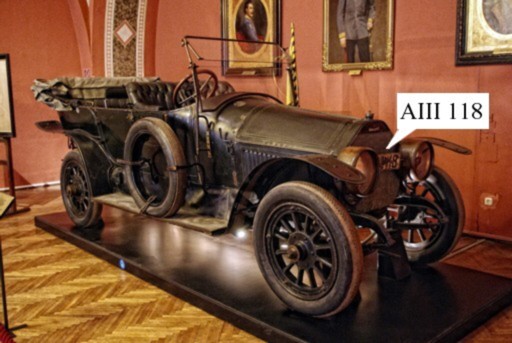
My wife and I were not the only ones having this, it soon turned out. People have shared stories on the Internet about being haunted by time prompts such as 11:11. This peculiarity is often referred to as the 11-phenomenon or the 11:11-phenomenon. Eleven is the first double number, a noteworthy coincidence of digits, and 11:11 is like the same happening a second time, thus two related, strange coincidences, hence doubly strange. World War I ended on 11 November 1918. Franz Ferdinand’s car’s licence plate number refers to this particular date. But what does that signify? Could there be a connection? Or was there nothing to it, and was it just my imagination?

Our minds trick us in different ways, such as selective remembrance. Remarkable things we remember best. Maybe you have experienced a few strange incidents. They stick with your memory, but you may not remember thousands of mundane events that also transpired because there was nothing special about them. Often, I see a number, and within a second or so, I see the same number again somewhere else, usually on licence plates. But when I look for recurring numbers, I rarely see them. Perhaps repeating numbers triggers my brain. Recording them then becomes a conscious process, so for each remarkable combination, countless others remain unnoticed.
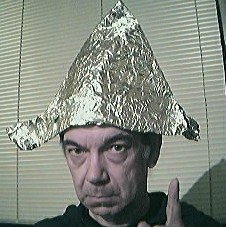
tin foil hat

My waking up at night and seeing these time prompts was something different. There were no exceptions. I didn’t see other time prompts. And my wife had the same at the same time. That was not my mind playing a trick on me. Something made me wake up and look at the clock at these times. Is it mind control? Is there a plan, and is Natural Money part of it? And is there a connection with the licence plate number of Franz Ferdinand’s car? Only large-scale mind control can make the assassination succeed, trigger a war, and end that war on that date, 11 November 1918. And so, mind control, it is. And your mind is also under control. But don’t worry. A tin foil hat won’t help you. Nothing will.

Usury, thus charging interest on money and debts, is an ancient question and a biblical issue. Things were about to get a lot stranger. The only sensible explanation I could eventually think of is that this world is not real, but a virtual reality created by an advanced humanoid civilisation for entertainment, and that we are actors in a play. And everything goes according to a plan, so Natural Money could be part of that plan. That, of course, I still do not know, but it is better to be safe than sorry. And so, I worked out a monetary theory for a usury-free financial system with negative interest rates.

Latest revision: 5 October 2025

Featured image: 11:11 time prompt.

Other images: Tin foil hat. Morton Devonshire (2007). Wikipedia. Public Domain.
Dead Sea Scroll - part of Isaiah Scroll

Peeking into the Future

What will the future look like? Futurologists have been pondering this particular question. A few things seem plausible. First, robots and artificial intelligence may take over our jobs, making us obsolete as workers. Machines and computers have already taken over many jobs. Until now, new jobs have replaced the old ones. These new jobs were more complex, so machines couldn’t do them. However, artificial intelligence may be able to perform these tasks. Artificial intelligence is a computer programme that can learn like a human, but faster and better. And so, artificial intelligence may soon make better decisions than humans and take over many remaining jobs. As a result, we may have a lot of leisure time. Or we could be left without income and become destitute.

In a few decades, we may no longer be driving our cars. We tell them where we want to go. Our cars then plot a route, bring us there, and keep us safe. Perhaps it will be forbidden to drive yourself when human drivers cause more accidents than self-driving cars. When I was a teenager, and Knight Rider was a popular television series, it was science fiction. Today, the technology is already there. Artificial intelligence may soon make other decisions as well. We may still decide what we want, for example, what kind of book we like to read, but algorithms decide the specifics. And you might even be happy with it because artificial intelligence knows better what you desire than you do.

Some people fear that computers and robots will take over the world, controlling or destroying us. Computers and robots don’t have a will of their own. Artificial intelligence is different, which makes it potentially more dangerous. Traditional computers operate according to their programming, but artificial intelligence thinks for itself. It learns and can become more intelligent than we are. We allow smartphones to take over our lives, but this is not what smartphones want to do. Humans have made apps to make them addictive, so we do what the programmers of these apps want us to do. And we are lazy, so we allow algorithms to decide for us. In this way, artificial intelligence can take over our lives. Emotions and desires have a biological origin, so computers and robots don’t possess them. That may change because artificial intelligence can learn to act as if it has desires.

Second, humans may enhance themselves with biotechnology, cyborg engineering and information technology. These beings are no longer human and can be referred to as post-humans. They might still be like us in many ways because we think that our inner selves are precious. And so, we are unlikely to alter our inner selves, even if we can. These post-humans may live very long while artificial intelligence does the decision-making. And so they have a lot of time on their hands, and boredom may be their biggest challenge. That brings us to the third option. These post-humans may create games and imaginary worlds with simulations of human civilisations to entertain themselves. If the technology becomes cheap, there could be billions of virtual universes for every real one, and we live in a virtual reality ourselves.1

Latest revision: 18 July 2025

Featured image: Dead Sea Scrolls – part of the Isaiah Scroll. Public Domain.

1. Are You Living In a Computer Simulation? Nick Bostrom (2003). Philosophical Quarterly (2003) Vol. 53, No. 211, pp. 243-255. [link]

The car in which Archduke Franz Ferdinand was killed

Is There a Plan?

On 28 June 1914, the Serbian nationalist Gavrilo Princip shot Archduke Franz Ferdinand and his wife Sophie in their open car in Sarajevo. It triggered a sequence of events that led to World War I. Austria held Serbia responsible and declared war on Serbia. The conflict soon escalated and became the First World War. The war ended four years later with the Armistice of 11 November 1918. The date 11 November (11/11) is remarkable. But there is something far more peculiar about this event. The car in which Franz Ferdinand died bore licence plate number AIII 118, possibly referring to Armistice 11-11-18.

The assassination succeeded after a series of mishaps. Two conspirators failed to act. A third threw a bomb that exploded below the next car. Franz Ferdinand then changed his plan to visit the wounded from the bombing at the hospital. After learning the plot had failed, Princip positioned himself on the route to the hospital. There, Franz Ferdinand’s open car reversed after taking a wrong turn. The engine stalled, and the gears locked precisely in front of the only person still prepared to strike.

Surrounded by a crowd, Princip was unable to activate the bomb he was carrying. He used his handgun instead, but failed to aim it properly. He later said, ‘Where I aimed, I don’t know.’ Princip added that he turned his head off when firing the shots. Even considering the close range, it is odd he fired only two bullets, killing both the Archduke and his wife.1

Franz Ferdinand had premonitions of early death. One relative recalled him telling a few friends a month earlier that he knew that he was about to be murdered. Another account notes that the Archduke had shot a white stag a year earlier. According to folklore, a hunter who had killed such an animal would die soon. While hunting, Franz Ferdinand killed over 270,000 animals. It may have happened, but no reliable source confirms it.1

The assassination could have gone wrong, or it might not have triggered a war, or the war could have proceeded differently to end on another day. Indeed, remarkable coincidences surrounded the assassination. The car stopped just in front of Princip. And two poorly aimed shots proved to be fatal. But the licence plate adds a very peculiar suggestion to it. Did someone know the car would play a crucial role in the assassination that would ignite a world war that would end on 11 November 1918? In other words, is there a plan behind everything that happens in this world?

Latest revision: 15 July 2025

Featured image: Gräf and Stift Double Phaeton of Archduke Franz Ferdinand at the time of his assassination. User OlliFoolish (2011). Wikimedia Commons.

1. Curses! Archduke Franz Ferdinand and His Astounding Death Car. Mike Dash (2013). Smithsonian. [link]