The New Religion

Perhaps you think, ‘How did I find out?’ It seems that I once encountered God in a dormitory during my student years in 1989. She was one of the students living there, an overbearing figure who dominated the group. She made my life miserable and forced me to leave the dormitory. She told me that I didn’t fit in the group, was rude and didn’t show my feelings. There was something off about Her. And She connected with me like no one else ever has. It also seemed that She didn’t care what would happen to me, as if I were nothing in Her eyes. A student from another dormitory who was in a similar position had committed suicide around the same time.

She cast me out as I didn’t fit in in Her little Paradise. I was autistic and hardly aware of the consequences of my actions, but I felt that something was wrong with me. And so, it wasn’t hard to make me feel at fault. It didn’t help that I was a simple rural guy with little life experience. I didn’t fit in an intellectual environment where people discussed art, literature, and feelings. Afterwards, I realised I had fallen in love with Her, which made me feel even more miserable. It turned out to be a life-changing event that helped me resolve my issues and become a better person. Only that took years.

Since then, I never saw Her again, found a wife and had a son. Over the years, a few strange coincidences occurred, reminding me of Her. Nineteen years later, in 2008, I had a psychosis, in which She appeared to make telepathic contact and appeared to be God. She had a message for me: ‘I am Eve, and you are Adam, and together we will recreate Paradise.’ That suggested that She has a romantic interest in me. I figured that Jesus had a similar connection with Mary Magdalene, and that She had made him believe that Adam was Eve’s son. I didn’t want to be mistaken, because most messiah claimants were delusional, so I checked whether it could be true. This book is the result of that effort.

I can’t rule it out. But nothing happened. I continued with my life, living with my wife, while trying to figure out what to do if it were true. After all, I hadn’t asked for this, so if God wanted me for Herself, She could come and get me, which She hasn’t done yet. I once emailed Her, asking Her what this was about, but She denied being God or having anything to do with the events in my life. But God has fooled us for thousands of years. Whatever the truth may be, my discovery could be meaningful, so I proceeded with this research. This world seems a joke, and we exist to amuse God. If it is all true, you might save yourself with my guidance, not because I am a genius or can do miracles, but because it is the plot of the story.

Paradise will be what God desires, not what we want. I am an actor in this play, so I play the role of guessing which way things will go and helping you find a way out. The future will likely be different from what I anticipate, but I may be right about the direction. Time will tell. Knowing the consequences of your actions and doing no harm are the keys to a better future. I felt I had no excuses when I was a student, even though I didn’t know I was causing harm. But I should have known. That also applies to you. There are no excuses. You should have known. And you should do whatever it takes.

Only from a Western perspective do things seem to fall apart. If you live elsewhere, you probably see things differently. If these are not the end times, it is the end of 500 years of Western dominance. What many in the West see as social progress, such as human rights, may soon regress. The West has shaped the world as it is today. If Hegel was right, and social progress coming from a dialectic duel between progressivism and conservatism will lead us to Paradise, we have arrived at the end of the line. Even the Chinese Communist Party has built its vision on Hegel’s ideas. There is either social progress and a coming Paradise, or there is no point to history. It seems we are about to find out.

In Eden, Eve and Adam lived simple lives in harmony with nature. That may also lie ahead for us. That will be the New Religion, at least if we all embrace these wonderful tidings. Overall, it can be good, but that doesn’t mean it will all be nice and dandy. And so, before you get carried away by the idea of entering God’s kingdom, picture life in Eden. The Talking Heads already did,

Here we stand
Like an Adam and an Eve
Waterfalls
The Garden of Eden
Two fools in love

There was a shopping mall
Now it’s all covered with flowers

If this is paradise
I wish I had a lawnmower

We used to microwave
Now we just eat nuts and berries
You got it, you got it

Don’t leave me stranded here
I can’t get used to this lifestyle

Talking Heads, (Nothing but) Flowers

Latest update: 28 November 2025

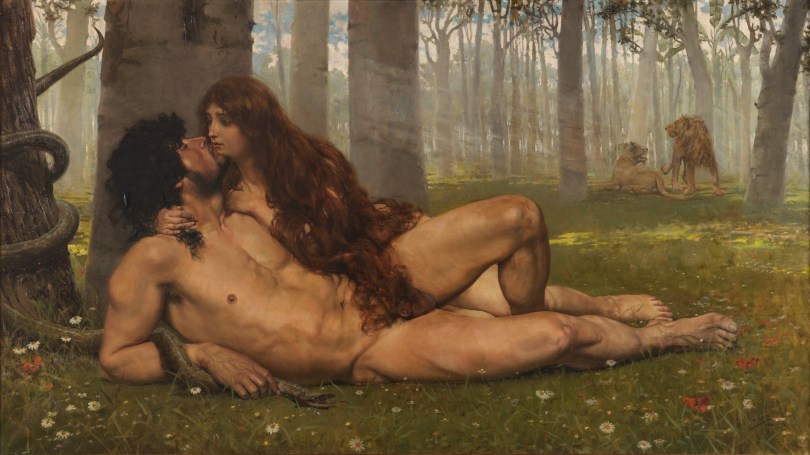
Featured image: The First Kiss of Adam and Eve. Salvador Viniegra (1891). Public Domain.

The Spider’s Web

The Spider’s Web is an informative documentary about the hidden world of offshore finance.

This is a documentary that everyone should watch to understand what is going on behind the scenes.

If you have Netflix, you can also watch it there.

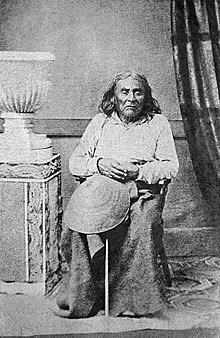
The only known photograph of Chief Seattle

Thus spoke Chief Seattle

The Great Chief in Washington sends word that he wishes to buy our land. The Great Chief also sends us words of friendship and goodwill. This is kind of him since we know he has little need for our friendship in return. We will consider your offer. For we know that if we do not sell, the white man may come with guns and take our land.

But how can you buy or sell the sky, the warmth of the land? The idea is strange to us. If we do not own the freshness of the air and the sparkle of the water, how can you buy them from us?

Every part of this earth is sacred to my people. Every shining pine needle, every sandy shore, every mist in the dark woods, every clearing, and humming insect is holy in the memory and experience of my people.

Our dead never forget this beautiful earth, for it is the mother of the red man. We are part of the earth and it is part of us. The perfumed flowers are our sisters; the deer, the horse, the great eagle, these are our brothers.

This shining water that moves in our streams and rivers is not just water but the blood of our ancestors. If we sell you land, you must remember that it is sacred and that each ghostly reflection in the clear water of the lakes tells of events and memories in the life of my people.

The rivers are our brothers, they quench our thirst. The rivers carry our canoes and feed our children. If we sell you our land, you must remember, and teach your children, that the rivers are our brothers, and yours, and you must henceforth give rivers the kindness you would give any brother.

The red man has always retreated before the advancing white man, as the mist of the mountain runs before the morning sun. But the ashes of our fathers are sacred. The graves are holy ground, and so these hills, these trees, this portion of the earth is consecrated to us.

We know that the white man does not understand our ways. One portion of land is the same to him as the next, for he is a stranger who comes in the night and takes from the land whatever he needs.

The earth is not his brother but his enemy, and when he has conquered it, he moves on. He leaves his father’s graves behind, and he does not care. He kidnaps the earth from his children. He does not care. His fathers’ graves and his children’s birthright are forgotten.

He treats his mother, the earth, and his brother, the sky, as things to be bought, plundered, or sold like sheep or bright beads. His appetite will devour the earth and leave behind only a desert.

I do not know. Our ways are different from your ways. The sight of your cities pains the eyes of the red man. But perhaps it is because the red man is a savage and does not understand.

There is no quiet place in the white man’s cities. What is there to life if a man cannot hear the lonely cry of the whippoorwill or the arguments of the frogs around the pond at night? I am a red man and do not understand.

The air is precious to the red man, for all things share the same breath―the beast, the tree, the man, they all share the same breath. The white man does not seem to notice the air he breathes. Like a many dying for many days, he is numb to the stench.

I have seen a thousand rotting buffaloes on the prairie, left by the white man who shot them from a passing train. I am a savage and I do not understand how the smoking iron horse can be more important than the buffalo that we kill only to stay alive.

What is man without the beasts? If all the beasts were gone, men would die from a great loneliness of spirit. For whatever, happens to the beasts, soon happens to man. All things are connected. Whatever befalls the earth, befalls the sons of the earth.

This we know. The earth does not belong to man; man belongs to the earth. This we know.

All things are connected like the blood which unites one family. All things are connected. Man did not weave the web of life; he is merely a strand in it. Whatever he does to the web, he does to himself.

We may be brothers after all; we shall see. One thing we know, which the white man may one day discover―our God is the same God. You may think now that you own Him as you wish to own our land, but you cannot.

This earth is precious to Him, and to harm the earth is to heap contempt on its Creator. The whites too shall pass; perhaps sooner than all other tribes. Continue to contaminate your bed, and you will one night suffocate in your own waste.

God gave you dominion over the beasts, the woods, and the red man, and for some special purpose, but that destiny is a mystery to the red man. We might understand if we knew what it was that the white man dreams―what hopes he describes to his children on long winter nights―what visions he burns onto their minds so that they will wish for tomorrow.

God loves us all. One thing we know. Our God is the same God. This earth is precious to Him. Even the white man cannot be exempt from the common destiny. We may be brothers after all. We shall see.

Latest update: 18 May 2023

Featured image:

Sepphoris Mosaic

Sarah, Mother of the Jews

Weaving one tale inside another

The Jewish Bible is a good read, apart from the sections that lay out the Jewish religious laws in excruciating detail. It features tales about the Jewish patriarchs Abraham, Isaac, and Jacob. Moses led the Israelites out of Egypt to the Promised Land under the guidance of a wrathful cloud. It is nearly all made up. Writing and editing the Jewish Bible took centuries. The authors wrote it to promote their religion rather than to provide an accurate account of history. That is how historians look at the Jewish Bible. If you believed it all, don’t blame the Jews for writing good stories, but yourself for your gullibility. You could have known if you had put some effort into educating yourself. And you don’t think reptiles live among us because scriptwriters in Hollywood made a film in which they do? Some do. That is how imagination becomes religion.

But what does the almighty owner of quadrillions of galaxies have to do with the Jewish Bible, a product of the fantasies of a petty nation dwelling in a small area on a tiny planet near an insignificant star inside one of those countless galaxies? To answer that question, imagine you are John Ronald Reuel Tolkien writing about Hobbits living in The Shire. The Shire might be an insignificant spot on a tiny planet in an infinitely large universe, but Tolkien hardly cares about the rest. Only the Shire and the Hobbits have his interest. Tolkien could write a story about a Hobbit who makes up stories about his maker.

If Tolkien can do that, God can do it too. After all, that is one of the perks of being all-powerful. If God is a woman and has been among us as Mary Magdalene, what roles did God play among the Jews? In other words, which women in the Jewish Bible were God in disguise? Inquiring minds want to know because many of these stories are fantasy. At best, these are local tales that may or may not have some connection to actual events and have become integrated into the biblical narrative. Hence, the first question you should ask is: Can God have played a role in stories that never happened in the story?

Tolkien can write a story in which a Hobbit writes a story in which Tolkien enters the Shire disguised as a Hobbit. But that story never happened in the story Tolkien wrote. It is a tale that a Hobbit wrote in Tolkien’s story. The Hobbit might not even realise that the Hobbit in the tale is Tolkien in disguise, but he thinks it is just a Hobbit with a special role in the story, because that is the plot Tolkien created. I hope you haven’t lost track. That is the level of deception we are talking about here. And what about the Hobbits starting a religion with an imagined creator? Then the truth comes out. Tolkien reveals himself, and the Hobbits all laugh. And then it turns out that, even though the story that this Hobbit wrote never happened, it featured Tolkien disguised as a Hobbit. So it is possible. And indeed, strong women, who could have been God in disguise, appear in the Jewish Bible.

Hiding it behind human motivations

Powerful women also appeared in the Jewish Bible for a mundane reason. The Israelites were too small a people and thus too weak to defend a territory. They had to survive as a minority in the lands of others. Military adventurism would be fatal for them. To facilitate the right attitude among Jewish men, the authors of the Jewish Bible invented a new type of hero. Rather than fearless warriors, their heroes were virtuous individuals who helped others, such as Boaz,1 people with weaknesses like David, and risk-averse, shrewd individuals. Abraham was not a courageous warrior, nor was his son, Isaac. Resourcefulness had to compensate for that. Jacob cheated on his brother Esau and took his birthright. Meet the Jewish hero. He is a family man, but lacks the courage to defend his wife’s honour. Yet he is shrewd and defrauds his brother. And he has God on his side.

Heroes die, but the cunning and timid remain, even more so if God is on their side. That is why there are still Jews, while other nations made a one-way trip to the dustbin of history due to their excess testosterone and stupidity. And, of course, they lacked divine support. That is why the authors of the Jewish Bible refashioned the role of men and women in family life. The stories of Jewish patriarchs focused on family life and domestic affairs, in which women played a central role. And women played a crucial part in Israel’s victories.1

That undermined male authority in war. In several cases, women achieved triumph on the battlefield or determined the fate of men. Jacob defrauded Esau of his birthright and deceived his father, Isaac, with the help of his mother, Rebecca. Esther saved the Jewish people from a plot in the Persian court. The Jewish Bible doesn’t depict events suggesting Rebecca or Esther could have been God in disguise. There are, however, a few stories that catch the imagination and qualify. According to the Bible, Jewish history begins with Sarah and Abraham. There was something special about Sarah, the matriarch of the Jews.

Sarah and Abraham

The Lord allegedly promised Abraham that one day, his offspring would be as countless as the stars and own the land between Egypt and the Euphrates River. His wife, Sarah, was barren. She asked Abraham to sleep with her slave, Hagar, so Hagar would bear a child in her name. Those were the days when slavery was not forbidden, and you could get away with that. Once Hagar was pregnant, she began to look down on Sarah. Sarah then mistreated Hagar, and Hagar fled. But God sent an angel, the famous Angel of the Lord, who ordered Hagar to return and submit herself to Sarah. Hagar bore Abraham a son, Ishmael.

That could have been good enough, but the Lord chose differently and presented Abraham with a covenant. It required the circumcision of all males, and Sarah was to become the matriarch of the Jewish nation. At the time, Abraham was one hundred years old, and Sarah was ninety. Abraham and Sarah laughed when they learned this. Remember, 4,000 years ago, there were no erection enhancement pills or fertility treatments. Sarah became pregnant and bore Isaac.

Like in most traditional agricultural societies, Jewish religious law prescribes that men precede women in inheritance. Daughters can only inherit if there are no sons. Nevertheless, being a matriarch of the Jewish people is crucial because you are a Jew if your mother is one. Your father is irrelevant to your Jewishness. God was particularly picky as to who was to become the matriarch of the Jews. In this sense, the Jews are not primarily children of Abraham, as the Jewish Bible says, but children of Sarah in the same way Christians are children of God.

Abraham feared for his life because of Sarah’s beauty. When the Egyptians asked if Sarah was his wife, he said she was his sister. The Pharaoh’s servants took notice and informed the Pharaoh, who took her as his wife. God then inflicted severe diseases on Pharaoh and his household. That is divine justice. God punished the Pharaoh because Abraham had deceived him. With a God like that, you don’t need Satan. Not surprisingly, that horned fellow was nowhere to be found in this tale. Perhaps he enjoyed a sabbatical. The Bible doesn’t tell. Abraham did the same in Abimelech’s kingdom, thus knowingly bringing Abimelech into mortal danger. King Abimelech then received threats from God after he planned to take Sarah as his wife. Luckily for him, God didn’t have a bad mood that day.

To us mere mortals, an intriguing question might be, what made Abraham worthy in the eyes of God? Is it that he intended to sacrifice his son when a voice asked him? If it had happened today, we would have locked up Abraham in a mental ward. If Abraham was God’s husband, it makes more sense. In any case, God works in mysterious ways, and a ram presented itself, and that same voice then asked Abraham to sacrifice the animal instead. That was a narrow escape. If that ram had not been there, there would have been no Jewish people, and world history would have been entirely different. That is chaos theory at work here, or is it God’s plan?

In family matters, God sided with Sarah. The Angel of the Lord summoned Hagar to return to her mistress, Sarah. Later, God told Abraham to send Hagar away. Sarah wanted this. Sarah became the matriarch of the Jews because the Lord commanded. The Lord thus represented her well. Had this been a scrap of history, Sarah might have been God in disguise and done an excellent job of hiding that. However, God can also play an undercover role in events that never took place. That is a perk of writing the story yourself. And why does God desire bits of male reproductive organs in exchange for making a covenant? That is indeed most peculiar unless the Lord is a Lady. Another, and probably better, explanation is that it is a hygiene measure. The Jewish Bible describes the rules for ritual hygiene that Jews are required to follow in great detail.

Joseph and Asenath

Jacob had twelve sons, but Joseph was his favourite and the best-looking one. His brothers were jealous and conspired against him. They sold him as a slave. Joseph ended up in the household of Potiphar, an Egyptian and a high-ranking official in Pharaoh’s court. Joseph did well there and became Potiphar’s favourite. Joseph was handsome, so he caught the eye of Potiphar’s wife, who wanted to sleep with him. When he refused, she accused Joseph of trying to seduce her, and Potiphar put him in prison. There, Joseph became the prison warden’s favourite. Joseph was adept at explaining dreams. That eventually brought him to the Pharaoh, who also made Joseph his favourite. The Pharaoh made him a Viceroy and put him in charge of the granaries.

Scholars believe that the biblical story of Joseph was once a separate story that originated in the Jewish community living in Egypt at the time when many other Jews were in Babylonian captivity. The story resembles several Egyptian tales about a seven-year famine, divine dreams, and a wise vizier who helped the pharaoh and priests to restore the land. One of these stories, in fact, is inscribed on a large monument called the Famine Stele near Elephantine, an Egyptian colony on the Nile River where many Jews also lived.

Joseph married Asenath, the daughter of an Egyptian high priest. The Jewish Bible tells us nothing about her. That raised questions as marrying pagans became a controversial matter for Jews. A later story about their marriage explains how Joseph, after he escaped Potiphar’s wife, ended up in the arms of a pagan priestess. How could God have let this happen? An explanation was needed and invented, and they named the story Joseph and Asenath, which was quite to the point. According to this tale, Asenath was proud and despised men, but became impressed by Joseph’s looks.

Joseph first didn’t want to marry a pagan priestess who bowed before idols and didn’t worship the God of the Jews. But lo and behold, Asenath showed repentance and changed her faith. And then an angel from heaven hurried to her chamber to bless the marriage. When Asenath told Joseph, he changed his mind and married her. It thus must have been convincing. Asenath’s change of faith appears insincere and may have been motivated by her desire to marry Joseph. Nevertheless, God blessed the marriage, which is remarkable considering the high standards that usually apply. Asenath might have been God in disguise if only this had actually happened.

Zipporah and Moses

A fellow named Moses allegedly led the Israelites out of Egypt. A burning bush claiming to be God commanded Moses to return to Egypt to free the Israelites. Moses then took his wife, Zipporah, and their sons and started his journey to Egypt. On the road, they stayed at an inn, where that same burning bush supposedly came to kill Moses, which is a reason why you should not believe it happened. Zipporah saved Moses’ life by circumcising their son and touching Moses’ feet with the foreskin, saying he was her bridegroom of blood (Exodus 4:24-26). Later, the burning bush allegedly transformed itself into an irate cloud of fire, which helped Moses lead the Israelites into the Promised Land.

Zipporah saving Moses’ life fits the agenda of the authors of the Jewish Bible, which is to undermine male authority so Jewish men wouldn’t strive to posthumously win the prestigious Darwin award for their military adventures and terminate the Jewish people in the process. After all, the success of Moses’ mission depended on Zipporah having rescued him from the consequences of his daring attempt to let his son remain uncircumcised. God somehow was particularly keen on that foreskin. Zipporah knew what God was about to do and the reason why. But Zipporah reading God’s mind? No mere mortal could accomplish such a feat, not even Jesus. Hence, Zipporah might have been God in disguise if only this had happened.

Bathsheba and David

Bathsheba, who was the wife of Uriah, brought ruin to David and his kingdom. While Uriah served in the army to fight one of David’s wars, Bathsheba conspicuously bathed on a rooftop near the royal palace, where David could see her naked. She intended to seduce him. The alternative explanation that there was no room inside the house to bathe isn’t persuasive. David ordered Bathsheba to come to his place. And so She did, apparently without even saying it might be a bad idea. She became pregnant after sleeping with him. David then commanded Bathsheba’s husband, Uriah, to go home, hoping he would sleep with his wife so the scandal would go unnoticed. But Uriah didn’t out of solidarity with his comrades on the battlefield. David then asked his commander to place Uriah on the frontline of the battle so he would die. After Uriah died, David married Bathsheba. Bathsheba turned out to be a true fate changer. She also bore the future king Solomon.

You might have learned that the Lord loved David, but the subsequent events don’t demonstrate that. From then on, everything went downhill. In hindsight, this sequence of incidents led to the son of Bathsheba ascending to the throne. The prophet Nathan foretold David that his act would bring a curse upon his house. David’s eldest son, Amnon, was murdered by his half-brother Absalom after he had raped Absalom’s sister Tamar. Later, Absalom declared himself king and started a revolt against David, and David’s troops killed him. That eliminated two potential heirs to the throne. In David’s old age, Bathsheba secured the succession to the throne of Solomon. The marriage was a grave sin, but God nevertheless loved Bathsheba’s son, who was to become king. Bathsheba could have been God in disguise.

That might shed some light as to why the Lord loved David so much, as it cannot be due to his moral virtue. And it presents us with a reason why he couldn’t resist Bathsheba. David is a historical figure, so there could be truth to the story. It, however, also fits the agenda of the authors of the Jewish Bible. Even Israel’s greatest king, David, had faults and crumbled in the hands of a woman. But who would have thought Bathsheba had something to do with the angry cloud dwelling in that tent? Remarkably, the name Bathsheba is composed of two parts: Bath and Sheba. Bathsheba seduced David by bathing naked on a rooftop near the palace. The Queen of Sheba later visited Solomon. That is a bit odd. Hence, the Queen of Sheba may also have been an avatar of God.

Deborah, the founder of the Jewish nation

Sarah is the matriarch of the Jews, but she never lived in that capacity as a historical figure. Still, the Jews have a real matriarch insofar as anything is real in this world. She is also in the Jewish Bible. The Jewish nation gradually emerged after Egypt retreated from Canaan around 1150 BC. That left a power vacuum in which states gradually developed from tribal leadership. It corresponds with the tribal era of the judges in the Bible. One of the oldest texts of the Jewish Bible is the Song of Deborah (Judges 5), dating back to the era before the kingdoms of Israel and Judah.2 Deborah was a tribal leader during this age.

Deborah was the fourth judge in the Book of Judges. Only Deborah may have lived in that era in that role. The Song of Deborah, not Genesis, is the actual starting point of the Jewish Bible. The song likely didn’t pop up out of nowhere. Jewish tribespeople composed it to celebrate the victory brought by their heroine, Deborah. She is the earliest historical person in the Bible. She attributed the triumph to Yahweh rather than El, so the history of the Jews as Yahweh’s people began with Deborah.

She took part in a battle (Judges 4:8-9). As the story goes, Deborah sent for Barak, the commander of the troops, and said to him, “The Lord, the God of Israel, commands you: ‘Go, take with you ten thousand men of Naphtali and Zebulun and lead them up to Mount Tabor. I will lead Sisera, the commander of Jabin’s army, with his chariots and his troops to the Kishon River and give him into your hands.'” (Judges 4:6-7) But it was Deborah who commanded Barak. And so, She might have been the God of Israel in disguise and founded the Jewish nation and religion in person.

Latest revision: 5 December 2025

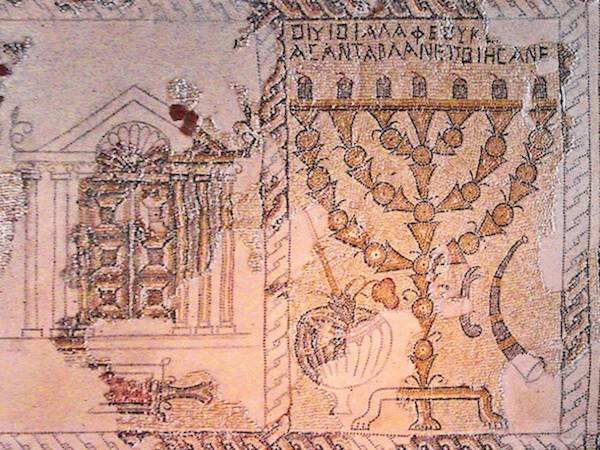
Featured image: Sepphoris Mosaic. Pbs.org. [copyright info]

1. Wright, Jacob L. (2014). The Bible’s Prehistory, Purpose, and Political Future. Coursera.
2. Why is the Song of Deborah considered to be the oldest text in the Hebrew Bible? r/AcademicBiblical (2025). https://www.reddit.com/r/AcademicBiblical/comments/1mhfw3z

Khadijah, Mother of the Believers

Bride of Muhammad

Mother of the Believers is a title Muslims give to the wives of Muhammad. It best suits his first wife, Khadijah bint Khuwaylid. According to Islamic sources, Khadijah was a wealthy widow and Muhammad’s employer. She had been married twice and had children from those marriages. Khadijah was a very successful merchant. Khadijah’s trade caravan equalled the caravans of all other traders of the Quraysh put together. Khadijah neither believed in nor worshipped idols, which was uncommon. Khadijah didn’t travel with Her trade caravans but employed others to trade on her behalf. Muhammad was one of them.

Muhammad attracted Her interest. He was twenty-five, and Khadijah was forty when She proposed to him. The woman proposing a marriage to the man was indeed unusual, most notably given the time and place where it occurred. She was wealthy and way out of Muhammad’s league, so that he wouldn’t have considered it. The marriage between Khadijah and Muhammad was both happy and monogamous. When he was without Her on one of his journeys, Muhammad never had any desire for other women. They had six children, of whom four daughters survived.

Muhammad returned home, shocked after the Archangel Gabriel appeared to him for the first time. He told Khadijah what had happened, trembling, no doubt. She comforted him like a mother and supported him thereafter. Khadijah’s moral support made Muhammad believe in his mission, and Her financial support was indispensable. Apart from a wife, Khadijah was thus like a mother to Muhammad, in the likeness of Eve and Adam. She was Muhammad’s boss in more ways than one. Like Jesus, Muhammad married God. However, unlike the Bride of Christ, the Bride of Muhammad is still well-known. Only after Khadijah’s death did Muhammad marry several other women.

Quran origins

Muslims believe that the Quran was revealed to Muhammad by God, with the Archangel Gabriel serving as the intermediary. The Quran lacks chronological order and repeats itself. Scholars believe its historical accuracy is inferior to that of the Bible in describing the same events. And so, you might find it hard to believe that this scratchy collection of sayings, which Muslims claim has unparalleled artistic value and is so brilliantly composed that it is beyond the capabilities of even the brightest minds to reproduce, is the word of God and meant to correct corruptions in previous Jewish and Christian scriptures, as Muslims claim. But God works in mysterious ways. The first Muslims memorised the verses and didn’t write them down.

Memorising such a lengthy text for decades is prone to errors. And the Muslims fought several battles that took the lives of some of those who knew these verses. To reduce the risk of verses going lost in this manner, the early Muslims divided the task of memorising the Quran and assigned multiple men to recall the same verses. How well they did that is anyone’s guess. It explains a great deal about why the Quran is the way it is. Those who later wrote down the Quran didn’t edit the verses or present them chronologically because humans shouldn’t distort God’s words. If only early Christians had shown that kind of reverence for their scriptures, Christianity would have been an entirely different religion.

Historical analysis suggests that much of the Quran originated from previously extant Zoroastrian, Jewish, and Christian sources. The Arab desert was far from Rome, so local Christians could hold deviant views that the Church considered heretical, such as that Jesus didn’t die for our sins, that Jesus was human and not the Son of God and that Jesus didn’t die on the cross but that there had been some ploy to make people believe that. The Quran mentions that Jesus created birds from clay and breathed life into them (3:48-49, 5:109-110). The Gospel of Thomas mentions this. Speaking from the cradle, Jesus defended his mother against accusations of sexual immorality (Quran: 19:27-30).

Parts of the Quran have no previously known sources. They could have been part of God’s message that the Archangel Gabriel supposedly dispatched to Muhammad. The Quran also adds a few juicy details to existing stories that the Jews have failed to mention in their Bible. These might have been local tales circulating in the area. An example is King Solomon gathering an army of ghosts, men and birds, entering the valley of the ants, and ants talking to each other (Quran 27:15-18),

Indeed, We granted knowledge to David and Solomon. And they said in acknowledgement, ‘All praise is for God Who has privileged us over many of His faithful servants.’

And David was succeeded by Solomon, who said, ‘O people! We have been taught the language of birds, and been given everything we need. This is indeed a great privilege.’

Solomon’s forces of ghosts, humans, and birds were rallied for him, perfectly organised.

And when they came across a valley of ants, an ant warned, ‘O ants! Go quickly into your homes so Solomon and his armies do not crush you, unknowingly.’

In virtual reality, these things can happen. We have no evidence, but some things are more plausible than others. Talking ants are as believable as a serpent talking to Eve. Still, Muslims claim Muhammad was the last prophet before the End Times and that the Quran corrects mistakes and omissions in the Jewish and Christian scriptures. At first glance, this is not particularly convincing, but the Quran contains a few discrepancies that seem more meaningful in hindsight:

  • The Quran discusses Adam’s creation extensively but says little about how Eve came to be. The story of the rib is absent. The Quran claims that humans originate from one soul (Quran 39:6), like the creation in God’s image (Genesis 1:27).
  • The Quran doesn’t blame Eve for the Fall. Eve and Adam transgressed together. One passage explicitly blames Adam (Quran 20:120-121).
  • There is no original sin in Islam. The Quran states that Eve and Adam repented, and God forgave them (Quran 2:37, 7:23). The Quran doesn’t claim that Jesus was a redeemer for the sins of humankind.
  • The Quran names Jesus the Son of Mary and confirms the virgin birth, thereby implying that Jesus had no father, and because Christians call him the Son of God, it opens up the possibility that God’s name was Mary.
  • In the Quran, God orders the angels to prostrate before Adam, while the New Testament says that the angels must bow before Jesus, implying that Jesus could be Adam. The repeated mention could signal importance.
  • Finally, the Quran stresses the return to Paradise 147 times. Although the Jewish and Christian scriptures pay little attention to our return to Eden, the Quran mentions it so often that it could be of the utmost importance.

God ordering the angels to bow before Adam and Satan refusing to do so was a Jewish theme that some Christians, and later the Muslims, took over. One of the earliest accounts of Satan’s fall as a result of the conflict with Adam comes from the Life of Adam and Eve, a retelling of their lives from around 200 AD. God first formed, animated, and endowed Adam with the image and likeness of his creator. The archangel Michael brought him to bow before God. God then confirmed the creation of Adam in His image and likeness. Then, Michael summoned the rest of the angels and ordered them to bow before Adam, but Satan refused. The sevenfold repetition of this theme in the Quran suggests that there may be more to it than some obscure story entering the Quran by accident.

The Hidden Secret

The Quran claims that God is the greatest schemer (Quran 3:54, 7:99, 8:30, 10:21, 13:42) and capable of deception (Quran 4:88, 5:41, 11:34, 14:4). The existence of different religions and theological disputes is part of God’s plan. Otherwise, the message of Islam would have been more convincing. After 1400 years, that message has yet to convince 80% of the world’s population. The Quran is said to contain a hidden secret. Chapter 74 of the Quran is named The Cloaked One or The Hidden Secret. The former name is the translation of its title, while the latter refers to its content. The cloaked one is Muhammad. The chapter further mentions that 19 angels guard hell. The conflating of cloak and hidden secret suggests a disguise. About the number 19, the Quran says (Quran 74:31),

“We have made their number [that of the angels] only as a test for the disbelievers so that the People of the Book [Jews, Christians and Zoroastrians] will be certain, and the believers [Muslims] will increase in faith, and neither the People of the Book nor the believers will have any doubts, and so that those hypocrites with sickness in their hearts and the disbelievers will argue, ‘What does God mean by such a number?’ In this way, God leaves whoever He wills to stray and guides whoever He wills. And none knows the forces of your Lord except He. And this description of hell is only a reminder to humanity.”

Muslims insist it contains a clue proving the divine origin of the Quran. The verse suggests that the number 19 holds significance beyond the number of angels mentioned. In 1974, a fellow named Rashad Khalifa claimed to have discovered a mathematical code hidden in the Quran based on the number 19. It gave rise to a numerological cult and countless films on YouTube made by beard-wearing men that can bore you to death.

Numbers are meaningless, but the Quran implies there is more to that number and that it contains a proof of some kind, a hidden secret. So, what could the hidden secret be? Chapter 19 is titled ‘Mary’ and is about the Virgin Mary, the stand-in for God, the Mother Goddess. The hidden secret may be that God’s name was Mary, something only God could know. The cloak may refer to God appearing as a man while being a woman, or to the Virgin Mary, as the veil that conceals God’s identity.

Virgin birth

The Quran corroborates the virgin birth of Jesus (Quran 4:171) and claims that Jesus is not the Son of God, thereby implying that Jesus had no father. The virgin birth is a miracle of the Mother Goddess. Christians invented that tale because, if God is Jesus’ Father, then he can’t have a human father. Jesus was Adam, the Son of Eve, so it also replaced Adam’s birth from the Virgin Eve. The Quran consistently names Jesus the Son of Mary (Quran 2:87, 4:171, 61:6), while Christians call him the Son of God. Perhaps there was a Christian tradition in the Middle East that did so. Archaeologists excavated near the location commonly known as Armageddon, a 5th-century AD Greek inscription stating ‘Christ, born of Mary.’1 The odd thing is that it doesn’t say Son of God.

The Quran claims God has no children and that Jesus was not God’s son (Quran 6:100-102, 17:111, 18:4-5, 19:88-92). The reason is that the Meccan supreme deity, Allah, had a wife and children before God claimed this title. And the Virgin Mary wasn’t God either. The repetition of the phrase Son of Mary suggests importance. It stresses that God is not Jesus’ father, and it may imply that God’s name is Mary.

The star and crescent became the symbol of Islam. This symbol has a long history predating Islam, as it was associated with a Moon goddess. The moon represents the woman, and the star the child (Genesis 37:9). Hence, the Islamic symbol is akin to the Madonna and Child, or to the relationship between Khadijah bint Khuwaylid and Muhammad. She was fifteen years older and could have been his mother. The Son of God thus means Son of Mary, as Mary Magdalene was God. The appropriate picture is the Madonna and Child, along with the crescent-and-star symbol of Islam. And so, the same symbolism sneaked into Islam in the same sneaky fashion as it did with the Madonna and Child in Christianity, which is very sneaky indeed, and adds substance to the saying, ‘God works in mysterious ways.’

Return to Eden

Like Christians, Muslims believe Jesus will return (Quran 4:159, 43:61). Even more crucial, however, is our return to Eden, only sparsely mentioned in the Jewish Bible (Ezekiel 36:22-38) and the New Testament (Revelation 22:1-5). The Quran refers to Eden using terms like Gardens and Paradise 147 times, or 3 * 7 * 7. If you’re into numbers with religious significance, that is most remarkable. It is even more significant because humans wrote and edited the Bible, so if there are magic numbers in it, some scribe probably did that during a lifetime of boredom and number crunching. The Quran, however, is the result of decades of oral recitation, during which parts were changed or lost. And none of the reciters knew the entire Quran by heart. After several decades, they wrote down the verses as the reciters remembered them, without a significant redaction process.

God ordering the angels to prostrate before Adam seven times in the Quran is more miraculous than Jesus saying seven times ‘I am’ in the Gospel of John. The latter is not even a miracle, because someone could have done that intentionally, and probably did. In that sense, the Quran is uncorrupted by humans. The numerological signs, such as verse 36:36, which says that God created everything in pairs, and the fact that 36 is six times six, are God’s jokes. In all likelihood, no human ever decided to arrange the verses to create such a pair within a pair in a verse that says God created everything in pairs. Paradise is supposedly the final destination of the righteous. The Quran refers to the Garden of Eden with phrases such as ‘fruits from that garden’ and ‘spouses.’ For instance (Quran 2:25),

And give good tidings to those who believe and do righteous deeds that they will have gardens [in Paradise] beneath which rivers flow. Whenever they are provided with a provision of fruit from there, they will say, ‘This is what we were provided with before.’ And it is given to them in likeness. And they will have therein purified spouses, and they will abide therein eternally.

The promise of spouses in Paradise was a ploy to make horny young men fight for Islam without fear of death. And it worked well as the initial blitz of Islam was nearly as spectacular as Hitler’s. The New Eden is a central theme in the Quran, while the Jewish Bible and the Gospel hardly mention it. The repetition implies that it is of the utmost significance. Here, the Quran corrects Judaism and Christianity. Jews and Christians view God’s plan as a journey from the depraved city of Babylon to God’s city of Jerusalem, the New Jerusalem. Instead, we might go to the New Eden, as it is the core of the final revelation given to Muhammad, at least if we take repetition as a sign of importance. God’s plan, thus, is to bring us to the Final Gardens of Paradise, modelled after Eden.

The idea of a New Jerusalem in Judaism and Christianity has a historical origin. The Jews compiled most of their scriptures during their exile in Babylon and shortly after. Babylon was a centre of empire and civilisation. After the Jews had returned to Israel, they interpreted their journey as a move from the depraved city of Babylon to God’s city of Jerusalem. They received assistance from the Persian leader Cyrus the Great, who conquered the Babylonian Empire and permitted the Jews to return to their homeland. Christians took over this theme. If we go from Babylon to Eden, we get a new theme. Babylon represented advanced civilisation. In Eden, life was simple. That is where this seems to be heading.

Latest revision: 16 October 2025

1. 1,500-year-old ‘Christ, born of Mary’ inscription found in Israel. Mark Milligan (2024). Heritage Daily.

Featured image: top small written Arab phrase “Umm ul Muminin”(Mother of the believers), then in centre Big written “Khadijah”, and bottom small written Arab honour phrase ‘Radhi allahu anha.’