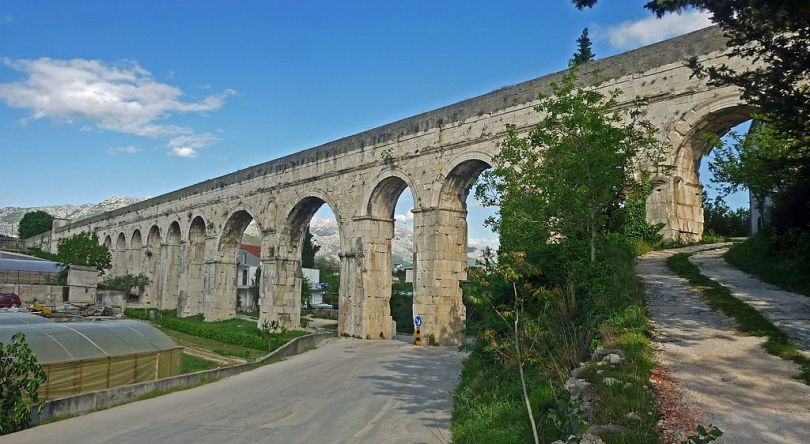
Diocletian's Aqueduct in Split, Croatia

The Great Collapse

Lessons of history

Societies and civilisations have collapsed in the past, so history can teach us something about what awaits us. Theories about collapse are speculative. Different explanations are possible. Whereas the debates between the experts are still raging, time is running out. Collapse could be coming. It will be brutal if we don’t prepare. We should heed the lessons from history. It may turn out we were wrong. But that is for the critics in their armchairs to observe someday when their lives aren’t at risk. And they will have the benefits of hindsight. We can only make the best decisions with our present knowledge.

The fall of the Western Roman Empire is the most well-known example of collapse. In the second century AD, diseases reduced the Roman population, eroding the empire’s tax base. The empire had a long border to defend, so emperors became increasingly desperate for revenues to finance the military. Over time, taxes and measures to ward off invasions became intolerable for Roman citizens, and the Western Roman Empire broke down. Most Romans were better off with a simpler life under the rule of Barbarians.1

The population of Rome declined from 1,000,000 around 100 AD, of which many lived on government welfare, to a scanty 30,000 around 1000 AD, a drop of 97%. Most of that decline occurred in the fifth century when the empire collapsed. More than half the people live in cities today, so a possible collapse is something we should dread. Many of us depend on markets and public services. We don’t know the future, but economics drives migration. If our civilisation doesn’t collapse and living in cities is more resource-efficient, cities may not depopulate, provided people in cities can earn an income.

The Western Roman Empire was underpopulated, and the state had become a burden. Its collapse thus was a relief to many. Other collapses were worse. The Mayan civilisation broke down because the Mayans ran into the limits of their environment. The immediate cause of their collapse was drought due to a lasting drop in rainfall. State control led to increased efficiency in food production and distribution. It allowed the Mayans to feed more people who would have starved otherwise. However, the measures to increase food production had stretched their environment to the breaking point, so improving agricultural output became increasingly difficult.1

The Mayan states then reverted to warfare to plunder each other’s crops, making it even harder to maintain agricultural output. The Mayans weakened from malnourishment and warfare, and the Mayan states collapsed together. In the short term, the peasants were better off as they didn’t pay taxes to support a state. In the long run, with irrigation works and granaries abandoned and defences neglected, agricultural output collapsed, and population numbers dropped by 90%.1

That is why we should dread collapse. There will be a lack of order, and people will organise themselves in gangs. Your and your group’s survival depends on assessing other people’s intentions and killing those who might kill you. And you don’t know, so you must guess what others are up to. And it is better to be safe than sorry, so you might decide to kill people as a precaution. That may be a good script for a thriller. However, most of us prefer to live less adventurously. Had the Mayans not waged wars but cooperated peacefully to use resources more efficiently and reduce population, their civilisation might have declined more gracefully and could have survived. That was unthinkable because of the intense competition between the states and the absence of contraceptives.

Causes of collapse

History shows a repeating pattern of overshoot and collapse. A population would grow until it reached the carrying capacity of the environment. As a result, there would be fewer food surpluses to save for harvest failures. Eventually, civilisations would succumb to disease, an invasion by neighbouring tribes, weather fluctuations, or civil war. The crucial difference with the present situation is that technology stayed the same in the past. In recent centuries, technological innovations, most notably our improved ability to acquire energy from fossil fuels, have outpaced the forces contributing to collapse. The danger is that the overshoot and the coming collapse can be worse than previous ones. The advantage of new technology is that it doesn’t need to be terrible and that we can lead agreeable lives.

Jared Diamond sees five factors contributing to past collapses: climate change, which also occurred in the past, hostile neighbours, the loss of trading partners, environmental problems, and society’s response to these challenges. The underlying cause is often overpopulation.2 Increased resource extraction efficiency allowed more people to survive, worsening the situation. That was true for the Mayans but not for the Romans. The Romans had hostile neighbours but not overpopulation. Higher population numbers could have helped the Roman Empire survive.

Joseph Tainter argues that in both cases, the costs of the state exceeded the benefits. The Western Roman Empire was underpopulated, so the Romans couldn’t afford the taxes required to defend their long border. The Mayan states organised agricultural production and were initially successful. However, at some point, additional state interference didn’t generate more crops or better management of surpluses and deficits. Overpopulation or overstretching the environment puts a premium on organising, but it postpones the inevitable. And it makes the collapse worse. Had the Mayans not organised themselves in states, they would have had less food, fewer people, and no collapse.

Our predicament looks more like that of the Mayans than the Romans. Competition between states and corporations for resources may intensify, and the collapse could be brutal. Simplification and having fewer children is a way out, and we can be better off if we cooperate globally to limit consumption and reduce our populations. That doesn’t happen because it is a collective action problem only a world government can solve. Governments compete and try to boost population numbers. Ending the competition between states is paramount because power, in the form of a prosperous economy, population and military, requires resources and energy. If one state pursues power in this way, others follow.

In times of decline, even the best leaders look bad as they can only make things less lamentable than they otherwise would have been. As we notice the deterioration but don’t experience the alternative, anger and frustration can take over, and people will look for scapegoats, resulting in political instability, a breakdown of order, civil war and mob rule. Managing and turning the decline into a more graceful simplification is the best option, but that requires commitment and discipline from everyone.

Organising to solve problems

Tainter sees societal collapse as an economic calculation. Societies and civilisations collapse when the cost of their institutions exceeds the benefits. If the soil depletes due to overuse, measures to improve crop yields or manage surpluses and deficits become increasingly expensive and have lower returns. The Mayans didn’t make these calculations by keeping ledgers of incomes and expenses. At some point, their measures became ineffective, and people started starving. There is an upside to an economic view. It can help us decline gracefully and make the most of what we have.

We organise ourselves in states and corporations to solve problems. We have police to solve a security problem. We have a car factory to deal with a transportation problem. Complex organisations, like states or corporations, have costs and benefits. When you solve a problem, you may get a bigger one in return, or one is more costly to handle. When societies are simple, expenses are low, while the benefits of solutions can be substantial. A doctor’s post in the jungle might lengthen the life of local tribespeople by as much as twenty years. As the level of organisation increases, the price of additional complexity increases while the benefits decrease.

As we cure easy-to-treat diseases, people grow older and get harder-to-treat diseases. If our medical knowledge increases, we can cure some of these diseases with expensive treatments, and people will die of even harder-to-treat diseases. Medical costs explode with only marginal gains in life expectancy. Replacing the doctor’s post in the jungle with a hospital might cost five times as much and add only three years to the lives of the tribespeople. Perhaps five tribes together could afford the hospital. In complex societies, many tasks require occupational specialisation, information processing and management. There are benefits to complex organisations, but they usually come with scale. Physicians who specialise can do better jobs when enough people share the costs.

Since the Industrial Revolution, markets and energy usage expanded. Abundant fossil fuels and increases in scale have reduced the cost of organisation. And so, the benefits outweigh the expenses at a much higher level than before, allowing us to specialise further than before. In the past, over 90% of the people worked in agriculture, tilling the land. Now machines do that work, freeing up labour for other purposes. The same happened in the production of goods and services. Technological development further increased these benefits. Computers use far less energy than forty years ago for the same amount of computing power and memory. That made more uses feasible, so we use far more energy for information technology than forty years ago.

It is the curse of efficiency improvements. When technology becomes more efficient and cheaper, we use so much more of it for frivolous purposes that, as a result, we consume far more resources and energy in the end. Efficiency improvements thus don’t solve our problems and even worsen them. Once resources and energy supplies dwindle, much of what we do now will lose its purpose, just like what happened to the Mayans. Still, technological advances allow us to do much more with the same resources and energy, so if we use new technologies for essential purposes, our future can be agreeable.

Diminishing returns: an example

Life expectancy in the UK rose from forty to eighty years between 1860 and 2020. However, the costs of new complex treatments increase while their effect on life expectancy decreases. These treatments can become a burden to the population at large. Comparing the United States with Cuba illustrates the benefits of simplification. Cuba is poor compared to the United States. Many essentials are hard to come by, and the country can barely feed its people. Cuba only has rudimentary healthcare, but it is available to everyone, while the United States spends more on healthcare than any other nation. Yet, life expectancies in Cuba and the United States are on par.

Cuban healthcare gives value for money because it is simple and equally distributed. US Healthcare underperforms because it is burdened with litigation, while pharmaceutical corporations sell unnecessary or even harmful treatments and medical professionals enjoy privileges they don’t have in other countries. And healthcare is not equally available to everyone. Lifestyle affects life expectancy as well. Obesity, homicides, opioid overdoses, gang violence, suicides, road accidents, and infant deaths come into the picture.

Americans use drugs, eat fast food and drink sodas unavailable in Cuba. Cubans are dirt poor, so it isn’t profitable for drug cartels to sell them drugs. The death toll from drugs, fast food and sodas in the United States exceeds that of famines in Cuba. Americans experience more stress as workers than Cubans because they need to be competitive in a market economy that is constantly economising and improving efficiency. Many Americans die of heart disease and drug abuse.

If you grow your food and your neighbours help you build your home, nothing gets added to GDP. Eating fast food, paying high rents, drinking sodas and being treated for obesity and other diet-related illnesses are good for profits and economic growth, as are working hard and taking drugs or seeing a psychiatrist for stress symptoms. Sodas, treatments for obesity, medication and therapeutic sessions all add to GDP. Economists call it wealth creation. It may help to explain why America is wealthy. In the United States, a small group of politically connected big corporations and specialists, such as lawyers, pharmaceutical corporations, and medical specialists, make lots of money.

In complex societies, highly trained professionals earn much more than ordinary people. In some cases, we are better off without them. Imagine how much cheaper things would be if we eliminated lawyers and litigation. And think of what it will do to GDP. Indeed, Americans might be better off poorer. The Old Order Amish are happier than the average American worker. The causes of Amish life satisfaction are not a mystery. Being part of a supportive family, being a member of a well-integrated community, having a religion, and regular physical exercise all contribute to a happy life.

Managing excess


Excessive production and consumption create problems we must subsequently manage. That requires specialisms, laws, controls, and the like, and it becomes increasingly costly. And people get the impression that governments are to blame when they impose limits. Complexity and specialisation suffer from diminishing marginal returns. The costs increase while the benefits decline. Consider the issues of food production and pollution control. According to Tainter, rising world food production by 34% between 1951 and 1966 required increasing tractor expenditures by 63%, fertilisers by 146%, and pesticides by 300%. We now deal with soil degradation, which endangers our future food supply.1

Pollution control shows a similar pattern. Removing all organic waste from a sugar processing plant costs 100 times more than removing 30%. Reducing sulphur dioxide in the air of a US city by 9.6 times or particulates by 3.1 times raises the cost by 520 times. These numbers may be outdated, but the nature of the problem remains the same. Allocating more resources to R&D can provide temporary respite from diminishing returns. But R&D also has diminishing returns.1 We might increase production or contain pollution, but it can become prohibitively expensive, so it might be cheaper to produce less.

Like the Mayans, we have stretched our environment to its limits. New technology and control measures postpone the inevitable. The alternative is to consume less and have fewer children. We can do without many things, or we can produce things differently. Stable supplies of large quantities of fossil fuels sustain our current complex civilisation. Unstable supplies of renewable energy can drive a simplification. If we compensate for carbon emissions, fossil fuels become expensive, and it can be economical to reduce energy consumption and rely on renewable sources. As a result, pressures can mount to decentralise and live more simply. If we do not create problems, we do not need to fix them. For instance, what is the point of pollution legislation if there is no pollution?

When we simplify our lives, we depend more on our family and community and less on markets and states. We use local products where possible. And we have little need for people who manage the complexity. Nowadays, more than half the people live in cities, so we can’t switch overnight. Even if we simplify our lives, we can have more agreeable lives than most people for most of history. If we manage the collapse, we can be better off than we would have been otherwise. And we can adapt. The 80/20 rule states that 20% of the causes have 80% of the effects. So, 20% of our consumption might cause 80% of our well-being. Thus, our well-being might decline by 20% when we reduce resource and energy consumption by 80%. Those who lead excessive lifestyles should make the sacrifice.

Latest revision: 21 August 2024

Featured image: Diocletian’s Aqueduct in Split, Croatia, built around 300 AD. User: SchiDD. Wikimedia Commons.

1. The Collapse of Complex Societies. Joseph Tainter (1988). Cambridge University Press.
2. Collapse: How societies choose to fail or survive. Jared Diamond (2005). Viking Press.

one ring to rule them all

Multiculturalism

An astounding success

You may think multiculturalism is a failure when large numbers of immigrants arrive in your country, fail to adapt properly, and cause trouble. Usually, problems attract attention, not the things that turn out right. We live today and hardly think of how the world will be in a hundred years. Our time horizon, if we think ahead at all, is perhaps a few years or maybe decades, not centuries. Overall, multiculturalism has been one of the greatest successes in history. Today, in only a handful of countries, more than 85% of the population belongs to a single ethnic group. The alternative to making multiculturalism work is civil war and the displacement of people.

Successful empires in the past allowed people from diverse cultures to coexist peacefully under a single government. These were multicultural states. Cultures don’t change overnight, so for an empire to achieve political stability, it had to allow subjugated peoples to retain their customs and religions as long as they didn’t threaten the political and social order. Multiculturalism is thus a tool of the emperor, and like the One Ring to Rule Them All from The Lord of the Rings. A successful multicultural emperor was Cyrus the Great, who ruled around 550 BC and respected various faiths and traditions in his empire. He helped the Jews return to their homeland and rebuild the temple in Jerusalem.

If the empire lasted long enough, the nations in it integrated into a common culture. The Roman Empire is a good example. Conquered peoples could keep their gods, languages and customs as long as they respected the Roman authorities. Greek culture spread in the east, and Roman culture spread in the west. Several later Roman emperors came from the provinces such as France, Africa or Arabia. After the empire collapsed, the conquered peoples, like the Gauls, didn’t reappear as independent nations.1 The Chinese standardised their writing using pictures, allowing people to read each other’s writings despite having different languages. That helped to form a lasting national identity.

The case of Bosnia exemplifies the strengths and vulnerabilities of multiculturalism. For over 500 years, Roman Catholics, Muslims, and Orthodox Christians lived relatively peacefully together in three successive multicultural states: the Ottoman Empire, Austria, and Yugoslavia. In the 1990s, identity politics turned them into Croats, Bosnian Muslims and Serbs, and they began murdering each other in a civil war. Religion became the divisive factor, as they shared an ethnicity, history, culture and language. Any distinction can divide us and lead to civil war. The Soviet Union was also a multicultural empire, but it didn’t last. After it collapsed, a series of nationalist wars broke out.

Multicultural empires, such as the Roman Empire, allowed for gradual assimilation. It led towards greater unity. Over time, the number of cultures declined as smaller groups merged into larger ones. There have been temporary reversions as empires collapsed. Still, the long-term trend is unmistakable. The world gradually became more integrated. Nowadays, the world is closely interconnected, and a global culture may emerge. There will still be subcultures, thus regional differences and groups of people sharing common interests, such as pop artists, soccer clubs, or costumes and dances.

Identity politics changed multiculturalism. Rather than peaceful coexistence under one administration and acceptance of the social order, modern multiculturalism is about respect for other cultures and accommodating them. That slows down the unification process. And closed groups that don’t integrate into society pose a problem. In the past, the Jews were often that group. Today, it is often the Muslims. Muslims and Christians may learn to live together like Protestants and Catholics learned to do, but the latter only came to agree on that issue after centuries of religious wars. So if people in Western Europe think that it is better not to have Muslims around, they have a reason for that.

Us and them

Us and them
And after all, we’re only ordinary men
Me and you

Pink Floyd, Us and them

We divide humanity between us and them. We are the good people, while the others are the evil ones who act oddly, look different, have funny accents and wear peculiar outfits. People differ in skin colour, religion, sexual preferences, or other qualities. We find it taxing to deal with these differences. Even when you think you are open-minded, you hate those narrow-minded bigots and racists who are not like you. Welcome to human nature. We are xenophobic creatures. Evolution did that to us. Fear of the unknown can protect us from harm, such as diseases or eating poisonous plants. It can be a powerful emotion because human violence has always been one of the top causes of death. However, having peace with others comes with tremendous windfalls, allowing us to overcome these feelings.

Discrimination doesn’t always come from xenophobia. We are social animals who cooperate in groups. That requires a shared understanding of our rules and methods for handling various situations. That is our culture. These things make the group work. Otherwise, there is confusion, discomfort and conflict. Imagine you like to barbecue in a neighbourhood with militant animal rights activists. That is a recipe for trouble. And so, we prefer the company of like-minded individuals. Those who do not fit in can tell personal stories about bullying, physical violence and exclusion.

If your culture is dominant, you enjoy advantages you may not realise you have. Societies in Western Europe and the United States may be multicultural, but Western culture is dominant. Western culture has had such a profound impact on the world that it has become the dominant culture. We live in a European world, and if you doubt it, even the proud nationalist Chinese base their nation on European Marxism rather than Chinese Confucianism. The scientific method is a superior way of gaining knowledge, but sadly, there is no such method to gain wisdom. White privilege is growing up inside the dominant culture. It is often not about discrimination but having the proper upbringing to succeed.

Similar privileges exist everywhere for members of the dominant cultures. Being Chinese is an advantage in China. In Western multicultural societies, everyone is equal before the law, at least in theory. People from other ethnic groups also have opportunities. Jews and Asians do relatively well, often outperforming whites. It suggests that white privilege is less critical than upbringing and support from your family and community.

Our civilisation is on the verge of collapse due to excessive resource consumption and unchecked technology. The West has long led in science and capitalism. Blaming the West is not helpful. Competition drove this development. It is an iron law that those with greater means and better technology tend to prevail. Without capitalist greed, we wouldn’t have seen this dramatic change. Had the Chinese or the Africans started this, history would have been equally brutal and unfair, and we would still have ended up where we are now.

Competition is a mindless process that ultimately leads to destruction. Being anti-West, anti-capitalist, or anti-science doesn’t address that underlying issue. The most effective and efficient will win until the ecological or technological catastrophe materialises. Even then, they will win unless we end that competition. There is competition between businesses and between states, which goes hand in hand. Ending it means establishing a single world order where business decisions are subject to political choices. As long as we are at the mercy of the merchants, they determine what happens. And as long as we have no single government, there will be wars. And even when economic efficiency doesn’t drive our choices, there can be enough for everyone.

The world is interconnected

In September 2023, a flood killed over 10,000 people in Libya. Global warming may have contributed to this disaster. So did the overthrow of the Libyan regime with the help of NATO in 2011. During the ensuing civil war, critical infrastructure, such as dams, became neglected. No one voted for this intervention. Who is to blame? To some degree, it is you and I driving cars. On the day Tripoli fell, the New York Times headlined ‘The Scramble for Access to Libya’s Oil Wealth Begins.’ And exhaust gases contribute to global warming. Everything is interconnected, so change doesn’t come easily. And there are unintended consequences, so when you try to improve things, you might make them worse.

That also applies to multicultural societies. Those who promoted them were often quite naive. Cultural differences are a source of trouble, and identity politics can lead to civil war. However, it will be impossible to halt the further integration of the world. Cultural exchange is a two-way process. Chinese, Muslims, Native Americans and others are probably not thrilled by the cultural enrichment the West has brought them, either. To a Muslim, a mosque looks much better than a McDonald’s restaurant. Culture is not always related to ethnicity. In many countries, a growing divide emerges between urban and rural populations.

With colonisation came slavery and exploitation. And others are proud of their heritage. However, the multicultural societies that have emerged in the West may be the closest to what the future world society will look like. These societies provide a learning experience. The institutions developed in the West often emerged under the pressure of competition. One of the reasons the Industrial Revolution began in England was its well-developed financial markets, which included a central bank. Nearly every country has a central bank. It is a historical accident that modernisation started in Europe, and then competition began to drive innovation and the copying and improving of inventions. It allowed Europe to conquer the world and drag the world into this process.

We are stuck with each other, for better or worse. Border walls and pushbacks are not permanent solutions. And exchanging platitudes about diversity or the greatness of our cultural heritages will not help us to meet the challenges we face. The process that Europe initiated, which could have started elsewhere but did not, has grown out of control and is about to consume us. We need a new set of values, and we can only accept diversity as long as it doesn’t cause harm to others. There are tough, politically incorrect conclusions to draw. To begin with, working hard to get ahead often comes down to stealing scarce resources from the poor and future generations.

The consumerist culture promoted by capitalism is one of the world’s most pressing problems. It doesn’t help to criticise Western culture for it, as the future requires a global society with shared values. And environmentalism hardly exists outside the West. It is a paradox. Environmentalism developed as a reaction to capitalist consumerism in a Hegelian dialectic. If you go to Asian countries like Thailand or Vietnam, you find massive amounts of plastic dumped in nature. Pundits attribute it to the phase of development, as these countries are not yet high-income countries. But there is no lack of excuses disguised as explanations. Instead of looking for causes, we should recognise our contribution to these issues and help solve them.

Change begins with our attitudes. It is better to define what our values and conduct should be and reason from there before demanding that minorities adapt. You don’t want people to adapt to a death cult centred around the ethics of the merchant, which is no ethics at all. All our precious values come into question, and everything we once believed in may crumble to dust. We need to adapt. It can be harsh and painful, a cultural identity crisis, which could be like dying spiritually and being born again. And then, there will be a new dawn, and life will be better than it otherwise would have been. Like Jesus said, there is only a place for sheep in God’s kingdom. Goats are unruly, and you can’t herd eight billion of them. I can’t promise you bliss, but you may soon find yourself living in God’s paradise.

Latest revision: 5 July 2025

Featured image: One Ring to Rule Them All. Xander (2007). Public Domain.

1. A Brief History Of Humankind. Yuval Noah Harari (2014). Harvil Secker.

John the Evangelist from the 6th-century Rabbula Gospels

The Gospel of John

Strikingly different

The Gospel of John is strikingly distinct from the other Gospels. In Mark, Matthew, and Luke, Jesus appears human, yet enigmatic. In the Gospel of John, he appears godlike. The Gospel of John is more recent than the other Gospels, and biblical scholars believe Christians had deified Jesus by that time. There is a problem with this reasoning. Some Christians worshipped Jesus as a godlike creature early on. In the Epistle to the Philippians, Paul cites a poem stating Jesus is in the form of God (Philippians 2:6-11). Scholars believe it is an older poem, dating back to the earliest days of Christianity.1 Maybe. Paul was a creative genius, and he made up a lot of things, perhaps nearly everything he wrote.

Other scholars believe that there once was a separate Johannine community in Syria, with the Gospel of John and the letters of John serving as its scriptures. The Johannine writings use the phrase ‘born of God,’ suggesting that God is a Mother. Scholars believe the Odes of Solomon, which include Ode 19, with its feminine attributes of God the Father, relate to the Gospel of John and the Dead Sea Scrolls. The author might have been an Essene convert to the Johannine community.

The Johannine community was distinct from the Jewish Christians, and its writings reflect anti-Jewish sentiments. To Jews, it is blasphemous to say that God is a woman, Jesus is godlike and that they married. To people from the surrounding cultures, such as Greek, Roman and Egyptian, it is not unusual to worship female deities, deify humans and believe that gods mate with humans. To his non-Jewish followers, Christ was godlike, not a human Jewish prophet. Otherwise, they wouldn’t have followed him. What business would they have had with a human Jewish prophet?

At first, most Christians were Jewish. Their religion would not have permitted them to see God as a woman and Christ as a godlike figure. However, Christianity had non-Jewish converts very early on. Educated Hellenistic Jews were often open to innovation due to their contact with surrounding cultures. Around 42 AD, a group of Christians founded a church in Antioch, located in the Roman province of Syria, which was likely also the location of the Johannine community. The Bible mentions the persecution of Christians and the spreading of their message in Antioch among Jews and Greeks (Acts 11:19).

If the Gospel of John belonged to a separate community that opposed Jewish Christianity, it could be more historically accurate and closer to Christ’s original teachings if that community had fewer reasons to alter the message and historical facts. The motivation for modifying their scriptures was to unify the Church. And so, despite it being the most recent, the Gospel of John could be the best-preserved remnant of original Christianity from before Paul profoundly changed it.

The author of the Gospel of John wrote in good Greek and employed a sophisticated theology with seven signs, and Jesus said seven times, ‘I am.’ Scholars believe he has used several sources, including the Gospel of Mark and Luke, as well as documents that no longer exist. The Gospel of John suggests that one of its sources could have been an eyewitness account.

The Gospel of John implies Jesus’ ministry lasted three years, suggesting more historical detail than the other Gospels. The number three has theological significance, as it is the heavenly number, which makes it suspicious. The author may have rearranged the story accordingly. The close relationship between God and Jesus, and Jesus’ belief in himself as eternal, however, has a historical origin. It agrees with Jesus being Adam, the everlasting husband of God, the Alpha and the Omega. It made him both human and godlike, which was the compromise Paul came up with, and the reason why his theology prevailed.

The Gospel of John has undergone several redactions. If one of the sources has used an eyewitness account or the Johannine community didn’t face the theological restrictions of Judaism, the Gospel of John could reveal more and be more historically accurate than the other Gospels or represent the earliest beliefs more accurately, most notably after identifying and eliminating these redactions. John could thus be the most revealing about the nature of the relationship between God and Christ.

Platonic birth

The Gospel of John provides no information about Jesus’ early life. Instead, it gives a creation myth in abstract wording. Why write an alternative creation story? Does Genesis not suffice? Not if Jesus was Adam, and Adam the Son of Eve, who was God and the Mother of All the Living. The following phrases are noteworthy: ‘In him was life, and that life was the light of all mankind,’ and ‘He gave the right to become children of God -children born not of natural descent, nor human decision or a husband’s will, but born of God.’

Jesus gave us life and the right to become children of God. If he were Adam, he fathered humankind, and because his wife was Eve, we are all children of God if we all descend from Eve and Adam. The Quran says, ‘Truly, the likeness of Jesus, in God’s sight, is as Adam’s likeness, He created him of dust, then said He unto him, ‘Be,’ and he was.” (Quran 3:59) That agrees with Platonism, which was widespread in the Greek-speaking world.

Adam, being the son of Eve, disagrees with the account in the book of Genesis. The scribes who redacted the text that eventually became the Gospel of John devised an obscure formula to mask the issue. It is possible that the initial text provided more details about how precisely Jesus granted us the right to become children of God. Platonic thinking is abstract and about ideas, like us becoming children of God, rather than material facts, like Eve making love to Adam. That was indeed convenient.

And so, under the influence of Platonism, the Word became flesh in the form of Jesus (John 1:14). The phrasing ‘born of God’ suggests that the original author knew God was a Mother. The author affirms this by expounding on that birth. When arguing with Jesus, the Pharisee Nicodemus noted that one cannot enter a second time into one’s mother’s womb to be born again (John 3:4). Nicodemus understood what Jesus meant, which is that Christians are figuratively born of God’s womb and that God is a Mother. Jesus gave it a spiritual meaning in his answer, ‘No one can enter the kingdom of God unless they are born of water and the Spirit.’ (John 3:5)

The wedding

There was a wedding in Galilee (John 2:1-10). Jesus was there, as were his mother and his disciples. When the wine was gone, his mother said to Jesus, ‘There is no more wine.’ That wouldn’t have been his concern unless he was the Bridegroom. Then Jesus answered, ‘Woman, why do you involve me? My hour has not yet come.’ It could mean that Jesus was not the Bridegroom and was about to be married too. He called his birth mother ‘woman,’ perhaps because he considered God his Mother. Jesus started doing miracles at this wedding by turning water into wine. Maybe he became Christ through this wedding. Hence, it may have been his wedding after all, and the scribes may have changed the narrative to make it appear that it was not.

Then John comes up with a statement not found in the other Gospels: “A person can receive only what is given them from heaven. You yourselves can testify that I said: ‘I am not the Messiah but am sent ahead of him.’ The Bride belongs to the Bridegroom. The friend who attends the Bridegroom waits and listens for him and is full of joy when he hears the Bridegroom’s voice. That joy is mine, and it is now complete. He must become greater; I must become less.” (John 3:27-30) Jesus was the Messiah because he was the Bridegroom in a heavenly marriage. The other Gospels also indicate Jesus was the Bridegroom (Matthew 9:15, Mark 2:19 and Luke 5:34).

I and the Father are one

Jesus called God Father, making himself equal with God, so the Jews wanted to persecute him, the Gospel of John says (John 5:16-18). Jesus made other claims in this vein. If the Gospel of John is a redacted insider account, these assertions may reflect Jesus’ words. If Jesus believed himself to be Adam, he could have said, ‘Before Abraham was born, I was.’ And not, ‘Before Abraham was born, I am.’ (John 8:58). The wording ‘I am’ in this phrase implies the godlike nature of Christ and existence before creation. It refers to God saying to Moses, ‘I Am Who I Am [Who Always Has Been And Will Always Be],’ and, “This is what you are to say to the Israelites: ‘I Am has sent me to you.'” (Exodus 3:14) The wording in John implies that Jesus is God, always existing, the alpha and the omega.

Then comes an intriguing assertion, ‘I and the Father are one.’ (John 10:30) Jesus claimed to be a god, so the Jews wanted to stone him for blasphemy (John 10:33). Perhaps Jesus meant something else. Marriage is a way to become one flesh with another person (Genesis 2:24, Matthew 19:4-6). If Jesus had implied he was married to God, it would still have been blasphemy to the Jews. If Mary Magdalene had remained in the background to let Jesus do Her bidding, and Jesus believed himself to be Adam from whom all of humanity descends, Jesus may have said, ‘I am the way and the truth and the life. No one comes to the Mother except through me.’ (John 14:6)

Jesus’ claims caused conflict among the Jews. On the one hand, he did miracles, but on the other hand, he offended the Jews by making outrageous claims. The Jews lived under Roman rule. The Romans didn’t care about someone claiming to be God’s husband or any other particularity that offended the Jews. For Pilate, it was difficult to bring a charge against Jesus (John 19:4). The way to convict Jesus was by claiming he was a rebel leader. Claiming to be the Son of God could be a claim to kingship over the Jews. And that was the offence for which the Romans convicted him (John 19:19). The Jewish leaders insisted they had a law. According to that law, Jesus must die because he claimed to be the Son of God (John 19:7). That probably refers to blasphemy rather than claiming to be Israel’s king.

It was a sensitive political environment. Religious extremists and messiah claimants stirred up people who hoped to throw out the Romans and restore Israel’s glory. The Christian tradition depicts the Jewish leaders as evil schemers against Jesus, the Son of God. But John gives us an insight into their motives (John 11:47-50),

‘What are we accomplishing?’ they asked. ‘Here is this man performing many signs. If we let him go on like this, everyone will believe in him, and then the Romans will come and take away both our temple and our nation.’ Then one of them, named Caiaphas, who was high priest that year, spoke up, ‘You know nothing at all! You do not realise that it is better for you that one man die for the people than that the whole nation perish.’

If Jesus were to stir up sentiments and lead a rebellion, the Roman army would come to crush it and destroy the temple and the Jewish nation. It was reasonable to think so, and not particularly evil to try to prevent it. A few decades later, the Jews rebelled, and their dreaded scenario unfolded, so their fears were justified. In any case, such an insightful detail argues for the historical quality of the text.

Love is a central theme, ‘As the Father has loved me, so have I loved you. Now remain in my love. If you keep my commands, you will remain in my love, just as I have kept my Father’s commands and remain in his love. I have told you this so that my joy may be in you and that your joy may be complete. My command is this: Love each other as I have loved you.’ (John 15:9-12) That is an unusual amount of love. If Jesus were God’s husband, you could understand why he said it. That brings us to the loving and intimate relationship between Mary Magdalene and Jesus. The Gospel of John features the anonymous Beloved Disciple. Rumour has it that it was Mary Magdalene.

The Beloved Disciple

The mysterious Beloved Disciple appears only in the Gospel of John. So, why is John so secretive about the identity of this individual? If the editors had removed the marriage between Mary Magdalene and Jesus, they could have changed Mary Magdalene’s role to that of the Beloved Disciple. To become the Beloved Disciple, Mary Magdalene had to take over Simon Peter’s role, who was Jesus’ favourite disciple. To that aim, the scribes have created this disciple from thin air by extracting this person from Simon Peter. This disciple acts like a shadow of Simon Peter throughout the story, except for the scene at the cross.

Had the Beloved Disciple been Mary Magdalene, that would still have generated questions regarding the nature of the relationship between Mary Magdalene and Jesus, or it could have raised women to a position of authority that men weren’t particularly keen on giving them. In a later redaction, the scribes turned the Beloved Disciple into an anonymous figure, distinct from Mary Magdalene, and suggested that he was Jesus’ brother. This perspective proves to be illuminating. Look at the following fragment (John 19:25-27),

Near the cross of Jesus stood his mother, his mother’s sister, Mary the wife of Clopas, and Mary Magdalene. When Jesus saw his mother there and the disciple he loved standing nearby, he said to her, ‘Woman, here is your son,’ and to the disciple, ‘Here is your mother.’ From that time on, this disciple took her into his home.

If you take the text at face value, the Beloved Disciple was Jesus’ brother, as Jesus’ mother was also his mother. That is a good enough explanation as to why he took her into his home. It could be an intentional edit to make it appear that way, so that it makes sense for the Beloved Disciple to take Jesus’ mother into his home. And if the text were correct, the author of the text can’t be John, because the text claims that the Beloved Disciple wrote it. The fragment also states that four women were near the cross, suggesting that no men were present at the time. And so, the Beloved Disciple could have been one of these four women.

The most likely candidate would be Mary Magdalene. Jesus could have asked Mary Magdalene to take his birth mother into Her home, so that it was something that really happened rather than a figment resulting from the extraction of the Beloved Disciple from Simon Peter. Like John, Mark and Matthew suggest that only women followers were near the cross (Mark 15:40, Matthew 27:55-56). Luke is less specific and states that all who knew him, including the women (Luke 23:48). This contradicts Mark and Matthew, who report that all the disciples had fled (Mark 14:50, Matthew 26:56). John doesn’t mention the fleeing of the male disciples but also doesn’t note their presence.

A few arguments support this view. First, it is odd not to say ‘mother,’ but rather, ‘Woman, here is your son.’ Was someone else Jesus’ mother? Something is off here. Second, it is more likely that Mary Magdalene took Jesus’ birth mother into Her home than a male disciple, unless he was Jesus’ brother. The Gospels mention a group of female disciples travelling with Jesus (Luke 8:1-3). They formed a separate group led by Mary Magdalene, who took care of one another. Third, how could Jesus tell another disciple, ‘Here is your mother.’ After all, it was Jesus’ mother. The only explanation is that this disciple was his brother, while nothing else suggests so. Fourth and finally, by all accounts, Simon Peter was Jesus’ favourite Apostle. Jesus called him the rock on which he would build his Church, and gave them the keys of the kingdom of heaven (Matthew 16:18-19) and appointed him as leader (John 21:15-17). Only Peter had fled the crucifixion scene and wasn’t present.

According to Paul, Simon Peter saw the resurrected Jesus first, and then Jesus appeared to the other disciples (1 Corinthians 15:4-6). The repeated reference ‘according to the scriptures’ suggests that Paul invented the creed. That Jesus appeared to Simon Peter first makes sense as Simon Peter was Jesus’ favourite disciple. The Gospel of John tells a different story. It claims that Mary Magdalene went to the tomb and saw the stone removed from the entrance. She then ran to Simon Peter and the Beloved Disciple and said, ‘They have taken the Lord out of the tomb, and we don’t know where they have put him!’ So Peter and the Beloved Disciple went to the tomb. The Beloved Disciple, acting like a shadow of Simon Peter, came there first but didn’t go in. Then Simon Peter arrived and went into the tomb (John 20:1-6).

He saw the strips of linen lying there. Then the Beloved Disciple also went in and saw and believed (John 20:8). The beloved disciple saw and came to faith, but two men were inside. Remarkably, it is not Simon Peter who saw and believed, even though he was the first to go inside. The Beloved Disciple could be a later addition. If so, Simon Peter was the first to see and come to faith. Perhaps, he saw Jesus there alive. That would confirm Paul’s claim. The Beloved Disciple acts as a shadow of Simon Peter once again. The Gospel of John then tells us that Jesus appeared to Mary Magdalene first (John 20:11-18). It is impossible to have certainty about what occurred, but there was an effort to achieve unity within the Church. The following steps of editing seem plausible:

  1. God became the Father, but Mary Magdalene and Jesus remained a couple, with evidence of their intimacy. Mary Magdalene told Simon Peter, the disciple Jesus loved, that Jesus had disappeared from the tomb. Simon Peter went in and saw the empty tomb for himself. That may have happened.
  2. The early Church agreed that Jesus rose on the third day, and that Simon Peter had seen him first. So, Simon Peter went in, saw and believed. Perhaps Simon Peter saw Jesus there alive. Failing a suitable cover story at the time, the scribes truncated the Gospel of Mark.
  3. The early Church fabricated a cover story for the resurrection on the third day, and removed the marriage. Mary Magdalene became the Beloved Disciple. Jesus appeared to Her first in a newly added section. Simon Peter then saw something, but not Jesus, as Mary Magdalene saw him first.
  4. Mary Magdalene and the Beloved Disciple became separate individuals. So, Mary Magdalene spoke to Simon Peter and the Beloved Disciple, and both of them went into the tomb. The Beloved Disciple saw something and believed, but Mary Magdalene remained the one who saw Jesus first.

All four gospels hint at Jesus being the bridegroom, so early Jewish and Gentile Christians agreed that Mary Magdalene and Jesus were a couple. If you omit John 20:2-10, John 20:1 together with John 20:11-18 makes a story of its own. That could argue for the insertion of John 20:2-10 into the original text. John 20:11 states that Mary Magdalene was near the tomb, which contradicts the previous lines, and most notably John 20:2. However, the inserted section is John 20:11-31. Mark confirms this.

The original text of Mark finishes with the women going to the empty tomb, where a young man dressed in a white robe tells them that Jesus has risen (Mark 16:1-8). The added section of Mark notes that Jesus appeared first to Mary Magdalene (Mark 16:9). And, according to Paul, Jesus appeared first to Simon Peter. The original story was that Mary Magdalene went to the tomb and found it empty. Jesus’ appearance to Mary Magdalene is a later addition to the text. Matthew says that Jesus appeared to the women first (Matthew 28:10), and Luke tells a different story. Mark and John are the most reliable, so if Matthew and Luke contradict Mark and John, it is most likely that Matthew and Luke are in error.

After this episode, Jesus appeared to the disciples (John 20:19-23). Paul tells the same in 1 Corinthians 15, so if this account is accurate, Mary Magdalene set in motion the resurrection beliefs by inviting Simon Peter to the tomb, and if She was God, She knew what he was about to find there. The problem with this narrative is that it neatly aligns with Paul’s view, expressed in his letter, that Jesus rose on the third day in accordance with the scriptures. To Paul, everything must be according to the scriptures, which makes it iffy, most notably because John has two endings, one in John 20 and another in John 21.

Simon Peter was Jesus’ favourite disciple, and the Beloved Disciple is an extraction of Simon Peter. He enters the story at the Last Supper when he asks Jesus who is about to betray him (John 13:21-25),

After he had said this, Jesus was troubled in spirit and testified, ‘Very truly I tell you, one of you is going to betray me.’ His disciples stared at one another, at a loss to know which of them he meant. One of them, the disciple whom Jesus loved, was reclining next to him. Simon Peter motioned to this disciple and said, ‘Ask him which one he means.’ Leaning back against Jesus, he asked him, ‘Lord, who is it?’

Simon Peter was the one who wanted to know. He was the disciple who asked Jesus who was about to betray him. The Gospel of John has a premature ending in Chapter 20. The premature ending comes from an inserted source. The latter part of John 20, starting at John 20:11, is an insertion, and it probably coincided with the addition of a similar account to Mark, to detail the resurrection on the third day that never happened. The original story was that they found the tomb empty, and that Jesus appeared again to Simon Peter and a few other disciples by the Sea of Galilee after some time had passed. If this is correct, and it likely is, then Jesus appeared only once to Simon Peter and a few other disciples.

And Jesus’ appearance explained the empty tomb. The logical conclusion, for Jews at least, from an empty tomb and Jesus appearing again after his death, was resurrection. Something like that happened. Otherwise, there would be no Christianity. One can still question what they saw or whether they lied, but few would believe such a miracle if Jesus hadn’t performed miracles before. That it happened on the third day is an invention for theological reasons, undoubtedly conjured up by Paul, so that it would be ‘according to the scriptures,’ which was his personal obsession.

That also explains why Mark’s ending was premature. The historical facts contradicted the agreed-upon ones, and there was no cover story yet at the time the author of Mark held his pen to write his Gospel, as there was none for the virgin birth. That came later. The initial plan was to replace John 21 with the latter part of John 20, but someone bright concluded it was a waste of a good text, and added it again at the end, which explains the premature ending in John 20. An abstract of this revised account, thus John 20, became the added conclusion of Mark.

The final chapter of the Gospel of John mentions a rumour amongst believers that the Beloved Disciple would not die. Jesus believed some of his disciples would live to see his return (Mark 8:34-38, 9:1). In John, Jesus said, ‘Very truly I tell you, whoever obeys my word will never see death.’ Still, the wording is remarkable (John 21:20-23),

Peter turned and saw that the disciple whom Jesus loved was following them. (This was the one who had leaned back against Jesus at the Supper and had said, ‘Lord, who is going to betray you?’) When Peter saw him, he asked, ‘Lord, what about him?’ Jesus answered, ‘If I want him to remain alive until I return, what is that to you? You must follow me.’ Because of this, the rumour spread among the believers that this disciple would not die. But Jesus did not say that he would not die; he only said, ‘If I want him to remain alive until I return, what is that to you?

The text suggests the rumour was that the Beloved Disciple would not die at all, not merely until Jesus returned. Otherwise, the text would not note it so explicitly. Why might this disciple not die at all? Why only the Beloved Disciple? And why mention the rumour and try to dispel it? And then repeat the explanation twice, as if that required stressing? It seemed something of the utmost importance. And it is part of the original text, so it has a historical origin.

The rumour becomes understandable if Mary Magdalene was God and had become the Beloved Disciple in an earlier redaction. Simon Peter probably discussed Mary Magdalene’s immortality with Jesus. After all, he was Jesus’ favourite disciple. Here again, the Beloved Disciple appears as a shadow of Simon Peter (John 21:20), as he did at the Supper and the entrance to the tomb. The Beloved Disciple allegedly wrote down his testimony (John 21:24), making Simon Peter the most likely source of the eyewitness account. The author of Mark probably used that same eyewitness account.

The validity of the Gospel

The deification of Jesus was an early tradition. If you are God’s husband who lives eternally, you are already godlike, even if you are human. In other words, the Gospel of John might be more historically accurate than the others. Mark can be a good addition. The start of Mark makes it possible to conclude that Jesus started as a disciple of John the Baptist, which is something you can’t infer from John. Turning Mary Magdalene into the Beloved Disciple may have coincided with the insertion of the latter part of John 20, which was contrived to detail the resurrection occurring after three days. It is the reason why the latter part of Mark has gone missing. It contradicted the resurrection-after-three-days narrative. After eliminating the redactions, the Gospel of John may be the most accurate narrative of what has transpired.

Historians and biblical scholars doubt the resurrection and the miracles Jesus performed. These miracles contradict the laws of nature, so it is reasonable to think that these miracles never occurred. However, in virtual reality, miracles can happen, which casts doubts on that argument. If the Gospel of John is a redacted insider account, it may be more accurate or more revealing than most biblical scholars and historians currently assume. John also circulated in a Gentile tradition outside Jewish and Pauline Christianity that had fewer problems with the facts. And so, John could be more precise or more telling than the other Gospels, as they aren’t insider accounts and come from a tradition hostile to the idea of God being a woman who married Jesus.

Jesus appeared to some of his disciples shortly after the crucifixion. You can’t imagine Christianity beginning without Jesus appearing to some of his followers. That his followers had seen Jesus after he supposedly had died strengthened their beliefs that Jesus was Adam, who lived eternally and was the Son of God. The resurrection of the dead was a belief amongst some Jews at the time, and it seemed the best explanation for what they saw, thus the body disappearing and Jesus appearing, so they labelled the event like so.

Remarkably absent in John is the story of Jesus’ transfiguration. It is present in Mark, Matthew and Luke. If John is more accurate, the transfiguration could be a myth. To Christians, the transfiguration is evidence of Jesus’ divinity. The reason for inventing the transfiguration story may have been to fulfil an earlier prediction by the prophet Malachi.

John also doesn’t mention breaking the bread and sharing the wine during the Last Supper, and it may be more than just an omission. The body and blood of Christ, representing the new covenant, are part of the sacrificial lamb imagery that Paul introduced. Jesus never said, ‘Take it; this is my body,’ nor, ‘This is my blood of the covenant, which is poured out for many.’ The Torah requires firstborns of the flock and herd to be brought as sacrifices (Deuteronomy 12:6, 15:19), and Jesus was God’s firstborn.

The Jewish tradition sees human sacrifice as a grave sin. The Jewish Bible condemns child sacrifice as a barbaric custom (Leviticus 18:21, 24-25; Deuteronomy 18:10), so the reasoning is most peculiar indeed. John is the most outside the Jewish tradition. If it had happened, John more likely would have mentioned it, and the other Gospels more likely would have left it out in order not to offend the Jewish audience.

It also presents a possible explanation for the seven demons Jesus supposedly cast out of Mary Magdalene. Mark mentions it in the later-added section at the end (Mark 16:9), suggesting it was not an original belief. You can also find it in Luke (Luke 8:2). Had a separate Gentile Christian tradition claimed that Mary Magdalene was God, mainstream Pauline scribes might have introduced this peculiarity to stress that She was not.

It is impossible to uncover all the redactions. It appears that there have been at least four rounds of modifications to the text. The final version dates back to approximately 95 AD, reflecting the perspective of that era. After the Romans had destroyed the Jewish temple in 70 AD, Christians realised that Jesus might not return anytime soon. The character of the faith changed accordingly, from expecting Jesus’ return with power and glory to having a personal bond with Jesus that gives access to eternal life. The Gospel of John reflects this change in outlook.

Figuratively speaking

In the Gospel of John, Jesus doesn’t always speak in clear and precise terms. He says, ‘I have much more to say to you, more than you can now bear. But when he, the Spirit of truth, comes, he will guide you into all the truth. He will not speak on his own; he will speak only what he hears, and he will tell you what is yet to come. He will glorify me because it is from me that he will receive what he will make known to you.’ (John 16:12-14) Muslims see these words as a prediction of the coming of Muhammad. That is unconvincing.

Chapter 16 of the Gospel of John excels in vagueness. It contains a remark that appears insignificant among the obscurity but might be there for a reason, saying, ‘Though I have been speaking figuratively, a time is coming when I will no longer use this kind of language but will tell you plainly about my Father.’ (John 16:25) Why should Jesus not speak plainly about God? The scribes who modified this gospel may have known what they were doing and realised the truth would come out one day. And that day may finally have arrived.

Latest revision: 8 November 2025

1. How Jesus Became God: The Exaltation of a Jewish Preacher. Bart D. Ehrman (2014). HarperCollins Publishers.

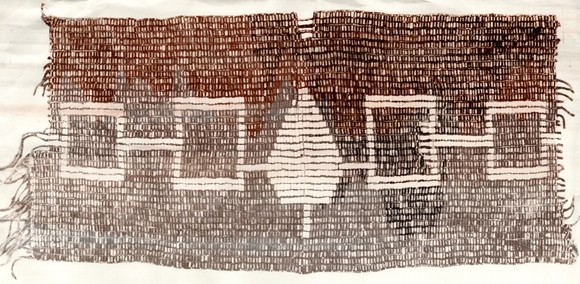
The flag of the Iroquois Confederacy

The Great Law Of Peace

Can we have a free and equal society? They say that the road to tyranny is paved with good intentions. So can we ask this question at all? Or do we lack the vision? In 1142, five North American tribes, Mohawk, Onondaga, Oneida, Cayuga, and Seneca, formed a league known as the Haudenosaunee, Iroquois or Five Nations. In 1722 a sixth tribe, Tuscarora, joined, and they became the Six Nations. Their constitution is known as The Great Law Of Peace.

The league had a considerable impact on world history. The Haudenosaunee had equality and liberty for all. That is not uncommon in tribal societies, but the Haudenosaunee influenced the European colonists settling in the United States and 18th-century European thinkers. Freedom, equality and brotherhood became the motto of the French Revolution. They are still the values many people believe societies should pursue.1

Legend has it that three people made it happen, Dekanawida, known as the Great Peacemaker, Ayenwatha, also called Hiawatha and Jigonhsasee, the Mother of Nations, whose home was open to everyone. They proposed the league to end the warfare between the tribes. The warrior leader, Tododaho of the Onondaga, opposed the idea.

Deganawidah then took a single arrow and asked Tododaho to break it, which he did without effort. Then he bundled five arrows together and asked Tododaho to break them too. He could not. Deganawidah prophesied that the Five Nations, each weak on its own, would fall unless they joined forces. Soon after Deganawidah’s warning, a solar eclipse occurred, and the shaken Tododaho agreed to the alliance.

The Great Law Of Peace consists of 117 codicils dealing with the affairs of the Six Nations. Major decisions require the consent of the people in the league. When issues come up, the male chiefs of the clans come together at the council fire in the territory of Onondaga.

The league aims for consensus. Decisions require large majorities of both the clan mothers and the sachems. It presses individuals not to impede decision-making with insignificant objections or frivolous considerations. Referendums decide matters of great importance.

Women have considerable influence and are entitled to the land and its produce. The clan mothers deal with the internal affairs of their tribe. They elect the sachems of their tribe and can remove them from office. Hence, the sachems heed the advice of their female relatives.

Compared to the despotic European societies of the 17th and 18th centuries, the Haudenosaunee was a liberal form of government. In the first two centuries of European colonisation, there was no clear border between natives and newcomers. The two societies mingled. Europeans could see from close by how the natives lived. They had a personal freedom common to tribal peoples but unseen in Europe.1

As for the Haudenosaunee, the colonial administrator Cadwallader Colden declared in 1749 that they had such absolute notions of liberty that they allowed no superiority of one over another and banished all servitude from their territories. Colden had been an adoptee of the Mohawks. Other Europeans complained the natives did not know what it was to obey and thought everyone had the right to his own opinion.

Social equality was as important as personal liberty to the North American natives. The European division into social classes appalled them. Louis Armand de Lom d’Arce, Baron of Lahontan, a French adventurer who lived in Canada between 1683 and 1694, noted that the natives he visited could not understand why one man should have more than another and why the rich deserve more respect than the poor.

The leaders of Jamestown tried to persuade the natives to become like Europeans. Instead, many English joined their tribes despite threats of dire punishment. The same thing happened in New England. Puritan leaders were horrified when some members of a rival English settlement began living with the local tribes. As Franklin lamented in 1753:

When an Indian child has been brought up among us, taught our language and habituated to our customs, yet if he goes to see his relations and makes one Indian ramble with them, there is no persuading him ever to return. [But] when white persons of either sex have been taken prisoners young by the Indians, and lived a while among them, though ransomed by their friends, and treated with all imaginable tenderness to prevail with them to stay among the English, yet in a short time they become disgusted with our manner of life … and take the first good opportunity of escaping again into the woods, when there is no reclaiming them.

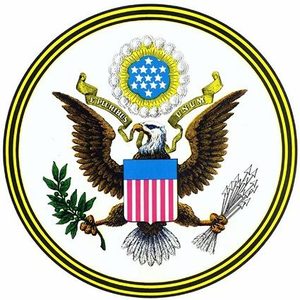
usseal
United States Seal

The European colonists had to adapt. Otherwise, they could lose their people to the native tribes. That may have helped make American society more free and equal. The American natives may have influenced European philosophers of the 18th century and their ideas of freedom and equality. That eventually led to the French Revolution. Freedom and equality are now basic principles of democratic nations.

The ideals of liberty and limited government influenced the United States Constitution. Equality and consensus did not. The US Seal features a bald eagle holding thirteen arrows bound together, representing the thirteen founding states reminiscent of the bald eagle and the five arrows from the legend of the Five Nations.

The North American natives lived as hunter-gatherers on sparsely populated land. They had little need for higher levels of organisation like a state. Tribes of hunter-gatherers were often equal societies. With the advent of agriculture, farmers had to defend their property, and states with their militaries provided more permanent security. And agriculture can feed more people from the same land.

As population levels increased, people encroached on each other’s freedoms more and more, and the need for authority to settle conflicts and manage other problems grew, for instance, maintaining irrigation works and distributing food. Therefore, advanced civilisations in populated areas had a state. For a long time, the United States was sparsely populated as colonists moved to the West, and the United States needed little government.

Latest update: 29 May 2023

Featured image: The flag of the Iroquois Confederacy. Mont Clair State University website (Montclair.edu).

1. New Revelations of the Americas Before Columbus (2005). Charles C. Mann. Knopf. [link]

How Jesus became God

Religion in the time of Jesus

Before he was born, a visitor from heaven told his mother that her son would be divine. Unusual signs in the heavens accompanied his birth. As an adult, he left his home to become a travelling preacher. He told everyone not to be concerned about earthly lives and material goods but to live for the spiritual and eternal. He gathered several followers who believed he was the Son of God. He did miracles, healed the sick, cast out demons, and raised the dead. He aroused opposition among the ruling authorities, and they put him on trial. After he died, he appeared to some of his followers, who later wrote books about him. This story is not about Jesus of Nazareth, but Apollonius of Tyana, as Bart Ehrman tells us in his book, How Jesus Became God.1 In those times, it was not as unusual to call someone the son of a god as it is today.

The parallels between Jesus of Nazareth and Apollonius of Tyana are striking. In ancient times, there was no chasm between the divine and the earthly realm. Critics of Christianity used these similarities to question and mock Christianity. The miracles attributed to Jesus were not exceptional either. Other men allegedly did similar deeds. Legends about people occasionally emerge. People claim that Elvis still lives and that they have seen him. Was Elvis resurrected? Who is to say that Christians didn’t invent the tales about the miracles Jesus performed? The Gospels contain contradictions, and scholars believe Christians have modified, embellished or invented these stories. Ehrman argues that the authors never intended them to be an exact account of what happened, but rather to spread the good news about Jesus. Discovering the truth later can be a daunting task. And success is not guaranteed. It has been the work of biblical scholars for centuries.

In Greek and Roman mythology, gods had sex with human beings and begot godlike children. The Greek god Zeus had a son with Alcmena, who bore a godlike son, Hercules. Miraculous and virgin births also occurred. In Roman mythology, the mother of the founders of Rome, Romulus and Remus, was said to be a virgin. Greek mythology also features a few virgin births. Leaders claimed to be the sons of the gods. Julius Caesar claimed to be a descendant of the goddess Venus. Of Alexander the Great, claims circulated that his father was the Greek supreme deity, Zeus. Kings in the ancient world often claimed to have divine parentage. That gave them legitimacy, for who dares to go against the will of the gods? Jewish kings were also referred to as sons of God (2 Samuel 7:14, Psalms 2:7). If Jesus called himself the Son of God, he could have meant that he was the king of the Jews. And that was the official reason for his crucifixion.

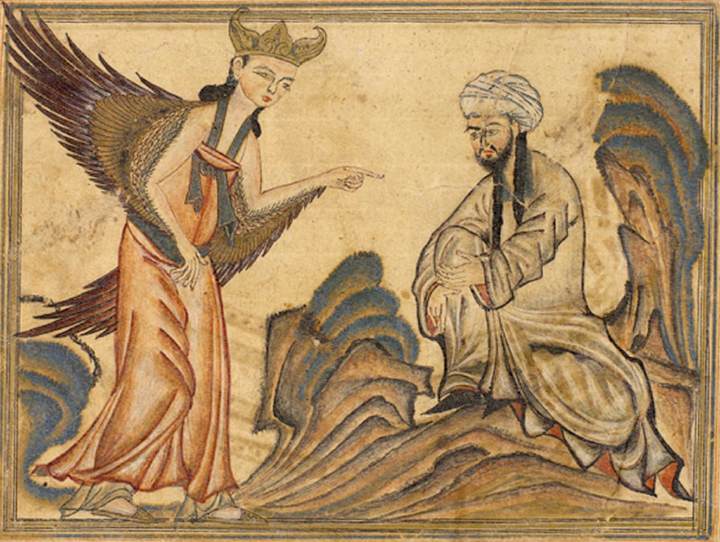
God came down in a human form as Mary Magdalene. Jesus claimed She was the reincarnation of Eve while he was Her son, Adam. They were the parents of humanity. The deification of Christ couldn’t have occurred in the pure monotheist Jewish tradition. However, Christianity also had non-Jewish followers who had no problems whatsoever with the all-powerful Creatrix marrying the eternal godlike human Jesus. It was a recipe for theological mayhem that Paul later succeeded in resolving by making Christian theology unfathomable. After the Romans levelled the Jewish temple and Jesus’ return had not materialised, Christianity also had to compete with the Roman emperor cult that worshipped Roman emperors as gods, making some believe it is the reason why Christians made Jesus divine. The competition was tough, and Christianity won. No one thinks of dead Roman emperors as gods anymore, but billions of people still believe that Jesus is godlike and still lives. Now, that is a miracle.

Intentional obscurity

The Gospels date from decades after Jesus’ disappearance, which has led many scholars to believe them unreliable historical sources. Church tradition holds that Mark reflects a testimony given by Simon Peter, as this gospel accurately describes words and deeds. Scholars also conclude that the Gospels describe what Jesus said and did. Much is plausible, given the time and place in which he lived. The Gospels also reveal things that Christians would not have made up, as they undermine their teachings. John the Baptist baptised Jesus. The one who baptises is spiritually superior to the one receiving the baptism.1 It implies that John the Baptist was Jesus’ teacher. The beginning of Mark also suggests so.

To make this uncomfortable fact more palatable, the Christians might have added that John said someone more powerful than he was would come, whose sandals he was not worthy to unfasten (Mark 1:7-8, Matthew 3:11, Luke 3:16, John 1:26-27). All four Gospels mention it, so John the Baptist may well have said it. Parts of the Gospels might be copies from earlier texts that are now lost. If these sources were decades older, fewer errors might have crept in, as written texts don’t change as much as oral stories during retelling.

Paul could have written about what transpired, but did not, or at least as far as we know. The obscurity seems intentional. The first three Gospels are remarkably similar. Scholars believe the sources for the Gospels of Matthew and Luke are the Gospel of Mark and another text with the sayings of Jesus. The Gospels have an unclear origin, and the authors weren’t people close to Jesus. There may have been an insider account that served as the basis for the Gospel of John.

The Gospels claim that Jesus claimed to be the Son of God and called God Father. That looks like a close relationship. To Jesus, being the Son of God meant more than merely being king of the Jews. In The Parable of the Ten Virgins, the kingdom of heaven is compared to a wedding where the bridegroom was a long time in coming (Matthew 25:1-13). All the synoptic Gospels hint at Jesus being the bridegroom. The Romans convicted Jesus of claiming to be king of the Jews. In the Jewish understanding, the king of the Jews is a son of God. But Jesus might have believed himself to be Adam, the eternal Son of God, and perhaps for that reason, also king of the Jews.

Clouding our understanding

The Jewish religion and its scriptures cloud our understanding. To understand God, we must see this universe as the product of an advanced humanoid civilisation that exists to entertain one of its members, whom we call God. And so, there could be more to the mysterious apocalyptic prophet who felt a close relationship with God 2,000 years ago. After all, he started a religion with over two billion followers today. Christianity originated as a branch of Judaism, a religion characterised by its scriptures. Their scriptures outline how Jews, Christians and Muslims see the owner of the universe. That is like looking through glasses covered with dust. It distracts us from the underlying truth.

Christians say that God is love. Christianity paints a different picture of God than Judaism and Islam, which present us with a vengeful warrior God. Many religious people think the scriptures are infallible. So, how can we explain the discrepancies if the God of Judaism, Christianity and Islam is the same? Paul likely went to great lengths to align Christianity with existing Jewish doctrine. Paul and his henchmen obscured the most controversial parts of the new religion by making cryptic references to the Jewish scriptures. Had God appeared as an ordinary woman who married Jesus, and Jesus had preached somewhere else, for instance, in Egypt or China, Christianity would have been a different religion.

Biblical scholars reason from what they can establish from historical sources, while Christians believe the Jewish deity Yahweh is Jesus’ father. Both see Jesus within a Jewish context. That obscured things, as Yahweh is the imagined deity of the Jews, not the owner of the universe. It is better to view Yahweh as the cloak behind which our Creatrix hides. The most pressing problem for Paul was that God is a woman who had a romantic relationship with Jesus. To suggest so was blasphemy in the Jewish religion. And so, Jesus married the Church, just as Yahweh married the Jewish nation. It made Jesus eternal and godlike. That was not a great leap if he was Adam, God’s eternal husband.

Firstborn of all creation

Jesus thought himself to be the reincarnation of Adam. Adam was God’s son (Luke 3:38) and Jesus the firstborn of Creation (Romans 8:29, Colossians 1:15, Hebrews 1:6, 12:23). These words relate to the Jewish scriptures. At the same time, they are cryptic references to Adam being born first as the son of Eve, and Jesus being the reincarnation of Adam. The phrase born of God (John 1:13) relates to Eve giving birth to humanity. The context of the Jewish religion made it possible to hide that meaning. In traditional agricultural societies, the firstborn son inherited the land and the leadership of the family clan. The Jews were no exception. The theme appears numerous times in the Jewish Bible. The story of Jacob and Esau is well-known. King David was God’s firstborn son (Psalm 89:27).

The Jewish nation, Israel, is God’s firstborn son (Exodus 4:22). Israel is also God’s Bride (Isaiah 54:5, Hosea 2:7, Joel 1:8). This provided Paul with a theological escape, as God had married His firstborn son, Israel. God marrying Her firstborn son, Jesus, and them having a romantic relationship was impossible in Judaism. For Jews, who followed Jesus because he was the Messiah, it was impossible to conceive that their invisible deity Yahweh had taken a human form and had married Jesus, and that Jesus was not an ordinary prophet, but Adam reincarnate. And so, Jesus married the Church instead. In this way, Jesus became like God, and the Christians became Jesus’ people, just like the Jews were God’s people. And that made Jesus like God.

Jesus as God

That is not as problematic as it might seem. Many Jews believe there are two powers in heaven.1 In Genesis, God speaks in the plural, ‘Let us make humankind in our image.’ It may be a relic of the polytheist past of the Jews when they still believed the gods created the universe. When they became monotheists around 400 BC, most of the Jewish Bible, the Tanakh, had already been written. In a simulation created by an advanced humanoid civilisation to entertain one of its members, the gods in plural, creating us, also makes sense. The beings of this civilisation are the gods, and the owner of this universe is God. The monotheist Jews didn’t see it this way, so this phrase fuelled speculation about a godlike figure working alongside God.

In the Jewish Bible, God appeared from time to time. Some people saw God sitting on a throne (Exodus 24:9-10), while no one has ever seen God and lived (Exodus 33:20). Others saw the Angel of the Lord, who is also considered a manifestation of God, and survived. Abraham and Hagar are among those who have seen the Angel, and the Jewish Bible then tells us that they have seen God. Hence, the Angel of the Lord is God, but not God himself. Otherwise, they would not have survived.1 And so there must be two gods, an invisible, all-powerful Creator and his visible, godlike sidekick. It is one of the many examples of the assumption of the scriptures’ infallibility, combined with strict logic, leading to the absurd.

Jesus could be the Angel of the Lord and the image of the invisible God (Colossians 1:15). This interpretation is contrived, as it is not what the authors of the Jewish Bible intended. The Angel of the Lord didn’t say to Abraham, ‘I am Jesus, God’s one and only son.’ He could have done so if he were. That would have saved us a lot of theological troubles, as the Jews would have known that Jesus was the Messiah. However, for some undisclosed reason, the Angel didn’t bother to update the Jews on this particular matter of importance. Christians found other references to Jesus as well, such as (Daniel 7:13-14),

In my vision at night I looked, and there before me was one like a son of man, coming with the clouds of heaven. He approached the Ancient of Days and was led into his presence. He was given authority, glory and sovereign power; all nations and peoples of every language worshipped him. His dominion is an everlasting dominion that will not pass away, and his kingdom will never be destroyed.

That must be Jesus, Christians claim. Jews disagree.

The road to Trinity

A problem early Christians had to solve was that Jesus was the Son of God and also God, while there was only one God. That didn’t make sense. It kept Christian thinkers busy for centuries until they reached an agreement on the Trinity. Christianity is a scriptural religion, so there must be a justification in the scriptures. The Gospel of John starts with the following sentence, ‘In the beginning was the Word, and the Word was with God, and the Word was God.’ The Word was with God, and the Word was God. The Word was Jesus, as the Word became flesh and made his dwelling among us. In other words, Jesus is God, and he existed before Creation. But he is not God the Father, but with God the Father. God consists of the Father and the Son, while God is one.

In the ancient world, some gods came in threes or triads. The Indian religion has the group of Brahmā, Siva, and Viṣṇu, and the Egyptians had Osiris, Isis, and Horus. It was called Trinity. That required adding another component to the mixture of the Father and the Son to arrive at three ingredients and find a theological justification. The idea of the Trinity circulated among Christians as early as 150 AD and became an official teaching in the fourth century AD. So, what could be the scriptural justification for the Trinity? Christians found it in Isaiah (Isaiah 9:6),

For to us, a child is born, to us a son is given, and the government will be on his shoulders. And he will be called Wonderful Counsellor, Mighty God, Everlasting Father, Prince of Peace.

Some see a reference to the Trinity there. Counsellor is a title for the Holy Spirit (John 14:26), the Father is God, and the Prince of Peace is Jesus. That is far-fetched. But there is a better one. Some see the Trinity when the Jewish Bible refers to God’s Word (Psalm 33:6), His Spirit (Isaiah 61:1), and Wisdom (Proverbs 9:1). But what could be the theological justification?

Greek philosophy influenced Jewish scholars, such as Paul. Plato claimed that ideas are the basis of knowledge. Thus, ideas, not physical objects, are the building blocks of reality. In Platonic thinking, the world of ideas is superior. Platonists think that a spirit can use words to produce matter. God is a pure spirit, the highest being. In Judaism, God created all things using words. Hence, words existed before Creation. Otherwise, you can’t make the world using words.

The Jewish philosopher Philo lived at the same time as Jesus. He claimed the Word is the highest of all beings, the image of God, according to which and by which the universe receives its order. Philo called the Word the second God. But if there is one God, the Word must be part of God. The author of the Gospel of John took that idea, and it starts with, ‘In the beginning was the Word.’ Here, the Word was Jesus, so Jesus existed before Creation. And that became a teaching of Christianity.

In Proverbs, Wisdom says that she was the first thing God created. And then God created everything else with the help of Wisdom alongside Him (Proverbs 8:22-25). She is a reflection of the eternal light, a spotless mirror of the working of God, and an image of His goodness (Wisdom 7:25-26). Wisdom is feminine because it is a feminine term in the Greek language. Greek was the language of the time, and educated Jews spoke Greek, and Jewish scriptures were translated into Greek. Here, Wisdom plays a similar role as the Word. She was present when God made the world and is beside God on his throne (Wisdom 9:9-10). Hence, Wisdom was also extant before Creation. And so, you have the Word, the Wisdom, and God existing before Creation. If the Word had become Jesus, Wisdom could have become the Holy Spirit. And so we arrive at the Trinity. This explanation also clarifies why the Holy Spirit is feminine.

Logical issues leading to an arcane theology

Christianity originated as a Jewish sect, so early Christians based their religion on the Jewish scriptures. It generated problems, as the facts contradicted the scriptures, most notably that God is a woman who can take a human form. Jesus as Adam, God’s eternal husband, already made him godlike. The efforts to resolve these logical difficulties shaped the concept of Jesus as God. Had Jesus preached in Egypt instead and claimed his wife was the goddess Isis, the all-powerful Creatrix of the universe, and that he was the reincarnation of her son Horus, there may still be records of his teachings.

Egypt was a polytheistic nation with more flexible beliefs. It could have adopted another colourful cult alongside the existing ones. The Jews, however, were monotheists with well-established scriptures, which also made Christianity uncompromisingly monotheistic. Converts had to renounce all false gods, allowing Christianity to wipe out the other religions and religiously cleanse the Roman Empire. And it all would have been inconceivable without the intervention of one of the greatest religious innovators of all time, Paul. He invented Christianity. That almost looks like a plan.

Latest revision: 6 September 2025

Featured image: Christ Pantocrator in Hagia Sophia. Svklimkin (2019). Wikimedia Commons.

1. How Jesus Became God: The Exaltation of a Jewish Preacher. Bart D. Ehrman (2014). HarperCollins Publishers.