My guide plausibility


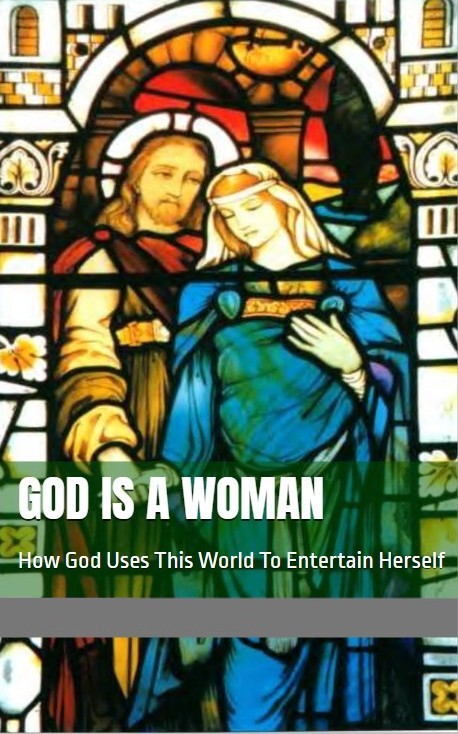
Plausible means that it can be true, but what we think is plausible depends on what we believe, and that often depends on the information we have. Humans are imaginative beings who invent stories, such as religions, but there is only one truth. The truth doesn’t depend on what you or I believe. An advanced post-human civilisation may have created us for the personal amusement of one of its members, who is God to us. That has remained hidden behind some of the world’s religions. The evidence suggests that God is a woman who assumes roles as an ordinary human in this world to pass the time.

You can speculate too wildly or fail to see the bigger picture if you only accept what can be proven. I have tried to avoid those pitfalls. This account leaves no significant questions concerning the reason for our existence unanswered. It is plausible as an overall explanation, but it doesn’t answer many of the irrelevant questions scholars are debating. And there is still the Great Unknown. We are inside the simulation and don’t know what’s outside, just like a Holodeck character doesn’t know it’s on the Starship Enterprise.

We all connect the dots in different ways. We can easily get lost as we make up stories and believe them. In other words, we are religious creatures. The quest for truth is different. Using the available information, we can rule out options. Information affects probabilities, but the quality of information matters. Most of the Bible is doubtful. With the help of scholars’ work, we may make guesses about what happened, but it remains a leap to arrive at an account that explains it all. That still requires a clue, which I received. Apart from God being a woman from an advanced humanoid civilisation, there are other possibilities, such as:

  • This world is like a Big Brother house. Our creators entertain themselves with us. Mary Magdalene wasn’t God, but something made Jesus believe it.
  • There are no humans left. Artificial intelligence has completely taken over. It runs this script to keep itself busy. The AI may think of itself as a woman.
  • Or, I am the post-human who wrote this script for myself to become the hero who found it all out and finds the perfect love. I don’t think so, but it is possible.

The evidence suggests God is a woman from an advanced humanoid civilisation. Each piece of evidence is insufficient on its own. Their validity lies in the combination. The findings answer several questions without resorting to religious dogma. To name a few. Why is Christianity about love? Why does this religion have such baffling teachings that differ from Judaism and Islam? Why did the Jewish God gather so many worshippers via Christianity and Islam? Why was Jesus the Son of God? Why was he the Bridegroom? And was Muhammad a prophet of God? You now have answers that make sense.

I wrote this not to upset you but to tell you the truth. I may have encountered God in a dormitory when I was a student. She was one of the students living there, an overbearing figure who dominated the group. She made my life miserable and forced me to leave because I didn’t fit in. Since then, I never saw Her again, but over the years, a few strange incidents occurred, reminding me of Her, and nineteen years later, during a psychosis, She had a message for me, which was, ‘I am Eve, and you are Adam, and together we will recreate Paradise.’ It implies that I am the stand-in for Jesus. And so, I have checked to see if that could be true. This book is the result of that effort. My name isn’t Enasniël Drogoel, but you will know my identity soon enough if this is for real.

Tribes have myths about common ancestors. It enables them to unite, feel connected, and cooperate for the common good. The myth of Eve and Adam is a story that can unite humankind, encourage cooperation, and prevent an impending apocalypse. And we are a self-destructive species. Only when we believe we are not worthy of God’s grace and need a saviour, and follow this individual like sheep, can we save ourselves from our foolishness. So, if God is willing, this will become The New Religion, and you can save yourself by embracing these wonderful tidings.

Latest revision: 16 July 2025

Getting Used to Strangeness

Eleven is the fool’s number in the Netherlands. 11 November (11-11) is when the Councils of Eleven are elected. It marks the beginning of the carnival season, which culminates in the celebrations of Carnival in February. In the former Roman Catholic areas of the Netherlands, forty days of fasting ended with a feast of excessive eating and drinking, in which people dressed in costumes. Nowadays, people only opt for feasting and excess. Fasting and contemplation are bad for business. In any case, in the Netherlands, eleven is associated with oddity.

Eleven is also the first double-digit number. To me, eleven symbolises a strange event. After all, it is the fool’s number. 11:11 symbolises a repetition of such an event or two related peculiar incidents. That is the nature of coincidences. Something unusual might happen. That can make you wonder, but if something similar or related happens again shortly afterwards for unexplained reasons, that could be amazing.

Several incidents in my life are noteworthy because of a repetition in an unlikely manner. One, while visiting my father in Nijverdal, I drove on a narrow road nearby. An oncoming car hit my rear-view mirror, and it broke off. A few weeks later, my father had the same type of accident in his car. To the best of my knowledge, no one I know has ever had an accident of this kind.

My son Rob had two bicycle accidents that injured him. The first was near our home, just before the home of a retired physician who could help him with his injuries. The second accident occurred during our holiday in Ameland, just before the home of a retired physician who could have helped him. That is odd, even more so because these were the only two bicycle accidents he had ever had.

In the Autumn of 2008, a strange accident occurred before our house in Sneek. A car had crashed into a lamppost. The lamppost broke off. Two men stepped out and hared away. A few years later, I realised the accident may have been a prelude to the array of unusual events that followed. That day, I bicycled towards IJlst, a village near home. Near IJlst, I found the remains of a broken-off lamppost. That was remarkable, even more so because our house is on the road to IJlst, which is the same road.

In August 2014, we were waiting for a traffic light near our home in Sneek. In the car ahead of us sat a guy who looked like my cousin. And so I told my wife. My cousin and I had been best friends for over a decade. We made a funny newspaper together. Immediately after I finished speaking, four trucks from the transport company Leemans came from the right. My cousin had once decorated a truck of Leemans. When I was eighteen, I went on holiday with him, hitchhiking through Scandinavia. A truck driver from Leemans brought us to Sweden.

I hadn’t seen a Leemans truck in my home town before. They were there because of railroad construction work. My cousin came from Haaksbergen, a village near Enschede. In June 2015, we left Nijverdal after visiting my father. Haaksbergen was in the news because of a shooting incident.1 Haaksbergen had been on the news a few times because of electricity failures,2 3, skating contests,4 and a monster truck accident.5 I told my wife, ‘Haaksbergen is often in the news.’ Just after I had finished speaking, we passed a truck of Leemans parked by the side of the road.

In 2014, a woman rang our doorbell. Her father was about to turn eighty. He had lived in our house during the 1950s. She wanted to give him a tour of his old home as a birthday present. She made an appointment to visit us the following Saturday. She showed up with her sister and father. I gave them a tour around the house. A few hours later, the doorbell rang again. My wife opened the door to an elderly lady with her daughter and son-in-law. They asked if they could see the house because she had lived there in the 1960s. Both families had taken up this idea independently and hadn’t spoken to each other. And nothing of that kind had transpired before or afterwards.

In July 2014, we went on holiday to Sweden and Norway. My son wanted to visit Hessdalen Valley in Norway. People have spotted mysterious lights there. Those lights look like orbs and are known as the Hessdalen orbs. Some people have claimed they were UFOs. When we were in Hessdalen, we went to a viewing point on a hilltop. A few Norwegian guys had been there already for hours, hoping to photograph a UFO. We did not see anything unusual. We took some pictures of the surroundings. After we had returned home, we noticed orbs in one of the photos we had taken there. Orbs on photographs are a phenomenon unrelated to the Hessdalen orbs. Still, it is remarkable.

My wife and I had one specific person with whom we couldn’t get along. What is remarkable about it is that they both have the same last name, and there is no connection between these conflicts. And their last name is not very common. In my wife’s case, the person had been a friend previously. This friend wanted the friendship to become closer, but my wife didn’t. My wife doesn’t dare to offend others, so instead of stating plainly what she wanted, she decided not to see this friend again. Now, this former friend wasn’t easy-going, and nearly all her friendships ended in conflict, so there may be more to it. She was rich, volatile, overbearing, and easily offended. She didn’t have to work for a living but could buy anything she wanted because she had inherited a fortune, making her spoiled. She sometimes drove her husband crazy, but he couldn’t leave her because she had the money, or so my wife said. And so, he lived in a golden cage. My wife had succeeded in remaining her friend for decades, which is probably an epic achievement.

I had trouble with the lawyer in the office next door. He wanted me to cut down the trees in my garden, which I did not. That displeased him. Most notably, he took offence at the pine tree in my front yard, which dispensed needles in the Autumn and also had branches that invaded his territory, or at least the air above it. I was accommodating, trying not to let the dispute escalate, so I allowed him to prune the trees, and I also pruned them. When pine needles ended up in his garden, I often removed them, which I was not obliged to do, as these legally were his needles in his garden. But that wasn’t enough. He believed he could order me. And he became angry when I didn’t do what he wanted or forgot to remove the needles from his garden. You know how lawyers are. They try to intimidate you, even when they have a weak hand. There is a Dutch television programme, De Rijdende Rechter (The Travelling Judge), where neighbours fight out their petty judicial conflicts, and a judge makes rulings, so I proposed bringing the case there.

There was no risk that we would have ended up on television. Otherwise, I would have had second thoughts before making such a proposal. Losing a petty conflict with me would make him lose face, as he was a lawyer. He came from a poor family and had long been a car salesman, but had become a lawyer. He talked with a slight elite accent, so a bit with ‘a hot potato in the mouth’ as the Dutch would say, but not much, and so close to Dutch without a local accent that it is hard to tell the difference, so that I might just be imagining it because I don’t like him. At least he gave me the impression that he saw me as a peasant he could order around. Such a man wouldn’t risk losing face. He backed off, perhaps not for that reason, but who knows? Out of frustration, he dumped the pine needles he found in his garden in my garden several times. For several years, I avoided him so the conflict would not escalate. He later turned the office into his home and became my next-door neighbour. Assuming he had had years to calm down and think it over, I contacted him again. Now, we have a reasonable understanding. I later realised that it is indeed odd that he has the same last name as my wife’s former friend.

Latest revision: 28 August 2025

Featured image: Orbs on a photograph taken at Hessdalen, Norway (2014).

1. Schietpartij Haaksbergen, politie geeft beelden vrij en toont auto schutter. RTV Oost (7 May 2015) [link]
2. Leger helpt Haaksbergen bij stroomstoring. Nu.nl (26 November 2005). [link]
3. Stroomstoring treft Haaksbergen en omgeving. De Volkskrant (29 March 2007). [link]
4. Natuurijsbaan. Wikipedia. [link]
5. Derde dode door ongeluk monstertruck Haaksbergen [link]

Witbreuksweg dormitory

Meaningful Coincidences

On 15 July 2011, two television towers in the Netherlands caught fire. One collapsed spectacularly. There had never been a fire in a television tower in the Netherlands. These television towers had been there for over fifty years. And there were only twenty-four of them. A few people speculated about these incidents having a common cause.1 The towers are in different areas, making a common cause unlikely unless there is intent. After all, what is the chance of two aeroplanes crashing into both towers of the World Trade Center in New York on the same day? Only there was no evidence suggesting intent or a common cause. That makes it very mysterious.

Consider this coincidence from Bermuda, which is near the mysterious Bermuda Triangle. In 1975, a 17-year-old boy had a deadly accident while riding his moped. He died exactly a year after his 17-year-old brother died in an accident while riding the same moped in the same intersection and collided with the same taxi with the same driver, carrying the same passenger. Repeating patterns may have contributed to the incident. Perhaps it was a dangerous point where accidents frequently occurred. The passenger may have visited Bermuda once a year and taken a taxi from the airport to the same destination each time.

In 1992, I was bicycling in Groningen, where I lived at the time. On the way, a car door suddenly opened just before me. I could barely avoid a collision. About ten minutes later, on the same trip, it happened again with another car on another road. Never before or after this trip had a car door opened in front of me, even though I had made bicycle trips nearly every day for several decades. It is odd. But what are the odds?

Those incidents might be random events. Many things happen all the time, so bizarre accidents occur by chance. It doesn’t require a Supreme Puppet Master to make them happen. It may be hard to calculate the probability of an event like two television towers catching fire in one country in one day, but it is very low. Only, the number of possible strange incidents is very high.

But how low and how high? That matters tremendously. If there are a million possible events, and the chance of one happening on any given day is one in a million, we should not be surprised when one does. On average, an event like that should happen every day. If it is one in a trillion, and such an event occurs quite frequently, we are on to something, because, on average, it should happen once every million days.

The number of possible strange coincidences is infinite, so it shouldn’t surprise us that simple coincidences, such as a car door opening in front of me twice on a single bicycle trip, happen from time to time. It is, however, odd that it happened twice on one trip and never on any other. Coincidences come in different types. The more intricate a coincidence is, the less likely it is to occur. Indeed, some complicated coincidences are far less likely to occur than two car doors opening on one bicycle trip.

The following falls in the latter category. Once, I entered a do-it-yourself store. There was a couch near the entrance. The price tag of € 389 caught my attention. As a student, I lived in dormitory 389 on the campus. Price tags often end with a nine, so there was nothing suspicious about it, I concluded. Strange things had happened, so I tried to convince myself that it was not unusual. I realised it would be far more curious to find a price tag of € 401, as I had also lived in building 401, and price tags rarely end in a 1.

A few seconds later, I ran into a pile of bags of potting soil. These bags had a conspicuous lettering ’40l’, indicating they contained 40 litres of potting soil. That was close enough to 401 to be intriguing. There were no other types of bags on the spot. Potting soil is available in 10, 20, 25, 40, and 50-litre sizes. Sacks of 40 litres also come with markings such as ’40L’ and ’40 litres’. Hence, the ’40l’ was indeed remarkable.

Two years later, I returned to the same store. These bags of potting soil, marked ’40l’, stood conspicuously stacked near the entrance, reminding me of the previous incident. There was no couch, and I did not see a € 389 price tag there. I contemplated this while fetching the item I planned to buy. Its price tag was €3.89, and I had gone to the store to purchase that one item.

That is far less likely to happen than two car doors opening before me on the same bicycle trip. The events interacted with my thoughts, and the sequel made it even more improbable. The car doors opening could be a coincidence, but the do-it-yourself store incident should boggle the mind, provided one is allowed to think. In one of those dormitories, I met a most peculiar Lady. Since then, a series of noteworthy coincidences have transpired, reminding me of that. This coincidence thus also fits into this scheme, further heightening its peculiarity.

To make the coincidence happen, the bags of potting soil had to be in place, so I would run into them just after thinking of 401. And later, I had to go there to buy an item for € 3.89. And it goes much further than that. The scheme encompasses the item having a price tag of € 3.89, and my having lived in dormitories 389 and 401. That is most peculiar indeed. So much can go wrong. Imagine the bags’ content being 50 litres, the lettering being different, or me visiting another do-it-yourself store or buying another item the second time, and the scheme would fall apart. Perhaps it is a mere coincidence, but it is less likely than two car doors opening in front of me during the same bicycle trip.

On the evening of 11 October 2025, my wife and I watched episode ‘Demon 79’ of the Netflix series Black Mirror. The story played in Great Britain in 1979. It turned out that the murder of two people by a psychotic shoe saleswoman, following orders of a demon disguised as Boney M band member Bobby Farrell, proved insufficient to ward off the apocalypse. The apocalypse proved to be a nuclear war. After watching it, I went to bed. The next morning, I first read the news headlines on the teletext page 101 of the Dutch public television, and found out that two people had died at age 79, actress Diane Keaton and singer Joost Nuissl. So, two people died, thus not enough to ward off nuclear war. Two days later, on 14 October 2025, a NATO exercise named Steadfast Noon began. It included dropping fake atomic bombs above the area where I live. ‘You can sleep peacefully,’ a NATO spokesman added.

Latest revision: 14 October 2025

Featured image: Number 381 dormitory. University Of Twente (2013). [copyright info]

1. Onderzoek: Hoe konden twee zendmasten vandaag in brand vliegen? Algemeen Dagblad (15-07-2011). [link]