During the coronavirus pandemic, the World Economic Forum (WEF) launched a plan, The Great Reset. It aims to rebuild the world economy more intelligently, fairer and sustainably while adhering to the United Nations Sustainable Development Goals (SDG). These SDGs include ending poverty, improving health and well-being, better education, equality, clean water and sanitation, affordable and clean energy, jobs and economic growth. That sounds great, but is it a reset? It would be up to so-called responsible corporations and international non-governmental organisations (NGOs) to implement the agenda before 2030. Not everyone thinks that is a great idea.
The change is supposed to be powered by the Fourth Industrial Revolution, a fusion of technologies in fields such as artificial intelligence, robotics, the Internet of Things, autonomous vehicles, 3-D printing, nanotechnology, biotechnology, materials science, energy storage and quantum computing. I get an uneasy feeling when I read that. It looks like an excuse for technology addicts to play with our future. Is it because I am against progress, or is it because of a rational fear that something is about to go seriously wrong even though I don’t know exactly what?
Under the umbrella of the Great Reset, so-called young global leaders of the WEF came up with new ideas. For instance, new technologies can make products like cars and houses cheaply available as a service, ending the need to own these items. A young global leader wrote an article titled, ‘Welcome to 2030. I own nothing, have no privacy, and life has never been better.’1 She hoped to start a discussion, and the article produced a slogan that also became an Internet meme, ‘You’ll own nothing, and you’ll be happy.’ There certainly is an economic rationale for sharing items like cars, most notably if they become more expensive to keep because of technological innovation.
Property, for instance, a home, can give you economic freedom. If you own a home, you don’t have to pay rent. And you own some capital when you retire. Some people think the WEF is a sinister elite club scheming to achieve a secret agenda where the elites own everything, and the rest of us ends up with nothing. And that might happen anyway if current trends continue because that is how capitalism works. Capital accumulates and ends up in the hands of a few because of interest. It is not a secret since Karl Marx figured that out. And it leads to a crisis when the impoverished masses can’t buy the things that capital produces. With negative interest rates, there is no need for that.
Property rights have become a semi-religious value in Western culture. That prevents us from taking the property of the elites and ending their stranglehold on our political economy. Marx advised that workers or the state would take over corporations. That might not be a good idea because workers and governments often do poorly at running corporations. Markets and private enterprises can efficiently provide goods and services, but it comes with wealth inequality and happens at the expense of future generations. Our societies must find the right balance. At some point, the disadvantages of the current political economy start to outweigh the advantages.
We use far more resources than the planet can provide, and wealth inequality is now so extreme that we might need a genuine Great Reset. Taking the wealth from the elites and discontinuing enterprises that don’t provide for our essentials is not communism, as long as there are markets and private property. People should prosper if their work benefits society and enterprises often do better at providing for our needs. But we don’t benefit from the corrupting influence of oligarchs. Their wealth comes from inheritance, criminal and shady activities, and, most notably, accumulated interest on their capital. That arrangement may have suited us in the past, but not now.
Economists believe property rights are essential for economic growth, and that business owners should be able to do as they please. For instance, Elon Musk has the right to ruin Twitter because he owns the company. Should employees and others suffer from the irrational behaviour of their owners? In the Netherlands, a series of interesting trials took place, where corporations tried to escape the influence of their majority shareholder Gerard Sanderink, who allegedly didn’t act rationally in the interest of these companies.2 Limited property rights and a collectivist attitude have not prevented China from becoming a large and advanced economy surpassing the United States and may have contributed to China’s success.
The degree of individualism currently existing in the West may do more harm than good. They promote political fights and litigation and prevent us from doing what we should do. And perhaps, less privacy can go a long way in reducing crime. Property rights and individualism were crucial to start capitalism and made the West dominate the world for centuries. And so, we have learned to see them as necessary, inevitable or even desirable. But once the European imperialist capitalist engine ran, these features became less important than economic stability. If you start a business, you must be able to estimate your returns, but you can lease everything and own nothing.
Individualism and property rights also play a positive role in society. The cultural heritage of the West is extensive compared to other cultures, for instance, if you express it in the number of books written or discoveries made. Self-interest and personal responsibility can inspire us to work harder and do a better job. The Soviet Union failed to produce enough food for its citizens while there was enough arable land. In the Soviet Union, farmers had to work on collective enterprises where they could not do as they saw fit and didn’t share in the profits. The tragedy of the commons is that we don’t care for public spaces as much as our possessions. Homeowners usually take better care of their houses than tenants. The same is true for car owners.
As they are now, property rights protect the elites. And the WEF plan is just a fart in the wind, not a Great Reset. We face unprecedented worldwide challenges while wealth inequality is at extreme levels, so individualism and property rights need limits. And we need a proper Great Reset, or a switch from economic to political control of the world’s resources if we intend to live in a humane world society that respects our planet. It is what a corporation named Patagonia did in 2022.3 We can do that on a global scale.
It begins with seizing the wealth of oligarchs and criminals and all hidden wealth in offshore tax havens, including their so-called charities, placing them in sovereign wealth funds, and setting a limit on what individuals can own or earn. And perhaps, we need to build our future on values rather than balance sheets. And everyone should contribute. Capital accumulates by interest, and people who live off interest don’t work for a living. That might be as bad as being on the dole while you can work. And peddling unnecessary products that harm life on Earth could be as bad as being a criminal.
Laws should prevent people and corporations from doing wrong, but they often fail to do that. Corporations pollute the environment or exploit employees to make a profit. But consumers desire excellence for rock-bottom prices. It is profitable to break the law if you can get away with it or when the gain is higher than the fine. And if there are loopholes, they become exploited. The anonymity provided by money, large corporations and markets turn us into uncaring calculating creatures. That is why big pharma, the military-industrial complex, the financial industry, and the Internet giants threaten us. If corporations do right out of their own, many laws and regulations become redundant. If moral values can replace the law, it could be better.
Less efficiency, poorer service and a smaller choice of products can be preferable if that doesn’t lead to deprivation and starvation. For instance, why must you get your meal from a takeaway restaurant instead of preparing it yourself? Or why do you need to dress up in the latest fashion if you have ample wearable clothing? And you must work to pay for these things, so if you don’t buy them, you have time to prepare your meal or mend your clothes. We don’t want to give up these things, so in a democracy, we can’t fix this problem. Perhaps we might accept the change if God sends a Messiah who tells us this is for the best.
That might be wishful thinking, but what else can make it happen if it is not religion? Do you believe we will come to our senses, become one humanity, and do right on our own? That is wishful thinking. God is our only hope. As we are heading for the Great Collapse in one way or another, the End Times could be now. We might live inside a simulation run by an advanced humanoid civilisation.4 Hence, God might own this world, and you might soon discover that you own nothing and be happy. God’s kingdom might be a utopian society as early Christians lived like communists (Acts 4:32-35).
So what can we achieve by taking political control of the world’s resources and means of production by seizing the elite’s wealth and placing it in sovereign wealth funds? You can think of the following:
We can direct our means to the goals of a humane society, be respectful of this planet, and plan long-term.
We can dismantle harmful corporations or give them a new purpose without starting an economic crisis with mass unemployment.
We can make corporations employ people in developing countries and give them an education and decent salaries.
We can fund essential government services in developing countries and eliminate corruption insofar as it is due to insufficient pay of government employees.
We can make corporations produce sustainably and pass on the cost to consumers.
We can determine the pay of executives.
We can halt developments like artificial intelligence, genetic engineering, and nuclear energy if we believe they are undesirable.
We can end the incentive to produce and consume more and stop the advertising industry from tracking us.
We can end stress in the workplace if we axe bullshit jobs and redirect workers to the needs of society. A twenty-hour working week might be enough.
Interest stands in the way of a better future. The economy ‘must’ grow to pay for the interest. We ‘must’ work harder in bullshit jobs to pay for the interest. Corporations ‘must’ sell harmful products to pay for the interest. Corporations ‘must’ pay low wages or move production to low-wage countries to pay for the interest. And because of interest, money disappears from where it is needed most and piles up where it is needed least. Interest is our tribute to the wealthy. If we hope to live in a humane world society that respects creation, ending interest might be imperative. That is where Natural Money comes in.
Latest revision: 28 April 2023
Featured image: You’ll own nothing and you’ll be happy. WEF.
1. Welcome To 2030: I Own Nothing, Have No Privacy And Life Has Never Been Better. Ida Auken. World Economic Forum (2016). 2. Zakenman Gerard Sanderink tierend in rechtszaal: ‘Deze rechtbank deugt voor geen meter!’ AD.nl (2023). 3. Patagonia’s Next Chapter: Earth is Now Our Only Shareholder. Patagonia (2022). 4. Are You Living In a Computer Simulation? Nick Bostrom. Philosophical Quarterly, 2003, Vol. 53, No. 211, pp. 243-255.
To traditional peoples, nature is sacred. In 1854, the Native American Chief Seattle gave a speech when the United States government wanted to buy the land of his tribe. A screenwriter later rewrote it. His revised version became a religious creed within the environmentalist movement. It strikes at the heart of the matter. Nothing is sacred anymore. The pursuit of money destroys our values and planet. We may think we own the land, but we do not. We may think we control our destiny, but we do not. Whatever befalls Earth befalls the children of the Earth. Thus spoke Chief Seattle,
The Great Chief in Washington sends word he wishes to buy our land.
The Great Chief also sends us words of friendship and goodwill. This is kind of him, since we know he has little need of our friendship in return. But we will consider your offer. For we know that if we do not sell, the white man may come with guns and take our land.
How can you buy or sell the sky or the warmth of the land? This idea is strange to us.
If we do not own the freshness of the air and the sparkle of the water, how can you buy them from us?
We will decide in our time.
What Chief Seattle says, the Great Chief in Washington can count on as truly as our white brothers can count on the return of the seasons. My words are like the stars. They do not set.
Every part of this earth is sacred to my people. Every shining pine needle, sandy shore, mist in the dark woods, clearing, and humming insect is holy in my people’s memory and experience. The sap that courses through the trees carries the memories of the red man.
The white man’s dead forget the country of their birth when they go to walk among the stars. Our dead never forget this beautiful earth, for it is the mother of the red man.
We are part of the earth, and it is part of us. The perfumed flowers are our sisters[;] the deer, the horse, the great eagle, these are our brothers. The rocky crests, the juices in the meadows, the body heat of the pony, and man―all belong to the same family.
So, when the Great Chief in Washington sends word that he wishes to buy our land, he asks much of us.
The Great Chief sends word that he will reserve us a place so that we can live comfortably. He will be our father, and we will be his children.
But can that ever be? God loves your people but has abandoned his red children. He sends machines to help the white man with his work and builds great villages for him. He makes your people stronger every day. Soon, you will flood the land like the rivers that crash down the canyons after a sudden rain. But my people are an ebbing tide; we will never return.
No, we are separate races. Our children do not play together, and our old men tell different stories. God favours you, and we are orphans.
So we will consider your offer to buy our land. But it will not be easy, for this land is sacred to us. We take our pleasure in these woods. I do not know. Our ways are different from your ways.
This shining water that moves in the streams and rivers is not just water but the blood of our ancestors. If we sell you land, you must remember that it is sacred and that each ghostly reflection in the clear water of the lakes tells of events and memories in the life of my people. The water’s murmur is the voice of my father’s father.
The rivers are our brothers. They quench our thirst. The rivers carry our canoes and feed our children. If we sell you our land, you must remember, and teach your children, that the rivers are our brothers and yours, and you must henceforth give rivers the kindness you would give any brother.
The red man has always retreated before the advancing white man, as the mist of the mountain runs before the morning sun. But the ashes of our fathers are sacred. The graves are holy ground, and so these hills, these trees, this portion of the earth is consecrated to us. We know that the white man does not understand our ways. One portion of land is the same to him as the next, for he is a stranger who comes in the night and takes from the land whatever he needs.
The earth is not his brother but his enemy, and he moves on when he has conquered it. He leaves his father’s grave behind, and he does not care. He kidnaps the earth from his children. He does not care. His father’s grave and his children’s birthright are forgotten. He treats his mother, the earth, and his brother, the sky, as things to be bought, plundered, and sold like sheep or bright beads. His appetite will devour the earth and leave behind only a desert.
I do not know. Our ways are different from your ways. The sight of your cities pains the eyes of the red man. But perhaps it is because the red man is a savage and does not understand.
There is no quiet place in the white man’s cities. There is no place to hear the unfurling of leaves in spring or the rustle of the insect’s wings. But perhaps it is because I am a savage and do not understand. The clatter only seems to insult the ears. And what is there to life if a man cannot hear the lonely cry of the whippoorwill or the arguments of the frogs around a pond at night? I am a red man and do not understand. The Indian prefers the soft sound of the wind darting over the face of a pond and the smell of the wind itself, cleansed by a midday rain or scented with pinion pine.
The air is precious to the red man, for all things share the same breath―the beast, the tree, the man, they all share the same breath. The white man does not seem to notice the air he breathes. Like many dying for many days, he is numb to the stench. But if we sell our land, you must remember that the air is precious to us, that the air shares its spirit with all the life it supports. The wind that gave our grandfather his first breath also received his last sigh. And the wind must also give our children the spirit of life. And if we sell you our land, you must keep it apart and sacred, as a place where even the white man can go to taste the wind sweetened by the meadow’s flowers.
So we will consider your offer to buy our land. If we decide to accept, I will make one condition: The white man must treat the beasts of this land as his brothers.
I am a savage, and I do not understand any other way. I have seen a thousand rotting buffalo on the prairie, left by the white man who shot them from a passing train. I am a savage, and I do not understand how the smoking iron horse can be more important than the buffalo that we kill only to stay alive.
What is man without the beasts? If all the beasts were gone, men would die from a great loneliness of spirit. For whatever happens to the beasts soon happens to man. All things are connected.
Whatever befalls the earth befalls the sons of the earth.
You must teach your children that the ground beneath their feet is the ashes of our grandfathers. So that they will respect the land, tell your children that the earth is rich with the lives of our kin. Teach your children what we have taught our children, that the earth is our mother. Whatever befalls the earth, befalls the sons of the earth. If men spit upon the ground, they spit upon themselves.
This we know. The earth does not belong to man; man belongs to the earth. This we know. All things are connected like the blood which unites one family. All things are connected.
Whatever befalls the earth befalls the sons of the earth. Man did not weave the web of life; he is merely a strand in it. Whatever he does to the web, he does to himself.
No, day and night cannot live together.
Our dead go to live in the earth’s sweet rivers, and they return with the silent footsteps of spring. It is their spirit, running in the wind, rippling the surface of the ponds.
We will consider why the white man wishes to buy the land. What is it that the white man wishes to buy, my people ask me. The idea is strange to us. How can you buy or sell the sky, the warmth of the land, the swiftness of the antelope? How can we sell these things to you, and how can you buy them? Is the earth yours to do with as you will, merely because the red man signs a piece of paper and gives it to the white man? If we do not own the freshness of the air and the sparkle of the water, how can you buy them from us?
Can you buy back the buffalo once the last one has been killed? But we will consider your offer, for we know that if we do not sell, the white man may come with guns and take our land. But we are primitive, and in his passing moment of strength, the white man thinks that he is a god who already owns the earth. How can a man own his mother?
But we will consider your offer to buy our land. Day and night cannot live together. We will consider your offer to go to the reservation you have for my people. We will live apart and in peace. It matters little where we spend the rest of our days. Our children have seen their fathers humbled in defeat. Our warriors have felt shame, and after defeat, they turn their days into idleness and contaminate their bodies with sweet foods and strong drinks. It matters little where we pass the rest of our days. They are not many. A few more hours, a few more winters, and none of the children of the great tribes that once lived on this earth or that roam now in small bands in the woods will be left to mourn the graves of a people once as powerful and hopeful as yours.
But why should I mourn the passing of my people? Tribes are made of men, nothing more. Men come and go like the waves of the sea.
Even the white man, whose God walks and talks with him as a friend to friend, cannot be exempt from the common destiny. We may be brothers, after all; we shall see. One thing we know, which the white man may one day discover―our God is the same God.
You may think now that you own Him as you wish to own our land, but you cannot. He is the God of man, and His compassion is equal for the red man and the white. This earth is precious to Him, and to harm the earth is to heap contempt on its Creator. The whites, too, shall pass, perhaps sooner than all other tribes. Continue to contaminate your bed, and you will one night suffocate in your own waste.
But in your perishing, you will shine brightly, fired by the strength of the God who brought you to this land and, for some special purpose, gave you dominion over this land and the red man. That destiny is a mystery to us, for we do not understand when the buffalo are all slaughtered, the wild horses are tamed, the secret corners of the forest heavy with the scent of many men, and the view of the ripe hills blotted by talking wires. Where is the thicket? Gone. Where is the eagle? Gone. And what is it to say goodbye to the swift pony and the hunt? The end of living and the beginning of survival.
God gave you dominion over the beasts, the woods, and the red man for some special purpose, but that destiny is a mystery to the red man. We might understand if we knew what the white man dreams―what hopes he describes to his children on long winter nights―what visions he burns onto their minds so that they will wish for tomorrow. But we are savages. The white man’s dreams are hidden from us. And because they are hidden, we will go our own way. Above all else, we cherish the right of each man to live as he wishes, however different from his brothers. There is little in common between us.
So we will consider your offer to buy our land. If we agree, it will be to secure the reservation you have promised. Perhaps we may live out our brief days as we wish there.
When the last red man has vanished from this earth, and his memory is only the shade of a cloud moving across the prairie, these shores and forests will still hold the spirits of my people. For they love this earth as the newborn loves its mother’s heartbeat.
If we sell you our land, love it as we’ve loved it. Care for it as we’ve cared for it. Hold in your mind the memory of the land as it is when you take it. And with all your strength, mind, and heart, preserve it for your children, and love it as God loves us all.
One thing we know. Our God is the same. This earth is precious to Him. Even the white man cannot be exempt from the common destiny. We may be brothers, after all. We shall see.
A religious desire for Eden
Perhaps you care for this planet, but what do you mean by that? When the last white rhino is dead, the Earth is still there. We may survive the demise of the rainforests. Humans have finished off other species for thousands of years. Why stop now? Nature doesn’t care. Predators kill prey, and natural disasters kill animals. Why should we care? Mr Lind, a professor at the University of Texas, noted that saving the planet has become the religion of politicians, business elites, and intellectuals in the West, replacing Christianity’s earlier mission of saving individual souls.1 He added that environmentalism is rooted in German 19th-century Romanticism, with a bias against organised society and civilisation and a pantheistic awe before an idealised Nature. In other words, environmentalists suffer from a religious desire for Eden.
In doing so, Mr Lind tapped into another 19th-century German tradition, that of Friedrich Nietzsche. Nietzsche hoped to leave traditional morality behind, saying, ‘God is dead.’ Religions like Christianity, Nietzsche claimed, were ruses to enslave us with a false sense of right and wrong under rules imposed by a priestly caste. And so do environmentalists, Lind implied. Nietzsche favoured the values of the strong to those of the weak embodied in Christianity and socialism. Slaves think in terms of good and evil rather than better and worse because they resent the ruling class. Nietzsche hoped to liberate us from our self-induced slavery and realise our full potential.
Mr Lind argued we should do away with false sentiments, saying, ‘There are costs to mitigating climate change as well as benefits, and rational people can prefer a richer but warmer world to a poorer but slightly less warm one. These individual policies benefit humanity, so there is no need to justify them on the basis of a romantic creed that defines the planet or the environment.’ That appears nice and dandy from behind the desk of Mr Lind’s air-conditioned Texas room. He says rational people might prefer money to a cooler climate. If it is too hot in France, you can go to the beach in Denmark. A few people may die due to heat stroke or extreme weather. We will be wealthier, so why care? We never cared. Cars kill one million people per year. That didn’t stop us from driving them.
A philosophy of connectedness
As our production and consumption increase, new problems emerge faster than we can solve existing ones with laws, technology, targets and other solutions. New technology, rules and controls don’t solve these problems. Meanwhile, millions of poor people try to escape their misery and look for a better future in wealthy countries. Is there a relation between these issues, and what is it? In the 1990s, the environmentalist group Strohalm wrote a booklet named Towards a Philosophy of Connectedness.2 It gives a vision for a sustainable and humane society centred around community solidarity. The principal founder of Strohalm is Henk van Arkel, a dedicated individual who remained its driving force for decades. He doesn’t blame anyone in particular. We are all part of the problem.
Everything is interconnected. Our actions have consequences, even though we may not know or ignore them. Wall Street traders who sold bad mortgages caused the financial crisis. Dumping plastic in a river, buying clothes made by children, or posting hateful comments on a message board has consequences. Western thinking, reflected in the scientific method, deconstructs reality to analyse the parts. In this way, the whole can get lost. Not seeing the whole can make us act irresponsibly. A single hateful comment doesn’t make someone take a semi-automatic rifle and shoot innocent people, nor would driving a single car change the climate. Still, hate makes people murder innocent people and driving cars contributes to climate change. If we accept that, we remain locked inside a cynical and uncaring world. It is our neglect. Good intentions can worsen things, but we can learn and do better next time. The alternative is turning evil.
Actions have consequences. We can’t look the other way if we hope to live in Paradise. We have to do the best we can to prevent harm. Our vision of harm fails us. If the relationship between our actions and the harm is remote or not proven, we feel free to do as we please. And that is the road to hell. And so, we have the choice of being free in hell or becoming a slave in Paradise. It is not slavery, as we understand it, the exploitation of one group of people by another, but slavery in Nietzsche’s sense, which is living under a self-imposed moral system that limits our options. And money shouldn’t be our highest value, which it is in the liberal-capitalist world. God owns this world, so it is not ours to destroy. The Sacredness of Creation is a religion. We need a new starting point and foundation for our culture, beliefs, thinking, and our place in the universe because we must change how we live.2
Latest revision: 20 August 2024
Featured image: Earth from space. Public Domain.
1. Why I Am Against Saving the Planet. Michael Lind (2023). Tabletmag.com. 2. Naar een filosofie van verbondenheid. Guus Peterse, Henk van Arkel, Hans Radder, Seattle, Pieter Schroever and Margrit Kennedy (1990). Aktie Strohalm.
Societies and civilisations have collapsed in the past, so history can teach us something about what awaits us. Theories about collapse are speculative. Different explanations are possible. Whereas the debates between the experts are still raging, time is running out. Collapse could be coming. It will be brutal if we don’t prepare. We should heed the lessons from history. It may turn out we were wrong. But that is for the critics in their armchairs to observe someday when their lives aren’t at risk. And they will have the benefits of hindsight. We can only make the best decisions with our present knowledge.
The fall of the Western Roman Empire is the most well-known example of collapse. In the second century AD, diseases reduced the Roman population, eroding the empire’s tax base. The empire had a long border to defend, so emperors became increasingly desperate for revenues to finance the military. Over time, taxes and measures to ward off invasions became intolerable for Roman citizens, and the Western Roman Empire broke down. Most Romans were better off with a simpler life under the rule of Barbarians.1
The population of Rome declined from 1,000,000 around 100 AD, of which many lived on government welfare, to a scanty 30,000 around 1000 AD, a drop of 97%. Most of that decline occurred in the fifth century when the empire collapsed. More than half the people live in cities today, so a possible collapse is something we should dread. Many of us depend on markets and public services. We don’t know the future, but economics drives migration. If our civilisation doesn’t collapse and living in cities is more resource-efficient, cities may not depopulate, provided people in cities can earn an income.
The Western Roman Empire was underpopulated, and the state had become a burden. Its collapse thus was a relief to many. Other collapses were worse. The Mayan civilisation broke down because the Mayans ran into the limits of their environment. The immediate cause of their collapse was drought due to a lasting drop in rainfall. State control led to increased efficiency in food production and distribution. It allowed the Mayans to feed more people who would have starved otherwise. However, the measures to increase food production had stretched their environment to the breaking point, so improving agricultural output became increasingly difficult.1
The Mayan states then reverted to warfare to plunder each other’s crops, making it even harder to maintain agricultural output. The Mayans weakened from malnourishment and warfare, and the Mayan states collapsed together. In the short term, the peasants were better off as they didn’t pay taxes to support a state. In the long run, with irrigation works and granaries abandoned and defences neglected, agricultural output collapsed, and population numbers dropped by 90%.1
That is why we should dread collapse. There will be a lack of order, and people will organise themselves in gangs. Your and your group’s survival depends on assessing other people’s intentions and killing those who might kill you. And you don’t know, so you must guess what others are up to. And it is better to be safe than sorry, so you might decide to kill people as a precaution. That may be a good script for a thriller. However, most of us prefer to live less adventurously. Had the Mayans not waged wars but cooperated peacefully to use resources more efficiently and reduce population, their civilisation might have declined more gracefully and could have survived. That was unthinkable because of the intense competition between the states and the absence of contraceptives.
Causes of collapse
History shows a repeating pattern of overshoot and collapse. A population would grow until it reached the carrying capacity of the environment. As a result, there would be fewer food surpluses to save for harvest failures. Eventually, civilisations would succumb to disease, an invasion by neighbouring tribes, weather fluctuations, or civil war. The crucial difference with the present situation is that technology stayed the same in the past. In recent centuries, technological innovations, most notably our improved ability to acquire energy from fossil fuels, have outpaced the forces contributing to collapse. The danger is that the overshoot and the coming collapse can be worse than previous ones. The advantage of new technology is that it doesn’t need to be terrible and that we can lead agreeable lives.
Jared Diamond sees five factors contributing to past collapses: climate change, which also occurred in the past, hostile neighbours, the loss of trading partners, environmental problems, and society’s response to these challenges. The underlying cause is often overpopulation.2 Increased resource extraction efficiency allowed more people to survive, worsening the situation. That was true for the Mayans but not for the Romans. The Romans had hostile neighbours but not overpopulation. Higher population numbers could have helped the Roman Empire survive.
Joseph Tainter argues that in both cases, the costs of the state exceeded the benefits. The Western Roman Empire was underpopulated, so the Romans couldn’t afford the taxes required to defend their long border. The Mayan states organised agricultural production and were initially successful. However, at some point, additional state interference didn’t generate more crops or better management of surpluses and deficits. Overpopulation or overstretching the environment puts a premium on organising, but it postpones the inevitable. And it makes the collapse worse. Had the Mayans not organised themselves in states, they would have had less food, fewer people, and no collapse.
Our predicament looks more like that of the Mayans than the Romans. Competition between states and corporations for resources may intensify, and the collapse could be brutal. Simplification and having fewer children is a way out, and we can be better off if we cooperate globally to limit consumption and reduce our populations. That doesn’t happen because it is a collective action problem only a world government can solve. Governments compete and try to boost population numbers. Ending the competition between states is paramount because power, in the form of a prosperous economy, population and military, requires resources and energy. If one state pursues power in this way, others follow.
In times of decline, even the best leaders look bad as they can only make things less lamentable than they otherwise would have been. As we notice the deterioration but don’t experience the alternative, anger and frustration can take over, and people will look for scapegoats, resulting in political instability, a breakdown of order, civil war and mob rule. Managing and turning the decline into a more graceful simplification is the best option, but that requires commitment and discipline from everyone.
Organising to solve problems
Tainter sees societal collapse as an economic calculation. Societies and civilisations collapse when the cost of their institutions exceeds the benefits. If the soil depletes due to overuse, measures to improve crop yields or manage surpluses and deficits become increasingly expensive and have lower returns. The Mayans didn’t make these calculations by keeping ledgers of incomes and expenses. At some point, their measures became ineffective, and people started starving. There is an upside to an economic view. It can help us decline gracefully and make the most of what we have.
We organise ourselves in states and corporations to solve problems. We have police to solve a security problem. We have a car factory to deal with a transportation problem. Complex organisations, like states or corporations, have costs and benefits. When you solve a problem, you may get a bigger one in return, or one is more costly to handle. When societies are simple, expenses are low, while the benefits of solutions can be substantial. A doctor’s post in the jungle might lengthen the life of local tribespeople by as much as twenty years. As the level of organisation increases, the price of additional complexity increases while the benefits decrease.
As we cure easy-to-treat diseases, people grow older and get harder-to-treat diseases. If our medical knowledge increases, we can cure some of these diseases with expensive treatments, and people will die of even harder-to-treat diseases. Medical costs explode with only marginal gains in life expectancy. Replacing the doctor’s post in the jungle with a hospital might cost five times as much and add only three years to the lives of the tribespeople. Perhaps five tribes together could afford the hospital. In complex societies, many tasks require occupational specialisation, information processing and management. There are benefits to complex organisations, but they usually come with scale. Physicians who specialise can do better jobs when enough people share the costs.
Since the Industrial Revolution, markets and energy usage expanded. Abundant fossil fuels and increases in scale have reduced the cost of organisation. And so, the benefits outweigh the expenses at a much higher level than before, allowing us to specialise further than before. In the past, over 90% of the people worked in agriculture, tilling the land. Now machines do that work, freeing up labour for other purposes. The same happened in the production of goods and services. Technological development further increased these benefits. Computers use far less energy than forty years ago for the same amount of computing power and memory. That made more uses feasible, so we use far more energy for information technology than forty years ago.
It is the curse of efficiency improvements. When technology becomes more efficient and cheaper, we use so much more of it for frivolous purposes that, as a result, we consume far more resources and energy in the end. Efficiency improvements thus don’t solve our problems and even worsen them. Once resources and energy supplies dwindle, much of what we do now will lose its purpose, just like what happened to the Mayans. Still, technological advances allow us to do much more with the same resources and energy, so if we use new technologies for essential purposes, our future can be agreeable.
Diminishing returns: an example
Life expectancy in the UK rose from forty to eighty years between 1860 and 2020. However, the costs of new complex treatments increase while their effect on life expectancy decreases. These treatments can become a burden to the population at large. Comparing the United States with Cuba illustrates the benefits of simplification. Cuba is poor compared to the United States. Many essentials are hard to come by, and the country can barely feed its people. Cuba only has rudimentary healthcare, but it is available to everyone, while the United States spends more on healthcare than any other nation. Yet, life expectancies in Cuba and the United States are on par.
Cuban healthcare gives value for money because it is simple and equally distributed. US Healthcare underperforms because it is burdened with litigation, while pharmaceutical corporations sell unnecessary or even harmful treatments and medical professionals enjoy privileges they don’t have in other countries. And healthcare is not equally available to everyone. Lifestyle affects life expectancy as well. Obesity, homicides, opioid overdoses, gang violence, suicides, road accidents, and infant deaths come into the picture.
Americans use drugs, eat fast food and drink sodas unavailable in Cuba. Cubans are dirt poor, so it isn’t profitable for drug cartels to sell them drugs. The death toll from drugs, fast food and sodas in the United States exceeds that of famines in Cuba. Americans experience more stress as workers than Cubans because they need to be competitive in a market economy that is constantly economising and improving efficiency. Many Americans die of heart disease and drug abuse.
If you grow your food and your neighbours help you build your home, nothing gets added to GDP. Eating fast food, paying high rents, drinking sodas and being treated for obesity and other diet-related illnesses are good for profits and economic growth, as are working hard and taking drugs or seeing a psychiatrist for stress symptoms. Sodas, treatments for obesity, medication and therapeutic sessions all add to GDP. Economists call it wealth creation. It may help to explain why America is wealthy. In the United States, a small group of politically connected big corporations and specialists, such as lawyers, pharmaceutical corporations, and medical specialists, make lots of money.
In complex societies, highly trained professionals earn much more than ordinary people. In some cases, we are better off without them. Imagine how much cheaper things would be if we eliminated lawyers and litigation. And think of what it will do to GDP. Indeed, Americans might be better off poorer. The Old Order Amish are happier than the average American worker. The causes of Amish life satisfaction are not a mystery. Being part of a supportive family, being a member of a well-integrated community, having a religion, and regular physical exercise all contribute to a happy life.
Managing excess
Excessive production and consumption create problems we must subsequently manage. That requires specialisms, laws, controls, and the like, and it becomes increasingly costly. And people get the impression that governments are to blame when they impose limits. Complexity and specialisation suffer from diminishing marginal returns. The costs increase while the benefits decline. Consider the issues of food production and pollution control. According to Tainter, rising world food production by 34% between 1951 and 1966 required increasing tractor expenditures by 63%, fertilisers by 146%, and pesticides by 300%. We now deal with soil degradation, which endangers our future food supply.1
Pollution control shows a similar pattern. Removing all organic waste from a sugar processing plant costs 100 times more than removing 30%. Reducing sulphur dioxide in the air of a US city by 9.6 times or particulates by 3.1 times raises the cost by 520 times. These numbers may be outdated, but the nature of the problem remains the same. Allocating more resources to R&D can provide temporary respite from diminishing returns. But R&D also has diminishing returns.1 We might increase production or contain pollution, but it can become prohibitively expensive, so it might be cheaper to produce less.
Like the Mayans, we have stretched our environment to its limits. New technology and control measures postpone the inevitable. The alternative is to consume less and have fewer children. We can do without many things, or we can produce things differently. Stable supplies of large quantities of fossil fuels sustain our current complex civilisation. Unstable supplies of renewable energy can drive a simplification. If we compensate for carbon emissions, fossil fuels become expensive, and it can be economical to reduce energy consumption and rely on renewable sources. As a result, pressures can mount to decentralise and live more simply. If we do not create problems, we do not need to fix them. For instance, what is the point of pollution legislation if there is no pollution?
When we simplify our lives, we depend more on our family and community and less on markets and states. We use local products where possible. And we have little need for people who manage the complexity. Nowadays, more than half the people live in cities, so we can’t switch overnight. Even if we simplify our lives, we can have more agreeable lives than most people for most of history. If we manage the collapse, we can be better off than we would have been otherwise. And we can adapt. The 80/20 rule states that 20% of the causes have 80% of the effects. So, 20% of our consumption might cause 80% of our well-being. Thus, our well-being might decline by 20% when we reduce resource and energy consumption by 80%. Those who lead excessive lifestyles should make the sacrifice.
Latest revision: 21 August 2024
Featured image: Diocletian’s Aqueduct in Split, Croatia, built around 300 AD. User: SchiDD. Wikimedia Commons.
1. The Collapse of Complex Societies. Joseph Tainter (1988). Cambridge University Press. 2. Collapse: How societies choose to fail or survive. Jared Diamond (2005). Viking Press.
Our greatest challenge at present is dealing with the limits of the planet. The second greatest challenge is to provide for an acceptable standard of living for everyone. The third may be reducing differences in income and power. To a large extent these are economic questions. The order is important. For instance, what’s the point of achieving a higher standard of living when our planet is destroyed in the process? And it may be good to reduce differences in income and power but not if everyone ends up poorer.
New technologies can make these goals easier to attain. Information technology and the Internet made it possible for people everywhere around the globe to connect and to work together. This created jobs for millions of people in countries like India and China and it provided them with a better standard of living. Imagine nuclear fusion becoming available and energy becoming really cheap. That could halt climate change and make our lives easier. But we don’t know what kinds of technology there will be in the future.
The challenges we face are of an economic nature so a model of the economy can be helpful. Economics is about deciding for what we use the limited means we have and for whom. The distinction between economics and politics is not always clear because economic choices are often of a political nature. Even when you believe that everything should be left to markets then this is a political opinion.
The economist Kate Raworth came up with the idea of doughnut economy. It can be used to assess the performance of an economy by the extent to which the needs of people are met without overshooting Earth’s limits.1 Assessing is not the real challenge here. Making it work is. Raworth did some suggestions but this model outlines a comprehensive global solution.
Much of economics is drawn from experience. Often from experience supposed economic laws were formulated. The supposed laws don’t always work so we need imagination too. Experience may be a good guide to predict human behaviour and it can help us to see how far we can make our imagination become reality.
We can’t continue to live like we do. New technologies alone will probably not save us. The changes we need most likely are a shock for most people, except the poorest. On the bright side there is the 20/80 rule. It states that if you set your priorities right, you can achieve 80% of what’s possible with 20% of the effort needed to achieve the 100%. So if we stop the 20% most resource consuming and polluting non-essential activities then we might achieve 80% of what we can possibly achieve. That may be enough so life may still be acceptable in the future.
This plan contains ideas that ignore political borders like combining environmentalism with supply-side economics. This is a comprehensive solution. People may take their pickings based on their political views but you can’t cherry pick and expect it to work. This plan doesn’t include specific proposals like building windmills nor does it dwell on sustainable development goals. It is an economic model only.
This model gives a general outline as to how to deal with the challenges using underlying economic mechanisms. Many issues have to be resolved along the way, for instance mitigating the consequences for those who suffer the most. In short the model is:
The limits of our planet should dictate economics. That is just plain survival. Everything else should be of a secondary nature.
Ending poverty should be the second goal in economic thinking. That is our moral obligation. All other goals come after that.
People organise themselves in different ways. Organisational flexibility is the feature that made humans so successful as a species.
Setting these limits will bring severe dislocations in the economy that have to be addressed in the short term as well in the longer term.
Money is power. Ignoring money and the profit motive won’t produce acceptable outcomes. Still, it may be possible to reduce the power associated with money.
The economy has a short-term bias. An important reason is interest. Negative interest rates can lengthen the time horizon of investment decisions.
Capital represents wealth. Capital can help to make the economy sustainable and to end poverty. Destroying capital usually is not a wise course of action.
It is probably easier to build the required capital via investment than via taxation as most people love to invest but hate to pay taxes.
It may be better not to tax capital but to tax conspicuous consumption of the wealthy instead and to ban harmful activities if that is feasible.
Caring for our planet should be central in economic thinking. In traditional economics the consequences for the planet are delegated to a marginal role. The approach so far has been that products and services can have hidden costs like the usage of scarce resources and pollution. The proposed solution is that bureaucrats calculate these costs and tax harmful products to the point that their price reflects their true cost.
The government is supposed to use the proceeds from these taxes to repair the damage done, which often doesn’t happen. Still these taxes increase the price of harmful products so people can afford fewer of them. That may help but it is a proverbial drop-in-the-bucket. Economic growth is exponential so measures to reduce resource consumption or pollution are overtaken by the growth of production and consumption.
It is hard to calculate the true cost of products and services. Another problem is that green solutions use scarce resources too. To build a windmill energy is needed, which often comes from non-renewable resources like fossil fuels. Subsidising these solutions can be inefficient. A better way out may be setting hard limits on resource consumption and pollution. That could allocate resources more efficiently and set higher rewards on solutions that really contribute to a sustainable future.
Ending poverty is not always an explicitly stated goal of economics but economics is about making the best use of limited resources. Economic thinking can help to reduce poverty. Capitalism can create wealth efficiently but doesn’t distribute it equally. An important obstacle is interest rates being limited to the downside. Negative interest rates can help to reduce poverty but poor people are often poor for other reasons too, for instance a lack of opportunities or their own behaviour.
Human organisation
The political economy describes how humans organise themselves. Humans are social animals that can cooperate on a large scale in a flexible way. It made humans the dominant species on the planet. There are three major forms of human organisation:
communities
markets
governments
Traditionally humans lived in communities and villages where people help each other. They contributed to their community and expected their community to care for them. Money hardly played a role and trade with the outside world was often barter. People were born into a community and it was difficult to leave. Communities are still important in modern societies but leaving is easier. Many communities are communities of choice that you can join and leave as you like. These are often based on shared interests, for instance a soccer club or a message board on the Internet.2
Markets can distribute goods and services efficiently. This is what is meant by the invisible hand. If people work in their own self-interest, this can benefit society because products and services are made according to the desires of individuals. The theory of supply and demand explains how that is achieved. This is done with the use of money in market transactions. In many instances markets fail to bring desirable outcomes. Markets are flexible but they do not think ahead so they do not take into account the limits of the planet.
Governments set the rules in societies and enforce them, often with the consent of the citizens. They provide public services that markets do not provide efficiently or in an acceptable manner. The organising agent is money too, in this case via taxes and government expenditures on public services. Governments can think ahead but they are less flexible. The limits of the planet aren’t flexible either so it may be a task for governments to enforce them.
Dealing with the consequences
The flexibility of the ways in which we humans organise ourselves allows us to set limits on a global scale and let governments, businesses and communities all over the world deal with them and reorganise themselves accordingly. These limits must be set from the top down like a dictate because the size of the planet can’t be changed. Being too flexible on this issue can be a greater mistake than not being flexible enough.
This requires a global authority. If adequate measures are taken, severe dislocations in the economy can be expected. For instance, if recreational air travel is to be ended, that will affect poor countries depending on tourism. The same is true for people working for businesses that use scarce resources produce non-essential goods and services. Millions of people will lose their jobs and their means of existence.
In the short run they have to be helped out with food and money. In the longer term people, communities, businesses and countries must adapt to the new reality. Multinational corporations may have to relocate jobs to areas that have little to offer to international markets. Ideally everyone has a useful role in society and feels secure but the economy requires a flexible labour market.
Money makes the world go round
Humans have social needs and varying motivations but most people are motivated by money, at least to some extent. Even when people are not motivated by money, those who are often determine what happens. That is because money represents power. Reforming the economy based on ideals and moral values will have little effect if money and financial markets are ignored. We need the goods and services money can buy.
People can be motivated by their jobs but most people work to make a living. Money plays an important role in this process. If you are not rewarded for doing your job well that can demoralise you, most notably if others receive the same reward for doing a poor job. A great experiment called the Soviet Union has proven that beyond reasonable doubt. Markets can help to eliminate businesses that are useless or inefficient.
Sadly the amount of money individuals acquire doesn’t always represent their merits for other people and society. The politically connected can enrich themselves at the expense of taxpayers. Business owners can exploit labourers and enrich themselves by moving jobs to low wage countries. And criminals can become very rich too.
Rich people can buy the respect and cooperation of others. They can make others do what they want them to do. This comes with social status. People like you when you are rich because they hope to benefit from your spending. Social status also comes from the products you can afford. Differences in power and social status can lead to social instability, most notably when many are poor and the rich didn’t deserve their wealth.
It is easier to finance a great endeavours like making the economy sustainable and ending poverty from investments than from taxation because nobody wants to pay taxes but everybody is happy to invest. People may work hard to build some capital for themselves through savings and investment but they won’t work so hard to pay taxes.
This was the secret of the success of the European empires that conquered the world. England, France, Spain and the Netherlands were much poorer and smaller than China, India or the Ottoman Empire, but they didn’t finance their conquests with taxation, but with investment capita. European conquerors took loans from banks and investors to buy ships, cannons, and to pay soldiers. Profits from the new trade routes and colonies enabled them to repay the loans and build trust so they could receive more credit next time.2
Reducing the power associated with money is possible. For instance, if there is a tax on currency, interest rates can go below zero, and owners of money can’t demand interest when there is a capital surplus and positive interest rates aren’t beneficial to the economy. Redistributing wealth via wealth taxes may reduce differences in wealth and power but it can also lead to capital destruction via higher interest rates.
Capitalists save and invest while ordinary people borrow and spend. Wealth taxes divert money from investment to consumption so interest rates may rise and the effect may be a reduction of capital rather than more tax income. And it is consumption that harms the planet. Wealth taxes can be useful but they aren’t part of the solution. It may be better to reduce the consumption of the wealthy instead as they often consume the most.
This would reduce the privileges attached to wealth as it reduces the options for the wealthy to use their riches. At the same time it allows capital to be allocated via markets so that efficiency considerations apply. Hence, more investment capital may become available and the excess may be transferred to governments, people and businesses via negative interest rates.
In other words, it may be smarter to ‘milk the capital of the rich’ by giving the rich fewer options to spend their wealth than to tax their wealth. In this way their capital may grow to the possible maximum and interest rates go lower to the benefit of everyone.
In the neo-liberal era government spending was constrained by interest payments. The public sector was neglected. The price paid was often poor health care, bad roads or an overstretched police force. Once interest rates are negative, we may enter an era of abundance, and interest payments may be added to government budgets. This is to be expected when resources are diverted away from the consumption of the rich.
I want it all, I want it all, I want it all, and I want it now.
– Queen, I want it all
Short-term bias
These words of Queen express the mindset behind an economic system that encourages people to buy as much stuff as possible. More is preferred to less and now is preferred to tomorrow. If we stop buying stuff, or even when we buy less, businesses go bankrupt, people become unemployed, debts can’t be repaid and money becomes worthless. And so there is a quest for economic growth that’s killing us.
Economics teaches that our needs and wants exceed the available goods and services and that we always want more. This is called scarcity. Economics also teaches us that we want stuff sooner rather than later. This is called time preference. And so we must be encouraged to save for the investments needed to make more stuff by promising us more stuff in the future. And so there must be interest, economics teaches us.
To be fair, economics goes beyond this simple caricature, but the short-term bias caused by the belief in scarcity, time preference and positive interest rates, is still everywhere in economic thinking, and also in our thinking because we are influenced by economics. The existence of negative interest rates signals that the basic assumptions underlying economics may not be correct. People keep on saving without the promise of more stuff in the future. And that is a good sign.
Our way of living has to change in a fundamental way. We need to recycle more, buy second hand stuff and forego frivolous consumption. In the future employment may come from addressing needs in society. For instance, former salespeople may care for the elderly. There is an abundance of capital, and if those who have enough constrain their desires, even more capital can be available to meet the challenges humanity is facing.
To make that happen we need new ideas about wealth and poverty. It may be wiser to see wealth as the amount of time we can to sustain our current standard of living. For instance, someone who owns € 50,000 in assets and needs € 10,000 per year to live off may be wealthier than someone who owns € 100,000 and needs € 50,000 per year. This also applies to humanity. The resources of the planet can be considered as our assets. On the basis of this measure we are becoming poorer by the day.
Interest rates are important here. They affect the time horizon of investment decisions. That is because of discounting. When investment decisions are made, this usually comes down to discounting the future income stream from the investment against the interest rate. Higher interest rates promote shorter time-horizons. This can be illustrated with an example from the Strohalm Foundation:
Suppose that a cheap house will last 33 years and costs € 200,000 to build. The yearly cost of the house will be € 6,060 (€ 200,000 divided by 33). A more expensive house costs € 400,000 but will last a hundred years. It will cost only € 4,000 per year. For € 2,060 per year less, you can build a house that lasts three times as long.
After applying for a mortgage the calculation changes. If the interest rate is 10%, the expensive house will not only cost € 4,000 per year in write-offs, but during the first year there will be an additional interest charge of € 40,000 (10% of € 400,000).
The long-lasting house now costs € 44,000 in the first year. The cheaper house now appears less expensive again. There is a yearly write off of € 6,060 but during the first year there is only € 20,000 in interest charges. Total costs for the first year are only € 26,060. Interest charges make the less durable house cheaper.3
In reality things are not that simple. The building materials of the cheap house might be recycled to build a new house. And technology changes. If cars had been built to last 100 years, most old cars would still be around. This could be a problem as old cars are more polluting and use more fuel. Nevertheless, the example shows that long-term investments can be more attractive when interest rates are lower.
The interest rate is not the cause but the consequence of the time horizons of individual borrowers and lenders in financial markets, which are people, businesses and governments. The economy doesn’t magically become sustainable because interest rates are low. Interest rates are low for a reason. If we don’t buy things we don’t need, interest rates go down. The time horizon of the economy lengthens because our economic time horizon lengthens.
Capital and wealth
The painful reality of what our wealth really is has such dramatic consequences for the economy that it is hard to foresee what a future sustainable society might look like. But capital will still represent wealth in the future. The traditional definition of capital is buildings, machines, technology and knowledge to make the products and services we use. This definition ignores the planet and that is not helping us to survive.
Only if we think of the planet Earth as our main capital and believe that we have to keep that capital in tact and that we have to sustain ourselves from the interest of this capital then economics can help us to survive. We must reduce our consumption to the point that the planet can regenerate itself. A true capitalist doesn’t consumes his or her capital either. He or she lives of the interest and saves whatever he or she can for the future.
Traditional capital can help with that. For instance, internet and video conferencing allow us to meet other people without travel. If most traffic is to disappear that would greatly reduce resource consumption and pollution but that may only happen if travel is restricted. Knowledge to make artificial meat from plants can reduce the need for fertilisers and pesticides. If we don’t have to feed livestock any more, lower yields in agriculture are acceptable. This can help to make agriculture in harmony with nature.
We may need more traditional capital in order to sustain ourselves within the limits of the planet even though much of our existing capital may prove to be worthless. For instance, if research is done to make artificial meat taste better then people will find it easier to switch. In that case factory farms may become redundant. We may need massive investments in renewable energy and recycling as well as pollution reduction. If we set limits on our resource consumption and pollution then the capital that can make us live within these limits can be profitable.
As capital represents wealth, lower interest rates can increase wealth. That is because investments must at least generate returns equal to the interest rate. If returns are lower then it makes no sense to invest as it would be better to put the money in a bank account. Hence, with lower interest rates more investments are profitable and more capital can exist. It may explain why wealthy countries often have the lowest interest rates.
The requirement of making at least the interest rate in the market has enormous consequences. A corporation that makes a product people like can go bankrupt when potential customers don’t have enough money and the corporation can’t make enough profit. In other words, if an investment in this corporation yields less than the interest rate in the market, it must fail. That’s why corporations don’t make products for poor people. There is no profit in that. Some economists think this is healthy and natural.
In a similar vein a coal fired power plant that returns 6% is considered efficient and useful while a windmill that makes 2% is seen as inefficient and wasteful at an interest rate of 4%. This logic can be suicidal because of climate change. Something is terribly wrong with this. But if investments don’t make the interest rate in the market, no-one would make them voluntarily. Nowadays windmills and solar energy are profitable because the technology has improved and interest rates have fallen.
In a market economy capital exists for profit. Capital can exist for other motives too. A community can make an encyclopedia or a software product freely available on the Internet. A government can build a road or operate a library or a hospital. But history has demonstrated that people are motivated by money and profit and that a market economy is an effective way to build capital. In order to live within the limits of the planet and to end poverty, markets may need more guidance from governments.
With lower interest rates it may be possible to make investments in ending poverty and making societies sustainable profitable so that people will make these investments voluntarily. Perhaps it is better to make a distinction between what should be done, for instance making the economy sustainable and ending poverty, and what can be done, which depends amongst others, on the interest rate. At an interest rate of 0% the windmill could be profitable and fossil fuels can be phased out. That’s why lower interest rates can be beneficial.
Indeed, there are other measures for usefulness than profitability. Perhaps the requirement to make a specific interest rate may not seem particularly useful to humankind but it can help to allocate capital more efficiently. Hence, for the benefit of humankind capital markets must continue to exist and interest rates may need to be as low as possible to generate the investment capital needed for making the economy sustainable and ending poverty.
Governments should guide this process by defining what is legal and what is not. The investment options for capitalists depend on the products and services that are legal. As the number of options are reduced, for instance by banning resource consuming non-essential consumption, the remaining alternatives can become more attractive, most notably when the excess of investment capital drives interest rates lower so that sustainable production processes with low returns become feasible.
If there is a market
Banning harmful products can elicit black markets, most notably when these products are addictive or save you from a lot of trouble or hard work and if you can use them without being noticed. It would be hard to stop the use of alcohol and drugs because people will use these products anyway. It may be easier to limit air travel as it will be difficult to fly a plane without being noticed.
Black markets and fraud are likely to arise if limits are set on the extraction of resources like fossil fuels and basic materials. The price of these resources could rise and it could be lucrative to extract more than is allowed. It might a good idea to look for places where effective control can be established. That may be on the demand side by banning or limiting certain activities or on the supply side by monitoring production.
Distortions in the markets for resources can produce losses or profits. Governments may need to take ownership of resources and compensate the owners. A government can then contract a miner to mine resources based on quota under specific regulations, and the miners can then be paid for extracting the resources. If markets become distorted by forward-looking planning then governments must intervene.
Perhaps different arrangements are possible. When interest rates are negative then future income discounted against the interest rate will have a higher net present value so it can make economic sense to keep resources in the ground.
Global competition drives down prices and it allows developing nations to build their economies too. Free trade can benefit humankind because it allows people and countries to specialise in what they do best so more and better products can be made at lower prices. Regulations aim to increase the quality of products by setting minimum standards. Regulations can favour large scale operations if they require large investments.
If the economy is to become sustainable the energy cost of producing items as well as the cost of transport may change and affect the scale of production. Regulations can stand in the way of scaling down and localising production but in many cases regulations, for instance regulations about food safety, exist for good reason. Investments to make production processes sustainable may be costly and may also favour economies of scale.
Confidence in money and trust in the financial system
Confidence is key in the capitalist economy because credit is based on confidence. The availability of investment capital comes from confidence in financial system and the economy. Actions that erode trust affect the available credit. Bank failures shatter confidence and stop the circulation of money. The Great Depression really took off after banks went bankrupt. The financial crisis of 2008 escalated once Lehman Brothers was allowed to go bankrupt.
To ensure that businesses can prosper credit must be available. A lack of trust in financial markets results in a destruction of capital. It is not a coincidence that economic crises are often preceded by a financial crisis. That’s why governments and central banks stand behind the financial system and support it at all cost. That’s why we seem to be hostage of the financial system. It doesn’t have to be that way.
Interest on money and debts makes the financial system unstable and prone to crisis because incomes fluctuate while interest payments are fixed. And because there is currency at an interest rate of zero, investors can flee to the safety of currency at no cost whenever there is some trouble. But interest rates are poised to go negative. This may be the opportunity to make the financial system more robust by charging a holding fee on currency and banning positive interest rates on money and debts.
Trust in the financial system and debts is reflected in the interest rate. If the interest rate is negative then investors prefer a certain loss to other investment alternatives. That might happen because of confidence in the currency as a store of value, for instance when inflation is non-existent. It is imperative that governments promote confidence in their currencies by limiting their primary deficits to the point that they are paid from the interest received on their debts.
Interest is the price paid for distrust so governments must be reliable and transparent to inspire confidence in financial markets. If a government is not honest to its creditors then the interest paid on its debts can rise. People like entitlements and do not like taxes so citizens may elect politicians who promise more entitlements or lower taxes. The interest rate on government debt can therefore also reflect the confidence of creditors in the citizens of a country.
A robust financial system that inspires confidence can meet the challenges that lie ahead as they will on the one hand require an unprecedented amount of capital in form of knowledge, new products and new ways of producing and distributing them, while on the other hand there will be severe shock and dislocations in the economy that only a robust financial system can withstand.
A holding fee on currency can ensure liquidity in financial markets so that the economy will not fall apart in times of economic stress. The situation in Wörgl demonstrated that even a deep depression can soon end with negative interest rates. The transformation to a sustainable economy requires an unprecedented amount of low yielding capital that may only be made profitable when interest rates are negative.
Investment guidance policies
For markets to do their job properly, capitalists should deploy their capital in the way they see fit within the options that are available. Additional measures may be needed to guide investments into desired directions like developing countries, recycling, and affordable housing. Wealthy individuals should realise they have a moral duty to make their capital contribute positively to society and the well-being of others. And even if the wealthy do not live up to their moral obligations, the laws and the financial system must channel their efforts in the right direction.
Financing the challenges of the future by investors may work better than financing them from taxes. Investors tend to chose the options that generate the most profits. In doing so they may be able to realise these goals more efficiently and generate more investment capital for the purpose. Favouring desired investments, for instance by excluding them from a wealth tax, can be a way to make them more attractive.
Products should cause as little harm as possible to the planet. Nature should be able to regenerate itself and undo the harm done. To make that possible, corporations should be responsible for the lifecycle of their products. Even when they work with contractors, the responsibility should remain with the corporation that markets a product.
During the neoliberal area businesses were often allowed to regulate themselves. This is didn’t work out well as businesses can gain an advantage from evading responsibilities in the form of reduced costs and higher profits. Governments have a responsibility to make and enforce the law. That may not be enough so journalists and activists have a duty to press businesses into sticking to the rules and governments into enforcing them.
Summary
This is an economic model meant to identify the economics to make the economy sustainable and to end poverty. There will probably be consequences that aren’t fair and they should be addressed where possible. Capital represents wealth. To make the economy sustainable we need a different view on wealth as it not being the amount of assets you currently have but the time your assets can support your lifestyle.
The planet should be seen as our main capital, not the buildings, machines, technology and knowledge to make the products and services we use. If we use more than nature can replenish, we use more than the interest of our main capital, and we become poorer as a consequence, even when the interest rate on traditional capital is positive.
To make the economy sustainable and to end poverty while maintaining an acceptable standard of living requires an unprecedented amount of traditional capital. The effort can better be financed from investments than taxes. Lower interest rates can make investments in making the economy sustainable and ending poverty more attractive.
Limiting our production and consumption will depress interest rates. Low interest rates require trust in the financial system and currencies. The financial system is based on debt, hence the integrity of debtors. A maximum interest rate of zero can improve the quality of debts. A holding fee on currency can ensure liquidity in financial markets.
Instead of spending on frivolous consumption everyone who can afford it should become a capitalist and invest in his or her own future. That can help to make the economy sustainable and to end poverty. Governments can support this process by legislation that bans harmful products and supports investments in areas that are beneficial.
Featured image: Doughnut economic model. Kate Raworth (2017). . CC-SA 4.0. Wikimedia Commons.
1. Doughnut economics: seven ways to think like a 21st century economist. Kate Raworth (2017). Vermont: White River Junction. 2. Political economy. Wikipedia. [link] 3. Sapiens: A Brief History Of Humankind. Yuval Noah Harari (2014). Harvil Secker.
The future prospects for humanity appear grim. At best we manage to avoid a planetary ecological disaster. And that already may be too high an aim. So what will our future look like? Which direction should we take? Can we build a sustainable and humane world society? And what is wrong with our current way of living? Perhaps the answer can be found in a speech the native American Chief Seattle allegedly gave in 1854 when the United States government wanted to buy the land of his tribe. Here are his first words:
How can you buy or sell the sky, the warmth of the land? The idea is strange to us. If we do not own the freshness of the air and the sparkle of the water, how can you buy them?
Every part of the Earth is sacred to my people. Every shining pine needle, every sandy shore, every mist in the dark woods, every clear and humming insect is holy in the memory and experience of my people.
Only, Seattle never said this. It is fake history. It has been made up by a screenwriter in 1971. Still, the speech strikes at the heart of the matter. Nothing is sacred anymore. The pursuit of money destroys our values and our planet. For instance, it is argued that if we don’t allow the airport to expand, money and jobs will be lost. This is killing us. The speech contains some more interesting words:
This we know – the Earth does not belong to man – man belongs to the Earth. This we know. All things are connected like the blood which unites one family. All things are connected.
Whatever befalls the Earth – befalls the sons of the Earth. Man did not weave the web of life – he is merely a strand in it. Whatever he does to the web, he does to himself.
We know this deep down in our hearts but it is hard to deal with it. What can we do? The people from the environmentalist group Strohalm worked for decades on an outline for the society of the future. They were not hindered by established interests nor did a lack of perspective deter them from continuing their search. They tried to learn their lessons from history and were part of a small group of people that kept on caring and never gave up. Here is another take-away from the speech:
Even the white man, whose God walks and talks with him as friend to friend, cannot be exempt from the common destiny. We may be brothers after all. We shall see. One thing we know, which the white man may one day discover – Our God is the same God. You may think now that you own Him as you wish to own our land, but you cannot.
In 1991 Strohalm issued a booklet named Towards a Philosophy of Connectedness. It lays out their vision for a future society that is both sustainable and humane. It gives possible steering mechanisms that can help to achieve such a society. It is a vision that long seemed unattainable, not because it is impossible to do, but because vested interests stood in the way. Seattle also never said:
That destiny is a mystery to us, for we do not understand when the buffalo are slaughtered, the wild horses tamed, the secret corners of the forest heavy with scent of many men, and the view of the ripe hills blotted by talking wires. Where is the thicket? Gone. Where is the eagle? Gone. The end of living and the beginning of survival.
In 1994 I was an active member of the environmentalist movement. In this way I became familiar with Strohalm. For a long time I believed them to be naive dreamers. Most people I know do not like environmentalists. And indeed, they weren’t always realistic and sometimes decades ahead of their time. I kept on supporting their work because there is no alternative. You can’t allow realism to stand in the way of what needs to be done. And so this vision is here because of the hard work of environmentalist groups like Friends of the Earth and the Strohalm Foundation.
A new perspective
We need a new starting point, a new foundation for our culture, our beliefs and thinking and our place in the universe. There is no other choice. Small steps can’t save us anymore. We need to fundamentally change ourselves and the way we live. The planet we live on is given to us on loan to live off and not ours to destroy. Sadly, the fate of our planet does not compel us to do the right thing so God may be needed to make it happen.
As long as we do not completely change our approach to the major issues of our time, our societies will not become more humane and respectful of our planet. As long as production and consumption increase, new problems emerge faster than old problems can be solved with laws, technology, targets and other solutions.1
We are not confronted with an array of regrettable separate incidents, but with a culture that is on the loose. It is a throw-away culture in which not only materials and energy are wasted. Human relationships and values end up on the waste dump too.1
You probably know that but you may find it difficult to admit. It can make you feel hopeless. And so you may be inclined to ignore this, to focus on smaller and more concrete problems, or to withdraw yourself1 by fleeing into cynicism, new age spiritualism or conspiracy theories.
Most of us believe that massive structural changes are impossible and that we can’t influence the course of history in a meaningful way. And I can’t blame you for having what I for a long time believed to be a realistic view on this matter. And so we choose to manage existing developments with smaller measures. That is not going to help us in the end.
There is another way of looking at the situation. Acknowledging a problem is already solving it half. Our belief that nothing will help can become a self-fulfilling prophecy. As soon as there is a realistic perspective for change, many of us will let go of their cynicism and help to make it happen1 and then it can happen fast. Twenty years may be all we have left. And twenty years may be all we need.
Natural World Order
You do your job and perhaps you achieve something. Your activities do not only have the intended consequences but many others as well. If you succeed and get a promotion, a colleague might get jealous. If you go to your job by car, the exhaust gases can make other people sick.1 The unintended consequences of your actions hardly play a role in your decisions but they change our reality in unexpected ways.
The world is complex so the models we use can’t get a proper hold on what is going on. And so it appears that we can’t change our future in a meaningful way, and that at best we can anticipate what is going to happen. The failure of communism demonstrated that centralised planning does not create a happy society. That left us with capitalism and markets. They brought us prosperity while our living conditions are being destroyed.
Perhaps nature can show us the way. Organisms start relationships with each other. These relationships can become permanent if one organism makes something another organism needs and the other way around so that both benefit. For instance, plants and animals have such a relationship. Plants produce oxygen that animals need while animals produce carbon dioxide that plants need.1
Plants and animals are part of a self-sustaining cycle. They are connected. They are parts of a whole. If plants die then animals including humans die too. There are many of such relationships in nature. Such a natural order emerges spontaneously but it takes a long time. It starts with individual organisms starting relationships. These relationships can grow to a global scale as long as the external conditions allow for it.1
External conditions are like a dictate. If there were no fossil fuels then we can’t burn them. If there was no technology to build cars, we can’t drive them. External conditions are usually taken for granted but when they suddenly change then we must adapt and that can be brutal. For instance, the spread of the corona virus brought long-distance travel to a standstill. And climate change can become far worse than that.
Make no mistake. Running into the limits of our planet will be more brutal than anything that ever happened before in the course of human history. That leaves us with no other choice than setting global limits on human activities before the planet does it for us. But the sudden stop of air travel also teaches us that we don’t really need it. And there are many more things we do not need.
People, businesses and governments must deal with these limits. Once they are in place, communities, governments and businesses all over the world can reorganise themselves via communities, so that the Natural World Order will arise more or less spontaneously. Humans can make this happen fast because they can quickly change the ways they cooperate by changing their cultures. That doesn’t require planning every detail but it does require altering the steering mechanisms of our societies and economies.
One of the most important things we must change is the way we look at wealth and conspicuous consumption. Wealthy people are seen as great examples and their consumption is seen as good for the economy. If conspicuous consumption is frowned upon, there is less fun in being extremely rich, and a lot of crime becomes pointless. For example, what’s the point of risking your life by being drug dealer if you can’t drive around in your expensive cars any more? This way looking at wealth and consumption is essential to make the Natural World Order come to pass.
Steering mechanisms
Money is now the most important steering mechanism in society. Realising goals of any kind usually requires the cooperation of others and therefore money. That is understandable. Everyone needs money but it may be better that we are motivated more by our job or our contribution to society and less by money. Economic decisions are affected by interest as well. Interest is a steering mechanism. High interest rates promote short-term decisions while low interest rates promote long-term decisions. So how does that work?
If the interest rate is 5% then € 1,00 next year is worth € 0,95 now. That makes you prefer to get € 1,00 now rather than next year, even when you need the money next year simply because you can receive interest and will have € 1,05 next year. Interest reduces the value of future income and therefore the future itself. Interest makes people and businesses prefer the present to the future and short-term gains at the expense future generations.
This is why a sustainable economy requires low or even negative interest rates. Ending growth also requires negative interest rates otherwise the interest on debts can’t be paid. Interest is any return on capital so interest doesn’t depend on money but on capital. As the wealthy own most capital, interest is a flow from everyone else to the wealthiest. A humane society may therefore need to end positive interest rates. Central banks do not determine interest rates in the end. The supply and demand for money and capital do. But ending interest may soon be possible.
In markets competition is a steering mechanism. Competition promotes efficiency and progress but it also causes problems. Competition affects economic decisions.1 It can force corporations to produce as cheaply as possible or to produce stuff that no-one really needs because it can be sold at a profit. Some corporations faced with intense competion see little room to treat their employees well or to care for the environment.
If you desire that latest model, the best service, the lowest price, and want more money to buy even more stuff, you are part of the problem like many others, and that includes me. It may be strange to realise that you have enough, or even have far more than enough, and that you can do with less, older models, poorer service and higher prices, so that local businesses may survive.
Another important steering mechanism is the distribution of cost. Short-term gains are for corporations while societies deal with the long-term cost like pollution and unemployment. Education and health care are public costs that corporations often do not pay for. Taxing systems do not take into account the limits of the planet. They need to be changed in order to attribute the true cost to the products and services people buy.
Shifting taxes from labour to raw materials and energy can help. This measure can induce people to use items longer and promote repair and recycling. Corporations must be responsible for the entire life-cycle of the products they produce. Non-essential products that are harmful can be banned completely. The advertisement industry can be regulated to stop people from buying items they do no need.
Laws are a steering mechanism too. What is legal isn’t always fair. Unethical behaviour is often not punished by the law. A greater role for ethics in law is needed, most notably in matters of business. Savvy people and corporations use loopholes to their advantage or bribe politicians into changing the law into their favour. Exploiting people, misusing public funds, and harming the planet should be sufficient ground for persecution and conviction, even if the specific activity is not declared illegal.
Most people take the existing steering mechanisms for granted. A few people like the anti-globalists and religious extremists think of an alternative. Only most people would not like a reign of terror. And so we limit ourselves to taking small measures in order to reduce the fall-out. It is hard to believe that the steering mechanisms themselves can be changed. Perhaps technology will save us, we hope. That may not be the case.
The throw-away culture
Science, technology, society and culture are closely interconnected. It is fair to say that we live in a technological society and a throw-away culture. If we have a problem then we look at scientists and engineers to solve it. Even our emotional problems we address with therapy sessions and pills. This is also true for environmental problems.
A good example is perhaps a report of the Dutch research agency TNO in the 1980s about replacing milk bottles by milk cartons. Milk bottles were used many times while cartons are thrown away. The discussion that followed was about the number of times a bottle was reused, which determines whether or not the bottle is better for the environment. That depended, amongst others, on the number of times a bottles was reused.
These discussions can be useful. What was not discussed however, was the throw-away culture. Milk bottles were part of a culture of reuse that was disappearing. The cartons are part of the new throw-away culture. Discussions are about quantity, objectivity and efficiency, but not about fundamental questions about the way we live.
The things we use deserve more respect. Valuable resources and energy have been used to make them. We should not depart from them until they are worn out completely. If they are broken we should fix them until they can’t be fixed any more. And why should we buy frivolous items or make long distance trips for recreational reasons?
The fourth way
The damage done to our planet is escalating. There is a lot of excess. Nowadays there are more obese people than hungry ones. The end of our way of living is here. Communism and state planning have failed. Capitalism and free markets have failed too, but most people have yet to find out. Many countries have combined state planning with market economies and called it a third way. That didn’t change much either. Many people have become cynical. But there is no need for poverty.
It is not surprising that people distrust stories that have a claim to the truth like religions, ideologies and science. But it is the absence of great stories we can believe in that makes our societies directionless. Individuals and their desires are now at the centre stage. So is there anything left that binds us together? Sure there is. A soon as a crisis emerges people join and help each other. The future is not without hope.
There is a fourth way. It can be called the Natural World Order. It is setting limits on a planetary level and letting people deal with them via communities, governments and markets. It is not clear from the outset what will happen because this can’t be planned from the top. Developments can take different turns. For instance, if energy is to become expensive, international trade would diminish and local products would be favoured. If most people do what needs to be done then it can be done.
This is the time to act. The current order can’t be sustained. The limits of our planet should be respected. Administrating these limits would require a global government and the same laws everywhere around the planet. It can only work if people, communities and businesses help to make it become reality. It can work when we want to make it work whatever it takes. It all begins with admitting that enough is enough.
We want more stuff because the advertisement industry tells us that we need this or that product or that buying it will make us happier. Our current economic system needs growth. We must buy more to keep the economy from collapsing. That is why fundamental change freaks us out. There can be enough for everyone. Eve and Adam had everything they needed. And so we may enter the Final Gardens of Paradise that await for us at the End of History. The change is not going to be easy but there may be no alternative.
Featured image: the only known photograph of Chief Seattle taken in 1864
1. Naar een filosofie van verbondenheid. Guus Peterse, Henk van Arkel, Hans Radder, Seattle, Pieter Schroever and Margrit Kennedy (1990). Aktie Strohalm.


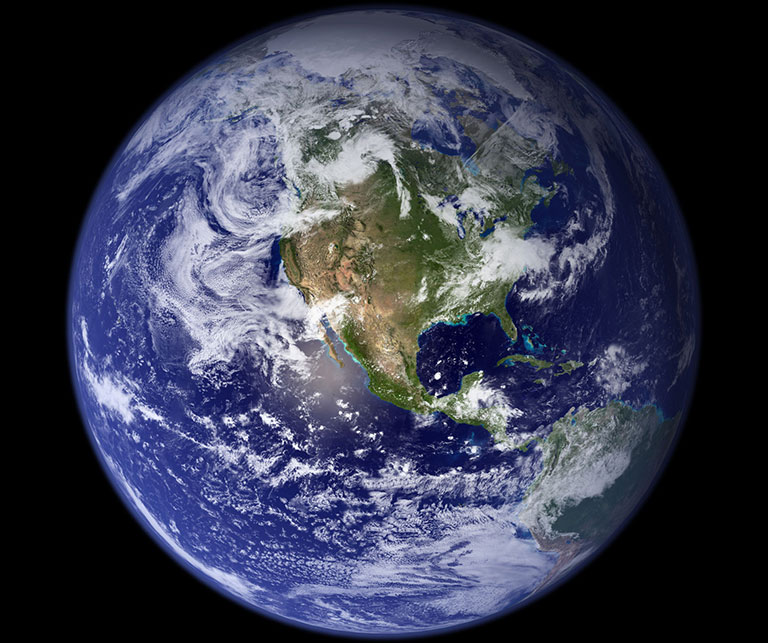
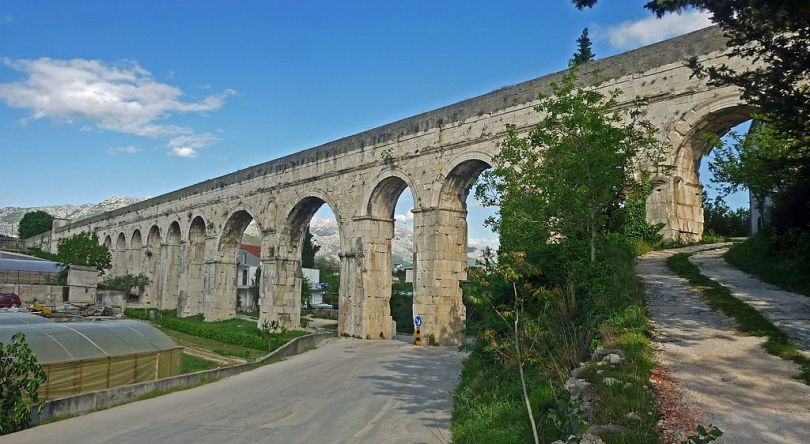
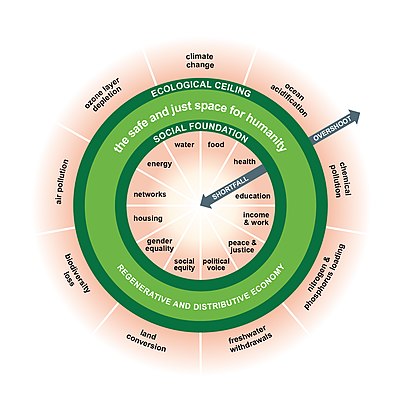
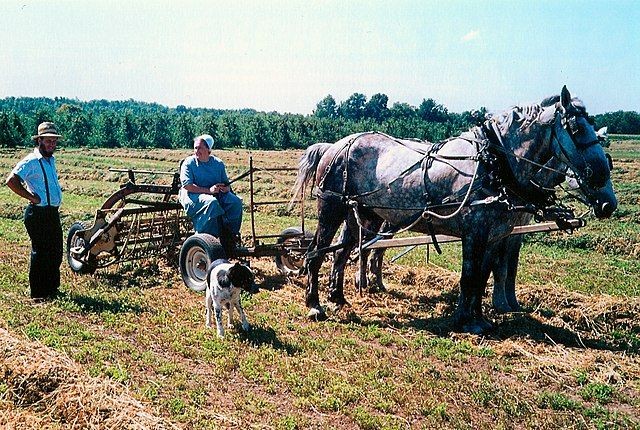
 The Plan For The Future