
Thomas Jefferson and John Adams
US Presidents Thomas Jefferson and John Adams were both involved in drafting the Declaration of Independence, signed on 4 July 1776. Hence, 4 July became Independence Day. Jefferson was Adam’s Vice President until he became President in 1800. They were the last surviving members of the revolutionaries. Both died on 4 July 1826, precisely fifty years after the Declaration of Independence.1 Independence Day is 4 July (4/7) as 4 + 7 = 11. This date occurring twice is similar to seeing an 11:11 time prompt.
Napoleon Bonaparte and Adolf Hitler
Napoleon Bonaparte and Adolf Hitler both conquered nearly all of Europe. There are several parallels between them. Both came to power through a coup that ended a period of instability. Napoleon and Hitler both turned Europe into a battlefield. They both ventured into Africa and faced defeat in Egypt. They both waged war on two fronts. Both attacked Russia while not having defeated Great Britain.
Napoleon was born on the island of Corsica, which was then an independent island but later became part of France. Napoleon became the leader of France. Hitler was born in Austria, an independent country that was later annexed by Germany. Hitler became the leader of Germany. On 9 November 1799, Napoleon came to power following a coup. Hitler was involved in a failed coup on 9 November 1923.
The Titanic
The supposedly unsinkable Titanic had sealable compartments. In 1912, it sank on its maiden voyage after having a close encounter with an iceberg. In 1898, Morgan Robertson wrote the novel Futility, describing the maiden voyage of a transatlantic luxury liner named the Titan. Although touted as unsinkable, it collided with an iceberg and sank, resulting in a significant loss of life. In the book, the month of the wreck was April, the same month the Titanic sank. The similarities are striking:
- The ships had similar names.
- Both were the largest crafts afloat and considered among humankind’s greatest achievements.
- The sizes were roughly the same: the Titan counted 45,000 tons, and the Titanic was 46,000 tons.
- Both ships were deemed unsinkable.
- Both had a triple screw (propeller).
- Both vessels had a shortage of lifeboats.
- Both struck an iceberg: the Titan, moving at 25 knots, struck an iceberg on the starboard side on a night in April in the North Atlantic, 400 nautical miles from Newfoundland, while the Titanic, moving at 22½ knots, struck an iceberg on the starboard side on the night of 14 April 1912 in the North Atlantic, 400 nautical miles from Newfoundland.
- Both ships sank with much loss of life.
Robertson’s apparent clairvoyance drew attention. He claimed the similarities were the result of his shipbuilding knowledge. That can explain the technical details but not the sinking or the similar names. And the story was to get a sequel.
In April 1935, the cargo vessel Titanian sailed in the North Atlantic. A sailor claimed he felt uncomfortable because the ship’s name was similar to that of the Titanic. For that reason, he sounded a warning. He claimed to have done this before an iceberg was in sight. He added that the vessel stopped just in front of an iceberg. According to reports, the Titanian had run into some damage during the voyage.2
One hundred years later, the luxurious Italian cruise liner Costa Concordia sank after hitting a rock. The accident occurred on Friday, 13 January 2012. The ship had thirteen decks. Some passengers claimed that the Titanic theme ‘My Heart Will Go On’ played in a restaurant when the accident happened.3 Shortly afterwards, on 27 February 2012, another cruise liner of the same parent company, the Costa Allegra, ran into trouble near Seychelles.4 This repetition within a short timeframe adds to the peculiarity of the scheme.
The assassination of Franz Ferdinand
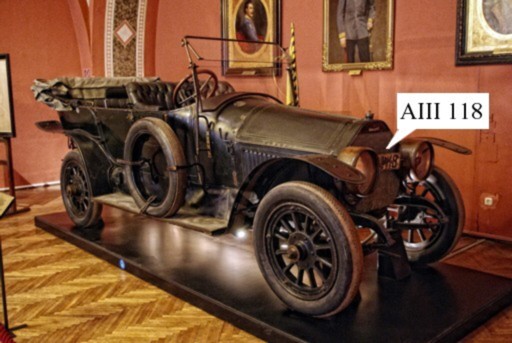
On 28 June 1914, the Serbian nationalist Gavrilo Princip shot and killed Archduke Franz Ferdinand in his car in Sarajevo. His act triggered World War I. World War I ended with the Armistice of 11 November 1918. 11 November is a peculiar date as it is 11-11. Several strange coincidences accompany the assassination. Franz Ferdinand had premonitions of an early death, and the assassination succeeded after a series of mishaps. But the most peculiar coincidence was the licence plate number A III 118 of the car that drove Franz Ferdinand to his appointment with destiny. It contains a possible reference to the Armistice of 11 November 1918 (11-11-18).5
D-Day
D-Day was on 6 June 1944 (6/6/44). That date has double digits, like 11 November (11-11). The Allies had selected 5 June 1944 for their invasion because of a full moon that night. They postponed it by one day due to the weather. There was no consensus among historians on the start date of World War II, whereas the Battle of Stalingrad lasted more than two months. Therefore, D-Day is considered the most important single day in World War II. D-Day means Decision Day. D is the fourth letter of the alphabet, so Decision Day (DD) can refer to (19)44, the year D-Day happened.
Normandy invaded England in 1066 AD, while D-Day occurred on 6 June, or 6/6. In the ensuing Battle of Hastings on 14 October 1066, King Harold II of England died while trying to repel the invasion. That happened a few days after his forces had killed King Harold III of Norway, who also had invaded England. On 14 October 1944, the German General Rommel committed suicide after having overseen the construction of the German coastal defences intended to repel the Allied invasion.
Roman de Rou is a chronicle written around 1170. It covers the history of the Dukes of Normandy. It mentions that Roger the Great de Montgomery commanded parts of the invading forces in 1066. Other sources don’t confirm this account.6 During the 1944 invasion, Bernard Montgomery commanded portions of the invading army. That is most peculiar indeed, and there is more.
On 11 March 2010, the founder of the Dutch political party D66, Hans van Mierlo, boldly went where billions have gone before, and passed away. The name D66 stands for Democrats 66 and refers to the year 1966 as the party was founded on 14 October 1966 by 44 people.7 The name can refer to D-Day, making the founding date and the number of people involved in establishing the party rather intriguing. D-Day was on 6-6-44, so D66 could mean D-Day 6-6. Van Mierlo died in 2010, 44 years after starting D66 and 66 years after D-Day. Van Mierlo had just married a few months before on 11 November 2009 (11-11-11 after compressing numbers), which might also raise some eyebrows.
The numbers 66 and 44, along with the date 14 October, repeatedly appear in this scheme. And 11-11 is part of it too. It was the day Hans van Mierlo got married. 11 November is the date of the Armistice that terminated World War I. And the Vikings founded Normandy in the year 911. This number is closely related to the fall of the Berlin Wall and 9/11. On 9 November 1989 (9/11 European notation), the Berlin Wall fell. On 11 September 2001 (9/11 American notation), the terrorist attacks took place.
The assassination of Martin Luther King was on 4 April 1968, one year after he spoke out against the Vietnam War on 4 April 1967. Both dates are 4 April (4/4). On 5 June 1968, in another high-profile political assassination in the United States, Senator Robert Kennedy crossed the path of a bullet. He died the next day, on 6 June (6/6). Both incidents happened in the United States in 1968 and point to the digits of D-Day (6/6/44). 6 June was also the release date of The Omen, the most ‘cursed’ film in history.
John F. Kennedy’s assassination
‘We’re heading into nut country today,’ said President John F. Kennedy to his wife on the morning of 22 November 1963. She had just seen an advertisement from the John Birch Society in the Dallas Morning News suggesting that he was a communist. The border of the advert was in the black of a funeral announcement. ‘But, Jackie, if somebody wants to shoot me from a window with a rifle, nobody can stop it, so why worry about it?’8
A few hours later, somebody shot him from a window with a rifle. The assassination date, 22 November (22/11), consists of two multiples of eleven, which is somewhat unusual as is the date of D-Day and the date of the Armistice ending World War I. There are also parallels between John F. Kennedy and Abraham Lincoln:
- Both concerned themselves with Civil Rights.
- Both did get a bullet in the back of their heads in the presence of their wives.
- Lincoln was shot in the Ford Theatre, and Kennedy in a Ford Lincoln.
- They were both murdered on a Friday.
- In both cases, an assassin assassinated the assassin before he could face trial.
- Lincoln’s election into Congress happened in 1846, and Kennedy’s in 1946.
- Lincoln’s election to President occurred in 1860, and Kennedy’s in 1960.
- Lincoln’s successor was Andrew Johnson, born in 1808, while Kennedy’s successor was Lyndon Johnson, born in 1908.9
Longer lists are circulating with some false claims. Sceptics have argued that these similarities are mere coincidences and that similar parallels exist between other US presidents. Wikipedia even labelled it an urban legend, although it is not, as it implies that the story is false. That both murders took place on a Friday is indeed unremarkable. But the murder of Lincoln taking place in the Ford Theatre and the assassination of Kennedy happening in a Ford Lincoln is noteworthy, as is the time difference of precisely one century that recurs three times. And there are links with other peculiar coincidences.
Kennedy’s brother, Senator Robert F. Kennedy, was shot a few years later. He died in 1968 on 6 June (6/6), just after the murder of Martin Luther King on 4 April (4/4). That is odd, given the coincidences surrounding D-Day (6/6/44). His untimely passing is part of a series of premature deaths, accidents, and other calamities involving members of the Kennedy family called the Kennedy Curse.
The son of President Lincoln, Robert Todd Lincoln, also had his share of remarkable coincidences. A few months before John Wilkes Booth murdered his father, Edwin Booth, the brother of John Wilkes, saved him when he was travelling by train. During a stop, he stepped back on the crowded platform to let others pass, pressing his back against a stopped train. When the train began to move, Lincoln fell onto the tracks. Booth hauled him back onto the platform. The Booth family and the Lincoln family were not neighbours, which makes the incident even more remarkable. Robert Lincoln was in the vicinity when the murder of his father occurred. He was also present at the assassination of President Garfield in 1881 and the assassination of President McKinley in 1901.10
The Kennedy assassination takes part in a series of premature deaths in office of American presidents elected in years starting with a zero, called the Curse of Tippecanoe or Zero-Year Curse. From William Henry Harrison to John Kennedy, every President elected in a year ending in zero died in office. It ended with Ronald Reagan, elected in 1980, who survived an assassination attempt. First Lady Nancy Reagan reportedly had hired psychics and astrologers to protect her husband from the curse.11 George W. Bush, elected in 2000, also survived an assassination attempt. The curse seems to have lost its lustre. Even Joe Biden, who could have passed away at any time without raising any suspicion of something of a curse having an involvement, survived.
Houston, we have a problem
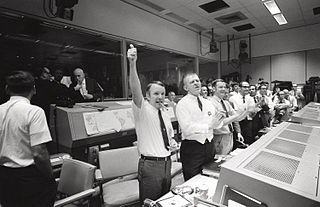
We associate the number 13 with bad luck. Bad luck haunted the voyage of Apollo 13. The launch was on 11 April 1970 at 13:13 CST from the Kennedy Space Center in Florida. The departure time combined with the mission number was a daring attempt to defy fate. Possibly, the people at NASA thought, ‘We are scientists and don’t believe in this superstitious nonsense.’ And bingo! Fate took vengeance. On 13 April,
note the date, an oxygen tank exploded. The event has enriched the annals of history with the famous quote, ‘Houston, we have a problem.’ Mission control aborted the lunar landing. The crew made it back alive.12
The fall of the Berlin Wall
The fall of the Berlin Wall was the pivotal event marking the end of the Soviet Empire and the Cold War. The dismantling of this wall began on 9 November 1989 (9/11 European notation). On 11 September 2001 (9/11 American notation), a terrorist attack was another pivotal event in the war on terror. It marked the end of the period of relative peace following the fall of the Soviet Empire. On 11 September 1989, thousands of East Germans began crossing the Austrian-Hungarian border to emigrate to West Germany. That eventually led to the fall of the Berlin Wall. This date, also being 11 September, is noteworthy.
The historian James P. O’Donnell unwittingly predicted the year the Berlin Wall would fall. In the German edition of Reader’s Digest, he wrote ten years before it happened, ‘Not long ago I dreamed of Berlin. The year was 1989. The wall was coming down. Along its hideous 165 kilometres, East and West Berliners were pouring out to dismantle it. […] Canny merchants were weaving through the happy crowd selling souvenir bricks.’13
That is not as remarkable as it seems at first glance. O’Donnell made his prediction in 1979. If you were thinking in 1979 about the Berlin Wall falling and were guessing when it might happen, 1989 is a year you could easily pick. The final year of a decade can be a moment to think of the next decade’s final year. A 1979 ABBA does the same in a song named Happy New Year. But then again, O’Donnell thought of it in 1979, which increased the likelihood of choosing 1989. He could have thought of it in many other years, but he just happened to think of it in 1979, which makes it somewhat fishy nonetheless.
There is another peculiar twist. O’Donnell became Newsweek Magazine’s German bureau chief in 1945. He came to Berlin on 4 July 1945 to investigate Hitler’s death and gather information about his wife, Eva Braun.5 Braun died at the age of 33, and Hitler died at the age of 56, while 33 + 56 = 89. Hitler was born in 1889. And the erection of the Berlin Wall was a consequence of Hitler’s defeat. And it fell in 1989. There is more to say about Eva Braun and 1989, which makes the coincidence part of a larger scheme.
That is, however, a separate story.
Latest revision: 23 July 2025
Featured image: NASA mission control celebrating the successful return of Apollo 13. NASA. Public Domain.
1. Thomas Jefferson and John Adams die. History.com (2009).
2. Titanian – Echo of Titanic. Encyclopedia Titanica (2004).
3. Costa Concordia disaster. Wikipedia.
4. MS Costa Allegra. Wikipedia.
5. Curses! Archduke Franz Ferdinand and His Astounding Death Car. Mike Dash (2013). Smithsonian. [link]
6. Roger de Montgomerie, 1st Earl of Shrewsbury. Wikipedia. [link]
7. Hans van Mierlo. Wikipedia. [link]
8. Three surprising details from the JFK assassination – and why they matter. James L. Swanson (2013). The Globe And Mail.
9. Lincoln–Kennedy coincidences urban legend. Wikipedia.
10. Robert Todd Lincoln. Wikipedia.
11. Curse of Tippecanoe. Wikipedia.
12. Apollo 13. Wikipedia.
13. Reader’s Digest, Geman Edition, January 1979
14. James P. O’Donnell. Wikipedia. [link]


 The Plan For The Future