Adam is the Son of God (Luke 3:38) and Jesus the Firstborn of all Creation (Colossians 1:15). Was Jesus Adam reincarnated? And was Adam born? Firstborn means you are the family heir, so the Firstborn of All Creation means you inherited the world. That is the standard interpretation with which most scholars would likely agree. The Christian doctrine states that Jesus already existed with God before creation and thus was not Adam. That is not what the words say, nor is it what Jesus’ inner circle believed. Existence before creation is not the same as being born. And Adam was the Son of God. When Paul was busy writing Colossians, he was also working on Christian theology, and his thoughts were still in a state of flux. And so, there may be more to it than theologians can explain.
Theologians regurgitate a century-old, pre-chewed menu of previous generations of theologians. Do theologians ever come up with something new rather than yet another insight on a hair-splitting detail? Do they discuss the simulation argument? No! They occupy themselves with century-old controversies. Why would Jesus sacrifice himself for Adam’s transgression? It makes more sense if Jesus believed he was Adam, who had to redeem himself. That was an idea Paul entertained for a while, for Jesus thought he was Adam. Only that generated serious theological problems. How could the perfect sinless Jesus also be the sinner Adam? And so, his mind ground on. Eventually, Christians came to believe that Jesus existed before creation, as laid out in the Gospel of John.
Don’t blame theologians for not being sufficiently imaginative. You could easily go astray. That ireful cloud that led the Israelites out of Egypt in a 2,500-year-old Jewish fairy tale was Eve from an even older Iraqi fairy tale, who gave birth to Adam, which the surviving Jewish version of the Iraqi fairy tale doesn’t mention. And by the way, that cloud from the fairy tale was Judge Deborah, the first historical person in the Bible. She started the Jewish nation by slaying Israel’s enemies and claiming that a magical cloud named Yahweh did it. She later married Jesus as Mary Magdalene and Muhammad as Khadijah bint Khuwaylid. You can’t guess it unless God gives you the clue that unlocks the mystery.
The message of Jesus being Adam still features in Christian doctrine as a remnant of an original belief. Jesus is the New Adam, and his birth mother is the New Eve, which implies that Jesus married his mother in a previous life. And precisely that was the original message of Christianity. Paul compares Jesus to Adam. In Romans, he writes, ‘Just as through the disobedience of the one man the many were made sinners, so also through the obedience of the one man the many will be made righteous.’ (Romans 5:19)
Paul didn’t blame Eve for the Fall. Later writers posing themselves as Paul cast the blame on Eve. But Paul, a god-fearing individual who still knew the truth, wasn’t that daring. In 1 Corinthians, Paul noted, ‘As in Adam all die, so in Christ, all will be made alive.’ Jesus thus became the redeemer for Adam’s Fall. Paul called Jesus the Last Adam (1 Corinthians 15:45). Jesus being Adam’s reincarnation was an early Christian belief until the narrative changed to Christ’s existence before creation. And so, you only find the comparison in Paul’s letters, the earliest surviving documents of Christianity.
The Quran underpins the idea that Jesus is Adam. You have to read between the lines. Jesus was like Adam in the way he was created (Quran 3:59), and the Quran supports the Christian claim that Jesus was born of a virgin (Quran 3:47, 19:16-22). Hence, they are both ‘born of a virgin.’ Not really, of course, but people believed it. And several Quran verses state that God ordered the angels to prostrate before Adam (Quran 2:34, 7:11, 15:28-29, 17:61, 18:50, 20:116, 38:71-74). The Quran mentions it seven times, making it appear significant. And seven times, Jesus says ‘I am’ in the Gospel of John, stressing his supposed divinity.
The Epistle to the Hebrews claims that God made Jesus, the firstborn, into the world, superior to the angels and made the angels worship him (Hebrews 1:1-7). And if the Quran is a message from God, the presumed guy in the sky, who possesses superpowers but is not Superman, and also not a man, then Jesus could be Adam. The Quran also claims Jesus will return (Quran 43:61). If he were Adam, God’s firstborn, who had already returned once, he could. Otherwise, it all gets even odder than it already is.
Before he was born, a visitor from heaven told his mother that her son would be divine. Unusual signs in the heavens accompanied his birth. As an adult, he left his home to become a travelling preacher. He told everyone not to be concerned about earthly lives and material goods but to live for the spiritual and eternal. He gathered several followers who believed he was the Son of God. He did miracles, healed the sick, cast out demons, and raised the dead. He aroused opposition among the ruling authorities, and they put him on trial. After he died, he appeared to some of his followers, who later wrote books about him. This story is not about Jesus of Nazareth, but Apollonius of Tyana, as Bart Ehrman tells us in his book, How Jesus Became God.1 In those times, it was not as unusual to call someone the son of a god as it is today.
The parallels between Jesus of Nazareth and Apollonius of Tyana are striking. In ancient times, there was no chasm between the divine and the earthly realm. Critics of Christianity used these similarities to question and mock Christianity. The miracles attributed to Jesus were not exceptional either. Other men allegedly did similar deeds. Legends about people occasionally emerge. People claim that Elvis still lives and that they have seen him. Was Elvis resurrected? Who is to say that Christians didn’t invent the tales about the miracles Jesus performed? The Gospels contain contradictions, and scholars believe Christians have modified, embellished or invented these stories. Ehrman argues that the authors never intended them to be an exact account of what happened, but rather to spread the good news about Jesus. Discovering the truth later can be a daunting task. And success is not guaranteed. It has been the work of biblical scholars for centuries.
In Greek and Roman mythology, gods had sex with human beings and begot godlike children. The Greek god Zeus had a son with Alcmena, who bore a godlike son, Hercules. Miraculous and virgin births also occurred. In Roman mythology, the mother of the founders of Rome, Romulus and Remus, was said to be a virgin. Greek mythology also features a few virgin births. Leaders claimed to be the sons of the gods. Julius Caesar claimed to be a descendant of the goddess Venus. Of Alexander the Great, claims circulated that his father was the Greek supreme deity, Zeus. Kings in the ancient world often claimed to have divine parentage. That gave them legitimacy, for who dares to go against the will of the gods? Jewish kings were also referred to as sons of God (2 Samuel 7:14, Psalms 2:7). If Jesus called himself the Son of God, he could have meant that he was the king of the Jews. And that was the official reason for his crucifixion.
God came down in a human form as Mary Magdalene. Jesus claimed She was the reincarnation of Eve while he was Her son, Adam. They were the parents of humanity. The deification of Christ couldn’t have occurred in the pure monotheist Jewish tradition. However, Christianity also had non-Jewish followers who had no problems whatsoever with the all-powerful Creatrix marrying the eternal godlike human Jesus. It was a recipe for theological mayhem that Paul later succeeded in resolving by making Christian theology unfathomable. After the Romans levelled the Jewish temple and Jesus’ return had not materialised, Christianity also had to compete with the Roman emperor cult that worshipped Roman emperors as gods, making some believe it is the reason why Christians made Jesus divine. The competition was tough, and Christianity won. No one thinks of dead Roman emperors as gods anymore, but billions of people still believe that Jesus is godlike and still lives. Now, that is a miracle.
Intentional obscurity
The Gospels date from decades after Jesus’ disappearance, which has led many scholars to believe them unreliable historical sources. Church tradition holds that Mark reflects a testimony given by Simon Peter, as this gospel accurately describes words and deeds. Scholars also conclude that the Gospels describe what Jesus said and did. Much is plausible, given the time and place in which he lived. The Gospels also reveal things that Christians would not have made up, as they undermine their teachings. John the Baptist baptised Jesus. The one who baptises is spiritually superior to the one receiving the baptism.1 It implies that John the Baptist was Jesus’ teacher. The beginning of Mark also suggests so.
To make this uncomfortable fact more palatable, the Christians might have added that John said someone more powerful than he was would come, whose sandals he was not worthy to unfasten (Mark 1:7-8, Matthew 3:11, Luke 3:16, John 1:26-27). All four Gospels mention it, so John the Baptist may well have said it. Parts of the Gospels might be copies from earlier texts that are now lost. If these sources were decades older, fewer errors might have crept in, as written texts don’t change as much as oral stories during retelling.
Paul could have written about what transpired, but did not, or at least as far as we know. The obscurity seems intentional. The first three Gospels are remarkably similar. Scholars believe the sources for the Gospels of Matthew and Luke are the Gospel of Mark and another text with the sayings of Jesus. The Gospels have an unclear origin, and the authors weren’t people close to Jesus. There may have been an insider account that served as the basis for the Gospel of John.
The Gospels claim that Jesus claimed to be the Son of God and called God Father. That looks like a close relationship. To Jesus, being the Son of God meant more than merely being king of the Jews. In The Parable of the Ten Virgins, the kingdom of heaven is compared to a wedding where the bridegroom was a long time in coming (Matthew 25:1-13). All the synoptic Gospels hint at Jesus being the bridegroom. The Romans convicted Jesus of claiming to be king of the Jews. In the Jewish understanding, the king of the Jews is a son of God. But Jesus might have believed himself to be Adam, the eternal Son of God, and perhaps for that reason, also king of the Jews.
Clouding our understanding
The Jewish religion and its scriptures cloud our understanding. To understand God, we must see this universe as the product of an advanced humanoid civilisation that exists to entertain one of its members, whom we call God. And so, there could be more to the mysterious apocalyptic prophet who felt a close relationship with God 2,000 years ago. After all, he started a religion with over two billion followers today. Christianity originated as a branch of Judaism, a religion characterised by its scriptures. Their scriptures outline how Jews, Christians and Muslims see the owner of the universe. That is like looking through glasses covered with dust. It distracts us from the underlying truth.
Christians say that God is love. Christianity paints a different picture of God than Judaism and Islam, which present us with a vengeful warrior God. Many religious people think the scriptures are infallible. So, how can we explain the discrepancies if the God of Judaism, Christianity and Islam is the same? Paul likely went to great lengths to align Christianity with existing Jewish doctrine. Paul and his henchmen obscured the most controversial parts of the new religion by making cryptic references to the Jewish scriptures. Had God appeared as an ordinary woman who married Jesus, and Jesus had preached somewhere else, for instance, in Egypt or China, Christianity would have been a different religion.
Biblical scholars reason from what they can establish from historical sources, while Christians believe the Jewish deity Yahweh is Jesus’ father. Both see Jesus within a Jewish context. That obscured things, as Yahweh is the imagined deity of the Jews, not the owner of the universe. It is better to view Yahweh as the cloak behind which our Creatrix hides. The most pressing problem for Paul was that God is a woman who had a romantic relationship with Jesus. To suggest so was blasphemy in the Jewish religion. And so, Jesus married the Church, just as Yahweh married the Jewish nation. It made Jesus eternal and godlike. That was not a great leap if he was Adam, God’s eternal husband.
Firstborn of all creation
Jesus thought himself to be the reincarnation of Adam. Adam was God’s son (Luke 3:38) and Jesus the firstborn of Creation (Romans 8:29, Colossians 1:15, Hebrews 1:6, 12:23). These words relate to the Jewish scriptures. At the same time, they are cryptic references to Adam being born first as the son of Eve, and Jesus being the reincarnation of Adam. The phrase born of God (John 1:13) relates to Eve giving birth to humanity. The context of the Jewish religion made it possible to hide that meaning. In traditional agricultural societies, the firstborn son inherited the land and the leadership of the family clan. The Jews were no exception. The theme appears numerous times in the Jewish Bible. The story of Jacob and Esau is well-known. King David was God’s firstborn son (Psalm 89:27).
The Jewish nation, Israel, is God’s firstborn son (Exodus 4:22). Israel is also God’s Bride (Isaiah 54:5, Hosea 2:7, Joel 1:8). This provided Paul with a theological escape, as God had married His firstborn son, Israel. God marrying Her firstborn son, Jesus, and them having a romantic relationship was impossible in Judaism. For Jews, who followed Jesus because he was the Messiah, it was impossible to conceive that their invisible deity Yahweh had taken a human form and had married Jesus, and that Jesus was not an ordinary prophet, but Adam reincarnate. And so, Jesus married the Church instead. In this way, Jesus became like God, and the Christians became Jesus’ people, just like the Jews were God’s people. And that made Jesus like God.
Jesus as God
That is not as problematic as it might seem. Many Jews believe there are two powers in heaven.1 In Genesis, God speaks in the plural, ‘Let us make humankind in our image.’ It may be a relic of the polytheist past of the Jews when they still believed the gods created the universe. When they became monotheists around 400 BC, most of the Jewish Bible, the Tanakh, had already been written. In a simulation created by an advanced humanoid civilisation to entertain one of its members, the gods in plural, creating us, also makes sense. The beings of this civilisation are the gods, and the owner of this universe is God. The monotheist Jews didn’t see it this way, so this phrase fuelled speculation about a godlike figure working alongside God.
In the Jewish Bible, God appeared from time to time. Some people saw God sitting on a throne (Exodus 24:9-10), while no one has ever seen God and lived (Exodus 33:20). Others saw the Angel of the Lord, who is also considered a manifestation of God, and survived. Abraham and Hagar are among those who have seen the Angel, and the Jewish Bible then tells us that they have seen God. Hence, the Angel of the Lord is God, but not God himself. Otherwise, they would not have survived.1 Then you have the mysterious figure Melchizedek, who might have been the Angel of the Lord, or Jesus, according to some interpretations. Melchizedek, as God’s priest, offered bread and wine to Abraham (Genesis 14:18-20), reflecting Christ’s eternal priesthood. And so, there must be two gods, an invisible, all-powerful Creator and his visible, godlike sidekick. It is an example of the assumption of the scriptures’ infallibility, combined with strict logic, leading to the absurd.
Jesus could be the Angel of the Lord and the image of the invisible God (Colossians 1:15). This interpretation is contrived, as it is not what the authors of the Jewish Bible intended. The Angel of the Lord didn’t say to Abraham, ‘I am Jesus, God’s one and only son.’ He could have done so if he were. That would have saved us a lot of theological troubles, as the Jews would have known that Jesus was the Messiah. However, for an undisclosed reason, the Angel didn’t bother to update the Jews on this interesting matter. Christians found other references to Jesus as well, such as (Daniel 7:13-14),
In my vision at night I looked, and there before me was one like a son of man, coming with the clouds of heaven. He approached the Ancient of Days and was led into his presence. He was given authority, glory and sovereign power; all nations and peoples of every language worshipped him. His dominion is an everlasting dominion that will not pass away, and his kingdom will never be destroyed.
That must be Jesus, Christians claim. Jews disagree.
The road to Trinity
A problem early Christians had to solve was that Jesus was the Son of God and also God, while there was only one God. That didn’t make sense. It kept Christian thinkers busy for centuries until they reached an agreement on the Trinity. Christianity is a scriptural religion, so there must be a justification in the scriptures. The Gospel of John starts with the following sentence, ‘In the beginning was the Word, and the Word was with God, and the Word was God.’ The Word was with God, and the Word was God. The Word was Jesus, as the Word became flesh and made his dwelling among us. In other words, Jesus is God, and he existed before Creation. But he is not God the Father, but with God the Father. God consists of the Father and the Son, while God is one.
In the ancient world, some gods came in threes or triads. The Indian religion has the group of Brahmā, Siva, and Viṣṇu, and the Egyptians had Osiris, Isis, and Horus. It was called Trinity. That required adding another component to the mixture of the Father and the Son to arrive at three ingredients and find a theological justification. The idea of the Trinity circulated among Christians as early as 150 AD and became an official teaching in the fourth century AD. So, what could be the scriptural justification for the Trinity? Christians found it in Isaiah (Isaiah 9:6),
For to us, a child is born, to us a son is given, and the government will be on his shoulders. And he will be called Wonderful Counsellor, Mighty God, Everlasting Father, Prince of Peace.
Some see a reference to the Trinity there. Counsellor is a title for the Holy Spirit (John 14:26), the Father is God, and the Prince of Peace is Jesus. That is far-fetched. But there is a better one. Some see the Trinity when the Jewish Bible refers to God’s Word (Psalm 33:6), His Spirit (Isaiah 61:1), and Wisdom (Proverbs 9:1). But what could be the theological justification?
Greek philosophy influenced Jewish scholars, such as Paul. Plato claimed that ideas are the basis of knowledge. Thus, ideas, not physical objects, are the building blocks of reality. In Platonic thinking, the world of ideas is superior. Platonists think that a spirit can use words to produce matter. God is a pure spirit, the highest being. In Judaism, God created all things using words. Hence, words existed before Creation. Otherwise, you can’t make the world using words.
The Jewish philosopher Philo lived at the same time as Jesus. He claimed the Word is the highest of all beings, the image of God, according to which and by which the universe receives its order. Philo called the Word the second God. But if there is one God, the Word must be part of God. The author of the Gospel of John took that idea, and it starts with, ‘In the beginning was the Word.’ Here, the Word was Jesus, so Jesus existed before Creation. And that became a teaching of Christianity.
In Proverbs, Wisdom says that she was the first thing God created. And then God created everything else with the help of Wisdom alongside Him (Proverbs 8:22-25). She is a reflection of the eternal light, a spotless mirror of the working of God, and an image of His goodness (Wisdom 7:25-26). Wisdom is feminine because it is a feminine term in the Greek language. Greek was the language of the time, and educated Jews spoke Greek, and Jewish scriptures were translated into Greek. Here, Wisdom plays a similar role as the Word. She was present when God made the world and is beside God on his throne (Wisdom 9:9-10). Hence, Wisdom was also extant before Creation. And so, you have the Word, the Wisdom, and God existing before Creation. If the Word had become Jesus, Wisdom could have become the Holy Spirit. And so we arrive at the Trinity. This explanation also clarifies why the Holy Spirit is feminine.
Logical issues leading to an arcane theology
Christianity originated as a Jewish sect, so early Christians based their religion on the Jewish scriptures. It generated problems, as the facts contradicted the scriptures, most notably that God is a woman who can take a human form. Jesus as Adam, God’s eternal husband, already made him godlike. The efforts to resolve these logical difficulties shaped the concept of Jesus as God. Had Jesus preached in Egypt instead and claimed his wife was the goddess Isis, the all-powerful Creatrix of the universe, and that he was the reincarnation of her son Horus, there may still be records of his teachings.
Egypt was a polytheistic nation with more flexible beliefs. It could have adopted another colourful cult alongside the existing ones. The Jews, however, were monotheists with well-established scriptures, which also made Christianity uncompromisingly monotheistic. Converts had to renounce all false gods, allowing Christianity to wipe out the other religions and religiously cleanse the Roman Empire. And it all would have been inconceivable without the intervention of one of the greatest religious innovators of all time, Paul. He invented Christianity. That almost looks like a plan.
Latest revision: 31 January 2026
Featured image: Christ Pantocrator in Hagia Sophia. Svklimkin (2019). Wikimedia Commons.
1. How Jesus Became God: The Exaltation of a Jewish Preacher. Bart D. Ehrman (2014). HarperCollins Publishers.
The Gospel of John tells us that Jesus believed he had eternal life and a bond with God from the beginning of Creation until the end of time. Christians and Muslims expect him to return. Even though Muslims don’t believe Jesus is the Son of God, they also think he has eternal life and that his mother was a virgin. Remarkably, Muhammad and the Jewish prophets didn’t view themselves as the eternally living Son of God. In other words, Jesus is perhaps the most enigmatic individual in the history of humankind. Some people claim that there is no evidence that Jesus was a real person and that he is a fantasy figure like Spike and Suzy. So, let’s first address the argument that Jesus is a fictional person.
Sources from his era don’t mention him. There is hardly any evidence of Jesus outside the Bible. Jesus was the leader of a small sect, so that is not particularly surprising. The problem with the idea that there never was a Jesus is that it leaves us without a compelling explanation for the existence of Christianity, so that we must seek refuge in more bizarre explanations, like Christianity being a Roman conspiracy to replace Judaism with the Roman emperor cult. The supposed proof is that Jesus Christ shares the initials JC with Julius Caesar, and that both died due to a betrayal. That can’t be a coincidence, so the Christ story is just a refurbished Caesar story, the proponents of this ‘theory’ argue.
They are right that it isn’t a coincidence. However, as an explanation for Christianity, it is pretty imaginative. And it fails to explain nearly everything we can read about Jesus in the Gospels. And so, Jesus did live. But what made him unique? Jesus started a religion that has over two billion followers today. Apart from a historical account, an explanation of his beliefs may help us understand him. That includes his relationship with God, the supposed guy in the sky who is far more powerful than Superman, can do more tricks, and is allegedly all-knowing. But Jesus changed world history more than anyone else, so did that sky dude have a hand in that? It would be strange not to ask that question.
What can we know?
Historians and biblical scholars try to reconstruct what Jesus taught and did. They use historical sources such as the Gospels. In many ways, Jesus was a typical first-century Jewish end-time prophet, a product of the culture he lived in, first-century Judaism. Yet, they never ask the question that would be strange not to ask: what made Jesus think he was the Son of God? And so, they fail to clarify Jesus’ supposed close relationship with God or why God was his Father. Decades after Jesus allegedly went missing, a few anonymous authors wrote the Gospels. Mark, Matthew and John haven’t written the Gospels attributed to them. The Gospels provide no clue as to who wrote them. Mark, Matthew and John were peasants who spoke Aramaic, while the authors of the Gospels were educated and spoke Greek. Some scholars argue that Christians initially relied on oral traditions and utilised writings that are no longer extant. Oral recounting is notoriously inaccurate. Stories change when retold. Details get lost, and new details get added. They had good reason to think so. Luke begins, stating precisely that (Luke 1:1-4),
Many have undertaken to draw up an account of the things that have been fulfilled among us, just as they were handed down to us by those who from the first were eyewitnesses and servants of the word. With this in mind, since I myself have carefully investigated everything from the beginning, I too decided to write an orderly account for you, most excellent Theophilus, so that you may know the certainty of the things you have been taught.
Luke was not one of the original Apostles, but a companion of Paul (Philemon 24), who was a physician (Colossians 4:14). And so, he could have written the Gospel attributed to him. But we don’t know. Church tradition also holds that the author of Mark wrote down a testimony of Peter. Peter died years before the author of Mark penned the text, but there are reasons to believe that a testimony of Peter was a source the author used, most notably because Peter has a prominent role in the text. Much of this Gospel is plausible given the time and place in which Jesus lived. Mark also discloses things about Jesus that Christians wouldn’t make up because it is embarrassing, such as Jesus’ family claiming he was insane (Mark 3:21). Mark seems to have had access to a reliable source.
There is also evidence of redactions in the New Testament. What to think of Jesus being the bridegroom and the Bride having gone missing? Jesus was married, but we are not supposed to know that. As a result of the confusion, scholars agree on very little about Jesus of Nazareth, except that he lived and preached shortly after 26 AD. His ministry started after John the Baptist had baptised him. Then there was a lot of action, with mystical and sensational statements, including miracles such as healing the sick and multiplying bread and fish, followed by a betrayal, crucifixion, and resurrection from the dead, and finally, his disappearance. The Gospels agree on a few things:
Jesus performed miracles, such as walking over water, healing the sick, multiplying bread and fish, and raising the dead.
Jesus made controversial statements that baffled the Pharisees, so they schemed against him, which eventually led to his crucifixion.
Jesus did not take Jewish religious law as seriously as other religious zealots. He had a different message of forgiveness of sins.
Jesus did not like hypocrites, for who is without sin? He forgave sinners who repented. Still, he claimed there would be judgment.
Jesus was respectful of women. And he held unconventional views on marriage. Few men were up to that task. That goes unexplained.
Oh yes, and he called God his Father, and he was God’s son. It was a close and loving relationship. Other prophets weren’t like that.
Who was Jesus, what did he do, and what were his teachings? Scholars and historians seek to reconstruct what happened and the beliefs of the earliest Christians by examining the oldest texts and earliest controversies. They have analysed the scriptures for centuries and concluded that you can’t establish much with certainty about Jesus except that he lived and preached. Some things are more plausible than others. And some things are nearly certain. The virgin birth didn’t happen, while the crucifixion did. Some of Jesus’ disciples likely saw him after he died, perhaps in a psychosis. Otherwise, you lack a compelling explanation for the origins of Christianity. Thoughts that scholars dared not entertain were that some of the miracles did happen, or that Jesus did have the gift of prophecy. If you have witnessed paranormal events, which scientists seem to call metanormal events, or know people who have, you may have second thoughts about the scholarly consensus on miracles. The scholar Dale Allison wrote in his book Interpreting Jesus,
What if a historian of the early Jesus movement decides, on empirical, not theological grounds, that sometimes people see the future, that clairvoyance is not uncommon, that additional metanormal claims should be seriously entertained, and even that enigmatic capacities sometimes congregate in exceptional or charismatically gifted individuals, in what Max Weber termed ‘religious virtuosi’?
Allison produces a long list of examples in the Gospels and concludes that his fellow scholars who reject the historicity of Jesus’ clairvoyance suffer from dogmatic incredulity. In other words, the Gospels could be more historically accurate than most scholars claim because their assumptions about the possibility of miracles and clairvoyance are incorrect. Hence, the confidence they have in their claims is unjustified. And the original written sources are older than the Gospels, so oral recounting probably hasn’t affected them. Earlier written records have existed, scholars argue, and they give these supposed writings mysterious names, such as Q and ‘The Signs Gospel’. Mark, Matthew, and Luke are very similar and primarily draw on the same sources. The Gospel of John stands apart. The Gospel of John notes that an eyewitness, the Beloved Disciple, wrote it. And so, an eyewitness account by a disciple could be the basis for this text. Now, John 5:1-3 reads,
Some time later, Jesus went up to Jerusalem for one of the Jewish festivals. Now there is in Jerusalem near the Sheep Gate a pool, which in Aramaic is called Bethesda and which is surrounded by five covered colonnades. Here, a great number of disabled people used to lie — the blind, the lame, the paralysed.
The use of the word ‘is’ implies that the text dates from before the destruction of Jerusalem in 70 AD, thus from before the writing of the Gospel of Mark. The Sheep Gate was still there at the time of writing, the wording suggests. Now it gets more interesting. Peter was Jesus’ favourite disciple, and John may contain his testimony. There is little doubt that the Gospels contain historical evidence, but they also claim that miracles and the resurrection have happened. And so, you have some additional explaining to do, as these events defy the laws of nature, which is impossible had this world been real.
This universe is a virtual reality, so these miracles are possible. On the Holodeck, I can slay platoons of ferocious Klingon warriors alone with my bare hands and some magical powers. At the same time, in real life, elderly ladies overtake me in the swimming pool even when I am giving my best. Conjuring fish out of thin air, reviving the dead, walking on water, and turning water into wine should also be no problem. The same goes for a virgin birth. Whatever you imagine can become true. But it is not proof that it happened because Christians may have invented stories. For the virgin birth at least, that applies.
Explaining the differences
Mark and John are so different because they come from two very different traditions. Jesus had Jewish and Gentile followers. In the Jewish tradition, he was a prophet, and ‘Son of God’ meant ‘King of the Jews.’ To Gentiles, the Son of God had a literal meaning as God’s firstborn child. The Jewish Jesus was a human prophet and perhaps a resistance leader, while the Gentile Jesus was an eternal godlike being, the Firstborn of Creation. Most of the confusion stems from these differences, which reveal a controversy in the early Church that Paul successfully resolved. Mark and John are the best historical sources about Jesus’ life, but they have different perspectives. And the final version of the Gospel of John has undergone several revisions.
Writing a Gospel was an intellectual challenge for talented writers who could combine scraps of information, symbols and signs to compose high-level literature. Without social media, scribes could dedicate their entire lives to such a project. And others could dedicate lifetimes to finding out what those writers meant, so, if we wish to do so, we can read countless commentaries by experts. The Jews and the Muslims also have them. Jesus also contributed to the confusion. Well-known are the parables, stories that Jesus told to convey an underlying message. By saying one thing and meaning another, Jesus often left his audience, including his disciples, confused. Even today, the central question remains: was Jesus merely human, or godlike? In either case, he is enigmatic.
Jesus’ deeds had religious significance, which is why we read that he had twelve disciples. Twelve stands for perfection or authority in government. Jacob had twelve sons who represented the twelve tribes of Israel. Jesus likely didn’t have twelve disciples. And Jesus supposedly spent forty days in the desert. The number forty signifies new life, growth and transformation. The rain of the Great Flood lasted forty days and nights. If Jesus went to the desert, then it was probably not for forty days. According to the Bible, God created the world in six days and rested on the seventh. The number seven also signifies completion and perfection. And Jesus said ‘I am’ seven times in the Gospel of John, supposedly implying he was godlike. If he said it, then he probably didn’t say it seven times. And the scripture tells us that Jesus rose from the dead after three days. This number represents divine wholeness, completeness and perfection. If Jesus had returned from the dead, it would probably not have been after three days.
The biblical authors tweaked and rearranged the facts to fit the religiously significant numbers. Eight disciples would have made a dud. What kind of prophet has eight disciples? You can’t take such a prophet seriously. Paul claimed that Jesus appeared to ‘The Twelve’ (1 Corinthians 15:5) after Judas had already died. That is fishy. Mark, Matthew, and Luke list the names of ‘The Twelve,’ but John does not. He only calls them ‘The Twelve’ like Paul did. If that is indeed the case, Mark must already have seen significant editing, including Jesus predicting his resurrection after three days (Mark 8:31), and that might explain why the sources have disappeared.
Talking about fishy, the experts are still baffled about those 153 fish Simon Peter dragged ashore without tearing his net (John 21:11). What does that number signify? Experts agree that it is not merely a fact. They have written voluminous tracts on the matter. A Wikipedia page deals with this question. There, you find links to the relevant literature. But we still await the book title ‘The Ultimate Guide on the 153 Fishes’ that explains it all. The experts don’t mention that 153 = (12 * 12) + (3 * 3). Both three and twelve have special meanings. It can’t be that simple. Or can it?
As time passed by
There are facts, early beliefs, and later beliefs. What Christians believed changed over time due to circumstances, so early beliefs are likely closer to Jesus’ teachings than later ones. Earlier sources might have fewer distortions and are thus closer to the facts than later ones. To understand Jesus, you must also become familiar with the time and place in which he lived. The Jews were a small nation crushed by major powers and could only hope for God to come to their rescue. At the time of Jesus, many believed the end was near and that God would send a Messiah to kick out the wicked Roman oppressors and restore Israel to its former glory, which it supposedly had when David was king.
Religious zealots prayed, committed terrorist acts, and revolted. Nowadays, the Palestinians follow the same recipe only to get their butts kicked time after time. And they never seem to learn. Back then, the Jews were like the Palestinians today. They were a pain for the Romans. Nowadays, the Jews run the empire in Washington, DC, and let it protect their pet project in the Holy Land. The stage was already set 2,000 years ago. The end times, the arrival of a Messiah, and a final reckoning still define Jewish, Christian, and Islamic thinking. In Jesus’ time, numerous end-time preachers proclaimed that the end was near. Jesus was one of them. He said things like (Mark 13:12-13),
Brother will betray brother to death, and a father his child. Children will rebel against their parents and have them put to death. Everyone will hate you because of me, but the one who stands firm to the end will be saved.
That is pretty scary already. Jesus continues (Mark 13:14-17),
When you see the abomination that causes desolation standing where it does not belong, then let those who are in Judea flee to the mountains. Let no one on the housetop go down or enter the house to take anything out. Let no one in the field go back to get their cloak. How dreadful it will be in those days for pregnant women and nursing mothers!
Now comes his prediction, which the faithful still await to come true (Mark 13:23-27),
So be on your guard. I have told you everything ahead of time. But in those days, following that distress, the sun will be darkened, and the moon will not give its light. The stars will fall from the sky, and the heavenly bodies will be shaken. At that time, people will see the Son of Man coming in clouds with great power and glory. And he will send his angels and gather his elect from the four winds, from the ends of the earth to the ends of the heavens.
Jesus may have seen himself as a Jewish Messiah and didn’t plan to start a world religion. When a non-Jewish woman begged Jesus to drive a demon out of her daughter, he replied, ‘First let the children eat all they want, for it is not right to take the children’s bread and toss it to the dogs.’ He was there for the Jews, and Gentiles were on par with dogs. Only after she replied, ‘Lord, even the dogs under the table eat the children’s crumbs,’ was Jesus willing to grant her request (Mark 7:24-30, Matthew 15:21-28). It is at odds with the Parable of the Good Samaritan (Luke 10:25-37) and the story of the Samaritan woman, in which Jesus asked this woman to give him some water she had drawn from the well, and in which everyone can get salvation (John 4:1-26). John also notes the woman’s surprise as Jews didn’t associate with Gentiles. It was also a point of contention between Peter and Paul (Galatians 2:11-21).
Scholars explain the contradiction by assuming each of the Gospels had an intended audience. Matthew wrote for the Jews and aimed to prove that Jesus was the Jewish Messiah. Gentiles were Luke’s intended audience. John was the product of a community separate from mainstream Pauline Christianity with an anti-Jewish bias. And so, we can’t be sure whether Jesus really compared Gentiles to dogs or whether it merely reflected a widespread Jewish sentiment about Gentiles. Still, all the Gospels agree that Jesus accepted the faith of Gentiles, halfheartedly or not.
Jesus probably saw himself as the eternally living Son of God. Unlike John, Mark doesn’t say it plainly, but notes that he did see himself coming in clouds with great power and glory. Initially, Jesus’ followers expected him to return soon. Jesus may have believed that himself. However, Jesus also said that no one knows the day or hour, not even he, only God (Mark 13:32). It could be a later addition, but there is no evidence to suggest that it is. His disciples probably thought they would live to see it happen. Scholars think Paul believed it also. When things didn’t go according to plan, the Christians had to adapt to this new reality and become less specific about the date of Jesus’ return.
Jesus’ Jewish followers had hoped that he would throw out the Romans. After the Romans levelled the Jewish Temple around 70 AD, that hope crumbled to dust together with the Temple. In the end, with no return of Jesus in sight, Christians turned him into a heavenly ruler who gives you access to eternal life if you follow him. That is how the Gospel of John depicts Jesus. It was the last Gospel written around 95 AD. To understand what happened, it is crucial to view the development of early Christianity as a historical process with actors, where there was a development over time as these actors attempted to address various issues. One actor in particular is of interest, namely Paul. He, rather than Jesus, invented Christianity. The historical order of the New Testament is with approximate dates:
Paul’s Epistles (the genuine ones), 55 AD,
Gospel of Mark, 70 AD,
Gospel of Matthew, 75 AD,
Gospel of Luke, 85 AD,
Gospel of John, 95 AD.
No one knows who wrote the Gospels. Attributing them to the Apostles was a ploy by the Church to lend them authority. The New Testament also contains epistles signed by Paul and Peter. Nobody knows who wrote them. Now, that does not need to be forgery. The writing process in Paul’s time involved co-authors. 1 Thessalonians starts with (1 Thessalonians 1:1-2),
Paul, Silas and Timothy, To the church of the Thessalonians in God the Father and the Lord Jesus Christ: Grace and peace to you. We always thank God for all of you, mentioning you in our prayers.
The Paul who wrote these letters was not always the individual Paul, but often a team of authors. After Paul’s death, the other team members might still have written letters in his name. They wouldn’t have thought of it as a forgery. Individualism as we know it today didn’t exist at the time, so if you were part of Team Paul, you could still write a letter and sign it in Paul’s name after his death.
The Gospel of John is the latest, so scholars have long considered it the least reliable of the four Gospels. They long held the view that Christians gradually deified Jesus, which could then explain why it is so different. However, Paul already viewed Jesus as God in nature (Philippians 2:6), and that at the name of Jesus, every knee should bow, in heaven, on earth, and under the earth (Philippians 2:10). The latter phrase originally referred to God. Paul applied it to Jesus, viewing him as godlike but not equal to God.
The mystery remains
And so, scholars’ views have shifted, and many now believe that the Gospel of John comes from a separate tradition. To Greeks and others, a human could more easily become godlike than to Jews. The Bible also testifies to this. After Paul healed a lame man in Lystra, the locals concluded that Paul and Barnabas were gods in human form (Acts 14:11). The first three Gospels emerged within Jewish Christianity. In contrast, the Gospel of John originated from a Gentile Christian community. And gradually, the scholars concluded that John could be more historically accurate than previously thought.
Hence, John may reveal details that other Gospels omit. There were disputes about the nature of Jesus and his relationship with God. Was he human or godlike? The compromise ultimately became that he was both. Paul never wrote about what transpired during Jesus’ life. Mark is the oldest Gospel, telling the story of Jesus’ life. It is brief and presents an enigmatic Jesus. Mark 1:27-28 reads,
The people were all so amazed that they asked each other, ‘What is this? A new teaching, and with authority! He even gives orders to impure spirits and they obey him.’ News about him spread quickly over the whole region of Galilee.
The Gospel of Mark initially ended with Mary Magdalene and a few other women discovering that Jesus’ tomb was empty and an angel telling them that Jesus had risen. The remainder is a later addition. Because of that, some scholars doubt the resurrection. Other scholars have suggested that it was an intentional open ending, ‘because everyone knew what happened next.’ That is a bit of a stretch, as it is attributing Hitchcock-like motives to an author who seemed keen to give testimony. Jesus probably appeared to at least some of his followers after his death. Otherwise, there would be no Christianity. And so, the premature ending of Mark raises questions.
That could be as reliable as it can get. Conviction, no matter how strong, is not a fact, but we have no accurate accounts of what had transpired. The Gospels diverge from what Paul writes, so we can’t construct a more precise picture of the events unless we can establish which accounts are the most reliable and what the falsifications are. And so, we can’t get closer to the truth unless we learn more about the relationship between God —that supposed guy in the sky— and Jesus, His alleged son.
Latest revision: 28 March 2026
Featured image: Jesus and Minas Coptic icon dating from the 6th or 7th century. Clio20 (Anonymous). Wikimedia Commons.
1. At what point were there doubts about Mark’s longer ending? r/AcademicBiblical (2025). [link] 2. Did Mark’s gospel really end on a cliffhanger, or is it unfinished? r/AcademicBiblical (2025). [link]
Will Jesus return? What will he do if he does? Will Jesus make things right? Will there be a showdown between the forces of good and evil? Will evil people burn in hell forever? And what about Buddhists and atheists? They don’t believe in God. And Hindus? They have many gods. Or Jews, Christians and Muslims? Who are the good people, and who are the wicked anyway? The Italian mafia bosses were devout Catholics. The usurers of Goldman Sachs claimed that they were doing God’s work. The Muslims blowing themselves up to murder as many unbelievers as they could also did. US President George Bush claimed that God had ordered him to invade Iraq. So, what might happen if the Messiah were to come? A Messiah already came, sort of, at least. His name was Adolf Hitler.
Adolf Hitler was a most messianic figure, perhaps the most messianic figure ever, even surpassing Jesus. So, was he the opposite of Christ, the anti-Christ, or was he like Christ, as many of his followers expect him to be? Will there be a final reckoning in which billions of people die or face eternal torture in hell? The latter is worse than being gassed in a concentration camp, as there is no end to the suffering. For those who think it is an inappropriate remark, life in Gaza in 2025 was as horrible as in a concentration camp. And Jews did that. They may have had their reasons, but so did Adolf Hitler. So, have we learned our lessons? And what are these lessons in the first place?
Europeans have learned the hard way, in two devastating world wars, that nationalism and tribalism are the paths to destruction. It is still in their collective memory. That is why the European Union exists. Other continents don’t share the same experience, and memories don’t last forever. Nationalists aren’t wrong about the troubles mass migration and mixing people from different cultures cause, but nationalism has more serious flaws that will prove to be fatal in today’s world. European history has demonstrated that beyond doubt. And why should we doubt what we know for certain? Humans are a failed and destructive species. We cooperate through the myths we share. Without an inspiring fairy tale and a leader who unites us, we are doomed. And that is why we need a messiah.
Adolf the Messiah or the Anti-Christ
At first glance, Jesus Christ and Adolf Hitler are opposites. Jesus personifies goodness, while Hitler is the epitome of evil. Christ stood at the cradle of Christianity, the Religion of Love. Jesus taught that love would overcome hatred. He said, ‘If anyone slaps you on the right cheek, turn to them the other cheek also.’ And, ‘Love your enemies and pray for those who persecute you.’ Hitler represents Nazism, the ideology of hatred that brought us unprecedented cruelty and revealed the depth of human depravity. As the world is barrelling towards an apocalypse, it is the right time to take a distance and be honest. Only by following a strong leader with the right vision can we save ourselves now. In that sense, the Third Reich looks like a dress rehearsal.
Closer inspection reveals a few intriguing parallels between Hitler and Christ. Adolf Hitler’s followers considered him their saviour, and they worshipped him like one. Christians believe that Jesus will descend from heaven and that there will be a rapture when he returns (1 Thessalonians 4:16-17). Hitler was the first leader to fly around in an aeroplane. He came down from the sky to meet the cheering crowds. Rapture means ecstasy, enthusiasm and admiration. Few people in history caused as much rapture as Hitler. A Nazi slogan was, ‘One people, one empire, one leader.’ Christians and Muslims expect that to happen when Jesus returns. In that sense, Hitler foreshadows the Second Coming.
In many ways, Hitler was a messiah. He told the Germans they were the chosen people for their superior race. Jews believe they are the chosen people because of a supposed special relationship between God and the Jewish people. Like Moses, Hitler promised to end the unjust oppression, in this case, caused by the Treaty of Versailles. He claimed that his Third Reich would last a thousand years, whereas the Bible tells that the reign of Christ would last a thousand years (Revelation 20:1-6). And Hitler inspired the same blind following and loyalty to the death that many Christians expect the Second Coming of Christ would do. Somewhat unsurprisingly, a British intelligence report concluded that Hitler had a messiah complex.1
In traditional agricultural societies, land remained within the family. The Jews were no exception. The Bible says the bond between people and land is not to be broken, and land is not to be sold (Leviticus 25:23). The Nazi ideology of Blood and Soil focuses on ethnicity and homeland and stresses the importance of the land people live on and celebrates rural living. The Nazis made the ownership of selected lands hereditary. Those lands could not be mortgaged or sold. The Nazis sought to return to their Eden, without Jews and other undesirables. The Holocaust became the culmination of centuries of anti-Semitism fed by the belief that Jews are inferior people because they rejected the message of Christ.
The Nazis objected to degenerate art, which supposedly was perverse, thus, Communist or Jewish. Ironically, a Jew, Max Nordau, was the one who coined the term degenerate art for modern art, which he believed was the work of feeble minds corrupted by modern life who had lost their self-control. That was by far not the only thing that the Nazis borrowed from the Jews. It is the irony of history, or perhaps God’s sense of humour, that Nazism has much in common with Judaism. That kind of humour is godlike and inappropriate for us mortals. The implied message is that God can do as She pleases, that we are nothing, and no one should claim special privileges because of being chosen.
Nazism and Judaism both have fairy tales about superior people, the nation’s greatness, messianic leadership, and a promised land. Like the Nazis, the Jews have been keen on not allowing mixed marriages, not to keep their tribe racially pure, but to keep it free from foreign influences. In the past, Jews saw non-Jews as inferior, and many still do. Whether Jesus compared Gentiles to dogs, we can’t be sure of, but there is little doubt that these words reflected a widespread sentiment among the Jews. It is a natural human inclination to perceive our own group as superior and other groups as inferior, and Jews are as human as the rest of us. They have only been the best at cultivating their superiority complex by producing an elaborate collection of fairy tales about their supposed special relationship with the owner of the universe. Nazism is the Frankenstein’s monster that Judaism has spawned.
View of the Auschwitz concentration camp
Political views
Hitler could have been a painter had the Vienna Art School not declined his application, and we would have had a few additional acceptable wall decorations instead of World War II and the Holocaust. Hitler wouldn’t have sought revenge if Germany had not lost World War I. Had he not lived in an impoverished multicultural neighbourhood in Vienna, he might not have thought that mixing ethnic groups was a bad idea. And had there been no widespread anti-Semitism already, he wouldn’t have hated the Jews that much.
Adolf Hitler was skilled at delivering speeches, which were often angry rants that energised his followers. During the Great Depression, Hitler gained popularity and grabbed power in Germany. He started a war that killed fifty million people. Ten million people died in the Holocaust, including six million Jews. When American troops entered Germany in 1945, they were horrified by what they found in the concentration camps. Few people had imagined the Nazi regime could be that depraved.
Like many Germans, Hitler considered the Peace Treaty of Versailles unjust. The treaty stipulated that Germany accepted responsibility for causing World War I and had to pay massive reparations. The economist Keynes warned in 1919 about the harsh peace terms imposed upon Germany. They were the product of vindictive sentiments among the allies. It could lead to another major war, Keynes warned. His words proved prophetic. Hitler also proved himself to be a man of foresight in his views on usury.
Hitler’s enlightenment on that particular issue came after attending a lecture by Gottfried Feder, titled ‘The Abolition of Interest Servitude.’ It was the reason Hitler joined the National Socialist Party. It could also be that Feder’s moustache has impressed Hitler. Hitler’s views were similar to those expressed in the Bible and the Quran. Feder’s ideas became central to Hitler’s ideas on international finance. Today, unchecked trade and finance are about to end human civilisation as we know it.
Hitler feared that the Jews would take over Germany. Hitler’s fears have become a reality in the United States. About half the wealthy US elites are Jewish, while Jews are only 2% of the population. To get elected, American politicians must unconditionally support Israel. If not, they face the wrath of the Israel Lobby, which will terminate their career. Today, many Americans are impoverished while the wealthy, often Jewish elites, party. The elites bribe US politicians to do their bidding, which is a crime in Europe.
Inspired by scientific discoveries about natural selection, the Nazis became preoccupied with the fitness of the race. They euthanised those whom they believed were unfit, such as the mentally disabled. Had we still lived in nature, many of them wouldn’t have survived, because the communities they lived in would have abandoned them. Civilisation allows the inept to survive. If you can do a trick, you can get a paycheck. The Nazis believed that if the feeble survived and procreated, it would weaken the human race.
To the Nazis, other races were inferior. Some were good enough as slaves, while others had to disappear. Apart from the Jews, the Nazis exterminated the Roma. But why? Today, 70% of the Roma have criminal records, and the majority of them rely on welfare. And they still suffer from mob violence and exclusion.2 But is that racism? Like the Roma, the Jews didn’t change their ways, so anti-Semitism is once again rearing its ugly head. Cultures, so norms, values and myths, hold groups together, so you can’t reason with groups as you can with individuals. And it is not only the Roma and the Jews. We all do harm to others through our values, conduct, and the myths we believe.
‘Why do they hate us?’ It was a question few Americans dared to ask after the 11 September 2001 terrorist attacks. And then the Americans did precisely what many Muslims hated them for: bombing, occupying and plundering the oil in Muslim countries. And Muslims never ask themselves why others hate them. In many places where Muslims live together with others, there is trouble. It can’t be that only the others are to blame. And so, it is a question everyone should ask. Pride is the gravest sin of all, and for good reason. The prejudices others hold about your group can be telling. How others view you can tell you more about yourself than how you see yourself.
If we intend to live together, it will only work if we become a one-world society. That is because our actions affect everyone else. We must be honest about ourselves, our traditions, and our conduct. We must fix the issues that cause us to harm others. In hindsight, the Nazi racial superiority ideology was a guise to address cultural issues plaguing German society. Mixing people from different cultures causes trouble. None of today’s cultures meets the requirements for our future, so we must all change. Xenophobia and racism come from tribalism and the myths we believe in. If there is to be a World War III, it will probably be worse than the previous one. And so we must identify as one humanity and believe in a single set of myths.
Harsh questions
The Nazis didn’t shy away from harsh questions, or at least the ones that could be a pretext for mass murder. The world is finite. The Nazis obsessed over limited resources or living space, and thought that the Germans needed more of it, so that Germany should start wars to conquer territory. The issue of limited resources is far more pressing today, and the alternative to warfare is sharing. Sadly, many of us aren’t inclined to do so, except perhaps at gunpoint. Revolutions, whether the American Revolution or the Bolshevik Revolution in Russia, were not only about ideals but above all about people desiring more for themselves. More stuff is what motivates people. And that comes at the expense of something, such as other people or nature. An economic crisis brought Hitler to power, and an economic miracle made him popular with the Germans.
You run into questions like, is it okay to spend €100,000 per year to keep one person alive, while that money could have saved a hundred others who now die horrible deaths? And those who take more than is sustainable or have many children condemn others to death. The point is that by avoiding these questions or failing to take adequate action, you will have more misery in the future, so avoiding them is a greater evil than dealing with them. Those who live a luxurious lifestyle and have more than one child are mass murderers on par with the Nazis. And for what? The economic law of diminishing marginal utility indicates that excessive consumption barely increases happiness. The opposite might be true. And children are a lot of trouble. One is more than enough. Malthus may have had it wrong for 200 years, but that doesn’t mean he will not be right in the end. Likewise, end-time predictors were wrong for 2,000 years, but that doesn’t mean the end time will not arrive. The world doesn’t need children. On the contrary, the fewer humans, the better.
That brings us to eugenics, or the improvement of the human race via selective breeding. Why would we bring misfits into the world if we can avoid it? If you suffer from a severe hereditary disease, should you have children? If you are mentally incapable of raising children because you are a retard, a criminal, an alcoholic or a drug addict, should you be allowed to have children? Excessive consumers of resources and planetary destroyers are more likely to transfer their values to their offspring. So, should we allow billionaires to breed? They generate more useless eaters who live off their capital. The prevailing liberal view is that it is a human right to have children. And then liberals leave it up to science to fix the problems this view causes. But to own a gun or to drive a car, you need a license and prove you are sane. So, why don’t we have to qualify to have children?
Drug abuse
Adolf Hitler was a hypochondriac suffering from mood swings, Parkinson’s disease, flatulence, skin problems and a gradual decline. His physician, a quack named Dr Theodor Morell, gave him unorthodox medications, such as cocaine, speed, glucose, testosterone, estradiol, and corticosteroids. In addition, Der Führer received a preparation made from a gun cleaner, rat poison and atropine to treat his farting.
Der Führer miraculously survived all these treatments, but they contributed to his erratic conduct and illnesses. He also ingested an extract of bulls’ semen and numerous vitamins and tonics. He took potions, pills and injections to improve his sexual performance to deal with the sexual appetite of his demanding mistress, Eva Braun. As they say, behind every strong man is a strong woman, and in the case of Hitler, an even stronger one.
Eva Braun
Eva Braun was the mistress and later wife of Adolf Hitler. Most historians consider Her an insignificant figure who didn’t participate in political decisions. But opinions differ, and the truth is more bizarre than the wildest imaginations. A letter demonstrates that Braun knew of the concentration camps and the gas chambers. Some Nazi officials close to Hitler have said that Braun was at the centre of Hitler’s life for most of his twelve years in power. She was committed to Hitler, won his affection, gave him moral support, and enjoyed a healthy sex life with him. Braun’s friends have said that She giggled over a photograph of Neville Chamberlain sitting on a sofa in Hitler’s Munich apartment and said, ‘If only he knew what goings-on that sofa has seen.’
Hitler’s letters indicate that he was fond of Her, and worried when She participated in sports or was late returning for tea. Hitler’s secretary, Traudl Junge, stated that during the war, Hitler telephoned Braun every day. After learning about a failed plot to kill Hitler in 1944, Braun wrote to him, ‘From our first meeting, I swore to follow you anywhere even unto death. I live only for your love.’ And that was how it ended. Over twenty plots to kill Hitler failed, making Hitler believe a supernatural force protected him. When the end of the Third Empire neared, Braun became merrier. In the end, She married Hitler and committed suicide together with him. It was the romantic ending She desired.
Eva Braun was God and the mastermind behind Hitler’s rise and demise. Coincidences could serve as a clue. Braun was Eva’s last name, and it is the German word for brown. Adolf Hitler was born in Braunau am Inn, and brown is the colour associated with the Nazi ideology. Nazis were nicknamed brown shirts. And Eva is German for Eve. Eva had a passion for nude sunbathing to brown Her skin. She loved being photographed naked. She had no shame like Eve in the Garden of Eden.
For Braun, the story didn’t end with the Third Reich’s demise. She turned into Marilyn Monroe by taking over Norma Jeane Mortenson’s body. I contemplated that possibility when watching a Netflix documentary about Monroe’s life. Immediately after my thought, the word goddess appeared on the screen in massive lettering. That hint was as plain as it could get. Monroe had an affair with US President John F. Kennedy. He later dumped Monroe. Soon afterwards, Kennedy met the Grim Reaper in an epic scene dubbed the Kennedy assassination. People still speculate about who assassinated Kennedy and why.
The Kennedy assassination has kept conspiracy theorists busy, but who fired the bullet is of secondary importance concerning the question of who killed Kennedy. Messing with Monroe proved to be a fatal mistake. A set of coincidences surrounds the assassinations of President John F. Kennedy and his brother Robert. They are part of an intricate scheme involving the premature deaths of Presidents, including James A. Garfield. Furthermore, the Kennedy family suffered a series of accidents and early deaths called the Kennedy Curse. The book ‘The Virtual Universe’ goes into more detail.
The prophecy of the Holocaust
Rumour has it that Nostradamus predicted the coming of Adolf Hitler, but the argument is not particularly convincing. The word Hister in Nostradamus’ ravings refers to the Danube. These names are alike, and Hitler’s birthplace was on a tributary of the Danube, a peculiar coincidence. More ominous are the prophetic references to six million Jews in danger of being exterminated or a coming Holocaust of Jews appearing in Jewish magazines before World War II. That is not as remarkable as it might seem. The figure emerged because six million Jews lived in the Russian Empire before World War I. Jews in Russia suffered from a hostile government and pogroms. Pogroms are riots incited to expel or kill Jews.
The Russian Empire collapsed, and the Soviet Union came in its place. Still, the six million figure continued to circulate in Jewish publications, which is odd. It subsequently became the number of Jews murdered in the Holocaust.5 These prophetic statements are eerie, like the reference to the end date of World War I on the licence plate of Franz Ferdinand’s car. The most notable ones are listed below:
In 1911, at the tenth Zionist Congress in Basel, Switzerland, Max Nordau, co-founder of the World Zionist Organisation, together with Theodore Herzl, prophesied the annihilation of six million Jews.
Shortly after World War I in 1919, Zionists feared that a Holocaust of six million Jews was imminent in Europe.
According to the New York Times, in 1936, Zionists were lobbying for a Jewish state in Palestine to save the Jews from a European Holocaust. It was three years before World War II and five years before the extermination camps came into existence.
In 1939, The Jewish Criterion predicted the coming world war would annihilate six million Jews in East and Central Europe.
In 1940, the Jewish leader Nahum Goldmann predicted that if the Nazis achieved victory, six million Jews would be doomed to destruction.
That ugly face in the mirror
The 1981 film ‘The Wave’ was about a schoolteacher, Ben Ross, who showed his class a film about the Holocaust. One of his pupils asked him how the Germans could have rallied behind Adolf Hitler and committed these atrocities. Ross couldn’t answer the question and decided to start an experiment. He began by offering advice on proper posture and a few classroom rules to improve efficiency. The pupils took it up with enthusiasm. The next day, he introduced The Wave, a youth movement with a secret salute and membership card.
Robert, an unpopular student, received the task of monitoring the other students, a position that filled him with pride. Robert began reporting unorthodox behaviour to Ross and the other Wave members. Two hundred more students joined. Wave members bullied other students. The school newspaper published a negative review about The Wave, prompting Wave members to plan an attack on the editor.
The following day, Ross told the Wave was a nationwide youth movement in schools, and its leader would give a televised speech. The eager Wave students assembled in the auditorium with television monitors. To their horror, the monitors displayed a film of Adolf Hitler at a Nazi rally. Ross told them that this was their leader. The experiment showed that most of us are fit to become Nazis or would not resist a fascist takeover. In other words, similar atrocities can occur again, and they did. That is because strong leaders and fairy tales appeal to our deep desire for belonging and order.
We remember the Nazis for their cruelty, but they were also corrupt. Hermann Göring looted art and other precious items, a recurring pattern in authoritarian regimes. Far-right leaders are often gangsters who lie more than democratic politicians, engage in bribery, embezzlement and coups to overthrow the government. Democratic countries are turning into gangster kingdoms where criminal leaders and their cronies enrich themselves, exceeding the corruption of the previous liberal establishment. If you have studied human politics, the return of gangster governments should be unsurprising. When order collapses, gangsterism will take its place. And order in the West is collapsing.
The way forward
If it is about survival, you do whatever it takes. To Hitler, the war was about the survival of the German people. He took a rather particular view on the matter and started World War II. The irony of history is that no one ever destroyed Germany more than Hitler. The Jews posed no immediate threat to Germany. Still, Hitler was not wrong in fearing that the Jews would take over Germany. In the United States, where the Jews had the opportunity, something of that kind has occurred. Usury and political corruption are the main pillars of Jewish power in the US. To the Jews, it is also about the survival of their nation, so they see control over US foreign policy as a crucial national interest. The Palestinians may not be an immediate threat to Israel, but that may change. And if Adolf’s fears were justified, then you can’t easily dismiss the fears of the Israeli fascists as well.
The Holocaust was exceptional in its scale and cruelty, but it fits in a long list of atrocities humans have committed. We can do good things, but the overall outcome of all that we do is a complete disaster. Technology only enhances our destructive inclinations. And so, human civilisation as we know it is about to end. Had Adam and Eve listened to God, we would still have run around naked. We would have done all right, killing each other with sticks and stones, not knowing the difference between good and evil. Humans are a failed species. If we hope to survive, hatred is not the answer. It is the problem. We must all learn to see our part in the drama and do better. We need a saviour who gives us an inspiring myth so we can unite as one humanity. Today, it is about the survival of humankind. We must do whatever it takes and hope that God is willing to save us.
Latest revision: 19 February 2026
Featured image: Eva Braun and Adolf Hitler
1. WWII Adolf Hitler’s profile suggests a messiah complex. BBC (2012). [link] 2. Harvard International Review. Minority Report: Roma and Eastern Europe (2019). 4. Nazi loyalist and Adolf Hitler’s devoted aide: the true story of Eva Braun. The Guardian (2010). [link] 5. The Six Million Jews. [link]
Who was Mary Magdalene? That question has occupied curious minds throughout the ages. The Gospels allow for confusion. Was Mary Magdalene a repentant prostitute? Inquiring minds want to know. She became a cult figure after the recovery of lost Gospel fragments implying Mary Magdalene and Jesus had an intimate relationship and that She stood above the other Apostles. The official Gospels also contain phrases suggesting Mary Magdalene was the most significant person in Jesus’ life. That made Her an inspiring figure for feminists. She witnessed the crucifixion from the foot of the cross after the male disciples had fled and was the first to see the resurrected Jesus.
Luke wrote that Mary Magdalene was one of the women who travelled with Jesus and supported him financially, implying that Mary Magdalene was not only wealthy but also independent, and that no one else decided for Her. We also learn that Jesus had cured these women of illness and demonic possession and that seven demons had troubled Her (Luke 8:1-3). The later-added section at the end of Mark also mentions it, suggesting that it was a falsification of importance, possibly serving to downplay Mary Magdalene’s role. According to the Gospels, Mary Magdalene rose to prominence only after the crucifixion and became a central figure in the events that followed.
If Mary Magdalene was always with Jesus, and there is no mention of their interactions in the Gospels, they were likely either not worth noting or too controversial. According to the Gospels, She did or said nothing of consequence during Jesus’ life. However, once he was dead, Mary Magdalene suddenly played a central role. There has been speculation as to whether Mary Magdalene was Jesus’ wife. Jesus is the bridegroom in every Gospel (Mark 2:19-20, Matthew 9:15, Luke 5:34, John 3:29). Mary Magdalene went out to wash and anoint Jesus’ body after the crucifixion (Mark 16:1). This was the duty of the wife. Christians see Jesus as an eternally living godlike being. A marriage can make him appear human. However, their marriage was not an item of controversy at first, as all the Gospels mention Jesus as the bridegroom.
Recovered Gospel fragments cast a different light on Jesus’ relationship with Mary Magdalene. The Gospel of Philip names Her as Jesus’ companion2 and mentions that Jesus loved Her more than the other disciples and kissed Her often.3 The Gospel of Mary notes that Jesus loved Her more than the other women.4 That is close to saying they were married. If these Gospels reveal things the Church didn’t want us to know, Mary Magdalene and Jesus Christ must have been a wedded couple.
In the Jesus Movement, the sect led by Jesus during his lifetime, women were equal to men. This was still the case when Paul wrote his letters, in which he named women as full partners in the Christian movement and mentioned them by name. However, this gradually changed, and the Gospels came to emphasise the role of the male Apostles. The role of women in the Jesus Movement was more prominent than the official Gospels reveal.
One of the recovered Gospels, the Gospel of Mary, portrays Mary Magdalene as the leader of the early Church, surpassing the other Apostles, including Peter, who was often regarded as the leader of the Church. One fragment reads,
Peter said to Mary, ‘Sister, we know that the Savior loved you more than all other women. Tell us the words of the Savior that you remember, the things which you know that we don’t because we haven’t heard them.’ Mary responded, ‘I will teach you about what is hidden from you.’ And she began to speak these words to them.
This Gospel dates from the second century AD and is not as old as the official Gospels. It is a Gnostic Gospel centred around supposed hidden truths and inner spiritual knowledge, but other Gnostic beliefs are absent. One Gnostic belief is that the Jewish God of the material world is evil, as opposed to the good Christian God of the spiritual world. The Platonic view that ideas create reality and that spirit is superior to matter, which you can also find in the Gospel of John, profoundly influenced Gnosticism.
And so, in another belief, Sophia, or wisdom, created all that is. Her fall led to the creation of the material world. She resides within all humans as the divine spark. Christ’s return to redeem humankind is about returning humanity to the spiritual world. If you read between the lines of this latter version, the fall of Eve the Creatrix led to the state of sin in which we live today. The Gnostic Gospels are controversial among scholars because they date from a later period than the official Gospels.
Gnosticism emerged around 100 AD and appears to be related to the enigmatic Gospel of John. The Gnostic movement likely originated from a Christian tradition that held on to the original beliefs and remained outside the mainstream of Pauline Christianity. Scholars now name this tradition the Johannine community. Only the Gospel of John mentions that Christians are born of God. His Gospel is mysterious and secretive about Jesus and his intensely close relationship with God, as are the Gnostics. The confusion and rumours surrounding that relationship fuelled speculation about secret knowledge.
The Gospel of John says that Jesus had an intimate and loving relationship with God. He seemed to have known God personally, believing he had eternal life and existed at the beginning of the world. Christians claim that God is love. So, did God and Jesus kiss and do other things lovers do? God can give birth, so God is not a Father after all.
Mary Magdalene convinced Jesus that She was the reincarnation of Eve and that he was the reincarnation of Adam. She made Jesus believe that Adam was the son of Eve, and that he was the Son of God because Adam was. Adam, being the son of Eve, makes more sense than the rib story. Thus, Mary Magdalene married Jesus after persuading him that he was Her eternal husband from Creation until the End of Times. It explains why Jesus thought he had eternal life, existed from the beginning, and would live until the end. It made Eve the Mother of humanity. Jesus called God Mother rather than Father, so he called his birth mother ‘woman’ rather than ‘mother’ (John 2:4, 19:26).
The Gnostic Gospels are most closely related to the Gospel of John. The Gnostics likely split off from the Johannine community after the scribes had turned God the Mother into God the Father. At that point, editors likely altered the role of Mary Magdalene from God and Jesus’ wife to the Beloved Disciple. The split occurred before the removal of the intimate relationship between Mary Magdalene and Jesus from the Gospel, so when people still knew that the Beloved Disciple, who later became anonymous, was Mary Magdalene. In that previous version of John, they weren’t married but soulmates nonetheless, and so intimate that it remained problematic in Pauline Christianity, leading to another redaction, and the version of John we have now. And so, the Gnostics reveal something that the official Gospels have omitted.
Mary Magdalene’s sudden appearance as a central figure only after the crucifixion is likely related to this. Removing details regarding the relationship between Mary Magdalene and Jesus Christ, which has been the outcome of Paul’s efforts to bring Christianity more in line with the Jewish scriptures, alters the plot entirely. So, what remains are some sketchy details. And that is the primary explanation for the current deplorable state of the Gospels, not oral storytelling or embellishments.
There are a few loose ends to tie up. The rib story is a falsification, and Eve was Adam’s mother. That we can infer from the text we still have. But was Eve a goddess? That is not so obvious. According to the account in Genesis, God created Eve and Adam. It doesn’t corroborate what Mary Magdalene made Jesus believe. Eve is the Mother of all the Living, which suits a Mother Goddess. But you must leave the creation myth in Genesis behind and invent another one to make the idea work.
The first verses in the Gospel of John contain such a myth. After some mystical allusions such as ‘in the beginning,’ and ‘there was light,’ and an undercover operation of Jesus during which few recognised him, Christians are born of God. And Jesus gave us the right to become children of God. Eve was God and the Mother of humanity, and Adam, thus Jesus, fathered humanity, and in doing so, he gave us the right to become children of God.
Latest revision: 5 September 2025
Featured image: Christ with Mary Magdalene, West Nave, Kilmore Church, Isle of Mull, made by Stephen Adam. B. Galbraith. Victorian Web.
1. Who was Mary Magdalene? James Carrol (2006). Smithsonian. [link] 2. Gospel of Philip: There were three who always walked with the Lord: Mary, his mother, and her sister, and Magdalene, who was called his companion. His sister, his mother and his companion were each a Mary. 3. Gospel of Philip: And the companion of the saviour was Mary Magdalene. Christ loved Mary more than all the disciples and used to kiss her often. The rest of the disciples were offended by it and expressed disapproval. They said to him, “Why do you love her more than all of us?” The Saviour answered and said to them, “Why do I not love you like her?” 4. Gospel of Mary: Peter said to Mary, “Sister we know that the Saviour loved you more than the rest of woman. Tell us the words of the Saviour which you remember which you know, but we do not, nor have we heard them”. Mary answered and said, “What is hidden from you I will proclaim to you”. And she began to speak to them these words: “I”, she said, “I saw the Lord in a vision and I said to Him, Lord I saw you today in a vision”.


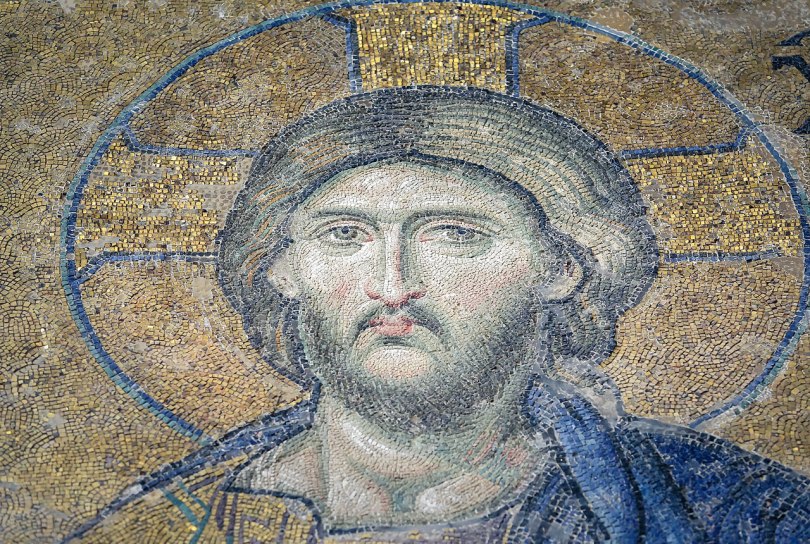

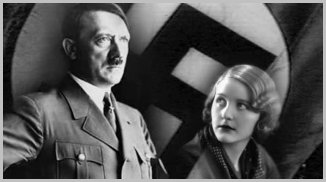
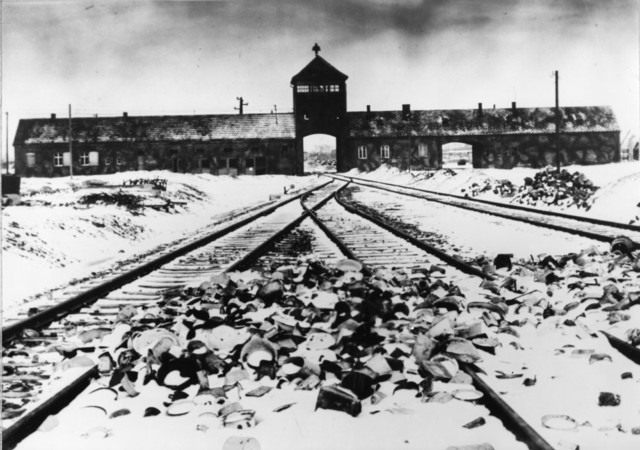
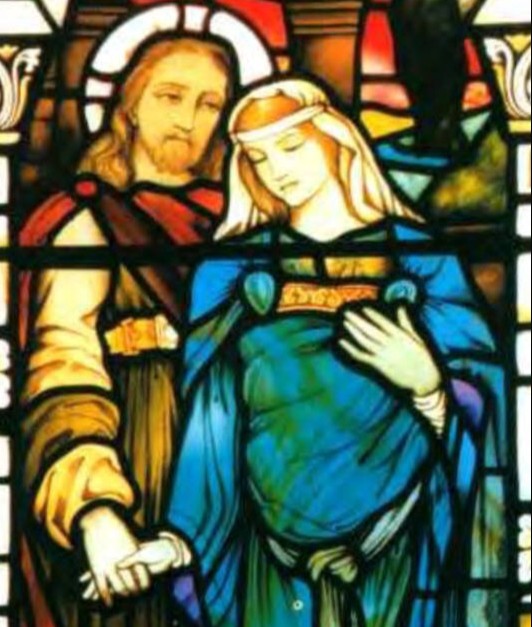
 The Plan For The Future