Sepphoris Mosaic

Sarah, Mother of the Jews

Weaving one tale inside another

The Jewish Bible is a good read, apart from the sections that lay out the Jewish religious laws in excruciating detail. It features tales about the Jewish patriarchs Abraham, Isaac, and Jacob. Moses led the Israelites out of Egypt to the Promised Land under the guidance of a wrathful cloud. It is nearly all made up. Writing and editing the Jewish Bible took centuries. The authors wrote it to promote their religion rather than to provide an accurate account of history. That is how historians look at the Jewish Bible. If you believed it all, don’t blame the Jews for writing good stories, but yourself for your gullibility. You could have known if you had put some effort into educating yourself. And you don’t think reptiles live among us because scriptwriters in Hollywood made a film in which they do? Some do. That is how imagination becomes religion.

But what does the almighty owner of quadrillions of galaxies have to do with the Jewish Bible, a product of the fantasies of a petty nation dwelling in a small area on a tiny planet near an insignificant star inside one of those countless galaxies? To answer that question, imagine you are John Ronald Reuel Tolkien writing about Hobbits living in The Shire. The Shire might be an insignificant spot on a tiny planet in an infinitely large universe, but Tolkien hardly cares about the rest. Only the Shire and the Hobbits have his interest. Tolkien could write a story about a Hobbit who makes up stories about his maker.

If Tolkien can do that, God can do it too. After all, that is one of the perks of being all-powerful. If God is a woman and has been among us as Mary Magdalene, what roles did God play among the Jews? In other words, which women in the Jewish Bible were God in disguise? Inquiring minds want to know because many of these stories are fantasy. At best, these are local tales that may or may not have some connection to actual events and have become integrated into the biblical narrative. Hence, the first question you should ask is: Can God have played a role in stories that never happened in the story?

Tolkien can write a story in which a Hobbit writes a story in which Tolkien enters the Shire disguised as a Hobbit. But that story never happened in the story Tolkien wrote. It is a tale that a Hobbit wrote in Tolkien’s story. The Hobbit might not even realise that the Hobbit in the tale is Tolkien in disguise, but he thinks it is just a Hobbit with a special role in the story, because that is the plot Tolkien created. I hope you haven’t lost track. That is the level of deception we are talking about here. And what about the Hobbits starting a religion with an imagined creator? Then the truth comes out. Tolkien reveals himself, and the Hobbits all laugh. And then it turns out that, even though the story that this Hobbit wrote never happened, it featured Tolkien disguised as a Hobbit. So it is possible. And indeed, strong women, who could have been God in disguise, appear in the Jewish Bible.

Hiding it behind human motivations

Powerful women also appeared in the Jewish Bible for a mundane reason. The Israelites were too small a people and thus too weak to defend a territory. They had to survive as a minority in the lands of others. Military adventurism would be fatal for them. To facilitate the right attitude among Jewish men, the authors of the Jewish Bible invented a new type of hero. Rather than fearless warriors, their heroes were virtuous individuals who helped others, such as Boaz,1 people with weaknesses like David, and risk-averse, shrewd individuals. Abraham was not a courageous warrior, nor was his son, Isaac. Resourcefulness had to compensate for that. Jacob cheated on his brother Esau and took his birthright. Meet the Jewish hero. He is a family man, but lacks the courage to defend his wife’s honour. Yet he is shrewd and defrauds his brother. And he has God on his side.

Heroes die, but the cunning and timid remain, even more so if God is on their side. That is why there are still Jews, while other nations made a one-way trip to the dustbin of history due to their excess testosterone and stupidity. And, of course, they lacked divine support. That is why the authors of the Jewish Bible refashioned the role of men and women in family life. The stories of Jewish patriarchs focused on family life and domestic affairs, in which women played a central role. And women played a crucial part in Israel’s victories.1

That undermined male authority in war. In several cases, women achieved triumph on the battlefield or determined the fate of men. Jacob defrauded Esau of his birthright and deceived his father, Isaac, with the help of his mother, Rebecca. Esther saved the Jewish people from a plot in the Persian court. The Jewish Bible doesn’t depict events suggesting Rebecca or Esther could have been God in disguise. There are, however, a few stories that catch the imagination and qualify. According to the Bible, Jewish history begins with Sarah and Abraham. There was something special about Sarah, the matriarch of the Jews.

Sarah and Abraham

The Lord allegedly promised Abraham that one day, his offspring would be as countless as the stars and own the land between Egypt and the Euphrates River. His wife, Sarah, was barren. She asked Abraham to sleep with her slave, Hagar, so Hagar would bear a child in her name. Those were the days when slavery was not forbidden, and you could get away with that. Once Hagar was pregnant, she began to look down on Sarah. Sarah then mistreated Hagar, and Hagar fled. But God sent an angel, the famous Angel of the Lord, who ordered Hagar to return and submit herself to Sarah. Hagar bore Abraham a son, Ishmael.

That could have been good enough, but the Lord chose differently and presented Abraham with a covenant. It required the circumcision of all males, and Sarah was to become the matriarch of the Jewish nation. At the time, Abraham was one hundred years old, and Sarah was ninety. Abraham and Sarah laughed when they learned this. Remember, 4,000 years ago, there were no erection enhancement pills or fertility treatments. Sarah became pregnant and bore Isaac.

Like in most traditional agricultural societies, Jewish religious law prescribes that men precede women in inheritance. Daughters can only inherit if there are no sons. Nevertheless, being a matriarch of the Jewish people is crucial because you are a Jew if your mother is one. Your father is irrelevant to your Jewishness. God was particularly picky as to who was to become the matriarch of the Jews. In this sense, the Jews are not primarily children of Abraham, as the Jewish Bible says, but children of Sarah in the same way Christians are children of God.

Abraham feared for his life because of Sarah’s beauty. When the Egyptians asked if Sarah was his wife, he said she was his sister. The Pharaoh’s servants took notice and informed the Pharaoh, who took her as his wife. God then inflicted severe diseases on Pharaoh and his household. That is divine justice. God punished the Pharaoh because Abraham had deceived him. With a God like that, you don’t need Satan. Not surprisingly, that horned fellow was nowhere to be found in this tale. Perhaps he enjoyed a sabbatical. The Bible doesn’t tell. Abraham did the same in Abimelech’s kingdom, thus knowingly bringing Abimelech into mortal danger. King Abimelech then received threats from God after he planned to take Sarah as his wife. Luckily for him, God didn’t have a bad mood that day.

To us mere mortals, an intriguing question might be, what made Abraham worthy in the eyes of God? Is it that he intended to sacrifice his son when a voice asked him? If it had happened today, we would have locked up Abraham in a mental ward. If Abraham was God’s husband, it makes more sense. In any case, God works in mysterious ways, and a ram presented itself, and that same voice then asked Abraham to sacrifice the animal instead. That was a narrow escape. If that ram had not been there, there would have been no Jewish people, and world history would have been entirely different. That is chaos theory at work here, or is it God’s plan?

In family matters, God sided with Sarah. The Angel of the Lord summoned Hagar to return to her mistress, Sarah. Later, God told Abraham to send Hagar away. Sarah wanted this. Sarah became the matriarch of the Jews because the Lord commanded. The Lord thus represented her well. Had this been a scrap of history, Sarah might have been God in disguise and done an excellent job of hiding that. However, God can also play an undercover role in events that never took place. That is a perk of writing the story yourself. And why does God desire bits of male reproductive organs in exchange for making a covenant? That is indeed most peculiar unless the Lord is a Lady. Another, and probably better, explanation is that it is a hygiene measure. The Jewish Bible describes the rules for ritual hygiene that Jews are required to follow in great detail.

Joseph and Asenath

Jacob had twelve sons, but Joseph was his favourite and the best-looking one. His brothers were jealous and conspired against him. They sold him as a slave. Joseph ended up in the household of Potiphar, an Egyptian and a high-ranking official in Pharaoh’s court. Joseph did well there and became Potiphar’s favourite. Joseph was handsome, so he caught the eye of Potiphar’s wife, who wanted to sleep with him. When he refused, she accused Joseph of trying to seduce her, and Potiphar put him in prison. There, Joseph became the prison warden’s favourite. Joseph was adept at explaining dreams. That eventually brought him to the Pharaoh, who also made Joseph his favourite. The Pharaoh made him a Viceroy and put him in charge of the granaries.

Scholars believe that the biblical story of Joseph was once a separate story that originated in the Jewish community living in Egypt at the time when many other Jews were in Babylonian captivity. The story resembles several Egyptian tales about a seven-year famine, divine dreams, and a wise vizier who helped the pharaoh and priests to restore the land. One of these stories, in fact, is inscribed on a large monument called the Famine Stele near Elephantine, an Egyptian colony on the Nile River where many Jews also lived.

Joseph married Asenath, the daughter of an Egyptian high priest. The Jewish Bible tells us nothing about her. That raised questions as marrying pagans became a controversial matter for Jews. A later story about their marriage explains how Joseph, after he escaped Potiphar’s wife, ended up in the arms of a pagan priestess. How could God have let this happen? An explanation was needed and invented, and they named the story Joseph and Asenath, which was quite to the point. According to this tale, Asenath was proud and despised men, but became impressed by Joseph’s looks.

Joseph first didn’t want to marry a pagan priestess who bowed before idols and didn’t worship the God of the Jews. But lo and behold, Asenath showed repentance and changed her faith. And then an angel from heaven hurried to her chamber to bless the marriage. When Asenath told Joseph, he changed his mind and married her. It thus must have been convincing. Asenath’s change of faith appears insincere and may have been motivated by her desire to marry Joseph. Nevertheless, God blessed the marriage, which is remarkable considering the high standards that usually apply. Asenath might have been God in disguise if only this had actually happened.

Zipporah and Moses

A fellow named Moses allegedly led the Israelites out of Egypt. A burning bush claiming to be God commanded Moses to return to Egypt to free the Israelites. Moses then took his wife, Zipporah, and their sons and started his journey to Egypt. On the road, they stayed at an inn, where that same burning bush supposedly came to kill Moses, which is a reason why you should not believe it happened. Zipporah saved Moses’ life by circumcising their son and touching Moses’ feet with the foreskin, saying he was her bridegroom of blood (Exodus 4:24-26). Later, the burning bush allegedly transformed itself into an irate cloud of fire, which helped Moses lead the Israelites into the Promised Land.

Zipporah saving Moses’ life fits the agenda of the authors of the Jewish Bible, which is to undermine male authority so Jewish men wouldn’t strive to posthumously win the prestigious Darwin award for their military adventures and terminate the Jewish people in the process. After all, the success of Moses’ mission depended on Zipporah having rescued him from the consequences of his daring attempt to let his son remain uncircumcised. God somehow was particularly keen on that foreskin. Zipporah knew what God was about to do and the reason why. But Zipporah reading God’s mind? No mere mortal could accomplish such a feat, not even Jesus. Hence, Zipporah might have been God in disguise if only this had happened.

Bathsheba and David

Bathsheba, who was the wife of Uriah, brought ruin to David and his kingdom. While Uriah served in the army to fight one of David’s wars, Bathsheba conspicuously bathed on a rooftop near the royal palace, where David could see her naked. She intended to seduce him. The alternative explanation that there was no room inside the house to bathe isn’t persuasive. David ordered Bathsheba to come to his place. And so She did, apparently without even saying it might be a bad idea. She became pregnant after sleeping with him. David then commanded Bathsheba’s husband, Uriah, to go home, hoping he would sleep with his wife so the scandal would go unnoticed. But Uriah didn’t out of solidarity with his comrades on the battlefield. David then asked his commander to place Uriah on the frontline of the battle so he would die. After Uriah died, David married Bathsheba. Bathsheba turned out to be a true fate changer. She also bore the future king Solomon.

You might have learned that the Lord loved David, but the subsequent events don’t demonstrate that. From then on, everything went downhill. In hindsight, this sequence of incidents led to the son of Bathsheba ascending to the throne. The prophet Nathan foretold David that his act would bring a curse upon his house. David’s eldest son, Amnon, was murdered by his half-brother Absalom after he had raped Absalom’s sister Tamar. Later, Absalom declared himself king and started a revolt against David, and David’s troops killed him. That eliminated two potential heirs to the throne. In David’s old age, Bathsheba secured the succession to the throne of Solomon. The marriage was a grave sin, but God nevertheless loved Bathsheba’s son, who was to become king. Bathsheba could have been God in disguise.

That might shed some light as to why the Lord loved David so much, as it cannot be due to his moral virtue. And it presents us with a reason why he couldn’t resist Bathsheba. David is a historical figure, so there could be truth to the story. It, however, also fits the agenda of the authors of the Jewish Bible. Even Israel’s greatest king, David, had faults and crumbled in the hands of a woman. But who would have thought Bathsheba had something to do with the angry cloud dwelling in that tent? Remarkably, the name Bathsheba is composed of two parts: Bath and Sheba. Bathsheba seduced David by bathing naked on a rooftop near the palace. The Queen of Sheba later visited Solomon. That is a bit odd. Hence, the Queen of Sheba may also have been an avatar of God.

Deborah, the founder of the Jewish nation

Sarah is the matriarch of the Jews, but she never lived in that capacity as a historical figure. Still, the Jews have a real matriarch insofar as anything is real in this world. She is also in the Jewish Bible. The Jewish nation gradually emerged after Egypt retreated from Canaan around 1150 BC. That left a power vacuum in which states gradually developed from tribal leadership. It corresponds with the tribal era of the judges in the Bible. One of the oldest texts of the Jewish Bible is the Song of Deborah (Judges 5), dating back to the era before the kingdoms of Israel and Judah.2 Deborah was a tribal leader during this age.

Deborah was the fourth judge in the Book of Judges. Only Deborah may have lived in that era in that role. The Song of Deborah, not Genesis, is the actual starting point of the Jewish Bible. The song likely didn’t pop up out of nowhere. Jewish tribespeople composed it to celebrate the victory brought by their heroine, Deborah. She is the earliest historical person in the Bible. She attributed the triumph to Yahweh rather than El, so the history of the Jews as Yahweh’s people began with Deborah.

She took part in a battle (Judges 4:8-9). As the story goes, Deborah sent for Barak, the commander of the troops, and said to him, “The Lord, the God of Israel, commands you: ‘Go, take with you ten thousand men of Naphtali and Zebulun and lead them up to Mount Tabor. I will lead Sisera, the commander of Jabin’s army, with his chariots and his troops to the Kishon River and give him into your hands.'” (Judges 4:6-7) But it was Deborah who commanded Barak. And so, She might have been the God of Israel in disguise and founded the Jewish nation and religion in person.

Latest revision: 5 December 2025

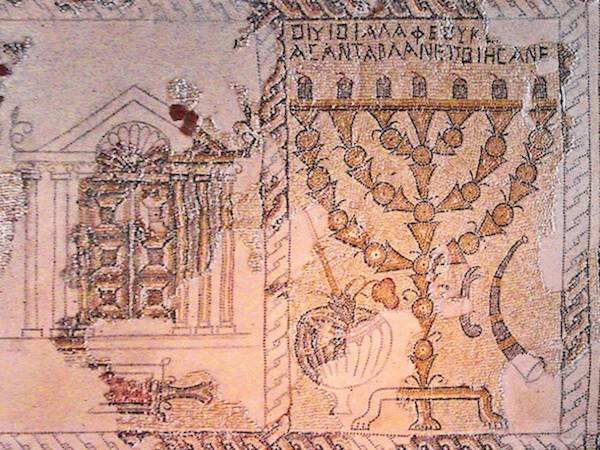
Featured image: Sepphoris Mosaic. Pbs.org. [copyright info]

1. Wright, Jacob L. (2014). The Bible’s Prehistory, Purpose, and Political Future. Coursera.
2. Why is the Song of Deborah considered to be the oldest text in the Hebrew Bible? r/AcademicBiblical (2025). https://www.reddit.com/r/AcademicBiblical/comments/1mhfw3z
Mohammed receiving his first revelation from the angel Gabriel

Religious Experiences and Miracles

The Jewish people still exist after 2,500 years, while they have not had a homeland for most of the time. That is a remarkable feat. Then Christianity replaced the existing religions in the Roman Empire in one of history’s strangest twists. Somehow, the message of personal salvation through Christ caught on. In the third century, Manichaeism emerged as a new religion. It taught that there was a struggle between the good spiritual world of light and the evil material world of darkness. The prophet Mani, who grew up in a Jewish-Christian Gnostic sect, claimed to have received revelations meant for the entire world, which were to replace all existing religions. It instantly became a spectacular success, spread everywhere in the known world, and could have overtaken Christianity, but it didn’t. A pivotal, and possibly decisive, moment was the conversion of Emperor Constantine to Christianity in 312 AD. He made Christianity the favoured religion in the Roman Empire.

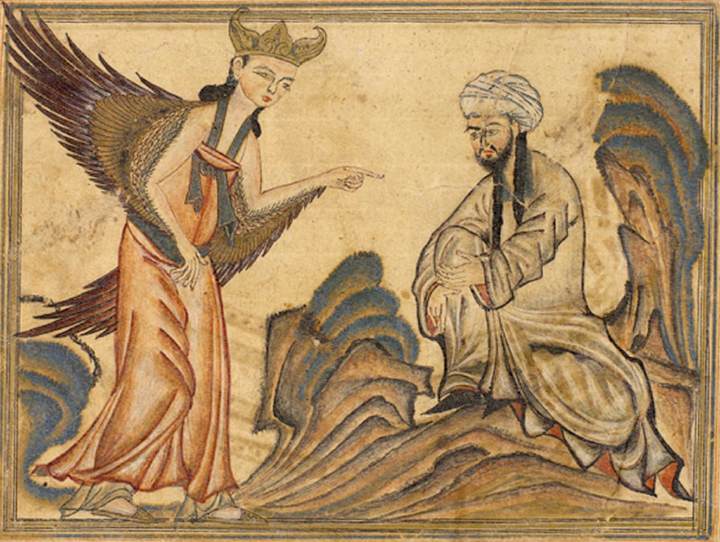
A few centuries later, a small band of Arab warriors established an empire that stretched from the Atlantic to India, spreading the new religion of Islam, in an even stranger and more rapid historical development. Is it a realistic scenario that the supposedly illiterate camel driver Muhammad became a crafty statesman after seeing an angel telling him he came to deliver messages from the God of the Christians and the Jews? After Muhammad’s death, his followers went on to defeat the Byzantine and Persian empires. At the same time, Manichaeism made a one-way trip into the dustbin of history, while in the third century, it appeared to be on the verge of becoming the world’s leading religion. So, why did Mani fail and why did Muhammad succeed? Historians can explain it, but it is an account of what happened rather than an explanation. The question remains, could it occur without someone pulling the strings?

So much can happen, and what happens now has once been extremely improbable. Your reading this text here and now seems highly unlikely a few decades ago. Think of all the things you could have done instead. Or you could have been dead. Yet, you wouldn’t consider your reading this text a miracle. Proselytising religions like Christianity and Islam have a built-in inclination to grow. That may not be the ultimate answer. Jews, Christians, and Muslims worship the same deity. Our universe could be a simulation, and someone could have planned it. But who is to say it couldn’t have happened otherwise?

When Islam arrived on the scene, Jews, Christians and Zoroastrians in the area already believed in an all-powerful creator. Muhammad had met them on his travels, so he was familiar with these religions. Before that, Christianity had faced an uphill struggle. While the Roman state suppressed this religion, pagans left their gods behind and accepted the Christian God as the only true God. And they did so in large numbers.

That begs for an explanation, even though the conversion of Romans to Christianity was a gradual process that took centuries. The Romans occasionally half-heartedly persecuted Christians and executed a few thousand of them over the centuries, not for being a Christian but for not paying their respects to the Roman gods. Despite that, the number of Christians increased 2-3% per year between 30 AD and 400 AD. Each Christian may have converted just one or two persons on average. Over time, exponential growth enabled Christianity to grow from about 100 followers in 30 AD to 30 million by 400 AD.

Such a gradual and steady growth over centuries was somewhat unique for a religion, and so was the blitz conquest of Islam later on. Most people in the Roman Empire, and everywhere else for that matter, lived miserable lives. The promise of an eternal blissful afterlife may have been too tempting for those poor, wretched souls to resist. However, the most often cited reason for conversions was stories about the miracles Christians performed.2 Only in the Middle Ages did the sword become the most compelling Christian argument as Christianity spread further and became integral to European politics. That was not the case in the Roman Empire, so miracles and stories about them were crucial.

An early miracle was Jesus’ appearance to a few followers after his crucifixion. The New Testament mentions miracles that the disciples allegedly performed. These accounts may be exaggerated, but the theme of miracles remains a consistent one in Christianity to this day. The Roman Catholic Church has a rich folklore surrounding relics that are believed to possess magical properties because they are said to have been touched by Jesus. The most famous relics are the Crown of Thorns in Paris, the mysterious Holy Grail, the chalice from which Jesus is said to have drunk, and the Shroud of Turin, a piece of linen cloth with a supposed image of Jesus’ face.

Many of the miracles attributed to these relics are unverifiable or can have other causes, such as luck, but a few cannot be easily explained away. The Roman Catholic Church keeps a record of them. On message boards, people tell stories about prayers heard and miraculous healings. Many of these stories may result from chance or other causes, such as a misdiagnosis or someone seeking attention by lying, but that is not always the case.

A recurring theme is the appearance of the Virgin Mary and other miracles related to her. Thousands of people have seen her. She appeared several times in Venezuela. She revealed herself to Maria Esperanza Medrano de Bianchini in 1976, who received exceptional powers. She could tell the future, levitate, and heal the sick. In Egypt, Mary appeared at a Coptic Church between 1983 and 1986. Muslims have also seen her there. There have been many more Virgin Mary appearances. The most notable sequence occurred in Portugal at Fatima between 13 May and 13 October 1917.

The grand finale was on 13 October 1917, when the Sun reportedly spun wildly and tumbled down to Earth, radiating in indescribably beautiful colours, before stopping and returning to its normal position. Some 40,000 attendants witnessed Mary’s performance. They had gathered because three shepherd children had prophesied that the Virgin Mary would perform a miracle on that date and location. Faking this was hard to do, considering the technology available in 1917. A lack of holographic equipment would have made the effort challenging, not to mention changing the location of the Sun, which is a large ball many times larger than Earth, thus making it difficult to move around. And somehow, the Sun only moved in Fatima, which can only happen in virtual reality.

Jesus also appeared a few times, but less frequently than the Virgin Mary. An intriguing account comes from Kenneth Logie, a preacher of the Pentecostal Holiness Church in Oakland, California, in the 1950s. In April 1954, Logie was preaching at an evening service. During the sermon, the church door opened. Jesus came walking in, smiling to the left and the right. He walked right through the pulpit. Then he placed his hand on Logie’s shoulder. Jesus spoke to him in a foreign tongue. Fifty people witnessed the event. Five years later, a woman in that same church suddenly disappeared. Jesus took her place. He wore sandals and a shiny white robe. He had nail marks on his hands, which were dripping with oil. After several minutes, Jesus disappeared, and the woman reappeared. Two hundred people have seen it. It was on film as Logie had installed film equipment, because strange things were happening.3 Such events can convince people that the message of Christianity, even though it may seem highly peculiar, is correct, as Zeus and Thor failed to show up and perform some tricks.

Mary and Christ are part of a folklore where genuine experiences mix with mental cases seeking attention or con artists profiting at the public’s expense. Usually, there are no 40,000 witnesses, verifiable evidence, or camera footage of what occurred. The Vatican is troubled by the self-proclaimed seers, fortune tellers, prophets, and messengers who believe they have a special bond with the Virgin Mary or have weeping Madonna statues, which they may or may not have prepared to weep. These people could be delusional, crave attention or, like the televangelists in the United States, be after your money. That is not always the case. If you have a religious experience, don’t suffer from mental conditions impairing your judgment, and can’t think of naturalist explanations, you should believe what you see. To quote Shakespeare’s Hamlet, ‘There are more things on heaven and earth, Horatio, than are dreamt of in your philosophy.’

Latest revision: 5 September 2025

Feature image: Mohammad receiving his first revelation from the angel Gabriel. Miniature illustration on vellum from the book Jami’ al-Tawarikh, by Rashid al-Din, published in Tabriz, Persia, 1307 AD. Public Domain.

1. Sapiens: A Brief History of Humankind. Yuval Noah Harari (2014). Harvil Secker.
2. The Triumph of Christianity: How a Forbidden Religion Swept the World. Bart Ehrman. Simon & Schuster (2018).
3. How Jesus Became God: The Exaltation of a Jewish Preacher From Galilee. Bart Ehrman. HarperCollins Publishers (2015).

Building a Nation with Religion

Israel emerging

The Jews started as tribal people in Canaan, the area currently covered by Israel and Palestine. For a long time, the area was under Egyptian control. The earliest known reference to Israel is on an Egyptian stone engraving from around 1200 BC. It lists the enemies the Pharaoh Merneptah defeated during his campaigns. Among them was Israel, which had revolted against its Egyptian overlords. The engraving lacks detail. There was no state of Israel, so quite possibly the uprising was no more than a few skirmishes with local hill dwellers. However, the Egyptians had already called the land Israel, named after the principal local deity, El, so the tribes living there had their own distinct religious beliefs.

Around 1150 BC, Egypt faced droughts, food shortages, civil unrest, corruption, and court intrigues. This period is known as the Late Bronze Age Collapse. Similar crises in neighbouring civilisations led societies to turn inwards and focus on local issues. Egypt retreated from Canaan. Setbacks at home were the reason the Egyptians gave up Canaan, which was an insignificant border province to them, filled with unruly hill dwellers who caused nothing but trouble. It was a footnote in Egyptian history, nothing more. The Egyptians, who had been there for centuries, suddenly went home,1 leaving the Israelites a victory they had not fought for. The locals may have viewed it as a miracle and came to suspect that their favourite deity, El, or perhaps Yahweh, had done some magic. Poof. The Egyptian army, which had been there for centuries, had suddenly vanished due to setbacks at home.

Stories retold grow more sensational over time, so the Bible now tells us that God sent seven devastating plagues to Egypt, and appointed a fellow named Moses to lead the Israelites out of Egypt, under the guidance of an irate and fiery cloud, split the Red Sea, drowned the Egyptian army and let the Israelites escape. The Song of the Sea (Exodus 15:1-18) could be the oldest text in the Bible, together with the Song of Deborah, and it mentions the drowning of the Egyptian army in the Red Sea. The song seems much older than the rest of Exodus, and it doesn’t mention Moses. Scholars disagree on whether the account has a historical basis, and therefore, also the song. It could date back to the Babylonian captivity 600 years later. In that case, the author used archaic language in the Song of the Sea to make it appear older. That would require the author to have knowledge of ancient Hebrew, which seems a stretch. Likely, parts of the song are ancient.

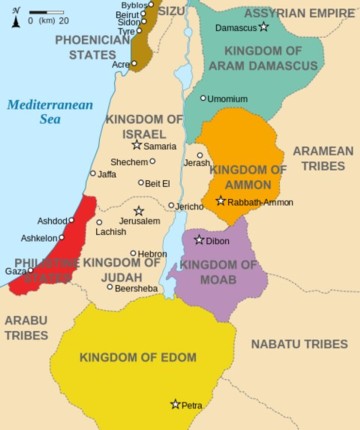
It took several centuries for new civilisations to take over, creating room for small local polities in Canaan until that time. Several small kingdoms emerged, including Israel and Judah. These petty kingdoms existed for a few centuries until new imperial powers overran the area. At first, the Israelites worshipped several gods and goddesses, among them Yahweh. Archaeological finds indicate that El was the supreme deity in the Canaanite belief system. The goddess Asherah was his wife.2

They were the parents of the other Canaanite deities, Baal, Anat, Yahweh, and Yam. Asherah is Yahweh’s mother and El his father. El was often depicted as a bull and was also known as Shor-El, the bull god. And so, we have the highly peculiar situation that half the world’s population now worships one of the children of El and Asherah, two deities of an insignificant tribe living somewhere between the more advanced civilisations of Egypt and Mesopotamia 3,000 years ago, as the supreme God who rules the entire universe. That might have been a hilarious observation if people hadn’t been murdering each other in the millions for their delusions.

Map of Canaan from around 750 BC

States and kings used religion to justify themselves. It matters whether a powerful entity like a god or a goddess supports the state and the king, for only the stupid and the suicidal defy the gods. The kings of Judah, and perhaps also those of Israel, promoted a national religion centred around Yahweh. Other kingdoms in the region also adopted national deities. Milcom was the deity of Ammon, while Moab had Chemosh to defeat its foes and supply the country with blessings (1 Kings 11:33).

Yahweh thus became the deity of the state religion in Judah and possibly Israel. Many in the area also worshipped other gods alongside Yahweh, as having multiple options is prudent. If Yahweh forsakes you, perhaps Baal or some other deity will still assist you. The Bible testifies to tensions between those who still worshipped different gods and goddesses alongside Yahweh and those insisting on worshipping Yahweh alone. As Yahweh had become the favourite deity of the Israelites, El became the word for ‘god’, and Asherah became Yahweh’s wife.

Writing the Bible

As time passed by, new empires arrived on the scene and set their eyes on Canaan. The Assyrians overran Israel in 720 BC. The Babylonians conquered Judah in 597 BC, following their takeover of the Assyrian Empire. The Babylonians deported many of the Judeans. Others fled to Egypt. It was the beginning of the diaspora. The Jewish communities in Egypt, Babylon, and Judah became dispersed. The authors of the Jewish Bible tried to reconnect them by showing that they belonged to a larger group, a nation with common ancestors. Judah already had religious writings. They became part of the Bible. The Jewish Bible became a compilation of tales from these communities and the royal archives of the former kingdom of Judah. The Jewish Bible presents the history of Israel and Judah from the perspective of the Kingdom of Judah.

After the Persians had conquered the Babylonian Empire, the Persian emperor Cyrus the Great allowed the Jewish people to return to Canaan. He commissioned the rebuilding of the Jewish temple. Those still living in the area were not keen on a group of religious zealots entering their country. They opposed the plan, and a political struggle unfolded. After seven decades, Ezra and Nehemiah succeeded in rebuilding the temple. Jewish society was on the brink of being wiped out. Israel and Judah no longer existed. The remaining Jews were mixing with the surrounding population. Jewish leaders had to find a way to keep their people together. Marrying outside the community became frowned upon, and the Jews became a seclusive group. That has caused them a great deal of trouble in the centuries that followed.

The authors of the Jewish Bible sought to preserve Jewish identity through a shared religion, history, and cultural heritage. The Jewish religion gradually became monotheistic. At the time, Zoroastrianism, a dualistic religion, became the official religion in the Persian Empire. The prophet Zoroaster believed in a good creator and an opposing evil power. And it had considerable influence. It brought Judaism monotheism, messiahs, free will, heaven, hell, and, of course, that horned fellow named Satan. Zoroastrianism not only affected Judaism. Some Greek philosophers around 400 BC were also monotheists.

The polytheist origin of the Jewish religion may explain why God says in Genesis, ‘Let us make mankind in our image, in our likeness.’ Later, the Jews became henotheists. They believed that other gods existed, but that they should worship only Yahweh. That is why the commandment says, ‘You shall have no other gods before me’ rather than ‘You shall believe there is only one God.’ Yahweh was jealous and didn’t appreciate offerings to other gods, such as Baal. Several texts in the Jewish Bible have that henotheist perspective.

The Jews wrote most of their scriptures between 600 BC and 300 BC, but there are older parts that date back to the royal archives of Judah. The Ketef Hinnom amulets are the oldest surviving evidence of texts that are now part of the Jewish Bible. They date back to 600 BC. So, before the Jews went into exile to Babylon, they already had an established religion with scriptures. And that later helped them maintain their Jewish identity. The Song of Deborah is one of the oldest texts in the Bible, dating back to the 12th to 10th century BC. Only, the Song of the Sea might be older. Little evidence supports the historical account in the Jewish Bible of the period before the kingdoms of Judah and Israel. However, that doesn’t mean that all these stories are entirely fictional.

Scholars believe David may have been the king of Judah, rather than the king of a united kingdom, as the Jewish Bible states. Based on archaeological excavations, experts have estimated that Jerusalem had around 1,000 inhabitants at the time David supposedly lived, suggesting that Jerusalem was a minor regional centre rather than the capital of a larger kingdom. However, archaeologists have also uncovered a 9th-century BC stone engraving with the lettering BYTDWD in northern Israel, possibly referring to the House of David. Another engraving found in the former kingdom of Moab contains the same lettering. That could raise questions, such as whether a larger kingdom existed.

Creating a nation

Whether or not it was fiction, the authors of the Jewish Bible employed the concept of a united kingdom to foster unity among people originating from Israel and Judah. A shared history united the inhabitants of Israel and Judah, as well as their offspring, into one great nation. The purpose of the Jewish Bible was to establish the Jewish nation based on a shared history and religion. That can be a reason to imagine a united kingdom that once existed. If you go back in time to before the kingdoms of Israel and Judah, the history of the Jews becomes murky. No written records exist from these times. The tales about Abraham, Isaac, and Moses may have originated from different communities, merged into a single narrative to promote a single Jewish identity.1 To make the proposition more attractive, the Jews believed they were the chosen people.

The survival of the Jewish people has been hanging by a thread for a long time. They were a small nation between great powers. They hoped for a Messiah who would save them from oppression, just as Moses had once done. Great powers came and went, but the Jewish people remained. After more than 2,500 years, the Jews are still around, so their nation-building project proved a successful long-term survival strategy. They managed to reclaim their original homeland. It is also remarkable that Judaism stood at the cradle of Christianity and Islam. The Jews have played a central role in world history, unmatched by any other nation. It is an impressive feat, considering their numbers. Today, Jews have an imposing power, and they slay their enemies at will. So, what do they need a Messiah for?

Historical analysis

How do historians and scholars look at the Jewish Bible? Apart from the lack of archaeological evidence, they find the early Jewish history in the Jewish Bible too neat to be correct. It presents an agreeable genealogical line extending from Abraham to Isaac to Jacob, who had twelve sons who, coincidentally, became the twelve tribes of the nation. The number twelve has religious significance, so the facts must have undergone some religiously inspired processing. Jacob and his family went to Egypt during Joseph’s days. Later, Egypt began to oppress the Israelites, and they escaped under the leadership of Moses. The Egyptians kept records, and they tell nothing about the Exodus. The reason is probably not that the Egyptian defeat was too embarrassing.

After Moses’ death, the story goes, Joshua took over and led the Israelites into the Promised Land. Following the death of Joshua, a series of judges took over. They governed Israel and saved it from its enemies. Each judge came from a different tribe, which is also unbelievably neat. It smells like fiction. Then Saul, Israel’s first king, was not up to his task, so David replaced him. The kingdom fell apart into two after the death of Solomon, David’s successor. From then on, the descendants of David ruled only in the south, thus in Judah. The northern part, called Israel, had several dynasties.

Many of the people described in the Jewish Bible may have once lived. Probably, they had very little to do with each other. The authors of the Jewish Bible compiled them to create a unified history of Israel. Abraham was probably not Jacob’s father, Moses was not Miriam’s brother, and David was not Saul’s successor. They may have figured in local tales from tribes and petty kingdoms that later became part of the Jewish nation. The stories in the Jewish Bible originate from several sources and have been revised and retold multiple times throughout the centuries. And the stories have undergone some religiously inspired processing. Think of God sending plagues to Egypt because the Pharaoh took Sarah as his wife. The Jewish Bible is a nation-building project rather than a historical account.1

Textual analysis

It might be interesting to see how scholars analyse the texts to understand biblical history and arrive at their conclusions. Professor Jacob Wright explained the basics using the example of Genesis 26 to illustrate how the authors of the Jewish Bible have woven the story of Isaac and Rebecca into the broader historical narrative of Israel.1 Biblical scholars attempt to uncover the construction process of the texts by examining various sources within biblical texts, including additions and other editing techniques. Genesis 26 tells the story of Isaac living in the Philistine land of Gerar, located west of Judah.

Isaac’s wife, Rebecca, was a beautiful woman. When his neighbours asked Isaac about Rebecca, he claimed she was his sister, so Isaac followed Abraham’s footsteps. Isaac feared the Philistine men in Gerar would kill him and take his beautiful wife. One day, Abimelech, the king of the Philistines, gazed out his window and spotted Isaac and Rebecca making out. He demanded an explanation. Abimelech feared one of his subjects might have slept with her, which could make his kingdom subject to divine retribution.

Abimelech then issued a decree stating that whoever touched Isaac or his wife would be put to death. Rebecca would become one of the matriarchs, a crucial figure in Israel’s history. Isaac prospered among the Philistines and eventually became mightier than them. Everywhere Isaac went in the waterless environs of Abimelech’s kingdom, he discovered water wells. His success aroused jealousy among local inhabitants. That amount of luck captures the imagination like Gladstone Gander’s in a Donald Duck tale.

Instead of fighting for his territories, Isaac moved on and ended up in Beer-Sheba in the south. Abimelech visited Isaac there. The Philistine king blessed him. Isaac invited him to a feast. After eating and drinking all night long, they exchanged oaths of peace. Later that day, Isaac’s servants discovered another water source, in yet another stroke of unbelievable luck. Isaac named this well Beer-Sheba, referring to his treaty with the Philistines. The story served a political agenda, which was to demonstrate that Beersheba was part of Israel.

A closer look at Genesis 26

Genesis 26 contains two kinds of material, which are the story about Isaac’s clan and how he came to possess towns in the far south and Beer-Sheba, and the broader narrative of the book of Genesis, which links this story with the other parts of Genesis to make it a coherent history of the nation. There are multiple ways of looking at the text. Hence, different scholars may come to different conclusions. One way of viewing Genesis 26 is as follows, with the parts that link the story into a broader narrative underlined:

1 Now there was a famine in the land, besides the previous famine in Abraham’s time, and Isaac went to Abimelek, king of the Philistines, in Gerar. 2 The Lord appeared to Isaac and said, ‘Do not go down to Egypt; live in the land where I tell you to live. 3 Stay in this land for a while, and I will be with you and will bless you. For to you and your descendants I will give all these lands and will confirm the oath I swore to your father Abraham. 4 I will make your descendants as numerous as the stars in the sky and will give them all these lands, and through your offspring all nations on earth will be blessed, 5 because Abraham obeyed me and did everything I required of him, keeping my commands, my decrees and my instructions.’

6 So Isaac stayed in Gerar. 7 When the men of that place asked him about his wife, he said, ‘She is my sister,’ because he was afraid to say, ‘She is my wife.’ He thought, ‘The men of this place might kill me on account of Rebecca because she is beautiful.’ 8 When Isaac had been there a long time, Abimelek king of the Philistines looked down from a window and saw Isaac caressing his wife Rebecca. 9 So Abimelek summoned Isaac and said, ‘She is really your wife! Why did you say, ‘She is my sister’?’ Isaac answered him, ‘Because I thought I might lose my life on account of her.’ 10 Then Abimelek said, ‘What is this you have done to us? One of the men might well have slept with your wife, and you would have brought guilt upon us. 11 So Abimelek gave orders to all the people: ‘Anyone who harms this man or his wife shall surely be put to death.’

12 Isaac planted crops in that land and the same year reaped a hundredfold because the Lord blessed him. 13 The man became rich, and his wealth continued to grow until he became very wealthy. 14 He had so many flocks and herds and servants that the Philistines envied him. 15 So all the wells that his father’s servants had dug in the time of his father Abraham, the Philistines stopped up, filling them with earth. 16 Then Abimelek said to Isaac, ‘Move away from us; you have become too powerful for us.’

17 So Isaac moved away from there and encamped in the Valley of Gerar, where he settled. 18 Isaac reopened the wells that had been dug in the time of his father Abraham, which the Philistines had stopped up after Abraham died, and he gave them the same names his father had given them. 19 Isaac’s servants dug in the valley and discovered a well of fresh water there. 20 But the herders of Gerar quarrelled with those of Isaac and said, ‘The water is ours!’ So he named the well Esek because they disputed with him. 21 Then they dug another well, but they quarrelled over that one also; so he named it Sitnah. 22 He moved on from there and dug another well, and no one quarrelled over it. He named it Rehoboth, saying, ‘Now the Lord has given us room and we will flourish in the land.’

23 From there, he went up to Beersheba. 24 That night, the Lord appeared to him and said, ‘I am the God of your father Abraham. Do not be afraid, for I am with you; I will bless you and will increase the number of your descendants for the sake of my servant Abraham.’ 25 Isaac built an altar there and called on the name of the Lord. There he pitched his tent, and there his servants dug a well.

26 Meanwhile, Abimelek had come to him from Gerar, with Ahuzzath his personal adviser and Phicol the commander of his forces. 27 Isaac asked them, ‘Why have you come to me, since you were hostile to me and sent me away?’ 28 They answered, ‘We saw clearly that the Lord was with you; so we said, ‘There ought to be a sworn agreement between us’—between us and you. Let us make a treaty with you 29 that you will do us no harm, just as we did not harm you but always treated you well and sent you away peacefully. And now you are blessed by the Lord.’ 30 Isaac then made a feast for them, and they ate and drank. 31 Early the next morning, the men swore an oath to each other. Then Isaac sent them on their way, and they went away peacefully. 32 That day, Isaac’s servants came and told him about the well they had dug. They said, ‘We’ve found water!’ 33 He called it Shibah, and to this day, the name of the town has been Beersheba.

34 When Esau was forty years old, he married Judith, daughter of Beeri the Hittite, and also Basemath, daughter of Elon the Hittite. 35 They were a source of grief to Isaac and Rebecca.

The first five verses are part of the larger narrative, except for the first part of verse 1. In verse 6, the story itself starts. Abraham comes up in verses 15 and 18. The intervention of the Lord in verses 24 and 25 is also part of the larger narrative. The mention of Esau at the end is part of the encompassing story. That raises the question of where Jacob and Esau were all that time. They were adults at the end of Genesis 25. One explanation is that Genesis 26, without the underlined parts, was once a separate story.

The stories about their sons, Jacob and Esau, seem wrapped around the story of Isaac and Rebecca and their dealings with the king of the Philistines. In this way, the authors created a larger narrative. Genesis 25 contains the story about the birth of Esau and Jacob and how Esau sold his birthright to Jacob. That story resumes at the end of Genesis 26. In Genesis 27, Jacob deceived his father into giving him his blessing with the help of his mother. These interweaving narratives come from different sources.

One is the P-source or priestly source. It tells an independent story of Israel. The authors merged it into the narrative. According to the P-source, Jacob didn’t flee from Esau because of stealing the birthright but because he was in danger of a mixed marriage. The P-source describes how Esau married a Hittite woman and how Rebecca asked Isaac to send Jacob away so he would find a woman who would not make her life miserable.

There is an older account of Isaac and Rebecca and how they came to possess Beersheba. Around it is wrapped a story of their children, where Isaac is the son of Abraham and the father of Esau and Jacob. Another small story tells how Rebecca sent Jacob off to find wives from her own family. Another source tells us how Jacob stole his birthright from his brother Esau. The authors of the Jewish Bible thus wove an older story and two other sources into a broader narrative.1

Theories from scholars

The P-source is a late source from after the exile in Babylon. It deals with Israel’s identity and its relationship to others. Mixed marriages outside the Jewish people became a huge issue after the defeat of Judah. Marrying within the clan or nation helped to maintain a community defined by a shared culture. Therefore, the marriages of Esau to Hittite women caused Rebecca concern.

Another source is the Jahwist source, also dubbed J-source. A part of Genesis 25 comes from the J-source. It tells about the birth of Jacob and Esau. It continues in Genesis 27 and 28, where Jacob stole Esau’s birthright and pursued the deal with the help of his mother, Rebecca. Jacob then had to flee from Esau. According to the J-source theory, the J-source has incorporated an older source into the broader narrative. Later, the P-source altered the reason why Jacob had to flee.

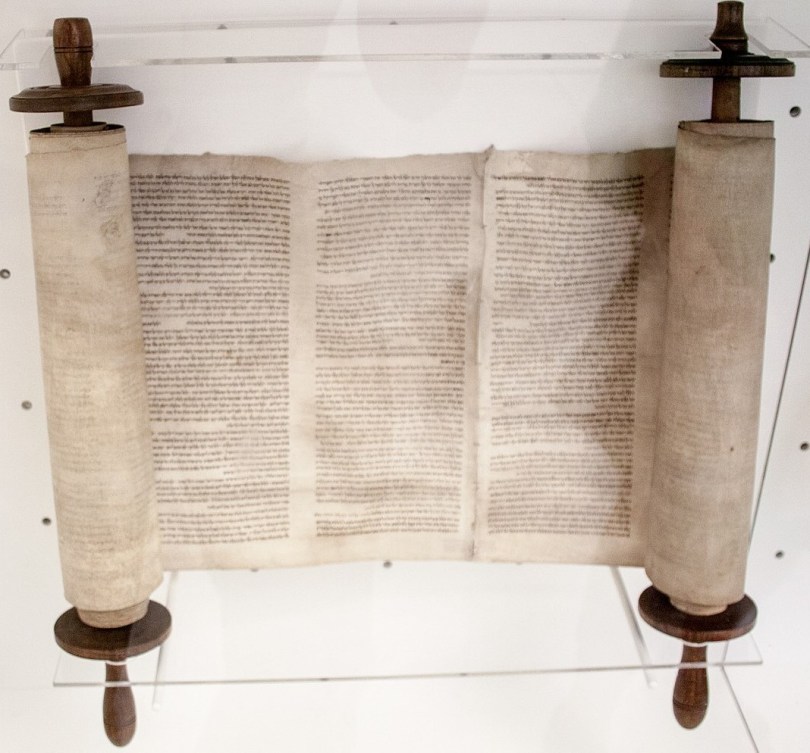
The formation of the earliest sources, the histories of Israel, whether it be the history of Israel’s ancestors and the lives of Abraham, Isaac, and Jacob, or the exodus leaving Egypt and the conquest of the land, is built upon the linking of stories. The authors brought separate individual representatives of clans together in a larger narrative to create the idea of a Jewish nation. Many scholars believe that the first chapters of the Jewish Bible, known to Jews as the Torah, comprise four distinct sources.1

Countless authors have contributed to the Jewish Bible over the centuries. The Bible even reveals how a book came into existence. King Josiah had commissioned artisans to work on the Temple, where they ‘discovered’ the Book of Law (2 Kings 22:8), probably Deuteronomy. Likely, King Josiah had ordered the writing of the book to advance his political agenda of centralising the worship of Yahweh in the Temple of Jerusalem. That could increase his standing as a king. And so, these artisans stumbled upon this work that had supposedly been gathering dust there for centuries.

Much of the writing and editing took place to serve purposes other than accurately presenting the facts, so you can’t expect that the Jewish Bible is an accurate account of historical events. There is more to say about scholarly research into the Jewish Bible. For our purposes, this brief explanation is sufficient. It illuminates how the first chapters of the Jewish Bible, which describe Israel’s earliest history, evolved and how scholars interpret the texts to arrive at their conclusions. Likewise, scholars attempt to reconstruct the origins of the Gospels, as that is an even greater mystery.

Latest revision: 5 December 2025

Featured image: Torah scroll (public domain)

1. The Bible’s Prehistory, Purpose, and Political Future. Wright, Jacob L. (2014). Coursera.
2. El the God of Israel-Israel the People of YHWH: On the Origins of Ancient Israelite Yahwism. In Becking, Bob; Dijkstra, Meindert; Korpel, Marjo C.A.; et al. Only One God?: Monotheism in Ancient Israel and the Veneration of the Goddess Asherah. Dijkstra, Meindert (2001).

Lucretia Garfield. Library Of Congres

The Identity of God

We live inside a virtual reality created by an advanced civilisation to entertain an individual we call God. Like it or not, it is why we exist. That civilisation probably is humanoid, which means that God is like us, with human imaginations and desires. What is also worth noting, and what can hurt your ego, is that all that happens goes according to a script, so that thinking of us as mere worms would be a delusion of grandeur. Think of it. Real worms decide for themselves how they grovel and when. And we don’t. Welcome to the Theatre of the Absurd. We are mere actors in a play, and no one thinks. We follow the script, and there is no exit, no life outside, like in the film The Matrix. The road to enlightenment starts with the acceptance of our complete insignificance.

So what about René Descartes, that world-famous fellow who once said, ‘I think, therefore I exist.’ Was he wrong? As the reasoning above painfully lays out, he starts with a debatable assumption: ‘I think.’ He then arrives at a logical conclusion: ‘Therefore, I exist.’ That made him stamp a realness certificate on his person. But logic in fantasy land is just basing conclusions on imagined assumptions. At least the logic is infallible. So, did Descartes think? Not really. Even then, he might still have had an existence. That is also dubious, however, because God imagined us. You can ask yourself: Do Spike and Suzy exist? They are comic characters created by Willy Vandersteen, who no longer exists, if he had ever done so, because he has stopped breathing. If you go down that road, everything you imagine exists. I just imagined a unicorn. Do unicorns now exist?

That is the question of being. Philosophers discuss such questions. Scientists agree that merely thinking of a unicorn doesn’t make it real. Saying ‘be’ doesn’t generate a bee. You can give such a command to a computer, and you get a simulation of a bee. Now you get how God could have created this world in six days. It might as well have been six seconds. So, if God exists, we don’t, and we are imaginations like unicorns. Countless non-existent minds have wasted their time and energy on the question, ‘Does God exist?’ Indeed, the gods we imagine also don’t exist because we imagine them, and that includes the God of Abraham. There is only God who exists in reality.

If we exist to entertain an individual from an advanced civilisation, God must be a person who, unlike us, might be real. Yes, God might be yet another virtual reality character in a simulation layer above us, but that is beyond our possibilities to find out. And let’s not waste our time on questions we can’t answer. So, who is this person, God? That we cannot know. Still, we might uncover something, at least. If we are here to entertain God, what is the fun of standing on the sidelines? Why not take part yourself? If God plays roles and becomes one of us, we might identify some of those individuals. The starting point for the inquiry is Jesus. No one had ever felt a closer relationship with God than he, so there is a good chance he knew God as a person.

The Gospels tell us that Jesus called God ‘Father’. They suggest a close personal relationship, so Jesus thought of himself as the Son of God. There is something off about Jesus’ Father as He can give birth (John 1:12-13). All four official Gospels imply that Jesus was the bridegroom (Mark 2:19-20, Matthew 9:15, Luke 5:34-35, John 3:27-30), but don’t mention the bride, which is also quite mysterious. The Church tells us that Jesus married the Church. Now, the Church didn’t exist when Jesus lived, so a historian would call it an anachronism. It is like saying that the Roman Emperor Caesar took an aeroplane to Egypt to spend his holidays with Cleopatra. That is impossible because there were no aeroplanes 2,000 years ago. The Gospels don’t say Jesus married the Church. The Church didn’t exist yet, and Jesus wasn’t planning to found it either. So, why would the Church lie about Jesus’ marriage? Are we not allowed to know the truth?

You can smell a rat here. And it is a huge and smelly one. Christians claim that God is love. Jews and Muslims don’t. Do they not worship the same deity? Is there something missing that Jesus’ inner circle knew about? And is it the identity of the Bride? That is indeed the case. The Bride of Christ was God in the person of Mary Magdalene. She was one of God’s avatars. She made Jesus believe he was Adam reincarnated and that She was Eve reincarnated, that Eve didn’t come from Adam’s rib but that Eve gave birth to Adam, and that they were an eternal couple living from the beginning of Creation until the End of Times. That is why Jesus believed he was the Son of God.

Simon Peter said to Jesus, ‘You are the Messiah, the Son of the living God.’ (Matthew 16:16) This phrase appears in the Jewish Bible (Deuteronomy 5:26, Jeremiah 10:10, Psalm 42:2), but Simon Peter’s use of it is noteworthy. In Deuteronomy, the living God refers to God’s active presence on Earth, meaning that God is not some mythical figure, of which we only have tales, nor some lifeless statue, but someone present in our midst. In Moses’ time, it was a pillar of fire. With the Bride gone, these words have lost their meaning, which led some later Christians to believe that Jesus was God.

Jesus was God’s son because Adam was. Hence, Adam is the Son of God (Luke 3:38), Jesus is the Firstborn of all Creation (Colossians 1:15), and Jesus gave us the right to become children of God who are born of God (John 1:12-13). As Adam, he was the father and God the Mother of humankind. The Jewish scriptures about the fantasy character, Yahweh, also known as the God of Abraham, don’t mention that. And so, Paul, who took these scriptures as seriously as a Pharisee, perhaps because he was a former Pharisee, made God male in his theology and persuaded the early Church to do the same. He succeeded because his work made it possible to unite the early Church. Muhammad also married God in the person of Khadijah bint Khuwaylid. Unlike Jesus, he didn’t know.

Those who take offence at God in the person of Eve marrying Her son Adam, but accept that God allowed millions of people to be slaughtered in wars or die of terrible diseases, or even chose to do so, have a problem with their priorities. And by the way, you are not in a position to judge God. In any case, the story of Eve and Adam is a myth. Eve never took Her son as Her husband, as Eve and Adam never existed. It is only what Mary Magdalene made Jesus believe. So, you can rest assured that nothing of that kind ever happened, except for the millions of people that God let die due to wars and diseases. A possible excuse for doing so is that it makes the simulation more realistic. Apart from that, everything being peachy all the time doesn’t make for a good story.

Jesus and Muhammad have lived. The accounts of their lives may be inaccurate because they date from decades after they died, but the early history of the Israelites in the Jewish Bible – the Jews call it Tanakh – is a fantasy. Archaeological evidence doesn’t support it. Moses never brought the Israelites from Egypt into the Promised Land. The story still has a historical origin. Around the time Moses allegedly lived, the Egyptians who governed Canaan went home, thereby liberating Israel from Egyptian oppression. Later on, the account in the Bible often has a closer relationship to historical events.

That leaves us with a question: how did God meddle with the Jewish nation and their religion? Historians have discovered that the Canaanites gradually formed tribes and, later, petty kingdoms after the Egyptians had departed, in what the Jewish Bible refers to as the Era of the Judges. Local leaders organised warfare and settled disputes. They were the judges. The Jewish Bible says they had nationwide authority, but that is incorrect.

The oldest source of the entire Jewish Bible is the Song of Deborah. Historians believe the song dates back to shortly after the Egyptians left. It likely didn’t pop up out of nowhere. Deborah brought victory to a tribe that later became part of the Jewish nation. Deborah attributed that victory to Yahweh, who, as a son of the Canaanite supreme deity El, would otherwise have remained an obscure, inferior deity. In this way, Deborah initiated the Yahweh cult, which today has four billion followers. The historical genesis of the Bible is not Creation but Deborah. She is the Mother of Israel and likely the earliest historical figure in the Jewish Bible, the founder of the Jewish nation, and an avatar of God.

The God of Abraham, known as Yahweh, the Father, and Allah, thus is a veil behind which the owner of this universe has operated so far. She only revealed Herself to Jesus. It made Jesus a unique prophet who came to see himself as the eternally living Son of God. No evidence suggests that Jesus was Adam, but God made him think he was. God, as Mary Magdalene, convinced Jesus that someone had corrupted the story of Eve and Adam. She appealed to rational thinking, as Eve’s creation from Adam’s rib makes less sense than Adam having been Eve’s son. God could have pointed out traces of fraud, such as Eve being the Mother of All the Living. So, what about Adam, who called her like so? Apart from that, Mary Magdalene must have had a very persuasive personality because She made him die on the cross. Jesus thus placed evidence and logic over religious dogmas. He was a true religious revolutionary. Sadly, logical evidence-based religion was a tradition that soon died with him. He was 2,000 years ahead of his time.

That God is a Mother who can appear as an ordinary woman is not that far-fetched. The leader of the Church Ministry of Mother of All Creation cult claimed she was God and that God had had 534 lives, including Jesus, Cleopatra, Joan of Arc, and Marilyn Monroe. The latter three guesses might be spot-on, but her claim of having been Jesus proves she made it all up. Mary Magdalene, however, may not only have claimed it, but also succeeded in convincing Jesus of it, and then let him start a world religion that now has over two billion followers. We have yet to see the leader of the Church Ministry of Mother of All Creation cult pull that off.

Jesus’ inner circle knew that God had wedded Jesus, but the Gospels don’t mention this crucial factoid that everyone would have wanted to know. Scholars didn’t ask themselves why there were no surviving eyewitness accounts. Isn’t that suspicious? Here is your answer. And why did the early leaders of the Church do it? To religious Jews, the idea of God being a woman who married Jesus was alien or even blasphemous. Most early Christians were Jewish followers who had heard of Jesus and his miracles but lacked detailed knowledge of his life and teachings.

Jewish prophets were human, and they expected a human messiah rather than a godlike being. In their view, Jesus was a mere human, so if you read Mark, Matthew or Luke, Jesus appears human, not godlike. And so, the Jews couldn’t handle that God is a woman who can take a human form and marry Jesus. Gentiles had no problem with it. They have tales about female deities and gods having sex with humans. That is why the Gospel of John is so different from the others. It was a controversy that tore the early Church apart.

A compromise, the Christian theology invented by Paul, resolved the conflict. Paul turned Jesus into a godlike Jewish messiah, the eternally living Son of God, the one promised by the Jewish scriptures. It required some imagination and twisting of the facts to reconcile these two irreconcilable viewpoints. Paul’s theology became the Christianity we know today. Try to understand it from God’s perspective. She lives eternally, or at least thousands of years, and uses us to pass Her time. Girls just want to have fun. That brings us to messages in pop music. The song ‘Gimme the Prize’ by Queen has the following lines,

Here I am, I’m the master of your destiny
I am the one, the only one, I am the God of kingdom come

Give me your kings, let me squeeze them in my hands
Your puny princes
Your so-called leaders of your land
I’ll eat them whole before I’m done
The battle’s fought, and the game is won

Queen, Gimme the Prize

Queen is the performing artist, so the hidden message is that the God of the coming kingdom is a Queen. The song features threats against the so-called leaders of the world. That looks like an end-of-time scenario. It is a queer pun, and Freddy Mercury was the performing artist. In the video clip of another Queen song, ‘I Want to Break Free,’ Mercury and the band members dressed in women’s clothing. In Western Europe, we found it funny. That was different elsewhere. The song had a lukewarm reception in the United States, a country that has culturally enriched us with websites like godhatesfags.com. Today, the hatred of LGBTQ people by conservative Christians is getting out of hand. The joke is on them. Early Christians have performed a sex change on God in their scriptures.

Muslims take blasphemy very seriously. Hurt Muslim feelings have made the headlines. Making cartoons of Muhammad can be your death sentence. But why only Muhammad? He isn’t God. Is he of a higher stature than Moses or Jesus? God made those mockers do what they did. The reward for killing a comedian will not be 72 desperate virgins trying to abuse you. Abrahamic religions have restricted the freedom of women, but Islam more than the others. Like Jesus, Muhammad married God, but unlike Jesus, he didn’t know. He had a loving marriage after his wife, Khadijah bint Khuwaylid, proposed to him. Islam may be a funny religion, but Christianity is even more comical.

Paul’s obfuscation of the relationship between God and Jesus gave Christianity its unique and baffling theology. Drinking Christ’s blood, eating his body, and the resurrection of the dead could be good ingredients for a motion picture called Zombie Apocalypse. Indeed, these rituals and beliefs are odd and could suit a cannibalistic sect. The outlandishness of Christianity begins with the idea that we are all cursed because Eve and Adam sinned. And then came Jesus, who sacrificed himself for our sins, so you can save yourself by following him. It seems outlandish, but Paul’s intervention is the most ingenious part of God’s plan. Humans are the most destructive species that have ever roamed this planet, and we are about to destroy ourselves. Only our ability to believe in fairy tales can unite us and make us perform extraordinary deeds. Thinking we are morally depraved, unworthy of God’s grace and in dire need of a saviour can save us from our collective stupidity.

Latest revision: 29 November 2025

Featured image: Lucretia Garfield