Getting Used to Strangeness

Eleven is the fool’s number in the Netherlands. 11 November (11-11) is when the Councils of Eleven are elected. It marks the beginning of the carnival season, which culminates in the celebrations of Carnival in February. In the former Roman Catholic areas of the Netherlands, forty days of fasting ended with a feast of excessive eating and drinking, in which people dressed in costumes. Nowadays, people only opt for feasting and excess. Fasting and contemplation are bad for business. In any case, in the Netherlands, eleven is associated with oddity.

Eleven is also the first double-digit number. To me, eleven symbolises a strange event. After all, it is the fool’s number. 11:11 symbolises a repetition of such an event or two related peculiar incidents. That is the nature of coincidences. Something unusual might happen. That can make you wonder, but if something similar or related happens again shortly afterwards for unexplained reasons, that could be amazing.

Several incidents in my life are noteworthy because of a repetition in an unlikely manner. One, while visiting my father in Nijverdal, I drove on a narrow road nearby. An oncoming car hit my rear-view mirror, and it broke off. A few weeks later, my father had the same type of accident in his car. To the best of my knowledge, no one I know has ever had an accident of this kind.

My son Rob had two bicycle accidents that injured him. The first was near our home, just before the home of a retired physician who could help him with his injuries. The second accident occurred during our holiday in Ameland, just before the home of a retired physician who could have helped him. That is odd, even more so because these were the only two bicycle accidents he had ever had.

In the Autumn of 2008, a strange accident occurred before our house in Sneek. A car had crashed into a lamppost. The lamppost broke off. Two men stepped out and hared away. A few years later, I realised the accident may have been a prelude to the array of unusual events that followed. That day, I bicycled towards IJlst, a village near home. Near IJlst, I found the remains of a broken-off lamppost. That was remarkable, even more so because our house is on the road to IJlst, which is the same road.

In August 2014, we were waiting for a traffic light near our home in Sneek. In the car ahead of us sat a guy who looked like my cousin. And so I told my wife. My cousin and I had been best friends for over a decade. We made a funny newspaper together. Immediately after I finished speaking, four trucks from the transport company Leemans came from the right. My cousin had once decorated a truck of Leemans. When I was eighteen, I went on holiday with him, hitchhiking through Scandinavia. A truck driver from Leemans brought us to Sweden.

I hadn’t seen a Leemans truck in my home town before. They were there because of railroad construction work. My cousin came from Haaksbergen, a village near Enschede. In June 2015, we left Nijverdal after visiting my father. Haaksbergen was in the news because of a shooting incident.1 Haaksbergen had been on the news a few times because of electricity failures,2 3, skating contests,4 and a monster truck accident.5 I told my wife, ‘Haaksbergen is often in the news.’ Just after I had finished speaking, we passed a truck of Leemans parked by the side of the road.

In 2014, a woman rang our doorbell. Her father was about to turn eighty. He had lived in our house during the 1950s. She wanted to give him a tour of his old home as a birthday present. She made an appointment to visit us the following Saturday. She showed up with her sister and father. I gave them a tour around the house. A few hours later, the doorbell rang again. My wife opened the door to an elderly lady with her daughter and son-in-law. They asked if they could see the house because she had lived there in the 1960s. Both families had taken up this idea independently and hadn’t spoken to each other. And nothing of that kind had transpired before or afterwards.

In July 2014, we went on holiday to Sweden and Norway. My son wanted to visit Hessdalen Valley in Norway. People have spotted mysterious lights there. Those lights look like orbs and are known as the Hessdalen orbs. Some people have claimed they were UFOs. When we were in Hessdalen, we went to a viewing point on a hilltop. A few Norwegian guys had been there already for hours, hoping to photograph a UFO. We did not see anything unusual. We took some pictures of the surroundings. After we had returned home, we noticed orbs in one of the photos we had taken there. Orbs on photographs are a phenomenon unrelated to the Hessdalen orbs. Still, it is remarkable.

My wife and I had one specific person with whom we couldn’t get along. What is remarkable about it is that they both have the same last name, and there is no connection between these conflicts. And their last name is not very common. In my wife’s case, the person had been a friend previously. This friend wanted the friendship to become closer, but my wife didn’t. My wife doesn’t dare to offend others, so instead of stating plainly what she wanted, she decided not to see this friend again. Now, this former friend wasn’t easy-going, and nearly all her friendships ended in conflict, so there may be more to it. She was rich, volatile, overbearing, and easily offended. She didn’t have to work for a living but could buy anything she wanted because she had inherited a fortune, making her spoiled. She sometimes drove her husband crazy, but he couldn’t leave her because she had the money, or so my wife said. And so, he lived in a golden cage. My wife had succeeded in remaining her friend for decades, which is probably an epic achievement.

I had trouble with the lawyer in the office next door. He wanted me to cut down the trees in my garden, which I did not. That displeased him. Most notably, he took offence at the pine tree in my front yard, which dispensed needles in the Autumn and also had branches that invaded his territory, or at least the air above it. I was accommodating, trying not to let the dispute escalate, so I allowed him to prune the trees, and I also pruned them. When pine needles ended up in his garden, I often removed them, which I was not obliged to do, as these legally were his needles in his garden. But that wasn’t enough. He believed he could order me. And he became angry when I didn’t do what he wanted or forgot to remove the needles from his garden. You know how lawyers are. They try to intimidate you, even when they have a weak hand. There is a Dutch television programme, De Rijdende Rechter (The Travelling Judge), where neighbours fight out their petty judicial conflicts, and a judge makes rulings, so I proposed bringing the case there.

There was no risk that we would have ended up on television. Otherwise, I would have had second thoughts before making such a proposal. Losing a petty conflict with me would make him lose face, as he was a lawyer. He came from a poor family and had long been a car salesman, but had become a lawyer. He talked with a slight elite accent, so a bit with ‘a hot potato in the mouth’ as the Dutch would say, but not much, and so close to Dutch without a local accent that it is hard to tell the difference, so that I might just be imagining it because I don’t like him. At least he gave me the impression that he saw me as a peasant he could order around. Such a man wouldn’t risk losing face. He backed off, perhaps not for that reason, but who knows? Out of frustration, he dumped the pine needles he found in his garden in my garden several times. For several years, I avoided him so the conflict would not escalate. He later turned the office into his home and became my next-door neighbour. Assuming he had had years to calm down and think it over, I contacted him again. Now, we have a reasonable understanding. I later realised that it is indeed odd that he has the same last name as my wife’s former friend.

Latest revision: 28 August 2025

Featured image: Orbs on a photograph taken at Hessdalen, Norway (2014).

1. Schietpartij Haaksbergen, politie geeft beelden vrij en toont auto schutter. RTV Oost (7 May 2015) [link]
2. Leger helpt Haaksbergen bij stroomstoring. Nu.nl (26 November 2005). [link]
3. Stroomstoring treft Haaksbergen en omgeving. De Volkskrant (29 March 2007). [link]
4. Natuurijsbaan. Wikipedia. [link]
5. Derde dode door ongeluk monstertruck Haaksbergen [link]
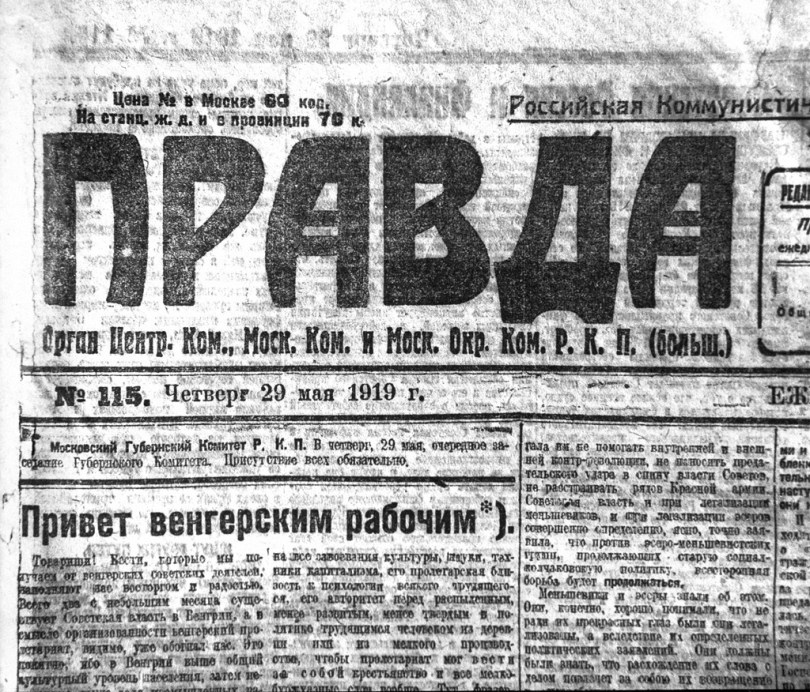
The newspaper Pravda dated 29 May 1919

Strife

My sister Mary Anne was an ordinary kid with a social life, friends and later boyfriends, and social skills. And I was a peculiar child, a loner and a bit strange, and having a social disadvantage, which is probably Asperger’s Syndrome. My sister didn’t take life as seriously as I did. She was more pragmatic and had a more flexible arrangement with the truth. Perhaps, not surprisingly, my sister later became a fashion saleswoman and was good at her job. In sales, you shouldn’t care about the truth. ‘That looks good on you.’ That’s a lie! Nothing looks good on me. I am far too sexy for any clothing. And so, I was upset when it came out that Saint Nicholas (Santa Claus) didn’t exist. Everyone had lied to me for years. It was already hard to fathom that people could lie occasionally.

Mary Anne was two years younger and promised she would still believe in Saint Nicholas if he brought her presents. I was rigid when it came down to the truth. Most people lie if that suits them. I was different. My sister was amazed at how I kept strictly to the facts, even when it harmed my interests. ‘ An Enasniël never lies,’ she said more than once. These were her exact words. She added an article to my name and said, ‘An Enasniël.’ Perhaps that was to stress that I was a specimen of a highly peculiar species, of which she only knew one. But I wasn’t perfectly honest. I still remember an instance when I cheated. I once arranged a few letters before the beginning of a Scrabble game to pick them up, make a word, and get extra points.

Mary Anne had a way of nagging me. It began early. She followed me wherever I went as soon as she could walk and was set free from the kids’ box. Probably, she didn’t intend to annoy me at first, but when she suddenly became my constant companion, it felt intrusive. Perhaps she craved attention, and my frustrated reactions fulfilled that desire. And so, she went on and on, and Mary Anne became adept at soliciting vexed responses. It went from bad to worse and escalated into protracted strife.

Whenever there was a conflict, my mother blamed me. I was older and should be wiser. That changed once she caught on to how these conflicts started and escalated, as Mary Anne usually was the culprit. She never showed remorse and pulled out all the stops. She could become angry if she didn’t get her way. So, she did get her way. On one occasion, Mary Anne smashed a chair at me so fiercely that its leg broke on my shoulder. Was it blind anger, or did she aim for my head? That is unclear. Perhaps she had aimed for my head and not thought of the consequences. My mother later said that she had terrorised the family. She usually got what she wanted in this way. And so, home was a war zone as well. I was always plotting and scheming to get back at her.

My cousin Rob and I started a new club, The Company, a spy club. Rob’s brothers joined the club. We could get our hands on a set of walkie-talkies, and we hid in the alleys in Haaksbergen, talking to each other over the radio. We thought of ourselves as spies, so Rob and I wrote each other letters in code. My tree garden in a fallow backyard behind the shed became our headquarters. I built a hut, made a lookout post so we could survey the area, and erected a flagpole to raise our flag.

Mary Anne and her friends soon invaded this land. And they made a hut of their own. It took a long time to get them out. I had to be careful because she could become enraged, take up a shovel or a hoe and come after me, and then you had to run for your life. I wasn’t violent or mean. These silly wars weren’t worth any injuries. Mary Anne’s best friend, Dorothee, was once indignant after I had shot a cork at her legs using a sawn-off bicycle pump on this land and hit her trousers with it. I split up the tree garden, introduced a border, and retook the land after my sister lost interest in her stake.

And I found a way to get back at her. Rob and I started a funny newspaper, The Big Company Newspaper. It had a lot of fiction in which we named Mary Anne and her friends Dorothee and Ellen as ‘The Morons’. We didn’t use their names but called them Moron M, Moron D, and Moron E. We were constantly ‘fighting’ The Morons. The war against morons was our primary mission. We fought hard, for instance, by reading my sister’s secret diary and writing about it in the newspaper. Later, after some people had complained about the word morons, which wasn’t nice indeed, we renamed The Morons into The Wokkels after a particular potato crisp and named them Wokkel M, Wokkel D, and Wokkel E, respectively. Wokkel sounds like mokkel, the Dutch for bitch, and you only had to turn the W upside down to get at that word.

Occasionally, the newspaper reporting had a remote relationship to facts. I made up most of the stories while Rob took care of the drawings. Mary Anne practised horse riding and played hockey. These were elite sports for the upper class. Even though we had different political opinions, as Rob was left-wing while I was right-wing, we were both anti-posh and anti-elite. In the rag, Mary Anne spoke with a posh accent, or as the Dutch would say, with a hot potato in her mouth. To stress the nature of our newspaper, the fictitious Bureau van Lulkoek (Bullshit Agency) issued it. It was fake news, so we labelled it as fake news. People take the written word seriously, whether it is a tweet from Paris Hilton or the Bible. You can never be careful enough. You can’t have people take nonsense seriously.

We were thirteen when we began and eighteen when we stopped. The rag started childish and rude, but over time, it grew funnier, and my sister became, not entirely a side-show, but definitely of lesser importance. The paper began to feature fantasy stories about us fighting organised crime and other groups in the neighbourhood. We outwitted everyone, including the CIA, the KGB, and the mafia. We always came out victorious because of odd coincidences and the stupidity of our opponents, who usually attacked each other, so we didn’t have to do anything to win.

One of the stories we added was an account of an expedition led by Dr Livingstone, the grandson of the famous Dr Livingstone, to the so-called mountains near Nijverdal, where cannibals hid in the forests. They were German soldiers who had stayed there since World War II and were unaware that the war had ended. Not all expedition members returned whole. We also mocked advertisements. The newspaper featured Roweco, a corporation selling light bulbs and robots. And there was Geopondex, a producer of automatic spear throwers. Its advertising slogan was, ‘Otiosity is our quality,’ a catchy phrase. We sold those newspapers to pay for the materials. These were the early 1980s, so we didn’t use computers. We used a typewriter, paper, and special rub-on fonts to create newspaper headlines.

To give you a glimpse of the kind of buffoonery the funny newspaper was about, I cite one article in its entirety. To understand the story, you need to know that at age fifteen, I invented a new game, chessers, a combination of checkers and chess, but I was the only person playing it. The tale itself is entirely fictional, so it didn’t happen. So, here it goes,

The world championship chessers, which is a merger of chess and checkers, took place in the sports hall of Nijverdal. It started on Saturday, 11 May, and continued on Monday, 13 May. The current world champion, Mr. E Drogoel, had to compete against a Roweco chessers robot due to a lack of human opponents. The main prize consisted of a cash prize of f 0.05 (€ 0.02) and a challenge cup made of pure tin with a height of two millimetres. The fight was rather slow and tedious. Half of the audience, Mr. Drogoel’s father and mother, left the hall. After six moves, the robot gave up because its batteries were empty. Mr. E Drogoel then received the trophy from the director, Mr. E Drogoel, of the Dutch Chessers Promotion Committee (DCPC). After that, the public relations officer of DCPC, Mr. E Drogoel, gave a speech about the fascinating aspects of chessers. After this mediocre performance, the remaining two-person audience, namely the journalist from Nieuwsblad de Grootcompagnie and the reporter from Radio Huunt (an imaginary local radio station), started throwing rotten eggs, tomatoes, beer bottles and car parts.

My mother criticised my childish behaviour. Once, I disturbed Mary Anne’s birthday party with a smoking device. I also had hidden a microphone in her room. After all, we had a spy club. We hardly ever made recordings, and the ones we did were so poor that I couldn’t make out what she and her friends were saying. However, being able to make a recording gave me a sense of power. The newspaper reported what they supposedly said during their secret meetings in that room. I also placed devices in my room that would throw Lego blocks at her if my sister entered to plunder my piggy bank. Still, my sister and I often played together. We played games like Who Is It, chess and Stratego. Mary Anne became the chess champion at her school. She later said it was because we played so much chess together. Our mutual understanding improved once we became adults.

It still doesn’t explain the situation well enough. Copies of the newspaper reveal a great deal of hatred towards my sister. It would be better to clarify this further by referencing a few specific events. Instead of listing incidents, it might be better to mention a few similar events suggesting a pattern. When my sister went to kindergarten, we bicycled to school together because her school was next to mine, allowing my mother to stay home. Mary Anne once ran into a flat tyre on our way to school. I set her on the back seat of my bicycle and took her to school. I took her bicycle with me, expecting to bring her back home this way. When school finished, my bicycle and my sister were gone. Her bicycle with the flat tyre was still there. I had to walk home, a stretch of 1,5 kilometres.

You might think it was just an incident. After all, Mary Anne was five or six. Perhaps she didn’t know better. That was what my parents thought, so they didn’t punish her. I had received punishments for lesser offences, like a severe spanking for singing in bed around five AM. And the affair with the flat tyre was not a mere incident. I already knew that. More than a decade later, my sister had taken my bicycle to go out and had run into a flat tyre. She left it that way in the shed. I asked her repeatedly to fix the bicycle or bring it to the repair shop, but she didn’t. When my sister needed her bicycle, I took it and went out. She scolded me and came furiously after me, but I was on a bicycle, thus much faster.

When I was a teenager, I saved money for the future, but Mary Anne was short of cash, likely because she wanted to go out with friends or buy candy. To finance her expenses, she stole money from my piggy bank. I noticed money disappearing, but I needed proof before telling my mother. It was time to set up a trap. After receiving the pocket money, I told my mother in my sister’s presence so she could hear it, ‘I will bring this money to the piggy bank now.’ After doing that, I returned and said, ‘I will now go out to the tree garden in the backyard and will be away for at least an hour.’

Then, I positioned myself outside the house near the front door window to observe the entrance of my room and started lurking. And after fifteen minutes, bingo! I slipped inside, went upstairs and waited for
my sister to come out. I then asked her to empty her sacks, which she refused. A wrestle unfolded, and I cleared her pockets myself, thereby retrieving a sum of 2,25 guilders. And lo and behold, that same amount had gone missing from my piggy bank. I told my mother, but also, this time, she didn’t punish Mary Anne, perhaps out of fear of what my sister might do.

And again, you might think she was just a teenager short of cash. But that was not the whole truth. Years later, when my parents were married for twenty-five years, Mary Anne and I bought a stereo set together as a present for them. It cost 1,000 guilders, but my sister had no money, so she borrowed her share, 500 guilders, from me. She promised to pay back once she had some money herself. Time passed, and my sister did get a job. And so, I asked her nicely several times to give me my money back, which she never did. And then, when we were at my parents’ house, she proudly announced she was saving 250 guilders per month to buy a home with her fancy man, Marcel, who later became her husband. I was furious and made a scene, and finally, I did get my money back. These incidents reflect a disregard for me that was always there. My parents never took action against it, so I had to fend for myself. Many people have suffered far more, but unlike them, I must explain myself to you. I know that many people have suffered far worse than I ever did, but unlike them, I must explain myself to you.

We also had two white rabbits when we were teenagers. My sister later revealed how we got them. When my parents were on a journey, my grandfather came to look after us. She talked my grandfather into buying these rabbits and a rabbit hutch by telling him it was something her parents had agreed to, which was a lie, which she also said. She knew my parents would disapprove, and she still seemed proud of her deception, so when my parents returned, the rabbits were there and stayed. She was an animal lover, or so she proclaimed, and she reproached my father for being a hunter, calling him a murderer, but I had to clean up the hutch. My sister was a popular kid, while I was not. She could get away with things I could not. She often made my life miserable, and the funny newspaper brought it into balance.

We also had two white rabbits when we were teenagers. My sister later revealed how we got them. When my parents were on a journey, my grandfather came to look after us. She talked my grandfather into buying these rabbits and a rabbit hutch by telling him it was something her parents had agreed to, which was a lie, which she also said. She knew my parents would disapprove, and she still seemed proud of her deception, so when my parents returned, the rabbits were there and stayed. She was an animal lover, or so she proclaimed, and she reproached my father for being a hunter, calling him a murderer, but I had to clean up the hutch. My sister was a popular kid, while I was not. She could get away with things I could not. And the funny newspaper brought it into balance.

A final titbit underscores my sister’s character. She had a red-haired boyfriend, Peter, for several years until he broke up with her to date another girl. That was his mistake—never make Mary Anne angry! She schemed to have him back, luring him into a break-up with the other girl and becoming her girlfriend again so she could dump him for revenge. My sister was mean and excessively domineering.

I hate to write about it because it makes my sister look bad. There are no hard feelings. She has changed quite a lot and isn’t like that today anymore. The same is true for me. And now, my sister is in a miserable situation because she has a brain tumour, which she handles with more spirit and optimism than I would have done, so I don’t want to make her life more miserable than it already is. But my mission seems to be the kind that justifies any means and requires you to know the conditions that shaped me. At the time, my sister didn’t seem like preparation for my future.

The story depicts actual events but contains fictitious names.

Latest revision: 2 August 2025

Featured image: The newspaper Pravda (Russian for The Truth) dated 29 May 1919. RIA Novosti archive. Wikimedia Commons. Public Domain.