Virtual Worlds

We live in a virtual world, a computer-simulated environment. Virtual worlds, such as computer games, can have numerous users who create personalised avatars, engage in activities, and interact with others. If you are familiar with computer games, you know what an avatar is. Once you enter a game, you become a character inside that game, your avatar, and you have an existence apart from your regular life. Inside the game, you are your avatar, not yourself. Alternatively, you could start a virtual world where you are God and make your dreams come true. In this world, you can also become someone else, a character in your story.

Virtual worlds have rules that may draw from reality or fantasy worlds. Rules can include gravity, methods of procreation, and types of communication. In virtual reality, you can change the rules. You can do away with planets and stars and create a flat surface. Or there is no surface at all. You can eliminate gravity and let everyone float. You can do away with procreation and let individuals emerge from thin air. You can invent species that communicate via light signals or not have species but individuals with random features.

This world might look like the original. Our experiences shape our imagination and influence the options we consider. If we write stories and produce films, most are about humans and their feelings and actions. Only a few are about animals. And the animals we imagine in our tales are like humans. Ed, the talking horse, is more human than a horse. Tales and motion pictures about imaginary beings, such as The Lord of the Rings or the Star Trek series, are rare compared to series about humans. And the fictitious beings in our stories, such as Star Trek, look and act like humans. They usually have two legs and two arms and walk upright. Extraterrestrials in Star Trek feature males and females.

The Holodeck is a virtual reality room available in the Starship Enterprise in Star Trek. Using holograms, it creates a realistic, interactive simulation of the physical world. On the Holodeck, you can make a personalised environment with objects and people, interact with them, or write a story and play a role in it. With the help of artificial intelligence, we might soon create simulations of humans and the world. If the technology becomes cheap, we could make billions of virtual universes. If we do that, it likely happened long ago, and we live inside a virtual world ourselves.1

We are about to do so, so this world is probably a simulation. But can we find out? Most philosophers and scientists think we can’t. They have overlooked the obvious. There is an elephant in the room: the things science can’t explain. It begins with establishing that these phenomena aren’t subjective, so there must be multiple credible witnesses or verifiable evidence. Then, you need to certify that it is not due to randomness or a natural phenomenon. To say that the simulation causes these phenomena upends the knowledge we currently believe we have. And so, we must be thorough. Answering the question begins with investigating what we can or cannot know. That is the domain of knowledge theory, a branch of philosophy which deals with the nature of knowledge.

Latest revision: 18 July 2025

1. Are You Living In a Computer Simulation? Nick Bostrom (2003). Philosophical Quarterly (2003) Vol. 53, No. 211, pp. 243-255.
Explaining the Unexplained

The paranormal is a subject of controversy. The evidence is often problematic and certainly not scientific. Take, for instance, psychics. Scientists have investigated their abilities. In experiments, psychics fail to perform better than guessing. Scientists isolate a psychic so others can’t supply this person with information. Sometimes, psychics make stunning guesses, but not in these experiments. Divination can be fraud or manipulation. The same is true for the paranormal in general. Paranormal incidents can be natural phenomena or the result of fraud or delusion.

Still, a large number of paranormal incidents remain without explanation. Few scientists dare to investigate them, as it could make them a laughingstock to their peers. And what can be worse than getting zero publications in respectable scientific magazines because you take reincarnation stories seriously? That is groupthink and intellectual cowardice on a grandiose scale. Apart from that, there is little science can say about the paranormal because there likely is no such thing as the Third Law of Paranormal Activity that explains it all neatly in an elegant mathematical formula.

Thinking that science will one day give the answers is also a belief. Science can become like a religion once you discard evidence that contradicts it. Evidence for the paranormal doesn’t meet scientific criteria, but that doesn’t make it invalid. Science requires that we use a theory, such as the existence of psychic abilities, to make predictions that we can subsequently check. So, if a psychic doesn’t do better than chance guessing during an experiment, this individual has no psychic abilities from a scientific perspective. But there is more to the world than science can prove.

Countless times, witnesses have observed things that the sciences can’t explain. In the early twentieth century, Charles Fort collected 40,000 notes on paranormal experiences. They were about strange events reported in magazines and newspapers, such as The Times, as well as in scientific journals, including Scientific American, Nature, and Science. Most incidents probably never become public, so the total number of these incidents is impossible to guess. It could be billions. Fort had worked on a manuscript suggesting a secret civilisation controls events in this world. He compared the close-mindedness of many scientists to that of religious fundamentalists.

So, did my wife’s father make himself noticed from the other side? Or was the wind gust and the clocks being back just bizarre coincidences caused by natural phenomena? Or did my wife make it up to have a good story to tell at birthday parties? I know her better than you do, and I don’t think she did. I have witnessed countless strange incidents, so I don’t think she was mistaken either. She could only have noticed that these clocks were back by looking at other timepieces. Even if she had been wrong and did not find out about it, it still would have been a remarkable coincidence.

The wind gust was peculiar. The clocks made it even more mysterious. In virtual reality, the laws of nature don’t have to apply. Clocks can stop for an hour, and elephants can fly. We haven’t seen flying elephants, but virtual reality makes it possible. Psychic abilities may exist, even when the scientific method can’t certify them. And Jesus could have walked on water and raised the dead. And meaningful coincidences, even when caused by ordinary natural phenomena, may indicate someone is pulling the strings.

Latest revision: 18 July 2025

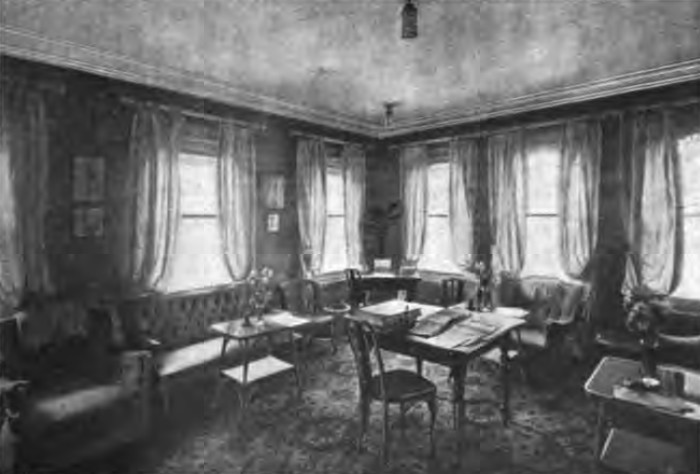
Featured image: Psychic reading room