The Virtual Universe

Some religions claim that God or gods have created this world. In the Bible, God created everything by saying, ‘Be.’ That God uttered ‘Be’ and poof, there are bees, is not a particularly compelling explanation for the existence of bees. So, how could the gods have the magical powers to do that? Until recently, we had no clue, but then Nick Bostrom, known for his dry and incomprehensible employment of words, delivered us the simulation hypothesis, the most profound breakthrough in theology in nearly 2,000 years. We might exist inside a computer simulation run by an advanced humanoid civilisation. Our creators can define a class bee and instruct the computer to create instances of this class. A class has properties, allowing individual instances to be unique.

And so, Genesis might be closer to the truth than the religion sceptics think. Bostrom didn’t say whether or not that is indeed the case or how likely it is. He didn’t speculate on that issue. Otherwise, his critics might have a field day, ridiculing him for opening a back door to the paranormal and religion. That could have been the end of his career. However, it is easy to find out if you venture into areas that scientists anxiously avoid, such as paranormal incidents, religious experiences, meaningful coincidences, people’s memories of past lives, ghost phenomena, and UFO sightings.

Scientists dare not investigate these phenomena, as it could make them a laughing stock in front of their peers. That is groupthink and intellectual cowardice on a grandiose scale. On numerous occasions, multiple credible witnesses have observed events that science can’t explain. Like nearly everyone else, scientists have been proficient at ignoring evidence that contradicts their beliefs, such as unscientific ravings about spirits relaying messages from the other side during seances. Bostrom speculated that this world might be a virtual reality, but didn’t search for proof. As a philosopher, he had better things to do.

The book The Virtual Universe delves into the evidence. You can prove this universe is a virtual reality if you assume scientists have correctly established the laws of nature and that sciences like physics, chemistry and biology are correct. If events transpire that defy these laws of science, such as paranormal incidents, religious miracles, meaningful coincidences, memories of previous lives, ghost phenomena and UFO sightings, breaches in these laws occur. According to science, the Virgin Mary doing a miracle before a crowd of thousands, like in Fatima, is impossible. If science is correct, and it happens nonetheless, this world must be fake. The book The Virtual Universe puts it like this:

  1. If we live in a real universe, we can’t notice. Virtual reality can be realistic and come with authentic laws of reality.
  2. This universe may have fake properties, but we cannot notice that either because we don’t know the properties of a genuine universe.
  3. Breaching the laws of reality is unrealistic in any case. If it happens, we may have evidence of this universe being fake.

It follows from (1) and (2) that we can’t use the universe’s properties, reflected in the laws of nature, to determine whether or not this universe is real. Science can establish the laws of physics or the properties of this universe, but science can’t tell whether they are real or fake. However, if breaches occur, we have evidence suggesting this universe is bogus. The book The Virtual Universe investigates the evidence, which includes stories about paranormal incidents, religious experiences, meaningful coincidences, reincarnation stories, ghost phenomena, and UFO sightings, often with multiple credible witnesses. So yes, aliens can beam you up into their UFO because they are as fake as you are.

Advanced humanoids, often dubbed post-humans, likely share motivations with us because they evolved from humans, likely after some engineering, genetic, or otherwise. These advanced humanoids may run simulations of human civilisations for research or entertainment. Research applications could be about running what-if scenarios. Possible entertainment applications include games or dream worlds where someone’s imagination comes true. These simulations may not be realistic in some aspects, as they reflect the rules of a game or someone’s personal fantasies. In a simulation, you can let Jesus walk over water and make him think that faith alone suffices to do that.

Civilisations are complex. Small changes can derail events that would otherwise occur. Just imagine another sperm had won the race to Adolf Hitler’s mother’s egg. There were millions of sperm in that race. Guaranteeing an outcome, such as letting World War I end on a date referred to by the licence plate number of the car that drove Archduke Franz Ferdinand to his appointment with destiny, requires control over everything that happens. That doesn’t apply to games. Unpredictable developments make games more interesting. Considering how we utilise computing power, mainly for games, sexy pictures and cat videos, the number of simulations for entertainment likely vastly outstrips those run for research purposes. If we live inside a simulation, we should expect its purpose to be entertainment.

The owner or owners may use avatars to play roles in this world and appear like ordinary human beings to us. If you are familiar with computer games, you are familiar with avatars. Once you enter a game, you become a character inside that game, your avatar, and you have an existence apart from your regular life. Inside the game, you are your avatar, not yourself. Alternatively, you could start a virtual world where you are the Creator and bring your dreams to life. In this world, you also become someone else.

That is a lot of assumptions, and without evidence, they remain speculation. Even when there is evidence, it doesn’t necessarily mean the explanation is correct. Suppose you hear the noise of a car starting. That is the evidence. You may think there is an automobile starting. Perhaps a vehicle is firing up its engine. But your husband might be watching his favourite television series, Starting Engines, so you can’t be sure. Nothing you know contradicts your assumption, but you could be wrong. So, is God an individual from an advanced humanoid civilisation who uses us for amusement? It is credible, and perhaps nothing contradicts it. But who is to say it is correct?

Now comes the disagreeable part. We are instances of the class human. When the beings in the simulation think for themselves, that raises ethical questions like whether they have rights that the creators should respect. Considering how humans treat each other, it is not a given that these rights would be respected even when our creators acknowledge them. In the real world, bad things happen to people. In the case of control, the beings inside the simulation don’t think, but are mindless bots following the script. We have no independent will and are toys to our creators. God kills people at will, and a few million casualties more don’t matter. On the bright side, if God wants us to enter Paradise, where there is peace and happiness, nothing can stop that as well. Those who try will surely find themselves on the losing side. So, if the Boss makes a joke, you can better laugh. Perhaps it isn’t easy. But don’t worry. It took me fifteen years to look at the bright side of life.

Latest revision: 6 September 2025
Simulation argument II: Adding information

Will we soon create simulations of humans who act like humans and even believe they think? Will we invent a Holodeck like in Star Trek? And will we expand it to civilisation-size simulations? Nick Bostrom dares not to assess the likelihood of that. However, you don’t have to look far for answers. We are already close to doing it. Imagine a world where you can be king or queen. You can even create the world as you like and build your paradise. You can lead the life you desire. You can design the ideal spouse who fulfils your deepest romantic and sexual desires. And no one frustrates your ambitions.

Your dream can be your life. And you don’t have to wake up. It is simply too tempting for many of us to resist. Your life is not great. Your spouse is not perfect. Your job is mediocre or worse. Other people make you miserable. Your boss ignores your ideas. Your ventures fail. You think you deserve better. Likely, at least one of those options applies to you. If we could make our dreams come true, we would. We will spend a lot of time there if we ever invent something like the Holodeck from Star Trek.

You might think you won’t do it, but others would, so there will be demand for such a toy. What you have just read is information, specifically insights into human nature. We will make our dreams a reality if we can. We can also consider the advances in artificial intelligence, extrapolate them, and demonstrate that simulations of humans will be feasible at some point, likely soon. Hence, we probably live inside a simulation and are someone’s fantasy. Showing it is possible or likely, however, doesn’t prove it. So, how can we do that? It is possible with the information we have.

Scientists have established the laws of nature, which determine what is realistically possible and what is not. Simulations can be realistic in many ways, but they can also be unrealistic in some aspects. If we can establish that unrealistic events occur, thus breaching natural laws established by science, we could be living in a simulation. Instead of speculating about us living in a simulation by guessing the probability of post-humans existing and their abilities, resources, and possible motivations, we can look at what we know about our universe. That is information. We can establish that we live in a simulation as follows:

  1. When this universe is genuine, we can never be sure about it. A simulation can be realistic and feature authentic laws of reality.
  2. This universe may have fake properties, but we can’t establish this because we don’t know the properties of an authentic universe.
  3. Breaching the laws of reality is unrealistic in any case. If it happens, we may have evidence of this universe being virtual.


Science can establish the laws of reality or the properties of this universe. Only science can’t determine whether they are real or fake. Perhaps there is no gravity in a genuine world, even though we deem it unlikely. But the breaching of these laws suggests we live in a simulation. If we believe science is correct, breaching its laws proves the simulation. We have a body of evidence for the scientifically established laws of reality. These laws of reality and breaches thereof are information about our universe. Science has established, among others, the following:

  • The laws of physics always apply inside their realms. Newton’s third law of motion states that for every action, there is an equal and opposite reaction.
  • The universe started with the Big Bang. Life on this planet emerged from chemical processes, and evolution shaped it. There is no evidence of a creator.
  • We are biological organisms made of carbon and water, and our consciousnesses reside in our bodies. There is no spirit or soul.

Evidence to the contrary indicates this world is fake. Meaningful coincidences suggest there is an intelligent force directing events. The paranormal defies the laws of physics. A ghost pushing you breaches Newton’s laws of motion. Credible reincarnation stories challenge the claim that we are biological organisms. However, meaningful coincidences can materialise by chance. There may be laws of reality we don’t know. There is plenty of evidence suggesting that consciousness resides in the body, while only a few people remember a previous life. And ghosts, have you seen them? It may be time to take your pills.

Still, if a sufficient number of credible accounts of breaches of the established laws of reality exist, we can assume we live inside a simulation. We may still differ on what a sufficient number is or which accounts are credible. The proof can’t be scientific because science can’t prove we live inside a simulation. We can’t verify that we live inside a simulation by doing experiments, as breaches of natural laws are unpredictable. But we can check the accounts of violations of these laws. It remains speculation, akin to living in the dark and assuming that cows exist and make a mooing sound, even though we have never seen them, and believing that our hearing of a moo proves their existence.

Latest update: 18 July 2025

Simulation hypothesis

In ancient times, philosophers speculated that we can’t tell whether the world around us was genuine or whether other people also have minds. Perhaps I am the only one who exists, while the rest of the world is my imagination. It could all be a dream. Some religions claim that gods created this universe and that we are like them. According to the Bible, God said, ‘Let us make mankind in our image, in our likeness.’

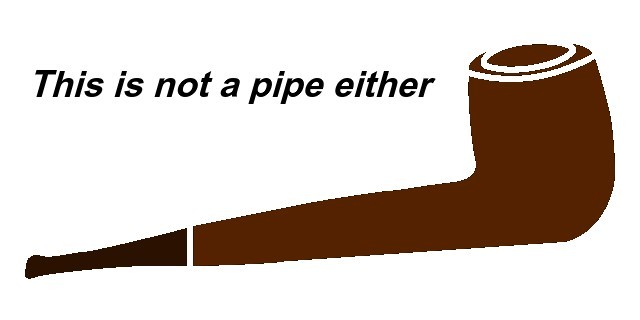
For a long time, we couldn’t tell why this world might not be authentic or how the gods could have created it. That changed with recent advances in information technology. This universe could be a simulation. We believe that our senses register an outside reality so that we ignore evidence to the contrary. You may think you see a pipe when watching an image. The caption of the famous painting, The Treachery of Images, by René Magritte, makes you notice: this is not a pipe.

In 1977, science fiction writer Philip K. Dick was the first to assert that our reality must be computer-generated. In a press conference in France, he described his psychotic experiences and strange coincidences that led him to believe this world is fake. He told the audience that his lost memories returned in full for unknown reasons. He also claimed to have had a vision. And a scenario Dick wrote came true. And so, he thought what he had found was of momentous importance to humanity, so he organised that press conference. His last name suggests our Creator, if there is one, likes sexist jokes.

The idea that we live inside a computer-generated world is known as the simulation hypothesis. We could all live in a simulation created by an advanced humanoid civilisation. Professor Nick Bostrom explored the probability of it in the simulation argument. According to Bostrom, there could be many different human civilisations. The humans in those civilisations may, at some point, enhance themselves with biotechnology and information technology, live very long, and acquire capabilities that ordinary humans don’t have. For this reason, these beings are no longer humans, making them in need of a new name, which became post-humans. A post-human might be a biological creature, a humanlike artificial intelligence or a combination of both. They might be brains in vats or have no physical bodies at all.

These post-humans might experience an urge to run simulations of their human ancestor civilisations, so we could be living in one of those simulations. Bostrom argues that at least one of the following options must be true:

  1. Nearly all human civilisations terminate before becoming post-human.
  2. In any post-human civilisation, only a negligible number of individuals develop an appetite for running simulations of their human ancestor civilisations.
  3. We almost certainly live inside a computer simulation.1

The argument comes with the following assumptions that seem increasingly plausible due to the recent developments in artificial intelligence, but are not proven:

  • The computing power of post-human civilisations suffices to run a large number of simulations of human ancestor civilisations.
  • It is possible to simulate human consciousness in a computer.1


Bostrom concludes that if you think our civilisation will one day become post-human and run many simulations of human ancestor civilisations, you must believe we already live inside one.1 It is a matter of probability. If we invent this technology in the next 10, 100 or 1,000 years, it won’t happen later than that. By then, we will have done it. But millions of years have passed when it could have happened, so it probably did. If we do it within 100 years, and it could have happened a million years ago, the chance it already happened might be (1,000,000 – 100) / 1,000,000 = 0.9999 or 99.99%.

Non-humanoid civilisations are probably not interested in running large numbers of simulations of humans. They might run a few for research, perhaps to investigate human behaviour, but it seems unlikely that our emotions and history entertain beings entirely different from us. Thus, most simulations of human civilisations will likely be run by post-humans.

Non-humanoid civilisations are probably not interested in running large numbers of simulations of humans. They might run a few for research, perhaps to investigate human behaviour. Still, it seems unlikely that our history and emotions interest beings that are entirely different from us so that they will run billions of simulations of human civilisations. And if they exist, they must first learn to travel faster than light to find humans. Thus, post-humans will likely run most simulations of human civilisations. So, our Creator, if there is one, is probably humanoid, but that doesn’t necessarily mean human.

It is a problematic argument. Philosophy is the art of not accepting the obvious because the possibilities are boundless. The obvious often isn’t the case. But with the information we do have, it is our best guess. We think of God as having a human nature because we imagine God. And so, the God in the Bible appears to have human character traits. Conversely, when God imagines us, God probably is humanoid. We would create virtual realities with humans if we could. That is the reason why. However, because we imagine God, that is what we imagine. It seems obvious, but that doesn’t mean it’s true. It is only what our imagination and the evidence suggest is most likely. But we know very little. We can’t go outside the simulation and check.

The simulation argument comes with uncertainties. Post-humans might lack sufficient computing power. Recent developments in quantum computing suggest otherwise. Alternatively, nearly all human civilisations die out before building these simulations. Alternatively, post-humans have evolved and differ from us, so they aren’t interested in running simulations of humans. We may only know this once we have become post-humans. Bostrom doesn’t try to guess the likelihood of the options. He thinks we have no information about whether this universe is real, but that is incorrect. There is evidence.

Latest update: 18 July 2025

Featured image: Inspired By The Treachery of Images.

1. Are You Living In a Computer Simulation? Nick Bostrom (2003). Philosophical Quarterly (2003) Vol. 53, No. 211, pp. 243-255.

Halloween cat from Poland. User Silar.

Ghost Stories

The first thing someone told me about ghosts was that they are fake. That person was probably a schoolteacher. Before that, I hadn’t heard of spooks. Ghosts are fairy tales, the teacher said at primary school. Several years later, I went on a school trip and visited the Singraven Estate near Denekamp. The custodian told us that a spook dwelt inside the manor, upsetting things, but he added that we shouldn’t fear it. We could safely enter. It is better not to put faith in spooky stories about venues that depend on tourist income. The facts that are beyond doubt aren’t spectacular. They are lame indeed.

As a teenager, I also visited Twickel Castle in Delden, located near Denekamp, but it did not have such a spooky reputation. I recently learned that this castle also has ghostly phenomena. The castle doesn’t advertise itself as a ghostly venue, which makes the claim more believable. Only one source on the Internet mentions it. If it is true, the laws of physics went out the window, at least temporarily. The author preferred that I quote her work. She wrote,

Recently I heard a strange tale from the phlegmatic steward of Twickel Castle in Delden. An English restorer who had come to restore some antique cupboards was given permission by her to stay overnight in an attic room of the castle. After he had been there for a few days, she saw that he had put his mattress on the floor.

She asked him why he slept on the floor and not on the bedstead? He answered her unmoved that he had been pushed out of bed for three consecutive nights. To prevent it from happening again, he had decided to sleep on the floor from then on. He had not been bothered since then. The steward asked him if he didn’t find that creepy? His answer was calm and clear: ‘No, I’m from England.’1

That is what the stiff upper lip is about. You might not believe it if you haven’t witnessed similar things occurring in your own house. So that is why I am inclined to believe it. There are plenty of ghost tales that go around. Most are hearsay. On the Internet, you can find lists of ghost tales like 10 Eerie Real-Life Paranormal Encounters to Creep You Out on Listverse.com.2 The list is fact-checked, which means the stories happened unless witnesses lied and got away with it. You are about to read one story from that list. It was also on CNN. The CNN article allows paranormal investigators to share their unscientific claims about crisis apparitions. An explanation that doesn’t conflict with science is that we live inside a virtual reality. So, here is the story,

Nina De Santo was closing her New Jersey hair salon when she saw Michael, one of her customers, standing outside the shop’s window. He had become a good friend. He had been going through a tough time after his wife left him. Nina had tried to cheer him up. When she opened the door, Michael seemed happy and transformed. He smiled at her and said he wanted to thank Nina for everything she had done for him. They chatted, and each went their way. The following day, Nina received a call from one of her employees. Michael’s body had been found the previous morning, nine hours before Nina had spoken to him at the salon. He had committed suicide.2

In 2014, a couple named the Simpsons asked the regional news channel Fox43 in the United States to visit their haunted house in Hanover, York County. DeAnna Simpson, the wife, mentioned that entities were haunting the home. She and her husband had lived there for seven years. She caught ‘ghosts’ on film. They had scratched or even attacked the guests. DeAnna had invited priests, paranormal researchers, and the crew of the TV show The Dead Files into her home, who then uncovered ‘evidence’ of ‘grisly deaths’ that had occurred there.3 When the Fox43 staff came in, something invisible scratched their photographer.

In March 2018, my wife woke me up in the middle of the night. She said, ‘The bathroom door is locked, and our son is sleeping in his bed.’ You can only lock the door from the inside. The lock needs force, so this can’t happen by accident. My wife feared a burglar was hiding inside. I took a knife from the kitchen to unlock the door while she was standing behind me, holding a heavy object to smash into the head of the burglar. Only, I never believed there was a burglar. So many unusual things had happened already. And I was right. There was no burglar.

So, what to make of this? The goings-on at Twickel Castle and the Hanover house are undoubtedly peculiar. Nina De Santo’s story is mind-boggling. In my home, the laws of physics didn’t always fully apply either. It made me wonder. I have seen it happen, and so has my wife. And if there is no naturalistic explanation, is this evidence of ghosts? Not necessarily. If you believe ghosts are real, you think science is crap. And I don’t. The simulation can play into our imaginations and fears. And ghosts are as unreal as we are. There may not be more to it than that. That at least makes sense.

Latest revision: 18 July 2025

Featured image: Halloween cat from Poland. User Silar (2012). Wikimedia Commons. Public Domain.

1. Betoverd door: haunted houses. Theracoppens.nl.
2. 10 Eerie Real-Life Paranormal Encounters to Creep You Out. Listverse.com (2022).
3. A haunted Hannover home. Civilwarghosts.com. [link]
4. Why those TV ghost-hunting shows are transparently fake. Scott Craven (2019). The Republic. [link]

Satire on False Perspective. William Hogarth (1754).

Strange Universe

The license plate number on the car that drove Franz Ferdinand to his appointment with destiny was just one of the remarkable incidents and experiences on record. In many cases, we can establish the relevant facts to the point where there is little doubt that the event has indeed occurred. We have no evidence suggesting someone has changed the licence plate. Perhaps science will explain these things in the future, as this universe may have properties we don’t yet know. Some have come up with explanations that let go of our understanding of time and cause and effect.

Our usual way of perceiving events is that something happens in a particular place at a specific time. We think of a place as a constant as time passes. Events in the past caused events happening now. And events in the present cause future events. The Allied invasion took place in Normandy on 6 June 1944. Normandy is still there, but 6 June 1944 is history. The liberation of Western Europe from German occupation is a consequence of D-Day. If D-Day had not happened, history would have taken a different turn. In this way, cause and effect work. That makes sense to us.

Perhaps, events connect in ways other than causality and time. The psychiatrist Carl Jung proposed a collective consciousness that connects all events through meaning. If you believe it, that can explain a few things, such as reincarnation accounts and premonitions. Perhaps the collective consciousness carries a deceased person’s memories into someone else or gives premonitions that come true. According to science, this is all total gibberish, not even worth a second of your thought, as it contradicts established laws of science. Only in a story can events connect via meaning.

Others think of time as a dimension, so you can travel to a time like you can travel to a place, even though nobody ever succeeded in doing that as far as we know. These ideas counter our traditional notion of cause and effect over time. But so does the theory of relativity. And the theory of relativity proved to be helpful, so we consider it to be true. Perhaps physics will one day explain premonitions.

A reference to the end date of World War I could thus have ended up on the licence plate of Franz Ferdinand’s car because of some connection we don’t yet know. No plausible explanation is available for that connection, but perhaps some property of this universe is still unexplained. And maybe both are true. All points in time might be connected in another way, while causality also applies. Physicists have to work with queer phenomena that are hard to explain. For example, light behaves like both particles and waves, but waves can’t be particles.

Alternatively, a time traveller could have put AIII 118 on the licence plate, even though the theory of relativity doesn’t allow for that. Time travel to the future may be possible, but going back in time creates logical problems. It would alter future events. And there is another fly in the ointment: chaos theory. Insignificant disturbances can have dramatic consequences. If I could go back to 1914 to screw a license plate with the combination AIII 118 on the car, that may derail the events that were about to occur, and World War I would not end on 11 November 1918 and perhaps not even have started. And sneezing can be enough to do the job, just like a butterfly in Texas can start a storm in China. It seems likely that the Austrian authorities issued the license plate. Plate AIII 118 probably came after AIII 117 and before AIII 119, so we can drop this imaginative scenario into the bin.

And look at what scientists are doing. Recent measurements confirmed the electron’s roundness to a record level of exactness. It deepened the mystery of why the universe consists of matter rather than antimatter. Any asymmetry in the electron’s shape would point to a related asymmetry in the laws of nature that could explain this feature of the cosmos.1 Scientists were baffled. Metaphysical speculation also dominates science, and scientists imagine invisible friends like gravity and electrons to describe our world. And then they discover something suggesting that some of their imaginary friends may not exist. Well, who would have thought that?

Maybe we should let our imagination run free. Anything is possible if we can think of it and corroborate it with experiments. It is how science progresses. A piece of fruit could be an apple for as long as you look at it. And it can turn into a banana once you look the other way. Scientists believe that if experiments confirm it. Some particles turn into waves when you don’t look. Scientists might even base their theories on things that are impossible but do happen because we live inside a simulation. We don’t know that, of course, because we don’t know the properties of a genuine universe.

Some laws of this universe appear ridiculous. Only why should they make sense? Nature doesn’t exist to make sense to us. We can imagine that this universe is a simulation to avoid logical difficulties. It makes more sense than apples turning into bananas. Assuming the obvious, however, can be dangerous. If it quacks, walks, and swims like a duck, it might be a great actor in a duck suit. Apples could turn into bananas when you don’t look. Of course, when you place a camera to observe them, they don’t. And one plus one might only equal two after you have solved the equation. And if faith moves mountains, this universe could be genuine as long as you believe it is.

Latest revision: 19 July 2025

Featured image: Satire on False Perspective. William Hogarth (1754). Public Domain.

1. Electrons are extremely round, a new measurement confirms. Emily Conover (2023). Science News. [link]