Before the Dawn of Reality

It was March 2018. My wife, Ingrid, woke me up in the middle of the night. She said, ‘The bathroom door is locked, and our son Rob is sleeping in his bed.’ You could only lock the door from the inside, so that was strange. The lock requires force. It couldn’t close itself by accident. Ingrid feared a burglar might be hiding inside. I took a knife from the kitchen to unlock the door. Ingrid was standing behind me, holding a heavy object to smash into the head of the burglar. Only I never believed a burglar was hiding there. I had become too accustomed to God’s pranks to consider it might be something else. The unusual had become the new normal. Even the laws of physics had gone out the window a few times. And I was right. No burglar was hiding in the bathroom. Ingrid was baffled.

It was the last seriously peculiar incident in the Decade of Strangeness. The number of unusual events that have taken place is truly remarkable. Most occurred between 2008 and 2018. After that, strange events became rare. Ingrid and Rob also noticed the spooky incidents. Whenever something mysterious happened, we hummed the theme from Midsomer Murders, a British crime drama series. It radiated an atmosphere of mystery and eeriness, much like the theme of The Twilight Zone.

Candles had popped out from their stands, travelling eye-popping distances on several occasions, leaving Ingrid with the question, ‘Are there any ghosts out there doing this?’ And so, once Ingrid decided to test the supposed spooks dwelling in our house, by saying, ‘If you are here, pull this card from the refrigerator.’ A magnet attached the card to it. And then she waited. Nothing happened. However, the next day, the card was on the ground, at a noteworthy distance. Something had shaken the refrigerator. The toothpaste on top of it had also fallen. That is no proof of ghosts, but it is a remarkable coincidence.

If something happened that defies the laws of nature and we couldn’t think of a natural explanation, or was in other ways highly peculiar, thus a noteworthy coincidence, I just put up my Sneek accent, and said, ‘Het is gewoon behekst juh.’ It’s just haunted, man. In other words, nothing to worry about. Ingrid is not a logical thinker who understands science. Otherwise, she would have shared my logical conclusion that this world is not real. But if I said that, Ingrid rolled her eyes or became angry. And so, I made these jokes, or I would say, ‘There is more between heaven and Earth, Horatio.’ Ingrid wasn’t religious, so I couldn’t bring up God either, as another logical conclusion is that Someone created us.

Before the Autumn of 2008, I didn’t take notice. Something was slightly off, but I just accepted it without questioning my worldview. There had also been incidents suggesting A******* was interfering with my life from a distance, and some of them scared me, but there were too few to become suspicious. There was no reason to suspect a connection with the other incidents either. However, the events of the Autumn of 2008 made me take notice from then on. And there was no turning back. We live in a scripted reality, and God directs the script. Related remarkable coincidences are doubly strange. Something weird happens, and then something equally strange happens with a meaningful relation to the previous peculiar event. As the following example demonstrates, we usually don’t notice. As the Dutch soccer player Johan Cruyff once said, ‘You only see it once you get it.’

At the office, our team, the Green Team, worked on twelve Java services. They all had names, which were acronyms like GAS, CIQR, CBBOX or OGWS. One was named KISS, and another was named CUS, which sounds like the Dutch word for kiss. On 27 January 2025, I completed a release for CUS, and the release number became 3.45.0, which I told the other team members. Someone else then said, ‘That is strange. I just released that same version 3.45.0 for KISS.’ Releasing two services with the same release number on the same day is remarkable already. But the names of the services made the coincidence truly astounding. I alerted the other team members and stressed the amount of planning that would have gone into making this happen if it were intentional. The others didn’t appreciate it as much. And I thought, ‘Welcome to the Matrix.’ Seconds later, another team, the Yellow Team, on the opposite side of the aisle, began discussing a matrix they had built inside one of their Java services, loudly enough for me to hear.

On 1 March 2006, my father had worked for forty years for his employer, Roelofs, a road constructor. His employer threw a party for that occasion, but an exceptional snowstorm blocked the roads. Several guests were unable to attend. People slept in their cars on roads blocked by snow. As far as I know, that didn’t even happen during the epic winter of 1979 when parked cars became covered in snow, but not while driving. But it was March by then, while we had a regular winter that year. In the Netherlands, the winters are mild. In hindsight, the roadblocks happening on the same day my father had a party, as he had worked forty years for a road construction company, is a noteworthy coincidence. Only, it didn’t suggest that anything out of the ordinary was afoot.

In 2006, Ingrid went to a psychic fair. A medium asked the audience, ‘Did someone drop a plate today?’ She had dropped a plate that morning. Then the medium continued, ‘I see trains and railroads.’ We live next to the railway station. She asked, ‘Does anyone recognise this?’ Ingrid remained silent. She didn’t want to go on stage. Then the medium said something Ingrid couldn’t relate to. After that, the medium said, ‘I see a sensitive boy who could benefit from swimming.’ Ingrid believed it referred to Rob. A year later, I started swimming to cope with repetitive strain injury, and have been doing so ever since.

In 2007, Ingrid’s mother had passed away during the night. In the morning, we didn’t know that yet. I woke up Rob because he had to go to school. After that, I closed the door of his room. A few minutes later, Rob couldn’t get out. The door lock malfunctioned. It was impossible to open it. I had to use an axe to free Rob. By then, it was too late for Rob to go to school as the school bus had already left. Then the phone rang. Rob’s grandmother had passed away. And so, Rob could come with us to see her lying body.

We then had to clean up Ingrid’s mother’s apartment. We brought most of her belongings to a second-hand shop. There was a lot of stuff, including a doll that had always been on her bed. A few months later, Ingrid returned to her mother’s apartment to fetch the mail of her late mother. A new tenant had moved in. That same doll, wearing the same clothes, sat on the bed in her mother’s bedroom again. A decade later, Ingrid returned, and the same woman still lived there, so Ingrid discussed the doll with her. And then the truth came out. It was not the same doll, but another one of the same type.

On 1 January 2008, an epic fog covered the Netherlands. It was the densest fog ever seen, enhanced by powder fumes from the fireworks. Car drivers couldn’t see the road before them. Pedestrians walked in front of cars to point the way. We were staying with my brother-in-law to celebrate the New Year. I didn’t dare drive back home, so we walked. At the end of 1988, I had walked through a dense fog, thinking it resembled the future’s visibility as I planned to look for a room in 1989. That was the year A******* crossed my path. That visibility of the future was similar in 2008, even though it didn’t cross my mind at the time, and A******* would again have something to do with it.

In January 2008, the lottery jackpots of the two major Dutch lotteries fell in my hometown of Sneek within two days.1 It is a small town, so it is not so likely to occur, but also not so unlikely that you would call it a miracle. But what was about to happen to me that year was a statistical miracle, probably less likely than winning the lottery jackpot twice.

In the summer of 2008, a good-looking woman sat by the side of the swimming pool. She was watching me. The following week, she was there again, watching me. It had been quite a while since a good-looking woman had shown interest in me. That gave me the good feeling of still being attractive, but I kept a distance. It went on for a few months. I wasn’t willing to cheat on Ingrid. And I had a family and a responsibility. It couldn’t go on, so one day, I walked out when she came in. She understood the hint and didn’t return. I then realised I would never become unfaithful to Ingrid. That was just weeks before I learned about my True Love, and also about my primary responsibility. Things were about to go wild.

She says, ‘Ooh, my storybook lover
You have underestimated my power, as you shortly will discover’

Paul Simon, She Moves On

Featured image: dense fog, somewhere in the Netherlands on 1 January 2008

1. Jackpot valt weer in geluksstad Sneek. Leeuwarder Courant (11 January 2008).

Doomsday Machine

Forces of nature

How did we get where we are today? Nature’s driving forces are competition and cooperation. This perspective provides a great deal of insight into what happened. Plants and animals cooperate and compete for resources. Cooperation and competition are everywhere. Cooperation increases the available resources. Plants generate the oxygen animals need, while animals produce the carbon dioxide plants need. Still, the available resources are limited. There is only room for one tree on that spot. And so, there is a competition called the struggle for life, where the fittest survive.

Plants and animals are opportunistic, taking advantage of opportunities whenever possible, with the help of both competition and cooperation. Plants and animals have a blueprint, their genes. These genes have the urge to make copies of themselves. It is why we exist and the basis of our will to live and our sexual desires. And so, the biological purpose of plants and animals, including humans, is to spread their genes. That is indeed a most peculiar purpose. The copying of genes is prone to errors. And so changes occur, resulting in variation within species. It is why people vary in appearance and character.

Some changes make individual plants and animals better adapted to their environment, thereby increasing their chances of survival and reproduction, resulting in a rising number of individuals with these features. Environments allow for several species to coexist, most notably when they don’t compete for the same resources. It is why ants and monkeys can live in the same area. The balance in nature is always precarious, as changes in circumstances can favour different species. And so, introducing foreign species in places where they have no natural predators can lead to pests.

Like other social animals, humans operate in groups. Social animals benefit from group cooperation, which enhances their chances of survival. Within the group, competition can arise, resulting in rankings and struggles among members. Cooperating in groups also helps us to compete with other groups, usually in warfare. And groups can form coalitions to compete with coalitions of different groups. Stories enable humans to work together in groups of any size, which then further increases the competition between these groups.

Meet our closest relatives

Chimpanzees are our closest kin. Studying these apes provides us with insights into our nature. Chimpanzees live in small troops of a few dozen individuals. They form friendships, work with reliable group members, and avoid those who are unreliable. Chimpanzees have rules, may cheat on them, and can feel guilty when they do. Within the group, the members have ranks. When there is food available, the highest-status animals eat first. Ranks and rules regulate competition within the troop, reducing conflicts and enabling its members to collaborate more effectively.

Like human leaders, chimpanzee alpha males acquire their status by building coalitions and gaining support. Others show their submission to the alpha male. Like a government, the alpha male strives to maintain social harmony within his group. He takes sought-after pieces of food like a government collects taxes. Within a chimpanzee band, there are subgroups and coalitions. There are close friendships and more distant relationships. They unite as a single fighting force in the event of an external threat.

Coalition members in a chimpanzee band build and maintain close ties through intimate daily contact such as hugging and kissing, and doing each other favours. For the band to function effectively, its members must be aware of what others will do in critical situations. For that, they need to know each other through personal experiences. Unlike humans, chimpanzees have no language to share social information. That limits the size of the group in which chimpanzees can live and work together to about thirty individuals.

Chimpanzees also commit violence in groups. Like humans, they are among the species that commit genocide on their congeners. Humans and chimpanzees are not alone in this. Chickens are known to fight racial wars when they face a lack of food. Groups of chickens may start to kill those with different colours from themselves. And so, racism could be a natural behaviour caused by competition between genes.

The human advantage

Humans have become the dominant species on Earth. We can collaborate flexibly in large numbers. We have mastered fire, which enhances our power and allows us to eat foods we couldn’t otherwise. It allowed us to become the top predator. We use tools and clothing, allowing us to do things other animals can’t and live in inhospitable environments. Compared to other animals, humans employ a rich language. That enables us to express countless meanings and describe situations in precise terms.

We pass on social information, such as who is fit for a particular job. We get information about others in our group without needing personal experience. If someone cheats, you don’t need to learn it the hard way like chimpanzees must, but someone can tell you. That allows us to cooperate more effectively. Most human communication is social information or gossip. We need the group to survive, so we must understand what is happening within our group and the decisions our group needs to make.

Human politics is about cooperating and competing. We must agree on what we should do as a group and on how we divide the spoils of our cooperation. Within the group, we may compete to cooperate. Leadership contests benefit the group when the outcome is better leadership. That isn’t always the case, and infighting can weaken the group. We also cooperate to compete. We organise ourselves in groups to compete with other groups, such as defeating them in warfare.

Early humans lived in bands of up to 150 individuals. The number of individuals with whom we can closely collaborate is one of our natural limitations. We overcame the limit of our natural group size by cooperating based on shared imaginings, such as religions, laws, money, and nation-states. That competitive advantage over other species allowed us to take over this planet and become the ‘killer bug’ that has completely upended nature and has terminated more species than any other species.

Unlike other animals and plants, which adapt to their environment, we have altered our environment to suit us. We have created societies and civilisations and have become immensely powerful collectives to compete with other collectives. However, our civilisations also shield us from the forces of nature, turning us into weak individuals. We have become integrated into the system, and many of us won’t survive a collapse of civilisation. It is crucial to understand that competition drives this process.

We imagine corporations, laws, money, and nation-states. We believe a law exists, and that is why the law works. It is also why religion works. These shared imaginations allow us to cooperate on any scale for any purpose. We are programmable, with our brains serving as the hardware and our imaginations serving as the software. And we can change the software overnight. During the French Revolution, the French stopped believing in the divine right of kings overnight and began to envision the sovereignty of the people.

Organising to compete

The forces of competition and population density drove humans to organise. There is a competition between groups of humans. Just as there is a competition between species in nature, there is also a competition between human groups. Groups that succeeded in adapting to new circumstances survived those that did not. We are rule-following animals. Once we start to cooperate on a larger scale, we need political institutions that embody the rules of a community or society.

Humans design political institutions while genetic mutations emerge by chance. Still, competition determines which designs survive and become copied. In general, under the pressure of competition, which mainly was warfare, human organisation advanced from bands to tribes to feudalism to states. The experts deem this explanation simplistic and flawed. Still, overall, that trend towards more advanced organisation occurred.

Hunter-gatherers lived in family groups of a few dozen individuals. They had few violent conflicts, probably because they had no property, and population density was low. Hunter-gatherers could move on if a stronger band invaded their territory. Small groups were egalitarian. They often had no permanent leader or hierarchy and decided on their leaders based on group consensus.

The Agricultural Revolution changed that. Farming allows more people to survive. Farmers invest heavily in their cattle and crops, so agricultural societies need property rights and defence forces. Agriculture promoted the transition from bands to tribes. Population density increased, leading to more frequent violent conflicts among people. Tribes are much larger than bands and can muster more men for war, so tribes replaced bands.

Tribes were usually egalitarian, but a separate warrior caste often emerged. The most basic form of political organisation was the lord and his armed vassals, known as feudalism. The lord and his vassals exchange favours. The loyalty of the vassals is crucial, and politics is about these loyalties and betrayals. Tribalism centres around kinship, but also includes feudalist, personal relationships of mutual reciprocity and personal ties.

States yield more power than tribes because they force people to cooperate, while tribes work with voluntary arrangements. As population density increased and people lived closer to each other, the need to regulate conflicts also grew, so some states also provided justice services. Leaders, with their family and friends, led these states. They worked with personal, feudal relationships, thus making deals and returning favours. And so, the transition from tribes to feudalism to states is not a straightforward process.

The first modern, rationally organised states with professional bureaucracies based on merit rather than personal relationships and favours appeared in China. The reason was a centuries-long cut-throat competition of warfare on an unprecedented scale, with states having armies of up to 500,000 men, in the period now known as the Warring States Era. Fielding these armies required professional tax collection, with records of people and their possessions, as well as the provisioning of soldiers in the field.

Once the state of Qin emerged victorious by 200 BC, China became unified, and the competition between the states ended, and China’s modernisation ground to a halt. Even so, China adhered to modern bureaucratic principles and remained the most modern state for 2,000 years, enabling its rulers to govern a vast empire. States remained the most competitive organisational form until Europeans invented capitalism and corporations, which would cause a radical new dynamic of permanent change driven by competition.

Capitalism and corporations

China had a strong centralised state that prevented the merchants from becoming the dominant force in society. In the Middle Ages, Europe had no strong states, so capitalism could gradually emerge in Europe. The rise of merchants and later corporations brought a new economic dynamic and wealth. Corporations are legal entities serving a specific purpose. Invented in Roman times, they included the state, municipalities, political groups, and guilds of artisans or traders.

From the Middle Ages onward, Europeans introduced commercial corporations with shares and stock markets such as the Dutch East Indies Company (VOC). The advent of corporations triggered a new phase in the competitive cycle, further increasing efficiency by specialising in specific tasks. The Europeans combined their entrepreneurship with inquisitiveness, so eventually the profit motive began to drive innovations as well.

The new dynamic intensified competition and innovation, causing permanent economic growth and disruptive change, a process that economists call creative destruction. Capitalism increases available resources via cooperation or the division of labour, but competition is the driving force. As long as that remains so, competition rather than our desires determines what our future will look like.

Currently, China may have the most competitive socio-economic model, potentially outcompeting those of the West. But it will not end well for them either. Artificial intelligence may soon outcompete humans. It may become a ‘killer bug’ that ends humanity. We can’t keep up with artificial intelligence. The future doesn’t need us. We aren’t sufficiently efficient and innovative. Competition is our first and foremost problem. It is our doomsday machine. Competition, insofar as we allow it, should be at the service of cooperation rather than the opposite. If we don’t do that, we are doomed.

Featured image: Tower of Babel by The Tower of Babel (1569). Public Domain.

College Noetsele

Secondary School

Nijverdal had a secondary school, Noetsele College. It was a Protestant comprehensive school with 1,500 pupils. It was near my friend Marc’s home. The building impressed me. It was huge and three storeys high. Okay, this was Nijverdal, not Tokyo, remember that. It was one of the most extensive buildings in Nijverdal. My primary school had only 200 pupils and one floor. My mother once told me we had passed by that building bicycling, and I said decisively, ‘I want to go to this school.’ It was close to home, and perhaps I feared she would send me to Pope Pius X College in Almelo, a similar Catholic school where many Roman Catholics sent their children. That was eighteen kilometres from home, which meant bicycling that distance twice a day for years, no matter the weather.

In contrast to the liberal, loose, and left-leaning primary school, this school was right-leaning, disciplined, and conservative. Conservative Protestants had a significant influence. Nearby Nijverdal was Rijssen, a conservative Protestant village without a comprehensive secondary school. People from Rijssen thus sent their children to Nijverdal. About Rijssen, people said there were twenty-two different churches because of the various types of Protestantism that disagreed on a particular matter. Television was a device of Satan for many of them, so they didn’t have one or hid it in a sealable closet so the neighbours and the preacher couldn’t see it.

When we visited my grandparents on Sundays, we saw them attending church, the black-stockinged Protestants. The women wore hats. They didn’t observe the traffic, so my father had to stop the car when they crossed the street. Someone later told me that if they died in an accident, they considered it God’s will. To these conservative Protestants, Roman Catholics like me weren’t real Christians but idol worshippers of the Virgin Mary. Our days at school started with a lecture from the Bible and ended with prayer. Nijverdal was predominantly Protestant, but there were also Roman Catholics.

I did fit in much better there, so my former classmates didn’t give me a hero’s welcome at the secondary school reunion. Marc was my classmate during the first year, so I still had a friend. In the second year, they reshuffled the groups, and I ended up in a different group with a great atmosphere. That group included a few classmates from primary school, but Marc was no longer in it. On Ascension Day, we went out bicycling. We started early, at six AM. It was a local tradition in Twente called dew kicking. A few classmates, including me, continue that tradition to this day. After that, no major reshuffling of the classes occurred. I had a good time and hardly went out alone during breaks.

Instead of Marc, Patrick P. became my mate. He sat beside me. I knew him from primary school. He was a lively character with a vivid imagination, albeit a bit over the top. He made drawings of our business accounting teacher, Mr B*****, in various Superman outfits and then prodded me during the lessons to attract attention, ‘Look… look… SuperB*****.’ He had a small studio in an attic above a garage, where he could be a disc jockey. Patrick hoped to become a celebrity one day, which indeed happened, as he was on television and radio several times, even though not as a disc jockey, but as a traffic expert.

It was not all calm and peaceful. For all those six years, my math teacher was Mr. B****. We initially had a problematic relationship. When Mr. B**** entered the classroom the first time, I said sarcastically to Marc, who sat beside me, ‘Is he our mathematics teacher?’ Mr. B**** had an insignificant stature and a remarkable face. He had heard it, and ordered me to his desk, noted my name, and promised to ‘polish the sharp edges of my personality.’ To his very personal taste, I was a bit too feisty, so from then on, Mr. Blaak frequently punished me for insignificant offences everyone else got away with.

Nearly every week, I had to stay an extra hour, which was more time than all my classmates combined. I worked hard and had good grades. Still, Mr. B**** tried to catch me for not doing my homework. He meticulously inspected my notebook a few times. It was pointless. I always did my homework, and did it all. At some point, after being punished again for something everyone else got away with, I couldn’t take it anymore, and went into tears. That was nearly two years later. Mr. B**** had gone too far, and he knew. He stopped punishing me, but I didn’t stop making jokes about him. Once, I let my notebook go around the class with a fill-in exercise, allowing my classmates to use their imagination on ‘Mr. B**** is a … because he … while he ….’ My classmates came up with over twenty suggestions, some of which were rancid.

Once they were sixteen, many youngsters went to a bar named Lucky in Rijssen. I didn’t go at first. I lived on the road to Rijssen, so those who came from Nijverdal to visit Lucky passed by my home. One Saturday evening, a few classmates rang the bell at nine PM. They wanted me to go with them. Being already in my pyjamas, I put on my clothes and went to a bar for the first time. Going to bars and discotheques became a habit. I could dance, chat with friends, and hope for love to come. The encounters in Lucky were sometimes a bit physical. Some girls pulled me over to get a kiss. Others pinched me in the butt when I passed by. If I looked back to see who did it, these girls were grinning and pointing at each other. It always happened in the same spots. You could count on it. One of my friends later told me he had the same experience.

I became a member of the School Council, which advised the school board on some matters of lesser importance. This council comprised board members, teachers, parents, and three pupils. It wasn’t a popular job, so after showing a slight interest, I found myself a member. There, I witnessed firsthand how bureaucrats keep themselves busy at work. The school had a Financial Commission, which had overstepped its bounds by entering the domain of the Cultural Council. I don’t remember what the Financial Commission did wrong, but it caused a fuss. The discussions then focused on whether that had been inappropriate, thus a transgression, or inelegant, and therefore merely a matter of taste. It dragged on for several meetings because the head of the Financial Commission was also a member of the School Council. A member of the Cultural Council accused the Financial Commission of appropriating too much power and acting like the famous authoritarian French king Louis XIV, thereby creating, and these were his exact words, a ‘L’etat c’est moi’ situation, referring to something Louis XIV supposedly had said to stress that only he made the decisions. Louis XIV claimed to have the divine right of kings, thus unlimited authority, because God had appointed him.

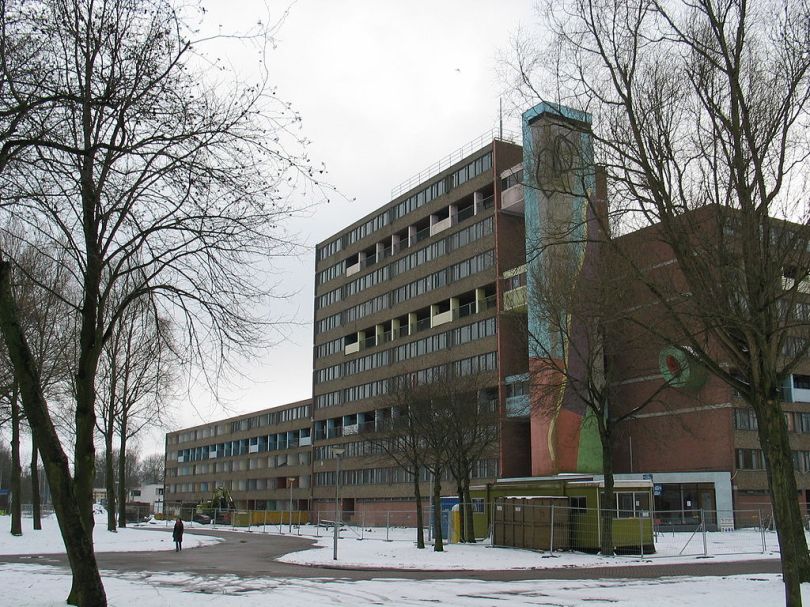
Featured image: College Noetsele by Historische Kring Hellendoorn-Nijverdal, from MijnStadMijnDorp, CC-BY 4.0

End of the Liberal Era

The liberal era is coming to an end. We see it happening in Europe and the United States, which have long been the centres of liberalism. The foundations of liberalism are individual freedom and rights, thus the rule of law rather than the ruler’s whims. The liberal steering mechanisms are markets and elections. Liberalism assumes we are all rational individuals who seek to express our preferences in elections and markets, which means that individual freedom works best. Individual freedom began to develop in Western Europe during the Middle Ages, and unlike in other areas, there have always been strong powers countering authoritarian rulers, like nobles and independent cities, and later, the bourgeoisie.

That has long enhanced the West’s might, as economic power translates into military power. Property rights were essential. If your property is safe, you can build your capital and grow stronger economically. The propertied classes ran successful states like the Dutch Republic, Great Britain, and the United States. The emancipation of the masses later turned these countries into liberal democracies. These historical developments were responses to societal issues that arose under the pressure of competition. Universal suffrage gave citizens a stake in their country, which helped prevent revolutions, promote stability, promote economic growth, and make the country more successful.

Our values aren’t necessarily superior, and may fail us when circumstances change. The rise of China suggests that its authoritarian model is more competitive, but this remains uncertain. In the 1930s, while the West suffered from an economic depression, Nazi Germany and the Soviet Union powered ahead. At the time, they seemed to win the race. But liberal democracy has survived both. Liberal democracies are now going under due to wealth inequality and the consequences of mass migration. The fascist parties promise to look after the interests of the native working class. After the Soviet bloc collapsed in 1989, liberals like Francis Fukuyama deluded themselves into thinking we had reached the end of history and liberalism had won. Others were more cautious and warned that tribalism has not died.

The Clash of Civilisations became the response to The End of History. After the terrorist attacks of 11 September 2001, there was no denying that history had not yet ended. Since then, we have seen the rise of a new nationalism and fascism, including messianic leadership cults. It began in the Netherlands with Pim Fortuyn, which is quite remarkable, as the country has led the previous liberal revolution as well on issues like abortion, euthanasia, LGBTQ rights, and the allowance of the use of marijuana. For long, the memory of two devastating world wars has kept nationalism and fascism at bay in Western Europe. After two world wars, Europeans had learned the hard way that nationalism and fascism are excellent ways to destroy their country. That memory has now faded, and the world has changed.

It becomes easier to understand once you see history as a struggle for the survival of groups of people via competing stories. It is rational to believe the stories that help you to survive. That is also why we look for strong leaders in times of uncertainty. Democracy works best when the situation is stable, the rules are clear, everything is functioning smoothly, and everyone is honest and on the same page. But it often required warfare to get people on the same page. If you think immigrants are a threat and ending immigration is a matter of survival, everything is allowed, including spreading fake news. It is not unreasonable to have that fear. Had the Native Americans made up and believed stories about whites being cannibals, eating human bodies and drinking human blood during secret rituals in their churches, and killed them all in a frenzy when they still could, they might have fared better.

The truth matters, but we don’t know the future, no matter how thoroughly we examine the facts, so our choices are a matter of faith. In the hypothetical example, believing the facts that Christians aren’t cannibals would be a death sentence for the Native Americans. And the truth is that lies and fake news can help us survive, most notably sensational stories that depict others as evil. And look at how these whites have culturally enriched the country. The beautiful forests have given way to strips of tarmac surrounded by ugly structures with neon lights. They have completely ruined the land. And look at the people: fatties in funny clothes. The remaining natives now languish in reservations. Those who fear mass migration and believe sensational stories about evil groups conspiring to cull us.

Evolution made us that way. It is survival of the fittest. That made us violent religious creatures who kill each other for our beliefs. Those who believed in lies and killed those who didn’t were the ones who survived. And so, fact-checkers bite the dust. There is often a relation to the facts. Christians have a peculiar ritual in which they eat bread and drink wine and pretend these are the body and blood of Christ. And because of overpopulation, there are efforts to promote birth control. But facts don’t inspire us. We need great stories about good versus evil. These stories help to come into action.

And so, we are religious beings and believe in fairy tales, whether it is the multicultural society or white genocide. So, who is destroying the United States? Is it MAGA cultists trampling on the Constitution, or is it cultural Marxists with their diversity policies who tell us what to think? Take your pick. We also need scapegoats or enemies, and it helps if they have an unusual appearance, so you can poke fun at them. For the leftists, these are neo-Nazi skinheads with their particular tattoos, and for the fascists, it is transgenders. It allows us to cooperate and rally behind causes, which enhances our chances of survival, provided we choose the right stories.

The new fascism is less about racism and more about cultural identity. It is also less about starting wars to enlarge a nation’s territory and more about preserving the country by preventing immigration and sending immigrants back. While Europe’s population is declining, it is growing in Africa. By 2100, there may be four billion people in Africa, eight times as many as in Europe. And that is a concern, because many Africans might come to Europe. South Africa is an example of what can go wrong if descendants of African immigrants replace European natives. It is a worst-case scenario.

Some African countries do well, so it may come to pass, but it is a realistic scenario. Blacks can learn to run successful states because they have done so for over 2,000 years in Ethiopia. Ethiopia has long been ahead of Western Europe. Running a state and building institutions is an ability you acquire by learning. Most of Africa had never had states before the European colonisers came. Africa had to catch up and achieve in a few decades what Europeans took 1,000 years to accomplish. We don’t know the future. That is where the fear comes from. And that can make us go apeshit. Civilisation is just a thin veneer. Underneath, we are all primates.

Several countries, like Hungary, now have fascist governments. In 2023, the nationalist anti-immigration party PVV became the largest in the Netherlands. The tipping point, however, became Donald Trump’s second presidency. During his first presidency, Trump’s cabinet consisted of Republican establishment figures, thus people from the old political order. By 2024, Trump had transformed the party and surrounded himself with yes-men, and he has little regard for the rule of law. The US political order was already corrupt to the core before Trump became president, and the previous Biden Administration also did not uphold the law by doing little against illegal immigration.

Things will not return to what they once were. We have entered unprecedented fascist territory with scenes not seen in the West since the demise of the Third Reich, with raids to round up illegal immigrants, withholding funds from universities for political reasons, and efforts to take away the rights of legal immigrants. But let’s not forget that many activists on the left are also illiberal, don’t tolerate alternative views, and use violence. Dutch politicians who have tried to limit migration know, or at least those who have survived the assassination attempts.

Indeed, force has always been our ultimate argument. Liberals try to solve issues with laws, but laws are also opportunities for abuse. You can ask yourself why babies born in the US should automatically become US citizens. But that was also the law. Laws and litigation don’t make just societies, which has been the most visible in the United States. The rule of law is a century-old pillar of Western civilisation, so liberals are shell-shocked, or as MAGA enthusiasts would point out more colourfully, suffer from Trump Derangement Syndrome and exploding heads.

Laws are fictions we create to make societies work, so you should question the laws when they don’t work. Even the rule of law comes into question when it fails to protect ordinary citizens. We often forget that the first and foremost task of a state is to provide order and prevent gang violence. We often take the state for granted, or even think we can do without it. States have succeeded in reducing violent deaths by over 99%, and if they disappear, the world will become a dangerous place.

In El Salvador, violent crime has gone out of control. Eventually, rounding up suspected gang members and locking them up without due process brought down murders by over 95%. That measure turned El Salvador into one of the safest countries after being one of the most unsafe. But once you go down that road, where does it end? Concentration camps? Conversely, how many murders do you accept to prevent innocent people from going to prison? So, why did liberalism fail? There are several issues:

  • Liberalism is not a story that unites us but one that allows us to merely coexist and do as we please. It only requires us to obey the law. The arrangement works when everyone respects liberal institutions despite their differences.
  • The world has become globalised, but we want to be part of a group and feel a connection to each other. Mass immigration reduces social cohesion, making the lack of stories that unite us a pressing problem.
  • The rule of law has failed us. Authorities often don’t uphold the law. Legal doesn’t mean just. The elites get away with their crimes. Innocent until proven guilty helps criminals. Litigation blocks solutions. Lawyers make money by scamming us.
  • Liberalism centres around individual rights. That blocks solutions to global collection action problems, such as reducing production, consumption, and population, which requires trampling on rights that people imagine they have.
  • Technological development is about to produce a disaster. Many things can go wrong, but artificial intelligence can make us redundant. Countering this threat requires ending the competition, thus ending nation-states and capitalism.

Humans are creatures that cooperate by believing the same stories. To liberals, the myths the fascists believe may seem hilarious, but they forge group cohesion and create an enemy, which can generate the required anger for collective action. Trump supporters stormed the Capitol after Trump claimed he had won the election, and Democrats had committed election fraud. That was after Trump had tried to commit election fraud himself. Accusing others of what you are doing yourself was a successful tactic often employed by fascists. It shifted the attention from the real fraud Trump had tried to commit to the imaginary fraud Democrats supposedly had committed. And the MAGA crowd loved it. No politician lied more than Donald Trump. He gets away with corruption, sexual assault, and countless lies. It makes liberals go apeshit. That is what the MAGA enthusiasts want to see.

Within the MAGA movement, several outlandish ideas circulated. One of the most extreme was Q harping about a paedophile network operating at high levels and Donald Trump leading the fight against them. The reality is that Epstein held parties with underage girls whom Trump also attended. Then there are the suspicious circumstances surrounding Epstein’s death, dubbed a suicide. He had been on suicide watch after he tried to commit suicide. Somehow, the supervision failed due to ‘a perfect storm of screw-ups,’ as the then US attorney general, Bill Barr, called it. One of Epstein’s victims said that Epstein had claimed he was running a Mossad operation. It looks like the plot of a spy novel. Liberals can poke fun at Q, but upon closer examination of the facts, it becomes understandable why some people believe it.

Most MAGA supporters didn’t believe it, yet found it helpful for their cause. Stories help us cooperate. And Qit is a great story: Trump as a gladiator fighting paedophile networks within the elites, even infiltrating them by attending these parties. And Trump is a sexual predator, as 26 women have accused him of sexual misconduct, while he admitted that he grabbed women by the pussy. He uses his presidency for his business interests and those of his family and friends. Trump is a lowlife and makes a good gangster boss, but that is precisely what his followers look for. A gangster boss can win a fight for you in this world full of danger. A bureaucrat or a career politician can’t. They play it by the book or do the bidding of their wealthy donors.

Due to campaign financing and influence buying, which is legal in the United States, the US political system is criminally corrupt according to Dutch law. Outright gangsterism was a logical next step. Why pretend not to be criminals if everyone knows you are? Trump is even more open to bribes than any president in recent history. That is the art of the deal. Indeed, far-right leaders are more often gangsters than not. The Hungarian president is an excellent example. The French far-right leader has also proven to be a swindler. And so are most others. These leaders know to inspire their followers by calling investigations into their corrupt dealings witch hunts. To their followers, they are strongmen or women.

Trump single-handedly built the MAGA movement, took over the Republican Party, won the election, and is now going after the liberal establishment. That is what his vengeful followers hope to see. They don’t care if he is more corrupt than any US president in recent history. When you think Marxists are destroying your country, lying and cheating are okay. The Biden Administration did little to stop the influx of illegal immigrants. If you believed Democrats were destroying the United States, that was good evidence. It wasn’t all bad what Donald Trump tried to achieve. Think of bringing industrial jobs back to the United States and ending the war in Ukraine. Still, Trump and the MAGA movement will likely wreck the United States. MAGA drives on Big Bullshit. It can collapse at any time, leaving the country in shambles.

We can’t oversee the consequences of our actions. Our beliefs and ideologies are models of reality, not reality itself. They are all fictions or stories we tell. And whatever story works best to survive is the most successful. Models have limitations and fail from time to time. Liberalism has been a success for centuries, but mainly in the West, making liberals blind to their faulty assumptions, like the state being a voluntary agreement between individuals. It forged nations like the United States by allowing people from different backgrounds and religions to cooperate.

And immigration has contributed much to the success of the country. Liberalism supposes an individualist culture, making it typically Western. That is where it went wrong. Something similar applies to cultural Marxism, as it builds on the Western tradition, thus the progress of society through the Hegelian dialectic. That societal process mainly took place in the West. Marx already argued that progress builds on previous achievements. A society needs to become bourgeois before it can progress further. Tell Africans or Muslims about LGBTQ rights. They will probably think you are nuts.

Liberals didn’t foresee that the influx of immigrants from different cultures would undermine the very basis of liberalism. They deluded themselves by thinking liberalism is superior because nationalism and fascism have failed even more miserably in two devastating world wars than communism, which has collapsed relatively peacefully. Science has proven religions wrong, making liberals think that liberalism is superior. If your ideology is vastly superior, immigration is no problem, because the immigrants will eventually see the light. You can even invade a country like Iraq, and a liberal democracy will pop up and flourish. Okay, it didn’t work out that way. That should have been a warning sign.

Like many in the MAGA crowd today, the Nazis under Adolf Hitler believed the elites, communists and Jews were destroying Germany. The irony of history is that no one ever did a greater job in ruining Germany than the Nazis. In fact, patriots often did a much better job of destroying their countries than Marxists. Had the Soviet Union still existed, Russia and Ukraine wouldn’t have fought a bloody nationalist war. Had the communists still run Yugoslavia, the civil war wouldn’t have torn the country into pieces. But we live by stories, not facts, and liberalism is also a fairy tale. Liberalism was only very successful. It was the fairy tale that built the West.

Success is about survival, not about getting the facts right, which liberals, impressed by the achievements of science, have forgotten, but that is also a fact and why liberalism collapsed so quickly. If humans commit suicide by science and the rats survive, the rats are more successful as a species. You don’t need science and facts to survive. They might even kill you. It explains seemingly irrational fears, such as those related to vaccines. But the odds of a product of science killing us may well exceed those of natural causes. Only the fictions we create can help us cooperate and survive, and the fiction that we need science and facts has long helped those who believed it. And suddenly, that story fails.

That is where we stand now. Humanity is at a crossroads. Global problems like the coming technological-ecological apocalypse don’t disappear without unprecedented measures unthinkable in a liberal world. You can’t reason from the facts, find definitive proof, and propose solutions respecting individual rights. That is not going to work. We don’t know the future. The choices we make are a matter of faith, and only faith can save us now. Humankind, as we know it, may only survive with an inspiring fairy tale that unites us all. We are about to enter a new chapter in history, which may well be the end of history.

Featured image: AI-generated

Latest revision: 23 August 2025

The Grades

Unemployment in the early 1980s was high, especially among young people. I had asked my mother, ‘What is the point of studying for unemployment?’ She stressed that there would always be room for the best. They had lived in poverty and had learned that you must work hard to earn your place under the sun. I never experienced poverty, but my parents kept reminding me that you shouldn’t take a comfortable life for granted. It made me work hard, possibly harder than everyone else. It was a conservative Protestant school, so that says something. In primary school, I didn’t see the point of working hard.

Occasionally, I knew more than my teachers. My father later told me about a mayor he knew. He had been my history teacher before he became a politician for the Christian Democrats. He told my father that I once had corrected him during the lessons. It annoyed him, so he checked his books during the break to discover I was right. He was not the only one. A geography teacher admitted I knew more than he did about Russia.

On the final exams, my average grade was the highest (8.6 out of 10). The scores were good but not outstanding and resulted from hard work. Some pupils had stellar degrees in mathematics without working hard, but not me. My average was good but not stellar. If I didn’t prepare for a test, which happened once, my grade dropped dramatically to 3.5. And so, the mathematics teacher, Mr. Blaak, had a field day and made jokes about me spending too much time on the school newspaper. And I never solved the Rubik’s cube, despite spending much time on it. It demonstrates I was not a genius.

My weak spot was explaining literature. It is about guessing the supposed motives of book authors. My scores were consistently poor, the poorest of the class. I considered guessing other people’s motives and decoding hidden messages in texts a waste of time. The authors themselves often marvelled at what the literature experts found out about their intentions from the books they had written. Art and literature were a lot of fluff about feelings, quite often imagined. And I did poorly at it, and it probably has to do with my Asperger’s Syndrome. With the final exams nearing, I began to fret and asked my teacher, Mr. Amelink, to give me additional practice exams. A teacher could only dream of such a fanatic pupil, so he was helpful, but the grades remained as poor as before.

Before the final exam, I prayed that the grade wouldn’t be too bad. Not only to my surprise, my result was the best of everyone, only equalled by Geraldine, a girl with a striking hairdo, a bit alternative, who dressed outspokenly and flaunted her interest in art and literature. Mr. Amelink was also amazed and suggested the extra lessons had made a difference. Another girl became curious about this feat. She said, ‘You have a mysterious way of winning in the end.’ I was too embarrassed to tell about the prayer. It was selfish to pray for a higher grade. People in Africa needed God’s help much more. And it could not be that God granted that wish, or could it? While doing the test, the questions appeared more concrete than usual, making it easier to answer them.

There is a subtle difference between speculating about hidden motives and understanding the meaning of texts. I was good at the latter. It inflated my grades, as explaining texts comprised 50% of the scores in English and French. If a particular English or French word was unfamiliar to me, I could still infer its meaning from the subject of the text, the author’s opinions and the purpose of the paragraph or sentence. By connecting the dots, you often arrive at the correct answers. I hardly made errors in these questions.

At the time, there was no reason to suspect God had anything to do with it. Still, later developments added a peculiar twist to this incident, as I may have uncovered messages from God in pop music lyrics. The teacher’s name, Amelink, suggests a possible link to the isle of Ameland, and Ameland was to become part of a set of peculiar coincidences. A song named The Foundling of Ameland refers to this island. It includes a scene with the foundling walking over the water. But that was still over twenty years into the future. And I disappointed my economics teacher. Had my grade for economics been slightly higher, I would have received a 10, and an economist would have come to the school to give me the diploma. My teacher had hoped for that.