Royal Steam Bleachery: Exterior Overview Complex With Halls

History’s Oddities

Thomas Jefferson and John Adams


US Presidents Thomas Jefferson and John Adams were both involved in drafting the Declaration of Independence, signed on 4 July 1776. Hence, 4 July became Independence Day. Jefferson was Adam’s Vice President until he became President in 1800. They were the last surviving members of the revolutionaries. Both died on 4 July 1826, precisely fifty years after the Declaration of Independence.1 Independence Day is 4 July (4/7) as 4 + 7 = 11. This date occurring twice is similar to seeing an 11:11 time prompt.

Napoleon Bonaparte and Adolf Hitler

Napoleon Bonaparte and Adolf Hitler both conquered nearly all of Europe. There are several parallels between them. Both came to power through a coup that ended a period of instability. Napoleon and Hitler both turned Europe into a battlefield. They both ventured into Africa and faced defeat in Egypt. They both waged war on two fronts. Both attacked Russia while not having defeated Great Britain.

Napoleon was born on the island of Corsica, which was then an independent island but later became part of France. Napoleon became the leader of France. Hitler was born in Austria, an independent country that was later annexed by Germany. Hitler became the leader of Germany. On 9 November 1799, Napoleon came to power following a coup. Hitler was involved in a failed coup on 9 November 1923.

The Titanic


The supposedly unsinkable Titanic had sealable compartments. In 1912, it sank on its maiden voyage after having a close encounter with an iceberg. In 1898, Morgan Robertson wrote the novel Futility, describing the maiden voyage of a transatlantic luxury liner named the Titan. Although touted as unsinkable, it collided with an iceberg and sank, resulting in a significant loss of life. In the book, the month of the wreck was April, the same month the Titanic sank. The similarities are striking:

  • The ships had similar names.
  • Both were the largest crafts afloat and considered among humankind’s greatest achievements.
  • The sizes were roughly the same: the Titan counted 45,000 tons, and the Titanic was 46,000 tons.
  • Both ships were deemed unsinkable.
  • Both had a triple screw (propeller).
  • Both vessels had a shortage of lifeboats.
  • Both struck an iceberg: the Titan, moving at 25 knots, struck an iceberg on the starboard side on a night in April in the North Atlantic, 400 nautical miles from Newfoundland, while the Titanic, moving at 22½ knots, struck an iceberg on the starboard side on the night of 14 April 1912 in the North Atlantic, 400 nautical miles from Newfoundland.
  • Both ships sank with much loss of life.

Robertson’s apparent clairvoyance drew attention. He claimed the similarities were the result of his shipbuilding knowledge. That can explain the technical details but not the sinking or the similar names. And the story was to get a sequel.

In April 1935, the cargo vessel Titanian sailed in the North Atlantic. A sailor claimed he felt uncomfortable because the ship’s name was similar to that of the Titanic. For that reason, he sounded a warning. He claimed to have done this before an iceberg was in sight. He added that the vessel stopped just in front of an iceberg. According to reports, the Titanian had run into some damage during the voyage.2

One hundred years later, the luxurious Italian cruise liner Costa Concordia sank after hitting a rock. The accident occurred on Friday, 13 January 2012. The ship had thirteen decks. Some passengers claimed that the Titanic theme ‘My Heart Will Go On’ played in a restaurant when the accident happened.3 Shortly afterwards, on 27 February 2012, another cruise liner of the same parent company, the Costa Allegra, ran into trouble near Seychelles.4 This repetition within a short timeframe adds to the peculiarity of the scheme.

The assassination of Franz Ferdinand

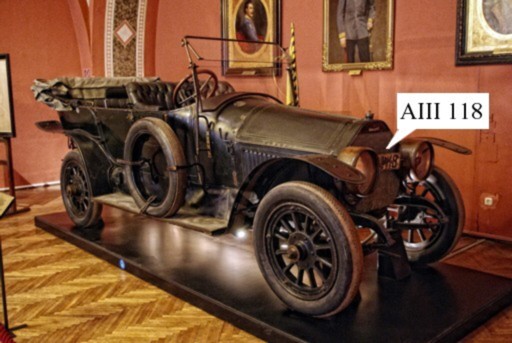
On 28 June 1914, the Serbian nationalist Gavrilo Princip shot and killed Archduke Franz Ferdinand in his car in Sarajevo. His act triggered World War I. World War I ended with the Armistice of 11 November 1918. 11 November is a peculiar date as it is 11-11. Several strange coincidences accompany the assassination. Franz Ferdinand had premonitions of an early death, and the assassination succeeded after a series of mishaps. But the most peculiar coincidence was the licence plate number A III 118 of the car that drove Franz Ferdinand to his appointment with destiny. It contains a possible reference to the Armistice of 11 November 1918 (11-11-18).5

The car in which Archduke Franz Ferdinand was killed
Gräf and Stift Double Phaeton ridden by Archduke Franz Ferdinand at the time of his assassination

D-Day

D-Day was on 6 June 1944 (6/6/44). That date has double digits, like 11 November (11-11). The Allies had selected 5 June 1944 for their invasion because of a full moon that night. They postponed it by one day due to the weather. There was no consensus among historians on the start date of World War II, whereas the Battle of Stalingrad lasted more than two months. Therefore, D-Day is considered the most important single day in World War II. D-Day means Decision Day. D is the fourth letter of the alphabet, so Decision Day (DD) can refer to (19)44, the year D-Day happened.

Normandy invaded England in 1066 AD, while D-Day occurred on 6 June, or 6/6. In the ensuing Battle of Hastings on 14 October 1066, King Harold II of England died while trying to repel the invasion. That happened a few days after his forces had killed King Harold III of Norway, who also had invaded England. On 14 October 1944, the German General Rommel committed suicide after having overseen the construction of the German coastal defences intended to repel the Allied invasion.

Roman de Rou is a chronicle written around 1170. It covers the history of the Dukes of Normandy. It mentions that Roger the Great de Montgomery commanded parts of the invading forces in 1066. Other sources don’t confirm this account.6 During the 1944 invasion, Bernard Montgomery commanded portions of the invading army. That is most peculiar indeed, and there is more.

On 11 March 2010, the founder of the Dutch political party D66, Hans van Mierlo, boldly went where billions have gone before, and passed away. The name D66 stands for Democrats 66 and refers to the year 1966 as the party was founded on 14 October 1966 by 44 people.7 The name can refer to D-Day, making the founding date and the number of people involved in establishing the party rather intriguing. D-Day was on 6-6-44, so D66 could mean D-Day 6-6. Van Mierlo died in 2010, 44 years after starting D66 and 66 years after D-Day. Van Mierlo had just married a few months before on 11 November 2009 (11-11-11 after compressing numbers), which might also raise some eyebrows.

The numbers 66 and 44, along with the date 14 October, repeatedly appear in this scheme. And 11-11 is part of it too. It was the day Hans van Mierlo got married. 11 November is the date of the Armistice that terminated World War I. And the Vikings founded Normandy in the year 911. This number is closely related to the fall of the Berlin Wall and 9/11. On 9 November 1989 (9/11 European notation), the Berlin Wall fell. On 11 September 2001 (9/11 American notation), the terrorist attacks took place.

The assassination of Martin Luther King was on 4 April 1968, one year after he spoke out against the Vietnam War on 4 April 1967. Both dates are 4 April (4/4). On 5 June 1968, in another high-profile political assassination in the United States, Senator Robert Kennedy crossed the path of a bullet. He died the next day, on 6 June (6/6). Both incidents happened in the United States in 1968 and point to the digits of D-Day (6/6/44). 6 June was also the release date of The Omen, the most ‘cursed’ film in history.

John F. Kennedy’s assassination

‘We’re heading into nut country today,’ said President John F. Kennedy to his wife on the morning of 22 November 1963. She had just seen an advertisement from the John Birch Society in the Dallas Morning News suggesting that he was a communist. The border of the advert was in the black of a funeral announcement. ‘But, Jackie, if somebody wants to shoot me from a window with a rifle, nobody can stop it, so why worry about it?’8

A few hours later, somebody shot him from a window with a rifle. The assassination date, 22 November (22/11), consists of two multiples of eleven, which is somewhat unusual as is the date of D-Day and the date of the Armistice ending World War I. There are also parallels between John F. Kennedy and Abraham Lincoln:

  • Both concerned themselves with Civil Rights.
  • Both did get a bullet in the back of their heads in the presence of their wives.
  • Lincoln was shot in the Ford Theatre, and Kennedy in a Ford Lincoln.
  • They were both murdered on a Friday.
  • In both cases, an assassin assassinated the assassin before he could face trial.
  • Lincoln’s election into Congress happened in 1846, and Kennedy’s in 1946.
  • Lincoln’s election to President occurred in 1860, and Kennedy’s in 1960.
  • Lincoln’s successor was Andrew Johnson, born in 1808, while Kennedy’s successor was Lyndon Johnson, born in 1908.9

Longer lists are circulating with some false claims. Sceptics have argued that these similarities are mere coincidences and that similar parallels exist between other US presidents. Wikipedia even labelled it an urban legend, although it is not, as it implies that the story is false. That both murders took place on a Friday is indeed unremarkable. But the murder of Lincoln taking place in the Ford Theatre and the assassination of Kennedy happening in a Ford Lincoln is noteworthy, as is the time difference of precisely one century that recurs three times. And there are links with other peculiar coincidences.

Kennedy’s brother, Senator Robert F. Kennedy, was shot a few years later. He died in 1968 on 6 June (6/6), just after the murder of Martin Luther King on 4 April (4/4). That is odd, given the coincidences surrounding D-Day (6/6/44). His untimely passing is part of a series of premature deaths, accidents, and other calamities involving members of the Kennedy family called the Kennedy Curse.

The son of President Lincoln, Robert Todd Lincoln, also had his share of remarkable coincidences. A few months before John Wilkes Booth murdered his father, Edwin Booth, the brother of John Wilkes, saved him when he was travelling by train. During a stop, he stepped back on the crowded platform to let others pass, pressing his back against a stopped train. When the train began to move, Lincoln fell onto the tracks. Booth hauled him back onto the platform. The Booth family and the Lincoln family were not neighbours, which makes the incident even more remarkable. Robert Lincoln was in the vicinity when the murder of his father occurred. He was also present at the assassination of President Garfield in 1881 and the assassination of President McKinley in 1901.10

The Kennedy assassination takes part in a series of premature deaths in office of American presidents elected in years starting with a zero, called the Curse of Tippecanoe or Zero-Year Curse. From William Henry Harrison to John Kennedy, every President elected in a year ending in zero died in office. It ended with Ronald Reagan, elected in 1980, who survived an assassination attempt. First Lady Nancy Reagan reportedly had hired psychics and astrologers to protect her husband from the curse.11 George W. Bush, elected in 2000, also survived an assassination attempt. The curse seems to have lost its lustre. Even Joe Biden, who could have passed away at any time without raising any suspicion of something of a curse having an involvement, survived.

Houston, we have a problem

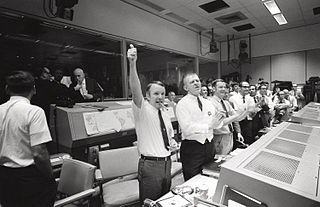
We associate the number 13 with bad luck. Bad luck haunted the voyage of Apollo 13. The launch was on 11 April 1970 at 13:13 CST from the Kennedy Space Center in Florida. The departure time combined with the mission number was a daring attempt to defy fate. Possibly, the people at NASA thought, ‘We are scientists and don’t believe in this superstitious nonsense.’ And bingo! Fate took vengeance. On 13 April,
note the date, an oxygen tank exploded. The event has enriched the annals of history with the famous quote, ‘Houston, we have a problem.’ Mission control aborted the lunar landing. The crew made it back alive.12

The fall of the Berlin Wall

The fall of the Berlin Wall was the pivotal event marking the end of the Soviet Empire and the Cold War. The dismantling of this wall began on 9 November 1989 (9/11 European notation). On 11 September 2001 (9/11 American notation), a terrorist attack was another pivotal event in the war on terror. It marked the end of the period of relative peace following the fall of the Soviet Empire. On 11 September 1989, thousands of East Germans began crossing the Austrian-Hungarian border to emigrate to West Germany. That eventually led to the fall of the Berlin Wall. This date, also being 11 September, is noteworthy.

The historian James P. O’Donnell unwittingly predicted the year the Berlin Wall would fall. In the German edition of Reader’s Digest, he wrote ten years before it happened, ‘Not long ago I dreamed of Berlin. The year was 1989. The wall was coming down. Along its hideous 165 kilometres, East and West Berliners were pouring out to dismantle it. […] Canny merchants were weaving through the happy crowd selling souvenir bricks.’13

That is not as remarkable as it seems at first glance. O’Donnell made his prediction in 1979. If you were thinking in 1979 about the Berlin Wall falling and were guessing when it might happen, 1989 is a year you could easily pick. The final year of a decade can be a moment to think of the next decade’s final year. A 1979 ABBA does the same in a song named Happy New Year. But then again, O’Donnell thought of it in 1979, which increased the likelihood of choosing 1989. He could have thought of it in many other years, but he just happened to think of it in 1979, which makes it somewhat fishy nonetheless.

There is another peculiar twist. O’Donnell became Newsweek Magazine’s German bureau chief in 1945. He came to Berlin on 4 July 1945 to investigate Hitler’s death and gather information about his wife, Eva Braun.5 Braun died at the age of 33, and Hitler died at the age of 56, while 33 + 56 = 89. Hitler was born in 1889. And the erection of the Berlin Wall was a consequence of Hitler’s defeat. And it fell in 1989. There is more to say about Eva Braun and 1989, which makes the coincidence part of a larger scheme.
That is, however, a separate story.

Latest revision: 23 July 2025

Featured image: NASA mission control celebrating the successful return of Apollo 13. NASA. Public Domain.

1. Thomas Jefferson and John Adams die. History.com (2009).
2. Titanian – Echo of Titanic. Encyclopedia Titanica (2004).
3. Costa Concordia disaster. Wikipedia.
4. MS Costa Allegra. Wikipedia.
5. Curses! Archduke Franz Ferdinand and His Astounding Death Car. Mike Dash (2013). Smithsonian. [link]
6. Roger de Montgomerie, 1st Earl of Shrewsbury. Wikipedia. [link]
7. Hans van Mierlo. Wikipedia. [link]
8. Three surprising details from the JFK assassination – and why they matter. James L. Swanson (2013). The Globe And Mail.
9. Lincoln–Kennedy coincidences urban legend. Wikipedia.
10. Robert Todd Lincoln. Wikipedia.
11. Curse of Tippecanoe. Wikipedia.
12. Apollo 13. Wikipedia.
13. Reader’s Digest, Geman Edition, January 1979
14. James P. O’Donnell. Wikipedia. [link]

The Simulation Argument

Is this world real?

Already in ancient times philosophers found out that there is no way of telling that the world around us is real or that other people have a mind of their own. Perhaps I am the only being that is real while the rest of the world exists only in my imagination. This could all be a dream. On the other hand, some major religions claim that gods created this universe, and that we are like these gods. For instance, in the first chapter of the Bible God allegedly said: “Let us make mankind in our image, in our likeness.”

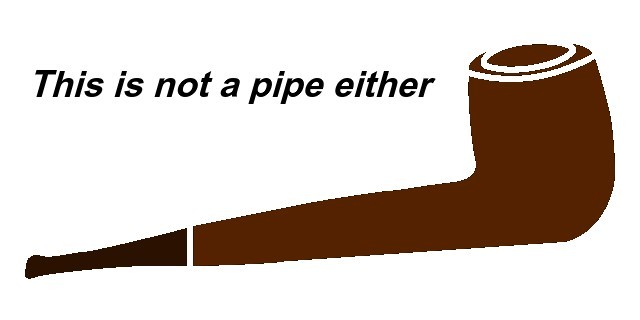
For a long time it was impossible to clarify why this world might not be real or how the gods might have created it. More recently that became possible due to advances in technology. This universe could be a virtual reality created by an advanced civilisation. We could all be a characters in a virtual reality controlled by a computer programme. That may give you an uneasy feeling for we are inclined to think that what our senses register, is real. For instance, we may think we see a pipe when there is only an image of a pipe. The caption of the picture reads ‘this is not a pipe.’

Do we live inside a computer simulation?

The idea that we could be simulated beings inside a computer first came up in 1964 in the book Simulacron-3. In 1977 a science fiction writer named Philip K. Dick (funny name) was the first to really claim that our reality is made up by a computer. He did this after experiencing a psychosis. The philosopher Nick Bostrom formalised the idea twenty-five years later in the simulation argument. He argued that we might be living inside a virtual reality. There could be many different human civilisations. The humans in those civilisations may enhance themselves with bio-technology and information technology, live very long and have capabilities ordinary humans don’t have. For those reasons these beings aren’t humans any more, henceforth they are called post-humans.

Bostrom now asserts that these post-humans may run virtual realities of human civilisations. An obvious reason for doing this is entertainment. And so we could be living in a virtual reality ourselves. The difference between a real (non-virtual) universe and a virtual reality is that a real universe is not created by intent, while a virtual civilisation is. Given sufficiently advanced technology, it seems possible to represent a universe in a meaningful way, including simulated human consciousnesses. Current developments in information technology suggest that our civilisation may be able to create virtual reality universes in the not-too-distant future.

Bostrom thinks that one of the following three options must be true: (1) nearly all human civilisations end before they can build virtual realities resembling human civilisations, (2) when human civilisations or post-human civilisations can build virtual realities of human civilisations, they will not do so or only make a small number of them or (3) we are almost certainly living inside a virtual reality as there will be a large number of virtual universes for every real universe. The hidden assumption behind the simulation argument is that this technology is feasible and can be made cheap.1

How likely is it?

It is not possible to calculate the probability of us living in a virtual reality. There are a lot of uncertainties in the simulation argument. For example, our civilisation could be the only human civilisation and we could go extinct. Or perhaps post-humans develop ethical objections against building virtual realities of humans. And even though humans like to write stories and use virtual realities for research or entertainment, they may alter themselves so that post-humans do not have these desires. Still, there is a good chance that live in a virtual reality ourselves.

That is because we humans see ourselves as special and unique. Religions make use of this trick too. The Bible says that we are made in the image of God and that humans are ordained to rule all other living creatures. So if we have the means to perpetuate our delusions, we will not give up on them. On the contrary, as soon as it is possible to make our imagination become reality, we will not hesitate to do so. Hence, when humans transform themselves to become post-humans, they will probably cling to their human essence, and let their imagination run free. And their imagination may become their new life as Scott Adams, the creator of Dilbert noted:

For those of you who only watched the ‘old’ Star Trek, the holodeck can create simulated worlds that look and feel just like the real thing. The characters on Star Trek use the holodeck for recreation during breaks from work. This is somewhat unrealistic. If I had a holodeck, I’d close the door and never come out until I died of exhaustion. It would be hard to convince me I should be anywhere but in the holodeck, getting my oil massage from Cindy Crawford and her simulated twin sister. Holodecks would be very addicting. If there weren’t enough holodecks to go around, I’d get the names of all the people who had reservations ahead of me and beam them into concrete walls. I’d feel tense about it, but that’s exactly why I’d need a massage. I’m afraid the holodeck will be society’s last invention.2

Processing and memory constraints

Even though the advanced civilisation will may have enormous processing and memory capacity, there may be processing and memory constraints for individual simulations as they may run billions of simulations. There may be ways to overcome these limitations like rendering only observed reality and running a predetermined script. Free will may simply be too expensive.

The idea of this universe being a virtual reality is popularised in the 1999 film The Matrix. The film speculates about us having an existence outside this world. That doesn’t need to be. We may just be virtual reality characters inside a computer simulation. So why did Neo’s passport expire on 11 September 2001, the date of the terrorist attacks? Perhaps it is just a coincidence. Or perhaps this universe is a form of entertainment.

matrix_passport
Neo’s passport expirin on 11 September 2001

Featured image: The Treachery of Images. René Magritte (1928). [copyright info]

1. Are You Living In a Computer Simulation? Nick Bostrom (2003). Philosophical Quarterly (2003) Vol. 53, No. 211, pp. 243-255. [link]
2. The Dilbert Future. Scott Adams (1997). Harper Business.

South Western langur (Semnopithecus hypoleucos) female, Kanha National Park, MP, India. Charles J. Sharp.

So There Must Be Something More

It was December 2010, and the wind was blowing. My wife and I sat at the kitchen table. My wife was discussing her late mother and father. Her mother had outlived her father for more than three decades. When her father was still alive, her mother had once asked him to contact her as a spirit if he were to die first. My wife recalled her mother later saying he had never made himself noticed, ‘not even by stopping a clock.’

Just after my wife had finished speaking, a gust of wind blew a flower pot over the balcony, making a loud noise. It was windy that day, but the blow came out of nowhere. It was eerie. The next day, my wife noticed that both a clock and an alarm clock were back one hour. One was connected to the power grid, while the other ran on a battery. So, did her late father make himself noticed?

Perhaps you also experienced something you couldn’t explain, such as an incredible coincidence or a near-death experience. You are not the only one. Or maybe you know someone who did. You can’t reason it away. And so you believe there must be something more than this life in this world. That can be comforting. Perhaps there is a God, and maybe your life has a purpose.

And I’m gone with the wind like they were before
But I’m believing myself, I think there’s something more
There must be something more, I think there’s something more
Something more

Amy MacDonald, Footballer’s Wife

Why do people believe in an afterlife or God? Do they fear death? Do they hope their life has meaning? Would it be so bad if our existence had no reason? Is that worse than playing a part in the grand scheme of a Supreme Puppet Master? And eternal life? You could bore yourself to death. For a long time, I believed that I would die one day and that it would all be over by then. And that was comforting.

Let’s end this on a lighter note. In 2014, my wife, son, and I visited the Apenheul monkey zoo in Apeldoorn. We had been walking around watching monkeys for hours when a long-tailed monkey came down from a tree to sit near me. I could have touched its tail if I wanted to. And so I said to my wife jokingly, ‘Well, if I pull the tail, a bell will go off, saying ding-dong.’ Within a second, a loud ding-dong came from the speakers all over the zoo. An announcement followed. There had not been an announcement all day, nor did one follow later on. The monkey zoo is in Apeldoorn. That is noteworthy, as this name refers to the word ‘ape’. Indeed, there may be more about this universe than science can explain.

Latest revision: 16 July 2025

Featured image: South Western langur (Semnopithecus hypoleucos) female, Kanha National Park, MP, India. Charles J. Sharp. CC BY 4.0. Wikimedia Commons.

Wake Up Call

It was the Autumn of 2008. The financial system was in jeopardy. It was a scary time. The world as we know it could have ended if the financial system had imploded. I had just discovered how to prevent financial crises by having negative interest rates and a maximum interest rate of zero. At the time, it seemed an epic find that could change the world forever. Interest charges on money and debts, or usury, are the underlying cause of financial crises. However, banning interest would require negative interest rates, which had been impossible to achieve. In the early 20th century, Silvio Gesell proposed charging a holding fee on currency, allowing interest rates to become negative when the supply and demand in the markets for money and capital would justify it.

During the 1930s, when the world was in the most dramatic economic crisis in recent history, several leading economists, including John Maynard Keynes and Irving Fisher, recognised the potential of a holding fee on currency to prevent economic crises. Still, they didn’t think of using it to create an interest-free financial system. Interest-free lending never took off because you don’t lend money interest-free if you can receive interest elsewhere. Lending interest-free must be attractive for lenders. But I figured out how it can work. If the currency’s value rises, borrowing at negative interest rates can be appealing. More evidence emerged a few years later when interest rates in Europe fell below zero for several consecutive years.

That was still years in the future at the time. A holding fee on currency and abolishing interest rates above zero could stabilise the financial system and end economic crises. That would limit lending to the safest borrowers, as there is no reward for taking risks in the form of interest. As lending creates money, it promotes inflation. And so, this money could be inflation-free or even lead to lower prices or deflation.

In the Austrian town of Wörgl, money with a holding fee had been a spectacular success until the central bank banned it. The money continued to circulate because the holders spent it to avoid paying the holding fee, so people didn’t need to borrow to keep the money circulating and keep the economy afloat. A similar kind of money had existed in ancient Egypt for over 1,000 years. Grain stored in granaries had been money there. This money came with a fee to cover the storage costs. The Biblical story about Joseph in Egypt claims that he introduced these granaries.

I named the fin Natural Money after The Natural Economic Order, Gesell’s book in which he presented the idea of the holding fee. Initially, I attempted to recruit a few people to work on the theory and promote it. Nothing came out of it. Most economists think negative interest rates are impossible. I realised that might be wrong, and even if I were right, who would believe me? It seemed pointless to go on, so I planned to give up.

My wife and I were not the only ones having this, it soon turned out. People have shared stories on the Internet about being haunted by time prompts such as 11:11. This peculiarity is often referred to as the 11-phenomenon or the 11:11-phenomenon. Eleven is the first double number, a noteworthy coincidence of digits, and 11:11 is like the same happening a second time, thus two related, strange coincidences, hence doubly strange. World War I ended on 11 November 1918. Franz Ferdinand’s car’s licence plate number refers to this particular date. But what does that signify? Could there be a connection? Or was there nothing to it, and was it just my imagination?

Our minds trick us in different ways, such as selective remembrance. Remarkable things we remember best. Maybe you have experienced a few strange incidents. They stick with your memory, but you may not remember thousands of mundane events that also transpired because there was nothing special about them. Often, I see a number, and within a second or so, I see the same number again somewhere else, usually on licence plates. But when I look for recurring numbers, I rarely see them. Perhaps repeating numbers triggers my brain. Recording them then becomes a conscious process, so for each remarkable combination, countless others remain unnoticed.

tin foil hat

My waking up at night and seeing these time prompts was something different. There were no exceptions. I didn’t see other time prompts. And my wife had the same at the same time. That was not my mind playing a trick on me. Something made me wake up and look at the clock at these times. Is it mind control? Is there a plan, and is Natural Money part of it? And is there a connection with the licence plate number of Franz Ferdinand’s car? Only large-scale mind control can make the assassination succeed, trigger a war, and end that war on that date, 11 November 1918. And so, mind control, it is. And your mind is also under control. But don’t worry. A tin foil hat won’t help you. Nothing will.

Usury, thus charging interest on money and debts, is an ancient question and a biblical issue. Things were about to get a lot stranger. The only sensible explanation I could eventually think of is that this world is not real, but a virtual reality created by an advanced humanoid civilisation for entertainment, and that we are actors in a play. And everything goes according to a plan, so Natural Money could be part of that plan. That, of course, I still do not know, but it is better to be safe than sorry. And so, I worked out a monetary theory for a usury-free financial system with negative interest rates.

Latest revision: 5 October 2025

Featured image: 11:11 time prompt.

Other images: Tin foil hat. Morton Devonshire (2007). Wikipedia. Public Domain.

Dead Sea Scroll - part of Isaiah Scroll

Peeking into the Future

What will the future look like? Futurologists have been pondering this particular question. A few things seem plausible. First, robots and artificial intelligence may take over our jobs, making us obsolete as workers. Machines and computers have already taken over many jobs. Until now, new jobs have replaced the old ones. These new jobs were more complex, so machines couldn’t do them. However, artificial intelligence may be able to perform these tasks. Artificial intelligence is a computer programme that can learn like a human, but faster and better. And so, artificial intelligence may soon make better decisions than humans and take over many remaining jobs. As a result, we may have a lot of leisure time. Or we could be left without income and become destitute.

In a few decades, we may no longer be driving our cars. We tell them where we want to go. Our cars then plot a route, bring us there, and keep us safe. Perhaps it will be forbidden to drive yourself when human drivers cause more accidents than self-driving cars. When I was a teenager, and Knight Rider was a popular television series, it was science fiction. Today, the technology is already there. Artificial intelligence may soon make other decisions as well. We may still decide what we want, for example, what kind of book we like to read, but algorithms decide the specifics. And you might even be happy with it because artificial intelligence knows better what you desire than you do.

Some people fear that computers and robots will take over the world, controlling or destroying us. Computers and robots don’t have a will of their own. Artificial intelligence is different, which makes it potentially more dangerous. Traditional computers operate according to their programming, but artificial intelligence thinks for itself. It learns and can become more intelligent than we are. We allow smartphones to take over our lives, but this is not what smartphones want to do. Humans have made apps to make them addictive, so we do what the programmers of these apps want us to do. And we are lazy, so we allow algorithms to decide for us. In this way, artificial intelligence can take over our lives. Emotions and desires have a biological origin, so computers and robots don’t possess them. That may change because artificial intelligence can learn to act as if it has desires.

Second, humans may enhance themselves with biotechnology, cyborg engineering and information technology. These beings are no longer human and can be referred to as post-humans. They might still be like us in many ways because we think that our inner selves are precious. And so, we are unlikely to alter our inner selves, even if we can. These post-humans may live very long while artificial intelligence does the decision-making. And so they have a lot of time on their hands, and boredom may be their biggest challenge. That brings us to the third option. These post-humans may create games and imaginary worlds with simulations of human civilisations to entertain themselves. If the technology becomes cheap, there could be billions of virtual universes for every real one, and we live in a virtual reality ourselves.1

Latest revision: 18 July 2025

Featured image: Dead Sea Scrolls – part of the Isaiah Scroll. Public Domain.

1. Are You Living In a Computer Simulation? Nick Bostrom (2003). Philosophical Quarterly (2003) Vol. 53, No. 211, pp. 243-255. [link]