The farm

Nearly every Sunday, we went to our grandparents. For most of the afternoon, we visited my father’s parents near Vragender, a village close to Winterswijk. They lived on a remote farm with my father’s youngest brother, Paul, my uncle, who had continued and greatly expanded it. On our way home, we went to my mother’s parents for an hour and a half. In 1976, they sold their remote farm near Beltrum, another village nearby, and moved to a small apartment for seniors in Eibergen. And to stress the remoteness, the Dutch call this area De Achterhoek (The Rear Corner). Winterswijk is at the rear of that area. Thus, a farm outside a village near Winterswijk is as remote as it can get in the Netherlands, at least if you look at the words. We live inside a story, so you should. The Netherlands is a tiny country, so De Achterhoek is not as remote as the desert of Algeria, the mountains of Chile, or the taiga of Siberia. Enschede is only 25 kilometres away, and Amsterdam is 125.

The atmosphere at both venues couldn’t be more different. My father’s family was noisy and outgoing, while my mother’s was quiet and withdrawn. If we visited my father’s parents, all the aunts, uncles, and cousins were there. The men played cards in the living room and blamed their mates vociferously for each other’s mistakes. A dense smoke of cigarettes filled the room, so I often went outside with my cousins to play and get some fresh air. It was always fun to be there. At my mother’s parents, there were never aunts, uncles or cousins. Most people my grandparents knew were old too and gradually dying. They discussed diseases like tumours, heart attacks and strokes, hospitals, treatments, mostly failing, and funerals, so my sister and I went outside together to escape the gloom.

Part of the local folklore in De Achterhoek is the rock band Normaal. Their greatest hit was Oerend Hard (Bloody Fast). It is about speeding on motorbikes and the accidents that come from that. They also made a song Ik ben maor een eenvoudige boerenlul (I’m just a simple farm prick). The wording reveals the mood in De Achterhoek. The local tradition is not one of pretence and elevated taste. If you asked the locals what Normaal is about, the answer would be høken, which is having fun by excessive drinking and being rough. I was not a fan of Normaal, but they were popular in De Achterhoek and adjacent Twente.

For those who don’t like to say they live on the edge of civilisation, De Achterhoek has yet another name: De Graafschap (The Shire). That is also the name of a place where an imaginary tale about Hobbits started. That is noteworthy because my life’s story begins here, and the character Frodo in the film looks like me when I was young. It illustrates how much effort has gone into this story. And the name Vragender might relate to questions about gender. My father’s youngest brother, Paul, lived there with my grandparents.

He was a kind man, and we could get along very well. It began when I was five. He praised my calculation skills and made me do sums on his lap while I became interested in his farm. And so I stayed with my grandparents quite often during the holidays. My uncle bred pigs. I fed the pigs, saw piglets being born and pigs going to the slaughterhouse, witnessed the artificial inseminating of sows dubbed KI, and saw tails being cut from piglets because they would otherwise injure each other by biting them off. It made me familiar with his business operations. Paul greatly expanded the farm to achieve economies of scale. He focused on efficiency. The farm was clean because the manure fell through a grate, and the pigs lived in confined spaces.

Sows that didn’t give birth to as many piglets as the others went to the slaughterhouse. Paul selected sows based on the number of nipples for his breeding to improve his pedigree. A sow with twelve nipples could raise more piglets than one with ten. From his piglets, he chose the best sows. The others, including the boars, went to the slaughterhouse after being fattened. It was a necessity. His business could only survive with efficiency and economies of scale. Humans slaughtered pigs since time immemorial. Little has changed since then, except for the scale and efficiency. Paul was my favourite uncle.

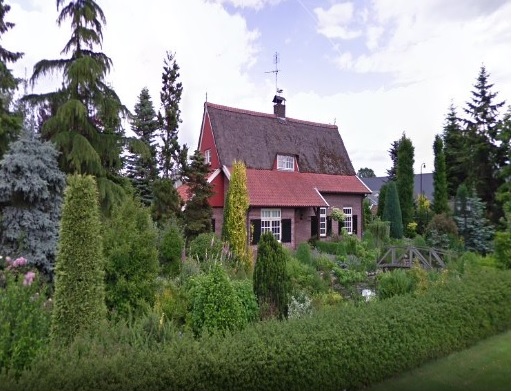
Paul’s work never stopped. If there was an emergency, like a sow in agony, he set the alarm clock to check on it in the middle of the night. My father worked hard, but Paul worked even harder. There always loomed dangers so that Paul could fret. An infectious disease could erase his pedigree. And the price of pigs fluctuated wildly. He had years with high profits and years with massive losses. But overall, his business went well. The old farm was from the 1930s and poorly constructed. When he married in 1977, he had it demolished and a new farm built. The new farm was in traditional style and an eye-catcher. It was huge and included a home for my grandparents. He had spent 500,000 guilders on it, more than three times the average home price, or so I heard. People came to the farm to take a picture of it. It was indeed exceptional. You can ask yourself, how many pigs died for it? But that is not only Paul’s fault because most of us eat meat.

Latest revision: 5 February 2025

Featured image: the farm that belonged to my uncle. Google Streetview. [copyright info]

Eibergen

Near Enschede, in the east of the Netherlands, is a village called Eibergen. I was born there in Iepenstraat (Elm Street). Elm Street. Do I have your attention? Here we go. The assassination of US President Kennedy happened on Elm Street, and that event is part of a web of remarkable coincidences. A Nightmare on Elm Street is a horror film first released in the United States on 9 November 1984 (11/9) and in the Netherlands on 11 September 1986 (9/11), with 9/11 referring to the terrorist attacks of 11 September 2001, yet another event marked by a remarkable array of coincidences. Here begins a tale riddled with coincidences and a story inside a story.

Eibergen means egg mountains, a possible cryptic reference to fallopian tubes. The initials of my last name, KI, make the Dutch abbreviation for artificial insemination, a way to make a virgin give birth. It is also the Dutch abbreviation for artificial intelligence, and this world is likely AI-generated. The name of the nearby city, Enschede, is found to be referencing the female reproductive organ. And Vagina, you could make of it. The initials of my first and middle names, BH, make the Dutch abbreviation for a bra. The song ‘A Boy Named Sue’ by Johnny Cash is about names of this kind and the strong character they build. But Sue had it easy. His funny name was the only thing he had to deal with.

Until age four, I lived in Eibergen and recall a little of that time. Nothing unusual happened. You might expect more if you know the remainder of this story, but to my knowledge, there were no spectacular omens of any kind. Often, I went out on a tricycle to feed the sheep in the pasture at the end of the street. The clock on television instilled anxiety. If it appeared, I took cover behind the sofa until it was gone. Unlike the clock in the living room of the renowned traditional pendulum type with the well-known ‘Nu Elck Syn Sin’ (Now, let everyone have it their own way) lettering, that one had a second hand, which made it particularly intimidating. Time was ticking. Tic toc tic toc. That was most frightening indeed. I remember my mother being pregnant. She was ironing. My sister Anne Marie was born in 1971. I sang songs for the baby in the baby room while my mother changed nappies.

Our home was on a block of similar houses. Next door lived an elderly lady, probably in her sixties. She came from the former Dutch Indies and had a fish tank in the living room. On the other side was a young family with children like us. They had a daughter of my age and a younger son. I remember playing together with them. They told me that rabbits eat grass. I tried it as well, but not being a rabbit, I didn’t appreciate the taste. And I once electrocuted myself by putting the chain of the stopper of the kitchen sink into a wall outlet. Others later said I had used scissors, but I am sure it was the stopper’s chain, which my mother confirmed. It suggests most of my memories are of good quality.

My father usually went to work around 6 AM and returned around 9 PM. He loved his job. On Saturdays, he went out hunting with his friends. And so, I hardly saw him. At home, he caught up on his sleep on the couch to wake up when sports started on television. So, at age three, I once said to my mother, probably jokingly, ‘Who is that man sleeping on the couch?’ That is what my mother later told me. My father probably took the hint, as he all of a sudden took me out of bed every morning before he went to work and played with me for a few minutes for a few weeks, which I do remember.

At the age of three, I once fell on my teeth on the wooden table in the living room in a most brutal smash. A piece of the wood broke off. My front teeth turned black shortly after, until my permanent teeth came in, making me an ugly duckling for years to come. We also had a bicycle accident. My mother was bicycling, Anne Marie was in the front, I was in the back, and my mother had trouble handling the bags full of groceries on the handlebars. And then the bicycle fell over. In early 1973, we moved to Nijverdal, which means ‘industrious valley’. It suggests we left the mountains for a life in a valley, but the Dutch mountains are imaginary, and the name of a song by my favourite band, The Nits. The music you love may reveal your character. And that might be correct in my case.

I was standing in the valley of rock
Up to my belly in an early fog
I was looking for the road to a green painted house
In the Dutch mountains
Mountains

I met a woman in the valley of stone
She was painting roses on the walls of her home
And the moon is a coin with the head of the queen
Of the Dutch mountains
Mountains

The Nits, In the Dutch Mountains

Latest revision: 20 April 2026

Featured image: my mother, my younger sister, and I (in the foreground)

Jokers on Files.

Joking Jokers

In 2002, I began working as an Oracle database administrator at a government agency. Most people in the Netherlands know about the agency because it processes traffic fines. Therefore, it isn’t popular with the general public, just as the Internal Revenue Service isn’t. If someone asked who my employer was, I kept it vague and said the government or the Department of Justice. It didn’t take long before something went seriously wrong. On my second day on the job, one of the production systems crashed after running the batch jobs, leaving the database corrupt. In hindsight, that was a bit peculiar. After three days of searching, which included a weekend, I still hadn’t found the exact cause. When the operator restored the backup of the previous evening, which was still valid, and ran the batch jobs, the database became corrupt again. It was probably a software bug, so I advised restoring the backup from the previous evening and upgrading the database software to see if that would solve the issue. Instead, the IT director declared a crisis and set up a multidisciplinary task force to address it.

The head of the task force was a corpulent project leader who decided we should find the cause, which I hadn’t uncovered. I just wanted to fix the problem. Every day at 10 AM, there was a meeting to discuss the state of affairs. Every day, I proposed to upgrade the database software to see if it would help. And every day, my proposal was brushed aside. I would have done it myself, but I was a brand-new hire and didn’t have sufficient access rights. And the agency used VAX VMS, an unfamiliar operating system, so I couldn’t install software or restore backups myself. Two weeks later, after the experts had weighed in and after hiring a database corruption expert from Oracle, the cause remained elusive, and managers were getting desperate. Finally, they were willing to consider my suggestion. And it solved the problem. It was a harbinger of things yet to come. During the review, they grilled me for not being interested in researching the cause. I was not a team player and said solving a crisis was more important because it was a production system, so the users needed it to work. And the upgrade demonstrated that it was a software bug.

If you had prejudices about the government, my employer didn’t dispel them. You expect red tape, risk-avoidance, rule-following, and the like. It was all there. One department excelled. If you made the request incorrectly, they would do nothing, even when it was clear what they had to do. You couldn’t disturb them between 10 and 11 AM when they were discussing the work. They didn’t seem to do much, so what did they discuss for 1 hour a day? Some colleagues may remember my so-called crusade against bureaucracy. I often made jokes about bureaucracy and fixed issues without telling anyone. Still, we perform our job effectively and efficiently, as traffic offenders would agree. And results matter most. Governments are bureaucratic because they implement rules.

Everywhere you go, some people work hard, while others take it easy. I have seen plenty of people lazing in corporations for profit as well. At my first project at Cap Volmac, we did nothing for months, but it generated profit for my employer, so it made economic sense. Still, the pace of work in the government bureaucracy is, on average, slower than in the private sector. It is hard to put a number on it, but there is a difference. There is less pressure. Decisions take time and require more meetings. This is not a representative picture of the entire public sector. Police officers and teachers may experience stress. But most bureaucrats live calm lives. The hours you work for your employer are working hours. Cap Volmac required me to invest private time in education and corporate meetings. Finally, government employment is more secure.

When I came in, there was already another database administrator, Dirk-Jan, a senior who had held several other roles and had recently become one. After two months, Kees came, and from then on, we were three. Kees had a technical education and was brilliant. A few years later, Rene also joined the team. There was also a security officer, a guy in a suit who soon began to make our work harder with procedures, so a true bureaucrat. We had to lock up our Oracle manuals in a secure location after work and bring the keys to the porter’s lodge. Our manuals were public information like Windows manuals, so there was nothing secret about them. And so, we made jokes like, ‘Now, the cleaners can’t break into our systems.’ Today, you can find this information on the Internet. Our management considered database administrators the most sensitive position due to our access to all the data, which led to overdoing things.

At the same time, the system that processed traffic fines had a superuser named after the system itself, with a password equal to the system’s name. Several other systems had the same issue, so the superuser and its password were the system’s name. I notified the security officer, but, being a true bureaucrat, he had more important things to do, such as attending meetings, inventing procedures, and preparing management reports. He added the issue to his list. But an issue like that called for immediate action. And so, I contacted a few senior programmers, and together we fixed that problem.

There were other issues with access rights as well. As they would say in the Professional Skills course, ‘There was room for improvement.’ If a new employee came in, the service desk made a ticket stating, ‘Create user account X as a copy of account Y,’ and sent it from one department to another. Usually, it took two weeks for the ticket to pass through all our departments, and system administrators made errors along the way. Hence, account X was rarely identical to account Y. If people switched departments or left, the defunct access rights were usually not deleted. Perhaps the audit department had figured this out, as our management soon launched a role-based access rights (RBAC) project.

RBAC works like so. You have a role in a department. In ordinary language, it is your job. For your job, you need access to an array of systems. Your job description determines which rights you need, for instance, to read specific data or change it. As a rule, employees should not receive more access rights than necessary to perform their tasks. RBAC is about the rights an employee in a specific job role needs. Business consultants came in and defined job roles and access requirements. A programmer then built an administrative database. However, the database didn’t connect to our systems, so there was no guarantee that the access rights in our systems matched the administration. And if you know how things fare in practice, you know that the administration would soon become stale and pointless. People are lazy, prone to errors, and forgetful. That would change once the administration and our systems are connected. If the administration was wrong, people couldn’t do their jobs properly, so it had to be accurate.

In 2004, I began building DBB, an account administration system, using Designer/2000, while keeping the bureaucrats out of the loop because they would likely stand in the way and make it harder for me. Only my manager and a few colleagues knew about it. DBB automated granting and revoking access rights in our systems, the RBAC way. It took me nine months, as I also had to do my regular work as a database administrator. But when I was ready to implement DBB on the production databases, bureaucrats became aware of what was happening and tried to block it. In their eyes, this was wildcat development. There had been no meetings, nor were there piles of reports to justify it. In early 2005, I introduced it sneakily with the help of the people from the service desk who wanted to use it. They installed the DBB client programmes on their personal computers. And I was a database administrator, so I could install anything I wanted on any database.

The results exceeded anyone’s expectations, including mine. The service desk created the accounts, so the tickets didn’t have to pass through all those departments. We could issue accounts in one day instead of two weeks. The service desk could reset passwords on the spot instead of relaying the request to a department, reducing the time to reset passwords from hours to seconds. And the access rights accurately reflected job roles. So, once DBB was operational, the opposition crumbled, and DBB became a regular application, even though not an official one, which was an essential distinction for bureaucrats. And so, we had RBAC fully implemented.

The DBB logo was a drawing by my wife. She had made it for another purpose. It features several jokers grinning at a set of file folders. To me, these folders symbolised bureaucracy. DBB joked with the bureaucrats, who considered it a rogue system. Supposedly, I was one of those jokers, so I made one of them my avatar on the Internet. DBB was my love child, just like Fokker once was Jürgen Schrempp’s, and for a while, I was overly attached to it. I ensured DBB could survive if I left my employer by producing design documents and manuals. I also built DBB in accordance with accepted Designer/2000 practices. We employed Designer/2000 programmers to maintain DBB. However, I hadn’t followed the proper procedures when building and implementing it, so it never became official. If something went wrong, it was not a mere incident, as would be the case with an official system, but a reason to replace DBB. That is bureaucratic reasoning at its finest. Something went wrong once, which allowed a high-ranking bureaucrat to block further development of DBB.

There have been two projects to replace DBB. In 2006, the first effort stalled because the planners had underestimated the complexity of the matter. They might have thought, ‘If one guy can do it, how difficult can it be?’ In 2016, a new project team realised it was pointless to replace DBB, as it was doing fine, while doing so would have been costly. The newer Java systems ran on Postgres databases and used web access. They did not use DBB. Our management planned to decommission the old Designer/2000 systems so DBB could retire by then. By 2024, DBB finally retired after nearly twenty years of service.

Bureaucrats have a unique way of doing things. In the case of serious incidents, they began filling out a ticket in the incident administration and discussing who should do what, while I pursued the issue. And sometimes, I had fixed it before others had finished filling in their forms. And I didn’t bother filling in forms. The system for which uptime was the most critical went down the most often. The solution was to reboot the system, but the operators hesitated and waited for a management decision. I said, ‘Just do it!’ And then they did. If it went wrong, they could blame me. I didn’t have the rank to make the decision for them and would have received a grilling if it went badly. But time was of the essence. The database was on an Oracle RAC cluster, a cutting-edge technology that had yet to mature. And that was so for a reason. It had to be operational at all times.

American software corporations like Oracle usually launch their products fast and aggressively market them. If customers buy them, they use the sales proceeds to improve these products and make them work properly. That gave American software corporations the lead over their European counterparts because Europeans believed you needed a good product before you could sell it. That was quite naive. Long before their product was good enough, the Americans owned the market and had the budget to make it better than the European product. In this way, Americans discarded failed products without investing much in them, saving costs. So, Oracle RAC on VAX VMS was not a great idea because RAC was in its infancy. At the same time, VMS was an exotic operating system with few customers, making fixing RAC bugs on VAX VMS a low priority for Oracle.

Not surprisingly, the system regularly malfunctioned, preventing users from accessing it. RAC is a cluster of machines accessing the same database. The idea behind RAC was that if one of those machines crashed, the others would remain operational and the database would remain accessible. In reality, the machines often went down in unison because of communication errors caused by the RAC software. And because the whole point of Oracle RAC was to have less downtime, you could do better without it. The crash corrupted the machine’s memory, and looking for the cause was pointless because it was a bug in Oracle software for which there was no fix. The only thing we could do was reboot these machines, which meant shutting them down and restarting them. That would wipe the memory clean, and the system would work again. I figured that out after one time, so the next time, when the symptoms were the same, I didn’t hesitate. The system was critical. It had to be up always. That was why it was our only RAC system. Otherwise, the police might not identify criminals. It was a database with the records of criminals dubbed Reference Index Persons, and the Dutch acronym was VIP, so the Very Important Persons for the Department of Justice.

Kees had built that RAC system. He was an innovator who liked working on new technologies, and he developed the RAC system with great enthusiasm. I was a problem fixer, and found innovation to be the greatest problem generator of all. It creates new issues while making good-working systems obsolete, so that you have to replace them with newer ones that generate more problems. There is always a reason, usually feature creep, so adding options you don’t need. In fact, all I did was bullshit, as humans managed without information technology until very recently. And now they can’t do without it, and they are locked in a process of mindless innovation they can’t escape. Obviously, I was the only one thinking this, so I mostly kept my peculiar opinions to myself.

Bureaucrats often seem to value rules over outcomes, which made me wonder what they were thinking. It could be something like, ‘If I mess things up, no one can blame me if I stick to the rulebook. But if I do the right thing but do not follow procedure and something goes wrong, my job is on the line.’ If something goes wrong, the government hires consultants to investigate the issue and propose changes to the procedures to prevent it from happening again. Consultants thus write piles of reports and make a lot of money on government contracts. Sadly, the next time, the situation may be different, and then it goes wrong again. Over time, the proliferating rules grow unwieldy.

Many have thought it better to do away with red tape, which led to an ill-fated push for deregulation. We ended up with more regulations. It didn’t happen in isolation. The proliferation of rules reflects the increasing complexity of society. When a large apartment building burns out, you see once again why there are strict building regulations concerning these skyscrapers. If you give profit-maximising businesses some leeway, they will use inferior materials to boost their profits. So, if you aim for fewer regulations, you shouldn’t build these things in the first place. Otherwise, you have to be extremely careful, for any opportunity to profit will not go unused. And if something goes wrong, there will be costly court cases that benefit only one profession: lawyers. As a result, you pay more, not less, due to deregulation. So, the neoliberal effort of self-regulation failed. Apart from that, there is fraud, but sometimes the only difference is that fraud is illegal, so deregulation can be a way to make fraud legal. Complexity is a cause of failure.

The government’s task is to provide and enforce the rules that keep a society functional. So, if there are no cars, we could do with fewer traffic rules and close down our traffic-fine collection operation. That solves a lot of problems, as we don’t have to keep up all those systems. There is a lot of room for deregulation if you solve the problems that gave rise to the regulation. Ending the profit motive in business might solve many problems and render many regulations redundant, as businesses are always scheming to increase profits at the expense of the public. That generates new problems, but maybe we mistakenly believe that they are worse. And perhaps, we should more often accept that things can go wrong. They go wrong anyhow, and they keep on going wrong, whatever you do. The real problem is our desire that things should be perfect.

DBB joked not only with the bureaucrats but also with me. In June 2010, I received a highly unusual request from a system administrator to manually drop a user account. That hadn’t happened for several years. DBB usually handled that, but it failed to drop this particular account for an unknown reason. The username was ELVELVEN. If you read that aloud, you say eleven elevens in Dutch, referencing the 11:11 time-prompt phenomenon that had once haunted me for a while. Usernames consisted of the first one or two characters of the employee’s first name, followed by the employee’s last name. In this case, the user’s last name was Velven. I don’t remember the first name, but it wasn’t Elvis. To me, 11:11 signals a combination of two related unlikely events. And indeed, the joke had a part two, and it was even more peculiar.

In 2014, during testing of an improvement to DBB, the test indicated that an unauthorised account had infiltrated our systems. The username was the first character of the first name, followed by the last name of the Lady from the Dormitory. Had She been employed by us, this would have been Her username. Her name isn’t common, so this was unnerving, especially since it was the only username that popped up in this list of sneakily inserted accounts. It couldn’t be Her, or could it? It turned out that a guy with the same last name as Hers had worked for us. His first name began with an A as well. And the account wasn’t illegal. I had mixed data from two different dates in the test, which made it appear that this account had sneaked in illegally. But imagine the odds of only this account popping up on that list.

In 2005, after completing DBB, my manager wanted to give me a promotion, and he only wanted to give it to me. My colleague Kees was a tech genius, and he set up the RAC system while I made DBB, so I said he was better than me. My manager responded with the prophetic words, ‘You have the right vision and make it happen despite the opposition. That is far more important than technical skills.’ DBB solved pressing problems using proven technology, while the RAC system only created problems. We used to reduce system downtime, but it produced system crashes, resulting in more downtime. Somehow, I had become his favourite, and that wasn’t because he was exceptionally good as a manager. Many of my colleagues weren’t particularly thrilled. He seemed the type of career guy who never stays long in one job. You know the type. He says he will clean up the mess and then hares off after a year or two towards his next challenge, claiming he has put things on track, only for the next manager to come in and claim he will clean up the mess.

He never put his promise in writing, despite my repeatedly requesting that he do so. Just before he left, I pressed him again. As the promotion had not yet come through, he wrote that there would only be a minor wage increase, then filed it with the human resources department for processing. A few weeks later, they summoned me to the human resources department. A personnel officer had raised a technicality. It wasn’t against the rules, but against their policies. And so, I couldn’t even keep the minor wage increase. That was a breach of contract, plain and simple, but to a bureaucrat like a personnel officer, only rules and procedures count. It would have been possible to fix this within the rules, but there was also a thing called policy, so they didn’t. My previous manager had already left, and they blamed him for not following proper procedure. His temporary replacement didn’t care, as he was on his way to another job as well. After putting a lot of effort into getting it in writing and with my manager already fobbing me off with a minor wage increase, they gave me nothing. I was angry and walked out of the meeting.

After arriving home, Ingrid told me that a freelance agency had called to offer me a job. It was the first offer of this kind in several years and the first time since starting work at the CJIB. As I was already considering leaving, I made a rash decision and resigned. In hindsight, it was a noteworthy coincidence that the freelance agency had called me precisely on this particular day. It didn’t take long before I did get second thoughts. Out of the blue, a strong feeling emerged that the decision was wrong. I can rationalise it by saying there weren’t many jobs near home for me. My son needed a father who was at home and could quickly return home in the case of an emergency, or so I believed. That may all be true, but that didn’t explain these strong feelings. And I had done freelance work before, so it was not a fear of being self-employed. And a government job didn’t seem right for me. Yet, there was no choice but to reverse course and try to undo my resignation.

Life had taught me that pride is poor counsel. A new manager, Geert, had come in, and he accepted my change of mind. My letter had not yet been filed with the personnel department, so the termination had not been initiated. He pledged to do his best to restore my confidence in my employer. He seemed trustworthy and acted as if he were my best friend. It later turned out that the process of creating a new job position was underway, and that the personnel department had misinformed me, likely because the employee didn’t know. Yet, once the position became available, Geert gave it to Kees. There was one position that my previous manager had promised me. That didn’t inspire my confidence. Yet Geert was planning to promote me as well. He gave me financial compensation, so the delay didn’t result in a financial loss. And after several years of bureaucratic wrangling, likely involving countless meetings and the like, the promotion finally came through.

Latest revision: 2 June 2026

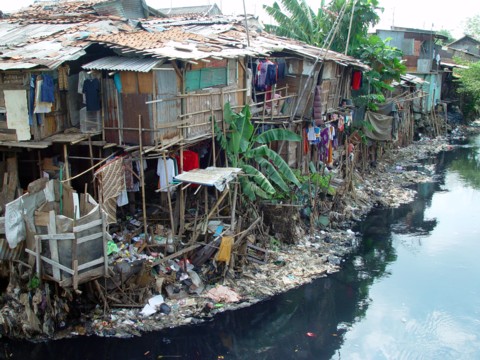
Slums in Jakarta

Extreme living

Overdoing things

In 1994, Princess, a friend from the United States, visited me in Groningen, where I lived at the time. Before we went out to the supermarket in the local mall, I took a shopping bag with me. Princess remarked on the shopping bag as if it were something peculiar. You could get a new one at the supermarket, she said. I answered that it was wasteful to fetch a new bag from the shop. She then called me an environmental extremist. I had no car and travelled by train, so that might have made her think this. I already believed that Americans are wasteful consumers, so her remark confirmed my prejudice. Taking a shopping bag with you is a minor inconvenience, but where does it stop? In other words, what will life be like after the apocalypse?

Perhaps Princess was right. Most of my clothes are over twenty years old. Some come from a thrift shop. There are holes in my underwear. My excuse is that no one sees my underwear. Sometimes I take a bath when there is plenty of solar and wind energy. I have an electric heater to heat the water. When the sun doesn’t shine, I sometimes warm up a litre of water and take a washcloth to wash myself. Compared to taking a shower, it saves over 95% in energy and water. Now and then, I succumb to temptation and take a shower or a bath. And I can’t help but eat scraps others leave behind, or when my son still lived with us, use paper towels he had discarded after hardly using them.

Waste and spillage unnerve me. I had a poorly insulated old home. It caused distress, making me anxiously oversee my natural gas consumption. I could easily pay the bill, so it wasn’t that. Insulating my house and only heating the living room resolved my emotional issues. As a side benefit, I reduced my energy bill by 70%. Still, I can’t stop brooding over new ways to lower my energy consumption even further. I do office work and can work at 17 degrees Celsius with warm clothes and gloves. My mother once said that I overdo things. Buying second-hand is what poor people do. My parents were raised in poverty and had worked hard, so they could buy new things and enjoy luxuries.

I don’t want to upset others, so I try to act inconspicuously. Everyone should live a simple life, but for a long time, my argument was, ‘Who am I to tell others what to do?’ Later, the excuse became, ‘Who is going to believe me?’ It is not always possible to guess what disturbs others. Or I might forget. Once, I wore worn-out clothes to a family party. My father was not amused. That was an oversight. My father thinks it is disrespectful to the hosts. They don’t take offence, and I don’t take offence at my family’s excessive consumption. That has been their upbringing. They must know they turn our planet into a wasteland. But everyone else lives the good life, so what is the point?

What is normal?

Who is an extremist depends on what we consider normal. Today, we think it is normal to live at the expense of poor people and future generations. It is normal to aspire to a luxury yacht and extravagant living. You may not be able to afford it, but you can dream of it. That is the American Dream. My life is rather ordinary, albeit with a few luxuries. I don’t engage in extreme measures like turning off the heating or getting rid of my car. I might have done so if I had lived alone, but my wife doesn’t want it. It is not enough, but there is no point in scrapping comfort if you are the only one doing it. What is the point of living without comfort if others go on driving SUVs and taking holidays by aeroplane?

The only way to do it is to do it together. Wasteful lifestyles can’t remain the norm much longer, so if we don’t change, disaster is likely. We can manage. My great-grandparents hardly left the village they lived in. They had no car, no television, and probably had never been to Germany. That seems like extreme living now. But it is not as hard as it appears. The 80/20 rule states that, for many outcomes, roughly 80% of the consequences come from 20% of the causes. It means that for those who aren’t poor, an 80% reduction in consumption would reduce their well-being by 20%.

The Netherlands has a mild climate. Winters have become significantly milder in recent decades, so there is hardly any frost. Cuts in energy use will cause discomfort but little suffering. In many other locations, the situation is quite different. I once read a story of a guy in rural Ohio who had lived off the grid for one winter and shared his experience on a message board. He woke up to a harsh reality. Things freeze and break down. You can easily get injured and incapacitated. He will not do it again. And he couldn’t do without a car. More experienced people gave him tips. One commenter suggested that he should move to a warmer location. Alaska has its version of the 15-minute city, Whittier, where all 200 residents live in one building, complete with necessities like a shop and a church.

Time is money or convenience

In 2002, when I was unemployed for a few months, I tried my hand at an allotment garden. It was a lot of work. It got me a few vegetables I could buy cheaply at the supermarket. Once I had a job again, I gave it up. Not so long ago, most people grew their food because they were poor. They had no other job, so they had the time. There were no agricultural machines, so it was manual labour. Today, home-grown food is uneconomical. Working 1 hour at the office might buy the food that takes 40 hours of work if you grow it yourself. It is an economic calculation. If I could earn more by producing food than working at the office, I would quit my job and grow food. That is why few people grow their own food.

You can save money by cooking your own meals instead of eating out or ordering takeout. Alternatively, you could work more, and if you make more money than you save by cooking, eating out is economically optimal. Usually, you don’t make these calculations. I never go to the canteen at work. I spread my bread before going to work instead. Many people take the convenience to save time, often because they have no time due to their work commitments. They say that time is money. So, time equates to money or convenience. People who work in restaurants have jobs that wouldn’t exist if we cooked our own food. Many of these jobs are bullshit jobs.

The consumerist economy is about squandering resources and energy to make money. Advertisements tell us how easy a product is and how much time or trouble it saves us. They don’t tell us how many hours we work for it. Eating out is convenient, but you have to work longer hours to pay for it. You could work less when you cook your meals yourself. If you forego ease, you can have more time. In the past, people had time to grow their food or mend their clothes. That is a lot of work, but food and clothes were more expensive, or incomes were lower. Buying new clothes meant more work than mending the old ones, because they had to work more hours to afford them. It was economically efficient to mend clothes and grow food because they were poor.

Wealth and poverty

My closet still features clothes from forty years ago. My mother bought them when I was a teenager. Most clothes don’t last that long. The fashion industry is the second-largest polluter. It generates, among others, mountains of waste, including landfills of unsold clothes, 20% of the world’s water pollution, and 10% of global carbon emissions. The economy is about selling more stuff to generate profits. The latest trend is fast fashion, so clothes that fall apart after you have worn them a few times. Your clothes won’t last a season, and new ones are cheap, so you can always stay fashionable.

The world’s largest waste producer, China, is making new clothes affordable for everyone, including the poorest. New clothes from China have become cheaper than second-hand from Europe. Africans can now buy new clothes. And so, Africa is now finally becoming economically developed, thus consumerist and wasteful like the rest of the world. Today, many Africans have newer clothes than I have.

Who is rich and who is poor? To me, wealth is how long you can survive on your capital. So, if your expenses halve, and your capital remains the same, you are twice as rich. The wealth of humanity is how long we can sustain our lifestyles. At present, human consumption levels are unsustainable because they exceed the planet’s capacity. If we could consider this planet ours, which we can’t, we are eating up our capital. We are poor but could be rich and live off the interest of our capital if we reduce our consumption to sustainable levels. And if you have a capitalist spirit like me, and think ahead, you are willing to save and invest in the future.

Living without a car

Many car owners work one day per week to pay for their car. Using public transport may take longer, but without a car, you can skip one working day each week or retire earlier. And you can think further. Why should you make that trip? In the past, people hardly ever left their village. If your aunt celebrated her birthday and lived thirty kilometres away, you didn’t go. And no one was offended. You didn’t go anywhere. There were festivals in your village that you could attend. Once or twice a year, there was some entertainment. For the rest of the time, you had to entertain yourself or bore yourself. That is extreme living.

For many years, I didn’t have a car, despite having a job that required one. I lived in a remote city. My job was there, or at least 200 kilometres from home, so I had to stay in a hotel. In that case, I took a train to a station nearby and parked my bicycle there. In either case, I went to my work by bike, either from my home or from the hotel. Using public transport requires planning, extra time, and sometimes considerable sacrifice. I remember taking a thirty-minute walk through the snow to reach an office outside the city centre, as buses only went there during rush hour. And then there was all that waiting at train stations. It saved me money, allowing me to buy a house. After all, time is money.

After I met my wife, we could borrow her mother’s car if we needed one, or we rented one. When her mother’s car fell apart in 2003, I bought my own, a second-hand 1998 Opel Astra, which has now survived over 320,000 kilometres. But I still go to work by public transport. And I use public transport for trips, if it is not too much trouble. Later, I began thinking about ways to reduce energy consumption. One way was combining trips. So, if I visited my sister, I also visited my father. That saved 200 kilometres of driving. We went to the forest nearly weekly, a 60-kilometre round trip to see some trees. There are parks near home. And so, we walk in these parks instead.

Turning down the heating

My grandparents had no central heating. It was cold inside their home, and it could even freeze. They warmed themselves at the stove in the living room, the only warm place. Central heating is a luxury we can do without. In 2022, Vlad the Empire Builder decided to launch a special military operation in Ukraine, leading to the termination of cheap Russian gas supplies to Europe. Natural gas prices skyrocketed for a while. To save energy, many people resorted to extreme measures, such as turning down the heating or only heating the living room. Some even turned off the heating entirely and put on a warm vest or a coat. You may not want to go that far, but heating only the living room makes sense.

Newspapers in the Netherlands featured a series about people who cut their energy use. Take, for example, Adri from Yerseke and his wife, who heat the living room of their 1906 home with a modern AC unit. They have insulated the walls, installed high-efficiency windows, and installed solar panels on the property. They consume 2,400 kWh of electricity and generate 3,000 kWh per year. Their natural gas use is nearly zero, as they shower only occasionally and wash themselves with a washcloth. Switching from central heating to an AC in the living room is probably what generates the most savings.

In our living room, the winter temperature is 19°C. I also made some changes in recent years, such as insulating poorly isolated rooms. An AC is now the primary source of heating. Only if the AC can’t maintain the temperature does the central heating come into play. As a result, the remainder of the house remains barely heated, which is where most of the cost savings come from. I work in a small room in the attic with an electric heater. When working there in the winter, I may wear warm clothes and gloves, and put an electric pillow on my lap. When you choose to do these things, it feels much better than when you must because you can’t afford the energy bill. But it is how we should live.

Growing your own food or local farming

Growing food is a lot of work. I had an allotment garden for one season. Sneek had clay soil, which is sturdy, thus not easy to till. The cost savings were negligible, probably less than the plot’s rent. Vegetables and potatoes in the supermarket are affordable, so the allotment garden wasn’t worth the hassle. I suspect we will live simpler lives in the future, yet I don’t foresee 90% of the population working in agriculture, as was the case in the Middle Ages. In wealthy countries, that number might rise, but not above 10% I suspect.

We will still have much more energy than we had for most of history. We will discontinue unnecessary economic activities and allocate a greater share of our resources to agriculture. And so, agriculture will probably remain largely mechanised and carried out by professional farmers. Today, farmers sell their produce to national and even global markets. European wine ends up in the United States, and California wine ends up in Europe. That is resource inefficient.

High energy prices may revive diversified farming for local and regional markets, as well as growing crops in their respective seasons. That was also the case in the past. Today, we have supermarkets. Selling local products may require a separate distribution channel, such as a person collecting produce from farmers and selling it to local customers. Several foods require centralised industrial processing for safety reasons, but a wide range of foodstuffs is suitable for local production and consumption.

Not throwing away

Recycling costs energy and doesn’t fully recover all the waste. So, what about not throwing things away in the first place? You can recycle glass by dumping it in a glass container, but turning it into new glass costs energy. And there is so much packaging. You go to a shop, buy a bottle, and throw away the old one when it is empty. That is normal. An outlandish suggestion is to have a tank in the supermarket where we can refill our reusable bottles. And we could bring bags with us for bread and fruit.

There are some considerations. It might not be a good idea for perishable foodstuffs. It is also advisable not to mix skin care products with detergents. It is best to use separate bottles designed for each substance to prevent accidental mixing. The hardest part is that we have to bring these bottles and bags to the shop. We have to plan and take the bottles and bags with us. That is an inconvenience that modern consumers might consider outrageous.

Finally, there are a few extreme ideas that might get you out of your comfort zone. You can save energy and water by showering or bathing less frequently and using a washcloth instead of a shower or a bath. You warm a bit of water, add some soap, and there you are. Some people change clothes daily. Once or twice a week can be enough in many cases. You can also switch to less frequent underwear changes, such as every other day instead of daily. Washing your clothes less frequently saves energy and extends their lifespan.

Latest revision: 29 November 2025

1. Welcome To Whittier, Alaska, A Community Under One Roof. NPR (2015).

Life in Vragender in 1949

From Community To Society

The time we live in

Due to a severe shortage of time-travelling equipment, you can’t choose the time you live in. Apart from that, you have more options than ever, at least if you have enough money. If you lived in Germany in 1620, you couldn’t go on vacation by aeroplane to Spain, watch television, or keep the rest of the world in the loop about your life on Instagram. And you didn’t know what happened in other countries. Look at all the choices we have today. There are shampoos for every hair type from several brands. And that is just shampoo. In 1620, you washed your hair with water or not at all. Today, countless products are on the market to cater for every possible desire. Everything has been made easy.

Yet due to all these fantastic, but mostly senseless, options and unprecedented comfort, allowing us to become dumb and inept, we are facing a zombie apocalypse. It can make intelligent people go mad. The Unabomber railed against modernisation in his manifesto. And he was right about where things were heading. Yet, modernisation encompasses much more than we realise, so blowing up a few buildings and murdering some people isn’t going to change that. Modernisation is not primarily about technological change. It is the change in how we live and organise ourselves. We have lost our self-reliance and have become cogs in the system. Money is the driver, and technology is its sidekick.

Today, you order a pizza with your smartphone, and someone will deliver it at your doorstep. No one did that a century ago, even though meal delivery was technically possible, as telephones, bicycles and motorised vehicles already existed. Not cooking your meals and letting someone deliver them is a lifestyle change. It requires organisation. The ingredients must be present at the pizza restaurant, employees must be available during opening hours, and financial service providers should handle online payments. Everything must operate like clockwork. In the past, villagers grew vegetables and cooked their meals themselves. There were few organisational dependencies. There was a planting season and a harvesting season, and daily routines like milking cows and eating meals.

The modern level of organisation requires us to live by the clock. Our forebears didn’t have clocks, agendas, and appointments. That came with the Industrial Revolution. Operating a factory requires workers to be present, so employers and employees agreed on working hours. Raw materials had to arrive on time. Time became money. Being late, or not being present, was costly. The scale of the investments and the pressures of competition meant that factories were only profitable if everyone kept to their schedules. Trains had to run on time as well, to bring people to their jobs and appointments. The idea of time changed. People in the past thought of seasons rather than hours and minutes.

Modernisation came with a transition from communities to societies. Not long ago, most people lived in villages with their families, and they did their work at home or near home. They didn’t work for corporations. The Industrial Revolution changed that. Large-scale production requires large markets, the free movement of labour and capital, a trained workforce, and later, due to technological advances, also a highly skilled workforce, hence more and more schooling.

People who had previously lived in villages moved to towns to work in factories. Nation-states and national languages replaced local governments and local dialects. Nation-states set up schools to turn people into citizens destined to play their role in a larger society. Individuals learned to identify with nation-states rather than villages. It changed how people lived and looked at themselves. In his book Identity, Francis Fukuyama gives a fictional example of a nineteenth-century German peasant who became a factory worker,

Consider a young peasant, Hans, who grew up in a small village in Saxony. Hans lived a fixed life in the village. He lived in the same house as his parents and grandparents. He was engaged to a girl whom his parents found acceptable. The local priest had baptised him. And he planned to continue working on the same plot of land as his father. Hans never asked himself, ‘Who am I?’ The people around him already had answered that question for him. Then he heard that opportunities were opening up in the rapidly industrialising Ruhr valley, so he travelled to Düsseldorf to get a job in a steel factory there.

Hans is now living in a dormitory with hundreds of young men like himself, coming from all over northwestern Germany. People speak different dialects. Some of the people he meets are not German at all but Dutch or French. He is no longer under the thumb of his parents and local priest and finds people with different religious affiliations than those in his village. He is still committed to marrying his fiancée, but some local women have caught his interest. He feels a bracing sense of freedom in his life.

At the same time, Hans is troubled. Back in his village, friends and relatives surrounded him. They knew him and would support him during sickness or a poor harvest. He does not have that kind of certainty about the new friends and acquaintances he has made and is wondering if his new employer, a big corporation, will look after his interests. He heard that Communist agitators were pushing to create a trade union in his factory, but he has heard bad things about them and does not trust them either. His part of Germany had become part of a large empire, of which he can feel proud, but it is barrelling forward to an uncertain future. He feels lonely, disconnected and nostalgic for his village, but for the first time, Hans can choose how to live his life.

Hans’ story characterises the transition from community to society. Industrialisation led millions of Europeans to move from their villages to cities in the nineteenth and twentieth centuries. Today, the same happens in countries like India and China. Hans didn’t think, ‘Who am I?’ Nevertheless, his view of himself changed. He had more choices than in the village. Did he become happier? That remains unclear. In areas with little industrialisation, cities also grew. In 1800, only 7% of the world’s population lived in cities. In 2023, it was nearly 60%.

Once traditional values become optional, you experience freedom. Or you may feel confusion and a longing for the clarity of the tradition once provided. Society, rather than your community, now answers the question of who you are and what group you belong to. Hans was no longer a villager in Saxony, his father’s son who would inherit his farm, but a Protestant from Germany. Nationality, ideology and religion came to define us.

Later, the number of identity groups proliferated. Twenty-first-century consumerist societies have a variety of identity groups, and the Internet makes it easier for like-minded people to find each other. Identity comes with a variety of product choices. You can identify yourself as a Madonna fan, a football club supporter, or a prepper. Marketers use and create these identities to sell us their merchandise. For preppers, it is canned food to survive the coming apocalypse.

Modernisation thus profoundly changed people’s lives, and today few areas remain unaffected by the all-pervasive power of the money economy. It brought, among others, urbanisation. People have been moving to cities since the Industrial Revolution, and in the West of the Netherlands, the area called Holland, even earlier. Yet, for a long time, modernisation didn’t upset life in villages, where most people still lived and depended on their families and communities.

My father loves to talk about the old times. He lived on a small farm. Before he went to school, he milked the cows. There were lots of other chores as well. My mother’s childhood had also been like that, but she rarely discussed it. One of the few things she told me was how she and her mother caught and slaughtered chickens. Most people have lived like them for ages, and all of a sudden, that all changed. My parents have seen it happen. By the time I was born, it was a done deal.

Life in the past was not great, a meagre existence even, but there was no apocalyptic threat, except in religious literature. Today, that threat has become real and imminent. Yet, God has left the scene, or at least in the Netherlands. On message boards with American conservatives, I sense a more apocalyptic atmosphere. The apocalypse is an outcome of an interaction among science, technology, and society, driven by business economics, which, by some not-so-miraculous coincidence, happened to match the studies I pursued at the university. And because of my father’s storytelling, I had some ideas about village life in the past. But what was it really like? That requires a more thorough investigation.

When God has left the scene

What was life before modernity? Shortly after World War II, life in most Dutch rural villages was still overly traditional. What changed and how did it happen? ‘How God Disappeared from Jorwerd’ by Geert Mak is a village history of Jorwerd, a Frisian village, during the so-called Silent Revolution of 1945 to 1995, when traditional life gave way to modernity. One change was that most villagers stopped visiting the church. Jorwerd is part of the scene you see from the train if you travel from Sneek, where I live, to Leeuwarden, the Frisian capital, where I work. Now, isn’t that yet another noteworthy coincidence? The title of the book, combined with Jorwerd being part of that scenery, eventually made me read it, also because of my investigation into modernisation, while experts praised the book for giving a deeper insight into this matter.

Jorwerd consists of a church with a small square surrounded by a few dozen houses surrounded by pastures. Yet every village, no matter how tiny, has a long history with locals who lived there and are now long forgotten. In the past, villages were closed-off places of endless boredom fought with countless folk tales, and where the fair was the main event of the year. Villagers plenty of time to work out the details of their arrangements. As Mak put it,

In villages in the past, the shared rhythm of life had often evolved into a system of detailed protocols that kept society ticking along like a clock’s mechanism. Nothing was left to the unpredictable. There were rules for everything. For example, who to visit and when, who was invited to weddings and funerals, who came for a visit to a newborn, what to eat and drink on those occasions, how new neighbours were to be welcomed, who had to look after horses on certain occasions. It was all according to an ingrained pattern of long-term reciprocity. But the times for rising and for sowing, planting, and harvesting were also fixed, as were the methods of working, all according to one great unwritten standard.

Villagers could ritualise their lives like that because every year was more or less the same, and the village was the central unit of organisation. The past was not great, drenched in boredom and poverty. To pass the time, the village established a drama club and a few other groups, such as a local department of the rural women’s association. Yet, these didn’t exist a few centuries ago. Rather unsurprisingly, the past is not a time the villagers wish to return to,

Now the old divide between city and countryside has largely been bridged, and both ways of life complement each other more than they are opposites. Over the years, the village has lost not only a certain tranquillity and tradition, but also much of its isolation, stifling atmosphere, repression, cruelty, poverty, and want. And if anyone is aware of this, it is the villagers themselves. No one wants to return to milking in the cold November rains, or toiling in the hot hayfields, or the fears of floods, diseases, and plagues.

Parenting was up to their parents and the villagers. And children on farms had to do a lot of work, so my father was not an exception. My father gave two accounts, on different occasions, of how villagers dealt with parenting problems. In one account, things like child molestation remained unnoticed or uncorrected. In the other account, the village priest or others would take measures. The latter seemed more like how he believed things should be, and sometimes happened. At least, the government was nowhere to be seen, so it entirely depended on the villagers. It is not easy to say which is better, as there have also been abuses in institutions.

Villagers avoided conflicts, as they could drag on and poison the atmosphere for years or even decades. Jorwerd had such a conflict over the village hall as it went at the expense of the pub’s business. As villagers identified with their village, there was some rivalry with neighbouring villages. Still, village life had its benefits, and problems didn’t scale up as they do in cities. In villages, there was more oversight. Villages also provided a social safety net for the weak. Autism seemed not to exist in the past. Not only was there no diagnosis, but villages provided a stable and predictable environment that most autists could cope with. Mak explains,

Unnoticed, a divide had developed within our highly developed society: that between the fast and the slow. The slow were not pitiful or disadvantaged. They were, however, ‘clumsy’. They were the ones who were too slow for contemporary social contacts and networks, preventing them from getting or keeping jobs. They were people who struggled with modern relationship patterns, causing their friendships to stagnate. Sometimes, they were families who lacked the discipline to keep their spending within limits in a consumer society, sinking into crime or accumulating nearly insurmountable debts. They were also the boys and girls who could not cope with the complicated and often undisciplined education system, causing them to fail to complete any schooling.

These slowpokes and clumsy people had always existed and will always remain. In the past, they usually did low-level work, but it was work nonetheless. There was little care, but it was care they understood. There were relationships that, in the eyes of the city dweller, offered little variety—for example, the eternal and exclusive association with relatives—but that family was there nonetheless. For years, the countryside was an oasis for the clumsy. The villages offered support and structure. Moreover, the villages gave them the value they deserved, for there was much to be learned from the slow and the clumsy, even if these were matters of a different order than the usual.

Villages had certain strong principles. The first was reciprocity, often in the form of assistance to kin and neighbours. It operates via detours and over the long term. You help others, and others help you. It occurs at the communal rather than the individual level. Another principle was that the young were subject to their elders. The environment was stable, so experience was more critical than today. With today’s rapid changes, youngsters often know better than their parents. Or as Mak put it,

When society changes rapidly, parents and children clash. The older generation inevitably views life differently from the younger one, and rightly so, for they must survive in different worlds. Such rifts can also occur within a person’s own life, leading to an internal conflict. In a world where everything is predetermined, as Jorwerd was until 1945, there is a strong likelihood that what a person expects will actually come to pass. In societies undergoing major changes, the predictability of the individual life course has vanished. Expectations that had been raised suddenly fail to materialise.

In villages, the individual was subject to the collective. Rural villages survived through stability and predictability. It doesn’t mean that they were conservative, with the soft terror of gossiping mothers-in-law prying on your every move. Jorwerd was fairly liberal. Yet, individualism led to unpredictable conduct, threatening the stability and predictability that were the pillars upon which the community rested. So, if you did something unusual in a village, you had to explain yourself.

Those principles are declining. Unlike in other areas, such as France, where rural areas have depopulated, Dutch villages have become suburbs without a suburban atmosphere because the Netherlands is small and densely populated, so there is always a town nearby. Jorwerd is close to Leeuwarden. Outsiders bought homes in the village. They don’t form long-term reciprocal ties with other villagers, partly because they work in the city and buy all they need in shops. In the past, the women of Jorwerd looked after the elderly, but as more women have jobs, that tradition is dying as well. The fair changed from a self-made village event into a consumption-centred activity with spectacle to entertain visitors. News items about neglected livestock showed that farmers no longer looked after each other. It became a matter for animal protection authorities. And youngsters had cars so that they could go out in Leeuwarden or even Groningen.

In the past, there were plenty of short tales that locals told each other to pass the time. A chronicle writer has recorded hundreds. These tales were often scary and rude, and sometimes involved bloodshed. Germanic gods had somehow survived in some of these stories in curious shapes. These tales were the collective memory of villages. Yet, the memory of real events was not more than a century, in most cases. So, some villagers might know about farms going ablaze in the 1930s if their parents or grandparents had told them, but after three generations, actual history had gone lost.

Television greatly contributed to the decline of social life in the village. Before television arrived, the goings-on in the village were what people knew about and talked about, but television turned local events into a sideshow. The consequences of television are hard to underestimate. It changed life everywhere. Gossip about celebrities replaced gossip about villagers. You can see how other people live and think on television. You learn about other options. Norms and values changed as a result. Among others, marriage gradually became a less obvious choice. The great power of television lies in its ability to replace words with images. A picture can say more than a thousand words. And then there was the neglect of village potential by the municipality,

Most of the major changes in Jorwerd, such as filling in the harbour and the new housing developments, had originated with the residents themselves. Later on, however, such initiatives were rarely approved. For instance, the path to the sportsfield was a quagmire. When Willem Osinga proposed fixing it up with a handful of men over a few Saturday afternoons, using some leftover paving stones, with the municipality merely needing to supply a load of sand, that plan was flatly rejected. The municipality eventually did the work itself at the cost of 30,000 guilders. ‘We could have done a lot of other things in the village with that money,’ Osinga grumbled.

Mak’s book falls into the same category as One Hundred Years of Solitude by Gabriel García Márquez, a village history set in Colombia. Yet, as Márquez’s tale is fictional, Mak’s book is a journalistic account of actual events, less spectacular but more insightful. Before World War II, most inhabitants of Jorwerd were poor and often worked in jobs and trades on the side to get by. As they grew wealthier, the villagers could more easily sustain community life by buying groceries at a local shop and getting drunk at the local pub. Yet once they had cars, they went to supermarkets and pubs in the city. Farming became a capital-intensive rather than a labour-intensive business. Farm jobs disappeared, and interest payments replaced wages. Most farms closed down. Those that survived did so by increasing scale. And with capital came specialisation. These developments combined into a silent murderer of village life. Or as Mak put it,

Decline is rarely the result of an open confrontation. It is almost always a complex and treacherous course, a process that unfolds from below, with nothing yet noticeable on the surface. Just as cities at the peak of their existence often already contain all the elements of their decline, just as trading companies, banks, and large corporations often experience a final flourishing, more luxuriant than ever, while the signals announcing their doom are already audible, so it was also for the blacksmith, the carpenter, and the other tradespeople of this small village.

Local businesses flourished initially in the 1960s and 1970s, profiting from trends that would eventually finish them off. The carpenters would work on farm enlargements and new homes. Local grocers could survive first because strong brands set minimum prices for their produce, thereby preventing larger supermarket chains from undercutting them. Vertical price ties, the Dutch called the arrangement. The producer set the retail price. Yet, economists argued that these were cartel-like agreements that went at the expense of consumers. Once these minimum prices were gone, the local grocers went out of business in droves. The local blacksmith initially profited from selling refrigerators and other appliances because local people trusted him as the expert on machines. Yet, eventually, the arrival of modern appliances ended his business. Mak explains,

Unlike the butcher shop and the local grocer, the village blacksmith’s demise had little to do with turnover, newcomers, and mobility, but everything to do with technological progress, increasing complexity, and the resulting specialisation. The blacksmith’s problem is perhaps easier to translate into an image. Just open the hood of an oil heater from 1970 and the hood of a compact gas burner from 1995. What do we see? On the oil heater, we discern a few taps, a chimney damper, and a simple but sophisticated float mechanism. If something breaks—which rarely happens, because there hardly is anything that can break—a few taps and some fiddling with the float mechanism are often sufficient. But now look at the small central heating burner from a quarter of a century later. We stare into a tangle of wires, relays, thermostats, automatic valves, electronic control systems, membranes, couplings, pumps, and double safety devices—a crammed industrial mini-complex of pipes and electronics. That was the village blacksmith’s problem.

Regulations further contributed to the blacksmith’s fate. Installing and maintaining modern gas heaters required him to take courses to obtain the necessary certificates. Having unqualified people working with them was dangerous. The blacksmith was a generalist who understood a wide range of simple appliances, from heaters and farm equipment such as tractors and milking machines to washing machines, which were at first simple mechanical devices but grew more complex over time. The jobs the blacksmith did came to be the domain of a range of specialists. Modernisation is an intricate process involving a general rise in opulence, the advent of cars as private transport, an increase in complexity that leads to specialisation, and a wider array of choices that leads to centralisation. And it all occurred in an era of rising opulence, so without hardship. As Mak put it,

Just as with the small farmers, these were not tragedies. It was not young people in the prime of their lives who went bankrupt, but older, nearly retired people who, as the old notary put it, ‘quietly capitulated to the flow of time.’

The community economy didn’t get wasted by the market without a struggle. The conflict occurred within families, often between parents, who were loyal to the village, and their children, making it a generational issue,

‘We have to live off the village, so the village has to live off us too,’ the carpenter said to his children. Most of the villagers agreed. ‘But then they need to have fresh produce,’ the children protested. ‘And to be honest, it is much, much cheaper in Leeuwarden.’

The village economy died with that generation, and with a whisper. Social life in the village also declined, even though there is generally still more social cohesion in villages than in cities. The villagers still take care of each other. On 25 August 1951, the church tower collapsed early in the morning, around 5 AM, out of the blue, after having stood there for 900 years. The villagers hung around chit-chatting on the square near it much of the day, so the tower collapsing at such a quiet hour was an instance of good fortune. In 1995, the tower could have collapsed at any time of the day, without hurting anyone. Geert Mak’s How God Disappeared from Jorwerd is not a spectacular story with heroes and great exploits. The most profound revolution in the history of humankind remains largely ignored and recorded in a few books that few people read.

The end of rural life as it existed for ages came with great distress. Farming is a way of life you are born into. Departing from it can come with a loss of identity and purpose. Due to the rationalisation of operations and increases in scale, most farms closed, often after a protracted struggle for the farmer, and suicides of those who couldn’t cope. It was harder on the men, who hadn’t learned to discuss their feelings. Usually, their wives or the bank would bring up the matter of stopping. And for young men, farming would often mean a life of loneliness, with only cows as companions. According to Mak,

In 1995, special matchmaking courses were organised to help young farmers find wives, as hardly any young women wanted to become farmers anymore. Advertisements featuring women appeared in agricultural trade journals; women from Poland and Russia were keen to stand by the side of a serious, single farmer.

Until recently, life barely changed over the centuries, and then, suddenly, everything changed. The story of Jorwerd, despite its unique details, is the story of millions of villages around the world that have lost their role as the basis for community and economic life, and of the social consequences that follow from that change. The processes that ruin us are pervasive. Warding off the apocalypse and maintaining an acceptable standard of living require a great deal of social engineering, as they entail regulating forces of nature that are hardly amenable to control. The unpredictability of the consequences of changes is our main adversary. And so, we need to halt time, as the Amish do, and select which products and technologies we allow.

Economies of scale

Societies are communities on a larger scale. Communities provide solidarity between individuals who know each other. In a community, there is social control. Shared values keep a community together. If the community is supportive, others help you, and you help them in return. Not all communities are like that. In some villages, neighbours steal from each other. And even if you live in a supportive community, life isn’t great if you don’t fit in. And so, we shouldn’t have romantic views about families and communities, but they are our natural way of living. Societies with states and markets are cultural constructs. With the help of culture, humans can cooperate on any scale, but this can cause psychological distress because our natural environment is a band or a village.

What was once informal, a tacit agreement in communities, became formalised as law in societies. People don’t know each other personally. Instead of neighbours helping each other, states provide welfare while bureaucratic controls replace social controls. If adequately applied, bureaucratic rules are less arbitrary than the support you get from your community. The help you get depends on your community’s supportiveness and on whether others like you. On the other hand, people misuse bureaucratic systems and may cheat. Within a village, that is harder to do, as everyone knows you, and if you misuse community solidarity, people will notice and may stop helping you.

Living within families and communities is our natural way of life. Still, we can also imagine ourselves as part of identity groups that share characteristics such as a religion or a nationality. The benefits of scale in war and economics promoted larger-scale cooperation. For a society to function, those who live in it must identify themselves with it and its values. Nationalism has often been a means of achieving that. Sharing a culture and a language creates a common identity. A strong society with responsible citizens makes a difference because markets and governments can’t create an agreeable society on their own. Sharing a culture and a language helps, but it isn’t required. An ideology or religion can achieve the same.

If civilisation breaks down, we will not gracefully return to villages and subsistence farming. Communities have given way to societies in which people rely on markets and governments rather than on neighbours and family. They go to the supermarket for groceries and don’t grow their own food, nor do they make or mend their clothes. They expect to buy what they need on the market and the government to care for them when they can’t. Many of us won’t survive without electricity. What drove us into this corner? It is competition and the benefits of scale, and a belief in progress. With fewer resources and energy, it makes sense to organise more things locally. Reducing competition by reducing the benefits of scale and favouring local industries can also help.

Latest revision: 14 September 2026

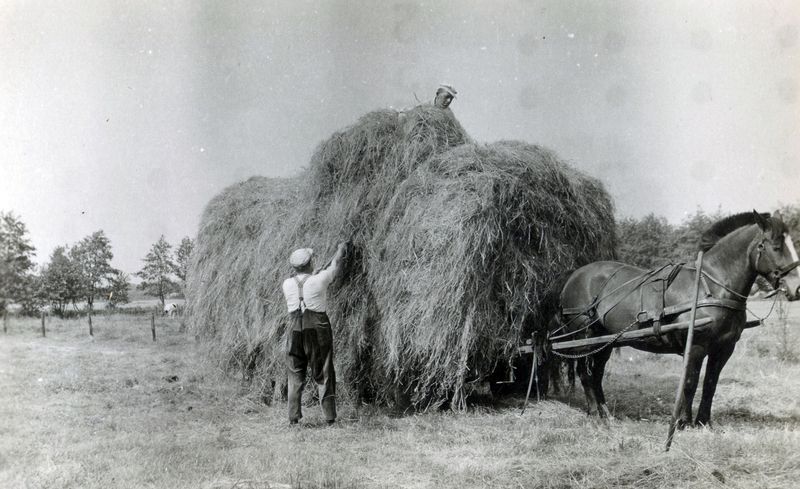
Featured image: Picture from Vragender where my father came from (1949). http://www.oudvragender.nl.