Weaving one tale inside another
The Jewish Bible is a good read, apart from the sections that lay out the Jewish religious laws in excruciating detail. It features tales about the Jewish patriarchs Abraham, Isaac, and Jacob. Moses led the Israelites out of Egypt to the Promised Land under the guidance of a wrathful cloud. It is nearly all made up. Writing and editing the Jewish Bible took centuries. The authors wrote it to promote their religion rather than to provide an accurate account of history. That is how historians look at the Jewish Bible. If you believed it all, don’t blame the Jews for writing good stories, but yourself for your gullibility. You could have known if you had put some effort into educating yourself. And you don’t think reptiles live among us because scriptwriters in Hollywood made a film in which they do? Some do. That is how imagination becomes religion.
But what does the almighty owner of quadrillions of galaxies have to do with the Jewish Bible, a product of the fantasies of a petty nation dwelling in a small area on a tiny planet near an insignificant star inside one of those countless galaxies? To answer that question, imagine you are John Ronald Reuel Tolkien writing about Hobbits living in The Shire. The Shire might be an insignificant spot on a tiny planet in an infinitely large universe, but Tolkien hardly cares about the rest. Only the Shire and the Hobbits have his interest. Tolkien could write a story about a Hobbit who makes up stories about his maker.
If Tolkien can do that, God can do it too. After all, that is one of the perks of being all-powerful. If God is a woman and has been among us as Mary Magdalene, what roles did God play among the Jews? In other words, which women in the Jewish Bible were God in disguise? Inquiring minds want to know because many of these stories are fantasy. At best, these are local tales that may or may not have some connection to actual events and have become integrated into the biblical narrative. Hence, the first question you should ask is: Can God have played a role in stories that never happened in the story?
Tolkien can write a story in which a Hobbit writes a story in which Tolkien enters the Shire disguised as a Hobbit. But that story never happened in the story Tolkien wrote. It is a tale that a Hobbit wrote in Tolkien’s story. The Hobbit might not even realise that the Hobbit in the tale is Tolkien in disguise, but he thinks it is just a Hobbit with a special role in the story, because that is the plot Tolkien created. I hope you haven’t lost track. That is the level of deception we are talking about here. And what about the Hobbits starting a religion with an imagined creator? Then the truth comes out. Tolkien reveals himself, and the Hobbits all laugh. And then it turns out that, even though the story that this Hobbit wrote never happened, it featured Tolkien disguised as a Hobbit. So it is possible. And indeed, strong women, who could have been God in disguise, appear in the Jewish Bible.
Hiding it behind human motivations
Powerful women also appeared in the Jewish Bible for a mundane reason. The Israelites were too small a people and thus too weak to defend a territory. They had to survive as a minority in the lands of others. Military adventurism would be fatal for them. To facilitate the right attitude among Jewish men, the authors of the Jewish Bible invented a new type of hero. Rather than fearless warriors, their heroes were virtuous individuals who helped others, such as Boaz,1 people with weaknesses like David, and risk-averse, shrewd individuals. Abraham was not a courageous warrior, nor was his son, Isaac. Resourcefulness had to compensate for that. Jacob cheated on his brother Esau and took his birthright. Meet the Jewish hero. He is a family man, but lacks the courage to defend his wife’s honour. Yet he is shrewd and defrauds his brother. And he has God on his side.
Heroes die, but the cunning and timid remain, even more so if God is on their side. That is why there are still Jews, while other nations made a one-way trip to the dustbin of history due to their excess testosterone and stupidity. And, of course, they lacked divine support. That is why the authors of the Jewish Bible refashioned the role of men and women in family life. The stories of Jewish patriarchs focused on family life and domestic affairs, in which women played a central role. And women played a crucial part in Israel’s victories.1
That undermined male authority in war. In several cases, women achieved triumph on the battlefield or determined the fate of men. Jacob defrauded Esau of his birthright and deceived his father, Isaac, with the help of his mother, Rebecca. Esther saved the Jewish people from a plot in the Persian court. The Jewish Bible doesn’t depict events suggesting Rebecca or Esther could have been God in disguise. There are, however, a few stories that catch the imagination and qualify. According to the Bible, Jewish history begins with Sarah and Abraham. There was something special about Sarah, the matriarch of the Jews.
Sarah and Abraham
The Lord allegedly promised Abraham that one day, his offspring would be as countless as the stars and own the land between Egypt and the Euphrates River. His wife, Sarah, was barren. She asked Abraham to sleep with her slave, Hagar, so Hagar would bear a child in her name. Those were the days when slavery was not forbidden, and you could get away with that. Once Hagar was pregnant, she began to look down on Sarah. Sarah then mistreated Hagar, and Hagar fled. But God sent an angel, the famous Angel of the Lord, who ordered Hagar to return and submit herself to Sarah. Hagar bore Abraham a son, Ishmael.
That could have been good enough, but the Lord chose differently and presented Abraham with a covenant. It required the circumcision of all males, and Sarah was to become the matriarch of the Jewish nation. At the time, Abraham was one hundred years old, and Sarah was ninety. Abraham and Sarah laughed when they learned this. Remember, 4,000 years ago, there were no erection enhancement pills or fertility treatments. Sarah became pregnant and bore Isaac.
Like in most traditional agricultural societies, Jewish religious law prescribes that men precede women in inheritance. Daughters can only inherit if there are no sons. Nevertheless, being a matriarch of the Jewish people is crucial because you are a Jew if your mother is one. Your father is irrelevant to your Jewishness. God was particularly picky as to who was to become the matriarch of the Jews. In this sense, the Jews are not primarily children of Abraham, as the Jewish Bible says, but children of Sarah in the same way Christians are children of God.
Abraham feared for his life because of Sarah’s beauty. When the Egyptians asked if Sarah was his wife, he said she was his sister. The Pharaoh’s servants took notice and informed the Pharaoh, who took her as his wife. God then inflicted severe diseases on Pharaoh and his household. That is divine justice. God punished the Pharaoh because Abraham had deceived him. With a God like that, you don’t need Satan. Not surprisingly, that horned fellow was nowhere to be found in this tale. Perhaps he enjoyed a sabbatical. The Bible doesn’t tell. Abraham did the same in Abimelech’s kingdom, thus knowingly bringing Abimelech into mortal danger. King Abimelech then received threats from God after he planned to take Sarah as his wife. Luckily for him, God didn’t have a bad mood that day.
To us mere mortals, an intriguing question might be, what made Abraham worthy in the eyes of God? Is it that he intended to sacrifice his son when a voice asked him? If it had happened today, we would have locked up Abraham in a mental ward. If Abraham was God’s husband, it makes more sense. In any case, God works in mysterious ways, and a ram presented itself, and that same voice then asked Abraham to sacrifice the animal instead. That was a narrow escape. If that ram had not been there, there would have been no Jewish people, and world history would have been entirely different. That is chaos theory at work here, or is it God’s plan?
In family matters, God sided with Sarah. The Angel of the Lord summoned Hagar to return to her mistress, Sarah. Later, God told Abraham to send Hagar away. Sarah wanted this. Sarah became the matriarch of the Jews because the Lord commanded. The Lord thus represented her well. Had this been a scrap of history, Sarah might have been God in disguise and done an excellent job of hiding that. However, God can also play an undercover role in events that never took place. That is a perk of writing the story yourself. And why does God desire bits of male reproductive organs in exchange for making a covenant? That is indeed most peculiar unless the Lord is a Lady. Another, and probably better, explanation is that it is a hygiene measure. The Jewish Bible describes the rules for ritual hygiene that Jews are required to follow in great detail.
Joseph and Asenath
Jacob had twelve sons, but Joseph was his favourite and the best-looking one. His brothers were jealous and conspired against him. They sold him as a slave. Joseph ended up in the household of Potiphar, an Egyptian and a high-ranking official in Pharaoh’s court. Joseph did well there and became Potiphar’s favourite. Joseph was handsome, so he caught the eye of Potiphar’s wife, who wanted to sleep with him. When he refused, she accused Joseph of trying to seduce her, and Potiphar put him in prison. There, Joseph became the prison warden’s favourite. Joseph was adept at explaining dreams. That eventually brought him to the Pharaoh, who also made Joseph his favourite. The Pharaoh made him a Viceroy and put him in charge of the granaries.
Scholars believe that the biblical story of Joseph was once a separate story that originated in the Jewish community living in Egypt at the time when many other Jews were in Babylonian captivity. The story resembles several Egyptian tales about a seven-year famine, divine dreams, and a wise vizier who helped the pharaoh and priests to restore the land. One of these stories, in fact, is inscribed on a large monument called the Famine Stele near Elephantine, an Egyptian colony on the Nile River where many Jews also lived.
Joseph married Asenath, the daughter of an Egyptian high priest. The Jewish Bible tells us nothing about her. That raised questions as marrying pagans became a controversial matter for Jews. A later story about their marriage explains how Joseph, after he escaped Potiphar’s wife, ended up in the arms of a pagan priestess. How could God have let this happen? An explanation was needed and invented, and they named the story Joseph and Asenath, which was quite to the point. According to this tale, Asenath was proud and despised men, but became impressed by Joseph’s looks.
Joseph first didn’t want to marry a pagan priestess who bowed before idols and didn’t worship the God of the Jews. But lo and behold, Asenath showed repentance and changed her faith. And then an angel from heaven hurried to her chamber to bless the marriage. When Asenath told Joseph, he changed his mind and married her. It thus must have been convincing. Asenath’s change of faith appears insincere and may have been motivated by her desire to marry Joseph. Nevertheless, God blessed the marriage, which is remarkable considering the high standards that usually apply. Asenath might have been God in disguise if only this had actually happened.
Zipporah and Moses
A fellow named Moses allegedly led the Israelites out of Egypt. A burning bush claiming to be God commanded Moses to return to Egypt to free the Israelites. Moses then took his wife, Zipporah, and their sons and started his journey to Egypt. On the road, they stayed at an inn, where that same burning bush supposedly came to kill Moses, which is a reason why you should not believe it happened. Zipporah saved Moses’ life by circumcising their son and touching Moses’ feet with the foreskin, saying he was her bridegroom of blood (Exodus 4:24-26). Later, the burning bush allegedly transformed itself into an irate cloud of fire, which helped Moses lead the Israelites into the Promised Land.
Zipporah saving Moses’ life fits the agenda of the authors of the Jewish Bible, which is to undermine male authority so Jewish men wouldn’t strive to posthumously win the prestigious Darwin award for their military adventures and terminate the Jewish people in the process. After all, the success of Moses’ mission depended on Zipporah having rescued him from the consequences of his daring attempt to let his son remain uncircumcised. God somehow was particularly keen on that foreskin. Zipporah knew what God was about to do and the reason why. But Zipporah reading God’s mind? No mere mortal could accomplish such a feat, not even Jesus. Hence, Zipporah might have been God in disguise if only this had happened.
Bathsheba and David
Bathsheba, who was the wife of Uriah, brought ruin to David and his kingdom. While Uriah served in the army to fight one of David’s wars, Bathsheba conspicuously bathed on a rooftop near the royal palace, where David could see her naked. She intended to seduce him. The alternative explanation that there was no room inside the house to bathe isn’t persuasive. David ordered Bathsheba to come to his place. And so She did, apparently without even saying it might be a bad idea. She became pregnant after sleeping with him. David then commanded Bathsheba’s husband, Uriah, to go home, hoping he would sleep with his wife so the scandal would go unnoticed. But Uriah didn’t out of solidarity with his comrades on the battlefield. David then asked his commander to place Uriah on the frontline of the battle so he would die. After Uriah died, David married Bathsheba. Bathsheba turned out to be a true fate changer. She also bore the future king Solomon.
You might have learned that the Lord loved David, but the subsequent events don’t demonstrate that. From then on, everything went downhill. In hindsight, this sequence of incidents led to the son of Bathsheba ascending to the throne. The prophet Nathan foretold David that his act would bring a curse upon his house. David’s eldest son, Amnon, was murdered by his half-brother Absalom after he had raped Absalom’s sister Tamar. Later, Absalom declared himself king and started a revolt against David, and David’s troops killed him. That eliminated two potential heirs to the throne. In David’s old age, Bathsheba secured the succession to the throne of Solomon. The marriage was a grave sin, but God nevertheless loved Bathsheba’s son, who was to become king. Bathsheba could have been God in disguise.
That might shed some light as to why the Lord loved David so much, as it cannot be due to his moral virtue. And it presents us with a reason why he couldn’t resist Bathsheba. David is a historical figure, so there could be truth to the story. It, however, also fits the agenda of the authors of the Jewish Bible. Even Israel’s greatest king, David, had faults and crumbled in the hands of a woman. But who would have thought Bathsheba had something to do with the angry cloud dwelling in that tent? Remarkably, the name Bathsheba is composed of two parts: Bath and Sheba. Bathsheba seduced David by bathing naked on a rooftop near the palace. The Queen of Sheba later visited Solomon. That is a bit odd. Hence, the Queen of Sheba may also have been an avatar of God.
Deborah, the founder of the Jewish nation
Sarah is the matriarch of the Jews, but she never lived in that capacity as a historical figure. Still, the Jews have a real matriarch insofar as anything is real in this world. She is also in the Jewish Bible. The Jewish nation gradually emerged after Egypt retreated from Canaan around 1150 BC. That left a power vacuum in which states gradually developed from tribal leadership. It corresponds with the tribal era of the judges in the Bible. One of the oldest texts of the Jewish Bible is the Song of Deborah (Judges 5), dating back to the era before the kingdoms of Israel and Judah.2 Deborah was a tribal leader during this age.
Deborah was the fourth judge in the Book of Judges. Only Deborah may have lived in that era in that role. The Song of Deborah, not Genesis, is the actual starting point of the Jewish Bible. The song likely didn’t pop up out of nowhere. Jewish tribespeople composed it to celebrate the victory brought by their heroine, Deborah. She is the earliest historical person in the Bible. She attributed the triumph to Yahweh rather than El, so the history of the Jews as Yahweh’s people began with Deborah.
She took part in a battle (Judges 4:8-9). As the story goes, Deborah sent for Barak, the commander of the troops, and said to him, “The Lord, the God of Israel, commands you: ‘Go, take with you ten thousand men of Naphtali and Zebulun and lead them up to Mount Tabor. I will lead Sisera, the commander of Jabin’s army, with his chariots and his troops to the Kishon River and give him into your hands.'” (Judges 4:6-7) But it was Deborah who commanded Barak. And so, She might have been the God of Israel in disguise and founded the Jewish nation and religion in person.
Latest revision: 5 December 2025
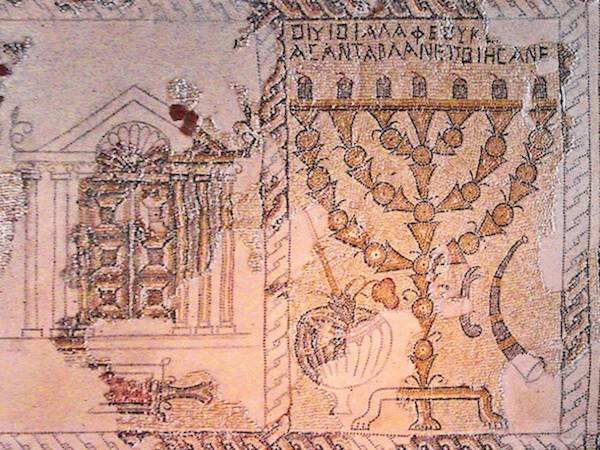
Featured image: Sepphoris Mosaic. Pbs.org. [copyright info]
1. Wright, Jacob L. (2014). The Bible’s Prehistory, Purpose, and Political Future. Coursera.
2. Why is the Song of Deborah considered to be the oldest text in the Hebrew Bible? r/AcademicBiblical (2025). https://www.reddit.com/r/AcademicBiblical/comments/1mhfw3z





 The Plan For The Future