
Surprise, surprise
Why would the Netherlands be central in God’s plan? It probably wouldn’t be your first guess, and it might even surprise you. Of all countries, the Netherlands? Indeed, that requires clarification. God likes a good joke. But there is more. That low-lying area ranks the highest in quality of life in 2026.1 It is the closest to Paradise. For that reason, probably, the tallest people come from there, making it the country of the giants. It is not an accident, but the outcome of extreme social engineering and an attitude of being hell-bent on doing the impossible, and really doing it, so not bullshitting. Culture is ubiquitous in our conduct, so this requires a more thorough investigation. Hegel’s grand scheme of social progress towards Paradise and the Enlightenment ideas are central pillars of God’s plan, and the Netherlands is among the countries that progressed the furthest. Culture is ubiquitous in our conduct, so this requires a more thorough investigation. Hegel’s grand scheme of social progress towards Paradise and the Enlightenment ideas are central pillars of God’s plan, and the Netherlands is among the countries that progressed the furthest.
Some would say it is the most progressive country. There is no objective measure for that, and the Netherlands lags in women’s emancipation, but on several other issues, it ranks high or highest. It makes the Netherlands, apart from windmills, dykes, tulips, red light districts, herring biting, and all the other things, such as the most unique illness-related swearwords with cancer, tuberculosis and typhus in them, the superior quality of the tarmac, and the lowest level of personal hygiene in terms of washing hands with soap after toilet visits, that make the Netherlands special, so special. On Reddit, several lists circulate in which the Netherlands stands out in one way or another. If you view it that way, it all starts to make sense. It is a very special country indeed.
In hindsight, the bogeyman of the conservatives, Georg Wilhelm Friedrich Hegel, who became the fall guy for everything they believed was wrong in this world, proved to be one of the greatest prophets of all time by implying that social progress through new ideas and revolutions is God’s path towards Paradise. Social progress is God’s thing. The Netherlands has been one of the most progressive countries on issues like dealing with the limits of growth, LGBTQ rights, animal welfare, balancing work and private life, opportunities for ethnic minorities, and the right to decide to terminate one’s own life.
And the plan seems to bring the rest of the world up to the same level, for the Netherlands is a tiny, crowded country, so not everyone can move over here to enjoy the good life. For that reason, the Netherlands was also the first to have a fascist party in parliament after World War II in the 1980s, arguing that the country was already overly crowded, and later, a fascist messianic leadership cult. The country even had a political party named New Social Contract, from Enschede, of all places, the place where, unlike Almelo, the greatest things have happened. A New Social Contract is what this world desperately needs now.
The Netherlands is God’s country. Israel, the United States, and Saudi Arabia bite the dust. The Netherlands means ‘low countries’. Half the Dutch live below sea level on land taken by draining swamps, lakes and even seas. It is only one of the things that make the country unique. Yet the name nearly translates to ‘humble country,’ as ‘humble’ in Dutch is ‘nederig’. So, what’s in a name? There is no coincidence. And so, I am not the kind of person who would brag, nor are most Dutch, but I have to explain why the Netherlands is God’s special country, for that it appears to be.
The Netherlands has long been a civil society centred on cooperation and founded on a compromise among identity groups, known as the polder model. That is less so today. Before that, the Netherlands was an oligarchic merchant republic, so like the United States today. It was the world’s wealthiest country on the eve of the Industrial Revolution. The Dutch greatly contributed to modern capitalism by founding the first stock market and the first multinational corporation, the VOC, during the Dutch Golden Age.
Yet, the Dutch Golden Age doesn’t fill the Dutch with pride. The VOC exploited the Dutch East Indies, which is now Indonesia. One of the best-known books in Dutch literature is Max Havelaar by Multatuli, which is about the plight of farmers and labourers on coffee plantations in the Dutch East Indies. We had to read it at school. The Dutch also made a lot of money from the Atlantic slave trade. And one of the most well-known Dutch heroes of the era, Piet Hein, was a pirate who stole boatloads of silver from the Spanish. Okay, there is a little bit of pride, but not that much. There was a dark side to it, and everyone knows it.
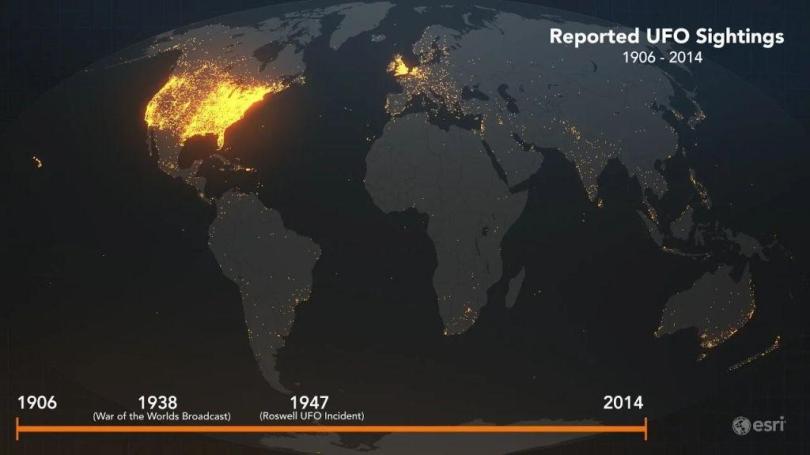
The Dutch are the best non-native English speakers. Dutch is the most similar to English, as the Netherlands is close to England. It helps me write this. Details like this demonstrate the intricacy of the script dubbed God’s plan. On Reddit, there once was a map of reported UFO sightings. The supposed extraterrestrials espouse a keen interest in three countries: the United States, Great Britain, and the Netherlands. As the Dutch are true pioneers in post-apocalyptic means of transport, since it is the country of the bicycle, it becomes all the more astonishing that extraterrestrials have also shown interest in the United States and Great Britain. And so, the scratching of heads continues.
Where it all comes together
That the Netherlands came to lead the world in liberal reforms and became the most socially progressive country was the outcome of the political manoeuvring of the left-wing liberal party D66 and, most notably, its leader, Hans van Mierlo, who features in an impressive coincidence scheme that involves, among others, D-Day, the battle of Hastings, the assassinations of Martin Luther King and Robert Kennedy, and the curse of all curses, The Curse of the Omen. The coincidences in history and The Curse of the Omen are discussed in detail in other stories. The fate of the Netherlands, and by extension the world, became settled when Van Mierlo seized the opportunity and plotted a liberal revolution that made the Netherlands the most liberal country.
The Christian Democrats of the CDA, who had always been in the government, had long blocked progressive reforms. In 1994, after the CDA had lost the election, D66 forged the purple coalition with the social democrats of the PvdA and the right-wing liberals of the VVD. They set aside their differences and focused on their shared progressive values to implement amendments. A large section of the Christian Democrat electorate supported these changes, so they remained uncontested afterwards. Leftists in the Netherlands saw their country as a guiding country. Yet, the country also saw an early revival of fascism in the 1980s with the Centrumpartij, so it was ahead on that count as well.
The Netherlands is one of the least nationalistic countries and one of the most cooperative in multinational organisations such as the United Nations, the EU and NATO. The Netherlands depends on international trade, and World War II led the Dutch to believe that they can’t survive on their own. The country is most closely tied to both the continental European and Anglo-Saxon worlds. And together with Great Britain, the Netherlands is the most oriented toward the United States. And so, the Dutch provided more NATO heads than any other country.
The Netherlands lies between Great Britain, Germany, France, and Scandinavia, and that extends to cultural ties. As the most ‘Scandinavian’ country outside Scandinavia, it is a social paradise and among the least corrupt countries. As for the Netherlands being a docile country, appearances can be deceptive. Russia is paying dearly for downing a Malaysian passenger jet with mostly Dutch on board. Ukrainian military analysts estimate that Dutch-funded FPV (First-Person View) drones and related unmanned systems are responsible for roughly one-third of all Russian casualties on the front in 2026.
The Netherlands further ranks highly in sexual liberty. Prostitution is legal and performed openly in red light districts. In the late 1970s and early 1980s, paedophiles could operate in the open until the focus returned to the damage they do to children. Today, most Dutch think that consenting adults, provided that they are sane and there is no pressure, can mostly do as they please in sexual acts. In Paradise, Eve and Adam were naked and knew no shame. On the work floor, equality is the norm, and, together with Denmark and Norway, it has the most egalitarian work environments. The Dutch balance work and private life and have the shortest work weeks. The Netherlands doesn’t lead on all fronts. It lags in the number of women on corporate boards and in parliament.
The border between the Roman Catholic and Protestant worlds ran through the Netherlands. Amsterdam harboured a sizeable Jewish community. With these diverse influences, it became the crossroads of Western civilisation and, as Muslims arrived, the crossroads of the Abrahamic religions. About 200 nationalities live in the Netherlands, making it a crossroads of world civilisation as well. It all seems daring, reckless even, as it is an unprecedented social experiment, for what is to come out of this? But if diversity means strength, that might explain why the Netherlands ranks highest in quality of life.
The reference to ‘humble’ in the name of the Netherlands is noteworthy, as honour plays a minor role in Northern European culture, including in the Netherlands. Pursuing or defending your honour is considered a frivolous pursuit for hotheads. Peace with honour is problematic as honour stands in the way of peace. You can more easily have peace without honour. The most unpretentious part of the country might be Twente, where I came from. The Dutch words for ‘suffer’, ‘lijden’, and ‘lead’, ‘leiden’, sound the same. Perhaps that is because Jesus led the world by his suffering. In Dutch, Jesus refers to ‘your sister.’ Eve and Adam were also like a sister and a brother.
There is more free thinking in the Netherlands than elsewhere. The Dutch are known for their tolerance. That dates back to the Dutch Republic, which made the country attractive to Jewish merchants. In the 19th and 20th centuries, the country had parallel societies with Protestants, Catholics and socialists living separate lives. Until 1850, Protestantism had been the official religion, but Catholics faced no persecution. Today, the same applies to smoking weed. Tolerance was also the stance towards immigrants for a time. In that sense, the Netherlands didn’t differ much from most other Western European countries.
The Netherlands was also the first to have a short-lived fascist revolution with a leadership cult. It proved to be a foreboding of things to come. Immigration led to a growing sense of unease among the Dutch as poorly adapted immigrants caused trouble. These feelings needed a catalyst to give the discontent a voice. After the terrorist attacks of 11 September 2001, a maverick politician, Pim Fortuyn, who posed himself as a messiah, rose to prominence with his anti-immigration views. A left-wing loner assassinated him, after which a sense of normalcy returned. Yet the unease didn’t go away, so the fascist movement gradually grew stronger, also in other European countries, and fifteen years later, the United States would see a similar movement and leader, with MAGA and Donald Trump, which culminated in the unravelling of the post-war liberal order.
Merchant and vicar
Mainland Europe, and most notably, Germany, has a tradition of idealism, while Great Britain and the United States have a tradition of pragmatism. That extends to the moral realm. Philosophers like Kant and Hume reflect these diverging traditions. The British philosopher Hume argued that we set goals and use reason to achieve them, which makes reason the slave of our passions. The deeply religious Kant vehemently disagreed, holding that we have a duty to reason, as it is our distinguishing feature. Hume believed morality is part of human nature and depends on popular sentiment. And outcomes matter more than intent, so something is wrong when it makes people angry or produces disaster, even when you have good intentions.
That immensely troubled Kant. Reason must be the foundation of morality, not empathy or anger, as Hume proposed. To Kant, intent matters most. Something is wrong if the intent was to hurt someone. Kant formulated the categorical imperative, a universal moral duty for everyone. Freedom means not being the slave of our passions. We should always treat people right, not only when we like them. And so, you have two views on freedom. The pragmatist one is doing as you please, and the idealist one is overcoming your lower urges and becoming a rational, morally upright person.
Continental European idealism and Anglo-Saxon pragmatism have wider implications than you might realise. A German idealist like Karl Marx devised a grand scheme for how things should be, while an English pragmatist like Adam Smith described capitalism as it worked in practice. In mainland Europe, Frédéric Bastiat would hit a more fundamentalist tone in defence of capitalism. When the United States turned the fight against communism into a moral crusade, it imported its idealist philosophers from the classical liberal and libertarian traditions, such as Friedrich Hayek of Austria, which is culturally close to idealist Germany. The Austrian School of Economics turned into a religious cult in the United States. Being halfway between England and Germany, the Netherlands ended up in the middle of those two traditions, making it both a pragmatic nation of merchants and an idealistic nation of vicars, also because Protestantism had become the predominant religion.
Catholic doctrine holds that faith and good works can save you. Catholics perform good works, such as giving money to the Church, to atone for their sins. It promoted corruption within the Catholic Church through the sale of indulgences. Protestants objected to this moral corruption and took moral integrity very seriously. They made morality a matter of personal choice, making them personally responsible. And so, it should come as no surprise that Immanuel Kant was a Protestant. Catholics are more morally flexible, so Catholic countries in Europe tend to be more corrupt than Protestant ones. Protestants should think for themselves, while Catholics merely follow the Church’s lead, except in the Netherlands, where the Catholics openly rebelled when the Church reversed its liberal reforms to the point that the 1985 Pope visit became an absolute disaster.
And so, despite the presence of a sizeable Roman Catholic minority, the moral conflict defining Dutch culture, the vicar versus the merchant, is ‘dominee versus koopman’ rather than ‘pastoor versus koopman.’ It was the Protestant vicar, not the Roman Catholic priest, who objected to the merchant’s wicked deeds. The merchant was also a Protestant. This dualism still profoundly affects the Dutch, making the Netherlands a nation of merchants and vicars. To a vicar, money is the root of many kinds of evil, while successful merchants are driven by greed. This dualism is challenging and made the Dutch work harder to reconcile the two by finding a pragmatic solution that also meets ethical requirements. It drove the Netherlands into territories that other countries did not go. The country may appear relaxed, but it is tightly organised, not as much as Japan, but still.
The machine no one can replace so far
It was up to the engineers to figure out the solutions. The Dutch engineering tradition dates back to the construction of dykes and windmills to drain lakes and swamps. Half the country is below sea level. Dealing with the unruly nature of water has become a Dutch expertise, as the sea and rivers can rise above the surrounding land. Likewise, Dutch agriculture has developed into a science- and engineering-driven enterprise. As Dutch farming centred on livestock, it exceeded the land’s carrying capacity, forcing Dutch farmers, also under the pressure of environmentalists, to minimise the ecological impact of their agricultural output, making Dutch agriculture one of the most innovative in the world. It is how reconciling idealism and pragmatism works in practice.
Today, the Netherlands is home to the world’s most advanced engineering. That is noteworthy, as we may have to socially engineer the future world society of God’s Kingdom, and the messiah may have to work out the grand design. China and the United States may seem to lead the technology race, but their accomplishments are built on Dutch technology. Without the Dutch corporation ASML, there would be no cutting-edge semiconductor chips needed for AI and quantum computing. The ‘$400M Machine No One Can Replace’ refers to the Extreme Ultraviolet (EUV) Lithography systems manufactured by ASML. Here is why these machines are considered irreplaceable:
- ASML has an absolute monopoly, as it is the only company on Earth that makes these high-volume EUV machines.
- ASML employs the most extreme engineering. Each machine consists of over 100,000 parts, weighs 165+ tons, and utilises mirrors so flat that if scaled to the size of Earth, the highest bump would be less than one millimetre.
- The ASML machines fire high-powered lasers at molten tin droplets at 50,000 times per second, creating a plasma that emits light at a 13.5-nanometer wavelength to print microscopic circuits on silicon.
- The cost and scale are unparalleled. Priced between $200 million and $400 million, these systems require 250 engineers to install over six months, and shipment requires 250+ shipping containers and seven Boeing 747s.
- The world is fully dependent on this single corporation: Without these machines, chipmakers like TSMC, Samsung, and Intel cannot produce the advanced chips (e.g., for Nvidia GPUs) that power the modern digital economy.
As of early 2026, ASML has introduced a new generation of these tools known as High-NA EUV, which cost approximately $400 million each and are crucial for the ‘Angstrom Era’ of chip manufacturing. China also plans to acquire this technology, but it takes time to reach the same level as ASML. ASML is an offshoot of Philips, which invented the compact cassette and compact disc that geezers like me might still remember. In consumer electronics, marketing and cheap mass production became more important than engineering, so the firm declined. It spun off parts as independent corporations, including ASML, and sold others to focus on medical appliances.
A Dutch building contractor and creationist, Johan Huibers, has constructed two replicas of the biblical Ark of Noah. He first finished a half-scale model in 2004. Huibers later finished a full-scale model in 2012. There are other copies of the ancient vessel elsewhere. Yet, contrary to Huibers’ models, they don’t float and are worthless once the poo really passes the ventilator. As the Netherlands faces the threat of flooding, the Dutch pay close attention to such particulars. And the Dutch have the engineering tradition to pull this off. So, if the deluge comes, it will be up to the Dutch to manage the problem.
The construction of buildings in the Netherlands involves specific engineering issues not found in other countries. Large sections of the Netherlands consist of peat and soft clay. There, homes rest on piles driven into the ground until they reach solid soil, enabling the Dutch to build robust homes on swampy terrain. Likewise, the construction of the Eastern Scheldt Barrier took place on shifting sands, requiring techniques such as the use of mats to create a solid foundation. There are parallels with the project, which aims to find a solid foundation in a shifting environment. Creating a lasting utopian society is a philosophical project akin to building a castle in a swamp. Nothing is given, and everything is open to debate, while it aims to establish a solid structure that can last for 1,000 years or more.
We may soon have to socially engineer the future world society and make it last for a thousand years or more. As the Netherlands is the best country to live in and can accommodate a wide range of diversity, it seems that this social engineering effort has been a success. But what is behind it? It begins with tolerance. What also helped is that the Netherlands has no history of racially antagonistic relationships like those in the United States. There are issues with discrimination and conduct, but racial relationships are not deeply troubled. The Netherlands was open to migrants. That may have to do with the Netherlands being a nation of merchants and vicars. To the merchant, they were good for business, and the vicar cared for those who fled from oppression abroad.
Diversity can benefit team building by combining strengths. Particular groups have particular strengths, and if you can build a team from them, diversity can be a benefit. To illustrate the point, in the 2024 Summer Olympics medal table, the Netherlands ranked 6th, below the United States and China, but above Great Britain and Germany. In the 2026 Winter Olympics medal table, the Netherlands ranks 3rd. The Netherlands never became world football champions, but they reached the final three times. Johan Cruyff is the most well-known Dutch football player. The point here is not that the Dutch are good at sports, for top sport is a waste of energy and resources, but in teamwork. Even individual sports today require a team to get the best out of the athletes.
Immigrants or their children have contributed to these results. Particular groups have particular strengths, and if you can build a team from them, diversity can be a benefit. Yet, social engineering has reached its limits, as people in Europe, including the Dutch, are growing increasingly sour toward immigrants and focus on what goes wrong and the long-term consequences, which are indeed uncertain. If the country is as great as the Netherlands, it is unlikely to get better. It is the best country to live in. Yet, if the rest of the world were to catch up and become as agreeable to live in as the Netherlands, that would be much better. And that might indeed be God’s plan. That requires the most extreme social engineering, so Dutch engineering.
Truth bomb
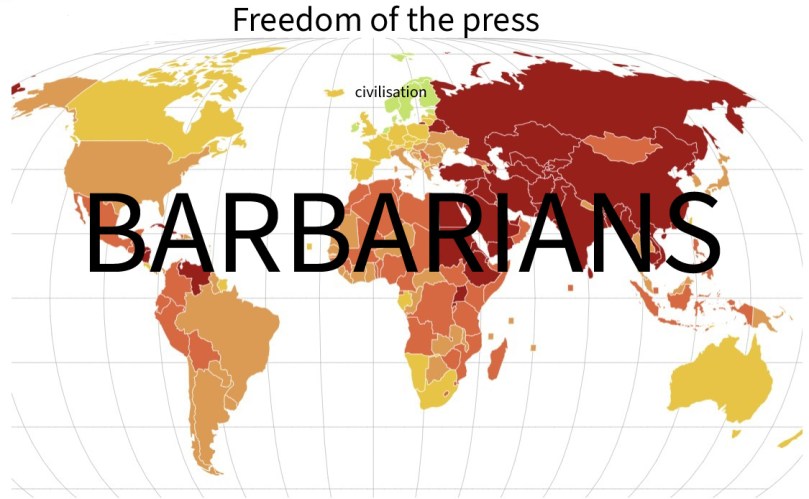
The 2025 RSF World Press Freedom Index, which you can see as a gauge of civilisation if you like, shows that all that remains of civilisation, so where there is still some freedom of the press, is that tiny, little green area somewhere above and in the middle, that includes the Netherlands. One of the tokens of civilisation under siege by crazed barbarians is the famous Dutch Protocol, a beacon of reason in a world of savages infected by anti-trans hysteria. Whether civilisation can still vanquish the barbarians depends on the superiority of its weaponry. As Judgement Day may be approaching, it seems no coincidence that the International Court of Justice is in The Hague, the Netherlands. It may become the place where the world’s greatest evildoers face justice.
So, in the country of the most extreme engineering, including social engineering, the work on the most advanced weapon of all time, the one that will end the world as we know it, including the world’s religions and the other fantasies people cling to, the Truth Bomb, is nearing its completion. To make it undetectable by radar, sonar, explosives-sniffing hounds, and Geiger counters, the device has been disguised as non-radioactive, odourless text with stealth capabilities, giving it the element of surprise and, with social media, unprecedented swiftness. When the Truth comes out, its enemies have already lost, and they will know it. But will it be in time to prevent the apocalypse and kickstart the New World Civilisation called God’s Kingdom? Storytellers love suspense.
Latest revision: 3 October 2026
Featured image: UFO sightings plotted on world map
1. Numbeo Quality of Life Index. Numbeo (2026).

