Nijverdal had a secondary school, Noetsele College. It was a Protestant comprehensive school with 1,500 pupils. It was near my friend Marc’s home. The building impressed me. It was huge and three storeys high. Okay, this was Nijverdal, not Tokyo, remember that. It was one of the most extensive buildings in Nijverdal. My primary school had only 200 pupils and one floor. My mother once told me we had passed by that building bicycling, and I said decisively, ‘I want to go to this school.’ It was close to home, and perhaps I feared she would send me to Pope Pius X College in Almelo, a similar Catholic school where many Roman Catholics sent their children. That was eighteen kilometres from home, which meant bicycling that distance twice a day for years, no matter the weather.
In contrast to the liberal, loose, and left-leaning primary school, this school was right-leaning, disciplined, and conservative. Conservative Protestants had a significant influence. Nearby Nijverdal was Rijssen, a conservative Protestant village without a comprehensive secondary school. People from Rijssen thus sent their children to Nijverdal. About Rijssen, people said there were twenty-two different churches because of the various types of Protestantism that disagreed on a particular matter. Television was a device of Satan for many of them, so they didn’t have one or hid it in a sealable closet so the neighbours and the preacher couldn’t see it.
When we visited my grandparents on Sundays, we saw them attending church, the black-stockinged Protestants. The women wore hats. They didn’t observe the traffic, so my father had to stop the car when they crossed the street. Someone later told me that if they died in an accident, they considered it God’s will. To these conservative Protestants, Roman Catholics like me weren’t real Christians but idol worshippers of the Virgin Mary. Our days at school started with a lecture from the Bible and ended with prayer. Nijverdal was predominantly Protestant, but there were also Roman Catholics.
I did fit in much better there, so my former classmates didn’t give me a hero’s welcome at the secondary school reunion. Marc was my classmate during the first year, so I still had a friend. In the second year, they reshuffled the groups, and I ended up in a different group with a great atmosphere. That group included a few classmates from primary school, but Marc was no longer in it. On Ascension Day, we went out bicycling. We started early, at six AM. It was a local tradition in Twente called dew kicking. A few classmates, including me, continue that tradition to this day. After that, no major reshuffling of the classes occurred. I had a good time and hardly went out alone during breaks.
Instead of Marc, Patrick P. became my mate. He sat beside me. I knew him from primary school. He was a lively character with a vivid imagination, albeit a bit over the top. He made drawings of our business accounting teacher, Mr B*****, in various Superman outfits and then prodded me during the lessons to attract attention, ‘Look… look… SuperB*****.’ He had a small studio in an attic above a garage, where he could be a disc jockey. Patrick hoped to become a celebrity one day, which indeed happened, as he was on television and radio several times, even though not as a disc jockey, but as a traffic expert.
It was not all calm and peaceful. For all those six years, my math teacher was Mr. B****. We initially had a problematic relationship. When Mr. B**** entered the classroom the first time, I said sarcastically to Marc, who sat beside me, ‘Is he our mathematics teacher?’ Mr. B**** had an insignificant stature and a remarkable face. He had heard it, and ordered me to his desk, noted my name, and promised to ‘polish the sharp edges of my personality.’ To his very personal taste, I was a bit too feisty, so from then on, Mr. Blaak frequently punished me for insignificant offences everyone else got away with.
Nearly every week, I had to stay an extra hour, which was more time than all my classmates combined. I worked hard and had good grades. Still, Mr. B**** tried to catch me for not doing my homework. He meticulously inspected my notebook a few times. It was pointless. I always did my homework, and did it all. At some point, after being punished again for something everyone else got away with, I couldn’t take it anymore, and went into tears. That was nearly two years later. Mr. B**** had gone too far, and he knew. He stopped punishing me, but I didn’t stop making jokes about him. Once, I let my notebook go around the class with a fill-in exercise, allowing my classmates to use their imagination on ‘Mr. B**** is a … because he … while he ….’ My classmates came up with over twenty suggestions, some of which were rancid.
Once they were sixteen, many youngsters went to a bar named Lucky in Rijssen. I didn’t go at first. I lived on the road to Rijssen, so those who came from Nijverdal to visit Lucky passed by my home. One Saturday evening, a few classmates rang the bell at nine PM. They wanted me to go with them. Being already in my pyjamas, I put on my clothes and went to a bar for the first time. Going to bars and discotheques became a habit. I could dance, chat with friends, and hope for love to come. The encounters in Lucky were sometimes a bit physical. Some girls pulled me over to get a kiss. Others pinched me in the butt when I passed by. If I looked back to see who did it, these girls were grinning and pointing at each other. It always happened in the same spots. You could count on it. One of my friends later told me he had the same experience.
I became a member of the School Council, which advised the school board on some matters of lesser importance. This council comprised board members, teachers, parents, and three pupils. It wasn’t a popular job, so after showing a slight interest, I found myself a member. There, I witnessed firsthand how bureaucrats keep themselves busy at work. The school had a Financial Commission, which had overstepped its bounds by entering the domain of the Cultural Council. I don’t remember what the Financial Commission did wrong, but it caused a fuss. The discussions then focused on whether that had been inappropriate, thus a transgression, or inelegant, and therefore merely a matter of taste. It dragged on for several meetings because the head of the Financial Commission was also a member of the School Council. A member of the Cultural Council accused the Financial Commission of appropriating too much power and acting like the famous authoritarian French king Louis XIV, thereby creating, and these were his exact words, a ‘L’etat c’est moi’ situation, referring to something Louis XIV supposedly had said to stress that only he made the decisions. Louis XIV claimed to have the divine right of kings, thus unlimited authority, because God had appointed him.
Featured image: College Noetsele by Historische Kring Hellendoorn-Nijverdal, from MijnStadMijnDorp, CC-BY 4.0
In 2016, Trump enthusiasts took over the GodlikeProductions.com message board. The atmosphere turned grim, much as it had fifteen years earlier, when Fortuyn fans flooded the IEX message board. Since then, the new fascism has grown stronger. This time, I stayed. I had missed out on something important, and given the job that may lie ahead, and me supposedly being Adolf Hitler reincarnate, not understanding fascism was no excuse. And so, I familiarised myself with the MAGA crowd, as I had previously with the Moroccan minority in the Netherlands. Hanging out with people helps you to understand them better. GodlikeProductions.com had that annoying feature of banning you for no apparent reason, probably to get you to switch to a paid subscription. Fair enough, but the content wasn’t worth paying for.
That eventually made me switch to Reddit. There, you can hang out with BLM and MAGA, and with others as well, like a fly on the wall, so to speak. And as you might well know, or maybe not, flies on walls like Georg Wilhelm Friedrich Hegel can arrive at superior insights. This particular fellow had somehow figured out how God’s plan would unfold over the next 200 years and how we would arrive in Paradise through a struggle between ideas that would lead to social progress. He did so by observing what happened around him, looking back at history, and reasoning from there. In hindsight, he was one of the greatest prophets of all time. Okay, God wrote the script and made him do it. The first Trump presidency was not a clean break with the past, as his cabinet featured several Republican establishment figures. They kept The Donald in check.
The second Trump administration became a different ballgame. Trump went unhinged as no adults were left to keep him in check after he had surrounded himself with sycophants. As there is no limit to Trump’s ego, his erratic and spiteful caprices became a spectacle so hilarious that even Monty Python couldn’t have made it up, with Trump naming buildings after himself, declaring his birthday a public holiday, and numerous other self-aggrandising acts. His followers praised him for his brilliance because no one could figure out his plan. His economic policies were like raising tariffs on Swiss imports because he didn’t like the way the Swiss leader spoke to him. And let’s not forget his brazen lies, his self-enrichment and that of his family members by abusing his office, eclipsing all previous corruption by US presidents, his pardoning of criminals, and his Christmas message, ‘Merry Christmas to all, including the radical left scum that is doing everything possible to destroy our country, but are failing badly.’ After MAGA made such a noise about DEI hires, the Trump administration was stuffed with individuals whose only qualities were being white and not LGBTQ.
His war threats against Denmark, for among other reasons, his not receiving the Nobel Peace Prize for which he blamed Norway, by the way, and his going to war with Iran for allegedly not honouring the nuclear agreement he tore up, were also noteworthy. When, due to that war, gas prices rose, fearing the wrath of voters, Donald Trump began pressing European allies to send their military in harm’s way after claiming that the Americans had ‘completely and totally’ destroyed the Iranian military. He asked Europe’s support after threatening to invade Danish territory, being unwilling to support Europe with the Ukrainian war effort and making Europe pay for the American weapons sent to Ukraine, and after helping Russia in its war in Ukraine by allowing Russian oil exports, which he did after threatening countries with serious consequences for buying Russian oil. Meanwhile, Mr Trump was already eying an invasion of Cuba. As a Swedish newspaper once put it, ‘This is the problem with having a giant baby in charge of the free world.’
No doubt that the second Trump administration will go down in history as the greatest joke in the history of government, and that the greatness of the joke will be remembered for eternity as a lasting monument of God’s sense of humour, so there is greatness in the second Trump administration after all, including the level of blasphemy. Trump sold his followers $3 made-in-China Trump Bibles for $60, which was one of his schemes to cash in on his presidency at his followers’ expense. If exploiting God’s word in this way will not prompt God to act, then what will? And if this level of insanity makes God bring in the Messiah to save us, then what will? Also, on the GodlikeProductions.com message board, I was cautious about expressing my opinions. I was there to learn, not to annoy others.
In a realistic scenario, there likely is no stopping our descent into savagery. The fascists are right that mixing incompatible cultures is a recipe for trouble, but they are wrong about thinking that nation-states and religions have a future. It would mean fighting tribal and religious wars until the end, and that end is not that far away now. We are fucked either way, unless there is a New World Order that represses religions and tribal sentiments and dictates one truth, so a global Soviet Union, as it were, sharing our material poverty, which may not be agreeable, but better than the alternatives. And conspiracy theorists fear that there is a secret plan to bring that about. Indeed, it was God’s plan.
In social justice, the law of diminishing returns also applies, and at some point, the net result becomes negative. Social justice hits the limits of human nature. More women than men may prefer to care for their children, which can affect their careers. Trying to fix that with government policies may, at some point, no longer be helpful. Humans also can’t live up to high standards, especially when belief in them is lacking. Or there is overreach, creating other injustices. To favour a disadvantaged group, the best candidate may not get the job. Social justice can turn into cock fights over respect and privileges. Think of special toilets for people who feel they are neither men nor women. But what would that cost if every public building needs refitting to add a fourth toilet group, if there are already toilets for disabled people?
Still, civilisation is a mindset, from which practical consequences follow. MAGA marks the end of Western civilisation based on reasoned Socratic and Hegelian debates, so it is a cultural suicide. So, this is really end-timish. African countries don’t have powerful militaries capable of blowing up anything anywhere in the world. The Chinese, who have seen twenty centuries of civilisation, have yet to grow that cheeky. America is still, in some ways, a frontier society, so a Wild West, and Americans like Donald Trump see the world as a giant saloon, where they can start brawls and shoot people for offences like looking nasty. The priority is thus halting America’s decline into barbarism. We are all savages, and culture is a thin veneer, because our genes rule our actions, including civilised conduct. And so, the barbarians are standing at the gates of civilisation. They always were.
Non-Westerners, including Africans and Muslims, have not been brought up in a culture founded on social progress through reasoned debates. Western culture is not superior in values or conduct. Western culture brought us the mess we are in, as did Adam by eating the fruit from the forbidden tree. Yet social progress through reasoned debate is God’s path to Paradise. Humans are savages, especially in groups. Nature has shaped us that way. In that sense, Woke is no different from MAGA. Stating a mere fact could get you cancelled, and furious Woke social justice warriors would treat you like a heretic from then on. We have reached the end of the line, and without an inspiring fairy tale to guide us, further progress is impossible, and we might soon decline into savagery. Knowing that God wrote the script, I kept my calm. In 2019, with no idea how the apocalypse might begin, I had a hunch it would be clear before 2025. That became a deadline, sort of, at least.
On 1 January 2025, I figured that an apocalypse had become more likely. Trump’s erratic conduct might destabilise the world and trigger mayhem. The world adapted, but with no one to check the orange madman, things could spiral out of control. My preparations were not yet complete, but good enough had God called upon me at the time, and close to the finish line, the moment when additional preparation would make little sense. I figured it would be around 1 April 2027, and further surmised that the job would start before Trump’s second term ended. And so, the new deadline became 1 January 2029. I promised myself that I would stop by then if nothing came out of it, but would I? So, is this going somewhere, or would I be setting deadlines until the Grim Reaper arrives to take me to the eternal hunting fields where death is beautiful all the time?
We have seen the collapse of liberalism, and with it, the so-called rules-based liberal world order, which was, of course, an order that favoured the West, but even more, the elites, which orders always do. But a poor order is always better than sheer chaos. Yet, things will not return to what they were before. The liberal world order has ended. Liberal states have long had an edge because of capitalism and science. Liberalism is as much a part of the Western heritage as Christianity, perhaps even more so, for without liberalism, science, and social progress, Western civilisation wouldn’t be distinct from the others, and the Christian and Islamic worlds would have been the closest kin in cultural values and outlook. Science and capitalism thrived most in a liberal environment with freedom of expression and property rights. When the Nazis took over Germany, several Jewish German scientists fled to the United States, including a fellow named Einstein. They helped the United States develop the atomic bomb. And then Adolf Hitler made the mistake of invading the Soviet Union. That is how liberalism won the day.
When the Soviet Union collapsed, liberalism seemed to have won. Yet, it is better to say that our consumption addiction has won. The communists had given up on their project because they had promised their workers more stuff, while everyone knew that workers in capitalist countries had more stuff. And like nearly every previous president, Donald Trump has promised Americans more stuff. The modern consumer is not much unlike a drug addict busy committing suicide by overdosing, wanting his dealer to bring on more. He has no survival skills and is hooked on a system he can’t survive without. The merchants of death, selling us all that merchandise, are like drug dealers selling opioids.
Complacency set in in the West. High on delusion and lured by the prospect of profits for the businesses they represented, the neoconservatives, a breed of conservatives that had adopted Hegelian dialectic much to the horror of true conservatives, and therefore believed that Western culture is superior, so that after toppling the regime in Iraq, a liberal democracy would magically appear, made the United States invade Iraq. Since then, China has revised its economic model and now outcompetes the West, while mass migration of non-Westerners has eroded the West’s liberal foundations. Most Muslims, Africans, and Eastern Europeans show little interest in LGBTQ rights or women’s rights, in the liberal sense that is. They have no upbringing in a tradition of progress rooted in Hegelian dialectic. Liberalism was yet another fairy tale. It has just collapsed in front of us, and quite suddenly, also to my surprise, but liberals have yet to catch on.
We are at a turning point in history. Western civilisation’s foundational pillar, social progress, is collapsing. We have reached the limits of human nature. Savages as we are, we can’t keep up appearances for too long. Civilisation is just a thin veneer to keep the beast within us in check. Liberalism was an attempt to achieve a good society through a social contract, giving all groups in society a suitable place based on the idea of a fundamental equality of all individuals. With the arrival of people from illiberal areas, where social progress has been lacking, this becomes increasingly difficult, as diversity requires everyone to accept society’s rules, including diversity, which is the hardest part. That is why fear is on the rise, the beast in us awakes, order collapses, the rule of law begins to look like a luxury we can’t afford, and gangsters like Donald Trump take over. Maintaining a good society is like a juggler keeping several balls in the air, as Denmark does. A juggler can only keep so many balls in the air, and only as long as no one hinders him.
The political scientist Francis Fukuyama used the phrase ‘Getting to Denmark’ for turning nations into stable, prosperous, and well-governed states with low corruption, rule of law, and accountability, an ideal yet difficult-to-achieve goal in the development of societies. Paradises don’t last because they try to regulate the forces of nature, and the competition never stops. Building a good society is like building a house of cards. As long as nothing interferes, you can build storeys upon storeys. Tensions build, either within society or in its environment, and existing arrangements fail to function properly. Change may require gathering people around a new myth, starting a revolution, and going to war to spread it.
That new myth comes with the assessment that a day-labourer in India is no less deserving than an actress in Hollywood. There are only two kinds of people: those who fit in and those who don’t. She and all the other entitled ones living the good life at other people’s expense have to cut back their consumption to sustainable levels and live a simple life. If this plan is going to work, it will work for everyone, and the coming decades will go down in history as the end times and the beginning of God’s kingdom on Earth. At least, I can present you the myth that can end all other myths, and all wars we fight over them, with a vision of Paradise that has proven to work, so a world society like Denmark. I wrote down the requirements while thinking it would never happen except in fairy tales, and that we live in a fairy-tale world. Time is drawing close. The balls are falling to the ground. We are at the end of Hegel’s ride. We may either see the end of civilisation or the completion of our journey to Paradise.
Peak Bullshit
In the early 2000s, I figured that we would soon see Peak Bullshit, the era when nonsense couldn’t reach higher levels, after seeing that the Internet is an ideal medium to spread misinformation, such as climate change denial. Social media didn’t exist at the time. It was a prophetic thought. But bullshit is everywhere, even in science, so many conservatives don’t trust science, including climate science, and see it as a hobby for progressives. That is also because Woke ideology has affected science, either by narrowing the range of subjects open to investigation or by limiting the range of acceptable conclusions. And if much of science is bullshit, then what can we still trust?
A high-profile case in the Netherlands was Wouter Buikhuisen’s research into the causes of criminal behaviour. Buikhuisen concentrated on biological factors. In other words, could genes affect conduct? Leftist opinion makers in magazines attacked him, claiming that the modern capitalist society and authoritarian upbringing cause behavioural issues like crime. Buikhuisen had to deal with personal attacks that portrayed him as dumb and evil, as well as disturbances during his lectures. Partly due to the upheaval and its effect on Buikhuisen’s private life, the research project eventually faltered.
Woke ideology affecting science is an issue raised by MAGA. Science projects funded by businesses face the same problems. The profit motive may affect the research topics and acceptable conclusions. So, can you trust the vaccines Big Pharma profits from? The left long dominated the social sciences, possibly because, through science, we might achieve social progress, an idea that mostly appeals to progressives. Humans are programmable but also constrained. Progressives think we are programmable, while conservatives think we are constrained and that going against human nature does more harm than good.
It had long been politically incorrect to link conduct to genes because the Nazis used it as an excuse for exterminating entire population groups. If you link conduct to genes, social problems become unfixable, except by sterilisation or extermination. It casts some light on the emotional responses. Around 1980, the memory of World War II still shaped the Dutch mindset, and anything remotely smelling like fascism was scary as hell and seemed profoundly evil. It may be why America, which lacked this historical memory, went fascist at a faster pace than Europe, but only slightly so. The general mood in society shapes what science can investigate and conclude. MAGA sets up an alternative myth with alternative facts, so climate science has become the new politically incorrect. Still, the facts don’t depend on what we believe, and we can ignore them at our own peril.
After Peak Bullshit, things may collapse, and perhaps, The Truth comes out. We all have a model of reality that we use to make sense of the world. Without a model of reality, nothing makes sense. We cooperate based on myths we share, like liberalism and fascism, that provide us with a model of reality with instructions on how we should behave. We cling to our worldviews because once everything we believe collapses, we are out in the wilderness on our own, with nothing to guide us. I have been there. It is horrific, worse than dying, maybe, making us willing to die for our myths and go to war for them. And so we ignore facts that contradict our worldviews. Peak Bullshit has the following symptoms:
Outright fabrications: many claims were simply bogus, so untrue. But they riled up people nonetheless. Anti-vaccine posts were usually of that nature.
Improper sourcing: a Twitter account claims something has happened, but there is no other evidence. You have to trust the gutter on that one.
Hyping incidents: if a black guy molests a white guy or rapes a white woman, the fascists claim it is evidence of white genocide.
Distorting the truth: if you get access to the same news from regular sources, you find that the fascist media paint a caricature of reality.
Finally, there are definitely things that the traditional media do not report on, and are worth knowing. You can think of what preceded the war in Ukraine.
It is not just MAGA. The left uses similar tactics, such as hyping violent incidents by fascists, which they have done for decades. An example of a dubious cause is Black Lives Matter, which made an issue out of the police killings of black people. The incidents that inspired the movement were acts of police brutality and vigilante policing with fatal consequences. Compared to European police forces, American police are savage. In the United States, police fatalities are 33 per 10 million inhabitants per year, in league with countries like Angola, Colombia, Mali and Sudan, which is 30 times as much as countries like Germany, Portugal, Sweden, and the United Kingdom. That highlights the difference between civilisation and barbarism. The incidents that gave rise to BLM were appalling, such as the police shooting an unarmed boy who was fleeing from the police.
BLM made a race issue out of it by saying ‘black lives matter,’ while the numbers indicate that it was brutal policing. It becomes clear when you take violent crime levels into account. Blacks are three times as likely to be killed by the police, but six times as likely to be convicted of murder. Relative to the number of murders committed, the police killed fewer blacks. Parents will be angry if the police kill their unarmed son, and rightfully so, but when you misinterpret statistics in this way, you rile up people without probable cause. It undermines social trust. MAGA claims that social justice causes like BLM undermine society. Yet, they do the same and turn savagery into a race issue. There is a parallel with the fascist fairy tale of South African blacks murdering white farmers, who have a low risk of getting murdered compared to the South African population at large. The problem in South Africa is rampant violent crime. It is one of the most unsafe places on Earth.
The primary cause of black fatalities at the hands of the police in the United States is police brutality, which comes with the level of lethal violence Americans accept. In the United States, you can get away with shooting a cleaning lady trying to open the wrong door. In the Netherlands, that would be murder. It highlights a difference in the level of civilisation. And in the United States, everyone can carry a gun, so, understandably, the police are on edge, making them shoot first and ask questions later. Social justice issues can promote divisions in society, and if a cause lacks merit, such criticism is justified. Stressing that black lives matter, considering these numbers, gives others the impression that their lives matter less. Mentioning the crime levels amongst blacks or saying that white lives also matter riled up quite a few people, ‘That’s a racist thing to say.’ If you want to know why people voted for Trump, here is one reason. Triggered liberals were a favourite item of mockery among MAGA people.
You don’t have to doubt that MAGA is racist. The Trump social media post portraying President Obama and his wife as apes proves it. The barbarians are now in charge of the United States, but they came to power with a little help from BLM. Intentions don’t invalidate an argument. So, if you are black and a racist says to you that blacks cause trouble, it would be better to accept the facts, stay positive, and help your community improve. Whatever society does wrong, you gain more from fixing your own problems. There is a bias against blacks in the United States justice system. They receive 10%-20% longer sentences for similar crimes and 10%-20% more wrongful convictions, but it is not the reason why blacks as a group lag in society. And even though blacks are overrepresented in the US prison population, most blacks do fine. Likewise, 95% of criminals are men, but that doesn’t mean 95% of men are criminals.
MAGA also riles up people without probable cause. Like BLM, MAGA thrives on anger. It would be better if sensible people made the best of it than let extremists run the show. Only, that is not what happens when things fall apart. The BLM cause is not comparable to that of the Civil Rights Movement in the 1960s, when whites were standing in the way of blacks. Social justice advocates hoped that equality could solve the issues plaguing black communities, but in the United States, inequality has gradually grown into a consequence rather than a cause. Even when others wrong you, it often helps you most to focus on your own issues. And I speak from experience. The average racist who scolds you for no reason is a loser. It doesn’t guarantee success, but the evidence is clear. Other ethnic groups do better in American society, some better than whites. And the Jews, despite centuries of discrimination and persecution, do particularly well, too well even for their own good, perhaps.
Believe it or not
For a long time, I found it hard to understand why people believe things that have been proven wrong. Yet the proof is everywhere around me. It happened to me as well. We always believe in something. We are myth-believing animals. I hadn’t questioned my religion until becoming an adult, and only because of a crisis that made me question everything. And I had ignored signs that the multicultural society could be failing. The rise of Pim Fortuyn in the Netherlands served as a wake-up call, prompting me to investigate the issue, and even then, I didn’t give up on the idea. Myths control us like software controls computers. We can switch the software, but adding yet another useless feature is much easier than changing the operating system. If no one stops us, we keep adding useless features until we hit a wall, and then it will be brutal.
I didn’t understand human nature well enough, but thinking of the point of having a Messiah, I had to think about why this might work, even though only in fairy tales. We cooperate based on myths. Things are never precisely as our myths tell us, but our myths shape reality. In other words, our belief in the myth can make it work. Myths are often stronger than reality because we are religious animals. Myths can make us ignore reality until they collapse. Then we search for new myths. Myths can change our perception: what was once far-right becomes normal, while what was once normal becomes far-left. That is a matter of competing myths and how myths define how we see reality. What we think of as sane or reasonable greatly depends on the fairy tales we believe in.
Here we arrive at the issue of conservatives distrusting the liberal mainstream press. Liberal media may not lie plainly, but forget to mention crucial facts like BLM did, so that they give you a distorted picture of reality, which is as bad. So when liberals say that MAGA people are idiots, it is because liberals don’t fall for Trump’s blatant lies, but require somewhat more sophisticated methods to get misguided. Yet, it requires even more intelligence, or experience, to see through that sophisticated propaganda, or perhaps the truth is so obvious. And so, the jury is still out on which group is the dumbest. On the bright side, our intelligence doesn’t work to our advantage, so a high IQ is not something to be proud of. Worms don’t develop weapons of mass destruction or make themselves obsolete by inventing artificial intelligence. So, three hoorays for the worms. Their collective intelligence overclasses ours by a wide margin.
Mainstream journalists pay little attention to issues we learn about elsewhere. Not only is that to protect the myths that support society, but also because many people can’t handle the facts in an adult fashion. Just discuss the Israel lobby’s stranglehold on US politics and their efforts to control the debate on universities. Mearsheimer and Walt were among the few adults in the argument by stating the facts in no uncertain terms while not going down the road of Jew-hating. Most people don’t want a race war, so perhaps mainstream journalists are too cautious, or it was Jews owning the media after all, but leaving the matter untouched helps the case of the anti-Semites. If we can’t discuss these issues frankly without people going crazy, whether they are Jews or anti-Semites, it is obvious why the worms have an edge and will still be there long after humans are gone. There are many issues where our feelings get in the way. We are unfit to survive because we are intelligent enough to invent things that can terminate us and stupid enough to use them.
Our gut feelings are a survival mechanism, not a fact-finding instrument. If you suspect that someone is planning to murder you, waiting for proof can be a fatal mistake. Fascism appeals to our gut feelings and tribal instincts. We cooperate in groups to compete with other groups, and that competition includes warfare. Multiculturalism can allow tribes within a country to coexist until they develop a common identity. That works as long as everyone respects the authorities, the national law supersedes tribal justice, and everyone shares the idea of a single community with a common destiny. Another issue is that a society’s institutions are built on the assumed behaviour of those who lived there at the time of foundation. Newcomers may not understand them and may miss out on benefits or exploit weaknesses in these systems with fraud schemes. Fraud and corruption are everywhere, but if immigrants do it, we are more alarmed because ‘they’ are robbing ‘us’.
That is why we have to be serious about fascism. Otherwise, things get worse. Those who abuse a system may feel no connection to the society they live in and may be more loyal to their tribe. And so, a society may have reasons to expel them, and people would say, ‘Go back where you came from.’ We can only address these issues when we are candid, fair and truthful. Trade is also the primary cause of mass migration, which many fascists understand, so they whine about Jews and elites. Yet, unwilling to go after the true causes, they seek protection behind borders, hoping to hold on to their privileged lives, which will not hold, as they are consumption addicts who don’t wish to toil on the fields to bring in the harvest. Indeed, trade and money corrupt everything and everyone. Donald Trump already caved in and allowed illegal immigrants to keep industries running.
Another solution may also lie in fascism: turn humanity into a single tribe and do away with borders altogether. If we all live similar lifestyles under similar political arrangements, there will be no mass migration. That could be my mission, so one people, one nation, one leader, which was also a Nazi slogan. It requires you to follow your leader without questioning, like the Germans followed Adolf Hitler, because we are too stupid to think for ourselves, and do stupid things like following Adolf Hitler without questioning. Perhaps, you get the point. Humans are a total joke. That is why worms, as a species, are so much smarter than humankind. And so, our path to salvation begins with accepting the truth: no matter how smart you think you are, you are less than a worm.
Mediocre vision
Humanity’s lack of collective intelligence sets the bar for a world leader at a rather unchallenging level. Someone with mediocre vision will already do much better, provided this individual has unlimited authority, which is the point of having a Messiah. Unlike politicians, he doesn’t need to promise you more stuff, for if we keep making decisions based on our pocketbooks, we won’t make it. Nearly everyone thinks, ‘What’s in it for me?’ Few think, ‘What can I do?’ There isn’t enough in the world to give everyone more stuff, as humanity already lives as if there is no tomorrow. During their lifetimes, typical members of modern affluent societies own several million artefacts each, ranging from cars and houses to disposable nappies and milk cartons. For most of history, almost everyone owned only a few items and no disposables at all. Inspiring propaganda with slogans like ‘you will own nothing and be happy’ may make consumers content with less stuff and turn them into people. Happiness is the worst nightmare for the capitalists. Imagine that we don’t buy more than we need. Profits would crater.
Indeed, it doesn’t require a genius to see the solution. The real problem is making people comply, which is also obvious. We all like to listen to salespeople who sell us alternative versions of math and make us feel like geniuses who can cook the books and get away with it. What if we solve the problem of overconsumption with economic growth? And then we compliment ourselves for being brilliant. We ruin the world for money and suicide ourselves in the process, and we can’t stop ourselves, for what would otherwise be the point of a saviour? Jesus said that our allegiance should be with him, not with our family or friends, and definitely not with the money changers and the merchants. The Quran says that the angels had to bow before Adam. God made Jesus believe he was Adam reincarnate. That trick didn’t work as well on me, but well enough to make me think I could be the Messiah. If I must be your shepherd, you are my sheep. So, let’s practice on our baa, for if we all say baa together, the world will tremble.
For the job that may await me, I needed answers. So, let’s start with a warning. It is the truth as I see it. I try to have a fair and balanced view, but above all, an insightful one that presents solutions. It is not a neutral view, because every view is to some extent arbitrary, as we don’t know the future, but if I am your saviour, it is the truth that you should accept. It is no accident that I live in the Netherlands, the most advanced country in the Hegelian sense on issues like dealing with the limits of growth, LGBTQ rights, animal welfare, balancing work and private life, and the right to decide to terminate one’s own life. The truth has many sides. Different views can highlight different aspects of it and reveal errors in other views. You run into contradictions. Turning it into a consistent whole is challenging because it depends on the relative importance of the arguments.
We face fundamental disagreements about the direction we should take, leading to an authority crisis and a moral crisis that divides societies. Think of it. An Antifa activist is as concerned about the future as a neo-Nazi. Authority and morality come from the stories we believe in. The United States faces a moral corruption issue. Money has corrupted everything. Even protesters who show up at social justice rallies may receive pay for their attendance. Most Americans are ordinary people who feel that what they do is right. Yet, Americans live in a tradition of pragmatism, while Europeans live in a tradition of idealism, and that is a profound difference. Both paths are dead ends. Without a measure of truth and good and evil we all agree on, there remain only perspectives and views over which we will fight without end.
As Judgement Day could be approaching, it is not a coincidence that the International Court of Justice is in The Hague, the Netherlands. If I sound judgmental, it is because it seems to be my role to judge. For a long time, I believed myself to be a rather particular individual with a somewhat peculiar collection of views that somehow only seemed to make sense to me, nothing more. But then the monkey came out of the sleeve, which is a Dutch saying for the truth coming out. And like my father, I am very good at telling people the truth they don’t like to hear, but should. Only, I don’t like to offend others or make them feel miserable, so I became quite proficient at keeping my opinions to myself. But now, standing with my back against the wall, while knowing that the wall is so strong that no one can attack me from behind, there is no choice. You are a bunch of morons busy optimising your performance on committing collective suicide. And you will undoubtedly make an issue out of my use of the word morons, which only proves my point. If you really think that my choice of words is the problem here, you are unfit to survive. So, try to view it as a problem description.
Remember that I am a systems engineer appointed to fix the biggest clusterfuck in the history of humankind. There are several harsh truths to engage. One is that if you work hard to get ahead, you may live at the expense of the planet, other people and future generations by taking more than you need. So, there you are: hard-working, obeying the law, paying taxes, raising your children properly, giving money to charities, perhaps being faithful to your spouse, only to find out that your work and consumption ruin the world. That is hard to stomach, but the capitalist economy is about transforming energy and resources into waste and pollution to make the rich richer. As they say, no pain, no gain.
That is, by far, not the only issue. Whatever I am going to tell you, no matter how rude or harsh, it is said in good spirits, so that you might learn from it. Most of us aren’t intentionally evil. We all grew up in a particular tradition, believe in myths, and cherish values we hold dear. Yet the outcome of it all is a total disaster. We all think that the others are the problem, not us. This world is the stage for a story God wrote, so She has intended every bit of it. No one can blame you for who you are if you don’t know better. Unwillingness to change is an entirely different ballgame. It is the gravest crime. Only a brutal truth exercise that spares no one can solve the current predicament. I know first-hand that it can be excruciating. The most painful truth of all is that the truth doesn’t inspire us. We are religious beings who live by myths. And therefore, only a fairy tale that is far more powerful than all the others can save us. Coming from a family of farmers, I am not afraid of shit. These are shitty issues, and you can’t fix them without getting your hands dirty. Some of the most profound truths are at the bottom of a manure pit.
Wishful thinking
For a long time, I had hoped the world would one day become one happy multicultural society. In hindsight, that was wishful thinking, as that only happens in fairy tales. The same is true for an interest-free financial system. Despite being theoretically sound, a usury-free financial system would never have prevailed in the real world. It is not that hard to convince people that they deserve interest on their money, so the usurers have the edge. We all like money for free and let others work for it. And, despite the problems that come with unification, religions and nation-states create even more problems. Yet it is easy to make people believe that their nation is the greatest and that they deserve perks for that, like elite membership in the God Club, so being the chosen ones with a gold card and special perks in heaven. Like usurers, nationalists and religious sects, have the advantage. Even I, after a lengthy study of history, concluded that the Netherlands is by far the greatest nation on Earth, as it has progressed the furthest on the Hegelian scheme of social progress, and God chose to live there. And so, it must be God’s chosen country. The Netherlands also holds the most potent weapon of all, the Truth Bomb, that will end the world as we know it forever. Indeed, nobody fucks with the Netherlands. So, may he who is without sin cast the first stone.
The Netherlands is great for yet another reason, as it is not a particularly nationalistic country. When asked whether they would fight for their country, a measly 15% of the Dutch answered yes. Only in Japan was that number lower. I would be willing to fight and die for a cause if my sacrifice makes a meaningful difference, but nation-states and tribalism are the reasons why we have no peace, so they aren’t good causes to begin with. Had the Soviet Union still existed, Russia and Ukraine wouldn’t be fighting a bloody patriotic conflict. So, what is the point of Russia and Ukraine being independent countries, except for supplying cannon fodder to generate profits for the arms industry? And this was not the only war fought within the borders of the former Soviet Union. The Soviet Union may have been bad, but this is worse. And let’s not forget former Yugoslavia. Roman Catholics, Eastern Orthodox and Muslims had lived relatively peacefully together for centuries, until they didn’t when patriotism reared its ugly head. Either we become one nation, or wars will continue to appear necessary, or really will be necessary, and with the existence of weapons of mass destruction, that becomes an increasingly unattractive idea.
If we keep on going on like this, we will keep on inventing myths to murder each other in tribal wars, religious wars or other necessary wars, including wars to promote peace, and wars to end all wars. That made me willing to accept a considerable degree of inconvenience, while I hardly experienced any inconvenience when living in multicultural neighbourhoods, and later, near an asylum seeker centre. Taking personal experiences as a measure, I would think that the fascists exaggerate with their grim visions of the misery caused by immigration. Yet, not everyone shares my experiences, and the statistics bear this out. Most immigrants don’t cause trouble, but it doesn’t take that many troublemakers to make the neighbourhood unsafe. And if the percentage of criminals rises from 2% to 4%, the number of criminals doubles, so you need twice as many police, prisons and the like. And there were so many newcomers that I would also have worried about the consequences had I not known that God had written the script.
So, what if I had been wrong? My best friend at secondary school sympathised with the anti-immigration party. I disagreed with him, but he presented his arguments reasonably. He was not a racist, but believed that foreigners have trouble adapting to Dutch society, and as a result, could become a problem. In the 1980s, the issues he raised seemed insignificant, and his worries overdone. Most Dutch felt the same, so the anti-immigration party remained a tiny faction. That was forty years ago. Yet, immigration continued, and its impact on society has become more visible, so more people feel uneasy about it.
Migrants not only want to escape misery but also want the good life. But if everyone lived like the Dutch, we would need four Earths. The Dutch live at the expense of others, future generations, and life on Earth in general. And the migrants do the jobs the Dutch don’t like to do, or at least not for those low wages that make products cheaper, allowing the Dutch to buy more stuff. The same goes for Americans. Like the Dutch economy, the American economy depends on immigrants. Had the Dutch not pursued economic growth but lived sustainably, and had life in the countries these migrants come from been better, fewer would have come. The challenge ahead is to turn humankind into a single society, to eliminate excessive planet-ruining lifestyles, which include having too many children, and not to aim for some measly average, but for the best possible society, so a world society like Denmark in terms of social and political development.
Over the years, the anti-immigration party PVV, led by Geert Wilders, gradually grew in popularity. In the 2023 elections, it became the largest faction. Wilders supported Trump and associated himself with gangsters like the Hungarian leader Orban. Still, the PVV differs from MAGA, partly because the Dutch tend to hold fewer conspiracy theory beliefs. And there is no Pizzagate, and no Epstein files. Belief in conspiracy theories is only lower in the Scandinavian countries, according to a European survey. The Netherlands is the exception, not the United States. It may be due to Dutch naivety, but it is also social trust.
Social trust is the glue of society. It requires everyone to be trustworthy and to believe others are trustworthy. That is why sowing division with lies or painting caricatures of reality is as destructive as being untrustworthy itself, because lying is being untrustworthy. Those who promoted the Pizzagate conspiracy theory did as good a job in destroying social trust as those who attended the Epstein Parties. MAGA rose to power by undermining trust in society, doing the work foreign secret services used to do. History and culture go a long way in explaining the differences between the Netherlands and the United States. And so, I felt the need to come into touch with MAGA people and understand them like I previously did with Muslims. If you want to know MAGA, you must learn to know America and Americans.
Make America Go Apeshit
When Wilders tried to copy Trump’s ‘I lost because of election fraud’ tactic, even his supporters didn’t believe him, so he quickly backed down. Wilders faced the brutal reality that spreading false claims only works when they are believable. The Dutch elections are clean and uncontested, whereas in the United States, they are rife with innuendo and prone to manipulation, including gerrymandering. Democrats opposed voter identification requirements, even though they can help to prevent election fraud. Many poor people in the US don’t have IDs, and they mostly vote Democrat, so Democrats argued that ID requirements disadvantage poor people. Conversely, Republicans try to prevent these, mostly black, people from voting with measures that make it harder for them to vote.
On Godlikeproductions.com, people wrote that they are a ‘Free Shit Army’ of Democrat-voting welfare recipients who want more free stuff paid for by others and would vote for more welfare, and therefore shouldn’t be allowed to vote. But isn’t democracy not voting for free shit others work for? The rich don’t want their fortunes taxed, so they vote to gut social security, so that they are the ones who do nothing and let others work for them by living off their capital. They only have to convince enough poor people to vote against their interests or bribe politicians into doing their bidding. Both parties are interested only in winning, not in fair elections. Otherwise, there wouldn’t be so much gerrymandering.
In the Netherlands, district borders don’t matter, and everyone is required to have an ID, so the issue of ID requirements disadvantaging poor people doesn’t arise. And the United States has voter registries. The Dutch don’t have them. They use the civil registry, so you can be sure that only citizens can vote. And with proportional representation rather than win-or-lose elections, there is less to gain from fraud. Instead of fixing the problems in a joint effort, Democrats began accusing Republicans of trying to exclude poor people from the vote. And Republicans began accusing Democrats of allowing election fraud. There have been a few instances of election fraud in the US, or credible suspicions. Allegations of election fraud surfaced after the 1960 Presidential election, which the Democrat John F. Kennedy won. Investigations by Republicans indicated that fraud could not be proven or ruled out, but that it was unlikely to have swayed the outcome.1 In 2000, Republicans prevented a full recount of the votes in Florida. They didn’t want a fair election. They wanted to win. In the Netherlands, if there is any doubt, there is always a recount, and a full one if needed, to rule out all doubt.
In 2004, a voting machine in Ohio erroneously added nearly 4,000 votes to Bush’s total. That was likely a glitch. Concerns about voting machines led to their termination in the Netherlands. Due to these issues, lingering concerns remained about the integrity of the US elections. Republicans were already suspicious of the Democrats’ efforts to prevent ID requirements for voting, so Trump’s accusations fell on fertile ground. There was no evidence for Trump’s claims, while Trump phoned a Republican governor asking him to ‘find votes.’ Trump, because of the size of his ego, might have thought that he couldn’t lose, so he might have thought that his loss was due to fraud, and that the votes he asked the governor to find were somewhere lying around uncounted. Yet, we can’t be sure. Donald Trump has told more lies than all previous US presidents combined. That is not particularly surprising, because the only people less trustworthy than politicians are merchants and salespeople. The best thing you can do is ignore what the man says. Some of it is true, some of it is not, some of it is somewhat, and it takes too much effort to figure out, so it is a meaningless yada yada yada.
Not only do MAGA people believe in election rigging conspiracies. A 2016 poll suggested that nearly half of the Hillary Clinton voters believed that Russia had meddled with the election tallies and made Trump win. That was after Russian hackers targeted the Florida election company VR Systems, and after malfunctions occurred in Durham County, North Carolina.2 Like Donald Trump supporters in 2020, they found it hard to believe they had lost. In 2020, 74% of registered voters were concerned about organised voter fraud.3 So, it is not just MAGA. It is how deep the distrust in America runs. Yet, proof of voter fraud is virtually non-existent. In Pennsylvania, a contested state, data covering 32 elections with over 100 million votes cast show only 39 cases of proven voter fraud.4 Spreading false claims generates eyeballs, hence advertisement income, but also undermines trust in society and its institutions, so plenty of ‘investigative journalism’ websites were busy destroying America for profit.
Conspiracy thinking is more widespread in the United States than in the Netherlands. Acquaintances of mine who have regularly visited the United States and have spoken to Americans confirmed it. I could see it for myself on message boards. The conspiracy theories range from aliens, faked moon landings, who killed Kennedy, 9/11, vaccinations, Jews running the world, and the elites being a network of paedophiles. The Epstein files give us an insight into how the elites are interconnected and engaged in various questionable dealings, of which abusing underage girls is only one. And there are links between Epstein and the Israeli secret services that raise questions.
Conspiracy theories often relate to the facts, but if you investigate them, much would be unproven, inaccurate or wrong. Conspiracy theorists don’t mind. Pizzagate may be a fabrication, but they claim the Epstein files prove it. The logic of that appals the fact-checkers, but if you call conspiracy theories hunches rather than facts, they make more sense. Humans are political animals, so they scheme all the time. We don’t know what’s going on, so getting the direction right is already a success. The conspiracy theorists aren’t paranoid enough because they are duped into believing they are so smart and everyone else is stupid, which is a mistake that only the greatest fools would make. Everyone is a pawn in the game, so hold on to your hats for the final disclosure. These secret dealings, as well as conspiracy theories, seem part of the ultimate psyop: God’s scheme to undermine trust in US society to make America go crazy to make the country ready for the Messiah. And so I figured that MAGA stands for ‘Make America Go Apeshit’.
Compared to Dutch politics, US politics is filthy and corrupt, and on every level, which my acquaintance also confirmed. Even for local positions like sheriffs, candidates air advertisements in which they accuse each other of being a paedophile, or even worse, a communist. In other words, US elections are highly competitive, leading to a race to the bottom in ethical standards. Casting doubt on your opponent with false allegations works better than having plans. Child abuse is a widespread problem, and most of it remains under the radar. People sense that, which promotes moral panics, including witch hunts. Communists are also everywhere, busy scheming to make healthcare more affordable and of higher quality, so that you can trust no one. In such a competition, the filthiest and most corrupt win. The outcome of that race to the bottom called competition is Donald Trump.
There is widespread quid pro quo in US politics. In Europe, they call it bribery. That is why Europe can’t keep up with the competition. Businesspeople pay for political campaigns and expect something in return. That is unthinkable in much of Western Europe. A former French president went to prison for accepting foreign funds for his political campaign. And that is unthinkable in the United States: going to jail for receiving funds from foreign interest groups. Political corruption is legal and commonplace in the United States. Both political parties were equally corrupt. That is part of the Anglo-Saxon tradition of moral pragmatism, while continental Europe has a tradition of moral idealism. There was a long cultural divide between the Anglo-Saxon world and mainland Western Europe. While most Anglo-Saxon countries have grown closer to Western Europe, the United States drifted further away, until it committed cultural suicide by departing from the West’s civilisational project, Hegel’s grand scheme of social progress.
Culture: selling versus convincing
The corruption in the United States is a foundational cultural issue, not just a political one. You convince Europeans but sell to Americans. The difference is not just the wording. It reflects a cultural divide. Americans buy or don’t buy your argument. I have heard Brits use the phrase, but in a negative sense, meaning getting scammed. It is more common in the United States, where it has a more neutral meaning of becoming convinced. The United States is a nation of salespeople. Many salespeople have no problem whatsoever with blatant lying. That comes with their profession. And accepting a lie is not getting conned, because the liar and the one accepting the lie, like in any trade deal, might both profit, even though that might be at the expense of others. If an American likes your argument, he buys it as if it were a product. It is a different idea of truth, and a profoundly corrupt one. It sheds some light on why religion and climate change denial are more widespread in the United States than in Western Europe. It made America powerful. Money is power, and bullshit sells, as we are religious beings who need fairy tales to believe in.
You may not buy the science of climate change because you don’t like taking public transport or eating less meat. And so, you buy climate change denial instead. That makes you morally corrupt, but no problem, you can buy the story that Jesus died for your sins, and believing that will get you into heaven. That Jesus died for our sins is pretty unbelievable, and if you had been honest and truthful, you would have questioned your faith, which Western Europeans do more than Americans. Many Americans now genuinely believe that climate change is a hoax made up by governments to raise taxes, but that is because they believe what they want to believe, not because it is the truth.
Moral corruption affects some denominations of Protestantism, such as Evangelicalism. History and culture go a long way in explaining that. Catholic doctrine holds that faith and good works can save you. Catholics can perform good works, such as giving money to the Church, to atone for their sins. That promoted corruption within the Catholic Church through the sale of indulgences. Protestants objected to this and took moral integrity very seriously. That made morality a matter of personal choice. Catholics are more morally flexible, so Catholic countries in Europe tend to be more corrupt than Protestant ones. Protestants should think for themselves, while Catholics merely follow the Church’s lead.
And so, despite the presence of many Roman Catholics, the Dutch moral conflict, vicar versus merchant, is ‘dominee versus koopman’ rather than ‘pastoor versus koopman.’ It was the Protestant vicar, not the Roman Catholic priest, who objected to the merchant’s wicked deeds. The merchant was also a Protestant, making the issue a Hegelian dialectical conflict. This dualism still profoundly affects the Dutch. The Dutch are a nation of merchants and vicars. For a vicar, money can never be the highest good. Successful merchants are morally depraved. Greed drives them. The merchant usually prevailed, so the Netherlands became the wealthiest nation before the Industrial Revolution started.
The Netherlands had a sizeable Roman Catholic minority. Roman Catholics didn’t suffer from that kind of gut-wrenching ethical dualism. It made Protestants seem sanctimonious and sneaky to them. They would take the moral high ground and lecture Catholics on trivial matters like the veneration of the Virgin Mary while they acted as merchants who were after the money. That is also a caricature. Many Protestants take ethical matters very seriously. Otherwise, you wouldn’t have had idealists like Kant and Hegel seeking absolute truth and absolute morality. There is a profound difference between most Protestant vicars, also in the United States, and televangelists, who are the personification of America’s religious corruption. So, what is the origin of the Protestant moral corruption?
The Protestant doctrine also holds that faith alone suffices. Protestants also take the scriptures more seriously than Roman Catholics, which opened the door to a different form of moral corruption, more prevalent in the United States. What the Bible says is right and wrong is not always objectively so. Paul condemned homosexual acts in no uncertain words. We don’t know Jesus’ opinion on this matter, but he said not to judge and that he who is without sin should cast the first stone. There is no objective moral reason to condemn gays and lesbians or deny them the right to marry. It became a problematic issue among Protestants, who take both scripture and moral conscience seriously. When you follow the scriptures on this matter, you shut down your moral conscience and become evil. And if only faith can save you, you don’t have to do good works to compensate for that. That is moral corruption. Catholics merely followed the Church’s lead, and Catholics must do good works to compensate for their sins, so that gets them off the hook.
This morally perverse Protestantism didn’t prevail in North-West Europe. Many of the least corrupt countries are there, while LGBTQ rights in these countries remain uncontested. Meanwhile, Catholic priests lived the good life, which the Dutch call ‘het Roomse leven’ or the Burgundian lifestyle. Jews, as Karl Marx observed, are amoral merchants, and this, rather than racism or religious bigotry, stands at the root of today’s anti-Semitism. Jews are often the merchants and usurers who buy the American politicians. It makes moral corruption in the United States a sensitive issue, most notably because anti-Semitism has led to the Holocaust. Now we are at the bottom of the manure pit.
Idealism and realism
The basic problem that we all face looks like a prisoner’s dilemma. Let’s explain that with an example. Suppose that the police have arrested two gang members and have put them in solitary confinement so that they can’t communicate with each other. The police tell both that they don’t have enough evidence to convict them on the principal charge, so they plan to sentence them to a year in prison on a lesser charge. Both receive the same offer. If he testifies against his partner in crime, he will be acquitted, while the partner will be sentenced to three years in prison for the main charge. There is a catch. If both prisoners testify against each other, both will serve two years in jail. The prisoners get a little time to think this over, but don’t learn what the other has decided until both have made up their minds. And each of them knows that the other gets the same deal.
If they both stay silent, they are best off as a group by serving one year each, for a total of two years. If one defects, he is better off as he walks free. Yet, together they are worse off, with three years in prison. If both rat out the other, they are the worst off as a group, facing a total of four years in prison. If both are interested in the best deal for themselves and think the other is as well, they may both defect, believing that serving two years in prison is preferable to three. If they are best mates and think that the other will not defect, they may not defect. Being an idealist or not is a similar bargain.
The bargain depends on the group’s cohesion or social trust. There are always people trying to take advantage of others, but if there are few of them, most people keep their end of the bargain. If you believe that others are as trustworthy as you are, and you are trustworthy, you are more willing to contribute to the common good. Had we all been idealists, we would be better off, but if we believe that others are only interested in the best deal for themselves, we are more likely to assume the same attitude, so degenerate morals become a self-fulfilling prophecy. A system of rewards and punishments can help to keep the group focused on the common good. Gangs torture and murder defectors. And somehow, that works quite well. That is why we have prisons and fines.
Our choice long seemed between murdering a few million more in a war to end all wars and locking up troublemakers in prison labour camps, or merely accepting that humans are depraved jerks because that is our nature, and just buy whatever those greedy merchants sell us. Yet the underlying choice remains God versus Mammon, or Jesus versus the thirty pieces of silver. It is gradually getting hotter due to global warming. Those who don’t believe in global warming, so it must be Satan and his minions heating the ovens, not realising that they are Satan’s minions by emitting greenhouse gases and releasing their brainfarts in the blogosphere. Like those proverbial frogs, we stay where we are. In any case, time is running out. And make no mistake: you can either be a slave in Paradise or free in hell. Humans are a failure. We are smart creatures, but we can’t control our urges, so every realistic scenario ends in a disaster.
That is why we may be incredibly lucky to be simulations, with God controlling the script. Otherwise, we wouldn’t stand a chance. Think of it, even when most people are good, the outcome is terrible. Evil always wins in the end. Only one of the disciples betrayed Jesus. That already proved fatal. Judas must have seen for himself that Jesus was the Messiah and had witnessed God’s power, but even then, the lure of money proved stronger than his fear of God. Most Christians are like him. They talk about Jesus, but are after the money. And only one Indian patriot sufficed to murder Mahatma Gandhi. Since then, India and Pakistan are one step away from a great patriotic war with nukes.
Muslims are no better. We are all human. If they can get their hands on it, they will go for the money, and their religion will become a hollow custom. The centre of the Islamic world, where the holy places are, is a graft hub with undeserving oligarch sheikhs bathing in oil money, while exploiting foreign labourers who often live in miserable conditions, leaving their less fortunate Muslim brothers to toil in misery. A few of them might generously donate money to religious charities helping the poor or funding nutters who blow up things and randomly murder people. They are, however, more interested in building the largest skyscrapers. And Jews? We don’t even have to discuss the Jews. So, what about the Dutch? Yeah, what about whataboutisms? As they say, it takes one to know one. Still, if economic growth and competition are the problem, trade is the problem, and if that is what kills us, trade is the greatest of all evils. How to deal with the problem comes next, but solving a problem begins with acknowledging it.
And so, the odds of religion defeating money in a realistic world are zero at best. There is enough for everybody’s need, but there isn’t enough for everybody’s greed. And the privileged never have enough. They will convince themselves that transforming energy and resources into waste and pollution to facilitate their lavish lifestyles will work out well for everyone, as if filling their swimming pools will alleviate the water shortage, and that the water will somehow trickle down to the thirsty beggars in the streets, provided they are hardworking and dig deep enough holes in the ground. And they have the money, so they decide what happens. Then there are the merchants of the green fairy tale, who tell us that if we invest enough in solar energy, windmills and batteries, we will do fine. Well, if we cut world energy consumption by 75%, then perhaps. And so, it is just another myth to keep us believing in the fairy tale of economic growth.
Not only do the production and disposal of solar panels, wind turbines, and batteries create toxic waste, but they also do not produce enough energy, so reducing energy consumption is the main way to mitigate climate change and pollution. And so, humans will continue to take more from the planet, just as cancer cells grow at the expense of their hosts. Greed always prevails unless brute force ends it. In the case of cancer, it is the demise of the host. So the force to end the madness must be truly brutal, so brutal that it is unimaginable, as even the communists weren’t up to the task. The salespeople are just too cheeky. You must be willing to murder billions of people and have the means to do so, like God, to frighten us to the point that we stop listening to the merchants and their lies.
Quite frequently, nothing good came out of good intentions, but even more often, nothing good came out of evil intentions. The argument in favour of the capitalist system is that greed is good and that doing evil somehow will produce good. Well, you can keep that fairy tale running until the consequences arrive. And the consequences have arrived. Idealists lack pragmatism, but pragmatists lack idealism. In a realistic scenario, nothing works, and humankind is doomed. There may be survivors of the apocalypse who become post-humans, living for thousands of years and building virtual universes to pass their time. At this point, the prospects are pretty bleak for the average individual. After the apocalypse, maybe humans come to their senses, but only if they can fulfil their infinite desires in personal virtual universes. You would probably be dead by then.
Had we all been idealists, we would already have lived in Paradise, but if no one reins us in, our desires have no limits, and if we can make it so, we would create worlds for ourselves where everyone does precisely what we want, and that is why we live in such a world. There will always be people taking more than they need at the expense of others if they can get away with it. The capitalist tactic is to present this evil as a virtue and to expand the available pie by making people compete for money, so that there is more for everyone until things collapse. That has worked so far, but it won’t work much longer because we are now entering the collapse phase. The only alternative that remains is to impose a Paradise by force, as the communists tried, but with much more force than they ever did. Only religion can save us, but that is not enough. Otherwise, Judas wouldn’t have betrayed Jesus for thirty pieces of silver. Humans cannot handle freedom, which is why it may only work in a fairy-tale world like this one, where God wrote the script, so that it cannot fail unless God wants it to.
Moral pragmatism is getting by and hoping that God will save the day. Moral idealism is not waiting for God and trying to create Paradise on Earth. A sizeable group of Christians holds the latter view, but also atheist progressives, ranging from communists to liberals. The cynical view is more prevalent among conservatives, since letting things be is also a form of giving up on improvement. Yet good societies do exist. If the conditions are favourable, and with the backing of sufficient force, we could live in Paradise. That requires us to leave our cynicism behind and care for others and nature, while understanding that everything is interconnected, that our actions affect others and nature, and that transgressions that disturb the balance in Paradise are heinous crimes, warranting severe punishments like burning eternally, or, if we can manage, community service.
The differences between Western Europe and the United States are a matter of degree. They are patterns that reflect culture and are observable at the aggregate level, but they say little about individuals. Many Americans are morally upright, probably most, including many conservatives, and many Western Europeans are corrupt, including many liberals. And many Jews aren’t greedy merchants, most likely not even most. The same goes for Arabs. Money also erodes ethical standards in the Netherlands, and the country is becoming more corrupt, but most Dutch have yet to catch up. Europeans are more naive, also because their systems are less corrupt. That is partly due to Protestant ethics, but also to history, as the French Revolution and the Napoleonic Wars were a terrible blow to corruption on the European continent, from which, after 200 years, graft has yet to recover fully. America has never seen such a purge of the corrupt old order.
The pragmatic view is that trade, finance, and money are invincible until God intervenes. And that is correct. It helped to make America strong. America helped to save Europe from the Nazis and the communists, even though, in hindsight, both might now seem lesser evils. The United States may be more corrupt than Western Europe, but most countries are more corrupt than the United States, including China, India, Russia and nearly all Muslim countries. To tackle their corruption, Saudi oil sheikhs plan to set up an alternative corruption index run by an organisation they can bribe, like FIFA. Yet if we aim for the highest standards, Denmark should serve as a beacon for the rest of the world, not only in the fight against corruption.
Hegelian dialectic is the way in which God sees social progress. The West has progressed the furthest on that path and must lead the way. My reason for focusing on the United States is that Americans may not only be the most willing to change but also the most likely to get things done. Europeans lack their pragmatic attitude. And so, the coming world revolution could start there. That is why Americans should learn that the problem runs deep and what it takes to deal with it. Compromising with the old, corrupt order is a dead end. We need a spiritual rebirth and must build a separate economy that breaks away from the system run by merchants and usurers, grounded in ethical principles and in which humankind is part of nature rather than above it. I suspect that Europe will be next, and that the rest of the world will follow. Don’t worry about the Muslims. They fear God at least as much as you do, and they also expect Jesus’ return. And don’t worry about the Chinese. God wrote the script, and it is their state’s official goal to run the Hegelian dialectic to its completion. It is my guess for now. Things hardly ever go the way I foresee. Yet, they go precisely according to God’s plan.
Human nature is the destructive outcome of a brutal competition called the struggle for life. And so, there is a beast within all of us. Our natural condition is to live in a gang of some 150 individuals, cooperating and competing with similar groups. Our imagination can make us cooperate on a larger scale. That requires myths to unite us. Even then, greed prevails. Judas betrayed Jesus for money, and communism failed. I have heard several people say, ‘If Jesus were to return today, they would murder him.’ Yes, they would try, and had we not lived in a fairy tale world, he wouldn’t have survived. God wrote the script, so a Messiah has a chance of survival and success even. If we let money rule our lives, we commit suicide like Judas. There must be an alternative. Otherwise, we are doomed.
As for the question I asked myself as a teenager, ‘Is it possible that communists had good intentions?’ If you know how deep the problem runs, you can only appreciate their effort. If there is no God, we, the little people, are on our own, against the superior force of money, and there is no chance at all that we will succeed. The elites will play us out by sowing divisions. They make others toil for them so they get rich without working, and it will end in destruction, albeit creative destruction, economists tell us, so that our suicide by money will go down in memory as a form of concept art. The elites fund think tanks that tell us fairy tales about individual freedom, so that we will not question the order in which they are our masters, and we are their serfs. And we, the gullible people, need myths to believe in. The communists faced that brutal truth and tried to stamp out religion. Maybe for that reason, they named their newspapers ‘The Truth’. Only, communism doesn’t change human nature, so new class societies arose in communist societies with elites and perks.
As for the question I asked myself as a teenager, ‘Is it possible that communists had good intentions?’ If you know how deep the problem runs, you can only appreciate their effort. If there is no God, we, the little people, are on our own, against the superior force of money, and there is no chance at all that we will succeed. The elites will play us out by sowing divisions. They make others toil for them so they get rich without working, and it will end in destruction, albeit creative destruction, economists tell us, so that our suicide by money will go down in memory as a form of concept art. The elites fund think tanks that tell us fairy tales about individual freedom, so that we will not question the order in which they are our masters, and we are their serfs. And we, the gullible people, need myths to believe in. The communists faced that brutal truth and tried to stamp out religion. Maybe for that reason, they named their newspapers ‘The Truth’. Communism doesn’t change human nature, so new class societies arose in communist societies with elites and perks.
Had communism prevailed, we would have seen poverty, pollution and stagnation, and also a secret police spying upon us, as well as political prisoners and show trials, a class of bureaucrats and intellectuals living the good life of our labour, and an official doctrine we cannot doubt, but not an apocalypse. In hindsight, communism may have been the last opportunity for humankind to save itself. Now, we need God. But communism is not an ideal system. It is only less suicidal than capitalism. The alternative is self-sufficient communities without trade, which doesn’t sound particularly enticing either. We can make a mix and then claim it’s the best combination of the three. The danger comes from freedom and personal initiative, because humans fuck up everything they can fuck up if no one stops them. Once you have a paradise, you must keep things as they are, which requires setting the rules in stone, including limits on personal initiative, thus creating a stable situation and preventing change, including technological change, so effectively halting time as the Old Order Amish did. Change will disturb the balance, and enterprising individuals will take advantage of it. Before you know it, the merchants will run the show again, and that will be the end of Paradise.
The problem I face, and I shouldn’t call it a problem but a challenge, as that is what they have taught me at the Professional Skills course, so that you should rephrase ‘a total clusterfuck’ as ‘there is room for improvement,’ my position looks like becoming the captain of the Titanic after it had hit the iceberg. Had the captain succeeded in keeping the vessel afloat at the cost of fewer than 2,000 fatalities, that would have been a success, but also a miracle and a supernatural event, as it was technically impossible to save the Titanic. It is also technically impossible to save humankind, given human nature, but this is a fairy-tale world where miracles can happen.
Saving humanity requires unthinkable measures. We can make it happen if we all accept that we are less than worms, that we are not entitled to anything, and that whatever befalls us is God’s will. That is the right attitude. For the rest, you can practice being a better sheep. Your ambitions and desires are problems. If you have them, you make my job harder, and in this problem-solving equation, humans are either problem-makers or problem-solvers. It is rude to say that, but it is the only way to solve the equation. I have thought a long time about it, for it is not easy for a well-meaning person like me to say that you should all shut up, accept what is coming, step in line, and do as you are told. Arriving at that conclusion took me over 15 years of thinking of how to solve the problem, uhm, I mean, challenge.
It would be wonderful if everyone of you survived and no one suffered. Counting on luck as a strategy has long seemed to me the stupidest idea, because luck hasn’t seemed to be on my side. A Dutch saying goes, ‘Good fortune is with the stupid.’ Everyone else counted on luck, and that is why we are here, facing the apocalypse. I can’t foresee the consequences of my actions. No one can. And so, I have to trust God. There is a script, so God is in full control, and nothing happens without God’s intention. I can try to make the right decisions. For the rest, success will be pure luck. Mao’s Great Leap Forward, in which 30 million Chinese died, is only child’s play compared to what we are about to do. But if Inspector Jacques Clouseau can solve his cases, then I can fix this.
If this really is going to happen, you will have to deal with the consequences, and in doing so, you must have the freedom to act so long as it contributes to the plan. Central planning of detail doesn’t work. If we try that, it can become a disaster 100 times worse than the Great Leap Forward. If you have a job in information technology, you know that your errors can copy themselves a million times or more. So, you design, build, test, start small to see if it will work, correct errors, scale up, and correct errors until it operates smoothly, unless changes are required, and you have to do it all over again. And so, the absence of further changes once it operates smoothly is perhaps the single most crucial success factor of this endeavour that might be building a world society for the coming 1,000 years.
I am not looking forward to that kind of responsibility, and an early death doesn’t seem that unattractive. The consequences are unfathomable. I expect you to do whatever it takes to succeed and to help each other. There will be a phase where nothing makes sense, causing anxiety and stress, and quite likely, your job will be gone, and you will have to find a useful task instead, but in situations of survival, only results matter. As the Dutch say, ‘Death or the gladiolas.’ Success or death. I would rather die than fail. My survival depends on God’s plans with me, not on the number of scheming assassins and their plans. I live only for Her love, and without that love, my life has no purpose, so I understand why Jesus went to the cross. To be fair, if that option seemed available, I would have opted for growing old and dying peacefully, like Jesus would have loved to have seen that cup taken from him, but things seem to go to shit before I reach old age.
Kicking off the revolution
Americans sense there is something profoundly wrong in their society, but liberals and conservatives experience it in their own ways. The American government became corrupt through historical developments, and the interests that profit from the current arrangement have become entrenched. And it is not just a corrupt government. The government reflects society. And if someone wrote a report on the ailments and proposed recommendations, nothing would change. The situation in the United States today is comparable to that of France before the French Revolution. The system is broken, and reform is impossible. Efforts to change the system make it more corrupt. Entrenched interests own the politicians, so any change is yet another opportunity to profit at the public’s expense. Cleaning the slate, as the French did during the French Revolution, is all that remains.
Many, perhaps most, US politicians are corrupt, but Donald Trump is Mr Graft himself. Between 2024 and 2026, his net worth nearly tripled from $2.3 billion to $6.5 billion, thereby outdoing the most brazen grifters in US politics. He and his cronies do the same crimes they have accused the Democrats of, but on a larger scale and more brazenly. Rumours on MAGA social media have it that Alexandria Ocasio-Cortez’s net worth is $29 million, which would already be a pittance in comparison to the MAGA corruption, while it is, in fact, only $49,000, so Ocasio-Cortez might be one of the few clean members of parliament who isn’t on the payroll of wealthy individuals and corporations, which only illustrates the moral depravity of US politics. There is no moral integrity in MAGA whatsoever. Donald Trump is an evil individual. Dutch television once aired a fragment, probably because it was hilarious, of a preacher standing in front of Donald Trump, with Trump putting up his best sanctimonious face. The preacher thanked Trump for ‘saving America from Satan.’ Then my wife, Ingrid, said, ‘Look! There you have him! That’s Satan!’
Ingrid meant Donald Trump. She was joking, but a joke like that can only be funny if there is some truth to it. She doesn’t dislike Trump and tends to look on the bright side of what he is doing. Forcing Ukraine to accept an unfavourable peace agreement? That’s fine with her if it stops the killing. Taking out Maduro? He didn’t win the election anyway. Things were bad in Venezuela already. Trump didn’t make it worse. And he ended the Gaza war. Greenland? Iran? She didn’t express an opinion. So, her feelings didn’t get in the way of forming an objective opinion. But after yet another bizarre act suggesting Trump is unfit, Ingrid said, ‘Who is going to dispose of him?’ Maybe I had the answer. My wife’s observation was relatively neutral and unemotional, making it more meaningful. When I later recalled the moment, she said the preacher had said ‘Antichrist’ rather than ‘Satan.’
Donald Trump may be a lowlife, but there have been far more evil people who have murdered millions, such as Hitler, Stalin and Mao. Pol Pot from Cambodia murdered a quarter of the Cambodians. Had that guy run Russia or China, he might have outdone Hitler, Stalin and Mao. So, have a little bit of perspective. We’re staring at a tuna while there are whales out there. As far as the supposed qualities of the Antichrist go, few people qualify for all of them. Donald Trump qualifies as egocentric and deceptive, but not as a genius, even though The Donald himself and his followers have an entirely different view. At least, the religious display of Donald Trump and his circle of evil in the Oval Office is more blasphemous than most of what those who have mocked Jesus have said, including Monty Python. It is indeed the greatest joke in the history of government, funnier than Monty Python even.
And is pride not the gravest sin, and is MAGA not about pride? Pride comes before the fall, as it now appears. Trump is a lowlife nonetheless. According to his own words, he is a pussy grabber who would do his daughter had she not been his daughter. At least 26 women have accused him of sexual misconduct.7 Indeed, American conservatives are willing to let Satan run their country if he promises them thirty pieces of silver. ‘We’re going to become so rich, you’re not gonna know where to spend all that money. I’m telling you: just watch!’ That is where the moral corruption of buying stories ends. If you don’t see it that way, hell is indeed a proper place for you to be in.
Trump is a jerk. That is also why people voted for him. It is natural human behaviour. When order falls apart, we revert to gangsterism and choose gangsters as our leaders. We believe that they will fight for us and rob and murder others for us. The United States had been murdering and robbing the world for decades via the US dollar reserve currency, so that America could get foreign goods and services for free because America owned the US dollar printing press. Donald Trump convinced Americans that it is not the elites, but the rest of the world that is scamming the United States, and that he will make foreign countries pay for the stuff they export to the United States, like he would make Mexico pay for the border wall. Americans are addicted to cheap stuff that the rest of the world pays for, and Trump promised them even more by making foreign countries pay for sending them that stuff. Some of them joined ICE, the MAGA Free Shit Army, to live off the government, so they can parade with guns and deport the working class. It heralds the end of the American Dream, built on the hard work of foreigners.
Many Americans can hardly make ends meet. That is due to their consumption addiction, but also because they are cogs in a system that squeezes them out. The rich have taken nearly everything, leaving the proletarians to fight over scraps. The rich have taken so much that even the cheap stuff from abroad can’t keep them afloat. The MAGA propaganda machine tells them not to question capitalism, but blame it on foreigners, while distractions like the Epstein files keep Americans aroused and glued to their screens so that they don’t see the truth and take matters into their own hands. The liberal order is falling apart, not because of Trump, but because the liberal story itself is collapsing.
There might have been no second Trump term had there been no surge in immigration during Biden’s tenure. The Democrats made the error of letting the incoherent Biden run for a second term, and when that fell apart, let Harris take over, who, as ‘border czar,’ had overseen the mass influx of immigrants. And the number of immigrants was epic, comparable to the Great Migration in Europe between 400 AD and 600 AD that brought down the Western Roman Empire. Like the Americans, the Romans had already brought in immigrants to promote economic growth and do the dirty work, like defending the borders. Letting foreigners defend their borders might have seemed like a brilliant plan to the Romans, and it worked for a while, until order fell apart and tribal allegiances took over.
Had Donald Trump, like a true entrepreneur, not taken advantage of the epic migration, the collapse of the liberal world order would have taken longer, but as the limits of growth kick in and the elites have gotten their greedy hands on nearly everything, precisely like that guy named Karl Marx prophecised 150 years ago, it would have happened sooner rather than later. In the Roman Empire, the elites had taken everything there, too. The barbarians are now at the gates of the last remains of civilisation. America has already fallen. A central pillar of Western civilisation is the fairy tale of social progress on the scales of liberty and equality. The 2025 RSF World Press Freedom Index, a reliable gauge of civilisation, shows that all that remains of civilisation, so where there is still freedom of the press, is that tiny, little green area that includes Denmark and the Netherlands.
And so, it is up to this tiny, little green area of civilisation to halt the onslaught from the barbarians and liberate the rest of the world. The success of that particular endeavour entirely depends on the superiority of our weaponry, for it must be powerful enough to wipe out these savages and let civilised life take over. And by some miraculous chance, that seems to be the case.
Racism, misogyny, and anti-Semitism are all part of MAGA. MAGA people may have their reasons for their mischief. Blacks cause trouble. Liberal women are demanding. And Jews run the United States. And they run it so well that even their Great Leader is their puppet. Even if that is all correct, anger is not the answer. You gain more from fixing your problems than blaming others. MAGA is not so different from BLM. It is easier said than done, because we need a catalyst to do it, so a fairy tale that inspires us.
Humans are a strange lot. What liberals say about MAGA people is at least as true as what MAGA people say about liberals. A 2013 poll indicated 26% of Americans believed that Obama is the Antichrist or might be.8 Others claimed that he was a Muslim. Most of these people voted for Trump. Racism plays a role here, as might anxiety about the fate of their beloved cats and dogs, because you never know what those black Haitian immigrants are up to, doing those factory jobs that Trump is bringing to America, but are jobs whites don’t like to do. The same applies to the Netherlands. Plenty of Dutch do bullshit jobs, while migrants do the work we need, like harvesting crops.
Racism is not the entire story by far. The introduction of public healthcare insurance has infuriated conservatives. How could Obama do such a thing? Every other modern country has public healthcare that provides better care at lower cost. That somehow eludes conservatives, who believe that public healthcare is a communist scheme promoted by a Satanic influence. The hatred of progressive presidents has a long history. John F. Kennedy faced the John Birch Society’s Wanted for Treason campaign.8 This particular society is the origin of the MAGA ideology. The John Birch Society had found that Kennedy was a communist and that communists had infiltrated the highest ranks of the US government, and were conspiring to create a totalitarian one-world government run by communists. The proof for that was the US administration’s attempt to prevent the spread of John Birch Society propaganda, which might have seemed like dangerous extremism to government bureaucrats at the time, but the act violated the freedom of speech.
If he had them, Kennedy did an excellent job of hiding his communist sympathies. After, like a true puppet of the Military Industrial Complex, having relentlessly grilled his opponent, Eisenhower, during the election campaign for neglecting America’s defences, making Eisenhower warn of the influence of the Military Industrial Complex at his farewell speech, he risked World War III with the Soviet Union during the Cuban Missile Crisis. Those geniuses at the John Birch Society saw through all that and found Eisenhower to be an even more dangerous radical leftist lunatic extremist. While conspiracy theorists, with their eyeballs glued to their computer screens, were busy analysing every move by every secret society and imagining countless others, the John Birch Society has taken over the United States, with help from Russia’s secret services, by making people believe these conspiracy theories. That was the true plot to destroy America. And it has succeeded marvellously. So, who has committed treason here?
By now, large groups of liberals and conservatives hate each other’s guts. To illustrate the point, there is a post I made on Reddit on 31 December 2025. Someone reposted a RealDonaldTrump social media post headlined ‘Windmills are killing all of our beautiful Bald Eagles!’ It featured a photograph of a dead bird, not a bald eagle, near a windmill in Israel, so not the United States. I reacted jokingly, ‘At least, Donald Trump was real.’ These were unmistakably his words, and he posted them under the name RealDonaldTrump. That was the gist of the joke. The post wasn’t offensive, or at least by any reasonable standard, yet it became one of the most downvoted I’ve ever written on Reddit. Praising or bashing Trump may draw ire, but this? It is hard to guess whether Trump haters or Trump lovers did it, but there is definitely something wrong with those who found it offensive.
Facts don’t motivate us enough to take adequate action. We cooperate based on shared beliefs, such as myths and religions. Myths help our genes survive and spread, which is our biological purpose. We don’t know the future. Unforeseen developments can endanger our genes. Our genes are our masters, and we are their slaves, so we do what they tell us to do. One way to help our genes survive and spread is to coexist in peace. The fairy tale of the multicultural society can help them with that. We can also murder others with different genes to create more living space for our own genes. The fairy tales of patriotism or religion can help our genes with that. To our genes, survival and spreading are of the essence, not the facts, and that is a crucial fact everyone should know about. There is no way we can escape the facts, but we may escape the control of our genes with the help of fairy tales if we choose to do so. And that is a glitch. If our genes had had any thinking capabilities, you could have called it an oversight.
Stories rather than facts inspire us. At best, our fairy tales highlight a part of the truth. They are models of reality at best. Our problem is that we can barely handle more than one model, while we must believe in something. So, you might believe in Christianity, and if you have some spare brain capacity left, you might also believe in capitalism. And if you add a fairy tale of national greatness, you might already be reaching brain overload. That is the limit for most people, and only if we eliminate the contradictions between them. Christianity, capitalism and nationalism disagree on particular issues, but we just ignore them. And so we had the great Hegelian conflicts between progressivism and conservatism, and between socialism and capitalism dominating Western civilisation for most of the last two centuries because people can’t handle conflicting truths.
The wars America has fought or been involved in to defend the property of the elites under the guise of freedom have come with millions of fatalities. The alternative seemed to be poverty under the guise of equality or communism. The communists murdered even more people. Liberalism is a belief like Christianity, and comes with infantile assumptions, such as that a maximum amount of liberty yields the best outcomes for society and that reasoned debates are a superior way of resolving issues. It has been a wonderful fairy tale for as long as it lasted. We are religious beings who believe in fairy tales like Christianity, Islam, liberalism or socialism. And we enforce conformity, either by exclusion or violence. That is why we can only have peace if we all believe in the same myths.
The fairy tales we believe in help us survive. The Jews have survived 2,500 years because they have the best fairy tales. Even after the Holocaust, they kept believing in a good God who had chosen them out of all peoples, which is a fairy tale that the Jews themselves had made up. It illustrates the success of fairy tales and why they are so powerful. Our belief in fairy tales makes us human. Only if we continue fighting over them will we keep on murdering each other. Borders are arbitrary, but according to a Chinese fairy tale, Taiwan belongs to China, whereas a Taiwanese fairy tale says it is an independent country. China may soon go to war, and the Chinese may soon savagely slaughter fellow-Chinese for these fairy tales, at least if we are to believe the Chinese fairy tale that the Taiwanese are Chinese. Israel versus Palestine is another case of endless senseless slaughter in the name of tribal and religious fairy tales. That will continue, unless a fairy tale unites us all.
Force rather than reason determines the course of history. The owner of the biggest gun is always right, provided he or she is willing to use it to win the argument. That is the most important lesson of history. The owner of the biggest gun thus has made me accept the mission of becoming your saviour after showing me Her gun and demonstrating Her willingness to murder far more people than is required to get what She desires. After all, if you wrote the script, everything could have been nice and peachy from the beginning, with flowers and rainbows, and even a smiling unicorn here and there, telling us that we are such wonderful creatures. So, let that be a warning to you all. We are nothing. Thinking of ourselves as mere worms would be a delusion of grandeur, for worms are smarter than we are, and real worms at least think for themselves, while we merely follow the script God wrote. The unthinkable is about to happen. If you accept what is coming and go along, you will probably do fine.
We are all part of the problem, and we can all become part of the solution. That requires a myth that unites us all. We are a failed species. Christians would say that we are sinners, not worthy of God’s grace and in dire need of a saviour. Otherwise, we would never agree. What is right and what is wrong is, to some extent, arbitrary, and what we should do depends on a future we don’t know. And order can only come from the top down, either through a social contract or through brute power. And so, I might be the only one who can guide humanity, not because I am a genius, but because it is the script of the story God wrote. Yet, it will be a role I play, nothing more, and things will still go wrong like they always did, or so I suppose. It is up to you to do the miracles. That begins with believing the fairy tales I tell you rather than those of others. If you don’t get it, you are a moron. You are either on my side or on the side of the morons.
My teacher, Donald Trump
In hindsight, I have been incredibly fortunate to have lived a peaceful, prosperous life in Western Europe during its most agreeable era. For most of my life, I have barely realised it. The situation you live in looks normal to you. It is not. Living in post-war Western Europe is like winning the lottery jackpot of history and geography. The welfare states of post-war Western Europe have been one of the brightest spots in an overall bleak history of humankind. I wish that everyone could live a life like that, but you can’t have a paradise if not all the right things are in place. And they hardly ever are. If you live in a Paradise, you can be naive. Barring a miracle, things aren’t going to stay pretty. The European Paradise is fading due to war, wealth inequality, environmental degradation, political instability, migration, and disruptive technological change. And it will be brutal, as the struggle for life has always been brutal. The Western Europeans aren’t ready for it. Paradises don’t last. Due to competition, we live in a ‘dynamic environment.’
Donald Trump was right when he recognised that competition was ruining the United States. Competition ruins everything. In the capitalist economy, trade and finance drive that competition. Tariffs are a measure to reduce it. The Soviet bloc could survive because it had irredeemable currencies, making trade with the rest of the world impossible. Had they chosen to do so, the Soviets could still be there, busy stagnating. Only, competition doesn’t end with implementing tariffs. It may help in the short term, but it will do nothing to change the outcome: destruction by competition. Tariffs will keep inefficient industries in operation, paid for by competitive industries, making the country less competitive. If the United States continues on that path, it will become like the Soviet Union. Yet, if we don’t end the competition, we need artificial intelligence to keep up with our rivals. Then we may need to terminate humans as they have become useless. When we allow competition, either between states or corporations, it might happen.
At the time of the psychosis, or if you prefer to formulate it differently, when receiving my revelation, I had no clue what to do. Perhaps my job would be to become a spiritual leader who would guide humanity toward its destined future. Only, I am a systems engineer and not a spiritual person, so not like Mahatma Gandhi. Mr Gandhi’s simple lifestyle should serve as an example for us all. Gandhi was also an economist with great foresight, and perhaps with more foresight than the entire Western economic profession, so my economic programme is similar to his. Yet today, India is moving away from Gandhi’s legacy and following the same path of trade-driven destruction as the rest of the world.
As an engineer, I see systems, relationships, variables, inputs, outputs, actions and their consequences, humans with properties, groups with properties, how they interact, and where that all leads. We are cogs in a system, not unique, wonderful, deserving individuals, as many people would like to think. If we were, we would all have been like Mahatma Gandhi, and humanity would have done fine. Gandhi was truly one of a kind. My ethical standards do not come close to his, and I am supposed to be the Messiah, which painfully illustrates the deplorable state of humankind. Yet, as an engineer, which Gandhi wasn’t, and with much more data at my disposal, I am pretty sure that the system runs us to our destruction, insofar as you can be sure, for nothing is certain. Only, what would otherwise be the point of a Messiah?
Donald Trump, the jerk he is, loves to hurt other people’s feelings. I am much better at hurting feelings than he is, but I don’t like to. But the joke is on me, as there is no choice. I am so good at it that you might soon forget that Donald Trump was such a jerk. In matters of survival, only results matter, and you are a bunch of delusional morons hell-bent on committing suicide, so what else can I do? And if I make a mistake, I correct my error without excusing myself. Trump has no plan, so he can’t fail, and whatever he does is a spectacular success, even if the result is that we are all dead. He is just a dick, but I must dig up the most painful truths from the bottom of the manure pit, and then smear all that shit on you, so that you stop being such stupid morons. I never chose this job in the first place, and if I start making excuses, there would be no end to it.
The thought that my previous life might have left me with some unfinished business made me preoccupied with history and learning lessons from it. The psychosis later suggested that I am Adolf Hitler reincarnate. Now, that was not the person you would have hoped to have been in a previous life. It was a horrible suggestion, to put it mildly, and calling that an understatement would be an understatement. I have no recollection of that, like I have no recollection of being Jesus, either. Despite my being good at hurting your feelings, God is so much better at it that any comparison fails to do it justice. It also reveals the sad truth about humans. We are a complete failure. There had been more than fifteen years to take it all in, and only results count, so we should deal with the facts as they are. Hitler was the most messianic figure in history, even surpassing Jesus, as his appearance led to an unprecedented rapture of the masses.
That Adolf Hitler, of all persons, moved the masses the most with his message of fuming hatred, so far more than Christ and Gandhi ever did, once again illustrates what depraved creatures humans are. No matter how crazy some conservative Christians have seemed to a liberal like me, they were right, as only following a Messiah can save us now. We don’t know the future. Only God does. I have trouble with people mindlessly following me like the Germans followed Hitler, as I make mistakes like everyone else. There is a script, so despite my mistakes, the outcome will probably be better than letting everyone decide for themselves. There is room to think for yourself because the script dictates your thoughts, but you can’t question my authority, and you must accept my decisions, unless you overthrow my rule, which would also be God’s will if you succeed. So that is the challenge for any enterprising individual who seeks to profit from the chaos.
Jokes helped to deal with that inconvenient truth, such as imagining coming on stage after an introduction by a lady in tight stockings and a hairdo like Helga from the comedy series Allo Allo, who would raise her hand to give the Hitler salute and scream, ‘Our Great Leader!’ Then, I would come up and say, ‘Oh, it’s me. Shame and scandal in the family.’ My mother wasn’t my mother, and she didn’t know. Perhaps, it isn’t as bad as it seems. Most Germans followed Hitler without questioning. Had he not started World War II and not murdered so many people in the Holocaust, history might have viewed him more favourably. If God wills it, you accept my leadership, and the repression could be minimal. And to prevent myths from spreading, or to pre-empt any malicious gossip, because nasty creatures will even find nasty things to say about Gandhi, I wrote down the story of my life, and left no matter of significance untouched.
Still, I have to become a dictator. Okay, most of you might follow me, but only because you know God sent me, not because you like me or my plans. In that regard, I have no illusions. I was never popular, nor were my viewpoints. Jesus faced similar issues, and that got him killed. Still, there appears to be a script, and God seems to have gone to such great lengths to make me believe I am the husband She desires, so there is a chance that I survive, and more importantly, succeed. Otherwise, I could be sure that I would either become a laughing stock or, if there was any chance of success, be murdered, so that there would be no point in trying. And if I have to go down anyway, I will do it laughing while looking at the bright side of life, as everyone dies and every joke has an ending.
To help me with the pressing issue of learning how to become a dictator, God has sent Donald Trump to prepare the arrival of the Messiah, precisely as conservative Christians in the United States had guessed. He was the best teacher, the very best. Trump attempted to impose a new reality by replacing the liberal myth with the MAGA fairy tale and depicting liberals as far-left extremists busy ruining the United States, thereby deflecting attention away from his divisive politics, which were politics that most Americans would have considered extremist and insane only a decade ago. That is the way to do it, for what is insane is not merely a matter of opinion. Hence, everyone who disagrees with me is a total moron, batshit crazy, completely deranged and totally insane. There is no other choice: the New Religion is The Truth that you must accept. There is no point in compromising with truth-denying nutters, hell-bent on creating divisions, starting wars, and destroying God’s Creation for personal gain with false fairy tales of economic growth.
It is a matter of survival. You are either with me or against me. You are either on my side or on the side of the psychopaths running this system. You either fit in Paradise, or you don’t. Living in Paradise requires caring for Creation and other people. There will still be harsh choices because resources are limited. There is only a place for sheep, not for goats, and definitely not for wolves. Judgment is coming. We need a holy war against the morons, who don’t accept the truth and live by it. Satire will be the weapon of choice, but that may not be enough, and we must do whatever it takes. We can’t deal with freedom, so the choice comes down to living as slaves in Paradise or dying as free people in hell. So, may I welcome you to God’s plantation, where you will own nothing and be happy?
Donald Trump went after his enemies, including some brutal regimes, even though his successes in regime change have remained limited so far. One of his tactics is intimidating those who stand in his way, with varying success, but under pressure, things become fluid. Donald Trump made NATO countries crank up their military budgets with his threats to leave NATO. Barack Obama has previously politely asked them, but to no avail. So, bullying works, even though in the case of Europe’s military spending, Trump had received help from Russia, which had invaded Ukraine, putting Europeans in the mood for increased military spending. Like him, I must go after all my enemies, and in a relentless pursuit, using any leverage I might find. They might soon find out that they are facing something they can’t possibly defeat, and will surrender at such a pace that Hitler’s lightning war might look like a snail’s pace in comparison. But unlike Trump’s words, mine aren’t bluster, also because of my repeated use of might.
We can’t have people believing alternative myths because that creates divisions and wars. We must eliminate alternative fairy tales, if it needs be, with re-education camps to brainwash dissenters into becoming good citizens who believe that they get what they deserve if they do what they should do. If you think that this new religion looks like a sect, you are right. I am only being honest with you, so that you know what you are signing up for if you follow me. But if you believe that individual freedom and critical thinking can save us, you suffer from a fatal lack of critical thinking.
I never desired this job, but if it must be, I will try to perform it professionally, so as someone who acts rationally based on the available information. Autism makes irrational conduct appear irrational, and if you are not autistic, rational behaviour can seem insane. Humans are social animals rather than rational beings. They see crazy as the opposite of normal rather than rational. So, if irrational is normal, they think that rational is insane. And normal is believing fairy tales that are proven untrue, and fighting over them until we are all dead. That is why we face a clusterfuck the likes of which the world has never seen before. That is why humans are a total failure. And it is why, if I don’t have unlimited authority, things will surely fail, and there will be no point in even trying, forcing me to decline the job.
On several occasions, Donald Trump has acted as if he were above the law. The joke is on me. As the Messiah, I would be above the law. That would be a l’état-c’est-moi situation, a term that the bureaucrats at my secondary school coined a long time ago, or as the former Dutch minister of immigration, Marjolein Faber, once put it, ‘I am policy.’ The Messiah has the divine right of kings, or as the Chinese would say, the mandate of heaven. That is an absolute rule no one should question. It can provide political stability that enabled the Chinese to administer a vast empire and survive as a nation for more than 2,000 years. I aim to set up a social contract and world institutions that can last 1,000 years. The main obstacle is that we live in a dynamic environment with permanent change driven by competition. Paradise requires a stable situation without technological development and with limited merit-based class differences.
The rule of law is something we should aspire to, but it can become an unaffordable luxury when criminals roam free. In El Salvador, President Nayib Bukele declared a state of emergency and ordered the incarceration of suspected gang members, leading to a 95% drop in murders, turning El Salvador from one of the most dangerous countries into one of the safest. There must be innocent people in prison, dozens at least, but also thousands of gangsters that would otherwise have been hanging around doing crimes and murders. In this case, the end justifies the means. And we need to take the money from billionaires, money in tax havens, and money owned by suspected criminals, even if they legally obtained it in the economic scam system aimed at enriching the rich. At this point, the rule of law has no meaning, and to restore it, we must first have order.
Humans are such a disaster that fewer humans are always better, even when a few million remain, so there is no point in setting a depopulation target. Preferably, we achieve population reduction without suffering, such as through low birth rates. We must terminate all non-essential industries that transform energy and resources into waste and pollution. And we should make sure that everyone has the necessities, which must be possible as only a small fraction of the money the rich waste on frivolous, wasteful, planet-destroying consumption would already suffice. Once you have enough, your material situation need not stand in the way of your happiness. If it does, it is your problem, and not someone else’s, and you shouldn’t make it someone else’s problem by taking more than you need.
No one should profit from harmful products like cigarettes, drugs, gambling, and social media. It may be impossible to eradicate these products, like you can’t end prostitution. In that case, the government should oversee or take control of the production and distribution, so that we can reduce their use and help addicts. Technologies that alter Creation, such as nuclear power, bioengineering, and artificial intelligence, will be off-limits. That has consequences, such as millions of preventable deaths from diseases that might have been curable otherwise. These choices are not based on science. They are choices of faith, founded on the belief that we cannot assess the risks that these technologies entail, that Paradise requires halting technological development, or that these technologies don’t fit into God’s vision of Paradise. For example, the route N666, which leads from Kwadendamme (Evildam) to Borssele, the site of the Dutch nuclear power plant, could be a hint that nuclear energy is evil. Taking it as a hint is a matter of faith, and perhaps of reason, because the hint is so clear that not taking it would be a risky bet.
Another of Donald Trump’s ambitions was to end more wars than anyone ever did in history, and so many wars that we can never stop counting. For his relentless efforts for world peace, and probably also for his contributions to the cause of world corruption, Donald Trump received FIFA’s peace prize from FIFA president Gianni Infantino at the draw for the 2026 men’s soccer World Cup. Ending all wars forever seems part of my job description, and if I had any doubts, there had been a clue suggesting so. Jesus said, ‘I am the way, the truth and the life.’ You may save yourself by following me, accepting that what I say is the truth, and that is how you survive. And that is because we need a fairy tale to believe in. It is an uneasy predicament for me to be in, nonetheless, so I question my viewpoints and implore you to prove me wrong if you can. A ruthless pursuit of the truth requires an open debate. Minor oversights can have dramatic consequences. We must prevent mistakes when possible and correct our failures as soon as we can. Paradise is a social engineering project, and changes in a society and its institutions have unexpected consequences. Still, God wrote the script, so we might succeed.
On 15 May 2025, exactly 8647 days after the terrorist attacks of 11 September 2001, former FBI director James Comey posted a photo of seashells on social media spelling ‘8647’, a code for removing Trump from office. That generated some media attention and drew the ire of the Trump administration after the MAGA movement had previously sold hats with ‘8646’ on them, calling for Biden’s removal from office. That 8647-day interval is no coincidence, and it is unlikely that Comey intended to create that coincidence. The incident is part of the 11 September 2001 coincidence scheme, a vast scheme of coincidence that no group of human conspirators can ever hope to engineer. It is the hand of God. Removing Trump from office could be part of God’s plan.
Trump must go and face trial in The Hague, Netherlands. The United States can’t give him a fair trial. Liberals may want to hang him, while conservatives might want to give him a pass. Whether trying to overthrow a legitimate election result constitutes high treason may remain a matter of contention between liberals and conservatives, but that Donald Trump and his pal Bibi Netanyahu have violated international law and committed crimes against humanity by starting the Iran war cannot be in doubt.
So, how to bring that orange guy down? That hadn’t been on my mind, as more pressing matters occupied my mind, but God gave me a hint. In April 2025, I dreamed of being part of a crowd in The Hague during the NATO summit scheduled for that summer. The leaders of the NATO member states were all there. When Trump passed by in his car, I began to scold him in Dutch, ‘Hij is een hondenlul (He is a dog dick).’ It is an offensive slur that soccer fans sing when disagreeing with the referee’s decision. There was absolute silence. Bystanders were shocked, making me fear that the police would round me up. But then the crowd joined in, and the singing grew louder until it became a thundering chant. It made the news worldwide. From then on, no one called him President Trump anymore. Everyone called him dog dick. That should be the name by which we will remember him, as he surely is a dick. I don’t know what will happen. The script has unexpected turns. Still, I have to work with assumptions. Play time is over. Adults should run the world. If I am Adam reincarnate, I am 6,000 years old. And there may be no one else left to save you.
Latest revision: 12 March 2026
Featured image: AI-generated
1. The drama behind President Kennedy’s 1960 election win. Scott Bomboy (2017). National Constitution Center. 2. How Close Did Russia Really Come to Hacking the 2016 Election? Politico. 3. Exclusive: Republicans, Democrats agree on one thing: Doubt about fair election – Reuters/Ipsos poll. John Whitesides and Chris Kahn (2020). Reuters. 4. The 26 women who have accused Trump of sexual misconduct. Eliza Relman and Azmi Haroun (2017). Business Insider. 5. One in four Americans think Obama may be the antichrist, survey says. The Guardian (2013). 6. Race Alone Doesn’t Explain Hatred Of Obama, But It’s Part Of The Mix. Alan Greenblatt (2014). NPR.org. 7. The 26 women who have accused Trump of sexual misconduct. Eliza Relman and Azmi Haroun (2017). Business Insider. 8. One in four Americans think Obama may be the antichrist, survey says. The Guardian (2013). 9. Race Alone Doesn’t Explain Hatred Of Obama, But It’s Part Of The Mix. Alan Greenblatt (2014). NPR.org.
Unemployment in the early 1980s was high, especially among young people. I had asked my mother, ‘What is the point of studying for unemployment?’ She stressed that there would always be room for the best. They had lived in poverty and had learned that you must work hard to earn your place under the sun. I never experienced poverty, but my parents kept reminding me that you shouldn’t take a comfortable life for granted. It made me work hard, possibly harder than everyone else. It was a conservative Protestant school, so that says something. In primary school, I didn’t see the point of working hard.
Occasionally, I knew more than my teachers. My father later told me about a mayor he knew. He had been my history teacher before he became a politician for the Christian Democrats. He told my father that I once had corrected him during the lessons. It annoyed him, so he checked his books during the break to discover I was right. He was not the only one. A geography teacher admitted I knew more than he did about Russia.
On the final exams, my average grade was the highest (8.6 out of 10). The scores were good but not outstanding and resulted from hard work. Some pupils had stellar degrees in mathematics without working hard, but not me. My average was good but not stellar. If I didn’t prepare for a test, which happened once, my grade dropped dramatically to 3.5. And so, the mathematics teacher, Mr. Blaak, had a field day and made jokes about me spending too much time on the school newspaper. And I never solved the Rubik’s cube, despite spending much time on it. It demonstrates I was not a genius.
My weak spot was explaining literature. It is about guessing the supposed motives of book authors. My scores were consistently poor, the poorest of the class. I considered guessing other people’s motives and decoding hidden messages in texts a waste of time. The authors themselves often marvelled at what the literature experts found out about their intentions from the books they had written. Art and literature were a lot of fluff about feelings, quite often imagined. And I did poorly at it, and it probably has to do with my Asperger’s Syndrome. With the final exams nearing, I began to fret and asked my teacher, Mr. Amelink, to give me additional practice exams. A teacher could only dream of such a fanatic pupil, so he was helpful, but the grades remained as poor as before.
Before the final exam, I prayed that the grade wouldn’t be too bad. Not only to my surprise, my result was the best of everyone, only equalled by Geraldine, a girl with a striking hairdo, a bit alternative, who dressed outspokenly and flaunted her interest in art and literature. Mr. Amelink was also amazed and suggested the extra lessons had made a difference. Another girl became curious about this feat. She said, ‘You have a mysterious way of winning in the end.’ I was too embarrassed to tell about the prayer. It was selfish to pray for a higher grade. People in Africa needed God’s help much more. And it could not be that God granted that wish, or could it? While doing the test, the questions appeared more concrete than usual, making it easier to answer them.
There is a subtle difference between speculating about hidden motives and understanding the meaning of texts. I was good at the latter. It inflated my grades, as explaining texts comprised 50% of the scores in English and French. If a particular English or French word was unfamiliar to me, I could still infer its meaning from the subject of the text, the author’s opinions and the purpose of the paragraph or sentence. By connecting the dots, you often arrive at the correct answers. I hardly made errors in these questions.
At the time, there was no reason to suspect God had anything to do with it. Still, later developments added a peculiar twist to this incident, as I may have uncovered messages from God in pop music lyrics. The teacher’s name, Amelink, suggests a possible link to the isle of Ameland, and Ameland was to become part of a set of peculiar coincidences. A song named The Foundling of Ameland refers to this island. It includes a scene with the foundling walking over the water. But that was still over twenty years into the future. And I disappointed my economics teacher. Had my grade for economics been slightly higher, I would have received a 10, and an economist would have come to the school to give me the diploma. My teacher had hoped for that.
After the terrorist attacks of 11 September 2001, a populist politician, Pim Fortuyn, gained popularity because traditional politicians had failed to address the growing unease of the Dutch about Muslim immigrants. Fortuyn promoted a messianic personality cult. He called himself the Son of the People of the Netherlands. About the leader the Netherlands needed, Fortuyn wrote in his book De Verweesde Samenleving (The Orphaned Society), ‘A leader of stature is Father and Mother in one. He dictates the law and oversees the herd’s cohesion. The skilful leader is the Biblical Good Shepherd.’ Fortuyn anticipated the coming of the Great Leader of the Netherlands as he wrote, ‘Towards a Father and a Mother, on the way to the Promised Land,’ and, ‘Let us prepare for his arrival so that we can receive him.’ He posed himself as the Messiah. It was one of the reasons I didn’t like him. Perhaps you can see the irony of that.
Fortuyn called Islam a backward religion and claimed that Western civilisation was superior. He valued the achievements of Western civilisation, such as the separation of church and state, LGBTQ rights and freedom of opinion. Many Muslims hold on to a medieval worldview. Still, Islam opposes interest charges on money and debts, and I believed that interest was one of the gravest threats to civilisation, so my views of Islam were more favourable. We could learn something from Islam. Even more so, out-of-control technology might end human civilisation, either through an apocalyptic event or by altering humans to the point that they cease to exist. You can’t blame Islam for that. It is Western civilisation that has brought us to the brink. And if you can only choose between doom and women wearing body covering garments and honour killings, the choice is not that difficult, for a rational individual at least. We are on a road to nowhere,
We’re on a road to nowhere Come on inside Taking that ride to nowhere We’ll take that ride I’m feeling okay this morning And you know We’re on the road to paradise Here we go, here we go
Talking Heads, Road To Nowhere
The song says that the road to nowhere is to paradise. That is the duplicity of it. Everywhere Fortuyn went, there was chaos and conflict. He seemed to enjoy it. Establishment politicians didn’t like him because they feared he would undermine society. The Netherlands has had a consensus-building tradition known as the Polder model for over a century. Fortuyn broke with that tradition.
False Messiah
Fortuyn saw himself as the coming Great Leader of the Netherlands. History took an unexpected turn. On 6 May 2002, a left-wing loner assassinated him, an event that shocked the Netherlands. ‘The bullet came from the left,’ Fortuyn’s supporters claimed. Exactly 911 days later, an Islamic fanatic murdered the Dutch filmmaker Theo van Gogh. Fortuyn’s sudden popularity was closely linked to 9/11, while Theo van Gogh had just finished 06/05, a motion picture about the assassination of Fortuyn. Van Gogh was killed on 2 November 2004 (11/2 in American notation), while 112 is the European emergency services telephone number. That points to the hand of God. The Bible has warned us of false messiahs like Fortuyn. I hope you can see the irony of that as well.
Jan-Peter Balkenende
Fortuyn aspired to become Prime Minister. Instead, Jan-Peter Balkenende got that job. He looked like an apprentice from the Hogwarts School of Witchcraft and Wizardry. Harry Potter became his nickname. And that was not a coincidence, as the Netherlands was in for a massive bout of magic. Captain Decker, a song by Boudewijn de Groot, has the following lines,
Captain Decker, Flying Dutchman, climbs above the timeless space machine you’re living in, starts to turn you inside out, he needs you to know what he was really all about
Captain Decker, Boudewijn de Groot
The timeless space machine could refer to the place where God is living. A Dutchman may need God to know what he is about. The animated picture Kroamschudd’n in Mariaparochie by Herman Finkers explores the possibility of Christ being born in Twente. My birthplace is Eibergen, just over the border in Achterhoek. In the 1980s, there were plans to create an independent province of Twente. It was to include Eibergen and Nijverdal. Finkers came from Almelo, like Ilse DeLange. DeLange’s fourth studio album, The Great Escape, plays a central role in God’s messages in pop music.
World peace
In December 2008, there were many strange incidents. One of them was that the candy vending machine at the office delivered a particular message. Often, I went there to fetch a Twix bar. This time, the machine malfunctioned and failed to produce a Twix. It repeatedly misfired. That had never happened before, and to my knowledge, no one else had trouble with the machine that day. After trying three different options, it finally worked when I chose option 22: a Nuts bar. That was nuts, even more so because 22 = 11 + 11.
It was about to get even nuttier. To me, 11:11 represents a strange coincidence with two parts. The next day, I bought a bag of potato crisps from the same machine. This time, it worked fine, but after opening the bag, I found a small piece of paper with the crisps. It was a temporary tattoo with the following Chinese text:
世界和平
One of my colleagues knew a Chinese man who translated it for me. The characters stand for world peace. No one else got a temporary tattoo with a bag of crisps. It was a production glitch. The paper had slipped into the bag, perhaps from another product line, and it ended up in my hands. Remarkably, my colleague Ronald Oorlog was absent that day. He had fallen ill. His last name, Oorlog, is the Dutch word for war. Now, that is a funny coincidence. Another colleague, Rene H, joked about the text, saying, ‘World peace is what Miss World would say she wanted after winning the prize.’
Linking it to Sneek
A nursing home in Sneek is named Nij Nazareth (New Nazareth). The nickname is The Banana because the building is banana-shaped. A former neighbour of Allard and Geke, nicknamed The Hedgehog because of his hairdo, has taken residence there. If the name New Nazareth means anything, it could mean that the Second Coming comes from this particular town, which was, by some miraculous accident, my town of residence. It could be that there were other places and buildings with the same name. And so, I used a search engine to look for them, but nothing else came up. Perhaps I was making too much of this coincidence. In the song Het Sneker Café, the unrivalled poet of the Dutch language, Drs. P mocks the making of outlandish connections to a pub in Sneek,
There once was a girl of seventeen years of age, the only child of a wine merchant, who sought shelter in the Jura, because she was lost on a trip. She found an unoccupied house at the edge of the forest, and felt from the outset that this is not right. She took a glance at the window and what appeared: Inside was the skeleton of a salesman in toiletries, who had been missing for years and had once stayed with his uncle and aunt in Bordeaux when he was young. And there, they had almost exactly the same type of lampshades as a small pub in Sneek.
Drs. P, Sneker café
That is indeed scary, that skeleton being the remains of someone who once stayed at a home with lampshades almost identical to those in that particular pub in Sneek. Equally sinister is the following. Sneek is one of the Frisian cities of the famous 11 City Skating Tour. The only junction on the tour is at Bartlehiem, which loosely translates to ‘Bart’s home’ but originally meant Bethlehem. And that brings us back to New Nazareth. Drs. P’s song reveals a few more equally sinister connections to the pub and then concludes,
You see now how the pub again and again affects the social interaction. How here and there, and yes, even overseas one stumbles upon this pub from Sneek. It’s inexplicable and almost occult, something that fills the world with trepidation.
Drs. P, Sneker café
As a prophecy, it is slightly off the mark by focusing on a pub, not on Sneek itself. Prophesies somehow tend to be off. That comes with predestination. If we knew our predestined future, it wouldn’t materialise. Yet there are inexplicable, occult connections that fill the world with trepidation. And that nursing home, New Nazareth, is not the only thing that justifies thepidation. You pronounce Sneek like ‘snake,’ and there was allegedly a serpent in Paradise. After what happened to me, there seemed to be more to it than just a coincidence. In scripted reality, there is no coincidence. And had the connection been meaningless, my noticing it would still have been part of the plan. So, behind every escape hatch hides another monster.
Pope end times prophecy
In January 2013, an Australian poster on the message board Godlikeproductions.com started a thread titled ‘112 Keeps Coming Up In The Media.’ Others joined in with their own selective biases and found many 112s popping up in the media. That same number is the European Emergency Services telephone number, and since I had lived in room 112 in that fateful dormitory, the thread caught my attention. The discussion remained active for several weeks. During that time, Pope Benedict XVI resigned on 11 February 2013, a highly unusual move. He was the first pope to step down in almost 600 years.
That became material for this thread. 11 February is also the 112 European Day, which celebrates the emergency services telephone number. 11 February is 11/2 in European notation, and 112 is the European emergency services telephone number, so that is why. You must admit the European bureaucrats have found a most peculiar occasion to throw a party. In any case, the Pope’s resignation came unexpectedly, like a bolt from the blue. And lightning struck the Vatican a few hours after the Pope had resigned.1 It made several people wonder, so the thread came back alive.
Pope Benedict XVI’s resignation on European 112 Day is also noteworthy because of the 112th Pope End Times Prophecy attributed to Saint Malachy. The prophecy alleges 112 popes would reign, starting with Celestine II, until the End of Times. Benedict XVI was the 111th Pope. His resignation prepared the way for the 112th Pope, Pope Francis, who, according to the prophecy, would become the last Pope before the End of Times and Jesus’ return. That made me curious, so I investigated the matter and discovered that Saint Malachy had died on 2 November (11/2 in American notation) 1148, and I added that noteworthy item to the thread.
The prophecy raves about the 112th Pope, ‘In the final persecution of the Holy Roman Church, there will reign Peter the Roman, who will feed his flock amid many tribulations, after which the seven-hilled city will be destroyed, and the dreadful Judge will judge the people.’ Some claim it refers to Judgement Day or the second coming of Jesus Christ. It requires quite a stretch of the imagination to make it fit Francis’s tenure, but humans are imaginative beings. Pope Francis died on Easter Monday, 21 April 2025, at the age of 88, and the 113th Pope, Leo XIV, came. My preparations weren’t yet complete, but had progressed far enough to think that the End Time could commence within a few years.
If so, that century-old prediction could be remarkably close in time, even though it doesn’t match the described events. It seems too accurate to be a coincidence, yet not entirely on the mark. The same holds for Finkers’ animated picture of Christ’s birth in Twente. My birthplace, Eibergen, is a few kilometres outside Twente. Likewise, the 9 February 2009 superstorm prediction was too accurate to be a coincidence. The date was correct, but the location was off by about 400 kilometres. Route N666 didn’t precisely end in Borssele, the location of the only remaining Dutch nuclear power plant, but in nearby Heerenhoek within the Borssele municipality. The other Dutch atomic plant, which had been closed, was in Doodewaard (Death Holm), a remarkable name. The former Doodewaard municipality had been 66.5 square kilometres in size, so close to 66.6 that it is noteworthy.
Jesus’ ministry occurred sometime between 26 and 30 AD, a period that will soon mark 2,000 years, which is worth noting. We might find out soon whether or not God finally means business this time. After 2,000 years of waiting, you wouldn’t expect that anymore, and most people live as if Judgment Day will not occur during their lifetimes. And as you might know, the hour will come as a thief in the night. The Day of the Lord will come unexpectedly, suddenly, and without warning. That is to say, if that day ever comes. Likewise, you wouldn’t expect an autistic individual like me to be the messiah. Okay, men with Asperger’s Syndrome tend to be faithful, and God might prefer a man with ‘a heart of gold’, but maybe there is more to it. So, what makes autistic people special?
Latest revision: 11 February 2026
1. Lightning strikes St Peter’s Basilica as Pope resigns. BBC (12 February 2013).
The school switched to a new method called the Jena plan. There were no old-fashioned classes. Mr. B was my teacher for four years. He was a gentle person with a beard and perhaps a bit of a hippy. After all, these were the 1970s. You had some freedom. The Jena plan had task hours. Every day, you had one or two hours to perform tasks you had to finish before the end of the week. Once you had finished them, you were free to do as you please. You could read books or make drawings if you wanted.
At the start of the fourth grade, Mr. B gave everyone a weekly task schedule for the entire year. I remember finishing the whole task list for the year in three months. Mr. B then gave me my work for the fifth grade. I then slowed my pace and spent two and a half years, most of the time drawing or doing other things. At the end of the sixth grade I had finished all these tasks precisely on schedule.
The school emphasised group work. That might have been due to the Jena plan. The classes consisted of children from different levels, ranging from the first to the third or the fourth to the sixth grade. They split the class into small groups of mixed levels so we could help each other. We still had old-style classes and different teachers for some fields, such as calculus or geography. Mr. B took personal development, expression, social skills and teamwork seriously. He probably found them more important than learning. And so he reported to my parents that I did well on my school tasks but was a strange kid who didn’t connect with other children, often went out alone during playtime, and acted oddly.
My parents became worried. My mother then forced me to join the Boy Scouts to play with other children and work in groups. Perhaps a psychologist had given my parents this advice. A young woman led the group. In the narrative of the Boy Scouts, she was our mother. She supposedly was a wolf, and we were her pups. We had a yell, ‘Akela, we do our best, and you do the rest.’ I endured being a Boy Scout for over a year while trying to find an excuse to quit.
Then came the epic winter of 1979, with snow storms and temperatures reaching minus twenty degrees Celsius. The bad weather started just after Christmas. On one of the last days of 1978, we split into two groups and went outside. One group supposedly was lost in the forest while the other group came to the rescue. We were the lost group. It took the other group a long time to find us. By then, it seemed we indeed needed rescuing. But no one was injured, so it wasn’t that serious.
After this chilly adventure, I refused to go there again. My mother then made me choose a sport. I wasn’t good at sports and didn’t like them. My father later recalled that I once wrote a hilarious essay about sports being a waste of time and energy. I selected judo because my friends Marc and Hugo did it, too. Judo is about harnessing your opponent’s force to your advantage. Again, I schemed to get out and succeeded after over a year.
My parents sent me to Almelo for psychological evaluation. I went there by bus every week and stayed for hours. Psychologists questioned me and watched me play with other children. I didn’t trust them and didn’t tell them about my thoughts and feelings. After accidentally saying I loved to dream, the psychologist asked me to elaborate. I cut off the conversation and tried to do and say what they expected of a normal child. And I took the hint. In later school reports, Mr. B noted I socialised more and played like an ordinary kid. He also mentioned I had a vivid imagination and appreciated my writing skills.
The report further noted that my desk drawer was a mess. Mr. B then made me responsible for keeping the materials closet in order. But I am very organised, not in irrelevant detail, but in essential matters. My files are currently neatly organised, but the room is not tidy. The drawer needed no organisation. It was easy to find what you needed. The materials cabinet had drawers for various parts, which was a file-type organisation, so I could indulge in organising it, which I did with fervour, much to the delight of Mr B, who believed he had taught me something.
Featured image: Heaths near Nijverdal. Jürgen Eissink (2018). Wikimedia Commons. Public Domain.

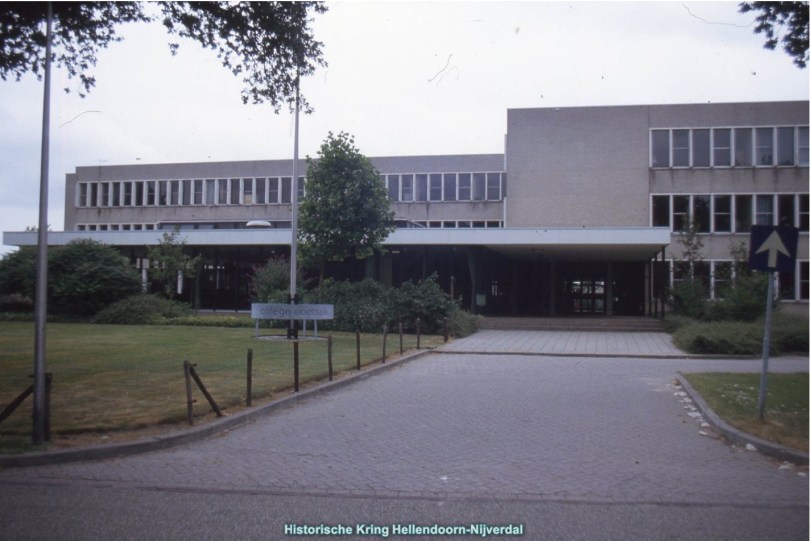

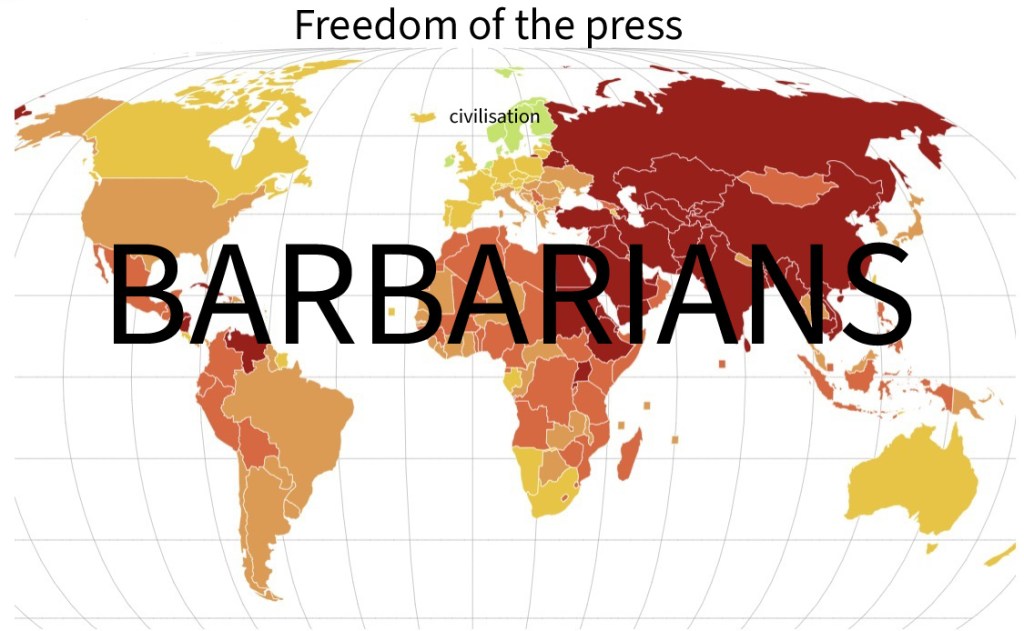


 The Plan For The Future