2017 Jeep Grand Cherokee in Makarska, Croatia. Elishur19.

The law of diminishing marginal utility

Imagine you are fond of pizza and very hungry. If I offer you a pizza, you will be very grateful. If, after you have finished, I present you a second, you will not decline, but you will be a bit less grateful. If I offer you a third, you might still eat it, perhaps not to offend me. The fourth pizza you would decline. You might give a lame excuse like nausea to explain your peculiar behaviour. Before the fifth pizza is offered, you may already have sneaked out of my home.

Welcome to the law of diminishing marginal utility. It is a law in economics. It states that the more you have of something, the less use an extra unit has.

It is possible to express the law in terms of money. Suppose you are at a pizza restaurant, hungry, and willing to pay € 12 for a pizza. After eating it, you are not hungry and unwilling to pay € 12 for a second pizza. But if the restaurant owner offers you a discount of € 6, you might accept the offer. A third pizza you may only eat if it is on the house. A fourth pizza you will not eat unless the restaurant owner offers you € 6 to eat it. Eating a fifth pizza might cost the restaurant owner € 12.

number of pizzas eatenvalue of the next pizza in €
0€ 12
1€ 6
2€ 0
3– € 6
4– € 12

What might strike you is that the fourth and fifth pizzas have negative value to you. You are not willing to eat them unless the restaurant owner pays you for it.

Most people have other desires than pizza alone. If you also desire soda, there is a limit to that, too, and at some point, drinking more soda also has a negative value to you. Perhaps you desire a hundred other things, for instance, a refrigerator, and you may even have room for a second, but more refrigerators have no use to you, nor do they fit in your house. And so, the more you have, the less something extra is worth to you, and you might start to think about the future.

Perhaps you have plenty of pizza and soda now, but what about tomorrow and next year, so you might start saving. As we get wealthier, getting more stuff becomes less important to most of us, while certainty about the future becomes more important. At some point, we do not want more stuff, and the law of diminishing marginal utility becomes an obstacle to economic growth.

If you are happy with what you have and care about the future, you may save too much for the economy to grow and capitalists won’t make enough money because they must at least make the interest rate. The law of diminishing marginal utility is, therefore, a grave threat to capitalism. And so is interest. This is where the advertising industry comes in. The trick of advertising is to make us unhappy with what we have and to make us desire more. Buying this or that will make us happier, advertisements promise us.

Fashionable items with a limited lifespan are part of the solution too. It is not always possible to make us desire more stuff, but it is still possible to make us desire new stuff. The dress you bought last year is out of fashion now. In order not to look stupid you have to buy a new one. And then there is technological development. Next year there will be a newer model, and by the way, the software on the old model won’t be supported any more. And of course, luxury items do their bit. Why go for a Volkswagen Polo if you can afford a car with a low marginal sports utility value like the Jeep Grand Cherokee?

Yes, the Jeep Grand Cherokee is an ugly monster, but it is bigger than the Volkswagen Polo and if you can afford to drive it, why not? There is a reason why not.

We, humans, use far more resources than our planet can offer. That’s why capitalism is a grave threat to humanity. Capitalism nowadays is like making us eat the fifth pizza and pay extra for it even though that creates a health hazard while many people are hungry. And there may be no food tomorrow because we have eaten too much today. The Jeep Grand Cherokee is like the fifth pizza. We work hard to buy stuff we do not need. This is how humanity is committing suicide. This can’t go on. There is one obstacle. Businesses must make at least the interest rate, and interest rates below zero are still unthinkable.

In other words, we must learn to care about the future and interest rates may need to go below zero. We must learn to be happy with what we have and settle for less when possible. This may be a grave threat to capitalism for what will happen if we stop spending on excesses? Economists fear that the economy will collapse and that we will be without jobs when business profits decline and interest on debts can’t be paid. That doesn’t have to happen when interest rates are negative. In that case, debts don’t have to be repaid and businesses with little or no profits can survive.

That may seem strange but it is already happening. The law of diminishing marginal utility is kicking in, and it is kicking in big time.

This law affects capital too. If there is only one pizza factory that can supply every pizza addict with one pizza per day, it would almost certainly make a profit. A second factory might make a profit but it might not. And what is more, if the second factory comes into operation, the supply of pizza increases, and according to the law of supply and demand, the price of pizza would drop. That would also cut into the profits of the first factory.

A third factory is even more likely to be loss-making and it could make the other factories loss-making too. At some point, there is little use for capital. That causes the demand for capital to drop and interest rates to go negative. Traditional economics would consider this unhealthy or temporary.

That doesn’t need to be and it can be desirable. Three pizza factories fiercely competing and without profits might be better for consumers than one that is profitable if we assume that pizza is a necessity. Everyone must eat something. There could be an ample supply of investment capital at negative interest rates so profits may not be needed for pizza factories to stay in business.

A problem is that excess investment capital can go to businesses that suicide humanity by using scarce resources to produce the stuff we do not need. Negative interest rates can help to make the economy sustainable but only if the excesses do not happen. This would require governments to ban or tax excesses or to regulate their production so that these products don’t have a harmful impact. That would make them a lot more expensive.

But the fun of driving a Jeep Grand Cherokee, apart from giving environmentalists the middle finger, comes from the fact that you can afford to drive it, so the fun may be even greater when it is three times as expensive.

When people start saving more and businesses hardly make profits then where does the money go? It can be used to make the economy sustainable. It can go to people in need who still have use for money. The money can help to reduce poverty and it can be used to address pressing needs in society. And we could have far more leisure time. What’s the point of working so hard for things we do not need? We may only have to work for twenty hours per week and still have a good life. It seems possible that humanity will survive capitalism and that capitalism will be transformed into an economic model that can endure for the foreseeable future.

Featured image: 2017 Jeep Grand Cherokee in Makarska, Croatia. Elishur19. CC BY 4.0. Wikimedia Commons.

Confucius. Gouache on paper (ca 1770)

Morality Clause

Legal is not always fair

Legal is not always fair. The role of morality in law may be too small. People have different views about right and wrong, so the prevailing view in many Western societies is that people should be free to do as they please unless their actions harm others. Even that view can justify an increased role of ethics in judicial matters. And if moral viewpoints converge, this becomes easier. That begins with setting priorities.

We can get trapped in contentious issues. People reason according to their beliefs and political views. Debates are often framed to make the opposing view look evil:

  • Leftists might be concerned with the rights of criminals in jail but not with the rights of unborn children who are innocent of any crime.
  • Conservatives might be concerned with the fate of unborn children but as soon as they are born in misery their compassion suddenly vanishes.

Science indicates that the degree to which a fetus is a baby gradually increases during the pregnancy. If you are religious and presume that an unborn child has a soul, it becomes a discrete process. When the soul enters the fetus, it instantly becomes a baby. These are two fundamentally different views. If you have one of those particular views, it may be hard to stay moderate. If there is a soul then abortion is killing an unborn child. If there is no soul, and a fetus has an awareness similar to a mouse, it is about the right of women to decide about what happens inside their bodies.

Moral issues are often complicated. Euthanasia can be an act of compassion but it can become a way of getting rid of undesired people. Perhaps criminals have mental issues, but making them suffer can give victims a sense of justice. In business, morality long took the back seat. In other words, in business, you can do as you please as long as it is legal, and making money is a virtue.

In some areas, ethics are needed urgently. Research has shown that CEO is the job with the highest rate of psychopaths while lawyer comes in second,1 possibly because traders in financial markets were not included in the survey. Media came in third because it was a British research. Salespeople make a rather unsurprising fourth position.

Vulture capitalism

Rural areas in the United States are turning into an economic wasteland. Closed-down factories and empty malls dominate the landscape. Communities are ravaged and drug abuse is on the rise. One reason for this to happen is that jobs are shipped overseas. Several factors contributed to this situation, but a major cause is CEOs not caring for people and communities. In many cases other solutions were possible.

Paul Singer is wealthy hedge fund owner. He made a fortune by buying up sovereign debt of countries in trouble such as Argentina and Peru at bargain prices and starting lawsuits and public relation campaigns against those countries to make a profit on these debts at the expense of the taxpayers of these countries.2

In the United States Singer bought up stakes of corporations in distress. He then fired workers so that the price of his shares rose. In the case of Delphi Automotive he and other hedge fund managers took out government bailouts, moved jobs overseas, and cut the retirement packages of employees so they could make a huge profit.2

Vulture capitalists prey on patients too. They buy patents on old drugs that are the standard treatment for rare life-threatening diseases, then raise the price because there is no alternative. Martin Shkreli was responsible for a 6,250% price hike for the anti-retroviral drug Daraprim. Many people died because of his actions.3 Perhaps he should be in jail for being a mass murderer but he is not because what he did is legal.

Profiteering at the expense of the public

In the years preceding the financial crisis of 2008 there was a widespread mortgage fraud going on in the United States. Few people have gone to jail because much of what happened was morally reprehensible but legal. Financial executives and quite a few academics share this view.4 And so nothing was done. Perhaps fraud can be proven some day but that may take years if it ever succeeds.

Healthcare is another domain for fraudsters and unscrupulous corporations. Patients are often not in a position to bargain. Perhaps that is why privatised healthcare performs poorly compared to government organised healthcare. In 2015 the Dutch government introduced the Social Support Act, making municipalities responsible for assisting people who are unable to arrange the care and support they need themselves.5

The municipalities were ill-prepared so fraudsters took advantage of the situation. Most businesses are legitimate but several private contractors enrich themselves at the expense of taxpayers and people in need. The Dutch prosecution is overwhelmed by fraud cases and it is not always possible to get a conviction because of loopholes in the law. Until these loopholes are fixed, several schemes remain legal.6

In the United States hospital bills are feared. A routine doctor visit for a sore throat can result in a $ 28,000 medical bill.7 And so many people in the US go without healthcare because they can’t afford it. Efforts to reform healthcare in the US haven’t succeeded, perhaps because those who send $ 28,000 bills for sore throats have plenty of money to bribe politicians into keeping the US healthcare system as it is.

Attributes of the law

First we have to recognise why it is so hard to prevent these things from happening. On the political front it is because once politicians are elected, they can do as they please until the next election. Lobbyists prey on them. Citizens have few means of correcting politicians, except in Switzerland. The Swiss have direct democracy. Swiss citizens can intervene in the political process when they see fit and fix laws if they think that is needed. Direct democracy might help to fix many of these issues.

Laws are often made with the best intentions but it is not possible to test them in a simulation to see how they will work out in practice. So once laws are enacted, unexpected problems pop up. The process of law-making is slow and it can take years before issues are fixed, at least if they are fixed at all because law-making is often political process, and that can make it rather complicated.

Even more importantly, the underlying principles of law benefit the savvy. The system of law is the way it is for good reasons. No one should be above the law and people as well as businesses should not be subject to arbitrariness. The rule of law implies that every person is subject to the law, including lawmakers, law enforcement officials, and judges. It is agreed that the law must be prospective, well-known, and general, treat everyone equally, and provide certainty. Only, in reality, not everyone is treated equally.

Laws being prospective means that you can only be convicted for violation of laws in force at the time the act was committed. Legal certainty means that the law must provide you with the ability to behave properly. The law must be precise enough to allow you to foresee the possible consequences of an action. Businesses prefer laws to stable and clear. Corporations invest for longer periods of time. If laws change they may face losses. If laws are not clear, investments won’t be made, and a country may end up poorer.

With the rise of neo-liberalism came the era of shareholder capitalism. Making profits became a goal in itself. Greed was considered good. Wall Street traders and CEOs were seen as heroes even when they were just psychopaths outsourcing jobs for profit. There was little consideration for the planet, people and communities. Consumers preferred the best service at the lowest price so businesses were pressed into cutting costs and moving jobs to low-wage countries. Ethics in business were a marginal issue at best.

A bigger role for ethics

More and more people believe that ethics should play a bigger role in business. Activists pressure corporations. That may not be enough. Corporations must be competitive and can’t make real changes if that increases their costs. Levelling the playing field with regulations is an option but that may not be sufficient. The law needs a morality clause, making unethical behaviour unlawful, even though the action itself is not explicitly stated as forbidden in the law. That increases the cost of unethical behaviour.

A randomly selected jury of laypeople could make verdicts on these issues. Perhaps the legal profession should stay out of these matters because it is not a legal matter in the first place. There are a few issues that come with a morality clause. Ethics in business can be a political issue. People may differ on what kind of behaviour is ethical and people may differ on what kind of unethical behaviour should be punished.

Introducing a morality clause to enforce ethical behaviour in business affects legal certainty. It will be harder for businesses to predict whether or not a specific action is legal. Business owners may incorrectly guess moral sentiment and believe they did nothing wrong. The uncertainty that comes from that might reduce the available investment capital for questionable activities. But that may not be so bad. And if immoral profits and bonuses from the past are to be confiscated, it affects the prospectiveness of the law.

International treaties like the Transatlantic Trade and Investment Partnership (TTIP) have been set up to accommodate the unethical practices of corporations and to protect those corporations from making those unethical practices unlawful. That is often what reducing the regulatory barriers to trade like food safety laws, environmental legislations and banking regulations often amounts to in practice.

In most cases, it can be known beforehand what actions are unethical. For instance, investors in corporations that extract fossil fuels should know that burning fossil fuels causes climate change. They are gambling on the future of humanity. So if some countries decide to outlaw the use of fossil fuels then these investors should not be compensated.

Perhaps you have serious doubts about this proposal as it upsets the very foundations of the current system of law. And I can imagine that you think: “Where does this end?” But there is something very wrong with the current system of law. Business interests often take precedence. So do you want the law to protect the psychopaths who maximise their profits at the expense of people and the planet? And do you really think that the law can be made without failures so that corporations and savvy people can’t exploit them?

Featured image: Confucius. Gouache on paper (ca 1770).

1. The Wisdom of Psychopaths: What Saints, Spies, and Serial Killers Can Teach Us About Success. Kevin Dutton (2012).
2. The death of Sidney, Nebraska: How a hedge fund destroyed ‘a good American town’. Charles Couger, Alex Pfeiffer (3 December 2019). Fox News. [link]
3. Vulture capitalists prey on patients. The Sacramento Bee (22 September 2015). [link]
4. How Mortgage Fraud Made the Financial Crisis Worse. Binyamin Appelbaum (12 February 2015). New York Times. [link]
5. Social Support Act (Wmo 2015). Government of the Netherlands. [link]
6. Gemeenten starten onderzoek naar Albero Zorggroep. Eelke van Ark (31 October 2019). Follow The Money. [link]
7. How a routine doctor visit for a sore throat resulted in a $28,000 medical bill. CBS News (31 December 2019) [link]

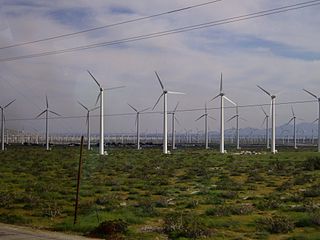
Beautiful countryside in southern California

Capital for the future

Making the economy sustainable may require an unprecedented amount of capital in the form of knowledge and outfits like solar panels, sustainable farms and energy-efficient transportation systems. It is hard to imagine that it can be done. And imagining it is still a lot easier than really doing it. It is going to require some economic magic to divert investment capital from destructive activities to the future of humanity. We may need more useful capital and less consumption.

Perhaps the invisible hand can be of some help. It is easier to finance a great endeavour from investments than from taxation because nobody wants to pay taxes but everybody is happy to invest. It is the secret of the success of the European empires that conquered the world after the Middle Ages. England, France, Spain and the Netherlands were much poorer and smaller than China, India or the Ottoman Empire, but they didn’t finance their conquests with taxation, but with the use of investment capital.1

Europe won out because European conquerors took loans from banks and investors to buy ships, cannons, and to pay soldiers. Profits from the new trade routes and colonies enabled them to repay the loans and build trust so they could receive more credit next time.1 The same logic may need to be applied to making the economy sustainable. The challenge is so enormous that it may never be possible to finance it by taxes. Nowadays interest rates are so low because there is plenty of investment capital.

It’s the economy stupid!

It is often argued that the economy is unsustainable because of short-term thinking. The economy must grow in order to have positive returns on investments. And it is believed that returns on investments need to be positive otherwise the economy would collapse. The economic time horizons of individuals are reflected in their time preferences. The time horizon of the economy as a whole is reflected in the interest rate.

The lower the interest rate, the longer the time horizon of the economy could be. The following example from the Strohalm Foundation can illustrate this:

Suppose that a cheap house will last 33 years and costs € 200,000 to build. The yearly cost of the house will be € 6,060 (€ 200,000 divided by 33). A more expensive house costs € 400,000 but will last a hundred years. It will cost only € 4,000 per year. For € 2,060 per year less, you can build a house that lasts three times as long.

After applying for a mortgage the math changes. If the interest rate is 10%, the expensive house will not only cost € 4,000 per year in write-offs, but during the first year there will be an additional interest charge of € 40,000 (10% of € 400,000).

The long-lasting house now costs € 44,000 in the first year. The cheaper house now appears less expensive again. There is a yearly write off of € 6,060 but during the first year there is only € 20,000 in interest charges. Total costs for the first year are only € 26,060. Interest charges make the less durable house cheaper.2

Without interest there is a tendency to select long-term solutions. Interest charges make long-term solutions less economical. Interest promotes a short-term bias in the economy. It may explain why natural resources like rainforests are squandered for short term profits. If interest rates are high, it may be more profitable to cut down a rainforest and to put the proceeds at interest rather than to manage the forest in a sustainable way.

Only, things are not as simple as the example suggests. For example, the building materials of the cheap house might be recycled to build a new house. And technology changes. For example, if cars had been built to last 100 years, most old cars would still be around. This could be a problem as old cars are more polluting and use more fuel. Nevertheless, the example shows that long-term investments can be more attractive when interest rates are lower.

This also applies to investments in renewable energy. For instance, a solar panel that costs € 100, lasts 15 years, and generates € 150 worth in electricity in the course of these 15 years, is feasible at an interest rate of 5% but not at an interest rate of 10%. Many investments in making the economy sustainable may have low returns and are only feasible when interest rates are low. Low and negative interest rates can also deal with low economic growth. That may be needed for living within the limits of the planet.

Living within the limits of the planet

When interest rates are negative, the time horizon of the economy could go to eternity so that it makes sense to invest in making the economy sustainable. A few examples from history can illustrate this. In the Middle Ages some areas in Europe had currencies with a holding fee like Natural Money. As there hardly was economic growth, interest rates were negative. It was the era of Europe’s great cathedrals. These cathedrals were built for eternity. As better investment opportunities were absent, wealthy towns people spent their excess money on cathedrals.3 For similar reasons, the people of Wörgl planted trees as the proceeds of the wood were expected to occur in the distant future.3

A bit of calculus shows why. At an interest rate of 5%, putting € 1 in a bank account turns into € 1,05 after a year, so you would rather have € 1 now than in one year’s time, even when you need the money in one year’s time. That’s because you can put the money on a bank account at interest. At an interest rate of 5%, € 100 in one year’s time is worth € 95.25 now. The distant future has even less value. The same € 100 in one hundred year’s time is worth only € 0.59. And € 100 after 1000 years has no value at all in the present.

At an interest rate of -5%, you would prefer to have the money when you need it, otherwise you would end up with less. At an interest rate of -5%, € 100 in one year’s time would be worth € 105. The same € 100 in one hundred year’s time would be worth € 13,501 now. And € 100 after 1000 years would be worth more than everything there is in the present. Income in the distant future is also very uncertain, so it is unlikely that investors will shift their time horizon to 1,000 years, but this logic may help us to come into terms with the limits our planet poses on human activities.

Living within the limits of the planet may require unprecedented investments in the future. These investments may require low or even negative interest rates as their returns may be low. Only low and negative interest rates can make these investments economical. Everyone who has money to save can help by shifting money from consumption to saving and investing. The more people act like capitalists, the lower interest rates may go, and the more sustainable the economy may become.

Capitalists think that money spent on a frivolous item is money wasted, because when you invest your money, you will have more money that you can invest again. Capitalists hardly care about interest rates. They will save and invest anyway because of their capitalist spirit. Rich people may be encouraged to save even more if luxuries that use a lot of natural resources and energy aren’t available any more. One can think of luxury yachts, private jets, but also of travel by airplane for holidays. When energy becomes a constraint, local products may replace long-distance trade.

Featured image: Beautiful countryside in southern California. James McCauley (2005). Wikimedia Commons. Public Domain.

1. A Brief History Of Humankind. Yuval Noah Harari (2014). Harvil Secker.
2. Poor Because of Money. Henk van Arkel and Camilo Ramada (2001). Strohalm.

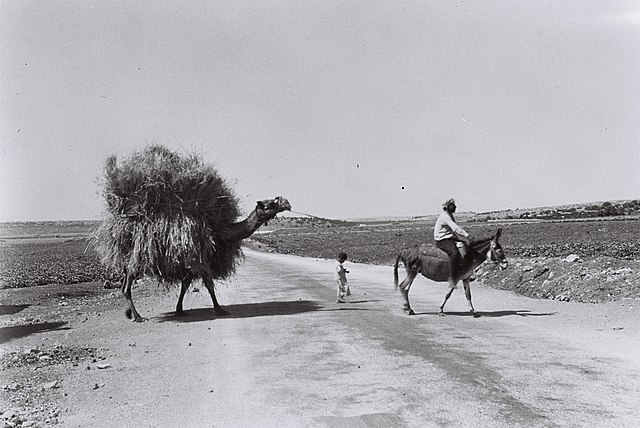
Arab farmer taking straw to his farm. Public domain.

Clutching at a Straw

Fleeing is no longer possible

As mentioned earlier, I read The Limits of Growth in my late teens. Having hoped to live for another sixty years or so, I was informed by that book that a computer had calculated I would live to see the end. And who would argue with a computer, an entirely logical device? Time was ticking. Tic toc tic toc. As a child, I dreaded the future whenever the song Vluchten Kan Niet Meer (Fleeing Is No Longer Possible) was on the radio. It unnerved me profoundly, as it painted a dismal future in which nature would be gone. The ticking clock had made me run for cover as a toddler. That gloomy mood faded when I went to secondary school, and for a long time, the coming doom hardly crossed my mind.

That was until I read The Limits of Growth. It featured dreadful graphs showing decades in advance how resources would run out, and billions of people would die. Two decades had passed since then, and everyone had ignored it. It led me to join a local environmentalist group, Friends of the Earth, after finishing my studies. That was in 1993. My political affiliation had gradually trended to the centre-left. For a long time, I had believed that there was no alternative to capitalism, but gradually I realised that it also meant there was no alternative to doom. And so there had to be an alternative. It was impossible, but it was necessary. And that thought settled.

Friends of the Earth is an international organisation known in the Netherlands as Milieudefensie, with local activist groups, most notably in student towns like Groningen. We researched issues and tried to convince people. Friends of the Earth also lobbies with politicians and pressures corporations. We were a hodgepodge of students, people with jobs, unemployed, activists, and ordinary people, led by a woman in her thirties who acted like an Akela in the Boy Scouts. A 22-year-old student was her boyfriend.

We were not as militant as Greenpeace, but sometimes we protested. Once, we blocked the entrance of Groningen Airport to object to the government subsidies for the airport. The police came and told us to leave, which we did. It made me realise that activism wouldn’t solve the world’s problems. What could you do? If you went extreme and vandalised property, people would hate you for it, and it wouldn’t change the world. Starting a political party wouldn’t help. Think of what must be done and promise that you will do it. Few will vote for that. Even the most ‘extreme’ environmental party, the Green Party (GroenLinks), didn’t have what it takes, and they had only a few seats. That did not bode well.

And finally, if the Netherlands was going to do it, but no one else would, it wouldn’t help. And then there is the competition in the economy. Businesses will go bankrupt if they do more to save the environment than others. Their products would be more expensive, and we wouldn’t buy them, except for those who care enough for the environment to pay more. The group had about thirty active members and was divided into subgroups centred around specific issues such as vegetarianism, factory farms, air pollution, and economics. Economic issues caught my interest.

My mind was often grinding. It was like Hegelian dialectic, so trying ideas and looking for reasons why they would fail. You can ask hypothetical questions. Is it possible to make capitalism sustainable and just? Fat chance. Wasting is the essence of the system. If capitalism doesn’t solve these problems, then why not try socialism? Would that work? Probably not. People want more stuff. Democracy? Authoritarianism? Likely not. Can we make nature sacred? They will laugh at the idea. Money is sacred. All I got was an increasing pile of objections as to why ideas don’t work. I was too realistic to get carried away by any idea. History is full of examples of ideas going wrong. You can discard most ideas without even trying. That was the benefit of knowing history all too well.

No frivolous accounting

Friends of the Earth in Groningen was a small outfit, so compared to the art festival at the university campus, the yearly budget was negligible, about 6,000 guilders (€ 2,723). It covered the group’s activities. We were short of money. That changed once I became the treasurer. I took measures to make expenses match project income. Everything had to be accounted for. I eliminated the use of cash and required everyone to deliver receipts and state their purpose. I transferred the money via bank transfer, so it was clear where the money went. Yet, luck played a major role.

Each year, we received two grants of 2,500 guilders (€ 1,134), one from the province of Groningen and one from the municipality of Groningen. The provincial administration had just denied the allowance we had received in previous years. We could appeal to the decision at the Appeals Commission, which we did. Then I went to the Provincial House to discuss the issue with the official responsible for the grant. He explained that our request had been late and that the money jar was empty. I asked him whether there was any point to the appeal. He said no. It was a done deal.

So, after receiving an invitation to a hearing at the Appeals Commission, I decided not to waste my time going. After all, it was a done deal. One of the commissioners called me after the hearing to ask why we hadn’t shown up. And I told him. That probably touched a nerve, as it gave him the impression that no one took the Appeals Commission seriously. Our appeal was granted, and we received the subsidy. As I had made a budget that didn’t anticipate this money and had implemented budgetary discipline, we ended up with income exceeding expenses.

Once over a cliff, a cartoon character might clutch at a straw to save itself. Only in animated pictures does the straw hold. The Dutch saying ‘clutching at a straw’ means grasping at your last hope. On economic issues, the local group of Friends of the Earth worked together with Strohalm, or more precisely, Rinke. He lived in Groningen and was actively engaged in Strohalm and its ideology. He was on social benefits, and his career was working for Strohalm and Friends of the Earth. He was serious about his job and worked hard. The meaning of the Dutch word strohalm is straw.

The people of Strohalm claimed that the economy must grow to pay interest. Interest rates can’t go below zero, and if debts aren’t repaid with interest, the financial system collapses, so it is grow-or-die. And interest adds to the principal until infinity. To deal with that problem, I later figured that central banks print money to fill the gaps and aim for inflation, which is why it hadn’t collapsed. Sound accounting attracted me, so this made me think. And the idea of economic growth is frivolous accounting if you are the accountant of our planet’s resources. Many people worry about government deficits, but not about the overexploitation of the earth. And so, the cranks run the show in this world with insane planetary accounting schemes and delusions about growth. And the global economy and financial system create oceans of wealth and deserts of poverty, Srohalm argued.

Strohalm aimed to end interest by charging a holding fee on money. You don’t have to pay the fee if you lend your money. In this way, it could be attractive to lend money without interest. Natural Money as an idea thus already existed back then. Silvio Gesell introduced the holding fee in his 1916 book The Natural Economic Order. Strohalm also promoted local money. And Strohalm promoted local solutions to shield the local economy from international financial markets, such as local currencies.

When you buy groceries at your local supermarket, you have no clue where your money ends up and what it helps to accomplish. The supermarket chain may use it to build a new distribution centre. One of the contractors there might exploit immigrants. It is hard to do something about that, but it made me aware of the impact my money has on the planet and on other people. I moved most of my savings to an ethical bank, first ASN and later Triodos. Later, I also started buying Fair Trade products.

With local money, you could oversee what it accomplishes. And so, Strohalm began a LETS (Local Exchange Trading System) in Groningen. We exchanged goods and services using fictitious currency with a holding fee. It soon dawned upon me that LETS would accomplish very little. It was more of a tea party than a viable alternative for the regular economy. The exchange circle had a few hundred people, and many weren’t very active, so there were only a few products and services. And most weren’t things you needed. You might get a Reiki healer but not a handyman.

If your skills had market value, you wouldn’t exchange them in the LETS circle because you could get guilders you could spend everywhere. Thus, it was not only a matter of scale but also of commitment. The people in the exchange didn’t offer valuable skills or products, either because they didn’t have them or because they could fetch more in the market. You could say that people value money more than community, but you could also say that people tried to make money from their hobby, so they didn’t have to work for a living.

The people in such a scheme were mostly idealists who wanted to change things rather than people who would get things done. For a closed economy to work, the community needs scale to fulfil most of its needs. And it must produce tradeable goods and services to fulfil the remainder of its needs. Above all, building such a community requires commitment. Everyone must contribute, make themselves useful by acquiring new skills if needed, and accept a lower standard of living because they forgo the benefits of the division of labour in international markets. How can you achieve that?

Friends of the Earth Groningen once held a camp to work on our persuasion skills. Rinke was one of the organisers. He specifically praised me and called me an example for the others. That couldn’t be because of my communication skills. What set me apart was that I knew very well what other people were thinking and how they would react. My parents and some of my friends disapproved of my joining the environmentalists. And I didn’t try to convince others of my views, but merely tried to figure out how much they were willing to go along with them. Everyone knows that dumping garbage in nature is not okay. You can use that.

My parents found environmentalists a nuisance at best. When, in 2012, the socialists, led by Diederik Samsom, had a chance to win the elections, they were alarmed because Samson had been with Greenpeace as a student. A former environmentalist running the country was their worst nightmare. Perhaps you can see the irony of that. They considered voting for the conservative liberals (VVD) rather than the Christian Democrats (CDA), for which they had voted all their lives, to prevent that from happening. And so, there is no point in arguing. Did I ever convince anyone of my political views as a teenager? Probably not. That lesson I had learned already as a young man.

Few people are willing to change their lifestyles for the welfare of animals or future generations. Blocking roads would make people angry. People want to drive cars and don’t care about climate change. Strohalm proposed a tax on air travel because air travel is highly polluting and a luxury. Environmental taxes would raise prices and infuriate people. Taxes have caused revolutions. People aren’t willing to give up their right to murder their children. I didn’t give up on environmentalism just because we were heading for the apocalypse, but annoying people wasn’t the way to solve the problem. Only that wasn’t particularly satisfactory. If you accept doom, you might as well commit suicide right away. And so, there must be a way, even if there isn’t.

And there were issues with interest-free money. Why would you lend out money without interest if you could receive interest elsewhere? If you can borrow money at an interest rate of zero, you could borrow as much as you can and put it in a bank account at interest. That is not going to work. That was my grinding mind, looking for failures. It is an occupational hazard if you work in IT. A programme always has errors, and it is better to find the bugs before running it. Cleaning up the mess afterwards is far more work. Still, if interest is the root cause of social and environmental problems and can destroy human civilisation, we must make interest-free money work, even if it never will.

And perhaps it could work. During the Great Depression, a small Austrian town, Wörgl, had money featuring a holding fee. It was a stunning success. A similar money had existed in ancient Egypt for over a thousand years. The Egyptians used receipts for grain stored in the granaries as money. These receipts had a holding fee to cover storage and putrefaction. A Strohalm book related it to the biblical story of Joseph, who supposedly had introduced these granaries to weather seven lean years. If it can work for a thousand years, it can work forever. If only we could uncover the key to these successes. That was a reason not to let go of the idea. Maybe the impossible is possible.

In 1997, I moved to Sneek to live with my wife, Ingrid. Sneek had no local Friends of the Earth group, so I stopped being an active member, but I kept using public transport. Not owning a vehicle while working in IT consultancy for 10 years was a considerable sacrifice. Living in Groningen had made that possible. It was a remote corner of the country. My jobs were either in Groningen itself or so far away that I had to stay in a hotel. In Sneek, I could use Ingrid’s mother’s car if needed. Still, life without a car is quite uncomfortable. And my sacrifice was pointless. More and more people drove SUVs. They didn’t care. They figuratively gave me the middle finger, and their message was, ‘If you don’t ruin this planet, we double down our efforts.’ That was not what these people were thinking, but terrorists at least believed they were doing it for a good cause, and these SUV drivers must have known that they were doing something wrong, at least if they had a conscience.

If you can do an IT consultancy job for ten years without owning a car, few people really need one. But who will tell them to ditch their cars and move closer to their jobs, or cram into crowded buses and trains for a journey that lasts up to twice as long? We can replace vehicles with public transport, but few people would do that voluntarily. The Dutch nickname for the car is ‘Holy Cow’ for a reason. In 2003, Ingrid’s mother’s vehicle broke down, and she didn’t buy a new one. Having never aspired to higher moral standards than others, at least if they are pointless, I bought a car. It must help. Otherwise, you are just having a hard time, with nothing good coming of it. We used the car to go to my parents’ home in Nijverdal or the forest in Rijs, as there was no forest near Sneek.

Becoming your avatar

Between 1998 and 2002, I was a freelance IT specialist. Lots of money came in, so there was some capital to invest. My first investments were small and unprofitable because I believed that profits mattered. At the time, loss-making internet startups did well in the stock market, while profitable corporations did poorly. Understanding financial markets seemed challenging, which made me think I had to stay informed and join the IEX investment message board. At the time, I still occasionally said, ‘With SuperB***,’ when picking up the phone. That once led to a hilarious moment when I expected a call from Ingrid, but it turned out to be from Martien. And so, that name became my avatar. I also took the Financial Markets course at the Dutch Open University.

Later, I changed my avatar name after someone noted that SuperB*** sounded arrogant. From then on, I never answered the phone, saying, ‘With SuperB***.’ That was no longer needed to feel better. A strange thing about avatars is that you somehow become this person, SuperB***, on the message board. People don’t know you, only the avatar. Readers began to expect serious commentary and strong writing from SuperB***. And so, I introduced a few other avatars with fanciful names like IEKS! (a Dutch exclamation of shock that sounds like IEX) or Schaduwschaap (shadow sheep) to be someone else and have fun. And I wasn’t the only one. Others also came up with fanciful names like mooiepipo (beautiful clown), danger money, !@#$!@! (some curse) or Schraalhans (a Dutch joke). Some also used multiple avatars, so the message board became a playground for practical jokes.

Usually, the name had some witty meaning. It could be something like this, ‘Buy And Hold (BAH) is for sheep and sheep say bah and like to live a calm life in the shadows, hence shadow sheep.’ Walhalla Raaskalla, which means something like mad ravings in the heavens of the Viking gods, just sounded funny. And it rhymed. MMWOPS stood for ‘Making Money While Other People Sleep.’ It was the name of an American scam company defrauding the Dutch shipbuilder RSV, which went bankrupt in 1984 despite receiving two billion guilders in government support. Most of my avatars didn’t last long, except Dikkevettebeer (big fat bear), who believed the stock market would crash to zero and the gold price would rise to infinity. Bears believe that stocks go down, and the stock market went down at the time, so the bears grew fatter.

Some people were promoting certain stocks and hoped others would buy them, so they could profit. Some people were there to defraud others. And you couldn’t see each other face-to-face, which promoted paranoia. You see that on social media today. Can you trust other posters? Do they have a hidden agenda? There is a lot of misinformation. Some governments and corporations pay people to spread their propaganda. Some believe other posters who disagree with them get payment.

A colourful investment fund manager, Michael Kraland, ran the message board. He wrote entertaining commentaries. At the time, he rode the hype of the internet and telecom bubbles. His strategy was risky and not sound advice to inexperienced investors. It was even more irresponsible because his boasting made uninformed people invest in these crappy stocks. And because he was a boaster, he received nasty negative comments on the message board, including unproven accusations of wrongdoing. And perhaps also because he was a Jew, which seemed not accidental, as he worked in finance, and there are many Jews in finance. And even though, as far as I know, he never did anything illegal, I considered him a dubious character.

You could witness what Keynes called ‘animal spirits’ on the message board, experience the fear and greed of small investors, and become part of it. You hope your investments do well and fear they will not. I traded in stock options and made a few huge gains, but overall, I lost. Human emotions often drive the decisions people make about their investments. I was not much different. Those who had success imagined they were geniuses. And then they lost it all when the bubble collapsed. I wasn’t good at picking stocks or trading, but I didn’t take many risks.

Introduction to conspiracy thinking

After some time, a day trader named Cees joined the IEX message board. A day trader is someone who tries to make a living out of trading rather than investing. About 90% of the people aren’t successful in trading and lose money, including me, for I have tried trading stock options for a while. Cees began sharing conspiracy theories from US message boards and websites. One was about the Plunge Protection Team. If the markets were about to collapse, a secretive group called the Plunge Protection Team would come to the rescue. A stock market crash could undermine confidence in the financial system run by Wall Street. They couldn’t allow that to happen.

Many ridiculed Cees at first, but after the internet bubble had popped and even more so after 9/11, markets often miraculously recovered due to massive buying in the futures markets just before they crashed, so his credibility gradually rose. It probably wasn’t entirely true, as the stock markets declined dramatically between 2001 and 2003 during one of the most epic bear markets in recent history. Still, something fishy was definitely going on there. And the gold price regularly plummeted due to sudden selling at irregular hours when most markets were closed.

Cees believed central banks were orchestrating this to bolster confidence in their currencies. He wrote that if the gold price were to rise, the public would lose trust in central bank money. In times of thin trade, you can sell a bit of gold to make the price drop. The trick was to break a trend. Trend followers, called technical traders, would join the bandwagon and sell more gold, lowering the price further, in a manipulative cycle. The purpose of the trade was to bring the price down, which made sense because if a rational investor planned to sell gold, he would seek the best price. And these sales at quiet hours caused the price to crash. These kinds of intriguing posts kept the reader’s attention.

The gold market was rigged like most markets, but not in this spectacular manner, other pundits explained. They would look at traders’ positions in the Commitment of Traders (COT) report to predict price movements. So, if the category of small speculators had loaded up on precious metals, prices would probably go down. Gold mining corporations sell gold in advance on futures markets to make their budgets predictable and plan their operations. The bullion banks were the intermediaries. These banks sold that gold in futures markets to hedge their risk and played the market to enhance their profits. Successful traders exploit our emotions with deception. They spread false information about central banks selling gold to scare suckers on gold bug sites into selling. Once the bullion banks had sold all their inventory on the futures market, they might crash the price to repurchase it at a lower price. And so a veritable conspiracy theorist should have asked, ‘Who profits from these conspiracy theories?’ You can ask the same question about many other conspiracy theories. Who profits from undermining trust in society and its institutions?

Meanwhile, I found alarmist websites about Peak Oil, claiming that oil production was about to decline. There were also websites denying global warming. Most people wouldn’t take them seriously and believe what the scientists say, but I looked into them to see what they had to say. Having studied the philosophy of science, it was not hard for me to uncover the brazen lies, falsifications and misinterpretations of the facts in the climate change denial scene. And they claimed climate scientists committed fraud. People want to believe it. Like my sister once said, ‘I will believe in Santa Claus as long as he brings me presents.’ The benefit of denying climate change is having the comfortable feeling of not needing to change your excessive consumerist lifestyle. The Internet proved to be an ideal platform for cranks to spread their nonsense, making me think there would soon be, like Peak Oil, a time of Peak Bullshit, where the truth would have gone lost entirely. Only, I never thought of what would come after that. The name suggests that after reaching a peak, bullshit would decline.

There was reason to be suspicious. The United States was the centre of a global empire financed by the US dollar’s reserve status, so the Powers That Be (TPTB) would, in all likelihood, protect the financial system at all costs. A collapse could mean the end of their trade and usury empire and their insane profits. I had already bought gold for other reasons and didn’t trust financial markets or those who operate them. And so these stories intrigued me, and I began to visit the sites Cees mentioned. American gold and bear websites complained corporations pumped up profits with frivolous accounting, thereby abandoning the tedious Generally Accepted Accounting Principles or GAAP, which made me smile because GAAP is Dutch for yawn. For the record, a bear is an individual who believes markets will go down and invest accordingly, while a bull thinks markets will rise and invest accordingly.

Those running the financial markets might be pulling out every lever to keep the Ponzi scheme of interest-bearing debt going. Debts continued to grow, as did interest payments, so there could soon be a day of reckoning. I had read ‘The Limits of Growth,’ so I knew that collapse was inevitable. The bear websites reminded me of that. If the sky has come down on you once, as it did to me as a student, you worry it might happen again. It made me on edge concerning my investments, which wasn’t helpful for profits. Gold was a long-term investment, as owning gold could help weather a financial collapse, so I didn’t care much about gold price swings. I sometimes hoped that the corrupt system would collapse, but that was because I hadn’t fully considered the consequences. If you come to think of it, it is unlikely that something good would come out of it.

Back then, conspiracy websites appeared reasonable because they investigated issues that the mainstream financial press did not. But it is a slippery slope. There are all kinds of secret goings on, but the imagination of the conspiracy theorists has no limits. You can go nuts if you don’t perform a regular reality check. Your beliefs will get farther from reality. When I revisited these sites in the early 2020s, they had gone delusional, disseminating misinformation about vaccinations, global warming and the 2020 US elections. The Dutch would call them Wappies. They never ask themselves, who profits from our nuttery? But also, if you rationally look at reality, you might go insane as well. The world is insane.

In 1999, I had already bought my first gold. The gold price had reached historic lows. Gold mines were loss-making and closing, making me smell total apathy toward precious metals, suggesting a generational low point. It made me think that it could be the beginning of a long-term trend of rising gold and silver prices that might last a decade or more. And feeling that an apocalypse could come, it was an insurance. And so, I went to my bank to open a gold account. They sent an investment advisor to talk me out of it. He said, ‘No one does that anymore. I know a man who has had a silver account with us for two decades. Silver has gone nowhere all that time. Gold mines are making losses because the price of gold is only going down. You should invest in the stock market instead. Stock prices only go up.’ It reinforced my belief that it was the perfect time to buy gold, so I pressed on and opened a gold account. Perhaps the investment advisors at the bank office had a good laugh that day.

Nijverdal, where I lived as a child, was the scene of a gold rush in 1901. It was the only place in the Netherlands that ever had a gold mining operation. The rush was short-lived because the ore concentration was lower than previously thought. In Sneek, I bought a goldsmith’s home. That is an interesting set of coincidences. There are no precious metals accounts anymore. Today, precious metals ETFs are essentially the same. I had gold coins in a safe-deposit box at a bank to weather a possible financial collapse. Later, I also acquired silver bars and coins, about 75 kilogrammes in total, and stored most of them in a safe deposit box at another bank. I did this, fearing financial collapse due to reckless debt creation and humanity’s depletion of resources.

A thought that didn’t die

In 2001, after the Internet bubble had popped, I pitched interest-free money on the IEX message board. My lack of financial knowledge didn’t deter me. Everyone can participate in a debate on a message board, so you can exchange thoughts with people you wouldn’t meet otherwise. Others rebuked me time after time and pointed out my errors, so I gradually learned. Lengthy exchanges over several years resulted in unwieldy discussion threads. As these arguments proceeded, my knowledge of finance improved. If you are trying something new, you learn more from open discussions on the Internet than academic debates, often occurring in closed circles under rigorous standards that don’t allow you to speculate. Seeing the issue from different perspectives is more helpful than having in-depth knowledge of a narrow field. My persistence came from an unwavering belief in the insanity of ever-expanding debts and interest payments.

Interest payments destabilise the financial system because borrowers must return more than they borrowed. That money isn’t there, so someone must borrow the difference. If no one else borrows, the government or the central bank must borrow or print new money. Otherwise, a financial crisis and possibly an economic depression will ensue. That is why debts accumulate and why inflation happens. Interest-free money can be sound money because banning interest promotes responsible lending, stabilises the financial system and ends inflation. You don’t lend to someone you don’t trust if you receive no compensation for the risk of not returning the loan. You don’t need to incur more debt to pay off existing debts. That is the theory, but practical issues stood in the way. The market sets the interest rate. If you have money to invest and can receive interest, you won’t lend without interest. That is why economists never took interest-free money seriously. It was a domain of eccentrics like me.

The gold websites familiarised me with the Austrian School of Economics and their adherents, another eccentric bunch. Many were libertarians who saw government, rather than the love of money, as the root of evil. Usually, the private sector can produce a product or service more efficiently than the government, so they believe the government shouldn’t impose regulations or provide public services. They also had ideas about sound money and preventing irresponsible lending. They question banks’ money creation and dispute the need for central banks. Banks create money, which causes inflation. Central banks help banks in trouble, which promotes irresponsible lending. They hoped to limit money creation or return to a gold standard to enforce financial discipline.

They didn’t want governments or central banks to interfere with economic cycles, thereby accepting financial crises and economic hardship to cleanse the excesses. They argued that these corrections are necessary and beneficial as they would terminate poorly run businesses. And things would only worsen if you didn’t allow these natural cycles to run their course. They would argue that the central bank, the FED, had exacerbated the Great Depression and that its policies had contributed to the 2008 financial crisis, as its support for commercial banks had promoted reckless lending. They have little regard for mainstream economics, which underpins government and central bank actions to manage the economy, or what economists call fiscal and monetary policies, thus running government deficits, setting interest rates and printing money.

These issues troubled me as well, as did reckless lending. And so, we had a common ground. Paying interest on existing debts with new ones is fundamentally unsound. To me, funny accounting is an abomination and the basis of corruption. Banks profit from creating money. Inflation is the price we pay for their profits. Banks steal from us, most notably people with low incomes and those who don’t own stocks or real estate. If real estate values rise, so do rents, benefiting homeowners at the expense of renters. The underlying cause is usury, thus charging interest on money and debts, but few people notice. By their lending, banks create money and demand more in return, so we need more money to prevent the scheme from collapsing. And if the scheme collapses, like it nearly did in 2008, that could be the end of civilisation as we know it. For adherents of the Austrian School, charging a fee on currency and banning interest are out of the question, as they run counter to their view of ‘free’ markets. Those who accept a wage below subsistence level are free in their view, even when slaves have a better life.

They were a cult, with their own particular universe of facts. They believed the fairy tale that once the government had disappeared and markets were ‘free’, we would live in Paradise. Even though they were on opposite sides of the political spectrum, a comparison to communists is apt indeed. Both ideologies are like religions. Like communists have their prophets, such as Marx, Lenin, and Engels, libertarians have their own, such as Von Mises, Hayek, and Rand. Both have holy books. Communists have Marx’s Das Kapital or the Communist Manifesto, and libertarians have Rand’s Atlas Shrugged or Ludwig von Mises’s The Theory of Money and Credit. I didn’t read these books, but I have read several of their articles and had discussions with them, so over time, I learned about their beliefs. And perhaps that works better. You can better understand Islam by listening to the opinions of Muslims than by reading the Quran. That is my conclusion after reading the Quran and having had exchanges with Muslims on message boards. I also never read Karl Marx’s books.

If their ideology fails, communists blame the capitalists, while libertarians blame the government. The problem is that humans are unfit for communism, but also for free markets. Regardless of the system, people take advantage of each other’s weaknesses and the system itself. If you held alternative views like me, they accused you of being Keynesian, which seemed worse than being Satan himself. They would argue for ending minimum wages and sell it as a way to help the poor. So, if you can’t earn a subsistence-level income in the so-called ‘free’ market, letting you starve would help you.

If their ideology fails, communists blame the capitalists, while libertarians blame the government. The problem is that humans are unfit for both communism and free markets. Regardless of the system, people take advantage of each other’s weaknesses and the system itself. If you held alternative views like me, they accused you of being Keynesian, which seemed worse than being Satan himself. They would argue for ending minimum wages and sell it as a way to help the poor. So, if you can’t earn a subsistence-level income in the so-called ‘free’ market, letting you starve would help you. To illustrate the mood among these people, on 23 February 2026, someone posted on the Austrian Economics subreddit, ‘It’s time for welfare reform: Maybe food is so expensive because 42 million people get it for free.’ Letting people die of starvation will lower food demand, which might lower food prices. Letting poor people starve for lower food prices for the rich is their line of thinking.

These Austrians may come up with all kinds of charitable motives as to why poor people should starve to pay for the boob jobs of rich women. It is how free markets work. If they were to run the world with their 19th-century views on economics, we would end up in an Oliver Twist novel. They were preoccupied with money like me, but in a way as if only money mattered. From that narrow perspective, their views make sense. Like them, I looked for a sound monetary system, so their views had my interest. Yet, they are a gathering of Scrooges McDucks fearing rot in their money vaults. A funny coincidence is that their hero, after whom they named their website, is Ludwig von Mises. So Mises for misers. Wall Street may be much more evil than they are, but they represent money worship in its purest form. Something isn’t quite right about these people. Central bankers may be the high priests of the money religion, but the Austrians consider them heretics. They are the true faith of Mammon, that is. And the great thing about them was that they had an unparalleled religious zeal to prove me wrong in monetary matters.

They raised new arguments and brought to my attention every error in my thinking they could find. And so, my mind kept grinding. Whatever these people say, the root of frivolous accounting is charging interest on money and debts. It may not be possible to end it because if you do, lending might stop, and the economy might collapse. However, if you investigate a problem, you must at least correctly identify the root cause. Otherwise, the solution will remain out of sight. Charging interest leads to crises. Only you can’t tell Scrooge McDuck. He thinks there is no life after usury. And so, I learned as much from the Austrians as from Strohalm. And perhaps it is no coincidence that the miracle of Wörgl happened in Austria. The answer to the issue that kept the Austrians awake at night, sound money, had been quietly gathering dust in their backyard all along.

In this way, two opposing fringe ideas, which were interest-free money with a holding charge and the Austrian School view, challenged each other in my mind. It was Hegelian Dialectic at its finest. I wasn’t constantly brooding over this issue, but I couldn’t let it go either. In 2008, this resulted in the synthesis of Natural Money. In a gold standard, you need positive interest rates to get the economy going. As a result, you end up with debts you can never repay in gold. At some point, you must face collapse or leave the gold standard. The latter is the easy short-term solution, so you can leave the problem for future generations to solve. Like Keynes said, ‘In the long run, we’re all dead.’

When you do that, the sky is the limit, and debts escalate to infinity, which we have seen happening, most notably after the end of the last remnant of the gold standard. The long run is now over, and Keynes is dead. It is up to our generation to address the problem. Limiting the interest rate to zero can curb money creation and stop irresponsible lending. If the money supply is stable and the economy grows, prices, including the gold price, would drop. And so, a well-managed currency with a holding fee could be stronger than gold. The economy can perform better without interest, allowing interest-free money to yield better returns. That was the beginning of Natural Money. Over the following decade, I developed a more comprehensive theory using modern monetary economics.

Latest revision: 21 April 2026

Featured image: Arab farmer taking straw to his farm. Public domain.

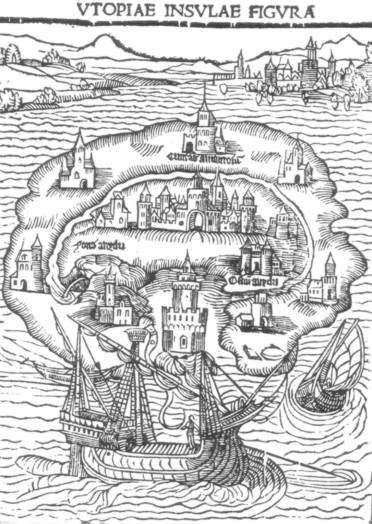
Illustration for the first edition of Utopia

Welcome to Utopia

Utopian dreams

A few centuries ago, nearly everyone lived in abject poverty. Most people had barely enough to survive. In the Middle Ages, 30% of the children died, often of malnutrition or diseases. And so, Thomas Hobbes wrote in 1651 that man’s life was poor, nasty, brutish, and short. It has been that way since time immemorial. Around 1800, Thomas Malthus concluded that humans live in a permanent state of misery. Once we have more food and resources, more children will survive, so that we will always be on the brink of starvation. At the time, only one billion humans were roaming the Earth, searching for a meal.

Two centuries later, a miracle had occurred, and it was unexpected if you had lived in 1800 or before. Today, more than eight billion people live on this planet, and less than one billion live on the brink of starvation. The life expectancy in the poorest countries exceeds that of the Netherlands in 1750, the wealthiest nation before the Industrial Revolution. At first glance, it looks like Paradise. Available food and resources have increased faster than the population. Capitalism and fossil fuels enabled this growth. We now use more resources than the planet can sustainably provide, so an apocalypse is in the air.

In 1516, Thomas More wrote a novel about a fictional island, Utopia. Life in Utopia was good. The Utopians had a six-hour workday and had enough because everyone took only what they needed. Utopia means ‘nowhere,’ but the name resembles eutopia, which means ‘a good place.’ More may have intended the pun. There is more than enough for all of us. So, why can’t we all work a few hours per day, live peaceful lives and have enough? A well-functioning society requires a set of values and a culture to support it.

Utopian dreams aren’t new. According to the Bible, humankind once lived in the Garden of Eden, where people lived simple lives and were happy with what nature provided. Jesus said, ‘Look at the birds of the air; they do not sow or reap or store away in barns. God feeds them.’ There have since then been utopian dreams of peace and sharing. Most utopian dreamers think of a better world while leaving the hard work to others. In reality, utopian societies are not perfect and are oppressive to those who don’t fit in. Usually, their ideologues define the ideal human as hard-working and public-spirited.

Third ways

There have been several attempts to arrive at a synthesis of capitalism and socialism, often called a third way. The challenge of socialism, the antithesis of capitalism, fuelled a lively debate about economic systems in the second half of the 19th and the first half of the 20th century. Silvio Gesell, who wrote Barataria, was one of the central figures in this debate, as was Henry George in the United States. Since the Cold War, that debate has narrowed down to a struggle between communism and capitalism, or between individual freedom and enforced collectivism. After the collapse of the Soviet Union, the feeling in the West is that capitalism is superior and that there is no alternative.

The Soviets have tried to bring communism into practice. They replaced markets with state planning and repression. Due to the forced collectivisation of farms, millions died of starvation. Millions more ended up in prison labour camps. The end of communism led many people to believe that a better future lay ahead. But many of the economic problems we face today stem from faith in capitalism and the idea that governments can manage its drawbacks. And so, the question remains: is a third way possible? The Chinese have kept innovating and remained determined to make socialism work. It did so by making the Chinese economy more capitalist. However, the state still runs much of it.

The Russians lost faith in the fairy tale of socialism as central planning produced poor outcomes. Still, the Chinese economy has baffled the proponents of the capitalist myth. The Chinese allow the profit motive to exist as long as businesses conform to the Chinese Communist Party’s objectives. State ownership of enterprises further ensures that. The Chinese have demonstrated that you can submit the profit motive to a society’s goals and place large corporations in sovereign wealth funds. But competition still determines the outcome. We are in a rat race that will probably not end well.

The Chinese political economy is more advanced than Western models in that it subordinates the economy to political goals while promoting prosperity for China’s population. In many fields, China has surpassed the West. So if we were to agree on humanity’s goals, political control works better than pure capitalism. Chinese culture contributed to China’s development. Several Asian nations with similar cultures have also successfully modernised their economies. Modernisation is also a cultural shift from reliance on families and communities to markets and states.

The failures of capitalism and socialism come from the fact that both are models of reality, thus simplifications, and that the oversights in both models come with disastrous consequences. We are religious animals who want to believe in fairy tales like capitalism and socialism. The proponents of these systems blame their failures on execution rather than on the systems themselves. To clarify the discussion and address confusion about terminology, it may be helpful to provide definitions of economic systems. Their differences centre around ownership of resources, capital, and labour.


resourcescapitallabour
communismstatestatestate
socialismstatepublicprivate
third way / mixedvariesvariesprivate
capitalismvariesprivateprivate

Under communism, the state owns all there is, including your labour, so you can’t even decide on the job you take. Under socialism, you can choose your occupation, but capital and natural resources are public, thus owned by workers or the state. In mixed economies, ownership of natural resources and capital varies. You may own the ground, but if there is oil underneath, the oil may belong to the state. There may be state-operated corporations, such as railways, alongside private corporations. Under capitalism, everything is private. There may be public services, but there are no public corporations. Few countries give their resources away for free. Governments want a piece of the action.

One crucial oversight is culture. There were substantial differences in living standards in the Soviet Bloc. Czechoslovakia did relatively well. Yugoslavia suffered from high unemployment, but the Slovenian unemployment rate never exceeded 5%, while Macedonia and Kosovo had rates of over 20%. These were extreme differences within a single country and under the same system. Likewise, capitalism also promoted varying results. Latin America remained poor despite having mostly right-wing regimes. Cultures change, and an advantage can turn into a disadvantage. Success breeds complacency, and to stay competitive, you have to regularly ‘reinvent’ yourself.

China has developed its economic model, a state-run socialist market economy, which now outcompetes the West. Its success depends on the Chinese people’s hard work, discipline, and ingenuity, as well as China’s long-standing tradition of modern bureaucratic government and Confucian ethics, which enable the government to work in the public interest and the people to respect authority. Chinese culture thus helped them to achieve this. China’s economic success resembles that of neighbouring countries with similar cultures, such as Japan and South Korea. The Japanese and South Korean economic successes also involved state planning and the state organising industries.

Free economy

There are other ways of organising the economy besides communism and socialism. These are community economics and religious economics, so economies founded on a moral system. Economic thinking centres around the division of tasks between the market and the state. There is little room for moral systems and communities. Religion can make people pursue other goals in life than maximising economic utility, while communities can produce most of the essentials, as they did in the past. Barataria had an economy with private enterprise and home ownership, but without capitalists, bankers, or merchants. The Baratarians were a community sharing a religion.

Silvio Gesell believed in economic self-interest as a natural and healthy motive for satisfying our needs through productive activity. He aimed for free and fair competition with equal opportunities for all. He proposed the end of legal and inherited privileges, so the most talented and productive, rather than the most privileged, would have the highest incomes without distortion by interest and rent charges. Henry George believed that society gives land its value through public services. George thought that a land tax would benefit the overall economy and could replace other taxes.

After Argentina experienced an economic depression in the 1890s, Gesell found that returns sometimes failed to meet investors’ minimum requirements. It caused investors to put their cash in their pockets, disrupting money flows. It regularly caused economic hardship and unemployment. Gesell proposed a holding fee on currency to keep the money in circulation, as low returns are more attractive than paying the surcharge, which amounts to a negative interest rate. Gesell’s economic system was well known in Germany as the free economy. In Wörgl, the holding fee on money proved a successful recipe to revive the economy during an economic depression.

European Union

European economies are mixtures of capitalism and socialism. Many Brits found the union too socialist and bureaucratic, so they left. The European Union tries to regulate capitalism a bit too much to the taste of many Britons. Overall, Western Europeans live a relatively good life. Well-being is hard to measure, but European societies are among the world’s most agreeable, at least if you believe the rankings. And if every country kills innovation with legislation like the bureaucrats of the European Union, we wouldn’t need to fear artificial intelligence, genetic engineering or other new technologies. But this political-economic model will probably not survive the competition for much longer.

Europe has a collectivist tradition with Christian and socialist roots, as well as worker and consumer protection laws. Europeans live longer than Americans, partly because the European Union has banned unhealthy foods that are available in the United States. At the same time, governments run the healthcare systems, so most healthcare is for the public interest rather than private profit. In Europe, it is harder for corporations to pass business-friendly legislation through bribery of politicians. That is also because Europeans have more faith in the common good than Americans do. Like the invisible hand, our imaginary invisible friend, the common good, has a few magical powers of its own.

Immigrants do much of the hard manual labour in Western Europe, often for low wages, so they help many Europeans lead agreeable lives. They frequently live in poor housing. Others may find Western Europeans lazy, as they work 36 hours per week and have five weeks of holidays each year. Europe is losing the competition, or at least that is what the experts think. Still, the lives of people in Western Europe may be the closest to what life should be in Paradise, except that European energy and resource consumption would be unsustainable if everyone lived like that. The demise of the European Dream shows that competition is the reason why we can’t live in Paradise forever.

Nazi Germany

The Nazis produced an economic miracle during the Great Depression. Their success came from deficit spending for rearmament and from restricting trade with the outside world, so government expenditures boosted the German economy without causing trade deficits. It is similar to Keynesian economics. It worked like the miracle of Wörgl, except that the German government accrued a large debt while the council of Wörgl did not.

Factories were idle, and many people were unemployed, so the scheme didn’t lead to high inflation. Price, wage and rent controls also helped keep inflation in check, but they hurt small farmers. The Nazi economy was a mixture of state planning and capitalism. Germany was rearming and preparing for war, so it was also a war economy. Countries organising for war take similar measures to mobilise their industries for warfare.

Yugoslavia

Yugoslavia was socialist rather than communist. It combined state planning with markets and decentralised decision-making or worker self-management. The Yugoslav economy fared better than that of fully communist countries. Yugoslavia was more open, and living standards were higher. Eventually, Yugoslavia couldn’t compete with more capitalist economies. The oil crisis of the 1970s magnified the economic problems. Foreign debt soared. Generous welfare spending further contributed to Yugoslavia’s financial woes. The case of Yugoslavia highlights the issues that plague utopian economies.

The country implemented austerity measures, such as rationing fuel use and limiting imports of foreign-made consumer goods. Yugoslavia had been able to feed its people until then, but from the 1970s onwards, the country became a net importer of farm products. Yugoslav citizens could travel to the West. Emigration helped the economy by reducing unemployment and bringing in foreign currencies as emigrants returned money home to support their families. The Yugoslav economy collapsed in the 1980s.

Openness to foreign competition contributed to the demise of the Yugoslav economy. Yugoslav consumer products were inferior to foreign products. To compete, businesses laid off workers. The Yugoslav economic system might have worked if every country had operated its economy like so. Yugoslav products would have sufficed had there been no better alternatives. In that case, mass unemployment wouldn’t have materialised, and Yugoslavia could have managed, perhaps with less generous welfare. Utopian economics can only work when the economy encompasses the entire world.

China

The stories of Airbus and Boeing demonstrate that state ownership of large businesses can work better than private ownership. Boeing was the industry leader, but ruined itself by focusing on shareholder value. Reducing quality brought short-term cost savings, boosted the stock price, and generated management bonuses. That seemed all fine until Boeing’s aeroplanes began dropping from the sky. The largest holders of Airbus stock are European states, allowing the corporation to focus on its long-term goals. The state-owned aeroplane industry is one of the few areas where Europe is still at the top.

Traditional Soviet-style communism yielded subpar economic results, but the Chinese continued to innovate. The Chinese socialist market economy (SME) has private, public and state-owned enterprises (SOEs). China is not capitalist, as the Chinese Communist Party (CCP) retains control over the country’s direction. It is a command state-market economy like Nazi Germany was. Unlike Nazi Germany, which aimed for maximum self-reliance, the Chinese economy integrated into the global economy. It depends on exports, like those of other Asian Tigers such as Japan and South Korea. China’s advantages include a massive market, which enables it to achieve economies of scale, the world’s longest tradition of rationally administered states, and a culture shared with some other East Asian countries that enabled the Chinese to develop quickly.

The ideological vision behind China’s market reforms was that China was underdeveloped and that a fully developed socialist planned economy would emerge once the market economy fulfilled its historical role, as Marx prophesied. The CCP claims it has incorporated a market economy into the Chinese socialist system. The CCP leadership looks at its project through an ideological lens. Proponents of capitalism might argue that China is more capitalist than the West, given its success. Had China failed, the same people would have blamed it on socialism. Others call it state capitalism, as the SOEs that comprise a large share of the economy operate like private-sector firms and retain their profits rather than returning them to the government. On economic organisation, the West can learn from China.

China eliminated extreme poverty, which declined from over 90% in 1980 to less than 1% today. It also became the world’s leading manufacturing economy and the world’s leading producer of unnecessary items that end up in our landfills. Despite its leadership in renewable energy and electric cars, China has also become the world’s leading polluter and carbon dioxide emitter. China’s status as a manufacturer and exporter distorts the picture. By importing from China, other economies appear less polluting. Those who have visited China long and often enough to have an informed picture agree on the following:

  • China is ahead of the West in several crucial fields. Its economy is more efficient. The West, as it operates now, is losing the competition.
  • Cities are clean, and violent crime levels are low. There is intensive surveillance, which we in the West consider intrusive.
  • There is a lot of corruption. Unlike in many other countries, Chinese corruption promotes economic growth by bribing people to get things done.
  • China is a dictatorship, but citizens have options to criticise and influence the government. If you aren’t a troublemaker, you are relatively free.
  • China represses dissenters and has put millions of people in internment camps to re-educate them and turn them into Chinese citizens.

Chinese corporations align with the Communist Party’s societal goals. There is a profit motive, but profit is secondary. The government can provide support through subsidies. In that sense, the Chinese economy looks like that of the Soviet Union. This model achieves acceptable living standards. At present, China outcompetes the United States and Europe in many fields. If our society’s goals are sustainability and happiness, this economic model can help align corporations with public policies.

State control and ownership of businesses, as in China’s, can be a viable way to pursue political goals such as protecting the environment and reducing poverty. Business objectives, such as profit, can become secondary to political goals, provided that corporations receive support when needed. With state ownership, it becomes feasible to ban products or subsidise others without harming or favouring private entrepreneurs. What China has demonstrated is that a politically steered economy can be competitive and achieve acceptable living standards. And so, we should have confidence that a political economy grounded in moral values can achieve acceptable living standards.

Getting to Denmark

In 1997, my wife and I visited a town in Venezuela. The shops there had armed guards. Shopkeepers believed that they needed these security measures. Not surprisingly, I didn’t feel safe there. If you need guns to protect yourself, something is wrong with society. Perhaps criminals had free rein, and you could not trust the police. Starting a business in Venezuela seemed unwise. I have also been to Denmark. The difference is astounding. Venezuela is an extreme case, and so is Denmark. In the 2024 Corruption Perceptions Index, Denmark ranked first, with the lowest level of corruption in the world. Venezuela was at the bottom. Compared to the rest of the world, Denmark is a Paradise.

Poverty, inequality, and the absence of the rule of law go hand in hand. Without a rule of law, you and your property are unsafe, and building a flourishing society becomes impossible. Some societies are more agreeable than others. Economists understand the rule of law as secure property rights, but it is more important that citizens feel safe and can conduct their affairs in peace. High-quality societies don’t come easy. It is tough to have a capable government, the rule of law, and accountability to the citizens simultaneously. One measure the Danes took to preserve their society was limiting migration, but it would be better if all societies were as agreeable as Denmark’s.

That is possible. Denmark became the way it is because of its unique history. The Danes turned from raping and pillaging Vikings into the peaceful nation it is today. Cultures can change dramatically. Danish history includes the Protestant Reformation. The German sociologist Max Weber argued that the Protestant ethic contributed to the rise of modern capitalism. This ethic includes education, hard work, thrift, and moral uprightness. And that affects attitudes towards graft. The ethic was most present in North-West Europe. Formerly Protestant countries are the least corrupt. But every country can achieve the same. Singapore, Uruguay and Japan are also among the least corrupt countries.

So, what is life in a high-trust society? Everyone is a good citizen. The government is clean. No one misuses state benefits. There is no crime. You feel safe on the streets. You can trust the police. The rules apply to everyone equally. A government can’t create a good society. It merely reflects society. A government can’t enforce laws when its citizens don’t believe in and don’t live by them. Denmark is a cohesive society. People feel connected to each other and share the same values. Becoming a global society like Denmark is an unlikely future for humanity, and getting to Denmark is a utopian dream. Unless, of course, unless a miracle happens. Only religion can move mountains.

Latest revision: 6 December 2025

Featured image: Illustration for the first edition of Utopia by Thomas More.

1. Leviathan. Thomas Hobbes (1651).