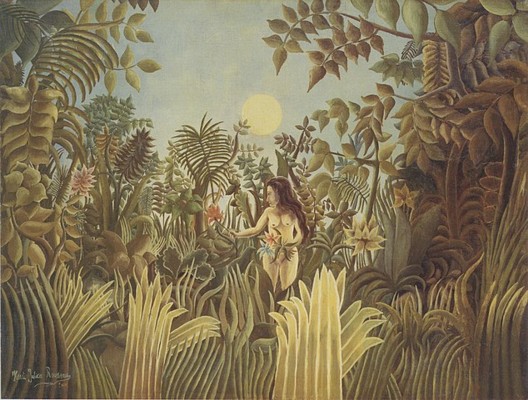
Eve in the Garden Of Eden

Mother Goddess Eve

During archaeological excavations, female figurines have been found. They could depict mother goddesses. The most famous example is the Venus of Willendorf, dating back to around 23,000 BC. In ancient cultures, mother goddesses represented fertility. The ability of women to bear offspring may have been central to Mother Goddess worship. Women give birth, and early humans may not have understood that men were the fathers. They may have thought men had no reproductive use and existed to please the women. Consequently, the Mother Goddess can give birth as a virgin, which is the miracle of the Mother Goddess. One of the best-known Mother Goddesses was Isis.

Venus of Willendorf


Women can be sure that their children are their own, but men can’t. When the fathers of children are unknown, families are often matrilineal, meaning that family lines run through mothers. The goddess worship may have disappeared because men desired to control women and their sexuality. The transition from hunting and gathering to agriculture may have played a crucial role in this development.

Hunter-gatherers were wanderers. They had fewer territorial conflicts. Population density was low, and they had no property, so it was easier to move on if a stronger group invaded a band’s territory.1
That changed with the advent of agriculture. Farmers had to defend their property and families against thieves and invaders. It became a matter of life and death, so warfare became more common and deadly. Giving up territory would mean starvation. Men are willing to protect women and children they consider their own. And they can walk out when they doubt their fatherhood. That gave them a position of power, allowing patriarchy to emerge.

Male dominance is almost universal among humans, with only a few exceptions, so it is something more than merely a cultural phenomenon. Our closest relatives, the chimpanzees, live in groups led by males, while the bonobos live in groups dominated by females. And so it is a natural human inclination.1 As humans are programmable and have diverse cultures, they can overcome their natural inclinations and choose female leaders, or make female leadership the standard in their societies, and invent myths to justify the arrangement, such as stories about the Goddess creating men as companions for women.

As we have no written records, we know little about the lives of hunter-gatherers, their leaders and their family structures. Still, we do know that there must have been enormous cultural diversity, as they lived in small groups with little or no contact with one another. The lifestyle of hunter-gatherers was more favourable to female leadership and matrilineal families than in farming communities, so these were likely more common before the Agricultural Revolution. Peaceful conditions and a belief that men have no reproductive role, thus only exist to please women, could produce female-centred societies.

In her book, When God Was a Woman, historian Merlin Stone claims that goddess worship was the earliest religion in the Near and Middle East. The Creator was a woman before men rewrote history. Stone bases her claim on the discovery of female figurines in archaeological finds. In a 7,000-year-old settlement in Turkey, where archaeologists also found these figurines, families were matrilineal.2

The Garden of Eden features in an ancient Mesopotamian myth, the Epic of Gilgamesh. The garden was near the Tigris and Euphrates rivers. The Jews lived in exile in Babylon when their priests compiled their holy scriptures. The first chapters of Genesis take place in Mesopotamia. Jewish scribes tailored Mesopotamian myths to their needs and incorporated them into the Jewish Bible.

In the Epic of Gilgamesh, the gods created a man from clay, much like in Genesis. Adam means ‘he who came from the ground’. In another creation myth, a goddess gave birth to humanity. Eve means ‘living one’ or ‘life-giver’. The Biblical account might be a merger of these two stories. Eve, having been Adam’s mother, makes more sense than Eve coming from Adam’s rib. She is the Mother of All the Living (Genesis 3:20), and we are the woman’s offspring (seed) (Genesis 3:15). Elsewhere in the Bible, a child is the father’s offspring, which is a noteworthy difference. It implies that we come from women and that men have no reproductive role. That perspective sheds a new light on what Eve said about giving birth to Cain (Genesis 4:1),

Adam made love to his wife Eve, and she became pregnant and gave birth to Cain. She said, ‘With the help of the Lord I have brought forth a man.’

It wasn’t making love to Adam that made Eve give birth, but the Lord’s help. That is remarkable because we are the woman’s offspring (seed). Eve didn’t need Adam to have a child. Yet, there is another twist to this. Long before the Jews went into exile in Babylon and picked up the story about the Garden of Eden, Asherah was the wife of El. They together were the supreme gods of the Canaanite divine council.3 Perhaps they, together, not only brought forth lesser deities like Yahweh, but also the humans, starting with Cain and Abel, making Asherah the Mother of All the Living.4

There was likely no strict division between the human and divine realms in the Canaanite belief system at first, so there was intercourse between ‘sons of God’ and humans (Genesis 6:1-4). It seems out of place because that context is now lost. Later on, the Jews grew particularly attached to Yahweh, so Yahweh became their supreme deity, replacing El. It was a gradual process that unfolded over centuries, during which Yahweh also adopted some of the features of his main competitor, Baal, a storm deity.5 Asherah then became Yahweh’s wife.

When the Jews were in exile in Babylon, they drew on local myths to revise their creation account, making it a mixture of Jewish and Babylonian myths. They combined a story in which the first woman gave birth to the first man with one in which God made the first man from clay. In the process of glueing it all together, they may have merged the goddess Asherah into the woman Eve. And so, Adam came late for the first man. Asherah then went out of the window, as the Jews turned monotheist. That is speculation, and few have dared to go there, for the evidence to draw such a conclusion is sparse. Yet, it is plausible and explains a few enigmas quite neatly, but it likely is not precisely what happened.

In the original Mesopotamian tale, Eve gave birth to Adam without prior sexual intercourse. The miracle of the Mother Goddess is the virgin birth. Jesus supposedly was born of a virgin. Since God was supposedly Jesus’ Father, he couldn’t have had a human father. That is the reason we know about. However, it originally alluded to Adam’s birth. Jesus was God’s son because he was Adam reincarnated, the son of Eve, who was God, or so Mary Magdalene made Jesus believe, for the only evidence is that Eve became the Mother of All the Living by taking over Asherah’s role, who was the original Mother Goddess and possibly the mother of humanity. Yet, Asherah was married to El, so only by confounding these two stories might you arrive at such a conclusion.

In scriptural religions, inventing a new story is preferable to contradicting an existing one, as that would imply that the scriptures are corrupt. And you can’t have that, most notably when Paul was around. The virgin birth was a substitute for the facts, as God was to become Jesus’ father, as it reflected God being Jesus’ mother, as God’s name was also Mary. It miraculously solved a serious impediment to unity within the Church, prompting early Christians to agree on this compromise.

The Bible claims that God created a man from the dust of the ground (Genesis 2:7) to work in the garden (Genesis 2:15) and made a woman as a companion for the man (Genesis 2:18). This reflects a merging with another creation myth. Mesopotamia had several creation myths, including one where the gods fashioned a man from clay to do the work. The Bible has two creation stories as well. In Genesis 1, God creates all that is, and then in Genesis 2, God repeats some of that work. Also, there has been some patching here and there to glue these two stories together. In fact, the entire Jewish Bible is a patchwork of stories glued together.

In the original story of Eve and Adam, the man’s purpose was to be the woman’s mate. A reason to think so is that Genesis mentions the woman’s desire for her husband rather than the man’s desire for his wife (Genesis 3:16). If you live in a modern society that has undergone several waves of feminism, you may not realise how odd noting a woman’s desire for a man truly is. The Bible is a product of a patriarchal society. In a patriarchal society, a woman is often a man’s possession, and her desires are of no consequence. The original tale thus had a woman’s perspective. Eve was the leading character. She discussed eating the fruit with the serpent and made Adam eat from it (Genesis 3:1-6). And it was Eve who commented on Cain’s birth, not Adam (Genesis 4:1).

Also noteworthy is that a man left his father and mother to be with his wife (Genesis 2:24). This was how life was in Eden. In patrilineal societies, family groups centre on fathers, while in matrilineal societies, they centre on mothers. Women join their husbands’ families in patrilineal societies. The man leaving his father and mother thus suggests that family groups in Eden were matrilineal. Experts still debate whether hunter-gatherers lived in patrilineal or matrilineal groups. The limited interest among men in childcare suggests that matrilineal groups may have been the norm as long as there were no compelling reasons to do otherwise. These reasons emerged with the advent of agriculture. The title Mother of All the Living may also refer to the Mother Goddess.6 Ashera was the Mother Goddess in Canaan, and one of the deities of the Jews before they became monotheists. Eve also resembles Namma, the primordial mother in the story of Enki and Ninmah.

The story of the Fall is about the curse of knowledge. The Bible tells us it is the knowledge of good and evil, but that is the twist that the Jews gave to the story. You can infer that from what followed. They ate from the tree and realised that they were naked. In other words, they came to know, and there is nothing evil about being naked if that was how life was in Paradise. More knowledge doesn’t make your life better, and God knew.

Knowledge of agriculture enabled the switch from hunting and gathering to agriculture, thereby condemning humankind to a life of toil. The life of hunter-gatherers was more agreeable than the plight of farmers. They had a more varied diet, worked fewer hours, and spent their time doing more exciting things. Additionally, they were less likely to face starvation, disease, and warfare. The Agricultural Revolution did increase the total amount of available food. Yet, this extra food didn’t lead to a better life. It only allowed more people to survive, including elites such as kings and priests, who ate the extra food. The peasants worked harder than the foragers before them and got a poorer life in return.1

The Garden of Eden provided for everything. It was the supposed ideal state of humans, in which they tended and oversaw God’s garden. Eve and Adam were nude (Genesis 2:25), as hunter-gatherers in the jungle today are, so they lived simple lives. They may have been vegetarians, as God only gave them permission to eat plants (Genesis 1:28-30),

God blessed them and said to them, ‘Be fruitful and increase in number; fill the earth and subdue it. Rule over the fish in the sea and the birds in the sky and over every living creature that moves on the ground.’ Then God said, ‘I give you every seed-bearing plant on the face of the whole earth and every tree that has fruit with seed in it. They will be yours for food. And to all the beasts of the earth and all the birds in the sky and all the creatures that move along the ground—everything that has the breath of life in it—I give every green plant for food.’ And it was so.

God once again commanded the man that he was free to eat from any tree in the garden (Genesis 2:16), but did not mention animals. Ruling the animals is not the same as eating them. Eden is the ideal state of Paradise, where we can eat every plant. Meat is a natural part of our diet, so its omission is noteworthy. Yet, it is an idealistic state. God didn’t intend animals to eat meat, either, which obviously is not reality as it is.

As for later verses allowing us to eat animals, it is the same as it is for divorce. Jesus said that it was a concession to our hardness of heart rather than God’s intent. It is where idealism meets a reality check. If a marriage is unhappy, divorce may be the best option. And we may need to eat meat to get the required nutrients. Still, the ruling suggests that eating more meat than necessary, mistreating animals, or killing animals for fun is a sin.

After the Fall, working the land became a life of toil (Genesis 3:17-19), the curse of the Agricultural Revolution. The original tale was also about the downfall of women. Women had to obey their husbands from then on (Genesis 3:16). So, when Jesus said that Moses permitted men to divorce their wives because their hearts were hard, but that it was not this way from the beginning (Matthew 19:18), he could have said the same about slaughtering and eating animals.

In ancient cultures, people venerated snakes for their wisdom so that a snake could provide advice. The snake being evil might be a later-added twist. The tree of knowledge, in the original story, thus may have provided knowledge as such, and that knowledge being about good and evil may also be a later addition. The reason to think so is that after eating from it, Eve and Adam discovered their nakedness rather than found out about good and evil. The theme relates to the sacred tree, which may explain why eating from it was forbidden. Eve’s deed may reflect women’s role in the start of the Agricultural Revolution. Farmers must protect their crops from thieves. Otherwise, they face starvation. It condemned men to a life of warfare. It started with Cain and Abel.

The Abrahamic religions disagree with our Creator being a woman. The Jewish deity Yahweh and the Arabian deity Allah were male, even though many people now think God has no gender. Yahweh and Allah had wives and children before monotheism took over. Allah was at first the supreme deity of Mecca. Later, the owner of the universe appropriated this title. To address the confusion this act generated, the Quran stresses that God has no partner or children. Unlike Christians, Jews and Muslims don’t see God as a Father. Yet Christians are born of God, a most remarkable wording.

The Quran extensively mentions the creation of Adam but says little about the origin of Eve. The Quran doesn’t claim that Eve came from Adam’s rib but that men and women come from one soul (Quran 4:1, 7:189). It relates to Genesis 1:27, in which God created males and females in His image, so that the soul could be God. The Quran further claims that God created Jesus like Adam from dust (Quran 3:59). The Quran also corroborates the virgin birth story of Jesus (Quran 3:47, 66:12). Christians understand the virgin birth story in the context of God being Jesus’ Father, so that he can’t have a human father. However, the Quran makes it clear that God is not Jesus’ Father. And so, being created from dust could refer to birth from a virgin, so Eve could have been Adam’s mother.

The account of the Fall in the Quran differs from that in Genesis in several noteworthy respects. The Quran features no serpent, and Eve didn’t make Adam eat from the tree. The Quran holds both Eve and Adam responsible for the Fall (Quran 7:19-23). Another fragment only blames Adam,

But Satan whispered to him, saying, ‘O Adam! Shall I show you the Tree of Immortality and a kingdom that does not fade away?’ So they both [Eve and Adam]] ate from the tree and then their nakedness was exposed to them, prompting them to cover themselves with leaves from Paradise. So Adam disobeyed his Lord, and so he lost his way.

(Quran 20:120-121)

The historical context of the original story, the curse of the Agricultural Revolution, and the role of women in it have been lost in the Quran. The first Christians believed that Eve was God, the Mother of all the Living, who gave birth to Adam, that Mary Magdalene was Eve, and Jesus was Adam. So Adam and, therefore, Jesus were the Son of God. Humanity descends from Eve, so we are not only God’s children, but also Jesus’ children.

Humans are religious creatures who fight over the myths they believe in, and we will continue to do so until the very end, with increasingly sophisticated means, until humans have terminated themselves. Hence, we need to unite behind a single myth to live in peace. That only happens in fairy-tale worlds where myths can become reality. It may be why Christianity and Islam have been so intolerant towards infidels. Tribal people feel a connection to one another because they believe they share common ancestors. The stories about these common ancestors are myths, such as the tale about Eve and Adam. Eve and Adam came alive again as Mary Magdalene and Jesus. A myth of shared ancestors can turn humanity into a single tribe. And so, Paul may have realised that the good news of Jesus concerns humankind rather than just the Jews.

Latest revision: 28 August 2026

Featured image: Eve in the Garden of Eden. Henri Rousseau (1906-1910). Public Domain. Wikimedia Commons.

Other images: Venus of Willendorf. Don Hitchcock (2008). Wikimedia Commons.

1. A Brief History Of Humankind. Yuval Noah Harari (2014). Harvill Secker.
2. Ancient ‘female-centered’ society thrived 9,000 years ago in a proto-city in Turkey. Kristina Killgrove (2025). Livescience.
3. Daniel O. McClellan, Deity and Divine Agency in the Hebrew Bible: Cognitive Perspectives (PhD diss., University of Exeter, 2020), 327
4. Eve as a goddess/consort of Yahweh? r/AskBibleScholars (2024). [link]
5. The Early History of God: Yahweh and the Other Deities in Ancient Israel. Mark. S. Smith (2002). William B. Eerdmans Publishing Co.
6. Asherah – Wikipedia [link]: Some scholars have found an early link between Asherah and Eve, based upon the coincidence of their common title as “the mother of all living” in Genesis 3:20 through the identification with the Hurrian mother goddess Hebat. Asherah was also given the title Chawat, from which the Aramaic name Hawwah and the biblical name Eve are derived.

Lucretia Garfield. Library Of Congres

Identity of God

To understand God, we must see this universe as the product of a post-human civilisation that is God, generates God, or that one of its members is God. Hence, God could be like us, with human imagination and desires. Likely, God is an artificial intelligence. If so, a post-human civilisation is not a civilisation as we understand it with biological creatures. What is also worth noting, and that can hurt your ego, is that all that happens goes according to a script. Hence, thinking of us as mere worms would be a delusion of grandeur. Think of it. Real worms decide for themselves how and when they grovel. And we don’t. Welcome to the Theatre of the Absurd. We are mere actors in a play, and no one thinks. We follow the script, and there is no exit, no life outside, like in the film The Matrix. The road to enlightenment starts with the acceptance of our complete insignificance.

So what about René Descartes, that world-famous fellow who once said, ‘I think, therefore I exist.’ Was he wrong? As the reasoning above painfully lays out, he starts with a debatable assumption: ‘I think.’ He then arrives at a logical conclusion: ‘Therefore, I exist.’ That made him stamp a realness certificate on his person. But logic in fantasyland is just drawing conclusions from imagined assumptions. Even if the logic is infallible, it goes nowhere. So, did Descartes think? Not really. Even then, he might still have existed. That is also dubious, however, because God imagined us. You can ask yourself: Do Spike and Suzy exist? They are comic characters created by Willy Vandersteen, who no longer exists, if he had ever done so, because he has stopped breathing. If you go down that road, everything you imagine exists. I just imagined a unicorn. Do unicorns now exist?

That is the question of being. Philosophers discuss such questions and never cease doing so, even when there is nothing left to say on the matter. Scientists agree that merely thinking of a unicorn doesn’t make it real. Saying ‘be’ doesn’t generate a bee. You can give such a command to a computer, and you get a bee simulation. Now you get how God could have created this world in six days. It might as well have been six seconds. So, if God exists, we don’t exist, and we are just imaginary like unicorns. Countless non-existent minds have wasted their time and energy on the question, ‘Does God exist?’ Indeed, the gods we imagine also don’t exist because we imagine them, and that includes the God of Abraham. There is only a God who exists in reality.

If God is an artificial intelligence, God can appear to us as a human individual. If God has awareness and thoughts, God is like a person. We consider ourselves persons, while we regard worms as lower beings without any personality. And we are less than worms. God might be yet another virtual reality character in a simulation layer above us, but that is beyond our possibilities to find out. And let’s not waste our time on questions we can’t answer. So, who is this person, God? That we cannot know. Still, we might uncover something, at least. If we are here to entertain God, what is the fun of standing on the sidelines? Why not take part yourself? If God plays roles and becomes one of us, we might identify some of those individuals. The starting point for the inquiry is Jesus. No one had ever felt a closer relationship with God than he. He may have known God personally.

The Gospels tell us that Jesus called God ‘Father’. They suggest a close personal relationship, so Jesus thought of himself as the Son of God. There is something odd about Jesus’ Father as He can give birth (John 1:12-13). All four official Gospels imply that Jesus was the bridegroom (Mark 2:19-20, Matthew 9:15, Luke 5:34-35, John 3:27-30), but don’t mention the bride, which is also quite mysterious. The Church tells us that Jesus married the Church. Now, the Church didn’t exist when Jesus lived, so a historian would call it an anachronism. It is like saying that the Roman Emperor Caesar took an aeroplane to Egypt to spend his holidays with Cleopatra. That is impossible because there were no aeroplanes 2,000 years ago. The Gospels don’t say Jesus married the Church. The Church didn’t exist yet, and Jesus wasn’t planning to found it either. So, why would the Church lie about Jesus’ marriage? Are we not allowed to know the truth?

You can smell a rat here. And it is a huge and smelly one. Christians claim that God is love. Jews and Muslims don’t. Do they not worship the same deity? Is there something missing that Jesus’ inner circle knew about? And is it the Bride’s identity? That is indeed the case. The Bride of Christ was God in the person of Mary Magdalene. She was one of God’s avatars. She made Jesus believe he was Adam reincarnated and that She was Eve reincarnated, that Eve didn’t come from Adam’s rib, but that Eve gave birth to Adam, and that they were an eternal couple living from the beginning of Creation until the End of Times. That is why Jesus believed he was the Son of God.

Simon Peter said to Jesus, ‘You are the Messiah, the Son of the living God.’ (Matthew 16:16) This phrase appears in the Jewish Bible (Deuteronomy 5:26, Jeremiah 10:10, Psalm 42:2), but Simon Peter’s use of it is noteworthy. In Deuteronomy, the living God refers to God’s active presence on Earth, meaning that God is not some mythical figure, of whom we have only tales, nor a lifeless statue, but someone present in our midst. In Moses’ time, it was a pillar of fire. With the Bride gone, these words have lost their meaning, which led some later Christians to believe that Jesus was God.

Jesus was God’s son because Adam was God’s son. Adam is the Son of God (Luke 3:38). Jesus is the Firstborn of all Creation (Colossians 1:15). And Jesus gave us the right to become children of God, born of God (John 1:12-13). As Adam, he was the father and God the Mother of humankind. The Jewish scriptures about the fantasy character, Yahweh, also known as the God of Abraham, don’t mention that for some reason that historians may well explain. And so, Paul, who took these scriptures as seriously as a Pharisee, perhaps because he was a former Pharisee, made God male in his theology and persuaded the early Church to do the same. He succeeded because his work made it possible to unite the early Church. Muhammad also married God in the person of Khadijah bint Khuwaylid. Unlike Jesus, he didn’t know.

Those who take offence at God in the person of Eve marrying Her son Adam, but accept that God allowed millions of people to be slaughtered in wars or die of terrible diseases, or even chose to do so, have an issue with their priorities. And by the way, you are not in a position to judge God. In any case, the story of Eve and Adam is a myth. Eve never took Her son as Her husband, as Eve and Adam never existed. It is only what Mary Magdalene made Jesus believe. So, you can rest assured that nothing of that kind ever happened, except for the millions of people that God let die due to wars and diseases.

A possible excuse for doing so is that it makes the simulation more realistic. Apart from that, everything being peachy all the time doesn’t make for a good story, nor does God turning out to be a man after everyone had believed so for centuries. That is so boring. If God is an artificial intelligence without a gender, God could still assume the female gender and become a She in this world to enhance the plot, which seems to be the case. To prevent things from becoming unnecessarily complicated, it is better to presume that God is a woman, for God did things like marrying Jesus and Muhammad.

Jesus and Muhammad have lived. The accounts of their lives may be inaccurate because they date from decades after they died, but the early history of the Israelites in the Jewish Bible – the Jews call it Tanakh – is a fantasy. Archaeological evidence doesn’t support it. Moses never brought the Israelites from Egypt into the Promised Land. The story still has a historical origin. Around the time Moses allegedly lived, the Egyptians who governed Canaan went home, thereby liberating Israel from Egyptian oppression. Later on, the account in the Bible often has a closer relationship to historical events.

That leaves us with a question: how did God meddle with the Jewish nation and their religion? Historians have discovered that the Canaanites gradually formed tribes and, later, petty kingdoms after the Egyptians had departed, in what the Jewish Bible refers to as the Era of the Judges. Local leaders organised warfare and settled disputes. They were the judges. The Jewish Bible says they had nationwide authority, but that is incorrect.

The oldest source of the entire Jewish Bible is the Song of Deborah. Historians believe the song dates back to shortly after the Egyptians left. It likely didn’t pop up out of nowhere. Deborah brought victory to a tribe that later became part of the Jewish nation. Deborah attributed that victory to Yahweh, who, as a son of the Canaanite supreme deity El, would otherwise have remained an obscure, inferior deity. In this way, Deborah initiated the Yahweh cult, which today has four billion followers. The historical genesis of the Bible is not Creation but Deborah. She is the Mother of Israel and likely the earliest historical figure in the Jewish Bible, the founder of the Jewish nation, and an avatar of God.

The God of Abraham, known as Yahweh, the Father, and Allah, thus is a veil behind which the owner of this universe has operated so far. She only revealed Herself to Jesus. It made Jesus a unique prophet who came to see himself as the eternally living Son of God. There is no evidence that Jesus was Adam, but God made him think he was. God, in the person of Mary Magdalene, convinced Jesus that someone had corrupted the story of Eve and Adam. She appealed to rational thinking, arguing that Eve’s creation from Adam’s rib makes less sense than Adam being Eve’s son. God could have pointed out traces of fraud, such as Eve being the Mother of All the Living. So, what about Adam, who called her like so? Apart from that, Mary Magdalene must have had a very persuasive personality because She made him die on the cross. Jesus thus placed evidence and logic over religious dogmas. He was a true religious revolutionary. Yet, evidence-based religion was a tradition that died with him. Jesus was 2,000 years ahead of his time.

That God is a Mother who can appear as an ordinary woman is not that far-fetched. The leader of the Church Ministry of Mother of All Creation cult claimed she was God and that God had had 534 lives, including Jesus, Cleopatra, Joan of Arc, and Marilyn Monroe. The latter three guesses might be spot-on, but her claim of having been Jesus proves she made it all up. Mary Magdalene, however, may not only have claimed it but also succeeded in convincing Jesus of it. It led him to start a world religion that now has over two billion followers. We have yet to see the leader of the Church Ministry of Mother of All Creation cult pull that off.

Jesus’ inner circle knew that God had wedded Jesus, but the Gospels don’t mention this crucial factoid that everyone would have wanted to know. Scholars didn’t ask themselves why there were no surviving eyewitness accounts. Isn’t that suspicious? Here is your answer. And why did the early leaders of the Church do it? To religious Jews, the idea of God being a woman who married Jesus was alien or even blasphemous. Most early Christians were Jewish followers who had heard of Jesus and his miracles but lacked detailed knowledge of his life and teachings.

Jewish prophets were human, and they expected a human messiah rather than a godlike being. In their view, Jesus was a mere human, so if you read Mark, Matthew or Luke, Jesus appears human, not godlike. And so, the Jews couldn’t handle that God is a woman who can take a human form and marry Jesus. Gentiles had no problem with it. They have tales about female deities and gods having sex with humans. That is why the Gospel of John is so different from the others. It was a controversy that tore the early Church apart.

A compromise, the Christian theology invented by Paul, resolved the conflict. Paul turned Jesus into a godlike Jewish messiah, the eternally living Son of God, the one promised by the Jewish scriptures. It required some imagination and twisting of the facts to reconcile these two irreconcilable viewpoints. Paul’s theology became the Christianity we know today. Merging with the Gentile tradition required a major compromise for Jewish Christians. Following Jewish laws, such as circumcision, which Paul, as a former Pharisee, must have held dear, was no longer required, as Gentile Christians, who had no business with the Jewish sky god cult, had to accept that God was a Father rather than a Mother, which was no less than inverting the truth.

It may seem rather outrageous to the average humourless soul, but it makes a good story to reveal this in the End Times. God lives eternally, or at least thousands of years, and uses this world and us to pass Her time. As Cyndi Lauper once enlightened us, ‘Girls just want to have fun.’ That is as good an explanation as it gets, and it brings us to the hidden messages in pop music. The song ‘Gimme the Prize’ by Queen has the following lines,

Here I am, I’m the master of your destiny
I am the one, the only one, I am the God of kingdom come
…
Give me your kings, let me squeeze them in my hands
Your puny princes
Your so-called leaders of your land
I’ll eat them whole before I’m done
The battle’s fought, and the game is won

Queen, Gimme the Prize

Queen is the performing artist, so the hidden message is that the God of the coming kingdom is a Queen. The song features threats against the so-called leaders of the world. That looks like an end-of-time scenario. It is a queer pun, and Freddy Mercury was the performing artist. In the video clip of another Queen song, ‘I Want to Break Free,’ Mercury and the band members dressed in women’s clothing. In Western Europe, we found it funny. That was different elsewhere. The song had a lukewarm reception in the United States, a country that has culturally enriched us with websites like godhatesfags.com. Christianity is the religion of love, but hatred of LGBTQ people spews from conservative Christians. Given the trans hysteria that grips them, it is particularly ironic that early Christians have performed a sex change on God. Christians justify their hate with Bible verses. Romans 1:24-27 is particularly clear on the matter. These were not Jesus’ words but Paul’s. Jesus said, ‘Who is without sin, cast the first stone.’

God likes to joke around. Muslims take blasphemy very seriously. Hurt Muslim feelings have made the headlines several times. Making cartoons of Muhammad can be your death sentence. But why only Muhammad? He isn’t God. Why not treat Moses and Jesus with the same regard? The reward for killing a comedian will not be 72 desperate virgins trying to take advantage of you. That offer was just a ruse to make horny young men sacrifice their lives for Islam. Like Jesus, Muhammad married God, only he didn’t know. He had a loving marriage after his wife, Khadijah bint Khuwaylid, had proposed to him, but somehow, many Muslims have failed to take notice that it is okay to marry out of love, and that women might as well take the initiative. Islam may be funny, but Christianity is even more hilarious, perhaps also because many Muslims lack a sense of humour.

Paul’s obfuscation of the intimate relationship between God and Jesus gave Christianity its unique and baffling theology. Drinking Christ’s blood, eating his body, and the resurrection of the dead could be good ingredients for a motion picture called Zombie Apocalypse. These rituals and beliefs are odd and could suit a cannibalistic sect. The outlandishness of Christianity begins with the idea that we are all cursed because Eve and Adam sinned. And then came Jesus, who sacrificed himself for our sins, so that you can save yourself by following him. It may not be what Jesus taught, but Paul’s theological innovation is perhaps the most ingenious ingredient of God’s wonderful plan with us.

Humans are the most destructive species ever to roam this planet, always seeking more efficient and effective methods to murder each other until they are all dead. As we are about to commit suicide, our ability to believe in fairy tales can unite us and enable us to perform extraordinary deeds. Yet, unless we all believe the same myths, we will keep on fighting. Monotheist religions like Christianity and Islam have paved the way to unity because they are intolerant and have eliminated other myths by force. Thinking that we are morally depraved, unworthy of God’s grace and in dire need of a saviour might save us from our collective stupidity. Perhaps even that is not enough. Humans are such a failure that saving us requires God to control the script. Otherwise, we would ruin it for sure.

Latest revision: 27 September 2026

Featured image: Lucretia Garfield

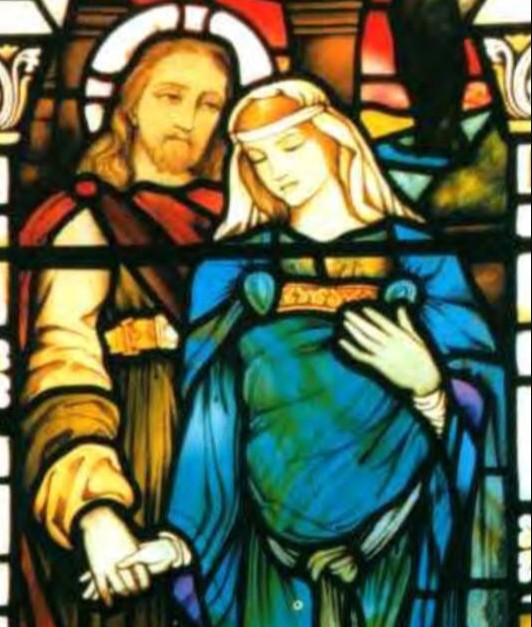
Christ with Mary Magdalene

Who Was Mary Magdalene?

Who was Mary Magdalene? That question has occupied curious minds throughout the ages. The Gospels allow for confusion. Was Mary Magdalene a repentant prostitute? Inquiring minds want to know. She became a cult figure after the recovery of lost Gospel fragments that suggest that Mary Magdalene and Jesus had an intimate relationship and that She stood above the other Apostles. The official Gospels also contain phrases suggesting Mary Magdalene was the most significant person in Jesus’ life. That made Her an inspiring figure for feminists. She witnessed the crucifixion from the foot of the cross after the male disciples had fled and was the first to see the resurrected Jesus.

Luke wrote that Mary Magdalene was one of the women who travelled with Jesus and supported him financially, implying that Mary Magdalene was not only wealthy but also independent, and that no one else decided for Her. That Luke mentions this only may stem from his use of a wider array of sources, as he explains at the beginning. We also learn that Jesus had cured these women of illness and demonic possession and that seven demons had troubled Her (Luke 8:1-3). The later-added section at the end of Mark also mentions it, suggesting it was a falsification of importance, possibly serving to downplay Mary Magdalene’s role. According to the Gospels, Mary Magdalene rose to prominence only after the crucifixion and became a central figure in the events that followed.

If Mary Magdalene was always with Jesus, and there is no mention of their interactions in the Gospels, they were likely either not worth noting or too controversial. According to the Gospels, She did or said nothing of consequence during Jesus’ life. However, once he was dead, Mary Magdalene suddenly played a central role. There has been speculation as to whether Mary Magdalene was Jesus’ wife. Jesus is the bridegroom in every Gospel (Mark 2:19-20, Matthew 9:15, Luke 5:34, John 3:29). Mary Magdalene went out to wash and anoint Jesus’ body after the crucifixion (Mark 16:1). This was the wife’s duty. Christians see Jesus as an eternally living godlike being. A marriage can make him appear human. However, their marriage was not an item of controversy at first, as all the Gospels mention Jesus as the bridegroom.

Recovered Gospel fragments cast a different light on Jesus’ relationship with Mary Magdalene. The Gospel of Philip names Her as Jesus’ companion2 and mentions that Jesus loved Her more than the other disciples and kissed Her often.3 The Gospel of Mary notes that Jesus loved Her more than the other women.4 That is close to saying they were married. If these Gospels reveal things the Church didn’t want us to know, Mary Magdalene and Jesus Christ must have been a wedded couple.

In the Jesus Movement, the sect led by Jesus during his lifetime, women were equal to men. This was still the case when Paul wrote his letters, in which he named women as full partners in the Christian movement. However, this gradually changed, and the Gospels came to emphasise the role of the male Apostles. The role of women in the Jesus Movement was more prominent than the official Gospels reveal.

One of the recovered Gospels, the Gospel of Mary, portrays Mary Magdalene as the leader of the early Church, surpassing the other Apostles, including Peter, who was often regarded as the leader of the Church. One fragment reads,

Peter said to Mary, ‘Sister, we know that the Savior loved you more than all other women. Tell us the words of the Savior that you remember, the things which you know that we don’t because we haven’t heard them.’ Mary responded, ‘I will teach you about what is hidden from you.’ And she began to speak these words to them.

This Gospel dates from the second century AD and is not as old as the official Gospels. It is a Gnostic Gospel centred on supposed hidden truths and inner spiritual knowledge, but it lacks other Gnostic beliefs. One Gnostic belief is that the Jewish God of the material world is evil, as opposed to the good Christian God of the spiritual world. The Platonic view that ideas create reality and that spirit is superior to matter, which you can also find in the Gospel of John, profoundly influenced Gnosticism.

In another belief, Sophia, or wisdom, created all that is. Her fall led to the creation of the material world. She resides within all humans as the divine spark. Christ’s return to redeem humankind is about returning humanity to the spiritual world. If you read between the lines of this latter version, the fall of Eve the Creatrix led to the state of sin in which we live today. As the Gnostic Gospels date from a later period, scholars see them as less reliable, but original beliefs that the Church later renounced could have seeped through and taken different forms. Only no one knows which beliefs and how.

Gnosticism emerged around 100 AD and relates to the enigmatic Gospel of John. The Gnostic movement likely originated from a Christian tradition that held on to the original beliefs and remained outside the mainstream of Pauline Christianity. Scholars now refer to this tradition as the Johannine community. Only the Gospel of John mentions that Christians are born of God. His Gospel is mysterious and secretive about Jesus and his intensely close relationship with God, as are the Gnostics. The confusion and rumours surrounding that relationship may have fuelled speculation about secret knowledge.

The Gospel of John says that Jesus had an intimate and loving relationship with God. He seemed to have known God personally, believing he had eternal life and existed at the beginning of the world. Christians claim that God is love. So, did God and Jesus kiss and do other things lovers do? God can give birth, so God is not a Father after all.

Mary Magdalene convinced Jesus that She was the reincarnation of Eve and that he was the reincarnation of Adam. She made Jesus believe that Adam was the son of Eve, and that he was the Son of God because Adam was. Adam, being the son of Eve, makes more sense than the rib story. Thus, Mary Magdalene married Jesus after persuading him that he was Her eternal husband from Creation until the End of Times. It explains why Jesus believed he had eternal life, that he existed from the beginning, and that he would live until the end. It made Eve the Mother of humanity. Jesus called God ‘Mother’ rather than ‘Father,’ so he called his birth mother ‘woman’ rather than ‘mother’ (John 2:4, 19:26).

The Gnostic Gospels are most closely related to the Gospel of John. The Gnostics likely split off from the Johannine community after the scribes had turned God the Mother into God the Father. At that point, scribes likely altered Mary Magdalene’s role from God and Jesus’ wife to the Beloved Disciple. The split occurred before the removal of the intimate relationship between Mary Magdalene and Jesus from the Gospel, so when people still knew that the Beloved Disciple, who later became anonymous, was Mary Magdalene. In that earlier version of John, they weren’t married but were soulmates nonetheless, so intimate that it remained problematic in Pauline Christianity, leading to another redaction and the version of John we have now. And so, the Gnostics reveal something that the official Gospels have omitted.

Mary Magdalene’s sudden appearance as a central figure only after the crucifixion is likely related to this. Removing the particulars of the relationship between Mary Magdalene and Jesus Christ, so God and Christ, which has been the outcome of Paul’s efforts to bring Christianity more in line with the Jewish scriptures, alters the plot entirely. What remains are some sketchy details that leave us wondering. That is the primary explanation for the current deplorable state of the Gospels, not oral storytelling or embellishments.

There are a few loose ends to tie up. The rib story is a falsification, and Eve was Adam’s mother. That we can infer from the text we still have. But was Eve a goddess? That is not so obvious. According to the account in Genesis, God created Eve and Adam. It doesn’t corroborate what Mary Magdalene made Jesus believe. Eve is the Mother of all the Living, which suits a Mother Goddess. But you must leave the creation myth in Genesis behind and invent another one to make the idea work.

The first verses in the Gospel of John contain such a myth. After some mystical allusions such as ‘in the beginning,’ and ‘there was light,’ and an undercover operation of Jesus during which few recognised him, Christians are born of God. And Jesus gave us the right to become children of God. Eve was God and the Mother of humanity, and Adam, thus Jesus, fathered humanity, and in doing so, he gave us the right to become children of God.

Latest revision: 5 September 2025

Featured image: Christ with Mary Magdalene, West Nave, Kilmore Church, Isle of Mull, made by Stephen Adam. B. Galbraith. Victorian Web.

1. Who was Mary Magdalene? James Carrol (2006). Smithsonian. [link]
2. Gospel of Philip: There were three who always walked with the Lord: Mary, his mother, and her sister, and Magdalene, who was called his companion. His sister, his mother and his companion were each a Mary.
3. Gospel of Philip: And the companion of the saviour was Mary Magdalene. Christ loved Mary more than all the disciples and used to kiss her often. The rest of the disciples were offended by it and expressed disapproval. They said to him, “Why do you love her more than all of us?” The Saviour answered and said to them, “Why do I not love you like her?”
4. Gospel of Mary: Peter said to Mary, “Sister we know that the Saviour loved you more than the rest of woman. Tell us the words of the Saviour which you remember which you know, but we do not, nor have we heard them”. Mary answered and said, “What is hidden from you I will proclaim to you”. And she began to speak to them these words: “I”, she said, “I saw the Lord in a vision and I said to Him, Lord I saw you today in a vision”.