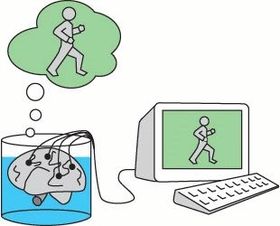
Some religions claim that God or gods have created this world. In the Bible, God created everything by saying, ‘Be.’ That God uttered ‘Be’ and poof, there are bees, is not a particularly compelling explanation for the existence of bees. So, how could the gods have the magical powers to do that? Until recently, we had no clue, but then Nick Bostrom, known for his dry and incomprehensible employment of words, delivered us the simulation hypothesis, the most profound breakthrough in theology in nearly 2,000 years. We might exist inside a computer simulation run by an advanced humanoid civilisation. Our creators can define a class bee and instruct the computer to create instances of this class. A class has properties, allowing individual instances to be unique.
And so, Genesis might be closer to the truth than the religion sceptics think. Bostrom didn’t say whether or not that is indeed the case or how likely it is. He didn’t speculate on that issue. Otherwise, his critics might have a field day, ridiculing him for opening a back door to the paranormal and religion. That could have been the end of his career. However, it is easy to find out if you venture into areas that scientists anxiously avoid, such as paranormal incidents, religious experiences, meaningful coincidences, people’s memories of past lives, ghost phenomena, and UFO sightings.
Scientists dare not investigate these phenomena, as it could make them a laughing stock in front of their peers. That is groupthink and intellectual cowardice on a grandiose scale. On numerous occasions, multiple credible witnesses have observed events that science can’t explain. Like nearly everyone else, scientists have been proficient at ignoring evidence that contradicts their beliefs, such as unscientific ravings about spirits relaying messages from the other side during seances. Bostrom speculated that this world might be a virtual reality, but didn’t search for proof. As a philosopher, he had better things to do.
The book The Virtual Universe delves into the evidence. You can prove this universe is a virtual reality if you assume scientists have correctly established the laws of nature and that sciences like physics, chemistry and biology are correct. If events transpire that defy these laws of science, such as paranormal incidents, religious miracles, meaningful coincidences, memories of previous lives, ghost phenomena and UFO sightings, breaches in these laws occur. According to science, the Virgin Mary doing a miracle before a crowd of thousands, like in Fatima, is impossible. If science is correct, and it happens nonetheless, this world must be fake. The book The Virtual Universe puts it like this:
If we live in a real universe, we can’t notice. Virtual reality can be realistic and come with authentic laws of reality.
This universe may have fake properties, but we cannot notice that either because we don’t know the properties of a genuine universe.
Breaching the laws of reality is unrealistic in any case. If it happens, we may have evidence of this universe being fake.
It follows from (1) and (2) that we can’t use the universe’s properties, reflected in the laws of nature, to determine whether or not this universe is real. Science can establish the laws of physics or the properties of this universe, but science can’t tell whether they are real or fake. However, if breaches occur, we have evidence suggesting this universe is bogus. The book The Virtual Universe investigates the evidence, which includes stories about paranormal incidents, religious experiences, meaningful coincidences, reincarnation stories, ghost phenomena, and UFO sightings, often with multiple credible witnesses. So yes, aliens can beam you up into their UFO because they are as fake as you are.
Advanced humanoids, often dubbed post-humans, likely share motivations with us because they evolved from humans, likely after some engineering, genetic, or otherwise. These advanced humanoids may run simulations of human civilisations for research or entertainment. Research applications could be about running what-if scenarios. Possible entertainment applications include games or dream worlds where someone’s imagination comes true. These simulations may not be realistic in some aspects, as they reflect the rules of a game or someone’s personal fantasies. In a simulation, you can let Jesus walk over water and make him think that faith alone suffices to do that.
Civilisations are complex. Small changes can derail events that would otherwise occur. Just imagine another sperm had won the race to Adolf Hitler’s mother’s egg. There were millions of sperm in that race. Guaranteeing an outcome, such as letting World War I end on a date referred to by the licence plate number of the car that drove Archduke Franz Ferdinand to his appointment with destiny, requires control over everything that happens. That doesn’t apply to games. Unpredictable developments make games more interesting. Considering how we utilise computing power, mainly for games, sexy pictures and cat videos, the number of simulations for entertainment likely vastly outstrips those run for research purposes. If we live inside a simulation, we should expect its purpose to be entertainment.
The owner or owners may use avatars to play roles in this world and appear like ordinary human beings to us. If you are familiar with computer games, you are familiar with avatars. Once you enter a game, you become a character inside that game, your avatar, and you have an existence apart from your regular life. Inside the game, you are your avatar, not yourself. Alternatively, you could start a virtual world where you are the Creator and bring your dreams to life. In this world, you also become someone else.
That is a lot of assumptions, and without evidence, they remain speculation. Even when there is evidence, it doesn’t necessarily mean the explanation is correct. Suppose you hear the noise of a car starting. That is the evidence. You may think there is an automobile starting. Perhaps a vehicle is firing up its engine. But your husband might be watching his favourite television series, Starting Engines, so you can’t be sure. Nothing you know contradicts your assumption, but you could be wrong. So, is God an individual from an advanced humanoid civilisation who uses us for amusement? It is credible, and perhaps nothing contradicts it. But who is to say it is correct?
Now comes the disagreeable part. We are instances of the class human. When the beings in the simulation think for themselves, that raises ethical questions like whether they have rights that the creators should respect. Considering how humans treat each other, it is not a given that these rights would be respected even when our creators acknowledge them. In the real world, bad things happen to people. In the case of control, the beings inside the simulation don’t think, but are mindless bots following the script. We have no independent will and are toys to our creators. God kills people at will, and a few million casualties more don’t matter. On the bright side, if God wants us to enter Paradise, where there is peace and happiness, nothing can stop that as well. Those who try will surely find themselves on the losing side. So, if the Boss makes a joke, you can better laugh. Perhaps it isn’t easy. But don’t worry. It took me fifteen years to look at the bright side of life.
Once we realise that reality is unrealistic, we discover that we live in a simulation. That doesn’t require spending massive budgets on scientists. But that doesn’t tell us why we exist. We can explore the possible motives behind those who run simulations of human civilisations to understand their motivations. Again, that doesn’t require scientists. There is no point in speculating beyond the obvious, because the possibilities are infinite. Modern humans place great value on their inner selves, so we may not alter our human essence once we can. Hence, the motives of post-humans could be similar to ours. And so, post-humans might run simulations of human civilisations for research or entertainment.
Research could involve running what-if scenarios. What if a giant meteor hits the planet’s surface? What if China never becomes unified? Alternatively, what if religions such as Christianity and Islam never existed? Or what if a deadly infectious disease breaks out? Countless scenarios are possible. Post-humans might be interested in running them to see how we cope. These simulations are likely realistic. After all, playing what-if with unrealistic assumptions is not playing what-if. What if humans suddenly transformed into koala bears? Some individuals might entertain that thought. And so, that is entertainment.
Possible entertainment applications include games or dream worlds that bring your imagination to life. Such a simulation may be unrealistic in some aspects, as it reflects the rules of a game or someone’s imagination. Minor changes can have a dramatic impact on future developments. And simulations of civilisations are complex. If you desire to make your imagination come true, you need control over everything that happens. That doesn’t apply to games. Unpredictable developments make games more interesting.
What we know about human nature suggests the number of simulations for entertainment will vastly outstrip those run for research. If we live inside a simulation, we should expect its purpose to be entertainment. That could be either a game or a script, thus a story someone wrote. The owner or owners may use avatars and appear like ordinary human beings to us. If reality is unrealistic in some aspects, this suggests that our purpose is entertainment, as a simulation run for research is more likely to be realistic. Evidence of control further indicates that the purpose of this simulation is not to play a game, but to stimulate someone’s imagination through a story.
We live by stories, so there is nothing typically modern or Western about the idea of using the existing technological means to run stories. We have books, theatres and films. What is more speculative is the degree of individualism in the supposed motives of the post-humans. Humans are originally social animals who live in groups. It is particularly Western to see ourselves as precious individuals. It is an inheritance of Christianity that sees each human soul as precious. That individualism allowed Europeans to organise more flexibly, which eventually made them conquer the world, so it is not far-fetched to assume that an individualist culture is at the basis of the civilisation that created us, and that we are a product of a consumerist economy.
If the beings inside the simulation are sentient, that might raise ethical questions like whether they have rights that the creators should respect. Rights don’t exist in objective reality. We only imagine that we have them. And, considering how humans treat each other, it is not a given that our creators would respect these rights even when they acknowledge them. In a realistic simulation, bad things happen to people. And if the simulation is the stage of a story, and there is a script like a film, the beings inside the simulation, thus us, aren’t sentient beings but mindless bots. We would be less than worms. Real worms at least decide for themselves how to grovel and when, so there would be no reason whatsoever for our creators to respect the rights we imagine we have.
Christians tell us that God is love. There is something about this love that the Church Fathers found so troubling that they didn’t want us to know. Jesus’ deeds might make more sense once you know what it is. Love is a central theme in Christianity. And so this religion is known as the Religion of Love. According to the Gospel, Jesus said we should love God with all our heart, soul, mind and strength (Mark 12:30-31). Paul wrote the First Epistle to the Corinthians around 54 AD. It is one of the earliest written sources of Christianity. It contains a remarkable poem (1 Corinthians 13),
If I speak in the tongues of men or of angels, but do not have love, I am only a resounding gong or a clanging cymbal. If I have the gift of prophecy and can fathom all mysteries and all knowledge, and if I have a faith that can move mountains, but do not have love, I am nothing. If I give all I possess to the poor and give over my body to hardship that I may boast, but do not have love, I gain nothing.
Love is patient, love is kind. It does not envy, it does not boast, it is not proud. It does not dishonour others, it is not self-seeking, it is not easily angered, it keeps no record of wrongs. Love does not delight in evil but rejoices with the truth. It always protects, always trusts, always hopes, always perseveres.
Love never fails. But where there are prophecies, they will cease; where there are tongues, they will be stilled; where there is knowledge, it will pass away. For we know in part and we prophesy in part, but when completeness comes, what is in part disappears. When I was a child, I talked like a child, I thought like a child, I reasoned like a child. When I became a man, I put the ways of childhood behind me. For now we see only a reflection as in a mirror; then we shall see face to face. Now I know in part; then I shall know fully, even as I am fully known.
And now these three remain: faith, hope and love. But the greatest of these is love.2
Paul informed us that love is more important than faith and good works. That is quite informative, as God is love (1 John 4:8, 16). The Christian story became that God loved the world so much that He gave His one and only son so that whoever believes in him shall not perish but have eternal life (John 3:16). The author of the Gospel of John shares his views on God’s love in the First Epistle of John (1 John 4:7-10),
Dear friends, let us love one another, for love comes from God. Everyone who loves has been born of God and knows God. Whoever does not love does not know God, because God is love. This is how God showed his love among us: He sent his one and only Son into the world that we might live through him. This is love: not that we loved God, but that he loved us and sent his Son as an atoning sacrifice for our sins.
God loving us and sending His one and only son into the world to die as a sacrifice for our sins seems peculiar, outrageous even, unless you are a Christian. Christians claim that Adam sinned, so we are all cursed, but then came Jesus, who saved us by his crucifixion. Jews and Muslims don’t believe that God has a son, nor do they think that Adam’s transgression justifies this sacrifice. When God ordered Abraham to offer his son, and Abraham was about to comply, God called it off. So why did Jesus do it? The odds are that it has to do with love. Ephesians gives a possible clue (Ephesians 5:25),
Husbands, love your wives, just as Christ loved the church and gave himself up for her.
Christians believe Jesus married the Church. Only the Church didn’t exist when Jesus lived. The verse suggests that Jesus died out of love, as in a marriage. It asks husbands to love their wives just like Christ loved the Church and gave himself up for her. That was as close to the truth as the church fathers dared to venture. Jesus was married and gave himself up for his Bride. And men should do the same for their wives. This vantage also sheds new light on Jesus’ views on marriage as a bond forged by God (Matthew 19:3-9),
Some Pharisees came to him to test him. They asked, ‘Is it lawful for a man to divorce his wife for any and every reason?‘
‘Haven’t you read,’ he replied, “that at the beginning the Creator made them male and female, and said, ‘For this reason a man will leave his father and mother and be united to his wife, and the two will become one flesh.’ So they are no longer two, but one flesh. Therefore what God has joined together, let no one separate.’
‘Why then,’ they asked, ‘did Moses command that a man give his wife a certificate of divorce and send her away?’
Jesus replied, ‘Moses permitted you to divorce your wives because your hearts were hard. But it was not this way from the beginning. I tell you that anyone who divorces his wife, except for sexual immorality, and marries another woman commits adultery.’
Here, Jesus departed from Moses’ law, referring to the beginning, thus Eden. Jesus’ disciples argued it would be hard for men to love their wives this way. Jesus replied that not all men can do this. Concerning marriage, Jesus promoted a high standard that was untenable for many men. It would be better to live in celibacy than not to live up to it. In the Gospel of Matthew, Jesus compares the kingdom of heaven to a king who prepares a wedding banquet for his son (Matthew 22:2-14). The wedding symbolises the kingdom of God. It may seem odd to compare the kingdom of God to a wedding, unless it is one.
The Pharisees indulged themselves in some additional testing of Jesus when they caught a woman in the act of adultery (John 8:1-11). They asked Jesus, ‘Teacher, this woman was caught in the act of adultery. In the Law, Moses commanded us to stone such women. Now what do you say?’ They were using this question as a trap, as stoning should be the verdict according to Numbers 5, perhaps because they expected Jesus to rule in favour of the woman. Jesus’ answer was, ‘Let any one of you who is without sin be the first to throw a stone at her.’ But according to Rabbinic literature, the man being free from sin was a precondition for the trial of the woman, as Hosea 4:14 reads,
I will not punish your daughters when they turn to prostitution, nor your daughters-in-law when they commit adultery, because the men themselves consort with harlots and sacrifice with shrine prostitutes.
Jesus’ answer was the correct interpretation of the law, as recorded in Rabbinic literature, so it wasn’t merely a clever rebuttal. By knowing the law better than they did, Jesus made the Pharisees appear foolish. The witnesses weren’t free from sin, and as for the husband, we learn nothing.
Surviving records of Jesus’ words and teachings suggest Jesus believed women to be equal to men. The equality of the sexes is at odds with the patriarchal society of Jesus’ time. Paul probably also saw women as equals, but his views concerning marriage are remarkable. In his first letter to the Corinthians, Paul says (1 Corinthians 7:1-2, 3-4, 10-11),
Now for the matters you wrote about: ‘It is good for a man not to have sexual relations with a woman.’ But since sexual immorality is occurring, each man should have sexual relations with his own wife, and each woman with her own husband.
The husband should fulfil his marital duty to his wife, and likewise the wife to her husband. The wife does not have authority over her own body but yields it to her husband. In the same way, the husband does not have authority over his own body but yields it to his wife.
To the married, I give this command (not I, but the Lord): A wife must not separate from her husband. But if she does, she must remain unmarried or else be reconciled to her husband. And a husband must not divorce his wife.
To Paul, celibacy was preferable to marriage, but only for the strong, who can resist their urges. Marriage is to keep the weak, who can’t control their desires, on the right path, so that Satan will not tempt them (1 Corinthians 7:5). That is a rather specific interpretation of Jesus’ saying that only men who are capable of loving a woman should marry, and that if one cannot love a woman, it is better to remain unmarried (Matthew 19:3-11). After explaining that, Jesus went on to discuss eunuchs, noting that some choose to live like eunuchs for the sake of the kingdom of heaven (Matthew 19:12). That may have inspired Paul’s views on celibacy.
The Didache, an early Christian text dating back to the first century, implies the equality of the sexes. It helped to make Christianity monogamous, as opposed to Judaism at the time, and later Islam. As many early Christians were Jewish and had heard about Jesus and the miracles he did, but didn’t know about his marriage to God and believed God was an invisible being in the sky, Paul faced a theological problem.
Patriarchy returning
Paul resolved that issue by aligning Christianity with the Jewish scriptures. He wrote that the head of every man is Christ and the head of the woman is man (1 Corinthians 11:3) and that a man is the image and glory of God, as man did not come from woman, but woman from man; neither was man created for woman, but woman for man (1 Corinthians 11:7-9). Paul must have known better, but it was the biblical account from Genesis. As a religious Jew, he considered these scriptures infallible, so the facts are secondary, which may seem strange, but that’s how many religious people reason. Most early Christians were Jews who didn’t know the specifics about the relationship between God and Jesus, so they wouldn’t have believed the truth anyway. Worse still, it would be blasphemous to them. And so, Paul did God’s work by making the new religion more palatable to them.
Paul makes up for it by adding that the head of Christ is God. He goes on to say that a woman ought to have authority over her own head, and that woman is not independent of man, nor is man independent of woman, and that woman came from man, but also man is born of woman (1 Corinthians 11:10-12). In his view, men and women were equal. It is a juggling with words, as Paul is beating around the bush.
Over time, Christianity became increasingly patriarchal. Scholarly analysis of the letters of the early church fathers underlines this. Scholars think 1 Corinthians 11:2-16 is a later addition.1 It claims that the man is the head of the family. The same applies to 1 Corinthians 14:34-35. It orders women to be silent in the churches. A reason for suspecting that the latter passage is an addition is that several manuscripts have it at the end of the chapter instead of its usual location. Scholars view it as a sign that a scribe copied a note into the body of the text.2 A previous scribe likely added that note.
If you ask yourself how scribes could justify falsifying their scriptures, here lies an answer. It happened in small steps that appeared reasonable. You might not consider adding a note a falsification. As Paul wrote, the head of the woman is the man. You can interpret this as the man being the head of the family, as traditional Jews did. Once the comment is there, it becomes part of the text’s context as a clarification. Once it is part of the context and has become an instruction to read the passage that way, it might not seem falsifying to include it in the text. In this way, a few generations can make an astounding difference. And so, the First Epistle to Timothy reads (1 Timothy 2:11-15),
A woman should learn in quietness and full submission. I do not permit a woman to teach or to assume authority over a man; she must be quiet. For Adam was formed first, then Eve. And Adam was not the one deceived; it was the woman who was deceived and became a sinner. But women will be saved through childbearing—if they continue in faith, love and holiness with propriety.
Paul never wrote this letter, despite the letter claiming otherwise. An unidentified Christian scribe likely penned it down more than fifty years after Paul’s death. Scholars uncover falsifications by comparing the wording of this epistle with that of Paul’s genuine letters. The passage above suggests women spoke publicly and felt they had authority over men. Otherwise, the author would not have written it. These modifications suggest an equality of the sexes, a prominent position for women in the early Christian movement, and the gradual re-establishment of male supremacy.
Sacrifice for love
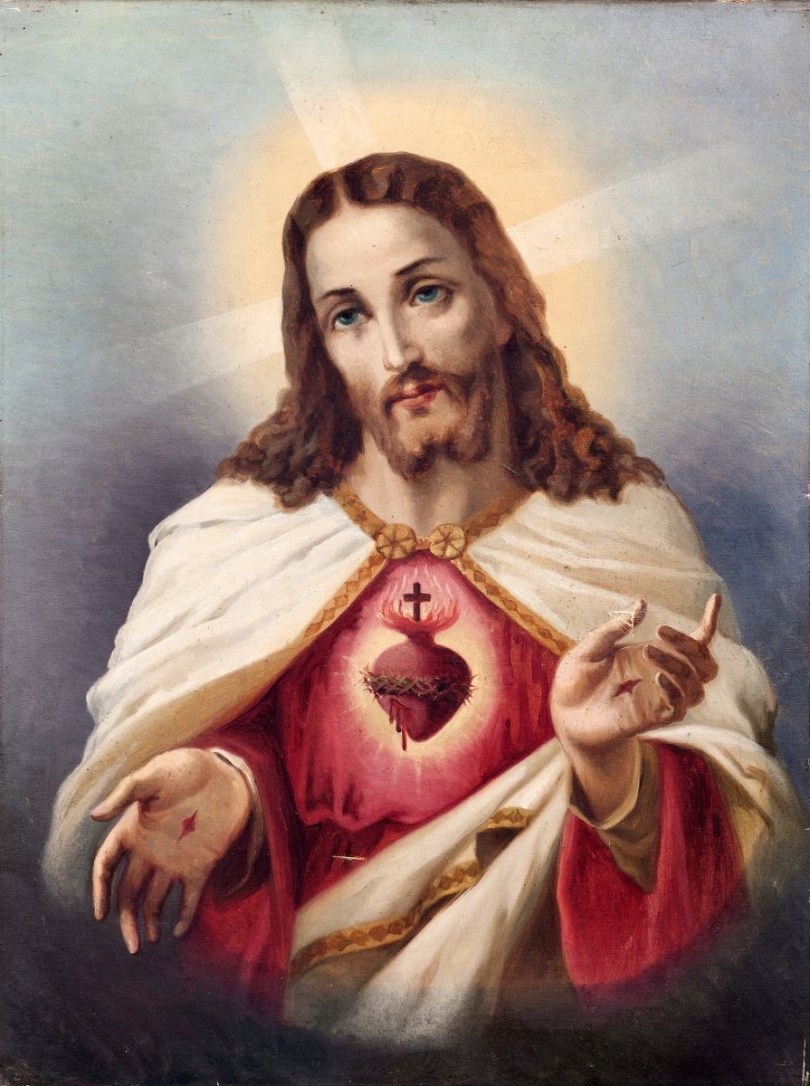
As Jesus sacrificed himself for love, devotion to the Sacred Heart of Jesus is a noteworthy peculiarity, as is some of the accompanying imagery. Within the Roman Catholic tradition, the Sacred Heart is a symbol of God’s boundless and passionate love for humankind. Nothing of the sort existed during the first ten centuries of Christianity. The Crusades revived religious life and inspired monks and nuns to revere Jesus’ wounds, including his heart, as sacred. The Franciscan monk Bonaventure wrote in 1274, ‘Who is there who would not love this wounded heart? Who would not love in return Him, who loves so much?’ Over time, Jesus’ heart came to the centre stage of these devotions.
Women mystics played a crucial role in that development. Among them were Lutgardis of Aywières (1182–1246), Mechtilde of Hackeborn (1241–1298), and Gertrude of Helfta (1256–1302). The devotion to the Sacred Heart in its present form began with Margaret Mary Alacoque (1647–1690), a nun of the Order of the Visitation of Holy Mary, who claimed to have received revelations about the Sacred Heart from Jesus Christ between 1673 and 1675 in the Burgundian French village of Paray-le-Monial. Later, Mary of the Divine Heart (1863–1899), a religious sister of the Congregation of Our Lady of Charity of the Good Shepherd, reported receiving locutions and visions of Jesus Christ.
So, did Jesus sacrifice himself for God’s love, and did God not care about Jesus? And if so, why would God care about us? If that thought had occurred to the Church Fathers, they would have found it disturbing. If someone else were to find himself in the position Jesus once was, he might not be instantly enthusiastic about the proposition. But no one can go against the will of God. And you can fall in love with someone who has taken you hostage. It is a natural reaction known as Stockholm Syndrome. Having no choice makes things easier. You must try to save humankind if there is a slight chance of success. He knows he has to play his role in the script. And he can succeed, like Chief Inspector Clouseau, if that is the plot of the story. And if the absurd has hunted you down and cornered you, and you see no escape, you can better embrace it.
And is it so terrible to die for love? Everyone dies, usually for less agreeable reasons like a fatal encounter with a deadly disease, some random accident, old age or a war fought for the ego of a leader, or even worse, his stupidity. In hindsight, Jesus’ sacrifice was exceptionally functional. It created Christianity, a religion that claims we are unworthy of God’s grace and need to accept a saviour and follow him. It is an idea that can save us because we can’t fix our problems ourselves. We are religious creatures who need a fairy tale to believe in. And as Paul explained in his poem, you can speak every language, know all the secrets, and give your money to those in need, but it is pointless if you don’t have love. If it is a delusion, you can enjoy it for as long as it lasts. And if you must go down in infamy and die, you can better do it laughing. So, always look on the bright side of life,
Life’s a piece of shit When you look at it Life’s a laugh and death’s a joke, it’s true You’ll see it’s all a show Keep ’em laughin’ as you go Just remember that the last laugh is on you And
Always look on the bright side of life Always look on the right side of life
Monty Python, Always Look on the Bright Side of Life
Latest revision: 12 February 2026
Featured image: A cross in a heart formed with candles. Photos taken in Camp Tejas, Giddings, Texas, USA. Wingchi Poon. CC BY 3.0. Wikimedia Commons.
1. Forgery and Counter forgery: The Use of Literary Deceit in Early Christian Polemics. Bart D. Ehrman (2013). 2. The Oxford Bible Commentary. John Barton; John Muddiman, eds. (2001). New York: Oxford University Press. p. 1130. ISBN 978-0-19-875500-5.
During archaeological excavations, female figurines have been found. They could depict mother goddesses. The most famous example is the Venus of Willendorf, dating back to around 23,000 BC. In ancient cultures, mother goddesses represented fertility. The ability of women to bear offspring may have been central to Mother Goddess worship. Women give birth, and early humans may not have understood that men were the fathers. They may have thought men had no reproductive use and existed to please the women. Consequently, the Mother Goddess can give birth as a virgin, which is the miracle of the Mother Goddess. One of the best-known Mother Goddesses was Isis.
Women can be sure that their children are their own, but men can’t. When the fathers of children are unknown, families are often matrilineal, meaning that family lines run through mothers. The goddess worship may have disappeared because men desired to control women and their sexuality. The transition from hunting and gathering to agriculture may have played a crucial role in this development.
Hunter-gatherers were wanderers. They had fewer territorial conflicts. Population density was low, and they had no property, so it was easier to move on if a stronger group invaded a band’s territory.1 That changed with the advent of agriculture. Farmers had to defend their property and families against thieves and invaders. It became a matter of life and death, so warfare became more common and deadly. Giving up territory would mean starvation. Men are willing to protect women and children they consider their own. And they can walk out when they doubt their fatherhood. That gave them a position of power, allowing patriarchy to emerge.
Male dominance is almost universal among humans, with only a few exceptions, so it is something more than merely a cultural phenomenon. Our closest relatives, the chimpanzees, live in groups led by males, while the bonobos live in groups dominated by females. And so it is a natural human inclination.1As humans are programmable and have diverse cultures, they can overcome their natural inclinations and choose female leaders, or make female leadership the standard in their societies, and invent myths to justify the arrangement, such as stories about the Goddess creating men as companions for women.
As we have no written records, we know little about the lives of hunter-gatherers, their leaders and their family structures. Still, we do know that there must have been enormous cultural diversity, as they lived in small groups with little or no contact with one another. The lifestyle of hunter-gatherers was more favourable to female leadership and matrilineal families than in farming communities, so these were likely more common before the Agricultural Revolution. Peaceful conditions and a belief that men have no reproductive role, thus only exist to please women, could produce female-centred societies.
In her book, When God Was a Woman, historian Merlin Stone claims that goddess worship was the earliest religion in the Near and Middle East. The Creator was a woman before men rewrote history. Stone bases her claim on the discovery of female figurines in archaeological finds. In a 7,000-year-old settlement in Turkey, where archaeologists also found these figurines, families were matrilineal.2
The Garden of Eden features in an ancient Mesopotamian myth, the Epic of Gilgamesh. The garden was near the Tigris and Euphrates rivers. The Jews lived in exile in Babylon when their priests compiled their holy scriptures. The first chapters of Genesis take place in Mesopotamia. Jewish scribes tailored Mesopotamian myths to their needs and incorporated them into the Jewish Bible.
In the Epic of Gilgamesh, the gods created a man from clay, much like in Genesis. Adam means ‘he who came from the ground’. In another creation myth, a goddess gave birth to humanity. Eve means ‘living one’ or ‘life-giver’. The Biblical account might be a merger of these two stories. Eve, having been Adam’s mother, makes more sense than Eve coming from Adam’s rib. She is the Mother of All the Living (Genesis 3:20), and we are the woman’s offspring (seed) (Genesis 3:15). Elsewhere in the Bible, a child is the father’s offspring, which is a noteworthy difference. It implies that we come from women and that men have no reproductive role. That perspective sheds a new light on what Eve said about giving birth to Cain (Genesis 4:1),
Adam made love to his wife Eve, and she became pregnant and gave birth to Cain. She said, ‘With the help of the Lord I have brought forth a man.’
It wasn’t making love to Adam that made Eve give birth, but the Lord’s help. That is noteworthy because we are the woman’s offspring (seed). Perhaps Eve didn’t need Adam to have a child. There is another explanation. Long before the Jews went into exile in Babylon and picked up the story about the Garden of Eden, Asherah was the wife of El. They together were the supreme gods of the Canaanite divine council.3 Perhaps they, together, not only brought forth lesser deities like Yahweh, but also humanity, starting with Cain and Abel, so that Asherah was the Mother of All the Living.4 Later on, the Jews grew particularly attached to Yahweh, so Yahweh became their supreme deity, replacing El.
Asherah then became Yahweh’s wife. When the Jews were in exile in Babylon, they drew on local myths to rewrite their creation account. They combined a story in which the first woman gave birth to the first man with one in which God made the first man from clay. In the process, they may have turned the goddess Asherah into the woman Eve. And so, Adam came somewhat late for the first man. Asherah then went out of the window, as the Jews became monotheists. That is speculation, and few have dared to go there, for there is too little information to draw such a conclusion. However, it is plausible and explains this peculiarity quite neatly, a quality the truth also possesses.
In the original Mesopotamian tale, Eve gave birth to Adam without prior sexual intercourse. The miracle of the Mother Goddess is the virgin birth. Jesus supposedly was born of a virgin. Since God was supposedly Jesus’ Father, he couldn’t have had a human father. That is the reason we know about. However, it also alluded to Adam’s birth. Jesus was God’s son because he was Adam reincarnated, the son of Eve, who was God.
In scriptural religions, inventing a new story is preferable to contradicting an existing one, as that would imply that the scriptures are corrupt. And you can’t have that, most notably when Paul was around. The virgin birth was a substitute for the facts, as God was to become Jesus’ father, as it reflected God being Jesus’ mother, as God’s name was also Mary. It miraculously solved a serious impediment to unity within the Church, prompting early Christians to agree on this compromise.
The Bible claims that God created a man from the dust of the ground (Genesis 2:7) to work in the garden (Genesis 2:15) and made a woman as a companion for the man (Genesis 2:18). This reflects a merging with another creation myth. Mesopotamia had several creation myths, including one where the gods fashioned a man from clay to do the work. Also, the Bible has two. In Genesis 1, God creates all that is, and then in Genesis 2, God repeats some of that work. There has been some patching here and there to glue these two stories together.
In the original story of Eve and Adam, the man’s purpose was to be a mate for the woman. A reason to think so is that Genesis mentions the woman’s desire for her husband rather than the man’s desire for his wife (Genesis 3:16). If you live in a modern society that has undergone several waves of feminism, you may not realise how odd noting a woman’s desire for a man truly is. The Bible is a product of a patriarchal society. In a patriarchal society, a woman is often a man’s possession, and her desires are of no consequence. The original tale thus had a woman’s perspective. Eve was the leading character. She discussed eating the fruit with the serpent and made Adam eat from it (Genesis 3:1-6). And it was Eve who commented on Cain’s birth, not Adam (Genesis 4:1).
Also noteworthy is that a man left his father and mother to be with his wife (Genesis 2:24). This was how life was in Eden. In patrilineal societies, family groups centre on fathers, while in matrilineal societies, they centre on mothers. Women join their husbands’ families in patrilineal societies. The man leaving his father and mother thus suggests that family groups in Eden were matrilineal. Experts still debate whether hunter-gatherers lived in patrilineal or matrilineal groups. The limited interest among men in childcare suggests that matrilineal groups may have been the norm as long as there were no compelling reasons to do otherwise. These reasons emerged with the advent of agriculture. The title Mother of All the Living may also refer to the Mother Goddess.5 Ashera was the Mother Goddess in Canaan, and one of the deities of the Jews before they became monotheists. Eve also resembles Namma, the primordial mother in the story of Enki and Ninmah.
The story of the Fall is about the curse of knowledge. The Bible tells us it is the knowledge of good and evil, but that is the twist that the Jews gave to the story. You can infer that from what followed. They ate from the tree and realised that they were naked. In other words, they came to know, and there is nothing evil about being naked if that was how life was in Paradise. More knowledge doesn’t make your life better, and God knew.
Knowledge of agriculture enabled the switch from hunting and gathering to agriculture, thereby condemning humankind to a life of toil. The life of hunter-gatherers was more agreeable than the plight of farmers. They had a more varied diet, worked fewer hours, and spent their time doing more exciting things. Additionally, they were less likely to face starvation, disease, and warfare. The Agricultural Revolution did increase the total amount of available food. Yet, this extra food didn’t lead to a better life. It only allowed more people to survive, including elites such as kings and priests, who ate the extra food. The peasants worked harder than the foragers before them and got a poorer life in return.1
The Garden of Eden provided for everything. It was the supposed ideal state of humans, in which they tended and oversaw God’s garden. Eve and Adam were nude (Genesis 2:25), as hunter-gatherers in the jungle today are, so they lived simple lives. They may have been vegetarians, as God only gave them permission to eat plants (Genesis 1:28-30),
God blessed them and said to them, ‘Be fruitful and increase in number; fill the earth and subdue it. Rule over the fish in the sea and the birds in the sky and over every living creature that moves on the ground.’ Then God said, ‘I give you every seed-bearing plant on the face of the whole earth and every tree that has fruit with seed in it. They will be yours for food. And to all the beasts of the earth and all the birds in the sky and all the creatures that move along the ground—everything that has the breath of life in it—I give every green plant for food.’ And it was so.
God once again commanded the man that he was free to eat from any tree in the garden (Genesis 2:16), but did not mention animals. Ruling the animals is not the same as eating them. Eden is the ideal state of Paradise, where we can eat every plant. Meat is a natural part of our diet, so its omission is noteworthy. Yet, it is an idealistic state. God didn’t intend animals to eat meat, either, which obviously is not reality as it is.
As for later verses allowing us to eat animals, it is the same as it is for divorce. Jesus said that it was a concession to our hardness of heart rather than God’s intent. It is where idealism meets a reality check. If a marriage is unhappy, divorce may be the best option. And we may need to eat meat to get the required nutrients. Still, the ruling suggests that eating more meat than necessary, mistreating animals, or killing animals for fun is a sin.
After the Fall, working the land became a life of toil (Genesis 3:17-19), the curse of the Agricultural Revolution. The original tale was also about the downfall of women. Women had to obey their husbands from then on (Genesis 3:16). So, when Jesus said that Moses permitted men to divorce their wives because their hearts were hard, but that it was not this way from the beginning (Matthew 19:18), he could have said the same about slaughtering and eating animals.
In ancient cultures, people venerated snakes for their wisdom so that a snake could provide advice. The snake being evil might be a later-added twist. The tree of knowledge, in the original story, thus may have provided knowledge as such, and that knowledge being about good and evil may also be a later addition. The reason to think so is that after eating from it, Eve and Adam discovered their nakedness rather than found out about good and evil. The theme relates to the sacred tree, which may explain why eating from it was forbidden. Eve’s deed may reflect women’s role in the start of the Agricultural Revolution. Farmers must protect their crops from thieves. Otherwise, they face starvation. It condemned men to a life of warfare. It started with Cain and Abel.
The Abrahamic religions disagree with our Creator being a woman. The Jewish deity Yahweh and the Arabian deity Allah were male, even though many people now think God has no gender. Yahweh and Allah had wives and children before monotheism took over. Allah was at first the supreme deity of Mecca. Later, the owner of the universe appropriated this title. To address the confusion this act generated, the Quran stresses that God has no partner or children. Unlike Christians, Jews and Muslims don’t see God as a Father. Yet Christians are born of God, a most remarkable wording.
The Quran extensively mentions the creation of Adam but says little about the origin of Eve. The Quran doesn’t claim that Eve came from Adam’s rib but that men and women come from one soul (Quran 4:1, 7:189). It relates to Genesis 1:27, in which God created males and females in His image, so that the soul could be God. The Quran further claims that God created Jesus like Adam from dust (Quran 3:59). The Quran also corroborates the virgin birth story of Jesus (Quran 3:47, 66:12). Christians understand the virgin birth story in the context of God being Jesus’ Father, so that he can’t have a human father. However, the Quran makes it clear that God is not Jesus’ Father. And so, being created from dust could refer to birth from a virgin, so Eve could have been Adam’s mother.
The account of the Fall in the Quran differs from that in Genesis in several noteworthy respects. The Quran features no serpent, and Eve didn’t make Adam eat from the tree. The Quran holds both Eve and Adam responsible for the Fall (Quran 7:19-23). Another fragment only blames Adam,
But Satan whispered to him, saying, ‘O Adam! Shall I show you the Tree of Immortality and a kingdom that does not fade away?’ So they both [Eve and Adam]] ate from the tree and then their nakedness was exposed to them, prompting them to cover themselves with leaves from Paradise. So Adam disobeyed his Lord, and so he lost his way.
(Quran 20:120-121)
The historical context of the original story, the curse of the Agricultural Revolution, and the role of women in it have been lost in the Quran. The first Christians believed that Eve was God, the Mother of all the Living, who gave birth to Adam, that Mary Magdalene was Eve, and Jesus was Adam. So Adam and, therefore, Jesus were the Son of God. Humanity descends from Eve, so we are not only God’s children, but also Jesus’ children.
Humans are religious creatures who fight over the myths they believe in, and we will continue to do so until the very end, with increasingly sophisticated means, until humans have terminated themselves. Hence, we need to unite behind a single myth to live in peace. That only happens in fairy-tale worlds where myths can become reality. It may be why Christianity and Islam have been so intolerant towards infidels. Tribal people feel a connection to one another because they believe they share common ancestors. The stories about these common ancestors are myths, such as the tale about Eve and Adam. Eve and Adam came alive again as Mary Magdalene and Jesus. A myth of shared ancestors can turn humanity into a single tribe. And so, Paul may have realised that the good news of Jesus concerns humankind rather than just the Jews.
Latest revision: 23 July 2026
Featured image: Eve in the Garden of Eden. Henri Rousseau (1906-1910). Public Domain. Wikimedia Commons.
Other images: Venus of Willendorf. Don Hitchcock (2008). Wikimedia Commons.
1. A Brief History Of Humankind. Yuval Noah Harari (2014). Harvill Secker. 2. Ancient ‘female-centered’ society thrived 9,000 years ago in a proto-city in Turkey. Kristina Killgrove (2025). Livescience. 3. Daniel O. McClellan, Deity and Divine Agency in the Hebrew Bible: Cognitive Perspectives (PhD diss., University of Exeter, 2020), 327 4. Eve as a goddess/consort of Yahweh? r/AskBibleScholars (2024). [link] 5. Asherah – Wikipedia [link]: Some scholars have found an early link between Asherah and Eve, based upon the coincidence of their common title as “the mother of all living” in Genesis 3:20 through the identification with the Hurrian mother goddess Hebat. Asherah was also given the title Chawat, from which the Aramaic name Hawwah and the biblical name Eve are derived.
We live inside a virtual reality created by an advanced civilisation to entertain an individual we call God. Like it or not, it is why we exist. That civilisation is probably humanoid, which means that God could be like us, with human imagination and desires. What is also worth noting, and that can hurt your ego, is that all that happens goes according to a script, so that thinking of us as mere worms would be a delusion of grandeur. Think of it. Real worms decide for themselves how they grovel and when. And we don’t. Welcome to the Theatre of the Absurd. We are mere actors in a play, and no one thinks. We follow the script, and there is no exit, no life outside, like in the film The Matrix. The road to enlightenment starts with the acceptance of our complete insignificance.
So what about René Descartes, that world-famous fellow who once said, ‘I think, therefore I exist.’ Was he wrong? As the reasoning above painfully lays out, he starts with a debatable assumption: ‘I think.’ He then arrives at a logical conclusion: ‘Therefore, I exist.’ That made him stamp a realness certificate on his person. But logic in fantasy land is just basing conclusions on imagined assumptions. At least the logic is infallible. So, did Descartes think? Not really. Even then, he might still have had an existence. That is also dubious, however, because God imagined us. You can ask yourself: Do Spike and Suzy exist? They are comic characters created by Willy Vandersteen, who no longer exists, if he had ever done so, because he has stopped breathing. If you go down that road, everything you imagine exists. I just imagined a unicorn. Do unicorns now exist?
That is the question of being. Philosophers discuss such questions. Scientists agree that merely thinking of a unicorn doesn’t make it real. Saying ‘be’ doesn’t generate a bee. You can give such a command to a computer, and you get a simulation of a bee. Now you get how God could have created this world in six days. It might as well have been six seconds. So, if God exists, we don’t exist, and we are just imaginations like unicorns. Countless non-existent minds have wasted their time and energy on the question, ‘Does God exist?’ Indeed, the gods we imagine also don’t exist because we imagine them, and that includes the God of Abraham. There is only a God who exists in reality.
If we exist to entertain an individual from an advanced civilisation, God must be a person who, unlike us, might be real. Yes, God might be yet another virtual reality character in a simulation layer above us, but that is beyond our possibilities to find out. And let’s not waste our time on questions we can’t answer. So, who is this person, God? That we cannot know. Still, we might uncover something, at least. If we are here to entertain God, what is the fun of standing on the sidelines? Why not take part yourself? If God plays roles and becomes one of us, we might identify some of those individuals. The starting point for the inquiry is Jesus. No one had ever felt a closer relationship with God than he, so there is a good chance he knew God as a person.
The Gospels tell us that Jesus called God ‘Father’. They suggest a close personal relationship, so Jesus thought of himself as the Son of God. There is something off about Jesus’ Father as He can give birth (John 1:12-13). All four official Gospels imply that Jesus was the bridegroom (Mark 2:19-20, Matthew 9:15, Luke 5:34-35, John 3:27-30), but don’t mention the bride, which is also quite mysterious. The Church tells us that Jesus married the Church. Now, the Church didn’t exist when Jesus lived, so a historian would call it an anachronism. It is like saying that the Roman Emperor Caesar took an aeroplane to Egypt to spend his holidays with Cleopatra. That is impossible because there were no aeroplanes 2,000 years ago. The Gospels don’t say Jesus married the Church. The Church didn’t exist yet, and Jesus wasn’t planning to found it either. So, why would the Church lie about Jesus’ marriage? Are we not allowed to know the truth?
You can smell a rat here. And it is a huge and smelly one. Christians claim that God is love. Jews and Muslims don’t. Do they not worship the same deity? Is there something missing that Jesus’ inner circle knew about? And is it the identity of the Bride? That is indeed the case. The Bride of Christ was God in the person of Mary Magdalene. She was one of God’s avatars. She made Jesus believe he was Adam reincarnated and that She was Eve reincarnated, that Eve didn’t come from Adam’s rib, but that Eve gave birth to Adam, and that they were an eternal couple living from the beginning of Creation until the End of Times. That is why Jesus believed he was the Son of God.
Simon Peter said to Jesus, ‘You are the Messiah, the Son of the living God.’ (Matthew 16:16) This phrase appears in the Jewish Bible (Deuteronomy 5:26, Jeremiah 10:10, Psalm 42:2), but Simon Peter’s use of it is noteworthy. In Deuteronomy, the living God refers to God’s active presence on Earth, meaning that God is not some mythical figure, of whom we have only tales, nor a lifeless statue, but someone present in our midst. In Moses’ time, it was a pillar of fire. With the Bride gone, these words have lost their meaning, which led some later Christians to believe that Jesus was God.
Jesus was God’s son because Adam was God’s son. Adam is the Son of God (Luke 3:38), Jesus is the Firstborn of all Creation (Colossians 1:15), and Jesus gave us the right to become children of God who are born of God (John 1:12-13). As Adam, he was the father and God the Mother of humankind. The Jewish scriptures about the fantasy character, Yahweh, also known as the God of Abraham, don’t mention that. And so, Paul, who took these scriptures as seriously as a Pharisee, perhaps because he was a former Pharisee, made God male in his theology and persuaded the early Church to do the same. He succeeded because his work made it possible to unite the early Church. Muhammad also married God in the person of Khadijah bint Khuwaylid. Unlike Jesus, he didn’t know.
Those who take offence at God in the person of Eve marrying Her son Adam, but accept that God allowed millions of people to be slaughtered in wars or die of terrible diseases, or even chose to do so, have a problem with their priorities. And by the way, you are not in a position to judge God. In any case, the story of Eve and Adam is a myth. Eve never took Her son as Her husband, as Eve and Adam never existed. It is only what Mary Magdalene made Jesus believe. So, you can rest assured that nothing of that kind ever happened, except for the millions of people that God let die due to wars and diseases. A possible excuse for doing so is that it makes the simulation more realistic. Apart from that, everything being peachy all the time doesn’t make for a good story.
Jesus and Muhammad have lived. The accounts of their lives may be inaccurate because they date from decades after they died, but the early history of the Israelites in the Jewish Bible – the Jews call it Tanakh – is a fantasy. Archaeological evidence doesn’t support it. Moses never brought the Israelites from Egypt into the Promised Land. The story still has a historical origin. Around the time Moses allegedly lived, the Egyptians who governed Canaan went home, thereby liberating Israel from Egyptian oppression. Later on, the account in the Bible often has a closer relationship to historical events.
That leaves us with a question: how did God meddle with the Jewish nation and their religion? Historians have discovered that the Canaanites gradually formed tribes and, later, petty kingdoms after the Egyptians had departed, in what the Jewish Bible refers to as the Era of the Judges. Local leaders organised warfare and settled disputes. They were the judges. The Jewish Bible says they had nationwide authority, but that is incorrect.
The oldest source of the entire Jewish Bible is the Song of Deborah. Historians believe the song dates back to shortly after the Egyptians left. It likely didn’t pop up out of nowhere. Deborah brought victory to a tribe that later became part of the Jewish nation. Deborah attributed that victory to Yahweh, who, as a son of the Canaanite supreme deity El, would otherwise have remained an obscure, inferior deity. In this way, Deborah initiated the Yahweh cult, which today has four billion followers. The historical genesis of the Bible is not Creation but Deborah. She is the Mother of Israel and likely the earliest historical figure in the Jewish Bible, the founder of the Jewish nation, and an avatar of God.
The God of Abraham, known as Yahweh, the Father, and Allah, thus is a veil behind which the owner of this universe has operated so far. She only revealed Herself to Jesus. It made Jesus a unique prophet who came to see himself as the eternally living Son of God. There is no evidence that Jesus was Adam, but God made him think he was. God, in the person of Mary Magdalene, convinced Jesus that someone had corrupted the story of Eve and Adam. She appealed to rational thinking, arguing that Eve’s creation from Adam’s rib makes less sense than Adam being Eve’s son. God could have pointed out traces of fraud, such as Eve being the Mother of All the Living. So, what about Adam, who called her like so? Apart from that, Mary Magdalene must have had a very persuasive personality because She made him die on the cross. Jesus thus placed evidence and logic over religious dogmas. He was a true religious revolutionary. Yet, evidence-based religion was a tradition that died with him. Jesus was 2,000 years ahead of his time.
That God is a Mother who can appear as an ordinary woman is not that far-fetched. The leader of the Church Ministry of Mother of All Creation cult claimed she was God and that God had had 534 lives, including Jesus, Cleopatra, Joan of Arc, and Marilyn Monroe. The latter three guesses might be spot-on, but her claim of having been Jesus proves she made it all up. Mary Magdalene, however, may not only have claimed it but also succeeded in convincing Jesus of it. It led him to start a world religion that now has over two billion followers. We have yet to see the leader of the Church Ministry of Mother of All Creation cult pull that off.
Jesus’ inner circle knew that God had wedded Jesus, but the Gospels don’t mention this crucial factoid that everyone would have wanted to know. Scholars didn’t ask themselves why there were no surviving eyewitness accounts. Isn’t that suspicious? Here is your answer. And why did the early leaders of the Church do it? To religious Jews, the idea of God being a woman who married Jesus was alien or even blasphemous. Most early Christians were Jewish followers who had heard of Jesus and his miracles but lacked detailed knowledge of his life and teachings.
Jewish prophets were human, and they expected a human messiah rather than a godlike being. In their view, Jesus was a mere human, so if you read Mark, Matthew or Luke, Jesus appears human, not godlike. And so, the Jews couldn’t handle that God is a woman who can take a human form and marry Jesus. Gentiles had no problem with it. They have tales about female deities and gods having sex with humans. That is why the Gospel of John is so different from the others. It was a controversy that tore the early Church apart.
A compromise, the Christian theology invented by Paul, resolved the conflict. Paul turned Jesus into a godlike Jewish messiah, the eternally living Son of God, the one promised by the Jewish scriptures. It required some imagination and twisting of the facts to reconcile these two irreconcilable viewpoints. Paul’s theology became the Christianity we know today. Merging with the Gentile tradition required a major compromise for Jewish Christians. Following Jewish laws, such as circumcision, which Paul, as a former Pharisee, must have held dear, was no longer required, as Gentile Christians, who had no business with the Jewish sky god cult, had to accept that God was a Father rather than a Mother, which was no less than inverting the truth.
It may seem rather outrageous to the average humourless soul, but it makes a good story to reveal this in the End Times. God lives eternally, or at least thousands of years, and uses this world and us to pass Her time. As Cyndi Lauper once enlightened us, ‘Girls just want to have fun.’ That is as good an explanation as it gets, and it brings us to the hidden messages in pop music. The song ‘Gimme the Prize’ by Queen has the following lines,
Here I am, I’m the master of your destiny I am the one, the only one, I am the God of kingdom come … Give me your kings, let me squeeze them in my hands Your puny princes Your so-called leaders of your land I’ll eat them whole before I’m done The battle’s fought, and the game is won
Queen, Gimme the Prize
Queen is the performing artist, so the hidden message is that the God of the coming kingdom is a Queen. The song features threats against the so-called leaders of the world. That looks like an end-of-time scenario. It is a queer pun, and Freddy Mercury was the performing artist. In the video clip of another Queen song, ‘I Want to Break Free,’ Mercury and the band members dressed in women’s clothing. In Western Europe, we found it funny. That was different elsewhere. The song had a lukewarm reception in the United States, a country that has culturally enriched us with websites like godhatesfags.com. Christianity is the religion of love, but hatred of LGBTQ people spews from conservative Christians. Given the trans hysteria that grips them, it is particularly ironic that early Christians have performed a sex change on God. Christians justify their hate with Bible verses. Romans 1:24-27 is particularly clear on the matter. These were not Jesus’ words but Paul’s. Jesus said, ‘Who is without sin, cast the first stone.’
This world exists for entertainment, and God likes to joke around. Muslims take blasphemy very seriously. Hurt Muslim feelings have made the headlines several times. Making cartoons of Muhammad can be your death sentence. But why only Muhammad? He isn’t God. Why not treat Moses and Jesus with the same regard? The reward for killing a comedian will not be 72 desperate virgins trying to take advantage of your lust. If God make a joke out of your religion, you’d better laugh. The Abrahamic religions restricted the freedom of women, but Islam more than the others. Like Jesus, Muhammad married God, only he didn’t know. He had a loving marriage after his wife, Khadijah bint Khuwaylid, proposed to him. Islam may be funny, but Christianity is even more hilarious.
Paul’s obfuscation of the relationship between God and Jesus gave Christianity its unique and baffling theology. Drinking Christ’s blood, eating his body, and the resurrection of the dead could be good ingredients for a motion picture called Zombie Apocalypse. Indeed, these rituals and beliefs are odd and could suit a cannibalistic sect. The outlandishness of Christianity begins with the idea that we are all cursed because Eve and Adam sinned. And then came Jesus, who sacrificed himself for our sins, so you can save yourself by following him. It seems outlandish, but Paul’s theological innovation is perhaps one of the most ingenious parts of God’s plan.
Humans are the most destructive species ever to roam this planet. And we are about to commit suicide. Our ability to believe in myths can unite us and enable us to perform extraordinary deeds, but unless we all believe the same myth, we will keep on fighting over our myths. That is why monotheist religions like Christianity and Islam are intolerant and have eliminated other myths by force, because we can only survive by believing in a single myth. Thinking that we are morally depraved, unworthy of God’s grace and in dire need of a saviour might save us from our collective stupidity. Perhaps even that is not enough. Humans are such a complete failure that saving us requires God to control the script. If we could think for ourselves, we would ruin it for sure.