Balls on the ground
The Netherlands has been one of the most liberal countries in the world. The country has a long tradition of tolerance dating back to the Dutch Republic. It was also a fairy-tale society, with Van Kooten and De Bie seeking the nuance. Their characters represented the so-called conservative, ignorant and xenophobic undercurrent in Dutch society, and also hustlers, such as Jacobse and Van Es, infiltrating politics with their corrupt schemes and dubious deals. That undercurrent didn’t go away. Instead, it grew stronger as immigrants continued to arrive, causing increasing unease. The progressive values many Dutch cherished didn’t agree with the conservative worldviews of many immigrants, most notably Muslims. And then there were the crimes and misconduct of particular groups. These feelings needed a catalyst to give the discontent a voice. The existing political parties had become complacent and didn’t see what was coming. Nor had I.
After the terrorist attacks of 11 September 2001, a maverick politician, Pim Fortuyn, rose to prominence with his strong views on immigration and Islam. Fortuyn claimed that leftists were to blame for immigration. He called them the Leftist Church for their moral superiority claims, who would call you a racist if you opposed immigration. There is a lot of racism, but it was not the reason why the movement gained strength. Many Dutch people desired to limit immigration, most notably of people who had trouble adapting. Only, no politician raised the issue the way Fortuyn did. The others were careful not to promote division. Most immigrants did okay, so inciting hatred would destroy society, they reasoned. Keeping a good society is not a simple affair. It is like juggling several balls in the air. Fortuyn didn’t seem to care and sought personal fame. And he believed that allowing immigration to continue would make it harder to maintain a good society.
Fortuyn attacked the fairy tale of the multicultural society and called it a failure. I had believed in it or wanted to believe in it. If there is ever to be world peace, the world must unite and become one multicultural society. Living with people from different cultures isn’t easy and can go wrong easily, and I knew that from what had happened to me as a student. Culture can be an unbridgeable gap. Yet, you could live separate lives as long as you don’t cause trouble. Some Fortuyn supporters seemed to anticipate civil war and hoped that it would start sooner rather than later, when the authentic white Dutch were still a majority. The atmosphere quickly turned grim. Under the guise of free speech, the sewers opened, and the rivers of hatred flooded freely into the open. Fortuyn’s rise made headlines in the international press as it represented a clear break with the past, occurring in what many believed was the world’s most liberal country.
Having lived in neighbourhoods with ethnic minorities myself, the picture the fascists presented diverged from my personal experiences. Add to that that I had seen a fair share of bullying and random violence, so harassment complaints didn’t impress me at first. Your life is normal for you, and if others make a fuss about what you think is normal, you might see them as a bunch of whiners. So, my initial belief was that it was mostly bigotry, racism and hatred, making me think that people would calm down over time. A leftist poster with the avatar Kingie launched a new website, BeursKings (MarketKings), with help from Danger Money, who programmed it. A small group left IEX and joined the new message board, including me. BeursKings remained in operation for several years. Kingie once posted photographs of himself. That was a shock. He looked like my double. In hindsight, that is remarkable because of his avatar name. Others who remained on IEX also joined the BeursKings message board. I was part of the so-called Leftist Church and had tried to rein in the bigotry. One of the IEX posters once called me ‘vicar’ for my moralising.
Somehow, I had come into his crosshairs. He had a high regard for himself. A spectacular profit he had made on a semiconductor stock might have led him to think he was a genius. The Dot-Com bubble led some people to believe, for a while, that they were stock-market legends, beating investment gurus like Warren Buffett, until the bubble imploded. My investment returns have never justified those kinds of ideas, but I could write stories people liked to read. This guy was a physicist working in a laboratory, or so he once wrote, and a Czech, a relative of Franz Kafka, he further confided on the message board. He claimed that his investment results came from ‘observing the herd and anticipating where it would go next’ rather than from luck in picking a winning stock. He was eager to pick on me, but when I returned years later to IEX, he praised me for identifying interest charges on money and debts as a root cause of financial collapse.
Shortly before the 2002 elections, a left-wing loner assassinated Fortuyn. Fortuyn had hinted at that possibility. If something were to happen to him, he claimed, it would be because establishment politicians had demonised him. The socialist-in-name-only Marcel van Dam, who lived in a luxurious mansion far from multicultural neighbourhoods and had always been eager to take the moral high ground, once called Fortuyn an ‘exceptionally inferior human.’ And so, you may ask yourself, which of the two was the most superb Nazi? Fortuyn gave a presentable at-your-service salute that might go well in some fascist circles, but his ‘inferior human’ remark gave Van Dam a clear edge.
Other politicians have called Fortuyn ‘extreme’ or ‘demolishing society’ as he was stirring up public sentiment, which might lead to violence. Fortuyn was a man of the theatre, hysterically hyping the wrongs others did to him while acting like a jerk himself. The Netherlands is not a violent country. It was the first political assassination in 400 years, so no one saw it coming. And the poisoned climate was his doing as well. The civil war didn’t arrive, but death threats to politicians have become common. The attitudes toward immigrants and Islam have also changed. Fifteen years later, the United States saw the rise of a similar leader.
Fortuyn’s assassin, Volkert van der Graaf, was diagnosed with Asperger’s syndrome. He was someone like me. To him, Fortuyn may have been a new Hitler on the rise. He feared Fortuyn would tear down Dutch society so that the weak, such as the poor and refugees, would suffer, and also animals, as he had been an animal rights activist. Van der Graaf drew a logical conclusion from the facts, or so he believed. The problem with this kind of thinking is that we don’t know the future. Van der Graaf had good intentions, but Fortuyn also believed he was serving the Netherlands. Yet, there was something sinister about Fortuyn. I am not a trained psychologist, but Fortuyn wanted to be the centre of attention and wield power, and didn’t care about the consequences, much like Donald Trump.
Harry Mens, a Dutch real estate tycoon whom you might call the Dutch Donald Trump, had promoted Fortuyn on his television show, Business Class. So, like Trump, Mens had a television show. Fortuyn’s appearance on his show foreshadowed a new type of politics, common in the United States but not in the Netherlands, in which wealthy moneymen fund the politicians. I found Mr Mens to be a questionable character, who boasted and flaunted his wealth. At the time, I didn’t think of Trump, but there are parallels. His programme was about investments with people in suits and dresses promoting their investment services. A few advertisers on his show turned out to be frauds, such as Palm Invest.
I see Pim Fortuyn and Donald Trump as narcissistic psychopaths. These are not official diagnoses, but personal impressions. However, I am not alone. Some psychoanalysts concluded that Fortuyn was a narcissist, possibly because of feelings of inferiority that he needed to compensate for with praise. It was all about him, and other people were just utensils. His neurotic disturbances and unresolved personality flaws made Pim Fortuyn such a powerful force. One psychoanalyst said, ‘Imagine if he had to go on a state visit to US President Bush. He would exhibit Sun King-like behaviour.’1 To Fortuyn, the US President would have been a mere extra in the Pim Fortuyn show. Even though the psychoanalysts didn’t raise that particular issue, Pim Fortuyn seemed to enjoy hurting other people’s feelings, making me think he was a psychopath as well.
If you consider the characteristics of narcissistic psychopaths, you might discover they are the opposite of Asperger’s syndrome. I name a few: (1) thriving on chaos versus thriving in order, (2) desiring to be the centre of attention versus not wanting attention or praise, (3) manipulative and lying versus honest and forthright and (4) charming versus impolite. At first glance, Fortuyn and Trump seemed impolite rather than charming. That needs further explanation. First, you don’t have to check all the boxes to be autistic or a psychopath. And second, the impoliteness of the autistic person comes from being honest. By being rude, Fortuyn and Trump catered to their supporters’ fear and anger. They told them what they wanted to hear. Still, I think that Fortuyn and Trump both believed that what they were doing was necessary. What can make psychopaths successful as leaders is that they are willing to hurt people, which may be required to do what is necessary. With these words, I conclude my psychoanalysis session.
Life went on
Beurkings also attracted a few posters who remained on IEX. They were the most colourful ones. One of them, Xzorro, didn’t believe the 9/11 conspiracy theories and thought that the success of the attacks was due to the incompetence of the American authorities. His conspiracy thinking took another direction. He believed the allegations that a high-ranking Dutch Prosecution official, Joris Demmink, had had sex with underage male prostitutes and that there was a conspiracy within the Dutch government to cover it up. An investigative journalist and conspiracy theorist, Micha Kat, had pursued the matter relentlessly for years. In the 1990s, there had been a police investigation into possible child abuse by four high-ranking government officials.
The investigation had collapsed after someone had leaked information. During raids, the police found no incriminating evidence on the suspects. Fred Teeven, who had led the investigation, later stated that Demmink had not been a person of interest in that investigation. The Dutch newspaper AD later claimed that Demmink had contact in the 1980s with a pimp of underage boys. Kat was onto something, but he may not have been right. He was also a nutcase. Kat later claimed that children buried in a Bodegraven cemetery were victims of Satanic child abusers, which was nonsense and easy to disprove. And Kat had a conviction for making death threats to a fellow journalist.
Another noteworthy poster on BeursKings, Gung Ho, who lived in the Dutch countryside, favoured traditional US conservatism and posted lengthy pieces copied from American conservative websites, including some claiming that US Neoconservatives were Leninist agitators. He enthusiastically promoted a penny stock, Clifton Mining, and believed that colloidal silver was a cure against many diseases. That made him the subject of mockery, most notably by Amoricano, an American of Dutch origin who had long been on IEX. Amoricano was a Democrat who ridiculed conspiracy thinking, quackery and pushing penny stocks. Gung Ho might have been in the military and had friends in the American military, or so his sparse remarks about his personal life suggested.
Gung Ho posted comments about the Neoconservatives in the Bush Administration being chicken hawks, so cowards who send others to war while having done no military service themselves. His use of language was odd, which made his lengthy texts amusing. The connection he made between Neoconservatism and Leninism seemed obscure to me at the time. Still, like the Leninists, the Neoconservatives use Hegel’s dialectic to promote social progress via revolutions and wars. The conflict between the West and Islam was their latest project, founded on the clash-of-civilisations ideology, and the Iraq War was one of its consequences. Traditional conservatives like Gung Ho opposed these methods.
There was also a psychiatrist on BeursKings. He had quit his job and tried to make a living by day trading. He posted under the name Kindval, a football player from the 1970s. He didn’t seem to like me. When someone attacked me personally or for my political views, he consistently upvoted these comments. He was usually a bit edgy and irritable, making me think that his life as a parasite didn’t work out so well for him, and he would have to work for a living again. I didn’t make those kinds of comments, so that was not why he disliked me. Once, Gung Ho went loose on him by suggesting he had psychological issues.
I upvoted that comment. It was a rare occasion for me to upvote a negative comment. Kindval became agitated about Gung Ho’s comment, but even more so about my upvote, which was particularly odd, as he had done the same to me several times before, never missing a single opportunity. That made me think that he was, as Gung Ho implied, on his way to a nervous breakdown, thereby confirming the prejudice of psychiatrists choosing their profession because of having mental issues themselves.
Fortuyn’s rise had made me curious about the troubles in the multicultural society. The conduct of young Moroccans received the most attention, also from Fortuyn. The Dutch secret service AIVD has found that Fortuyn had sex with underage boys, including Moroccans, which casts another light on Fortuyn’s interest in Moroccan boys. Yet Fortuyn was not the only one mentioning the issue. There seemed to be widespread agreement among those who knew. A social democrat, Rob Oudkerk, used the adjective ‘kut ‘, which translates best to ‘shit’ to go with the group. The fallout of my student years of not fitting in had made me preoccupied with cultural issues. The multicultural society has to work because nation-states and tribes fight wars. So, what stands in the way of success? Is the gap between Islamic and Western culture unbridgeable? It kindled my interest in Muslims and their beliefs. And why is there trouble?
Moroccans are a disliked minority. Some other minority groups also have issues, but Moroccans receive the most negative attention. When the nationalist politician Geert Wilders singled out one minority for deportation, he chose the Moroccans in his infamous ‘fewer Moroccans’ quote, ‘Fewer Moroccans. Let us take care of that.’ Indeed, they have a serious likeability problem. The reason is conduct. When people complain about youths causing trouble, it is most often about Moroccans. To illustrate the issue, people of nearly every nationality live in the Netherlands, but during the 2026 Football World Cup, riots broke out only after the Moroccan national team played. And so there definitely is something rotten. At least, they behave as if Judgement Day would not be in their lifetimes. Their mistake. They should have paid more attention in the mosque. That led me to join the Maroc.nl message board for people with a Moroccan background in 2004.
For two decades, I have regularly been on that message board. There were all kinds of people on it, including a few of those troublemakers. As far as the extent of the problems go, in most ethnic groups, 80% to 90% of the people check out okay. In that sense, Moroccans are not that different from other ethnic groups. Yet how the remaining behave makes Moroccans stand out. And the police are doing very little, as their provocative and intimidating acts are usually too minor to be prosecuted. That makes it a festering issue. A few times, someone raised the argument that Dutch football hooligans are worse. That is indeed the case, but they make up a small percentage of the population.
There is a historical background. The Netherlands had invited mountain dwellers to work in their factories. They were Berbers who call themselves Imazighen, meaning ‘free people.’ Among them were the pirates who made the Mediterranean and the Atlantic unsafe between 1500 and 1800 AD. Like the Dutch, they were engaged in the slave trade. They had what the Dutch would call a ‘VOC mentality.’ As faithful Muslims, they only took Christian slaves, raiding European ships and coasts. The Dutch were sought after by these pirates because they were rich and could be sold for ransom. Over the centuries, their franchise processed over 1,000,000 slaves. As true entrepreneurs, they were a liberty-loving people who disliked government. And so, the colonisation of these unruly people was brutal. The Spanish used poison gases to repress a rebellion in the 1920s. In Morocco, the Berbers have long been secondary citizens in a country dominated by Arab culture. Today, the Moroccan government recognises their culture and language.
The Dutch expected that these ‘guest labourers’ would return home and initially didn’t invest in their integration. Yet, most didn’t return because they had stayed for decades and had raised families in the Netherlands. They were denied opportunities, for example, by receiving advice to pursue lower levels of education than native Dutch with similar intelligence scores. Nordin Ghouddani, a man of Moroccan descent, and his Dutch friend Thomas Rijsman have been friends since primary school and are now both sports journalists. After primary school, Rijsman went to the highest level of secondary school, VWO. In contrast, Ghouddani went to a much lower level, LTS, despite having the same score on the test used to determine the school level. And Ghouddani had Dutch friends and had integrated. He explains,
Yes, you get torn away. I could become a car mechanic, the teacher said, and my father, for whom I had to translate that, thought that was a great job. But I was butterfingers. And that teacher knew. I wanted to go to the school where Thomas and all our friends went, but I was the only one who wasn’t allowed to do so.2
No surprise, then, that many Moroccans felt like outsiders and disrespected by the Dutch. They were contemned. I remember an aunt once telling me, in the 1970s or 1980s, that she had invited Moroccan children into their home to play, perhaps as friends of one of her children, and that it was the first time the Dutch had invited them into their home. The precise reason remains unclear, as integration means adapting to the surrounding culture to become accepted. In any case, many youngsters found their way into gang culture, where they felt respected. Their culture of distrust of authorities adds to the problems. It is mostly youths who misbehave. And somehow, the usual government tactics, like neighbourhood homes with social workers, don’t work. Most change their ways as adults, while the remainder end up in organised crime. But by then, a new generation of troublemakers has arrived.
No gain without pain
The issues Moroccans in the Netherlands face, and how they relate to society, compare to those of blacks in the United States, even though the blacks in the United States do identify as Americans. The message board was open. Everyone could join. It featured discussions about religion and social issues. Various people shared their opinions and discussed them with one another. People came and went on the message board over the years. I have been on it for two decades, not every day, but regularly. Occasionally, there were heated exchanges, with Moroccans complaining about the racism of the Dutch and Dutch complaining about the misconduct of the Moroccans.
What Moroccans call racism is often discrimination or cultural criticism. Criminals complain about the police and may use racism as an excuse. Yet, research has shown that discrimination is widespread. People with foreign names get fewer job interviews than those with Dutch names who have similar qualifications. Cultural groups favour each other. You have to fit in with the team. And hiring people from particular groups comes with a risk. Yet, that risk-avoidance also contributes to the problem. The issue is hard to solve, except by reducing differences, so that people mix more easily. And Muslims generally do not mix well with non-Muslims. Muslims are the least likely to mix with others.
Most people on the message board seemed okay. I never met them in person, but that was my impression. There were a few agitators from both sides, so Moroccans and Dutch, but overall, the discussions were insightful, thanks to the diversity of posters expressing their opinions. On the board, the moderators sometimes discriminated against the Dutch, who were banned for lighter offences than Moroccans. As far as discrimination goes, Moroccans are no better than the Dutch. Still, it was an open message board nonetheless, and in most cases, misconduct preceded a ban. The message board likely received a grant and was obliged to keep it a safe space for a variety of opinions. There were Christians, Jews, Muslims, former Fortuyn supporters, and leftists. There were also gays seeking to counter the hatred of LGBTQ people because of street violence against them.
A Dutchman sometimes asked why Moroccans don’t openly distance themselves from fellow Moroccans who misbehave. A Moroccan would argue that he is not responsible for others’ conduct and that there is no reason to make excuses for what others do. He also doesn’t ask the Dutch to excuse themselves for the misconduct of fellow Dutch. That is quite annoying if you have nothing to do with it. The same goes for Jews who have nothing to do with the war crimes committed by Israel.
On the message board, Dutch complained about annoying individuals who demand respect up front before they accept you. One poster acted like a jerk to me for a considerable time, and for no obvious reason, so my being Dutch must have been the reason. That was until I upvoted one of his comments. From then on, he saw me as his best friend. To be fair, I have had my fair share of people acting like jerks to me for no reason, so that doesn’t say much, but it fits a pattern others notice. A pattern means it is more prevalent in a group, so many Dutch people behave similarly, but on average, less often. Again, a psychologist might attribute it to an inferiority complex. He may have assumed that I didn’t respect him because the Dutch hate him, which becomes a self-fulfilling prophecy if that belief leads him to act like a jerk.
Pride and honour mean less to the Dutch than to Moroccans. On a Dutch message board, I found the following observation: ‘Moroccan troublemakers have a macho attitude and a short fuse. They see criticism as a personal attack, and if they don’t aggressively go against it, their friends will see them as sissies.’ Young men can be easily provoked, but culture can rein them in. That may go a long way in explaining the issue. That conduct may come from an inferiority complex. They may feel disrespected. Like Pim Fortuyn, they act out hysterically. That attitude can make you hate them instantly. Yet, if you are a bit self-critical and less impolite, others will like you much better already.
Violence against LGBTQ people is one of the issues at play, as was violence against Jews. Some posters on the message board argued that native Dutch commit more hate crimes against LGBTQ people, which is correct because there are far more native Dutch. Likewise, you can point at football hooligans or drunk Dutch causing trouble abroad at holiday destinations. It is how you can twist the numbers, as the sophists did in ancient Greece. For problem-solving, this tactic isn’t helpful. If you do that, you make people angry. The sophists were unpopular, and it wouldn’t surprise me if angry peasants had hanged a few. Statisticians look at percentages of the population, which makes more sense.
Traditional Muslims are strict on religion, much like conservative Christians. They have more in common with each other than with liberals. So, why many liberals like Muslims, and conservative Christians dislike them, is quite an enigma if you reason from their beliefs alone. Terrorists usually are young men who seek meaning in life and find it in Islam, and then fall prey to extremist preachers. There aren’t that many, but a few hundred can already be a serious threat. During the first year, there was uproar over the Dutch publicist Theo van Gogh, who was indeed kin to the famous Dutch painter. Under the guise of freedom of speech, he called Muslims ‘goat fuckers’ and Muhammad ‘a pimp’. The people on the message board didn’t care much about being called ‘goat fuckers,’ but insulting Muhammad was a red line that genuinely upset them.
Several posters also expressed fury about the Somali lady Ayaan Hirsi Ali, who had left Islam for a liberal lifestyle, and had, together with Van Gogh, made the short film Submission about the suppression and mistreatment of women by Muslims. To Muslims, the film was blasphemous as it showed the bodies of abused women with Quran verses on them that the filmmakers claimed Muslims use to justify mistreating women. Hirsi Ali also had called Muhammad a ‘pervert.’ She faced death threats. The anti-immigration and anti-Islam politician Geert Wilders also faced death threats and requires security to this day.
Hirsi Ali had escaped an arranged marriage. The Dutch police prevented her family from abducting her from an asylum seeker centre in Almelo. She later moved to the United States to work for the neoconservative think tank. Van Gogh paid for his Islam-insulting binge with his life. A youngster of Moroccan descent slit his throat, precisely 911 days after the Fortuyn assassination. That was on 2 November, which refers to the European emergency services telephone number 112, the European equivalent of 911. So, in the first year, the atmosphere on the message board was tense.
Western interventions in the Middle East and Western support for Israel also angered quite a few people, and that goes a long way in explaining violent incidents against Jews. Islam itself, like Christianity, is not hostile to Jews, but Muslims and Christians can be, and Jews can be hostile to Muslims and Christians where they are the majority, like in Israel. Israel illegally occupied Palestinian land, and Palestinians kept on committing acts of terrorism. It has proven to be an irresolvable conflict. Several posters on the message board viewed the West, including the Netherlands, as anti-Islamic.
Some Dutch have argued that they are ungrateful, as the Netherlands provided them with a good life and freedom of religion. If it was so bad over here, why don’t they move to an Islamic country where life is better? I tried not to offend people with my opinions. At first, I was making up my mind anyhow. It is a conflict between two worldviews, each with its own logic and merit. And there were issues the mainstream media hardly reported on, so for me, as an outsider, it was hard to tell what was true and how serious it was. And the West was not morally superior. There is an underlying truth, whatever that may be, so I was not inclined to judge before having a clear picture of all the issues at play.
In the first years, the American gangster heist called the Iraq War was still in progress. For me, the Iraq War became an unexpected mental dip. The Americans had tricked me into believing that Saddam Hussein had a stash of WMDs, making me think that this war was necessary. Once I saw live on CNN how the bombs fell on Baghdad and how gung-ho Americans ran over the country’s defences and murdered the defenceless Iraqis, with the Iraqi Information Minister vehemently claiming until the very end that there were no Americans in Baghdad and that all American forces had been obliterated. Americans found it funny because it was not them getting bombed. My mood suddenly swung to dim. And then there were no WMDs. That was the year before I joined the message board. They had attacked a country and killed for no reason. Estimates of the total number of people killed range from 150,000 to over 1,000,000.
The Netherlands has been a major contributor to the American war effort in Iraq as well as Afghanistan. It doesn’t seem a coincidence that the Dutch Prime Minister Balkenende had praised the Dutch VOC mentality of the former Dutch colonial enterprise that had invaded and exploited the Indies under the guise of trade. The VOC was a bunch of gangsters. The United States had copied that proud Dutch tradition of the oligarchic merchant republic.
The oil revenue was supposed to pay for the invasion that the Neoconservative planners envisioned. So today, the United States has the VOC mentality. Shell was a Dutch company, so the Dutch had to be in on the action, or so Mr Balkenende may have reasoned, so the Dutch sent troops to Iraq and Afghanistan. That, and Dutch liberal values, explain, to some extent, the negative views about the West and the Netherlands among the Moroccans on the message board. Some may have used these issues as an excuse for their misconduct and crimes that they would have committed anyway. Some could get angry at you simply for being Dutch because they think they know what you think. Some came to the message board only to lecture the Moroccans about the backwardness of Islam or the misconduct of Moroccans.
That didn’t work out so well. You also wouldn’t change your mind when someone you have never met before came out of the blue to tell you how stupid your religion is and that your community is a bunch of criminals. The Israelis were also stealing land from the Palestinians with American support. As for the Israeli-Palestinian conflict, some Dutch would say that Palestinians keep on committing acts of terrorism, thereby challenging a much stronger adversary, and then whine about losing the fight and their land.
Three posters once wrote that they had been in prison. One of them posted from jail, so he had access to the Internet or a smartphone. They discussed the Dutch police. Some were racist, they claimed, but others were professional. There had been hundreds of contributors on that message board, so that says little, but not everyone would openly write about having been in prison, and it is illustrative of the prejudices many Dutch have. If, as the statistics suggest, crime levels in their community are three times those of the native Dutch. Some have argued that you bear no blame for other people’s faults. Still, if group culture contributes to these issues, the group itself has a problem. One of these problems is that the Dutch dislike Moroccans more than any other ethnic minority. It is not because the Dutch singled them out for no reason.
As the most hated child in the entire school, I have been there. My predicament was not entirely my fault, but I was part of the problem, and the only one I could fix was myself, not the others. And if you want to solve the problem, you’re better off fixing yourself instead of waiting for others to fix themselves. So, once the opportunity arose, I went for it. Some other minorities face similar issues, but Moroccans, more than other minorities, seem to have an attitude problem of not acknowledging their own faults and blaming Dutch society. There is a lot of negative sentiment festering among the population that the mainstream media hardly reports on. Negativity makes matters worse for those who do well, but it is harder to change opinions among the Dutch as long as there is a problem.
The Moroccans on the message board hardly expressed pride about fellow Moroccans who did well in the Netherlands, such as Ahmed Aboutaleb, the mayor of Rotterdam, who was popular among the Dutch and would have had a good chance of becoming Prime Minister if he had demonstrated that ambition, or Khadijah Arib, who became Speaker of the House. Some called them bounty, so brown on the outside, but white on the inside, hence traitors of their Moroccan identity by siding with the Dutch or accepting their values. The Dutch national football team features players from ethnic minorities, but not Moroccans, who prefer to play for Morocco, despite being born in the Netherlands and having grown up there. Hakim Ziyech is an example. Among the reasons he cited was his feeling more Moroccan than Dutch. That is an integration failure.
Bounty politics means that the Dutch accept diversity as long as the migrants accept Dutch values. The Dutch question the allegiance of someone with a Moroccan or Turkish background more than that of someone from Sweden or France, due to the greater cultural distance, so they would ask Moroccans questions they wouldn’t ask someone from Sweden or France. And whites in New Zealand wouldn’t ask such questions of the Māori. That is because the Māori were there before the whites came.
Most Moroccans do all right, but the minority that causes trouble is large and problematic enough to drag down the group’s image. That well-known guy with a tainted skin on a scooter, who regularly features as a suspect in crime reports, ranging from street intimidation, robbery, and harassing women, often comes from that particular ethnic group. One of the top three most notorious Dutch criminals, Ridouan T, is of Moroccan descent. And the pimps luring or forcing vulnerable girls into prostitution are regularly of Moroccan or Turkish descent. Behind that seems a lack of respect for non-Muslim women, whom they see as sluts, so fair game. That it relates to Islam rather than Moroccan culture is illustrated by evidence that Turks are also involved, and in Great Britain, Pakistanis, who are involved in rape gangs. Similar problems exist in other countries. Most Muslims don’t do these things, and it is a small part of the total amount of sexual abuse, but it is a significant issue nonetheless.
Another issue causing upheaval in the Dutch multicultural society was the tradition of Saint Nicholas, in which a long-bearded, centuries-old white man from Spain arrived with a group of black servants to deliver presents to children. For a long time, that was fine, as it was an old tradition and there had not been slavery of blacks in the Low Countries themselves, so the Dutch didn’t associate the helpers with enslavement of blacks. As a child, I believed their faces were black because they went down chimneys to deliver the presents. Americans who saw it were appalled, as the tradition involved blackface. A black American woman working at the United Nations raised the issue, and black activists in the Netherlands began protesting. The issue remained contentious for over a decade.
The compromise gradually became the soot-stain helper, so a helper with soot-stain marks from going into chimneys. For the remainder, nothing changed. Yet a significant group of Dutch didn’t like black people telling them to change the tradition, which they claimed was part of Dutch cultural heritage. There had been some agitated encounters with the activists. The black activists had a point, but it was mainly a pissing contest between white egos and black egos. Whites could have accepted that the tradition had racist elements and that the soot-stain helper didn’t meaningfully change it, while the black activists could have understood that it was a quaint relic of the past and that altering it wouldn’t change the lives of blacks in the Netherlands. And there are far more serious issues, some apocalyptical even, making the conflict resemble a fight on the deck of the sinking Titanic.
Finally, there is the question of allegiance. Moroccans can’t renounce their nationality, and their children born in the Netherlands automatically become Moroccans. Morocco is firmly in the Western camp, so the consequences so far have been limited, with a few instances of Moroccans spying for their country. Yet, we don’t know what the future brings. The same goes for Turks, with many taking their orders from the Turkish president, who called the Netherlands a fascist country after the Dutch government had prevented a Turkish minister from politically campaigning in the Netherlands for a referendum in Turkey to give more power to him.
These problems persist not because of neglect by the Dutch government, which has programmes to give minorities opportunities. As a result, some of the best Dutch schools are Islamic schools. There is not much more that the Dutch government could have done. The underlying issue is cultural. And it works two ways. Western culture is even problematic because it promotes a suicidal way of life by valuing money above everything else. Nearly all existing cultures are problematic in some way. That is how I looked at it, which made me reluctant to judge.
I remained on the Maroc.nl message board for two decades. In 2024, shortly after the Gaza War had started, the message board went offline permanently after being filled with anti-Israel messages. That was suspicious indeed if you believe that the Jews are running this world. By then, I had arrived at some conclusions. We won’t make it if we aren’t willing to face these issues with brutal honesty. Few people are willing to change. They have their reasons. Moroccan malcontents may believe that they have it bad in the Netherlands and that they are not to blame for their misconduct. As for discrimination, it only stops once we identify as one people with a shared destiny. There will be no gain without pain, which I experienced firsthand as a student. For those who cause trouble, the consequences may soon be brutal, like they were for me. If you are one of them, you are on notice.
Latest revision: 19 August 2026
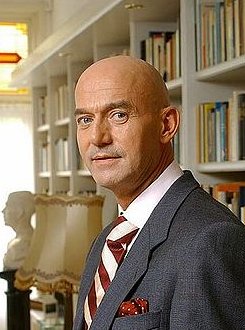
Featured image: Pim Fortuyn on 4 May 2002, two days before his assassination. Roy Beusker (2002). CC BY 3.0. Wikimedia Commons.
1. Een heel vervelend geval. Joris van Casteren (2002). Groene Amsterdammer.
2. Nordin Ghouddani, presentator van Mocro Inside: ‘De grootste vijand voor ons is toch echt wel links’. Margriet Oostveen (2026). NRC.