The Jewish Question
Jews have lived as a minority in the lands of others for centuries, often separately in dedicated quarters as second-rate citizens. From time to time, they had to flee murderous mobs, and if they were lucky, they only lost their belongings. Jews have chosen not to integrate into their host societies and accept their religions. That was a recipe for trouble. They were a separate community, so more loyal to each other than to others. That makes Jewish history also a learning experience for the issues plaguing multicultural societies today. How to deal with the Jews? It became known as the Jewish Question. Several thinkers, including Martin Luther and Karl Marx, couldn’t resist expressing their views on the matter. Also, Voltaire, a prominent European Enlightenment philosopher, wrote nasty things about the Jews. Adolf Hitler sought a definitive solution by exterminating them.
Nationalism was one idea to deal with the issue. Let the Jews have their own country. The founder of Zionism, Theodor Herzl, wrote, ‘The Jewish question persists wherever Jews live in appreciable numbers. Wherever it does not exist, it is brought in together with Jewish immigrants. We are naturally drawn into those places where we are not persecuted, and our appearance there gives rise to persecution.’ But even countries that had always been safe, like the Netherlands, suddenly became a death trap when the Germans invaded it. In folklore, conspiracy theories blame the Jews for all kinds of things, ranging from spreading diseases, sacrificing children in their rituals, and conspiring to dominate the world. This tradition continues into the present. A problem is that the facts make several of these conspiracy theories believable. A few examples are:
- Those who oppose the current financial system sometimes blame the Jews for it, as the Jews have been moneylenders for centuries.
- Jews have taken a piece of Arab land that is now called Israel. They expelled many Arab inhabitants. That is why a lot of Arabs hate Jews.
- You sometimes hear that the Jews determine what you hear on the radio and see on television because they control the media.
- Perhaps you have read that Jews cause wars and revolutions, often with the help of the secretive Freemasons and the elusive Illuminati.
- There is a worldwide trade in illegally harvested organs, and Jews are also involved. But it is not only Jews doing this.
- Perhaps you cannot trust Jews because they are more loyal to Israel than the country they live in. And what about people from other nationalities?
- The United States has a corrupt and dysfunctional political system. The Jews use it to their advantage. So, follow the money.
- The same goes for poor-quality Hollywood movies. The Jews did it.
- And Jews can be blamed for other things too, of course not the ‘good Jews’, only the ‘evil Jews’, but it is hard to tell the difference, so do not trust them.
It is a painful history. The truth can only set us free if we let go of hatred. There is a relationship between ethnicity and conduct that goes through culture. Cultures emerge out of history and circumstances. You can’t blame someone for being raised in a particular tradition, but these traditions can harm society. And that isn’t only Jews. Just think of the damage white Europeans have caused all over the globe. Other particular traditions can also be harmful, for instance, ethnicity-related organised crime like the Italian mafia.
Closer inspection reveals that things are not always what they seem. If antisemites allege Jews do this or that, look at the facts and don’t get carried away. If a US politician doesn’t unconditionally support Israel, you know what happens. Money rules our world. But hatred doesn’t solve the issue. Karl Marx wrote:
What is the secular basis of Judaism? Practical need, self-interest. What is the worldly religion of the Jew? Huckstering. What is his worldly god? Money[…] The Jew has emancipated himself in a Jewish manner, not only because he has acquired financial power but also because, through him and also apart from him, money has become a world power, and the practical Jewish spirit has become the practical spirit of the Christian nations. The Jews have emancipated themselves insofar as the Christians have become Jews[…] Money is the jealous god of Israel, in the face of which no other god may exist. Money degrades all the gods of man – and turns them into commodities[…] The bill of exchange is the real god of the Jew. His god is only an illusory bill of exchange[…] The chimerical nationality of the Jew is the nationality of the merchant, of the man of money in general.1
Marx had Jewish roots, so he knew what he was talking about. He equated practical Judaism to huckstering and money and claimed that Christians have become Jews and that humankind, both Christians and Jews, needs to emancipate itself from this practical Judaism. Money rules our world. Money is our God. And that is the core problem we face today. How this situation came to be is a long history.
There has been a long Christian tradition of intolerance towards Jewish people. Only Christians were even more intolerant towards all other religions, including diverging versions of Christianity. Christians only tolerated Jews, first because the Pope said so and later because they proved helpful for trade, tax collecting and moneylending, which were activities Christians found morally reprehensible and didn’t like to do themselves.
Muslims were even more tolerant. Apart from Jews, they also tolerated Christians. And they did not persecute Jews as much as Christians until the Jews founded the state of Israel and expelled the Muslims. That infuriated many Muslims, so they often returned the favour by expelling the Jews. Despite all this tolerance, Christianity and Islam were among the most intolerant religions ever. That proved to be crucial for their success. The owner of this universe, commonly known as God, did not provide sufficient proof of Her existence, so convincing people with reason was not always possible. The Jews did not get that. They preferred to hold on to their exclusive relationship with the all-powerful Creator of this universe. And so, they were not so kind to try to save others from eternal damnation by forcefully converting them.
The plight of Jewish people was not much unlike that of other minorities that did not adapt and integrate into society. The Jews had their religion, and the claims of Christians about Jesus did not make sense to them. Being beaten up regularly is the least you can expect from peasants if you differ from them. And it was often worse than that.
A short primer on Jewish history
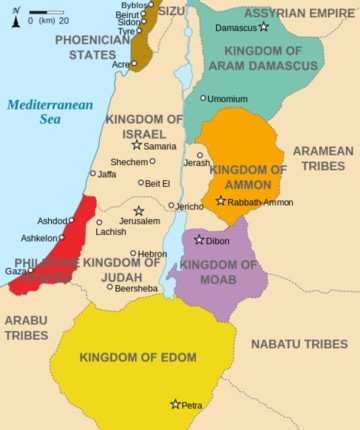
Between 1200 BC and 900 BC, a few small nation-states emerged in an area now covered by Israel, Palestine, Jordan, Syria and Lebanon. Among them were Israel and Judah. These small states appeared because Egyptian power in the area was waning. It took a few centuries before new strong powers emerged and overran these small states. Israel fell into the hands of the Assyrians in 720 BC. Judah was destroyed in 587 BC by the Babylonians, who had taken over the Assyrian Empire.
These small kingdoms had a national deity for fortune and protection. Their kings may have adopted this deity to promote a sense of a nation to assert their authority. Yahweh was the national deity of Judah and probably also of Israel. At first, Yahweh’s worship may not have differed much from the worship of other national deities, such as Chemosh, the god of Moab.
After Israel and Judah had ceased to exist, their inhabitants faced an identity crisis. The new powers defeated their uprisings, and the Babylonians took many Jews into exile in Babylonia. Jewish priests then began to write down the Torah (Old Testament) to define a sense of nation around their national deity, Yahweh, without a king or a territory.2 In this way, the Jews became a people without a land. Their promised land, Israel or Zion, remained central to their religion.
Around 450 BC, many exiled Jews were allowed to return. From 164 BC, there was an independent Jewish state for 100 years until the Romans conquered it. At the time of Jesus, tensions were growing between the Jews and their Roman overlords. It led to several uprisings between 66 AD and 136 AD. During these revolts, the Romans destroyed the Jewish temple. Over time, the majority of the inhabitants of the area became Christians and later Muslims. Jews remained in scattered communities around the Mediterranean.
In ancient societies, only the elite received education. The Jews introduced mass education for their people. The Torah became the pillar of their national education system. Divine knowledge, rules, and regulations became open to the public.2 The value of education thus became embedded in Jewish culture.
Nations came and went, but the Jews remained, so becoming people without a land was a successful long-term survival strategy. The Jewish people have been around for more than 2,500 years while not having a homeland for nearly 2,000 years. That was why not all Jews supported the Zionist project of creating the state of Israel. A Jewish state might endanger the Jewish people if they cannot defend their land.
The Jewish religion became the basis for Christianity and Islam. Christianity and Islam both tend to see Judaism as a legitimate religion. Christians and Muslims allowed Jews to live in their lands, albeit as secondary citizens. Living together was not easy. For instance, Christians sometimes blamed the Jews for killing Jesus.3 The Jewish high priests had accused Jesus of blasphemy as he claimed to be the Son of God. According to the Gospel, the Jewish high priests and a Jewish mob demanded the crucifixion of Jesus. And the Gospel, which means good news, by the way, says:
When Pilate saw that he was getting nowhere, but that instead an uproar was starting, he took water and washed his hands in front of the crowd. ‘I am innocent of this man’s blood,’ he said. ‘It is your responsibility!’ All the people answered, ‘His blood is on us and on our children!’
Matthew 27:24-25
The Jews are forever responsible for the death of Jesus, the wording implies, and it became a justification for Christian anti-Semitism.
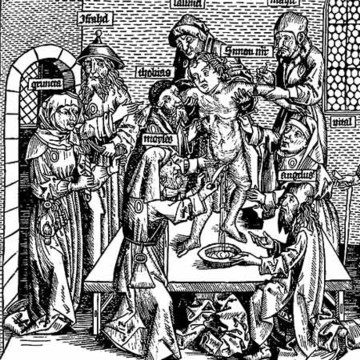
In the Middle Ages, rumours spread from time to time that Jews abducted Christian boys for their secret rituals. It is known as the blood libel. So when a boy disappeared, it was time to kill some Jews. There was no basis for these beliefs, but little did people know about the Jewish religion and its practices.2 And because of their ritual hygiene, the Black Death did not hit Jews as much as Christians. Rumours spread the Jews were behind the disease. Medieval peasants often freaked out because they were superstitious and lacked education. And so they burnt witches at the stake when the harvest failed.
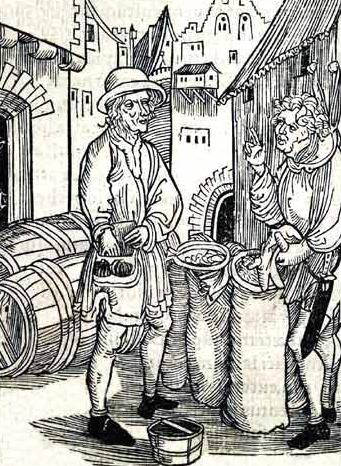
In popular culture, Jewish people had a low standing. They worked in trade and finance. These activities were often seen as reprehensible as trade and finance often coincide with questionable ethics. Some languages still reflect this. The English language has the term Jewish stock take, referring to a shopkeeper destroying his shop in a self-lit fire to claim insurance. The Dutch language has the word ‘jodenbod’, which means Jew’s bid, to indicate bids below a reasonable price which people in a desperate position have to accept. Jews living from trade and finance and little love existing between Christians and Jews might lead to that kind of situation.
After the French Revolution of 1789, Jews in Western Europe received citizenship. In Eastern Europe, and most notably in Russia, they faced pogroms or riots that included robbery, destruction of property and sometimes killings. Around 1870, the first Jewish settlers entered Palestine. In 1896, Theodor Herzl published The Jewish State. He claimed that the solution to The Jewish Question was a Jewish state. It marked the beginning of modern Zionism.
In 1873, the Vienna stock market crashed. A lingering recession followed that lasted until 1896. It was the first global economic crisis. Economic growth was lower than previously. Anti-Semitism rose in German-speaking areas and France as people blamed Jewish bankers and industrialists for the situation. It was the time when Silvio Gesell was a businessman. He experienced the poor economic conditions first-hand. It made him investigate the underlying causes and later write the Natural Economic Order.
In 1894, Captain Alfred Dreyfus, the only Jewish member of the French general staff, was convicted of spying for Germany. He was innocent and rehabilitated a decade later after vigorous protests. During World War I, many Jews fought for their nation-states. After the war, a myth emerged in Germany, suggesting Germany lost because of leftists, republicans and a Jewish conspiracy.
A Jewish state
In 1917, the British offered Palestine to the Jews to establish a national home for the Jewish people. The declaration was part of a letter from the United Kingdom’s Foreign Secretary Arthur Balfour to Lord Rothschild, a leader of the British Jewish community. Shortly after the start of World War I, a Zionist Cabinet member, Herbert Samuel, wrote a memorandum proposing to back the Zionist cause to enlist the support of Jews in the war. The Arabs living in Palestine had no say in this, which soon led to tensions and Arab resistance, which the British repressed. Between 1920 and 1940, 300,000 Jews migrated to Palestine, often to escape persecution. The Arabs revolted between 1936 and 1939. The British subsequently restricted Jewish immigration.
After World War II, large numbers of Jews entered Palestine, many of them Holocaust survivors. The Holocaust became a trauma in the collective memory of the Jewish people. Nearly six million of them died in concentration camps and mass executions. It gave credibility to the case of the Zionists, who believed that the Jewish people could only be safe once they had a country of their own. The atrocities the Jews had suffered from raised support for the Zionist cause in the West, most notably in the United States. The Zionists started a guerrilla war against the British. It included 70 terrorist attacks between 1937 and 1948, including the King David Hotel bombing that killed 91 people and the devastating bomb attack on the British police headquarters in Haifa.
In 1947, the United Nations planned to divide Palestine between the Jews and the Arabs. The plan allotted 62% of the land to the Jewish state despite the Palestinian Arab population numbering twice the Jewish population. The Zionist Jews accepted it as it was a favourable deal for them. The Arabs rejected it because, in addition to the Arabs forming a two-thirds majority, they owned a majority of the lands. The Arabs were also unwilling to accept a division and aimed for Arab rule of Palestine.
When Israel declared independence in 1948, a civil war broke out. The neighbouring Arab countries attacked Israel, but the Zionists were prepared and well-trained, and the Arabs lost. Around 700,000 Arab Palestinians, or 80% of the population, fled or were expelled from their homes. The Palestinians call it ‘The Catastrophe’. The Catastrophe greatly influenced Palestinian culture and helped to create a separate Palestinian identity. The Catastrophe means displacement, dispossession, statelessness and fracturing of Palestinian society. It is much like the Jewish diaspora.
During the Six-Day War of 1967, Israel conquered the remaining Palestinian territories. Israel started this war after Egypt blocked Israeli shipping through the Egyptian-controlled Strait of Tiran and brought military forces close to the Israeli border. An Israeli surprise attack caught the Egyptian forces off-guard, causing Egypt to lose nearly all its military aeroplanes. Jordan and Syria came to Egypt’s aid but were also defeated. Whether this pre-emptive war prevented an Egyptian attack on Israel remains a matter of debate. Israel captured and occupied the Golan Heights from Syria, the West Bank from Jordan, the Gaza Strip and the Sinai Peninsula from Egypt.
Around 300,000 Palestinians and 100,000 Syrians fled or became expelled from the West Bank and the Golan Heights. Many others came to live under Israeli occupation. At the same time, Zionist settlers began colonising the remaining parts of Palestine, most notably the West Bank. In 1973, Egypt and Syria launched a surprise attack against Israel with the support of other Arab nations in the Yom Kippur War. After initial Arab successes, Israel repelled the attack. Syrian and Egyptian forces killed and tortured captured Israeli soldiers. Over time, Israel achieved peace with several Arab countries, but the Israeli-Palestinian conflict remains unresolved. Palestinian resistance often comes in the form of terrorist attacks while Jewish settlers keep on colonising Palestinian land.
Conspiracy theories
The anti-Semitic conspiracy theories range from crazy allegations to well-documented research like the investigation into the Israel lobby by John Mearsheimer and Stephen Walt. There is a large grey area in between. And it is a minefield because of the Holocaust. No sensible person would like to see pogroms or worse. The Jewish people are a small nation with an enormous impact on world history. That fuels speculation. Before going into the conspiracy theories, it might be good to come up with a few general explanations for the remarkable successes of the Jewish people. These are:
- The Jews invented mass education twenty-five centuries ago (it took twenty-four centuries before Western Europe followed suit) because they felt they all had to understand their scriptures to discuss them intelligently.
- Due to restrictions imposed on them in the past, Jewish people often went into occupations like trade and finance, which are activities that can make you rich without a lot of toils.
- For centuries, the Jewish people lived under marginal and uncertain conditions which required resourcefulness that may have become part of Jewish culture.
- There might be a script running all that happens in this universe, and the Jews may be God’s chosen people, even though that was not always a blessing for the Jews themselves. The parallel with the sacrificial lamb Jesus is eye-catching.
Anti-Semitic conspiracy theories have done tremendous harm and helped to make the Holocaust possible. It may nevertheless be better to view them more objectively as theories for which there might be evidence and the understanding that cultural differences are a source of trouble because the behaviour of one group can harm others. That may require emotional distance as the truth is not always politically correct.
There is a joke that goes like this, ‘Why does Israel not become a state of the United States? Well, if Israel does, it will have only two Senators.’ Israel has the unconditional support of the United States. Senators and members of Congress who hold different views face the powerful Israel Lobby. The lobby will fund the campaign of their opponents, which likely means losing the election. Jewish interest groups have a lot of power, and a book claims there is a secret Jewish plot to gain world domination.
The Protocols of the Elders of Zion is a fiction made up by the Russian secret service around 1900. The Russian tsarist regime was hostile towards Jews. Some people took the protocols seriously, and it subsequently became a guidebook for blaming Jews for everything. The Protocols claim the Jews form a secret cult conspiring to gain world dominance via plots and schemes hidden from the public eye. Adolf Hitler and the automaker Henry Ford believed it, as did many others. And somehow, the work became a bit prophetic. That might be called the irony of history or perhaps the plan of God.
The main themes of the Protocols and related conspiracy theories are Jewish control of world finance, Jewish organisation of radical movements and Jewish manipulations of diplomacy to cause wars that kill white Christians. There are racist, political and religious aspects to these claims. You can definitely read ‘evil Jews’ between the lines. Anti-Semites use so-called whistle words, which means that they mean ‘evil Jews’ even when they do not say so. But using that as an argument can become a way to dismiss legitimate concerns.
Mearsheimer and Walt investigated the power of the Israel Lobby. They claimed that if you criticise Israel in the United States, you will be branded an anti-Semite. It means that you are a racist Jew-hater. Major newspapers subsequently published editorials calling their research anti-Semitic. AIPAC is the most prominent organisation in the Israel Lobby. Mearsheimer and Walt concluded:
AIPAC’s success is due to its ability to reward legislators and congressional candidates who support its agenda, and to punish those who challenge it. AIPAC makes sure that its friends get strong financial support from the myriad pro-Israel PACs. Those seen as hostile to Israel, on the other hand, can be sure that AIPAC will direct campaign contributions to their political opponents. The bottom line is that AIPAC, which is a de facto agent for a foreign government, has a stranglehold on the U.S. Congress. Open debate about U.S. policy towards Israel does not occur there.4
Stranglehold is a whistle word as it might imply that ‘evil Jews’ control US politics, but if you leave out the word ‘evil’, you arrive at a well-documented conclusion. And so, the anti-Semitism argument increasingly fails to convince people. It is apparently forbidden to say the truth in US politics. If you think of the consequences of anti-Semitism in the past or that millions of Jews face displacement or worse if Israel collapses, you might understand why Jewish interest groups go to such great lengths to keep American support.
Suppressing the truth is a self-defeating strategy in the long run while dealing with it is like opening a can of worms. Several powerful lobbies operate in the United States, some representing foreign national interests, but few attract as much attention as the Israel Lobby. So why is the Israel Lobby so powerful, visible and aggressive? There are some possible answers:
- Unlike other foreign interests, the Israel Lobby long had broad popular support. Anti-Semitism led to the Holocaust, so the Israel Lobby could more easily claim the moral high ground.
- Jews in Israel do not feel secure because of the Holocaust and because Israel is on land taken from the Arabs. Criticism of Israel provokes the fear that the legitimacy of the Jewish state is at stake.
- Israel ignores international law by colonising Palestinian land. The unconditional support of the United States helps Israel to do that.
The Israel Lobby is the most visible in the United States but has significant influence in some other countries as well. When a public figure demonstrates a one-sided sympathy for the Palestinian cause, like the former Dutch Prime Minister Dries Van Agt, the lobby brings in anti-Semitism allegations. Former labour leader Jeremy Corbyn faced a similar fate in the United Kingdom. He associated himself with anti-Jewish figures, including Holocaust deniers. His personal views on the matter became of secondary importance. Pro-Israel figures do not face the same kind of scrutiny.
Powerful lobbies undermine democracies, most notably when they suppress dissent, which most interest groups did not do as much as the Israel Lobby. The Woke copied these tactics inspired by the Frankfurt School. In his book Critique of Pure Tolerance, Herbert Marcuse claimed that freedom of speech limits freedom. He proposed a liberating tolerance, which is intolerance to right-wing movements and toleration of left-wing movements. That thought emerged within a context. The Frankfurt School is from Germany and was preoccupied with preventing the reappearance of Nazism.
Usury
The Jew as usurer is a well-known theme in anti-Semitic folklore. The Roman Catholic Church forbade Christians to charge interest to fellow Christians. During the Middle Ages, Jews were excluded from several professions and pushed into activities that Christians deemed reprehensible. One of them was money lending. The Torah allowed Jews to charge interest to Christians. Their principle was, thou shall not lend at interest to your brothers. Christians believed in that same principle. But Christians and Jews did not see each other as brothers. The long-term consequences of interest are not well-understood in modern times as economic growth and price inflation mask them. Interest charges can destroy people, businesses, nations and even entire civilisations.
The financialisation and indebtedness of Western societies, most notably that of the US and the UK, can be traced back to interest charges. The mere pursuit of profit, or making money with money, undermines the moral fabric of society. That may not be obvious as people have different views about right and wrong. There are supposedly nihilist philosophies that are either the outcome of despair or the acknowledgement that we are animals and that our moral values are not absolute but relate to our human nature. But apart from that, the love of money is the root of many kinds of evil.
In the Middle Ages, interest rates were high, sometimes as much as 20% to 30% annually. And so, the misery caused by interest charges was more visible. And Jews often received the blame because they were moneylenders. The official lending by Jewish money lenders mandated by the Church allowed for interest rates below 10%. Persecuting Jews was also profitable for their debtors. For instance, in 1290, King Edward I expelled the Jews from England, confiscated their assets, and defaulted on the loans he had received from them.
In the 16th century, short-term interest rates dropped to around 10% annually because financial markets became more developed and efficient. As interest rates went down, and because of the Protestant Reformation, religious objections against charging interest waned. Once Christians could charge interest on fellow Christians, the Jewish role in money lending was reduced, but it remained significant. Interest became an essential part of the capitalist economy, and Western culture became ignorant about the problematic nature of interest charges. Usury is an insidious process leading to a possible endgame of financial collapse or hyperinflation once economic growth falters.
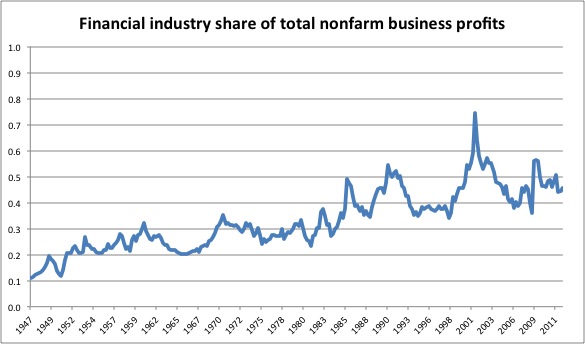
Jews play a prominent role in the financial sector in the United States. They have served as chairmen of the Fed, including Alan Greenspan, Ben Bernanke and Janet Yellen. The exploitative nature of finance and the bailouts feed the conspiracy theory of Jewish usury. Real wages in the United States have hardly risen for decades, but the US financial sector comprised only 10% of total non-farm business profits in 1947 but grew to 50% by 2010. Finance does not produce food or widgets but merely extracts its profits from those who make real things. At the top of the financial and economic food chain are relatively many Jews. While many ordinary people in the United States struggle to make ends meet, the top 1% is doing well.
Influence on the media and opinion
In 2012, six corporations owned 90% of the mainstream media in the United States. Most of these corporations have Jewish CEOs and owners. Journalists are also often Jewish. How much that affects the reporting remains to be seen. In 2008, Philip Weiss remarked that in a few months, several serious people suggested that Jews predominate in the American media. For instance, at a forum at the Nixon Center, the former high-ranking government official Dov Zackheim said, ‘Jews don’t dominate the policy-making process, but the media is a different story.’ From his personal experience, Weiss claimed most editors were Jewish.6
The real issue is, does it matter? Weiss thinks so when it concerns the Israeli-Palestinian conflict. He cites a few Jewish journalists who admitted to having a bias.5 J.J. Goldberg wrote in The Forward that, although Jews hold many prominent positions in the US media, they do not prioritise Jewish concerns and that Jewish Americans generally perceive the media as anti-Israel.6 And what about the Jews dominating Hollywood? That is such a Jewish stereotype. Joel Stein of the Los Angeles Times mocked the efforts of the Anti-Defamation League (ADL), which is another part of the Israel Lobby, to educate the American public:
I have never been so upset by a poll in my life. Only 22% of Americans now believe “the movie and television industries are pretty much run by Jews,” down from nearly 50% in 1965. The Anti-Defamation League, which released the poll results last month, sees in these numbers a victory against stereotyping. Actually, it just shows how dumb America has gotten. Jews totally run Hollywood.7
The Internet is more difficult to manage. Anti-Semitic and anti-Zionist messages can be found on many message boards. Israel has tried to counter that by paying students to post pro-Israel messages on social media.8 It was part of a public relations effort named ‘hasbara’ that some call propaganda.
In October 2007, about 300 academics issued a statement calling for academic freedom from political pressure, most notably from groups portraying themselves as defenders of Israel. In 2009, sociology professor William Robinson sent an email to students in which he compared the Israeli occupation of Gaza with the Nazi-controlled Warsaw Ghetto during World War II. The ADL started a campaign to discipline him for violating the faculty code of conduct.
Linguistics professor Noam Chomsky, a left-wing political activist, claimed the ADL had compiled a 150-page dossier on him. He is highly critical of US and Israeli policies. Chomsky also defended the right to deny the Holocaust as freedom of speech. The ADL called him a Holocaust denier, describing him as a dupe of overweening intellectual pride who is incapable of distinguishing between totalitarian and democratic societies and between oppressors and victims. Apparently, the ADL collected information to use against him. Chomsky said that an ADL insider sent him the file. It included conversations, correspondence and other materials. Chomsky added that it read like an FBI file. He further noted:
It’s hard to nail this down in a court of law, but it’s clear they essentially have spies in classrooms who take notes and send them to the ADL and other organisations. The groups then compile dossiers they can use to condemn, attack or remove faculty members. They’re like J. Edgar Hoover’s files. It’s kind of gutter stuff.9
In January 1993, the city’s police department raided the San Francisco ADL’s Northern California office. It kept files on more than 600, predominantly leftist, civic organisations and over 10,000 individuals. The police estimated that the ADL had illegally obtained 75% of that information. By November, District Attorney Arlo Smith appeared close to indicting the ADL. Fearing to lose the support of the influential Jewish community for his election, he dropped the case. The police investigation uncovered information about the ADL’s spying operations.10
In recent years, the influence of the Jewish lobby on public opinion in the United States waned because of the simultaneous rise of the woke left and the white supremacist right. The Woke favour the marginalised and oppressed and support the Palestinian cause, while white supremacists are open to anti-Jewish conspiracy theories. The woke people use the tactics that the Jewish lobbies have used previously, for instance, cancelling those with different views. The 2023 Gaza War eroded Israel’s standing further. For Hamas, the coverage of the Israeli brutality in Gaza was a gift that kept on giving. The terrorist attacks were over after a few days, but the misery in Gaza dominated the news for months.
Causing wars and revolutions
The French revolutionaries decided that Catholics, Protestants and Jews became full members of society. In 1797 and 1798, a French Jesuit and a Scottish physicist published two remarkably similar books claiming secret societies were undermining the social order and had started the French Revolution. Both named the Freemasons and the Illuminati as the main culprits. And Jews were also seen as conspirators. They benefited from Napoleon giving them equal rights, so they must have organised it. Much of contemporary conspiracy thinking still centres around these secretive groups and Jews.
And Jews supposedly started the Russian Communist Revolution of 1917. Anti-communists brought up the idea during the ensuing civil war to use existing anti-Semitic sentiments for their political aim. There was a high number of Jewish Communist Party leaders during the revolution. The anti-Semitism in the Russian Empire may have induced them to join radical political movements.
That does not explain why many Jews joined radical movements in other countries. Milton Friedman tried to shed some light on this issue. He found that Jewish people wrote a significant part of the revolutionary anti-capitalist literature and ran and disproportionally filled the ranks of Communist parties in many countries.11 A conspiracy theorist would like you to believe that the Jews seek to control both sides.
Friedman did not think Jews were seeking world domination. He gave two reasons why they joined radical movements. First, the left provided the Jews with equal citizenship, while the Christian right did not. Second, the stereotype that Jews are profiteers and usurers may have persuaded them to show themselves and the anti-Semites that they are not selfish and heartless but public-spirited and idealistic.11 A third reason, which Friedman did not mention, was that many intellectuals were Jewish causing them to have a significant influence on both socialist and capitalist thinking.
Anti-Semitism did not disappear in the Soviet Union. In 1948, Stalin started a campaign against the so-called rootless cosmopolitans, a euphemism for Jewish intellectuals. During that campaign, the Soviets killed leading Jewish writers and artists and removed Jewish scholars from the sciences.
After 1968, the left gradually alienated from its traditional base of workers in favour of disadvantaged groups like ethnic minorities, women, and LGBT people. The Marxist Frankfurt School played a significant role in this development. The Cultural Marxism conspiracy theory claims Marxists of the Frankfurt School undermine Western civilisation with civil rights movements, feminism, multiculturalism, LGBT propaganda, and above all, pop music, causing a breakdown of traditional Christian values. Several prominent thinkers of the Frankfurt School were Jewish, so some see Cultural Marxism as an anti-Semitic conspiracy theory.
The recent American wars in the Middle East are, to a significant extent, the outcome of the neoconservative ideology. They based their thinking on The Clash of Civilisations by Samuel Huntington. Huntington wrote that Western nations will lose predominance if they fail to recognise the irreconcilable nature of cultural tensions. He thus questioned whether multiculturalism would ever work. Huntington considered Islam a fundamental problem for the West.12 Only, Huntington himself believed that the West should adapt to a new era in which it is no longer dominant.
The neoconservatives held a different view. Leo Strauss, the founder of American neoconservatism, proposed a restoration of the vital ideas underpinning Western civilisation, such as classical Greek philosophy and the Judaeo-Christian heritage, and promoted faith in the moral purpose of the West. It is one of the reasons why the neoconservatives pressed for war to bring liberal democracy to Iraq. It was mainly due to the personal efforts of the non-Jewish Vice-President Dick Cheney, who had links to the oil industry, that this war came about. The Iraq War caused at least 300,000 civilian fatalities.
A conspiracy theorist could allege that, apart from undermining Western civilisation, the Jews also spread it by orchestrating wars and revolutions. The Protocols inspire this kind of thinking. If take the Protocols seriously, you might conclude that the Jews of the Frankfurt School and the Jewish neoconservatives secretly coordinate their actions to achieve Jewish world domination. And that the absence of evidence for this claim would be solely due to the secrecy of the operation rather than its non-existence.
Blood Libel 2.0
In 2009, the Swedish newspaper Aftonbladet ran an article about Israeli organ harvesting with the sensationalist headline ‘Our sons are plundered of their organs’. That was bad publicity for Israel. The allegations bore some similarities to the blood libel. Dead Palestinian children had been returned to their families by the Israeli army with organs missing.13 In the 1990s, Israeli doctors had taken skin, corneas, heart valves and bones from deceased Israelis, Palestinians and foreigners without permission.14
Organ trafficking is widespread. China, India, Pakistan, Egypt, Brazil, the Philippines, Moldavia, and Romania are among the world’s leading providers of trafficked organs. And China harvested organs from political prisoners. Trafficked organs are either sold domestically or exported to be transplanted into patients from the US, Europe, the United Arab Emirates, Saudi Arabia and especially Israel.15 Israel faces a shortage of organ donors because Jewish religious law requires the body to be intact in burial.16
Illegal organ trade is a questionable business but it can save lives. For poor people, the choice may come down to selling a child or selling an organ. Not allowing organ sales may make their situation even more miserable. Stealing organs from the dead is reprehensible because the deceased nor the family have given permission. These practices probably existed in Israel on a wider scale even though they likely have ended by now. It is telling that a stolen heart may have been used in Israel’s first successful heart transplant.17
Allegiance
The loyalty of Jews is another theme in conspiracy theories. Every minority in a foreign country faces the question of allegiance. It isn’t a big issue when the minority and the host country don’t have a serious conflict of interest, or when the minority has little influence. Jews have significant clout in the United States and elsewhere. In his book By Way of Deception, Victor Ostrovsky, a former operative for the Israeli intelligence service Mossad, claimed this service recruits helpers among the Jews outside Israel for its operations.18 Other secret services also enlist compatriots for espionage abroad, but the Mossad is legendary for its daring operations on foreign soil.
One of the most well-known helpers was Jonathan Pollard. As a young Navy intelligence analyst, he had claimed that the United States withheld information from its close ally, Israel. He took it upon himself to correct this injustice. He sold classified US documents to Israel. Sensitive documents stolen by Pollard ended up in the hands of the Soviet Union, putting the lives of US intelligence assets at risk. A few other cases of Israeli espionage in the United States attracted publicity, such as the arrests of former AIPAC officials Steve Rosen and Keith Weissman.
A noteworthy incident that raises questions is the Israeli attack on the spy ship USS Liberty during the 1967 Six-Day War, killing 34 Americans and wounding 170 others. The attack consisted of an air attack followed by a sea attack with gunboats. The official story is that Israeli forces mistakenly identified it as an enemy vessel. A story reported by former US Ambassador to Lebanon, Dwight Porter, who recounted a conversation between an Israeli pilot and the Israel Air Force war room picked up by an NSA aircraft and inadvertently cabled to CIA offices around the world, tells a different story:
Israeli pilot to war room: This is an American ship. Do you still want us to attack?
War room to Israeli pilot: Yes, follow orders.
Israeli pilot to war room: But sir, it’s an American ship – I can see the flag!
War room to Israeli pilot: Never mind; hit it.
It was clear to the Israelis that the ship was American. Israeli reconnaissance planes had already identified the ship as an NSA intelligence vessel earlier that day. The exchange between the pilot and the war room raises questions. What reasons could the Israelis have had? And why would they risk angering their ally, the United States? The journalist Peter Hounam claimed that President Johnson, fearing he would lose the election, sought a pretext to let the United States join the war on the Israeli side and had asked the Israelis to stage a false flag attack. That would also have been in Israel’s interest.
The intriguing coincidences surrounding the terrorist attacks of 11 September 2001 have kept conspiracy theorists on edge. One of them is that a New York housewife spotted five Israelis filming the attacks on the World Trade Center from a rooftop just after the first strike had hit the Twin Towers. The Israelis appeared full of joy as the World Trade Center burned and crumbled. The police arrested them with $4700 in cash, foreign passports and a pair of box cutters of the type used by the hijackers. Two of them were Mossad agents. The FBI believed they were spying on Islamic extremist networks.19
The FBI interrogated them for weeks and concluded that there was no evidence they had foreknowledge of the attacks. The Israelis were uncooperative. It was impossible to extract much information from them. Later, some of them discussed the events on an Israeli talk show. One said, ‘We come from a country that experiences terror daily. Our purpose was to document the event.’19 The evidence suggests the Israelis knew more, likely some specifics of the attack plan. An Israeli official told the Associated Press, ‘Everybody knew about a heightened alert and knew that bin Laden was preparing a big attack.’ He said the Israelis had passed on this information to Washington and denied Israel had concrete intelligence that could have prevented the attacks.20
The Mossad is known for its daring operations. In the aftermath of the Hamas terrorist attacks of 7 October 2023, Israel scored some remarkable successes against Hezbollah and Iran with the help of its secret services. Mossad agents had duped Hezbollah into buying thousands of explosive pagers and walkie-talkies. When Israel attacked Iran in 2025, it immediately struck a slew of high-value targets, killing senior commanders and nuclear scientists and disarming Iran’s air defences. Israel’s successes stem from intelligence operations conducted inside Iran. Commando forces operated in Tehran and across the country, while Iran’s security and intelligence agencies remained unaware. Mossad teams targeted air defence missiles, ballistic missiles, and missile launchers. Israel had already assassinated several Iranian nuclear scientists and acquired Iranian nuclear information. These attacks occurred almost immediately after the UN watchdog had declared Iran in breach of its non-proliferation obligations.
Influence on the United States government
An evangelical Christian desire to return the Jews to the Holy Land has promoted the Zionist cause in the United States, as they believe it to be a prerequisite for the Second Coming of Jesus. Consequently, there is strong support for Israel amongst Evangelical Christians and Republicans. Jewish Americans often back Democratic candidates, so Democrats pay close attention to their Jewish voters. It ensures support for Israel in both political parties. US politicians need donations to fund their campaigns. Corporations and wealthy individuals buy influence, which is bribery. Jews generously donate to political campaigns. In 2006, 60% of the Democratic Party’s fundraising and 25% of the Republican Party’s fundraising came from Jewish-funded Political Action Committees.
Several Jewish Americans found their way into influential positions in the United States government. Some were also citizens of Israel. In 1994, the Israeli paper Ma’ariv wrote that the Clinton Administration allowed more Jews in sensitive positions than any government before. The article noted that this was not a design and that their achievements had brought them there. The Jewish component of the Democratic government was significant, but there were also Jews heading for top positions in the Republican Party, for example, Paul Wolfowitz.21
Wolfowitz was one of the neoconservatives, a political movement whose ideology played a significant role in American policies after 11 September 2001. In 2000, he was one of the supporters of the Project for the New American Century (PNAC), which promoted the removal of Saddam Hussein. After 11 September 2001, the PNAC pushed for an attack on Iraq. The security of Israel played a role in the considerations of the neoconservatives, but there is little evidence that protecting Israel was a principal reason for starting the Iraq war.
Mearsheimer and Walt wrote that pro-Israel figures have established a commanding presence at the American Enterprise Institute, the Center for Security Policy, the Foreign Policy Research Institute, the Heritage Foundation, the Hudson Institute, the Institute for Foreign Policy Analysis, and the Jewish Institute for National Security Affairs and that these think tanks are all decidedly pro-Israel.4
In most cases, the US supported the position of Israel, but there are a few instances in which the US government did not. The Eisenhower administration forced Israel to withdraw from the Sinai after the Suez Crisis. The administration of Bush Sr delayed support to Israel because of the settlements in the Palestinian territories. The Israeli government and the Obama administration differed on the settlement issue and how to deal with Iran, and the Israel Lobby organised resistance in Congress and the Senate.

The irony of history
Perhaps the Protocols of the Elders of Zion are worth reading to see how the most bizarre conspiracy theories can appear convincing if you look at the evidence. If the Protocols had been for real, then the situation in the United States today may not have been so different. There is no grand conspiracy of Jews aiming for world domination, but what difference does that make in practice? It is the irony of history and perhaps God’s peculiar sense of humour. And so Manny Friedman wrote in the Times Of Israel:
We have, for example, AIPAC, which was essentially constructed just to drive agenda in Washington DC. And it succeeds admirably. And we brag about it. Again, it’s just what we do. But the funny part is when any anti-Semite or anti-Israel person starts to spout stuff like, “The Jews control the media!” and “The Jews control Washington!” Suddenly we’re up in arms. We create huge campaigns to take these people down. We do what we can to put them out of work.22
Did Friedman write that Jews determine who is allowed to govern in Washington DC? And perhaps the Israel Lobby has taken advice from the Protocols:
And let’s not forget AIPAC, every anti-Semite’s favourite punching bag. We’re talking an organisation that’s practically the equivalent of the Elders of Zion. I’ll never forget when I was involved in Israeli advocacy in college and being at one of the many AIPAC conventions. A man literally stood in front of us and told us that their whole goal was to only work with top-50 school graduate students because they would eventually be the people making changes in the government.22
Did he write that the Jewish interest groups act as if the Protocols were real? Perhaps the anti-Semites who believe the Protocols are real are not that imaginative. Then Friedman draws the following conclusion:
The truth is, the anti-Semites got it right. We Jews have something planted in each one of us that makes us completely different from every group in the world. We’re talking about a group of people that just got put in death camps, endured pogroms, their whole families decimated. And then they came to America, the one place that ever really let them have as much power as they wanted, and suddenly they’re taking over. Please don’t tell me that any other group in the world has ever done that. Only the Jews. And we’ve done it before. That’s why the Jews were enslaved in Egypt. We were too successful. Go look at the Torah — it’s right there. And we did it in Germany too.22
Did Friedman imply that Adolf Hitler had valid reasons to fear the Jews would take over Germany and that the proof of it is that they did so in the United States? It may be the personal opinion of a Jewish writer, but he made these comments in good spirit and as an expression of pride about his fellow Jews, and he writes what many people think. And you can plausibly interpret the evidence that way. Friedman could say it because he is a Jew, but if you are not, you are an anti-Semite. And you cannot call him a renegade or a self-hating Jew.
Jews excel in many fields, for instance, academics and finance. But pride comes before destruction and an arrogant spirit before a fall (Proverbs 16:18). The Nazis went down with their musings about Germans being a superior race. If the upper class of society coincides more and more with a small ethnic minority, ethnic tensions arise. The situation needs attention. Otherwise, this can end badly. History has taught us that too.
The Jewish people always lived at the margin and had to be resourceful to survive. These skills could have become part of Jewish culture so Jewish people could come out on top once they could operate without restrictions. And that can be at the expense of others and elicit resentment. That is not to say that there should be restrictions applying to Jews that do not apply to others. It is an instance of cultural differences causing trouble in multicultural societies. A fairer and more equitable society can also solve this issue.
Latest revision: 26 January 2024
Featured image: Blame Jews For Everything For Dummies. Found on Reuvera.hubpages.com. [copyright info]
1. On the Jewish Question. Karl Marx (1844).
2. The Bible’s Prehistory, Purpose and Political Future. Jacob L. Wright (2014). Coursera.org. [transcript]
3. Practising Tolerance in a Religious Society: The Church and the Jews in Italy. Bernard Dov Cooperman (2014). Coursera.org. [transcript]
4. The Israel Lobby and U.S. Foreign Policy. John J. Mearsheimer and Stephen M. Walt (2006). London Review of Books.
5. Do Jews Dominate in American Media? And So What If We Do? Philip Weiss (2008). Mondoweiss.net. [link]
6. Jewish power: inside the American Jewish establishment. Goldberg J.J. (1997). Basic Books. pp. 280–281.
7. Who runs Hollywood? C’mon. Joel Stein (2008). Los Angeles Times. [link]
8. Israel to pay students to defend it online. USA Today (2013). [link]
9. Israel lobby descends on UC Santa Barbara. Committee To Defend Academic Freedom at UCSB. [link]
10. ADL Spies. Jeffrey Blankfort (2013). Counterpunch.
11. Capitalism and the Jews. Milton Friedman (1988). Foundation For Economic Education. [link]
12. The Clash of Civilizations. Samuel P. Huntington (1996). Simon & Schuster.
13. ‘Our sons are plundered of their organs’. Donald Boström (2009). Aftonbladet. [link]
14. Israel harvested organs without permission, officials say. Kevin Flower and Guy Azriel (2009). CNN. [link]
15. Organ trafficking: a fast-expanding black market. Janes Defence & Security Intelligence (2008).
16. A mitzvah called organ donation. Efrat Shapira-Rosenberg (2007). Ynetnews. [link]
17. 40 Years After Israel’s First Transplant, Donor’s Family Says His Heart Was Stolen. Dana Weiler-Polak (2008). Haaretz. [link]
18. By Way of Deception: The Making and Unmaking of a Mossad Officer. Victor Ostrovsky (1990). St. Martin’s Press.
19. Five Israelis were seen filming as jet liners ploughed into the Twin Towers on September 11, 2001. The Scotland Herald (2003). [link]
29. Context of ‘August 23, 2001: Mossad Reportedly Gives CIA List of Terrorist Living in US; at Least Four 9/11 Hijackers Named’. Cooperativeresearch.org.
21. The Jews Who Run Clinton’s Court. Avinoam Bar-Yosef (1994). Maariv.
22. Jews DO control the media. Manny Friedman (2012). Times of Israel. [link]