The school switched to a new method called the Jena plan. There were no old-fashioned classes. Mr. B was my teacher for four years. He was a gentle person with a beard and perhaps a bit of a hippy. After all, these were the 1970s. You had some freedom. The Jena plan had task hours. Every day, you had one or two hours to perform tasks you had to finish before the end of the week. Once you had finished them, you were free to do as you please. You could read books or make drawings if you wanted.
At the start of the fourth grade, Mr. B gave everyone a weekly task schedule for the entire year. I remember finishing the whole task list for the year in three months. Mr. B then gave me my work for the fifth grade. I then slowed my pace and spent two and a half years, most of the time drawing or doing other things. At the end of the sixth grade I had finished all these tasks precisely on schedule.
The school emphasised group work. That might have been due to the Jena plan. The classes consisted of children from different levels, ranging from the first to the third or the fourth to the sixth grade. They split the class into small groups of mixed levels so we could help each other. We still had old-style classes and different teachers for some fields, such as calculus or geography. Mr. B took personal development, expression, social skills and teamwork seriously. He probably found them more important than learning. And so he reported to my parents that I did well on my school tasks but was a strange kid who didn’t connect with other children, often went out alone during playtime, and acted oddly.
My parents became worried. My mother then forced me to join the Boy Scouts to play with other children and work in groups. Perhaps a psychologist had given my parents this advice. A young woman led the group. In the narrative of the Boy Scouts, she was our mother. She supposedly was a wolf, and we were her pups. We had a yell, ‘Akela, we do our best, and you do the rest.’ I endured being a Boy Scout for over a year while trying to find an excuse to quit.
Then came the epic winter of 1979, with snow storms and temperatures reaching minus twenty degrees Celsius. The bad weather started just after Christmas. On one of the last days of 1978, we split into two groups and went outside. One group supposedly was lost in the forest while the other group came to the rescue. We were the lost group. It took the other group a long time to find us. By then, it seemed we indeed needed rescuing. But no one was injured, so it wasn’t that serious.
After this chilly adventure, I refused to go there again. My mother then made me choose a sport. I wasn’t good at sports and didn’t like them. My father later recalled that I once wrote a hilarious essay about sports being a waste of time and energy. I selected judo because my friends Marc and Hugo did it, too. Judo is about harnessing your opponent’s force to your advantage. Again, I schemed to get out and succeeded after over a year.
My parents sent me to Almelo for psychological evaluation. I went there by bus every week and stayed for hours. Psychologists questioned me and watched me play with other children. I didn’t trust them and didn’t tell them about my thoughts and feelings. After accidentally saying I loved to dream, the psychologist asked me to elaborate. I cut off the conversation and tried to do and say what they expected of a normal child. And I took the hint. In later school reports, Mr. B noted I socialised more and played like an ordinary kid. He also mentioned I had a vivid imagination and appreciated my writing skills.
The report further noted that my desk drawer was a mess. Mr. B then made me responsible for keeping the materials closet in order. But I am very organised, not in irrelevant detail, but in essential matters. My files are currently neatly organised, but the room is not tidy. The drawer needed no organisation. It was easy to find what you needed. The materials cabinet had drawers for various parts, which was a file-type organisation, so I could indulge in organising it, which I did with fervour, much to the delight of Mr B, who believed he had taught me something.
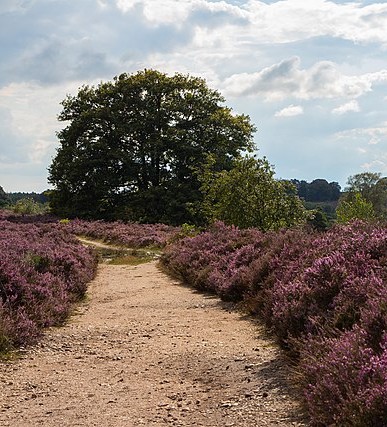
Featured image: Heaths near Nijverdal. Jürgen Eissink (2018). Wikimedia Commons. Public Domain.
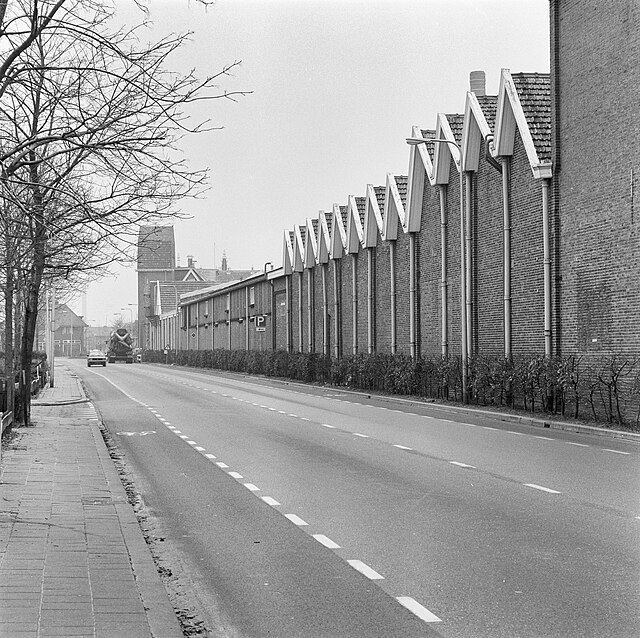
Nijverdal is a place that a comedian on national television once praised for the dullness of its weekly shopping evening. And unlike the people of Almelo, the people of Nijverdal for long knew exactly which location you were talking about when you said, ‘The traffic lights’. A few hills surround Nijverdal. The locals call them mountains. Evers Mountain is fifteen metres high. The Netherlands is flat, so fifteen metres can be impressive, especially if you are on a bicycle. Nijverdal is a small town, but the locals call it a village. It didn’t exist before the Industrial Revolution. It is there because, in 1836, a British entrepreneur deemed it a superb location for a factory. That factory is still there.
My father had bought a plot that included a house and two pastures, just outside Nijverdal, on the Rijssensestraat, the main road between Nijverdal and nearby Rijssen. He had the old home demolished and had a new one built. He enlisted my mother’s uncle, Hendrik, who was a retired mason. Hendik lived together with Bet in Eibergen. We sometimes visited them. Hendrik had been a union man, and there were plenty of union badges and flags in his home. My life in Nijverdal began on a sour note.
A few days after relocating, my mother sent me to kindergarten. A new home, a new village, going to school, and being left alone in a matter of days was a bit too much. I cried for over two weeks in a row. They just let me be. After two weeks, in a sudden stroke of genius, the teacher put me in another classroom with another teacher. The crying stopped. No one seemed to care. I was alone in this world, like an orphan. It became a turning point, making me emotionally self-dependent. From then on, I didn’t expect anything from anyone, not even my mother. I erected a wall around me. The hard times began. It is the story I told myself. After all, we see our lives as stories. Today, that treatment may seem harsh, and even though it may not have been common in the 1970s, it had been more common before. Many children have had it far worse.
Western societies have grown sissified. You have to know how my life was, so I can’t avoid disclosing my feelings. That looks like a good excuse. I will use that more often. It is not about telling you how tough my life was, which it was, but how I became the person I am now. So, for me, it was a brutal awakening into a world without love, one that would cast its shadow over my childhood. Nijverdal lies within the Hellendoorn municipality. Also, in Dutch, the name starts with ‘hell.’ Hell and Thorn, you can make out of it. That sounds not particularly appealing. Originally, the name may have referred to elder bushes. Hellendoorn is known for its adventure park. Nijverdal is less well-known. We lived at Rijssensestraat 270a. And the motorway A270 runs from Eindhoven to Helmond. Helmond means Gate of Hell. It is more than a coincidence.
My parents had grown up on small farms. They had been poor, and their lives had not been easy. And so, they ignored my whining just like their parents had ignored theirs. That was not a lack of love. Harsh conditions can make you stronger, so making your children weak is a lack of love. When I was two years old, my mother made me a pair of trousers. They gave me an intolerable itch, but I had to wear them every other week because she made only two. Luckily, I grew out of them after some time.
My father was tough, but my mother was tougher. She would say, ‘Kan niet ligt op het kerkhof en wil niet ligt ernaast.’ It is a Dutch saying that means, ‘If you say you can’t, you probably mean you don’t want to, but you will have to.’ So there were no excuses. She wasn’t the only parent using the phrase. It was a traditional Dutch upbringing. And children, my mother never said children, but always brats (blagen), can never be right, even when they are. That could undermine her authority.
The first television show I saw was Paulus de Boskabouter (Paul the Forest Gnome). It started around 6:30 PM. Afterwards, I went to bed. Later, there was Ti Ta Tovernaar (Ti Ta Magician), about a girl whose father was a magician. She could also do some tricks, like halting time. Once time has stopped, you can do things that will change subsequent events. I fell a bit in love with her. It was the first crush: a girl who could do magic.
Numbers intrigued me. At kindergarten, I chalked them down on the pavement. I associated numbers with genius and wisdom and embarked upon a personal project you might call counting to infinity. At first, I recited numbers on the way back home from kindergarten. My mother was cycling with me on the back, counting. I could ask her questions. After arriving at 99, I asked my mother, ‘What comes after 99?’ ‘One hundred,’ she said. And I continued. The next day, I still counted, ‘998, 999, ten hundred.’ ‘No, not ten hundred, but a thousand,’ my mother said.
Soon, I had mastered the number system. Then, I asked my mother, ‘How far can a university professor count? Is it a million?’ ‘Yes, a university professor can count that far,’ my mother answered. I wasn’t planning to stop at a million but aimed for infinite wisdom. It soon became clear that counting to infinity would be laborious and time-consuming. And so, I divided the effort into parts and started counting in bed in the evenings. And then, I fell asleep and lost count. And so, I had to start over the next day, using a number I was sure I had already recited, to ensure no number remained uncounted. Otherwise, it didn’t count. Somewhere near 16,000, I realised it was pointless and gave up.
Often, I went out alone on a tricycle and sometimes drifted away from home. There were mostly pastures. In the spring, the neighbours burnt the dead grass in the ditches. They said they did it to make room for the young grass. The fire was fun to watch, so I took matches from home and burned a few ditches myself.
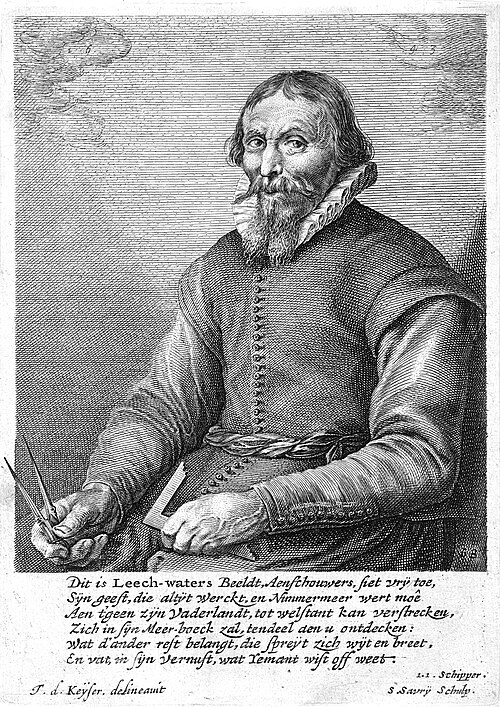
Once, we were driving somewhere in an unfamiliar location. The landscape was unusual, with high dykes, straight roads and straight pastures. My father asked me, ‘Do you know where we are now?’ I had no clue. Then my father said, ‘This is the bottom of the sea.’ That was hard to believe, for I saw no fish swimming. And so my father told me that we were in the North East Polder, which had once been the bottom of the sea. Taking land from the sea has been a century-old tradition. In the 17th century, the Dutch engineer Leeghwater, meaning ’empty water’, modified windmills to drain swamps and empty lakes. So, what’s in a name? Leeghwater was not his birth name. He adopted that name when submitting a patent for a diving bell. Dutch water and drainage engineering is a long tradition. The Dutch are excellent swamp drainers, the best there are. As the only country in the world, the Dutch enlarged their territory without taking land from others. Today, half the Dutch live in areas that would be uninhabitable or submerged without dykes.
Money also intrigued me. Once, my mother had bought some groceries. She paid with one banknote and received several banknotes and coins in return, so I asked her, ‘How is that possible? You give one banknote and get groceries, more banknotes and coins in return.’ She said, ‘I gave a one hundred note and received two of twenty-five, one of ten, and some guilders and cents, which is less than one hundred.’ One morning, I found a pile of banknotes on the living room table. The amount was 750 guilders, seven notes of a hundred, and two of twenty-five. I took a one-hundred-guilder bill out and hid it in my room to marvel at it. I was six and had some awareness that my deed was not right. I took a one hundred, not because it was worth more but because there were more of them, thinking its disappearance would be less noticeable. I showed it to my sister, who ratted me out.
My mother had left this money there for my father’s work expenses. There were no bank cards in the 1970s. My father had requested 750 guilders, and when he found only 650, he thought my mother had made a mistake and didn’t discuss it with her any further. And so, it could go unnoticed for several weeks. My parents were about to hand out my first pocket money, so they punished me by postponing it for nearly a year. Once the pocket money finally came, I saved for a year to buy a globe. It had a light inside. You could see the world’s countries in different colours if you put it on. The next thing I saved for was a microscope, which took a year as well.
I woke when daylight broke, sometimes as early as 5 AM in the summer. Not allowed to go out of bed that early, I lay awake for hours, staring at the ceiling and watching patches of sunlight gradually move on the wall as time passed. My room faced the north, so in the Summer, the Sun came in during the early hours. I was probably just thinking and singing songs. I waved my father goodbye from my bedroom window when he left in his car to work around 6 AM.
My father and I had completely different personalities, but we both enjoyed watching old-style cartoons like Tom and Jerry, Tweety and Silvester, Droopy, Bugs Bunny and Elmer Fudd, Donald Duck, the Pink Panther, and Roadrunner and Wile E. Coyote. We often went with him to a pub in Daarle, a traditional Dutch pub called a brown cafe, where the hunters in the area hung out. There wasn’t much to do, except going outside or hearing the hunter’s tales. There was a billiard table and a slot machine. One of my father’s friends sometimes gave me a guilder to play with. I had no qualms about hunting and ate duck, geese, and rabbits my father had brought home, but I noticed that the hunters lived in excess. They found it a poor showing if there wasn’t too much meat.
Latest revision: 8 April 2026
Featured image: Royal Steam Bleachery: Exterior Overview Complex With Halls. A. J. van der Wal. CC BY-SA 4.0.