Book: The Virtual Universe

Several religions claim that a god or gods have created this universe. The simulation hypothesis explains how this might have happened. We could all live inside a computer simulation run by an advanced post-human civilisation. But can we establish that this is indeed the case?

The evidence suggests that we live inside a simulation. It even allows us to infer the purpose of our existence. This book does not promote a specific religion. It follows science, but science has its limits. It can’t tell whether the world we live in is real.

Still, the sciences can support the argument that this world is a simulation, as they have established the natural laws that guide reality. If breaches of these laws occur, such as paranormal incidents with credible witnesses, we have evidence indicating that this world is not real.

We have just invented virtual reality. We can utilise virtual reality for both research and entertainment purposes. If the technology to create virtual worlds becomes affordable, most worlds will exist for entertainment, such as games or inventing stories where we can make our dreams come true.

The latter requires control over everything that happens, which is the situation we appear to be in. With our current knowledge, the world makes the most sense as a simulation created by an advanced post-human civilisation to entertain someone we can call God.

In this book, you can find answers to the following questions:

  • Is there something more than science can explain?
  • Is there a plan behind all that happens?
  • What are virtual worlds?
  • How can we know things and determine whether we live in a virtual world?
  • How can we explain things science can’t explain?
  • What are the simulation hypothesis and simulation argument about?
  • Can we improve the simulation argument to establish whether we are living in a simulation?
  • Why does our existence not need to be a miracle?
  • What reasons might post-humans have to create virtual worlds?
  • Can we infer from the properties of our universe that we live in a simulation?
  • What can we say about the evidence of spooks?
  • What is real about UFOs?
  • Do curses exist?
  • Do meaningful coincidences indicate that there is a script?
  • Is there some point to numeric coincidences like 11:11?
  • What happens after we die?
  • How can mediums sometimes be uncannily accurate?
  • Are there strange coincidences in history?
  • Are there an excessive number of strange coincidences surrounding the 11 September 2001 terrorist attacks?
  • What are the consequences of predetermination, and how does it affect our lives?
  • Is it possible to establish that we live in a story by using meaningful coincidences as evidence?
  • So, can we establish beyond a reasonable doubt that we live inside a simulation?
  • And can we establish the purpose of our existence?

After reading this book, you know you live inside a simulation.

The book is freely available under the CC BY-SA 4.0 licence.

You can download your free EPUB here:

https://drive.proton.me/urls/A32TV9FZFM#VK1pUJozUJy5

You can download your free PDF here:

https://drive.proton.me/urls/KNS1R6XKNG#6nawGfcicKuv

Or from here:

The book is freely available as an e-book on Kobe:

https://www.kobo.com/ebook/the-virtual-universe

The book is also available as a Kindle on Amazon. Amazon requires a minimum price, so it is available at that price:

Latest revision: 6 September 2025

Shepherd and sheep in Saudi Arabia

Scheme of History

The Abrahamic religions, Judaism, Christianity and Islam contradict each other on several issues, most of them minor, with the most important one being whether Jesus is merely human or the Son of God. In hindsight, it is possible to summarise the grand scheme of God’s plan via Biblical themes or historical developments.

Creation: God created the world and assigned humans as its caretakers. Humans are created in the image of God. Hence, God is somewhat like us, which aligns with us being simulations created by an advanced post-human civilisation.

Fall: Humanity’s disobedience brought evil into the world. Humans wished to know the truth themselves and become like God. Ambitions are humanity’s main problem. The Tower of Babel represents the collapse of advanced civilisation.

Covenant and Kingdom: God made covenants with Abraham, Moses, David, and also with Muhammad to establish Her people and rule. The spread of the Abrahamic religions is a prerequisite for the establishment of the Kingdom of God.

Messiah: By the Fall, humans set the path to the apocalypse in motion by acquiring knowledge. Averting it is a global collective-action problem that requires everyone to adhere to the same social contract. By his sacrifice, Jesus laid the groundwork.

Exile and Return: Israel’s exile to Babylon symbolises humanity’s exile from Eden, with the messiah providing the way back home. The simple life in Eden is the opposite of the advanced civilisation of Babylon, so Paradise is a return to nature.

Restoration: The final chapter of the biblical story promises a new heaven and a new earth, where God restores creation and dwells with Her people in the New Eden. The Quran stresses this particular interpretation.

Apart from these Biblical themes, there is a historical scheme. In short, it is:

  • Creating a tradition of monotheism out of Judaism with the help of Zoroastrianism.
  • Creating a tradition of reason and objective enquiry, starting with Greek philosophy.
  • God revealing Herself to Jesus, thereby contradicting the Jewish religion.
  • Resolving that confusion, turning Christianity into a baffling religion.
  • Making monotheism uncompromising and spreading it via Christianity and Islam.
  • Letting the Greek tradition of reason and objective enquiry revive in Europe.
  • That tradition came to include science and ideas of social progress.
  • It included ideologies and social experiments, giving us insights to build on.
  • The uncovering of the plot in which religion meets reason and objective enquiry.
  • Building a utopian society in which humanity survives with the help of a messiah.
  • Quite possibly, humankind lives happily ever after, like in a fairy tale.

Latest update: 15 May 2026

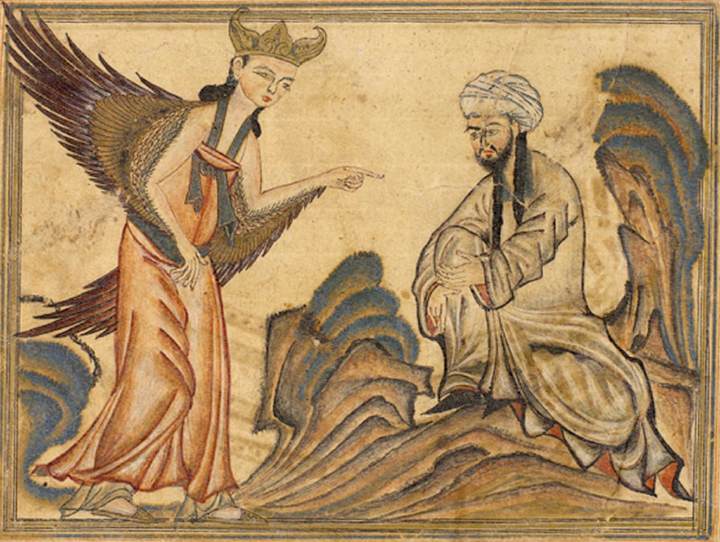
Mohammed receiving his first revelation from the angel Gabriel

Religious Experiences and Miracles

The Jewish people still exist after 2,500 years, while they have not had a homeland for most of the time. That is a remarkable feat. Then Christianity replaced the existing religions in the Roman Empire in one of history’s strangest twists. Somehow, the message of personal salvation through Christ caught on. In the third century, Manichaeism emerged as a new religion. It taught that there was a struggle between the good spiritual world of light and the evil material world of darkness. The prophet Mani, who grew up in a Jewish-Christian Gnostic sect, claimed to have received revelations meant for the entire world, which were to replace all existing religions. It instantly became a spectacular success, spread everywhere in the known world, and could have overtaken Christianity, but it didn’t. A pivotal, and possibly decisive, moment was the conversion of Emperor Constantine to Christianity in 312 AD. He made Christianity the favoured religion in the Roman Empire.

A few centuries later, a small band of Arab warriors established an empire that stretched from the Atlantic to India, spreading the new religion of Islam, in an even stranger and more rapid historical development. Is it a realistic scenario that the supposedly illiterate camel driver Muhammad became a crafty statesman after seeing an angel telling him he came to deliver messages from the God of the Christians and the Jews? After Muhammad’s death, his followers went on to defeat the Byzantine and Persian empires. At the same time, Manichaeism made a one-way trip into the dustbin of history, while in the third century, it appeared to be on the verge of becoming the world’s leading religion. So, why did Mani fail and why did Muhammad succeed? Historians can explain it, but it is an account of what happened rather than an explanation. The question remains, could it occur without someone pulling the strings?

So much can happen, and what happens now has once been extremely improbable. Your reading this text here and now seems highly unlikely a few decades ago. Think of all the things you could have done instead. Or you could have been dead. Yet, you wouldn’t consider your reading this text a miracle. Proselytising religions like Christianity and Islam have a built-in inclination to grow. That may not be the ultimate answer. Jews, Christians, and Muslims worship the same deity. Our universe could be a simulation, and someone could have planned it. But who is to say it couldn’t have happened otherwise?

When Islam arrived on the scene, Jews, Christians and Zoroastrians in the area already believed in an all-powerful creator. Muhammad had met them on his travels, so he was familiar with these religions. Before that, Christianity had faced an uphill struggle. While the Roman state suppressed this religion, pagans left their gods behind and accepted the Christian God as the only true God. And they did so in large numbers.

That begs for an explanation, even though the conversion of Romans to Christianity was a gradual process that took centuries. The Romans occasionally half-heartedly persecuted Christians and executed a few thousand of them over the centuries, not for being a Christian but for not paying their respects to the Roman gods. Despite that, the number of Christians increased 2-3% per year between 30 AD and 400 AD. Each Christian may have converted just one or two persons on average. Over time, exponential growth enabled Christianity to grow from about 100 followers in 30 AD to 30 million by 400 AD.

Such a gradual and steady growth over centuries was somewhat unique for a religion, and so was the blitz conquest of Islam later on. Most people in the Roman Empire, and everywhere else for that matter, lived miserable lives. The promise of an eternal blissful afterlife may have been too tempting for those poor, wretched souls to resist. However, the most often cited reason for conversions was stories about the miracles Christians performed.2 Only in the Middle Ages did the sword become the most compelling Christian argument as Christianity spread further and became integral to European politics. That was not the case in the Roman Empire, so miracles and stories about them were crucial.

An early miracle was Jesus’ appearance to a few followers after his crucifixion. The New Testament mentions miracles that the disciples allegedly performed. These accounts may be exaggerated, but the theme of miracles remains a consistent one in Christianity to this day. The Roman Catholic Church has a rich folklore surrounding relics that are believed to possess magical properties because they are said to have been touched by Jesus. The most famous relics are the Crown of Thorns in Paris, the mysterious Holy Grail, the chalice from which Jesus is said to have drunk, and the Shroud of Turin, a piece of linen cloth with a supposed image of Jesus’ face.

Many of the miracles attributed to these relics are unverifiable or can have other causes, such as luck, but a few cannot be easily explained away. The Roman Catholic Church keeps a record of them. On message boards, people tell stories about prayers heard and miraculous healings. Many of these stories may result from chance or other causes, such as a misdiagnosis or someone seeking attention by lying, but that is not always the case.

A recurring theme is the appearance of the Virgin Mary and other miracles related to her. Thousands of people have seen her. She appeared several times in Venezuela. She revealed herself to Maria Esperanza Medrano de Bianchini in 1976, who received exceptional powers. She could tell the future, levitate, and heal the sick. In Egypt, Mary appeared at a Coptic Church between 1983 and 1986. Muslims have also seen her there. There have been many more Virgin Mary appearances. The most notable sequence occurred in Portugal at Fatima between 13 May and 13 October 1917.

The grand finale was on 13 October 1917, when the Sun reportedly spun wildly and tumbled down to Earth, radiating in indescribably beautiful colours, before stopping and returning to its normal position. Some 40,000 attendants witnessed Mary’s performance. They had gathered because three shepherd children had prophesied that the Virgin Mary would perform a miracle on that date and location. Faking this was hard to do, considering the technology available in 1917. A lack of holographic equipment would have made the effort challenging, not to mention changing the location of the Sun, which is a large ball many times larger than Earth, thus making it difficult to move around. And somehow, the Sun only moved in Fatima, which can only happen in virtual reality.

Jesus also appeared a few times, but less frequently than the Virgin Mary. An intriguing account comes from Kenneth Logie, a preacher of the Pentecostal Holiness Church in Oakland, California, in the 1950s. In April 1954, Logie was preaching at an evening service. During the sermon, the church door opened. Jesus came walking in, smiling to the left and the right. He walked right through the pulpit. Then he placed his hand on Logie’s shoulder. Jesus spoke to him in a foreign tongue. Fifty people witnessed the event. Five years later, a woman in that same church suddenly disappeared. Jesus took her place. He wore sandals and a shiny white robe. He had nail marks on his hands, which were dripping with oil. After several minutes, Jesus disappeared, and the woman reappeared. Two hundred people have seen it. It was on film as Logie had installed film equipment, because strange things were happening.3 Such events can convince people that the message of Christianity, even though it may seem highly peculiar, is correct, as Zeus and Thor failed to show up and perform some tricks.

Mary and Christ are part of a folklore where genuine experiences mix with mental cases seeking attention or con artists profiting at the public’s expense. Usually, there are no 40,000 witnesses, verifiable evidence, or camera footage of what occurred. The Vatican is troubled by self-proclaimed seers, fortune-tellers, prophets, and messengers who believe they have a special bond with the Virgin Mary or possess weeping Madonna statues, which they may or may not have prepared to weep. These people could be delusional, crave attention or, like the televangelists in the United States, be after your money. That is not always the case. If you have a religious experience, don’t suffer from mental conditions impairing your judgment, and can’t think of naturalist explanations, you should believe what you see. To quote Shakespeare’s Hamlet, ‘There are more things on heaven and earth, Horatio, than are dreamt of in your philosophy.’ In virtual reality, it can happen. Yet, these appearances are not proof that Jesus and his mother still live. God can make you believe anything.

Latest revision: 2 June 2026

Feature image: Mohammad receiving his first revelation from the angel Gabriel. Miniature illustration on vellum from the book Jami’ al-Tawarikh, by Rashid al-Din, published in Tabriz, Persia, 1307 AD. Public Domain.

1. Sapiens: A Brief History of Humankind. Yuval Noah Harari (2014). Harvil Secker.
2. The Triumph of Christianity: How a Forbidden Religion Swept the World. Bart Ehrman. Simon & Schuster (2018).
3. How Jesus Became God: The Exaltation of a Jewish Preacher From Galilee. Bart Ehrman. HarperCollins Publishers (2015).

How Jesus became God

Religion in the time of Jesus

Before he was born, a visitor from heaven told his mother that her son would be divine. Unusual signs in the heavens accompanied his birth. As an adult, he left his home to become a travelling preacher. He told everyone not to be concerned about earthly lives and material goods but to live for the spiritual and eternal. He gathered several followers who believed he was the Son of God. He did miracles, healed the sick, cast out demons, and raised the dead. He aroused opposition among the ruling authorities, and they put him on trial. After he died, he appeared to some of his followers, who later wrote books about him. This story is not about Jesus of Nazareth, but Apollonius of Tyana, as Bart Ehrman tells us in his book, How Jesus Became God.1 In those times, it was not as unusual to call someone the son of a god as it is today.

The parallels between Jesus of Nazareth and Apollonius of Tyana are striking. In ancient times, there was no chasm between the divine and the earthly realm. Critics of Christianity used these similarities to question and mock Christianity. The miracles attributed to Jesus were not exceptional either. Other men allegedly did similar deeds. Legends about people occasionally emerge. People claim that Elvis still lives and that they have seen him. Was Elvis resurrected? Who is to say that Christians didn’t invent the tales about the miracles Jesus performed? The Gospels contain contradictions, and scholars believe Christians have modified, embellished or invented these stories. Ehrman argues that the authors never intended them to be an exact account of what happened, but rather to spread the good news about Jesus. Discovering the truth later can be a daunting task. And success is not guaranteed. It has been the work of biblical scholars for centuries.

In Greek and Roman mythology, gods had sex with human beings and begot godlike children. The Greek god Zeus had a son with Alcmena, who bore a godlike son, Hercules. Miraculous and virgin births also occurred. In Roman mythology, the mother of the founders of Rome, Romulus and Remus, was said to be a virgin. Greek mythology also features a few virgin births. Leaders claimed to be the sons of the gods. Julius Caesar claimed to be a descendant of the goddess Venus. Of Alexander the Great, claims circulated that his father was the Greek supreme deity, Zeus. Kings in the ancient world often claimed to have divine parentage. That gave them legitimacy, for who dares to go against the will of the gods? Jewish kings were also referred to as sons of God (2 Samuel 7:14, Psalms 2:7). If Jesus called himself the Son of God, he could have meant that he was the king of the Jews. And that was the official reason for his crucifixion.

God came down in a human form as Mary Magdalene. Jesus claimed She was the reincarnation of Eve while he was Her son, Adam. They were the parents of humanity. The deification of Christ couldn’t have occurred in the pure monotheist Jewish tradition. However, Christianity also had non-Jewish followers who had no problems whatsoever with the all-powerful Creatrix marrying the eternal godlike human Jesus. It was a recipe for theological mayhem that Paul later succeeded in resolving by making Christian theology unfathomable. After the Romans levelled the Jewish temple and Jesus’ return had not materialised, Christianity also had to compete with the Roman emperor cult that worshipped Roman emperors as gods, making some believe it is the reason why Christians made Jesus divine. The competition was tough, and Christianity won. No one thinks of dead Roman emperors as gods anymore, but billions of people still believe that Jesus is godlike and still lives. Now, that is a miracle.

Intentional obscurity

The Gospels date from decades after Jesus’ disappearance, which has led many scholars to believe them unreliable historical sources. Church tradition holds that Mark reflects a testimony given by Simon Peter, as this gospel accurately describes words and deeds. Scholars also conclude that the Gospels describe what Jesus said and did. Much is plausible, given the time and place in which he lived. The Gospels also reveal things that Christians would not have made up, as they undermine their teachings. John the Baptist baptised Jesus. The one who baptises is spiritually superior to the one receiving the baptism.1 It implies that John the Baptist was Jesus’ teacher. The beginning of Mark also suggests so.

To make this uncomfortable fact more palatable, the Christians might have added that John said someone more powerful than he was would come, whose sandals he was not worthy to unfasten (Mark 1:7-8, Matthew 3:11, Luke 3:16, John 1:26-27). All four Gospels mention it, so John the Baptist may well have said it. Parts of the Gospels might be copies from earlier texts that are now lost. If these sources were decades older, fewer errors might have crept in, as written texts don’t change as much as oral stories during retelling.

Paul could have written about what transpired, but did not, or at least as far as we know. The obscurity seems intentional. The first three Gospels are remarkably similar. Scholars believe the sources for the Gospels of Matthew and Luke are the Gospel of Mark and another text with the sayings of Jesus. The Gospels have an unclear origin, and the authors weren’t people close to Jesus. There may have been an insider account that served as the basis for the Gospel of John.

The Gospels claim that Jesus claimed to be the Son of God and called God Father. That looks like a close relationship. To Jesus, being the Son of God meant more than merely being king of the Jews. In The Parable of the Ten Virgins, the kingdom of heaven is compared to a wedding where the bridegroom was a long time in coming (Matthew 25:1-13). All the synoptic Gospels hint at Jesus being the bridegroom. The Romans convicted Jesus of claiming to be king of the Jews. In the Jewish understanding, the king of the Jews is a son of God. But Jesus might have believed himself to be Adam, the eternal Son of God, and perhaps for that reason, also king of the Jews.

Clouding our understanding

The Jewish religion and its scriptures cloud our understanding. To understand God, we must see this universe as the product of an advanced humanoid civilisation that exists to entertain one of its members, whom we call God. And so, there could be more to the mysterious apocalyptic prophet who felt a close relationship with God 2,000 years ago. After all, he started a religion with over two billion followers today. Christianity originated as a branch of Judaism, a religion characterised by its scriptures. Their scriptures outline how Jews, Christians and Muslims see the owner of the universe. That is like looking through glasses covered with dust. It distracts us from the underlying truth.

Christians say that God is love. Christianity paints a different picture of God than Judaism and Islam, which present us with a vengeful warrior God. Many religious people think the scriptures are infallible. So, how can we explain the discrepancies if the God of Judaism, Christianity and Islam is the same? Paul likely went to great lengths to align Christianity with existing Jewish doctrine. Paul and his henchmen obscured the most controversial parts of the new religion by making cryptic references to the Jewish scriptures. Had God appeared as an ordinary woman who married Jesus, and Jesus had preached somewhere else, for instance, in Egypt or China, Christianity would have been a different religion.

Biblical scholars reason from what they can establish from historical sources, while Christians believe the Jewish deity Yahweh is Jesus’ father. Both see Jesus within a Jewish context. That obscured things, as Yahweh is the imagined deity of the Jews, not the owner of the universe. It is better to view Yahweh as the cloak behind which our Creatrix hides. The most pressing problem for Paul was that God is a woman who had a romantic relationship with Jesus. To suggest so was blasphemy in the Jewish religion. And so, Jesus married the Church, just as Yahweh married the Jewish nation. It made Jesus eternal and godlike. That was not a great leap if he was Adam, God’s eternal husband.

Firstborn of all creation

Jesus thought himself to be the reincarnation of Adam. Adam was God’s son (Luke 3:38) and Jesus the firstborn of Creation (Romans 8:29, Colossians 1:15, Hebrews 1:6, 12:23). These words relate to the Jewish scriptures. At the same time, they are cryptic references to Adam being born first as the son of Eve, and Jesus being the reincarnation of Adam. The phrase born of God (John 1:13) relates to Eve giving birth to humanity. The context of the Jewish religion made it possible to hide that meaning. In traditional agricultural societies, the firstborn son inherited the land and the leadership of the family clan. The Jews were no exception. The theme appears numerous times in the Jewish Bible. The story of Jacob and Esau is well-known. King David was God’s firstborn son (Psalm 89:27).

The Jewish nation, Israel, is God’s firstborn son (Exodus 4:22). Israel is also God’s Bride (Isaiah 54:5, Hosea 2:7, Joel 1:8). This provided Paul with a theological escape, as God had married His firstborn son, Israel. God marrying Her firstborn son, Jesus, and them having a romantic relationship was impossible in Judaism. For Jews, who followed Jesus because he was the Messiah, it was impossible to conceive that their invisible deity Yahweh had taken a human form and had married Jesus, and that Jesus was not an ordinary prophet, but Adam reincarnate. And so, Jesus married the Church instead. In this way, Jesus became like God, and the Christians became Jesus’ people, just like the Jews were God’s people. And that made Jesus like God.

Jesus as God

That is not as problematic as it might seem. Many Jews believe there are two powers in heaven.1 In Genesis, God speaks in the plural, ‘Let us make humankind in our image.’ It may be a relic of the polytheist past of the Jews when they still believed the gods created the universe. When they became monotheists around 400 BC, most of the Jewish Bible, the Tanakh, had already been written. In a simulation created by an advanced humanoid civilisation to entertain one of its members, the gods in plural, creating us, also makes sense. The beings of this civilisation are the gods, and the owner of this universe is God. The monotheist Jews didn’t see it this way, so this phrase fuelled speculation about a godlike figure working alongside God.

In the Jewish Bible, God appeared from time to time. Some people saw God sitting on a throne (Exodus 24:9-10), while no one has ever seen God and lived (Exodus 33:20). Others saw the Angel of the Lord, who is also considered a manifestation of God, and survived. Abraham and Hagar are among those who have seen the Angel, and the Jewish Bible then tells us that they have seen God. Hence, the Angel of the Lord is God, but not God himself. Otherwise, they would not have survived.1
Then you have the mysterious figure Melchizedek, who might have been the Angel of the Lord, or Jesus, according to some interpretations. Melchizedek, as God’s priest, offered bread and wine to Abraham (Genesis 14:18-20), reflecting Christ’s eternal priesthood. And so, there must be two gods, an invisible, all-powerful Creator and his visible, godlike sidekick. It is an example of the assumption of the scriptures’ infallibility, combined with strict logic, leading to the absurd.

Jesus could be the Angel of the Lord and the image of the invisible God (Colossians 1:15). This interpretation is contrived, as it is not what the authors of the Jewish Bible intended. The Angel of the Lord didn’t say to Abraham, ‘I am Jesus, God’s one and only son.’ He could have done so if he were. That would have saved us a lot of theological troubles, as the Jews would have known that Jesus was the Messiah. However, for an undisclosed reason, the Angel didn’t bother to update the Jews on this interesting matter. Christians found other references to Jesus as well, such as (Daniel 7:13-14),

In my vision at night I looked, and there before me was one like a son of man, coming with the clouds of heaven. He approached the Ancient of Days and was led into his presence. He was given authority, glory and sovereign power; all nations and peoples of every language worshipped him. His dominion is an everlasting dominion that will not pass away, and his kingdom will never be destroyed.

That must be Jesus, Christians claim. Jews disagree.

The road to Trinity

A problem early Christians had to solve was that Jesus was the Son of God and also God, while there was only one God. That didn’t make sense. It kept Christian thinkers busy for centuries until they reached an agreement on the Trinity. Christianity is a scriptural religion, so there must be a justification in the scriptures. The Gospel of John starts with the following sentence, ‘In the beginning was the Word, and the Word was with God, and the Word was God.’ The Word was with God, and the Word was God. The Word was Jesus, as the Word became flesh and made his dwelling among us. In other words, Jesus is God, and he existed before Creation. But he is not God the Father, but with God the Father. God consists of the Father and the Son, while God is one.

In the ancient world, some gods came in threes or triads. The Indian religion has the group of Brahmā, Siva, and Viṣṇu, and the Egyptians had Osiris, Isis, and Horus. It was called Trinity. That required adding another component to the mixture of the Father and the Son to arrive at three ingredients and find a theological justification. The idea of the Trinity circulated among Christians as early as 150 AD and became an official teaching in the fourth century AD. So, what could be the scriptural justification for the Trinity? Christians found it in Isaiah (Isaiah 9:6),

For to us, a child is born, to us a son is given, and the government will be on his shoulders. And he will be called Wonderful Counsellor, Mighty God, Everlasting Father, Prince of Peace.

Some see a reference to the Trinity there. Counsellor is a title for the Holy Spirit (John 14:26), the Father is God, and the Prince of Peace is Jesus. That is far-fetched. But there is a better one. Some see the Trinity when the Jewish Bible refers to God’s Word (Psalm 33:6), His Spirit (Isaiah 61:1), and Wisdom (Proverbs 9:1). But what could be the theological justification?

Greek philosophy influenced Jewish scholars, such as Paul. Plato claimed that ideas are the basis of knowledge. Thus, ideas, not physical objects, are the building blocks of reality. In Platonic thinking, the world of ideas is superior. Platonists think that a spirit can use words to produce matter. God is a pure spirit, the highest being. In Judaism, God created all things using words. Hence, words existed before Creation. Otherwise, you can’t make the world using words.

The Jewish philosopher Philo lived at the same time as Jesus. He claimed the Word is the highest of all beings, the image of God, according to which and by which the universe receives its order. Philo called the Word the second God. But if there is one God, the Word must be part of God. The author of the Gospel of John took that idea, and it starts with, ‘In the beginning was the Word.’ Here, the Word was Jesus, so Jesus existed before Creation. And that became a teaching of Christianity.

In Proverbs, Wisdom says that she was the first thing God created. And then God created everything else with the help of Wisdom alongside Him (Proverbs 8:22-25). She is a reflection of the eternal light, a spotless mirror of the working of God, and an image of His goodness (Wisdom 7:25-26). Wisdom is feminine because it is a feminine term in the Greek language. Greek was the language of the time, and educated Jews spoke Greek, and Jewish scriptures were translated into Greek. Here, Wisdom plays a similar role as the Word. She was present when God made the world and is beside God on his throne (Wisdom 9:9-10). Hence, Wisdom was also extant before Creation. And so, you have the Word, the Wisdom, and God existing before Creation. If the Word had become Jesus, Wisdom could have become the Holy Spirit. And so we arrive at the Trinity. This explanation also clarifies why the Holy Spirit is feminine.

Logical issues leading to an arcane theology

Christianity originated as a Jewish sect, so early Christians based their religion on the Jewish scriptures. It generated problems, as the facts contradicted the scriptures, most notably that God is a woman who can take a human form. Jesus as Adam, God’s eternal husband, already made him godlike. The efforts to resolve these logical difficulties shaped the concept of Jesus as God. Had Jesus preached in Egypt instead and claimed his wife was the goddess Isis, the all-powerful Creatrix of the universe, and that he was the reincarnation of her son Horus, there may still be records of his teachings.

Egypt was a polytheistic nation with more flexible beliefs. It could have adopted another colourful cult alongside the existing ones. The Jews, however, were monotheists with well-established scriptures, which also made Christianity uncompromisingly monotheistic. Converts had to renounce all false gods, allowing Christianity to wipe out the other religions and religiously cleanse the Roman Empire. And it all would have been inconceivable without the intervention of one of the greatest religious innovators of all time, Paul. He invented Christianity. That almost looks like a plan.

Latest revision: 31 January 2026

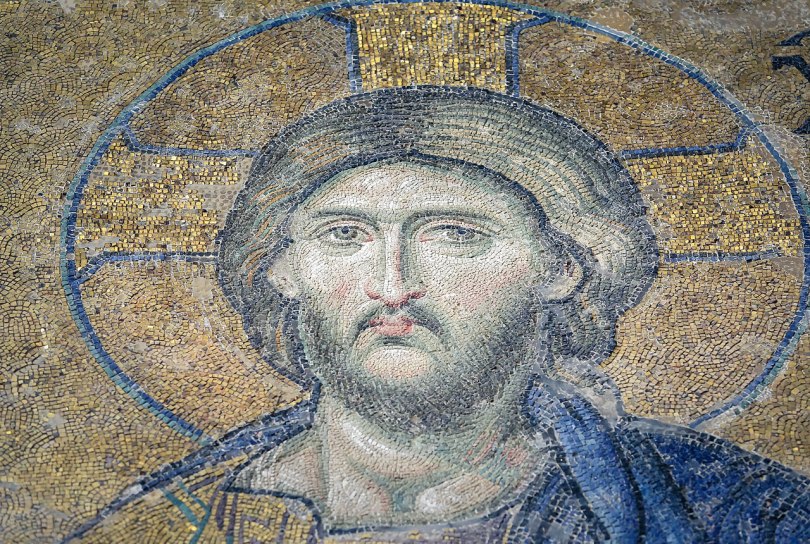
Featured image: Christ Pantocrator in Hagia Sophia. Svklimkin (2019). Wikimedia Commons.

1. How Jesus Became God: The Exaltation of a Jewish Preacher. Bart D. Ehrman (2014). HarperCollins Publishers.

The Religion Paul Invented

Paul’s reasoning

How did Christianity become the baffling religion it is today? A cloud of obscurity surrounds the first decades of the Christian movement. A few things we do know. Jesus started Christianity, but Paul of Tarsus, better known as Paul the Apostle, turned Christianity into the religion we know today. Paul was first a Pharisee who devoutly observed Jewish religious laws before becoming a follower of Christ. One thing we should know about Paul is that the scriptures were precious to him and more valuable than facts. Truth, in his view, is thus not, as Jesus taught, according to the facts as established by the senses, but according to the scriptures. And most people, religious or not, would not object to lying for a good cause, so it is not that strange.

How did Christianity become the baffling religion it is today? A cloud of obscurity surrounds the first decades of the Christian movement. A few things we do know. Jesus started Christianity, but Paul of Tarsus, better known as Paul the Apostle, turned Christianity into the religion we know today. Paul was first a Pharisee who devoutly observed Jewish religious laws before becoming a follower of Christ. One thing we should know about Paul is that the scriptures were precious to him and more valuable than facts. Truth, in his view, is thus not, as Jesus taught, according to the facts as established by the senses, but according to the scriptures. And most people, religious or not, would not object to lying for a good cause, so it is not that strange.

It is of the utmost importance, as it explains why Christianity has become the religion it is today. In Paul’s view, everything about Christianity should have a scriptural foundation. Paul’s education as a Pharisee is the reason why. We shouldn’t underestimate the consequences. Likely, most, if not everything, about Jesus that is ‘according to the scriptures’ is a fabrication. The label ‘according to the scriptures’ should serve as a red flag, signalling ‘invented by Paul.’ Hence, ‘Jesus rose on the third day according to the scriptures’ means ‘Paul made up that Jesus rose on the third day.’

It blows away the entire theological foundation of Christianity that Paul made up, including the idea of the New Covenant. That should come as no surprise if God is a woman who took a human form and married Jesus, telling him they were Eve and Adam reincarnate. It also suggests that the earliest document depicting the historical events, the Gospel of Mark, had already seen significant editing for theological reasons. If Christianity aligns with the Jewish scriptures, it gains credibility among the Jews. That was a good cause for Paul.

Christianity began as a small Jewish sect founded by an end-time prophet who claimed to be the Messiah. Many Jews awaited a Messiah but expected a strong leader who would liberate the Jewish nation from Roman occupation. Jesus didn’t live up to their hopes, and the Romans had him crucified. That wasn’t the end of Christianity, but just the beginning. Jesus later appeared to some of his followers, thereby giving credibility to his claims that he was the eternally living Son of God. That is possible in virtual reality, and it is hard to envision how Christianity could have survived otherwise. His post-death appearance gave his followers new hope and inspired them to carry on, leading to Pentecost and the belief in the Holy Spirit.

Paul, whose name was first Saul, was initially a fervent persecutor of Jesus’ followers. When travelling to Damascus, he received a vision. According to his own words, a bright light flashed from heaven, knocking him to the ground. He heard a voice he identified as Jesus accusing Saul of persecuting him. Today, we would call the experience a psychosis. The encounter temporarily blinded Saul. His companions led him to Damascus. There, Ananias, a Christian disciple in Damascus, restored Saul’s sight and baptised him.

It was a turning point in his life and an event that shaped the future of humankind. It was a personal calling. His response was not to consult any human being (Galatians 1:16). In other words, he didn’t go for a reality check. Instead, he went his own way and started preaching among the Gentiles (Galatians 1:15-16). Paul preached his own distinct gospel, which he claimed was revealed to him. He didn’t meet with most of the other Apostles for fourteen years (Galatians 2:1-10). He saw Simon Peter after three years, and also Jesus’ brother (Galatians 1:18-19). His mission succeeded. Indeed, God works in mysterious ways. In The Triumph of Christianity, Bart Ehrman attempts to reconstruct Paul’s reasoning, the foundation of Christian thought.

His vision proved to Paul that Jesus still lived as his followers claimed. Jesus had died, so he was resurrected, Paul reasoned. And therefore, he must be the long-awaited Messiah. That posed a few theological problems for Paul. The Romans had humiliated Jesus and executed him. So, why did Jesus have to die? Paul came up with an answer. In many religions, including Judaism during Passover, people sacrifice animals to please the gods.1 The Gospels agree that Jesus died either on the day of Preparation for the Passover or on Passover itself. Now, that doesn’t seem like a coincidence, so that pushed Paul’s thinking in this direction. Paul must have known that Jesus believed himself to be Adam. Adam led us out of Paradise, and Jesus would return us to it.

And so, Paul reasoned that Jesus came to undo what Adam had done. The Jewish religion doesn’t place such a dramatic weight on the Fall. It definitely wouldn’t justify human sacrifice, or worse, murdering the Son of God. To make the argument work, Paul inflated the significance of the Fall to grandiose proportions. That is why Christianity, contrary to Judaism and Islam, places such an emphasis on sin. Paul turned Jesus into the sacrificial Lamb of God. In his view, we are all sinners because Adam was, but Jesus saved us by sacrificing himself. It is a novel idea not found in Judaism or its scriptures. The Jewish religion opposes human sacrifice, and it is even blasphemous to think that God would require it, so this is alien to Jews, which made Paul’s innovation truly remarkable.

The Lamb of God

The sacrificial lamb is a revolutionary new type of saviour, someone who, by his death, provides redemption to his followers. According to Mark, Matthew, and Luke, the disciples shared bread and wine during the Last Supper. And Jesus said, ‘Take it; this is my body,’ and, ‘This is my blood of the covenant, which is poured out for many.’ It is outside the Jewish tradition and part of the sacrificial lamb imagery. So, did Jesus say these words, or did Paul invent them? Probably the latter. Paul wrote (1 Corinthians 11:23-26),

For I received from the Lord what I also passed on to you: The Lord Jesus, on the night he was betrayed, took bread, and when he had given thanks, he broke it and said, ‘This is my body, which is for you; do this in remembrance of me.’ In the same way, after supper he took the cup, saying, ‘This cup is the new covenant in my blood; do this, whenever you drink it, in remembrance of me.’ For whenever you eat this bread and drink this cup, you proclaim the Lord’s death until he comes.

It begins with, ‘For I received from the Lord.’ In other words, the origin of this tradition lies in Paul’s imagination rather than in Jesus’ words at the Last Supper. He declared that he received the information directly from the Lord, not from an eyewitness. That is iffy. The Gospel of John fails to mention it. This gospel comes from a separate tradition outside Paul’s influence. John provides the origin of his line of thinking.

There, Jesus claimed that he was the bread coming from heaven in analogy to the bread that God sent from heaven in Moses’ time (John 6:25-59). Jesus declared, ‘I am the bread of life. Whoever comes to me will never go hungry, and whoever believes in me will never be thirsty.’ (John 6:35) And, ‘I am the living bread that came down from heaven. Whoever eats this bread will live forever. This bread is my flesh, which I will give for the life of the world.’ (John 6:51) And, ‘Very truly I tell you, unless you eat the flesh of the Son of Man and drink his blood, you have no life in you. Whoever eats my flesh and drinks my blood has eternal life, and I will raise them up at the last day.’ (John 6:53-54) According to John, Jesus said this while teaching in the synagogue in Capernaum.

It is the same imagery, but with a very different context: Jesus as a life-giver and bread from heaven. It relates to what John alluded to when he wrote that the Word became flesh, and that Jesus gave us the right to become children of God. As Adam, he fathered humanity with Eve, who was God, or so that was what Jesus believed. As Adam’s reincarnation, he was a life-giver with eternal life to offer his followers, since many Jews believed in the resurrection of the dead. That Jesus was Adam and eternally married to God, and thereby the father of humanity, was unthinkable for Jews, and also for most Jewish Christians, who didn’t know about Jesus’ love affair with God. Gentiles had no problem with that. They had organised themselves in the Johannine community around their own Gospel, now known as the Gospel of John, so you only find it there.

And so, Paul gave the eating of the flesh and drinking of the blood a different twist by turning Jesus into a sacrificial lamb. He borrowed his offering theme from another part of the Scripture, in this case Melchizedek’s offering of bread and wine to Abraham. In the first epistle to the Corinthians, Paul writes (1 Corinthians 15:3-5),

For what I received, I passed on to you as of first importance: that Christ died for our sins according to the scriptures, that he was buried, that he was raised on the third day according to the scriptures, and that he appeared to Simon Peter and then to the twelve Apostles.

It is another ‘for I received’ sentence, so many scholars believe these things have been passed on to him, possibly by fellow Christians as a creed, and that it reflects the earliest Christian beliefs.2 However, the repeated reference to the scriptures makes the supposed creed suspect of being a product of Paul’s creative ingenuity. He has proven himself capable of writing a beautiful poem about love, so that wouldn’t be beyond his capabilities. A passage in Isaiah can explain the ‘died for our sins according to the scriptures’ (Isaiah 53:4-6),

Surely he took up our pain
and bore our suffering,
yet we considered him punished by God,
stricken by him, and afflicted.
But he was pierced for our transgressions,
he was crushed for our iniquities;
the punishment that brought us peace was on him,
and by his wounds we are healed.
We all, like sheep, have gone astray,
each of us has turned to our own way;
and the Lord has laid on him
the iniquity of us all.

You need not be too imaginative to apply this to Jesus, even though Isaiah had someone else in mind. Concerning the raising on the third day, Hosea 6:2 may come to assistance, as it says, ‘On the third day he will restore us.’ The larger the body of scriptures, the easier cherry-picking becomes. What comes next is even more unbelievable. Jesus supposedly appeared to more than five hundred at the same time. Paul was such a fantasist that it is unlikely to have happened.

Paul tried to answer the question of why God made Jesus sacrifice himself, which is a profoundly troubling question for a Jew. As a religious Jew, he looked for the answer in the scriptures, so facts were of secondary importance. Facts were never that important in religion, and are something scientists may care about. And humans are creatures who live by stories rather than facts. So, think of it as doing God’s work rather than lying. That was probably how Paul viewed it as well. And for good reason, because his diligent work united the early Church, a tremendous achievement.

So we should be cautious in concluding that Jesus believed that he had to die for our sins. The Gospel of John fails to mention it. John the Baptist calls Jesus ‘Lamb of God’ twice in the first chapter of John, but the other Gospels don’t mention that. It is an image from Pauline theology. There is no chance that John the Baptist said, ‘Behold, the Lamb of God.’ Although the author of John’s letter supports the claim that Jesus died for our sins, that could be telling. The letter expresses the author’s opinion, influenced by Pauline theology, whereas the Gospel of John is an existing account he redacted.

Jesus’ teachings were another reason Paul believed Jesus died for our sins. So, what did Jesus teach? It was the forgiveness of sins. Mark tells us that John the Baptist preached baptism of repentance for the forgiveness of sins, and that he baptised Jesus (Mark 1:4-9). These also became Jesus’ teachings. Jews already practised ritual immersion and washing for purification, spiritual cleansing, and as a conversion rite, so John the Baptist operated within an existing tradition.

Jesus began as one of John’s followers, a fact the Gospels don’t mention for obvious reasons. Instead, they say that John was the messenger sent ahead of Christ, thereby fulfilling a prophecy of Isaiah (Mark 1:1-3), which suggests that it is contrived. John the Baptist probably had said something like, ‘Jesus comes to take away our sins’ rather than ‘Behold, the Lamb of God.’ Nevertheless, it gives a possible answer to the question of why Jesus had to die, so the conclusion Paul arrived at is not far-fetched.

It leaves us with the question of why Jesus willingly went to the cross. Mark tells us that Jesus was deeply distressed and troubled. He prayed that the cup would be taken from him (Mark 14:32-36), which is a very different prayer from the one in John (John 17), where he hopes to await great glory. Many scholars think it is a later embellishment to explain that Jesus died in accordance with the will of God. Such an explanation doesn’t presume an intimate relationship between God and Jesus. And so, it probably was Jesus’ choice, perhaps made under duress. Jesus could have avoided the execution by rescinding his claims of being the Messiah and the Son of God. That would be denying the truth and his mission. Believing himself to be Adam and eternally living, he expected to survive, which emboldened him and strengthened his resolve. And don’t forget what people do for love.

Defining the Christian faith

It must have been God’s plan to save Her/His people this particular way, so by Jesus sacrificing himself, Paul reasoned further, so observing Jewish religious laws is not critical for your salvation, nor do you have to be a Jew. Jewish religious laws being irrelevant is another truly revolutionary thought for a Pharisee. Prophecies in the Jewish Bible foretold that all the nations would accept the God of the Jews. To Paul, Jesus was the fulfilment of these prophecies. After all, Jesus was Adam, the father of humankind. And from Adam, God made all the nations that inhabit the Earth (Acts 17:26), so Jesus’ message applied to everyone, not just Jews alone. There were already Gentile Christians, and Paul preached to them, so that was his view from the outset. Making them all adhere to Jewish religious law proved ‘a bridge too far’ and could hamper the spread of the religion. Paul then concluded that rejecting false gods and having faith in Jesus would be enough. Paul believed he was God’s missionary to spread the good news.1

Paul was a knowledgeable scholar of the Jewish scriptures, whereas the other Apostles lacked such education. He shaped the beliefs of the early Church and the future Christian religion by establishing the theological foundation of the Christian faith. Paul defined God’s image as the Father, the amalgamation of the Jewish Yahweh and the Christian Mother Goddess. The result became a hybrid: a Father who can give birth. Jesus also became a hybrid: a godlike human. In the Gospel of Mark, Jesus says, ‘Abba, Father.’ (Mark 14:36) More than a decade before Mark, Paul used that particular phrasing twice (Romans 8:15, Galatians 4:6). You read Paul’s words in the Gospel of Mark, just like at the Last Supper. Also, ‘The Twelve’ is a quote you can trace back to Paul. Likely, there were no twelve disciples. It took Paul over a decade to work out his new theology, and perhaps countless sleepless nights as well.

Around 55 AD, Paul wrote that the woman came from man (1 Corinthians 11:7-8), thereby reasserting the biblical account from Genesis rather than the original Christian account, of which we can still find traces in the Gospel of John. In Galatians, Paul also writes that God sent His Son, who was born of a woman (Galatians 4:4). That Jesus was born of a woman is stating the obvious. You don’t need to stress that, even when God is Jesus’ Father. If God were a Father, this factoid could be among the most uninteresting disclosures in the entire letter. The original Christian teaching, which Paul tried to obfuscate, was that Jesus was Adam reincarnated, so he was born of God. Paul claimed that Jesus is the Son of God the Father and was not Adam. And so, he was born of a woman rather than God. For once, Paul didn’t lie by stressing that particular factoid. It is also noteworthy that he didn’t write ‘born of a virgin.’ Had he known about the virgin birth, it would have been worth mentioning. By 55 AD, no one still knew about it.

For religious Jews, it was blasphemy to say that God was a woman who married Jesus. So it was probably also problematic for many Jewish converts, while non-Jewish converts had no issues with it. The Greek and Roman traditions had several gods and goddesses who had children with humans. For the Greeks and the Romans, God being a woman marrying a man who lives eternally is not that spectacular, while it is unthinkable for Jews. That made uniting the early Church an enormous challenge. To Paul, a former Pharisee, the truth of the scriptures mattered more than the facts. He could dismiss the Christian creation story and change God’s gender. Not having been a firsthand witness and not having spoken much to the other Apostles for the first fourteen years further helped him maintain his independent and particular perspective.

And the facts created challenges that Paul’s fantasy theology would solve. In the first epistle to the Corinthians, Paul writes, ‘It is reported that there is sexual immorality among you, and of a kind that even pagans don’t tolerate: A man is sleeping with his father’s wife. And you are proud!’ (1 Corinthians 5:1-2). Possibly, a scribe watered down this controversial fragment during copying, or it was so scandalous that Paul himself chose to formulate the truth in this fashion. The man might have slept with his mother, or probably did. After all, it is sexual immorality that even pagans don’t tolerate. And the Christians in Corinth took pride in it. Perhaps they believed this man followed Christ’s example.

Paul’s unique advantage, which placed him in the position to shape Christian theology, was that, apart from being an educated scholar with a dedication to the scriptures, he was not a firsthand witness to the events. To him, reality had to fit the scriptures rather than the other way around. He never met Mary Magdalene and Jesus, and didn’t meet with the other Apostles during the first years of his preaching. That allowed him to develop his theology independently of the facts.

As a Jew preaching among the Gentiles, he could bridge the gap between the Jewish and the Gentile views. His theology appealed to Jewish Christians because it connected Christianity to the Jewish scriptures and portrayed Jesus as the Jewish Messiah. At the same time, his preaching tours and letter writing provided him with a support base among the Gentile Christians as well, who saw Jesus as godlike. Pauline theology also shares that view. God the Father became the compromise between Yahweh and the Mother.

Paul’s diligent labour provided Christianity with an elaborate theological foundation, and his view could also bring unity within the early Church, so it prevailed. Most people only knew Jesus from stories, and few knew the details, so it was possible to sway opinions with false stories. It is still possible today, even when everyone can check the facts. The outcome of Paul’s intervention was that Christianity became an entirely different religion. Had a close follower of Jesus from 30 AD accidentally run into a time portal and leapt into the future, he wouldn’t have recognised his religion already in 100 AD, let alone today.

Spreading the good news

Paul dedicated his life to spreading the good news that faith in Jesus could save everyone. During his many travels, he founded Christian communities. His mission wasn’t easy. His message caused upheaval, and Jews expelled him from their synagogues several times. But he was determined and worked hard. Paul’s gospel of personal salvation through faith in Jesus Christ, which is open to everyone, appears to have caught on. However, it is a most peculiar tidings and not something you would believe if you had grown up in a different tradition, whether you were Jewish or worshipped other deities. And so the success of Christianity begs for a better explanation. Ancient sources indicate that stories about the miracles Christians performed made people convert.1 An example was the healing of a lame man when Paul and Barnabas visited Lystra.

We have to take Paul’s word for it, as he is a likely source. Had we not known Paul as a fantasist, it appears plausible. In other words, it might have happened. In other words, it might have happened. As the story says, Paul had healed the man. The Lycaonians then concluded Paul and Barnabas were gods in human form. The priest of Zeus brought bulls and wreaths to the city gate, as he and the crowd wished to offer sacrifices to them. Paul and Barnabas explained that they were only human and messengers of the good news that the God of the Jews, who had made the heavens, the earth, the sea, and everything in them, had decided that all nations should no longer go their own way. And the proof, they said, was that the Jewish God had shown kindness by giving us rain from heaven and crops in their seasons and filling our hearts with joy (Acts 14:8-18). The proof thus was the seasons, the crops and the rains, and, of course, joy in our hearts. The seasons and the crops had always been there, and people had been joyful before, so that didn’t prove much. Hence, it must have been the miracle of healing that made people believe Paul’s unusual message.

Paul’s activities led to a riot in the city of Ephesus. Demetrius, who made silver shrines of the goddess Artemis and brought in a lot of trade for the local businesspeople, realised the consequences of Paul’s good tidings. He called the craftsmen and workers in related occupations together and said, ‘You know, my friends, we receive a good income from this business. And you see and hear how this fellow Paul has convinced and led astray many people here in Ephesus and in practically the whole province of Asia. He says that gods made by human hands are no gods at all. There is danger not only that our trade will lose its good name but also that the temple of the great goddess Artemis will be discredited and that the goddess herself will be robbed of her divine majesty.’ When they heard this, they were furious and began shouting, ‘Great is Artemis of the Ephesians!’ Soon, the whole city was in an uproar (Acts 19:23-29). A mob seized Gaius and Aristarchus, Paul’s travelling companions from Macedonia, and brought them to an assembly in a theatre.

A city clerk managed to quiet the crowd in the theatre. He said, ‘Fellow Ephesians, doesn’t the world know that the city of Ephesus is the guardian of the temple of Artemis and of her image, which fell from heaven? Since these facts are undeniable, you should calm down and not do anything rash. You have brought these men here, though they have neither robbed temples nor blasphemed our goddess. If Demetrius and his fellow craftsmen have a grievance against anybody, the courts are open, and there are proconsuls. They can press charges. If there is anything further you want to bring up, it must be settled in a legal assembly. As it is, we are in danger of being charged with rioting because of what happened today. In that case, we would not be able to account for this commotion since there is no reason for it.’ After he had said this, he dismissed the assembly (Acts 19:35-41). Had it been untrue, then the spread of Christianity would have become a bit harder to explain, but not impossible. More upheavals were to come in the following centuries.

Contending versions of Christianity

During the first centuries, there were several versions of Christianity. It highlights contentious issues, suggesting that early Christian beliefs differ from those of Christianity today. Christianity today is not what it originally was. The alternative views are likely closer to the original faith in some respects because they reflect earlier beliefs. The most well-known deviant groups were the Nazarenes, the Marcionists, the Ebionites, and the Arians:

  • The Nazarenes continued to observe the Jewish religious laws. Jesus didn’t intend to abolish them. It was Paul who came up with that idea.
  • The Marcionists taught that the God of the Gospel is the true Supreme Being as opposed to the evil Jewish God. Indeed, God is not the deity the Jews imagined.
  • The Ebionites didn’t believe that Jesus was divine, nor did they think that he was born of a virgin. That is also correct.
  • Arianism emerged around 300 AD. The Arians opposed the doctrine of the Trinity, which was not an original Christian teaching.

Except for the Arians, these groups existed from an early period. Christianity was in flux. That began to change once the Roman Emperor Constantine made Christianity the state religion of the Roman Empire. Constantine invited all the bishops in the Roman Empire to the First Council of Nicaea in 325 AD. It was the first effort to create a uniform Christian doctrine. More efforts followed. The Roman state promoted the Church’s official teachings. Consequently, other strains of Christianity faded into obscurity.

The Gospels of the New Testament date from 70 to 100 AD, more than forty years after Jesus preached. Mark, Luke, Matthew, and John did not write the Gospels attributed to them. The Apostles were uneducated, Aramaic-speaking Jews, while the authors were educated, Greek-speaking Christians who were not eyewitnesses. Scholars believe Mark, Luke, and Matthew are collections of stories that circulated among early Christians. The author of the Gospel of Luke even says so (Luke 1:1-4).

Whenever someone retells a story, details change, new episodes emerge, and parts get omitted. And the story may become more spectacular. And so, the Gospels likely don’t accurately tell what happened. Several letters in the New Testament are anonymous, despite claiming to be from Peter, Paul, or another well-known figure. Jesus’ brother couldn’t have been the author of the Epistle of James because it contains no inside knowledge about the relationship between God and Jesus. And we don’t have the original texts of the New Testament. The oldest preserved copies date back to the second or third centuries AD. Scholars have used these copies to reconstruct the original texts as much as possible.

Latest revision: 30 July 2026

Featured image: Head of St. Paul. Mosaic in the Archbishop’s Chapel, Ravenna, 5th century AD (public domain)

1. The Triumph of Christianity: How a Forbidden Religion Swept the World. Bart D. Ehrman (2018).
2. How Jesus Became God: The Exaltation of a Jewish Preacher. Bart D. Ehrman (2014). HarperCollins Publishers.