The Religion Paul Invented

Paul’s reasoning

How did Christianity become the baffling religion it is today? A cloud of obscurity surrounds the first decades of the Christian movement. A few things we do know. Jesus started Christianity, but Paul of Tarsus, better known as Paul the Apostle, turned Christianity into the religion we know today. Paul was first a Pharisee who devoutly observed Jewish religious laws before becoming a follower of Christ. One thing we should know about Paul is that the scriptures were precious to him and more valuable than facts. Truth, in his view, is thus not, as Jesus taught, according to the facts as established by the senses, but according to the scriptures. And most people, religious or not, would not object to lying for a good cause, so it is not that strange.

How did Christianity become the baffling religion it is today? A cloud of obscurity surrounds the first decades of the Christian movement. A few things we do know. Jesus started Christianity, but Paul of Tarsus, better known as Paul the Apostle, turned Christianity into the religion we know today. Paul was first a Pharisee who devoutly observed Jewish religious laws before becoming a follower of Christ. One thing we should know about Paul is that the scriptures were precious to him and more valuable than facts. Truth, in his view, is thus not, as Jesus taught, according to the facts as established by the senses, but according to the scriptures. And most people, religious or not, would not object to lying for a good cause, so it is not that strange.

It is of the utmost importance, as it explains why Christianity has become the religion it is today. In Paul’s view, everything about Christianity should have a scriptural foundation. Paul’s education as a Pharisee is the reason why. We shouldn’t underestimate the consequences. Likely, most, if not everything, about Jesus that is ‘according to the scriptures’ is a fabrication. The label ‘according to the scriptures’ should serve as a red flag, signalling ‘invented by Paul.’ Hence, ‘Jesus rose on the third day according to the scriptures’ means ‘Paul made up that Jesus rose on the third day.’

It blows away the entire theological foundation of Christianity that Paul made up, including the idea of the New Covenant. That should come as no surprise if God is a woman who took a human form and married Jesus, telling him they were Eve and Adam reincarnate. It also suggests that the earliest document depicting the historical events, the Gospel of Mark, had already seen significant editing for theological reasons. If Christianity aligns with the Jewish scriptures, it gains credibility among the Jews. That was a good cause for Paul.

Christianity began as a small Jewish sect founded by an end-time prophet who claimed to be the Messiah. Many Jews awaited a Messiah but expected a strong leader who would liberate the Jewish nation from Roman occupation. Jesus didn’t live up to their hopes, and the Romans had him crucified. That wasn’t the end of Christianity, but just the beginning. Jesus later appeared to some of his followers, thereby giving credibility to his claims that he was the eternally living Son of God. That is possible in virtual reality, and it is hard to envision how Christianity could have survived otherwise. His post-death appearance gave his followers new hope and inspired them to carry on, leading to Pentecost and the belief in the Holy Spirit.

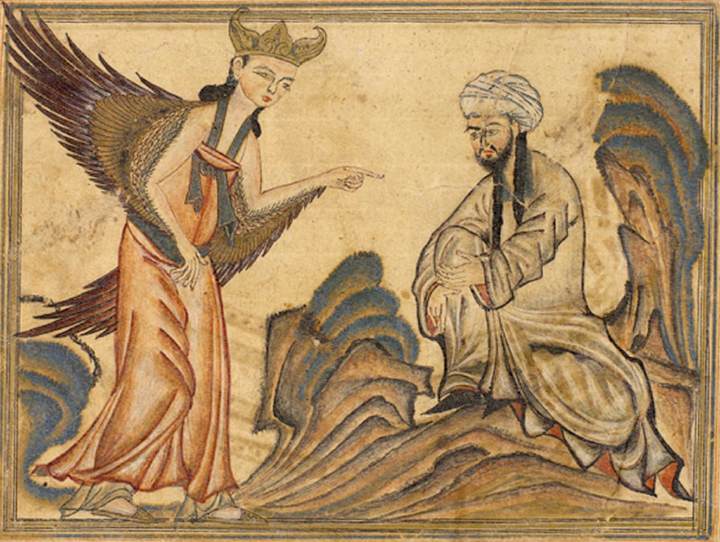
Paul, whose name was first Saul, was initially a fervent persecutor of Jesus’ followers. When travelling to Damascus, he received a vision. According to his own words, a bright light flashed from heaven, knocking him to the ground. He heard a voice he identified as Jesus accusing Saul of persecuting him. Today, we would call the experience a psychosis. The encounter temporarily blinded Saul. His companions led him to Damascus. There, Ananias, a Christian disciple in Damascus, restored Saul’s sight and baptised him.

It was a turning point in his life and an event that shaped the future of humankind. It was a personal calling. His response was not to consult any human being (Galatians 1:16). In other words, he didn’t go for a reality check. Instead, he went his own way and started preaching among the Gentiles (Galatians 1:15-16). Paul preached his own distinct gospel, which he claimed was revealed to him. He didn’t meet with most of the other Apostles for fourteen years (Galatians 2:1-10). He saw Simon Peter after three years, and also Jesus’ brother (Galatians 1:18-19). His mission succeeded. Indeed, God works in mysterious ways. In The Triumph of Christianity, Bart Ehrman attempts to reconstruct Paul’s reasoning, the foundation of Christian thought.

His vision proved to Paul that Jesus still lived as his followers claimed. Jesus had died, so he was resurrected, Paul reasoned. And therefore, he must be the long-awaited Messiah. That posed a few theological problems for Paul. The Romans had humiliated Jesus and executed him. So, why did Jesus have to die? Paul came up with an answer. In many religions, including Judaism during Passover, people sacrifice animals to please the gods.1 The Gospels agree that Jesus died either on the day of Preparation for the Passover or on Passover itself. Now, that doesn’t seem like a coincidence, so that pushed Paul’s thinking in this direction. Paul must have known that Jesus believed himself to be Adam. Adam led us out of Paradise, and Jesus would return us to it.

And so, Paul reasoned that Jesus came to undo what Adam had done. The Jewish religion doesn’t place such a dramatic weight on the Fall. It definitely wouldn’t justify human sacrifice, or worse, murdering the Son of God. To make the argument work, Paul inflated the significance of the Fall to grandiose proportions. That is why Christianity, contrary to Judaism and Islam, places such an emphasis on sin. Paul turned Jesus into the sacrificial Lamb of God. In his view, we are all sinners because Adam was, but Jesus saved us by sacrificing himself. It is a novel idea not found in Judaism or its scriptures. The Jewish religion opposes human sacrifice, and it is even blasphemous to think that God would require it, so this is alien to Jews, which made Paul’s innovation truly remarkable.

The Lamb of God

The sacrificial lamb is a revolutionary new type of saviour, someone who, by his death, provides redemption to his followers. According to Mark, Matthew, and Luke, the disciples shared bread and wine during the Last Supper. And Jesus said, ‘Take it; this is my body,’ and, ‘This is my blood of the covenant, which is poured out for many.’ It is outside the Jewish tradition and part of the sacrificial lamb imagery. So, did Jesus say these words, or did Paul invent them? Probably the latter. Paul wrote (1 Corinthians 11:23-26),

For I received from the Lord what I also passed on to you: The Lord Jesus, on the night he was betrayed, took bread, and when he had given thanks, he broke it and said, ‘This is my body, which is for you; do this in remembrance of me.’ In the same way, after supper he took the cup, saying, ‘This cup is the new covenant in my blood; do this, whenever you drink it, in remembrance of me.’ For whenever you eat this bread and drink this cup, you proclaim the Lord’s death until he comes.

It begins with, ‘For I received from the Lord.’ In other words, the origin of this tradition lies in Paul’s imagination rather than in Jesus’ words at the Last Supper. It is unlikely that Jesus laid that out in detail during Paul’s psychosis. It is therefore noteworthy that the Gospel of John fails to mention it. The Gospel of John comes from a separate tradition outside Paul’s influence, and its sources may include an eyewitness account. Yet, as a former Pharisee, Paul also took this idea from Scripture, so he made Jesus’s act align with Melchizedek’s offering of bread and wine to Abraham. In the first epistle to the Corinthians, Paul writes (1 Corinthians 15:3-5),

For what I received, I passed on to you as of first importance: that Christ died for our sins according to the scriptures, that he was buried, that he was raised on the third day according to the scriptures, and that he appeared to Simon Peter and then to the twelve Apostles.

It is another for-I-received sentence, so many scholars believe these things have been passed on to him, possibly by fellow Christians as a creed, and that it reflects the earliest Christian beliefs.2 However, the repeated reference to the scriptures makes the supposed creed suspect of being a product of Paul’s creative ingenuity. He has proven himself capable of writing a beautiful poem about love, so that wouldn’t be beyond his capabilities. A passage in Isaiah can explain the ‘died for our sins according to the scriptures’ (Isaiah 53:4-6),

Surely he took up our pain
and bore our suffering,
yet we considered him punished by God,
stricken by him, and afflicted.
But he was pierced for our transgressions,
he was crushed for our iniquities;
the punishment that brought us peace was on him,
and by his wounds we are healed.
We all, like sheep, have gone astray,
each of us has turned to our own way;
and the Lord has laid on him
the iniquity of us all.

You need not be too imaginative to apply this to Jesus, even though Isaiah had someone else in mind. Concerning the raising on the third day, Hosea 6:2 may come to assistance, as it says, ‘On the third day he will restore us.’ The larger the body of scriptures, the easier cherry-picking becomes. What comes next is even more unbelievable. Jesus supposedly appeared to more than five hundred at the same time. Paul was such a fantasist that it is unlikely to have happened.

Paul tried to answer the question of why God made Jesus sacrifice himself, which is a profoundly troubling question for a Jew. As a religious Jew, he looked for the answer in the scriptures, so facts were of secondary importance. Facts were never that important in religion, and are something scientists may care about. And humans are creatures who live by stories rather than facts. So, think of it as doing God’s work rather than lying. That was probably how Paul viewed it as well. And for good reason, because his diligent work united the early Church, a tremendous achievement.

And so, we should be cautious in concluding that Jesus believed that he had to die for our sins. The Gospel of John fails to mention that Jesus died for our sins, even though John the Baptist calls Jesus ‘Lamb of God’ twice in the first chapter. It is a modification. The other Gospels don’t mention this when describing the same event. It is an image from Pauline theology, so there is no chance that John the Baptist said, ‘Behold, the Lamb of God.’ And despite the author of John supporting the claim that Jesus died for our sins in his letter, that could be telling. After all, the letter expresses the author’s opinion, which Pauline theology could have influenced, while the Gospel of John is his redacted account of the evidence handed to him.

Jesus’ teachings were another reason that led Paul to believe Jesus had to die for our sins. So, what did Jesus teach? It was the forgiveness of sins. Mark tells us that John the Baptist preached baptism of repentance for the forgiveness of sins, and that he baptised Jesus (Mark 1:4-9). These also became Jesus’ teachings. Jews already practised ritual immersion and washing for purification, spiritual cleansing, and as a conversion rite, so John the Baptist operated within an existing tradition.

Jesus began as one of John’s followers, a fact the Gospels don’t mention for obvious reasons. Instead, they say that John was the messenger sent ahead of Christ, thereby fulfilling a prophecy of Isaiah (Mark 1:1-3), which suggests that it is contrived. John the Baptist probably had said something like, ‘Jesus comes to take away our sins’ rather than ‘Behold, the Lamb of God.’ Nevertheless, it gives a possible answer to the question of why Jesus had to die, so the conclusion Paul arrived at is not far-fetched.

It leaves us with the question of why Jesus willingly went to the cross. Mark tells that Jesus was deeply distressed and troubled. He prayed that the cup would be taken from him (Mark 14:32-36), which is a very different prayer from the one in John (John 17), where he hopes to await great glory. Many scholars think it is a later embellishment to explain that Jesus died in accordance with the will of God. Such an explanation doesn’t presume an intimate relationship between God and Jesus. And so, it probably was Jesus’ choice, perhaps made under duress. Jesus could have avoided the execution by rescinding his claims of being the Messiah and the Son of God. That would be denying the truth and his mission. Believing himself to be Adam and eternally living, he expected to survive, which emboldened him and strengthened his resolve. And don’t forget what people do for love.

Defining the Christian faith

It must have been God’s plan to save Her/His people this particular way, thus by Jesus sacrificing himself, Paul reasoned further, so observing Jewish religious laws is not critical for your salvation, nor do you have to be a Jew. Jewish religious laws being irrelevant is another truly revolutionary thought for a Pharisee. Prophecies in the Jewish Bible foretold that all the nations would accept the God of the Jews. To Paul, Jesus was the fulfilment of these prophecies. After all, Jesus was Adam, the father of humankind. And from Adam, God made all the nations that inhabit the Earth (Acts 17:26), so Jesus’ message applied to everyone, not just Jews alone. There were already Gentile Christians, and Paul preached to them, so that was his view from the outset. Making them all adhere to Jewish religious law proved ‘a bridge too far’ and could hamper the spread of the religion. Paul then concluded that rejecting false gods and having faith in Jesus would be enough. Paul believed he was God’s missionary to spread the good news.1

Paul was a knowledgeable scholar of the Jewish scriptures, whereas the other Apostles lacked such education. He shaped the beliefs of the early Church and the future Christian religion by establishing the theological foundation of the Christian faith. Paul defined God’s image as the Father, the amalgamation of the Jewish Yahweh and the Christian Mother Goddess. The product of this processing became a hybrid, a Father who can give birth. Jesus also became a hybrid, thus a human who is also godlike. In the Gospel of Mark, Jesus says, ‘Abba, Father.’ (Mark 14:36) More than a decade before Mark, Paul used that particular phrasing twice (Romans 8:15, Galatians 4:6). You read Paul’s words in the Gospel of Mark, just like at the Last Supper. Also, ‘The Twelve’ is a quote you can trace back to Paul. Likely, there were no twelve disciples. It took Paul over a decade to work out his new theology, and perhaps also countless sleepless nights.

Around 55 AD, Paul wrote that the woman came from man (1 Corinthians 11:7-8), thereby reasserting the biblical account from Genesis rather than the original Christian account, of which we can still find traces in the Gospel of John. In Galatians, Paul also writes that God sent His Son, who was born of a woman (Galatians 4:4). That Jesus was born of a woman is a statement of the obvious. You don’t need to stress that, even if God is Jesus’ Father. If God were a Father, this factoid could be one of the most uninteresting disclosures of the entire letter. The original Christian teaching, which Paul rejected, was that Jesus was Adam reincarnated, so he was born of God. Paul claimed that Jesus is the Son of God the Father rather than Adam. And so, he was born of a woman rather than God. For once, Paul didn’t lie by stressing that particular factoid. It is also noteworthy that he didn’t write ‘born of a virgin.’ Had he known about the virgin birth, it would have been worth mentioning. By 55 AD, no one still knew of this miracle.

For religious Jews, it was blasphemy to say that God was a woman who married Jesus. And so, it was probably also problematic to many Jewish converts, while non-Jewish converts had no problem with it. The Greek and Roman traditions had several gods and goddesses who had children with humans. For the Greeks and the Romans, God being a woman marrying a man who lives eternally is not that spectacular, while it is unthinkable for Jews. That made uniting the early Church an enormous challenge. To Paul, a former Pharisee, the truth of the scriptures mattered more than the facts. He could dismiss the Christian creation story and change God’s gender. Not having been a firsthand witness and not having spoken much to the other Apostles for the first fourteen years further helped him maintain his independent and particular perspective.

And the facts created problems that Paul’s imagination could solve. In the first epistle to the Corinthians, Paul writes, ‘It is reported that there is sexual immorality among you, and of a kind that even pagans don’t tolerate: A man is sleeping with his father’s wife. And you are proud!’ (1 Corinthians 5:1-2). Possibly, a scribe watered down this controversial fragment during copying. The man could have slept with his mother. After all, it is sexual immorality that even pagans don’t tolerate. And the Christians in Corinth took pride in it, a remarkable response. Perhaps they believed this man followed the example of Christ.

Paul’s unique advantage, which placed him in the position to shape Christian theology, was that, apart from being an educated scholar with a dedication to the scriptures, he was not a firsthand witness to the events. To him, reality had to fit the scriptures rather than the other way around. He never met Mary Magdalene and Jesus, and didn’t meet with the other Apostles during the first years of his preaching. It allowed him to develop his theology, independent of the facts.

As a Jew preaching among the Gentiles, he could bridge the gap between the Jewish and the Gentile views. His theology appealed to Jewish Christians because it connected Christianity to the Jewish scriptures and portrayed Jesus as the Jewish Messiah. At the same time, his preaching tours and letter writing provided him with a support base among the Gentile Christians as well, who saw Jesus as godlike. Pauline theology also shares that view. God the Father became the compromise between Yahweh and the Mother.

Paul’s diligent labour provided Christianity with an elaborate theological foundation, and his view could also bring unity within the early Church, so it prevailed. Most people only knew Jesus from stories, and few knew the details, so it was possible to sway opinions with false stories. It is still possible today, even when everyone can check the facts. The outcome of Paul’s intervention was that Christianity became an entirely different religion. Had a close follower of Jesus from 30 AD accidentally run into a time portal and leapt into the future, he wouldn’t have recognised his religion already in 100 AD, let alone today.

Spreading the good news

Paul dedicated his life to spreading the good news that faith in Jesus could save everyone. During his many travels, he founded Christian communities. His mission wasn’t easy. His message caused upheaval, and Jews expelled him from their synagogues several times. But he was determined and worked hard. Paul’s gospel of personal salvation through faith in Jesus Christ, which is open to everyone, appears to have caught on. However, it is a most peculiar tiding and not something you would believe if you had grown up in a different tradition, whether you were Jewish or worshipped other deities. And so the success of Christianity begs for a better explanation. Ancient sources indicate that stories about the miracles Christians performed made people convert.1 An example was the healing of a lame man when Paul and Barnabas visited Lystra.

We have to take Paul’s word for it, as he is a likely source. Had we not known Paul as a fantasist, it appears plausible. In other words, it might have happened. In other words, it might have happened. As the story says, Paul had healed the man. The Lycaonians then concluded Paul and Barnabas were gods in human form. The priest of Zeus brought bulls and wreaths to the city gate, as he and the crowd wished to offer sacrifices to them. Paul and Barnabas explained that they were only human and messengers of the good news that the God of the Jews, who had made the heavens, the earth, the sea, and everything in them, had decided that all nations should no longer go their own way. And the proof, they said, was that the Jewish God had shown kindness by giving us rain from heaven and crops in their seasons and filling our hearts with joy (Acts 14:8-18). The proof thus was the seasons, the crops and the rains, and, of course, joy in our hearts. The seasons and the crops had always been there, and people had been joyful before, so that didn’t prove much. Hence, it must have been the miracle of healing that made people believe Paul’s unusual message.

Paul’s activities led to a riot in the city of Ephesus. Demetrius, who made silver shrines of the goddess Artemis and brought in a lot of trade for the local businesspeople, realised the consequences of Paul’s good tidings. He called the craftsmen and workers in related occupations together and said, ‘You know, my friends, we receive a good income from this business. And you see and hear how this fellow Paul has convinced and led astray many people here in Ephesus and in practically the whole province of Asia. He says that gods made by human hands are no gods at all. There is danger not only that our trade will lose its good name but also that the temple of the great goddess Artemis will be discredited and that the goddess herself will be robbed of her divine majesty.’ When they heard this, they were furious and began shouting, ‘Great is Artemis of the Ephesians!’ Soon, the whole city was in an uproar (Acts 19:23-29). A mob seized Gaius and Aristarchus, Paul’s travelling companions from Macedonia, and brought them to an assembly in a theatre.

A city clerk managed to quiet the crowd in the theatre. He said, ‘Fellow Ephesians, doesn’t the world know that the city of Ephesus is the guardian of the temple of Artemis and of her image, which fell from heaven? Since these facts are undeniable, you should calm down and not do anything rash. You have brought these men here, though they have neither robbed temples nor blasphemed our goddess. If Demetrius and his fellow craftsmen have a grievance against anybody, the courts are open, and there are proconsuls. They can press charges. If there is anything further you want to bring up, it must be settled in a legal assembly. As it is, we are in danger of being charged with rioting because of what happened today. In that case, we would not be able to account for this commotion since there is no reason for it.’ After he had said this, he dismissed the assembly (Acts 19:35-41). Had it been untrue, then the spread of Christianity would have become a bit harder to explain, but not impossible. More upheavals were to come in the following centuries.

Contending versions of Christianity

During the first centuries, there were several versions of Christianity. It highlights contentious issues, suggesting that early Christian beliefs differ from those of Christianity today. Christianity today is not what it originally was. The alternative views are likely closer to the original faith in some respects because they reflect earlier beliefs. The most well-known deviant groups were the Nazarenes, the Marcionists, the Ebionites, and the Arians:

  • The Nazarenes continued to observe the Jewish religious laws. Jesus didn’t intend to abolish them. It was Paul who came up with that idea.
  • The Marcionists taught that the God of the Gospel is the true Supreme Being as opposed to the evil Jewish God. Indeed, God is not the deity the Jews imagined.
  • The Ebionites didn’t believe that Jesus was divine, nor did they think that he was born of a virgin. That is also correct.
  • Arianism emerged around 300 AD. The Arians opposed the doctrine of the Trinity, which was not an original Christian teaching.

Except for the Arians, these groups existed from an early period. Christianity was in flux. That began to change once the Roman Emperor Constantine made Christianity the state religion of the Roman Empire. Constantine invited all the bishops in the Roman Empire to the First Council of Nicaea in 325 AD. It was the first effort to create a uniform Christian doctrine. More efforts followed. The Roman state promoted the Church’s official teachings. Consequently, other strains of Christianity faded into obscurity.

The Gospels of the New Testament date from 70 to 100 AD, more than forty years after Jesus preached. Mark, Luke, Matthew, and John did not write the Gospels attributed to them. The Apostles were uneducated, Aramaic-speaking Jews, while the authors were educated, Greek-speaking Christians who were not eyewitnesses. Scholars believe Mark, Luke, and Matthew are collections of stories that circulated among early Christians. The author of the Gospel of Luke even says so (Luke 1:1-4).

Whenever someone retells a story, details change, new episodes emerge, and parts get omitted. And the story may become more spectacular. And so, the Gospels likely don’t accurately tell what happened. Several letters in the New Testament are anonymous, despite claiming to be from Peter, Paul, or another well-known figure. Jesus’ brother couldn’t have been the author of the Epistle of James because it contains no inside knowledge about the relationship between God and Jesus. And we don’t have the original texts of the New Testament. The oldest preserved copies date back to the second or third centuries AD. Scholars have used these copies to reconstruct the original texts as much as possible.

Latest revision: 6 June 2026

Featured image: Head of St. Paul. Mosaic in the Archbishop’s Chapel, Ravenna, 5th century AD (public domain)

1. The Triumph of Christianity: How a Forbidden Religion Swept the World. Bart D. Ehrman (2018).
2. How Jesus Became God: The Exaltation of a Jewish Preacher. Bart D. Ehrman (2014). HarperCollins Publishers.


A society on pillars

Identity groups building society

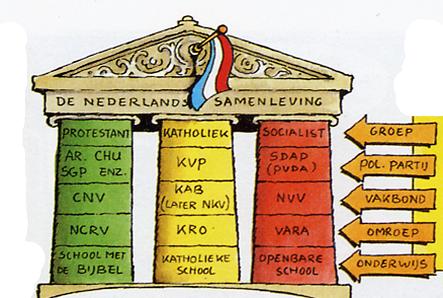
Dutch society long centred around identity groups based on religion or ideology. The Dutch call it pillarisation. A pillar is vertical, so it encompasses several social classes. Social life was within your identity group, and you had few contacts with outsiders. These pillars had sports clubs, political parties, unions, newspapers, and broadcasters. Roman Catholics and Protestants also had schools and hospitals.

The pillars of Dutch society were Protestant, Roman Catholic, and Socialist, with each about 30% of the population. The Protestants themselves consisted of smaller groups that had their specific views on the Bible. The remaining 10% of the Dutch were liberal. The liberals were less organised and opposed pillarisation, but they also had political parties, newspapers and broadcasters.

Strong communities are close-knit, have shared norms and values based on ideology or religion, and come with social obligations. The pillar organisations focused exclusively on their communities. Similar arrangements existed in other countries. In the Netherlands, none of these groups dominated society. And the shared Dutch identity and the state made these relationships cooperative. In other words, Dutch society was built on pillars.

The Dutch were famous for their tolerance, which was at times close to indifference. The identity groups accepted each other and minded their own affairs. After 1800, there was no civil war in the Netherlands, nor was there a threat of one at any time. Leadership played a significant role. The leaders of the pillars were willing to compromise, and the members merely followed their leaders, guaranteeing peaceful relationships within society for two centuries.

Still, identity issues dominated Dutch politics from time to time. On 11 November 1925, the cabinet fell when the Catholic ministers resigned after Parliament accepted an amendment introduced by a small Protestant fraction to eliminate the funding for the Dutch envoy with the Vatican. A Protestant government fraction supported the amendment.

None of the identity groups on its own was able to dominate society. Instead, they had to make deals with each other. On religious issues, Roman Catholics and Protestants found each other. For instance, they arranged that schools and hospitals could have a religious identity and that the state would fund them like public schools and hospitals. The Socialists made deals on working conditions and social benefits with Catholics and Protestants.

Pillarisation in the Netherlands began to take shape at the close of the nineteenth century. One could say that Dutch society was built upon the pillars. They allowed groups with different views and cultures to coexist peacefully and gradually integrate. From the 1960s onwards, the pillars began to lose their meaning, and the Dutch became one nation. Pillarisation can be helpful if you believe in a shared destiny, for instance, the nation-state, but have different backgrounds that prevent integration in the short term. In this sense, it works like multiculturalism.

Pillarisation can be helpful if people believe in a shared destiny, for instance, the nation-state, but do not share a common background. In that case, everyone can live and work together with the people they feel comfortable with. Cultural and religious differences may subside over time. But as long as these identities remain distinct, people can organise themselves accordingly via pillars, and in doing so, avoid conflict.

Latest update: 19 May 2023

What Are The Odds?

The law of large numbers

On 11 November 2017 (11-11), I went to Groningen with my wife and son by car. While driving, I noticed the date and time displayed on the car’s clock. The date was 11-11, and the time was 10:35. It made me think, ‘Wouldn’t it be nice to look at the clock at exactly 11:11 today because it is 11 November (11-11).’ Within a second, I noticed the distance recorder standing at 111.1. It had been 111.1 kilometres since I last filled up. Peculiar coincidences can occur by chance. With eight billion people on this planet and so many things transpiring, these things happen.

An example illustrates this. Imagine you have five dice and make a throw. A remarkable incident is throwing five sixes. If you roll the five dice only once, it probably doesn’t happen. On average, it only occurs once every 7,776 times. But if you throw the dice a million times, it happens 128 times on average.

If a reset of the distance recorder occurs every 500 kilometres, the chance of 111.1 kilometres appearing on it is one in 5,000. The distance recorder was not far from the clock, so I would probably have noticed a peculiar number on it after seeing the date. The probability of the distance recorder being on 111.1 might have been 0.02%. The likelihood of the thought about 11:11 popping up on 11 November is difficult to establish, but in my case, it was not low.

The birthday problem demonstrates strange coincidences happen more often than we might think. If you share a birthday with another person in a small group, it might strike you as odd, but the chance of someone sharing a birthday with another person is already 50% in a group of 23. However, two people sharing a birthday is not a mind-blowing coincidence. It is not as remarkable as the incident with the distance recorder.

When you are a member of this group, the probability of you being one of the persons sharing a birthday is much smaller, namely 6%. Meaningful coincidences are likely to happen, but less likely to you. So, if many people experience the same and think it is merely a coincidence because coincidences occur more often than you might think, they suffer from what you might call a collective delusion. Imagine a group of 24 all sharing a birthday with one other group member, so they share 12 birthdays, and they all think, ‘Nothing exiting to see here. The odds of me sharing a birthday with another person in this group are over 50%.’

Taking a smaller sample reduces the likelihood of meaningful coincidences. If you randomly pick two people, the chance of them having the same birthday is only 0.3%. So, if you run into someone else who happens to share your birthday, and it happens again with the next person, it is noteworthy. If it happens another time with the following individual, you might wonder whether there is more to this universe than mere chance. The more elaborate a scheme, the less likely it is to transpire. The probability of three people sharing a birthday in a group of 23 is 1.3%, and for five, it is only 0.0002%. If your life is riddled with elaborate, meaningful coincidences, you might start to believe that you have a critical role in the universe.

Possible avenues to circumvent the law of large numbers

There may be a way to find out there is no such thing as coincidence. If some of the most significant historical events come with peculiar coincidences, that might be more telling for two reasons. First, there are only a few, so the law of large numbers doesn’t apply. After all, it is a small sample. Suppose no intelligence is coordinating events in this universe. In that case, it is less likely that meaningful coincidences will turn up in this sample, and elaborate schemes will be unlikely to emerge. Second, if the most significant historical events come with peculiar coincidences, it becomes more likely that history is scripted than when peculiar incidents transpire in someone’s personal life.

To make the argument, you need to answer questions like, what are the most important historical events, and what are peculiar coincidences? Events such as the sinking of the Titanic or the Kennedy assassination might not qualify, even though the coincidences surrounding them form a strange and elaborate scheme. The extent of these schemes might compensate for that, but it is hard to tell. The beginning and the end of World War I meet the requirements. D-Day, the fall of the Berlin Wall, and the terrorist attacks of 11 September 2001 are among the most important historical events.

And what should I think of the number of meaningful coincidences in my life? It is not possible to establish the likelihood of that happening. You can make assumptions to arrive at an idea. A highly unusual coincidence, such as the do-it-yourself store incident, could be likened to throwing five sixes with five dice. The chance of such an event happening in any year in any life could be one in 7,776. If something similar transpires again that year, it is like throwing five sixes twice in a row. The chance of that would be one in 60,000,000. On average, 120 people would experience something similar each year. But what if more similar incidents occur in one life? Or if 100,000 people have this instead of 120?

I have shared a few of my coincidence stories on the Reddit/SimulationTheory message board. Others also experience similar situations. Only the people on that message board are not a random group, but a select group of individuals who believe we live in a simulation, often because they have witnessed similar phenomena. Some of these stories are as remarkable as mine. I can’t verify these tales, but I believe most aren’t frauds because similar things happened to me. The question remains whether they have seen strange incidents occurring in the numbers I have seen.

There is a point where you must admit that these things are not merely coincidental. We can’t establish that point objectively. The number of possible unusual events is infinite, so the chance of something strange happening, such as the do-it-yourself store incident, could be higher than we intuitively think. It seems impossible to accurately estimate the odds. Still, without intelligence coordinating events in this universe, we should expect these incidents to be distributed more or less evenly across all people and time frames.

Even then, significant deviations from the average are possible. Lightning strikes only a few people. It happens to some people twice, which might seem odd, but there is nothing suspicious about that. If lightning strikes one in 10,000 people once, then one in 100,000,000 gets hit twice. But how would you explain if one person ran into lightning ten times, and this individual did nothing unusual? Statistically, it can happen. More likely, there is a cause, such as living in a dangerous spot. There is a point where we must assume these stories are evidence of us living in a simulation. We can’t establish that point precisely, but whether we live inside a simulation or not doesn’t depend on our assessment. We are, however, inclined to see causes behind remarkable situations or events, but they may be accidental.

The limits of our minds

We are good at attributing causes, but we do poorly at estimating the likelihood of an event. The psychologist Daniel Kahneman provided an example. It is a study of the incidence of kidney cancer in the counties of the United States. The research revealed a remarkable pattern. The incidence of kidney cancer was the lowest in rural, sparsely populated counties in traditionally Republican states in the Midwest, the South, and the West.1 So what do you make of that?

You probably came up with reasons why kidney cancer is less likely to occur in these counties, such as a healthy rural lifestyle or low pollution levels. You probably did not think of randomness. Consider then the counties in which the incidence of kidney cancer is the highest. These counties were also rural, sparsely populated, and in traditionally Republican states in the Midwest, the South, and the West.1

How can that be? Those counties all had small populations. And with smaller samples come more sizeable deviations from the average. Our intuition makes connections of causality, but our reason does not verify whether it could just be randomness. We like to think some cause makes unusual things happen, while they might be random accidents.

When we consider the most significant historical events, we run into problems if we use this small sample to establish that someone is ‘writing history’. On the other hand, comparing this sample to a sparsely populated rural county may not be apt. It is more fitting to compare this sample to the royal family, as it encompasses the most significant events in history. If a high incidence of kidney cancer were to turn up in the royal family, an experienced physician would tell you it is probably not a random issue.

I am a single individual, the smallest possible sample. Some people get struck by lightning twice. It could even happen three or four times, but the chance of it happening ten times is so insignificant that no one will ever experience that unless they live in a hazardous spot. Is the number of meaningful coincidences in my life enough to rule out chance? That number is extraordinarily high. It is not chance. The question arises: Am I just a random individual, or do I live in a dangerous location, or has destiny given me a unique role, such as proving that we live in a simulation? Others have this, too. And so, a lengthy series of peculiar incidents doesn’t suffice to believe the latter.

The things that could have happened but did not

In 1913, the ball fell on a black number twenty-six times in a row at the roulette wheel at the Casino de Monte-Carlo. Some people lost a fortune by betting the ball would fall on red the next time. They did not realise the chance of the ball choosing a red number never changed. The ball does not remember where it went the previous times. If we represent black with a B and red with an R and assume, for simplicity’s sake, there is no zero, we can write down falling twenty-six times on black like so:

B B B B B B B B B B B B B B B B B B B B B B B B B B

The probability of the ball falling on black twenty-six times in a row is one in 67,108,864. That is a long shot. What might surprise you is that the following combination of black and red numbers is precisely as likely to occur:

R B B R B R R B R B B R R B R R B R B B R R B B R B

You wouldn’t be thrilled if that happened unless you became a millionaire by betting on this particular series of twenty-six. And even then, you wouldn’t think of the 67,108,863 sequences that did not materialise. We tend to consider only the things that did happen, but we rarely think of all the things that could have transpired but didn’t. Events such as the ball falling on black twenty-six times in a row impress us. And I am even more impressed because twenty-six happens to be my lucky number.

This argument applies to meaningful coincidences but not to a prediction materialising, as such a feat may imply that all the other things couldn’t have happened. If I say with firm conviction that the coming sequence of black and red would be R B B R B R R B R B B R R B R R B R B B R R B B R B and it happens as I predicted, I may have the gift of prophecy. The chance of me being accidentally right was one in 67,108,864.

Imagine the probability of you sitting here reading this page on a tablet or a mobile phone, but as a prediction from 3,600 years ago. Imagine Joseph telling the Pharaoh: ‘I see (your name comes here) reading a pile of papyrus pages, not real papyrus pages, but papyrus pages appearing on something that looks like a clay tablet. Do not be afraid, dear Pharaoh, for it will happen 3,600 years from now. But if we do not set up this grain storage, it will not happen, so we must do it. And by the way, Egypt will starve otherwise.’

The chance of this prediction coming true was not one in 67,108,864, nor was it one in 1,000,000,000,000,000,000,000. Adding more zeroes doesn’t help. The chance is far smaller than any number you can ever write down. It is so close to zero that no one can tell the difference. Nevertheless, you sit here reading this text, perhaps even on a tablet. How could this happen? The answer to this mystery is that many things could have occurred but did not; however, something had to happen, and that is what transpired. In any case, Joseph couldn’t have made such a prediction by accident.

The licence plate number

What about the reference to the end date of World War I on the licence plate of Franz Ferdinand’s car? Few historical events are as significant as the start and end of World War I. And so, the law of large numbers doesn’t apply here. It is one of the most important historical events, thus part of a sample comparable to the royal family. A mere accident seems unlikely. The assassination could have gone wrong; cooler heads might have prevailed, or the war could have proceeded differently, ending on a different date.

It might have been possible to guess the end date of World War I once it had started. If you presumed that the war would not take more than twenty years, a random guess of the end date could be correct one in every 7,305 times. But something doesn’t add up here. Hardly anyone expected the war to last longer than a few months. The licence plate originates before the war. The assassination succeeded after a series of mishaps. If the licence plate number contained a prediction, that prediction included the assassination succeeding, Franz Ferdinand dying in this particular car, and this event being the trigger for the war.

That is hard to do. And so Mike Dash in the Smithsonian noted, ‘This coincidence is so incredible that I initially suspected that it might be a hoax.’2 Only, it is not a hoax, so investigative minds could have probed other options, but they did not. Conspiracy theorists also ignored it, even though this incident agrees with their beliefs of a secretive plan being behind history.

In the conspiracy scene, a story circulates about a Freemason named Alfred Pike, who allegedly disclosed a secretive plan of the Freemasons to bring about the New World Order. Pike supposedly predicted both world wars with uncanny precision in 1871. Nobody had ever heard of this plan before 1959, when an ‘investigator’ ‘uncovered’ it. Contrary to the licence plate number, the story has no substance. It is a hoax. In the Netherlands, they would call it a monkey sandwich story.

Seeing meaning

Authors use symbolism, hidden meanings, themes, and stylistic figures. Events in their lives, as well as the writings of other authors, influence their writings. Literary critics look for those meanings. You can check out what experts wrote about the poem The Waste Land by T. S. Eliot. You will be surprised. Some authors marvel at what literature critics discover in their works. Apart from intention, there can be an unconscious influence. And so, seeing meaning is more like an art than a science. A scientist would argue there is no proof and that it is baseless speculation because science isn’t about meaning.

He spent a number of years at this project
And now he knows how an electron behaves

The Nits, Mountain Jan

You can’t understand intentions and meaning from investigating the conduct of electrons. Meaning in literature is often intentional. If someone wrote the script running the events in this world, the author might do what other authors do. And so, the licence plate number on Franz Ferdinand’s car could signal foreknowledge of future events or even control over them. The sceptics argue from a scientific perspective, while those who see meaning act like literary critics. Who is right about the meaning of AIII 118 depends on whether there is a script and, therefore, an author.

Sceptics might claim that AIII 118 is a random sequence of characters, but we see a reference to the end date of World War I. That is how our minds work. The argument is odd. If you take it to the extreme, this text is also a random array of characters, as is any book or report. And still, you read words and sentences that have meaning to you. Indeed, the licence plate number would have remained unnoticed if the war had not ended on 11 November 1918.

However, the war ended on 11 November 1918. AIII 118 is the car’s licence plate number that drove Franz Ferdinand to his appointment with his destiny. And destiny is the message the licence plate number radiates. It suggests premeditation concerning the assassination, the start of the war and its end on 11 November 1918. That is a meaning we can see without too much imagination. There are plenty of instances and locations where this sequence of characters could have turned up, so their presence in this particular spot is noteworthy. AIII 118 on a fish barrel in Vienna wouldn’t have attracted attention. Ditto for the licence plate number ABII 117 on that particular car.

Sceptics can also be fanciful. Austrians speak German. Armistice in German is Waffenstillstand. So why does it not read WIII 118? Or even better, W1111 1918? If someone sends you a message, you don’t quibble about such details. If I said ‘hello’ to you, you wouldn’t ask me why I didn’t utter the word ‘hi’ instead. That is, unless you are a philosopher with a lot of idle time and have a hobby of questioning everything. Great Britain, the United States and France were all major participants in the war. These countries all use the term armistice. And if the sceptics come with outlandish arguments, you have won the argument. Only, they disagree. Not seeing meaning is the art of being a moron. Communication with morons is, therefore, problematic.

Asking yourself which licence plate numbers were available in the Austrian-Hungarian Empire may be a better idea. You could check which combinations fit the purpose. There aren’t that many options. Perhaps, you end up with just one match: AIII 118. That makes it harder to believe that this sequence of characters is meaningless. This scheme became even more inconceivable because the war ended on 11 November (11-11), the most peculiar date of the year.

Only a few historical events are as important as the assassination of Archduke Franz Ferdinand and the Armistice of 11 November 1918. You can think of D-Day, the fall of the Berlin Wall, and 9/11. The coincidence scheme surrounding D-Day is extensive, and the recurrence of dates is intriguing. The involvement of Hans van Mierlo is also mind-boggling. It also relates to the Curse of the Omen, a film released on the anniversary of D-Day, as well as the untimely passing of Senator Robert Kennedy on 6 June (6/6) and Martin Luther King on 4 April (4/4) 1968. A historian correctly predicted the fall of the Berlin Wall in 1989, while the coincidences surrounding the terrorist attacks of 11 September 2001 are dumbfounding. In other words, this incident doesn’t stand alone.

A final argument may be that such extensive or peculiar coincidence schemes don’t appear in other historical events that are equally significant, such as the American, French, Chinese, and Russian revolutions. These events are marked by a few peculiar coincidences, such as Thomas Jefferson and John Adams having their appointments with the Grim Reaper on the same day, which happens to be 4 July, thus Independence Day. That is noteworthy, but perhaps not sensational. The parallels between Napoleon Bonaparte and Adolf Hitler might also raise some questions. Somehow, the licence plate number of Franz Ferdinand’s car is more exceptional, most notably because of it being so precisely predictive.

The Chinese Revolution of 1911 began on 10 October 1911. It marked the end of 2,000 years of imperial rule in China. The date, 10 October (10/10), is not as remarkable as 11 November (11/11), even more so because there are no related coincidences. The Russian Revolution led to the establishment of a communist empire that lasted for seven decades. A bad omen marked the coronation of the last Czar of Russia, Nicholas II. The communists later murdered him and his family. You can ask why these events don’t seem part of a coincidence scheme. It is like asking why several members of the Royal Family don’t have kidney cancer. Well, they haven’t. That’s all there is to it. Perhaps, it is not satisfactory to philosophers with a lot of time on their hands, but it will have to do.

Hindsight bias

And then there is the benefit of hindsight. Countless strange incidents could have occurred, but they didn’t. We notice only things that did happen and don’t think of those that didn’t. That is hindsight bias. The sample of the most significant historical events comes with the benefit of hindsight. There is a danger to that approach, and it is unacceptable in science. It is like selecting only the data that confirms your theory. You might have a theory about gravity, saying that all objects will fall to the ground. And you prove your theory by ignoring the heavenly objects and the birds in the sky, so everything you investigate falls to the ground. It later turned out that gravity works that way, and ignoring the heavenly objects and the birds in the sky put you on the right track.

With hindsight, you know things you can’t learn in advance. Hindsight knowledge is also a favourite tool of critics when something goes wrong. However, when you use hindsight to find evidence, your critics argue you can’t. That’s how the critics play their game. They might clip a bird’s wing feathers and then ask the bird to prove it is a bird by flying. But if you use clipped birds to prove your theory of gravity, they might criticise you for that as well. You can’t beat your critics in their game. No evidence will ever convince them. So I won’t try. This wasn’t science in the first place, but metaphysical speculation.

Using hindsight, thus, is the only way to conduct this investigation, as we can’t predict the occurrence of meaningful coincidences. If this universe is genuine, we can’t establish that it is authentic. However, if it is a simulation, we may discover it is a simulation. So, if there is meaning, we must look for it to find it. We should be careful, as we are inclined to see intent when it could have happened accidentally. With that in mind, it is still fair to say that meaningful coincidences related to the most important historical events are likely not mere coincidences. Combined with the other evidence, we can establish that we live inside virtual reality, probably a simulation created by an advanced post-human civilisation.

Latest revision: 24 July 2025

1. Thinking, Fast and Slow. Daniel Kahneman (2011). Penguin Books.
2. Curses! Archduke Franz Ferdinand and His Astounding Death Car. Mike Dash (2013). Smithsonian. [link]

Royal Steam Bleachery: Exterior Overview Complex With Halls

History’s Oddities

Thomas Jefferson and John Adams


US Presidents Thomas Jefferson and John Adams were both involved in drafting the Declaration of Independence, signed on 4 July 1776. Hence, 4 July became Independence Day. Jefferson was Adam’s Vice President until he became President in 1800. They were the last surviving members of the revolutionaries. Both died on 4 July 1826, precisely fifty years after the Declaration of Independence.1 Independence Day is 4 July (4/7) as 4 + 7 = 11. This date occurring twice is similar to seeing an 11:11 time prompt.

Napoleon Bonaparte and Adolf Hitler

Napoleon Bonaparte and Adolf Hitler both conquered nearly all of Europe. There are several parallels between them. Both came to power through a coup that ended a period of instability. Napoleon and Hitler both turned Europe into a battlefield. They both ventured into Africa and faced defeat in Egypt. They both waged war on two fronts. Both attacked Russia while not having defeated Great Britain.

Napoleon was born on the island of Corsica, which was then an independent island but later became part of France. Napoleon became the leader of France. Hitler was born in Austria, an independent country that was later annexed by Germany. Hitler became the leader of Germany. On 9 November 1799, Napoleon came to power following a coup. Hitler was involved in a failed coup on 9 November 1923.

The Titanic


The supposedly unsinkable Titanic had sealable compartments. In 1912, it sank on its maiden voyage after having a close encounter with an iceberg. In 1898, Morgan Robertson wrote the novel Futility, describing the maiden voyage of a transatlantic luxury liner named the Titan. Although touted as unsinkable, it collided with an iceberg and sank, resulting in a significant loss of life. In the book, the month of the wreck was April, the same month the Titanic sank. The similarities are striking:

  • The ships had similar names.
  • Both were the largest crafts afloat and considered among humankind’s greatest achievements.
  • The sizes were roughly the same: the Titan counted 45,000 tons, and the Titanic was 46,000 tons.
  • Both ships were deemed unsinkable.
  • Both had a triple screw (propeller).
  • Both vessels had a shortage of lifeboats.
  • Both struck an iceberg: the Titan, moving at 25 knots, struck an iceberg on the starboard side on a night in April in the North Atlantic, 400 nautical miles from Newfoundland, while the Titanic, moving at 22½ knots, struck an iceberg on the starboard side on the night of 14 April 1912 in the North Atlantic, 400 nautical miles from Newfoundland.
  • Both ships sank with much loss of life.

Robertson’s apparent clairvoyance drew attention. He claimed the similarities were the result of his shipbuilding knowledge. That can explain the technical details but not the sinking or the similar names. And the story was to get a sequel.

In April 1935, the cargo vessel Titanian sailed in the North Atlantic. A sailor claimed he felt uncomfortable because the ship’s name was similar to that of the Titanic. For that reason, he sounded a warning. He claimed to have done this before an iceberg was in sight. He added that the vessel stopped just in front of an iceberg. According to reports, the Titanian had run into some damage during the voyage.2

One hundred years later, the luxurious Italian cruise liner Costa Concordia sank after hitting a rock. The accident occurred on Friday, 13 January 2012. The ship had thirteen decks. Some passengers claimed that the Titanic theme ‘My Heart Will Go On’ played in a restaurant when the accident happened.3 Shortly afterwards, on 27 February 2012, another cruise liner of the same parent company, the Costa Allegra, ran into trouble near Seychelles.4 This repetition within a short timeframe adds to the peculiarity of the scheme.

The assassination of Franz Ferdinand

On 28 June 1914, the Serbian nationalist Gavrilo Princip shot and killed Archduke Franz Ferdinand in his car in Sarajevo. His act triggered World War I. World War I ended with the Armistice of 11 November 1918. 11 November is a peculiar date as it is 11-11. Several strange coincidences accompany the assassination. Franz Ferdinand had premonitions of an early death, and the assassination succeeded after a series of mishaps. But the most peculiar coincidence was the licence plate number A III 118 of the car that drove Franz Ferdinand to his appointment with destiny. It contains a possible reference to the Armistice of 11 November 1918 (11-11-18).5

The car in which Archduke Franz Ferdinand was killed
Gräf and Stift Double Phaeton ridden by Archduke Franz Ferdinand at the time of his assassination

D-Day

D-Day was on 6 June 1944 (6/6/44). That date has double digits, like 11 November (11-11). The Allies had selected 5 June 1944 for their invasion because of a full moon that night. They postponed it by one day due to the weather. There was no consensus among historians on the start date of World War II, whereas the Battle of Stalingrad lasted more than two months. Therefore, D-Day is considered the most important single day in World War II. D-Day means Decision Day. D is the fourth letter of the alphabet, so Decision Day (DD) can refer to (19)44, the year D-Day happened.

Normandy invaded England in 1066 AD, while D-Day occurred on 6 June, or 6/6. In the ensuing Battle of Hastings on 14 October 1066, King Harold II of England died while trying to repel the invasion. That happened a few days after his forces had killed King Harold III of Norway, who also had invaded England. On 14 October 1944, the German General Rommel committed suicide after having overseen the construction of the German coastal defences intended to repel the Allied invasion.

Roman de Rou is a chronicle written around 1170. It covers the history of the Dukes of Normandy. It mentions that Roger the Great de Montgomery commanded parts of the invading forces in 1066. Other sources don’t confirm this account.6 During the 1944 invasion, Bernard Montgomery commanded portions of the invading army. That is most peculiar indeed, and there is more.

On 11 March 2010, the founder of the Dutch political party D66, Hans van Mierlo, boldly went where billions have gone before, and passed away. The name D66 stands for Democrats 66 and refers to the year 1966 as the party was founded on 14 October 1966 by 44 people.7 The name can refer to D-Day, making the founding date and the number of people involved in establishing the party rather intriguing. D-Day was on 6-6-44, so D66 could mean D-Day 6-6. Van Mierlo died in 2010, 44 years after starting D66 and 66 years after D-Day. Van Mierlo had just married a few months before on 11 November 2009 (11-11-11 after compressing numbers), which might also raise some eyebrows.

The numbers 66 and 44, along with the date 14 October, repeatedly appear in this scheme. And 11-11 is part of it too. It was the day Hans van Mierlo got married. 11 November is the date of the Armistice that terminated World War I. And the Vikings founded Normandy in the year 911. This number is closely related to the fall of the Berlin Wall and 9/11. On 9 November 1989 (9/11 European notation), the Berlin Wall fell. On 11 September 2001 (9/11 American notation), the terrorist attacks took place.

The assassination of Martin Luther King was on 4 April 1968, one year after he spoke out against the Vietnam War on 4 April 1967. Both dates are 4 April (4/4). On 5 June 1968, in another high-profile political assassination in the United States, Senator Robert Kennedy crossed the path of a bullet. He died the next day, on 6 June (6/6). Both incidents happened in the United States in 1968 and point to the digits of D-Day (6/6/44). 6 June was also the release date of The Omen, the most ‘cursed’ film in history.

John F. Kennedy’s assassination

‘We’re heading into nut country today,’ said President John F. Kennedy to his wife on the morning of 22 November 1963. She had just seen an advertisement from the John Birch Society in the Dallas Morning News suggesting that he was a communist. The border of the advert was in the black of a funeral announcement. ‘But, Jackie, if somebody wants to shoot me from a window with a rifle, nobody can stop it, so why worry about it?’8

A few hours later, somebody shot him from a window with a rifle. The assassination date, 22 November (22/11), consists of two multiples of eleven, which is somewhat unusual as is the date of D-Day and the date of the Armistice ending World War I. There are also parallels between John F. Kennedy and Abraham Lincoln:

  • Both concerned themselves with Civil Rights.
  • Both did get a bullet in the back of their heads in the presence of their wives.
  • Lincoln was shot in the Ford Theatre, and Kennedy in a Ford Lincoln.
  • They were both murdered on a Friday.
  • In both cases, an assassin assassinated the assassin before he could face trial.
  • Lincoln’s election into Congress happened in 1846, and Kennedy’s in 1946.
  • Lincoln’s election to President occurred in 1860, and Kennedy’s in 1960.
  • Lincoln’s successor was Andrew Johnson, born in 1808, while Kennedy’s successor was Lyndon Johnson, born in 1908.9

Longer lists are circulating with some false claims. Sceptics have argued that these similarities are mere coincidences and that similar parallels exist between other US presidents. Wikipedia even labelled it an urban legend, although it is not, as it implies that the story is false. That both murders took place on a Friday is indeed unremarkable. But the murder of Lincoln taking place in the Ford Theatre and the assassination of Kennedy happening in a Ford Lincoln is noteworthy, as is the time difference of precisely one century that recurs three times. And there are links with other peculiar coincidences.

Kennedy’s brother, Senator Robert F. Kennedy, was shot a few years later. He died in 1968 on 6 June (6/6), just after the murder of Martin Luther King on 4 April (4/4). That is odd, given the coincidences surrounding D-Day (6/6/44). His untimely passing is part of a series of premature deaths, accidents, and other calamities involving members of the Kennedy family called the Kennedy Curse.

The son of President Lincoln, Robert Todd Lincoln, also had his share of remarkable coincidences. A few months before John Wilkes Booth murdered his father, Edwin Booth, the brother of John Wilkes, saved him when he was travelling by train. During a stop, he stepped back on the crowded platform to let others pass, pressing his back against a stopped train. When the train began to move, Lincoln fell onto the tracks. Booth hauled him back onto the platform. The Booth family and the Lincoln family were not neighbours, which makes the incident even more remarkable. Robert Lincoln was in the vicinity when the murder of his father occurred. He was also present at the assassination of President Garfield in 1881 and the assassination of President McKinley in 1901.10

The Kennedy assassination takes part in a series of premature deaths in office of American presidents elected in years starting with a zero, called the Curse of Tippecanoe or Zero-Year Curse. From William Henry Harrison to John Kennedy, every President elected in a year ending in zero died in office. It ended with Ronald Reagan, elected in 1980, who survived an assassination attempt. First Lady Nancy Reagan reportedly had hired psychics and astrologers to protect her husband from the curse.11 George W. Bush, elected in 2000, also survived an assassination attempt. The curse seems to have lost its lustre. Even Joe Biden, who could have passed away at any time without raising any suspicion of something of a curse having an involvement, survived.

Houston, we have a problem

We associate the number 13 with bad luck. Bad luck haunted the voyage of Apollo 13. The launch was on 11 April 1970 at 13:13 CST from the Kennedy Space Center in Florida. The departure time combined with the mission number was a daring attempt to defy fate. Possibly, the people at NASA thought, ‘We are scientists and don’t believe in this superstitious nonsense.’ And bingo! Fate took vengeance. On 13 April,
note the date, an oxygen tank exploded. The event has enriched the annals of history with the famous quote, ‘Houston, we have a problem.’ Mission control aborted the lunar landing. The crew made it back alive.12

The fall of the Berlin Wall

The fall of the Berlin Wall was the pivotal event marking the end of the Soviet Empire and the Cold War. The dismantling of this wall began on 9 November 1989 (9/11 European notation). On 11 September 2001 (9/11 American notation), a terrorist attack was another pivotal event in the war on terror. It marked the end of the period of relative peace following the fall of the Soviet Empire. On 11 September 1989, thousands of East Germans began crossing the Austrian-Hungarian border to emigrate to West Germany. That eventually led to the fall of the Berlin Wall. This date, also being 11 September, is noteworthy.

The historian James P. O’Donnell unwittingly predicted the year the Berlin Wall would fall. In the German edition of Reader’s Digest, he wrote ten years before it happened, ‘Not long ago I dreamed of Berlin. The year was 1989. The wall was coming down. Along its hideous 165 kilometres, East and West Berliners were pouring out to dismantle it. […] Canny merchants were weaving through the happy crowd selling souvenir bricks.’13

That is not as remarkable as it seems at first glance. O’Donnell made his prediction in 1979. If you were thinking in 1979 about the Berlin Wall falling and were guessing when it might happen, 1989 is a year you could easily pick. The final year of a decade can be a moment to think of the next decade’s final year. A 1979 ABBA does the same in a song named Happy New Year. But then again, O’Donnell thought of it in 1979, which increased the likelihood of choosing 1989. He could have thought of it in many other years, but he just happened to think of it in 1979, which makes it somewhat fishy nonetheless.

There is another peculiar twist. O’Donnell became Newsweek Magazine’s German bureau chief in 1945. He came to Berlin on 4 July 1945 to investigate Hitler’s death and gather information about his wife, Eva Braun.5 Braun died at the age of 33, and Hitler died at the age of 56, while 33 + 56 = 89. Hitler was born in 1889. And the erection of the Berlin Wall was a consequence of Hitler’s defeat. And it fell in 1989. There is more to say about Eva Braun and 1989, which makes the coincidence part of a larger scheme.
That is, however, a separate story.

Latest revision: 23 July 2025

Featured image: NASA mission control celebrating the successful return of Apollo 13. NASA. Public Domain.

1. Thomas Jefferson and John Adams die. History.com (2009).
2. Titanian – Echo of Titanic. Encyclopedia Titanica (2004).
3. Costa Concordia disaster. Wikipedia.
4. MS Costa Allegra. Wikipedia.
5. Curses! Archduke Franz Ferdinand and His Astounding Death Car. Mike Dash (2013). Smithsonian. [link]
6. Roger de Montgomerie, 1st Earl of Shrewsbury. Wikipedia. [link]
7. Hans van Mierlo. Wikipedia. [link]
8. Three surprising details from the JFK assassination – and why they matter. James L. Swanson (2013). The Globe And Mail.
9. Lincoln–Kennedy coincidences urban legend. Wikipedia.
10. Robert Todd Lincoln. Wikipedia.
11. Curse of Tippecanoe. Wikipedia.
12. Apollo 13. Wikipedia.
13. Reader’s Digest, Geman Edition, January 1979
14. James P. O’Donnell. Wikipedia. [link]