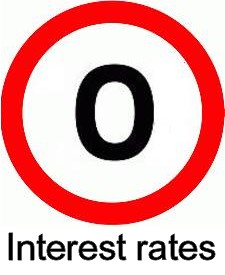
During the coronavirus pandemic, the World Economic Forum (WEF) launched a plan, The Great Reset. It aims to rebuild the world economy more intelligently, fairer and sustainably while adhering to the United Nations Sustainable Development Goals (SDG). These SDGs include ending poverty, improving health and well-being, better education, equality, clean water and sanitation, affordable and clean energy, jobs and economic growth. That sounds great, but is it a reset? It would be up to so-called responsible corporations and international non-governmental organisations (NGOs) to implement the agenda before 2030. Not everyone thinks that is a great idea.
The change is supposed to be powered by the Fourth Industrial Revolution, a fusion of technologies in fields such as artificial intelligence, robotics, the Internet of Things, autonomous vehicles, 3-D printing, nanotechnology, biotechnology, materials science, energy storage and quantum computing. I get an uneasy feeling when I read that. It looks like an excuse for technology addicts to play with our future. Is it because I am against progress, or is it because of a rational fear that something is about to go seriously wrong even though I don’t know exactly what?
Under the umbrella of the Great Reset, so-called young global leaders of the WEF came up with new ideas. For instance, new technologies can make products like cars and houses cheaply available as a service, ending the need to own these items. A young global leader wrote an article titled, ‘Welcome to 2030. I own nothing, have no privacy, and life has never been better.’1 She hoped to start a discussion, and the article produced a slogan that also became an Internet meme, ‘You’ll own nothing, and you’ll be happy.’ There certainly is an economic rationale for sharing items like cars, most notably if they become more expensive to keep because of technological innovation.
Property, for instance, a home, can give you economic freedom. If you own a home, you don’t have to pay rent. And you own some capital when you retire. Some people think the WEF is a sinister elite club scheming to achieve a secret agenda where the elites own everything, and the rest of us ends up with nothing. And that might happen anyway if current trends continue because that is how capitalism works. Capital accumulates and ends up in the hands of a few because of interest. It is not a secret since Karl Marx figured that out. And it leads to a crisis when the impoverished masses can’t buy the things that capital produces. With negative interest rates, there is no need for that.
Property rights have become a semi-religious value in Western culture. That prevents us from taking the property of the elites and ending their stranglehold on our political economy. Marx advised that workers or the state would take over corporations. That might not be a good idea because workers and governments often do poorly at running corporations. Markets and private enterprises can efficiently provide goods and services, but it comes with wealth inequality and happens at the expense of future generations. Our societies must find the right balance. At some point, the disadvantages of the current political economy start to outweigh the advantages.
We use far more resources than the planet can provide, and wealth inequality is now so extreme that we might need a genuine Great Reset. Taking the wealth from the elites and discontinuing enterprises that don’t provide for our essentials is not communism, as long as there are markets and private property. People should prosper if their work benefits society and enterprises often do better at providing for our needs. But we don’t benefit from the corrupting influence of oligarchs. Their wealth comes from inheritance, criminal and shady activities, and, most notably, accumulated interest on their capital. That arrangement may have suited us in the past, but not now.
Economists believe property rights are essential for economic growth, and that business owners should be able to do as they please. For instance, Elon Musk has the right to ruin Twitter because he owns the company. Should employees and others suffer from the irrational behaviour of their owners? In the Netherlands, a series of interesting trials took place, where corporations tried to escape the influence of their majority shareholder Gerard Sanderink, who allegedly didn’t act rationally in the interest of these companies.2 Limited property rights and a collectivist attitude have not prevented China from becoming a large and advanced economy surpassing the United States and may have contributed to China’s success.
The degree of individualism currently existing in the West may do more harm than good. They promote political fights and litigation and prevent us from doing what we should do. And perhaps, less privacy can go a long way in reducing crime. Property rights and individualism were crucial to start capitalism and made the West dominate the world for centuries. And so, we have learned to see them as necessary, inevitable or even desirable. But once the European imperialist capitalist engine ran, these features became less important than economic stability. If you start a business, you must be able to estimate your returns, but you can lease everything and own nothing.
Individualism and property rights also play a positive role in society. The cultural heritage of the West is extensive compared to other cultures, for instance, if you express it in the number of books written or discoveries made. Self-interest and personal responsibility can inspire us to work harder and do a better job. The Soviet Union failed to produce enough food for its citizens while there was enough arable land. In the Soviet Union, farmers had to work on collective enterprises where they could not do as they saw fit and didn’t share in the profits. The tragedy of the commons is that we don’t care for public spaces as much as our possessions. Homeowners usually take better care of their houses than tenants. The same is true for car owners.
As they are now, property rights protect the elites. And the WEF plan is just a fart in the wind, not a Great Reset. We face unprecedented worldwide challenges while wealth inequality is at extreme levels, so individualism and property rights need limits. And we need a proper Great Reset, or a switch from economic to political control of the world’s resources if we intend to live in a humane world society that respects our planet. It is what a corporation named Patagonia did in 2022.3 We can do that on a global scale.
It begins with seizing the wealth of oligarchs and criminals and all hidden wealth in offshore tax havens, including their so-called charities, placing them in sovereign wealth funds, and setting a limit on what individuals can own or earn. And perhaps, we need to build our future on values rather than balance sheets. And everyone should contribute. Capital accumulates by interest, and people who live off interest don’t work for a living. That might be as bad as being on the dole while you can work. And peddling unnecessary products that harm life on Earth could be as bad as being a criminal.
Laws should prevent people and corporations from doing wrong, but they often fail to do that. Corporations pollute the environment or exploit employees to make a profit. But consumers desire excellence for rock-bottom prices. It is profitable to break the law if you can get away with it or when the gain is higher than the fine. And if there are loopholes, they become exploited. The anonymity provided by money, large corporations and markets turn us into uncaring calculating creatures. That is why big pharma, the military-industrial complex, the financial industry, and the Internet giants threaten us. If corporations do right out of their own, many laws and regulations become redundant. If moral values can replace the law, it could be better.
Less efficiency, poorer service and a smaller choice of products can be preferable if that doesn’t lead to deprivation and starvation. For instance, why must you get your meal from a takeaway restaurant instead of preparing it yourself? Or why do you need to dress up in the latest fashion if you have ample wearable clothing? And you must work to pay for these things, so if you don’t buy them, you have time to prepare your meal or mend your clothes. We don’t want to give up these things, so in a democracy, we can’t fix this problem. Perhaps we might accept the change if God sends a Messiah who tells us this is for the best.
That might be wishful thinking, but what else can make it happen if it is not religion? Do you believe we will come to our senses, become one humanity, and do right on our own? That is wishful thinking. God is our only hope. As we are heading for the Great Collapse in one way or another, the End Times could be now. We might live inside a simulation run by an advanced humanoid civilisation.4 Hence, God might own this world, and you might soon discover that you own nothing and be happy. God’s kingdom might be a utopian society as early Christians lived like communists (Acts 4:32-35).
So what can we achieve by taking political control of the world’s resources and means of production by seizing the elite’s wealth and placing it in sovereign wealth funds? You can think of the following:
We can direct our means to the goals of a humane society, be respectful of this planet, and plan long-term.
We can dismantle harmful corporations or give them a new purpose without starting an economic crisis with mass unemployment.
We can make corporations employ people in developing countries and give them an education and decent salaries.
We can fund essential government services in developing countries and eliminate corruption insofar as it is due to insufficient pay of government employees.
We can make corporations produce sustainably and pass on the cost to consumers.
We can determine the pay of executives.
We can halt developments like artificial intelligence, genetic engineering, and nuclear energy if we believe they are undesirable.
We can end the incentive to produce and consume more and stop the advertising industry from tracking us.
We can end stress in the workplace if we axe bullshit jobs and redirect workers to the needs of society. A twenty-hour working week might be enough.
Interest stands in the way of a better future. The economy ‘must’ grow to pay for the interest. We ‘must’ work harder in bullshit jobs to pay for the interest. Corporations ‘must’ sell harmful products to pay for the interest. Corporations ‘must’ pay low wages or move production to low-wage countries to pay for the interest. And because of interest, money disappears from where it is needed most and piles up where it is needed least. Interest is our tribute to the wealthy. If we hope to live in a humane world society that respects creation, ending interest might be imperative. That is where Natural Money comes in.
Latest revision: 28 April 2023
Featured image: You’ll own nothing and you’ll be happy. WEF.
1. Welcome To 2030: I Own Nothing, Have No Privacy And Life Has Never Been Better. Ida Auken. World Economic Forum (2016). 2. Zakenman Gerard Sanderink tierend in rechtszaal: ‘Deze rechtbank deugt voor geen meter!’ AD.nl (2023). 3. Patagonia’s Next Chapter: Earth is Now Our Only Shareholder. Patagonia (2022). 4. Are You Living In a Computer Simulation? Nick Bostrom. Philosophical Quarterly, 2003, Vol. 53, No. 211, pp. 243-255.
Money with a holding fee existed in ancient Egypt for over 1,500 years. Egypt had storehouses of grain run by the state. Grain was the primary food source for the Egyptians. When farmers came with their harvest, they would get a receipt telling how much they brought in and on what date. A baker could return the receipt and exchange it for grain after paying for the storage cost and loss due to degradation.
The origins of the grain storage remain unclear. The government collected taxes in kind, thus a portion of the harvest, and had to store it. The government storage probably proved convenient for farmers as they didn’t have to keep and sell their grain, which was a significant convenience. And it made sense to have a public grain reserve in case the harvests failed.
The Egyptians used these receipts as money, as grain was a commodity everyone needed. Because of the storage costs, the receipts gradually lost value. With this kind of money, you might have interest-free loans. Someone in possession of this money who likes to save it will lose by storing it and can keep his capital intact by lending it without interest. There is no evidence that this happened.
The grain storage relates to a story in the Bible. It is fiction but might tie money with a holding fee to the Abrahamic religions. As the story goes, the Pharaoh had dreams his advisers couldn’t explain. He dreamt about seven lean cows eating seven fat cows and seven thin and blasted ears of grain devouring seven full ears of grain.
Joseph explained those dreams to the Pharaoh. He told the Pharaoh that seven years with good harvests would come, followed by seven years with crop failures. He advised the Egyptians to store food. They followed his advice and built storehouses for grain. In this way, Egypt survived the seven years of scarcity (Genesis 41):
When two full years had passed, Pharaoh had a dream: He was standing by the Nile when out of the river, there came up seven cows, sleek and fat, and they grazed among the reeds. After them, seven other cows, ugly and gaunt, came up out of the Nile and stood beside those on the riverbank. And the cows that were ugly and gaunt ate up the seven sleek, fat cows. Then Pharaoh woke up.
He fell asleep again and had a second dream: Seven heads of grain, healthy and good, were growing on a single stalk. After them, seven other heads of grain sprouted–thin and scorched by the east wind. The thin heads of grain swallowed up the seven healthy, full heads. Then Pharaoh woke up; it had been a dream.
In the morning, his mind was troubled, so he sent for all the magicians and wise men of Egypt. Pharaoh told them his dreams, but no one could interpret them for him. Then, the chief cupbearer said to Pharaoh, ‘Today I am reminded of my shortcomings. Pharaoh was once angry with his servants, and he imprisoned me and the chief baker in the house of the captain of the guard.
Each of us had a dream the same night, and each dream had a meaning of its own. Now, a young Hebrew was there with us, a servant of the captain of the guard. We told him our dreams, and he interpreted them for us, giving each man the interpretation of his dream. And things turned out exactly as he interpreted them to us: I was restored to my position, and the other man was hanged.’
So Pharaoh sent for Joseph, and he was quickly brought from the dungeon. When he had shaved and changed his clothes, he came before Pharaoh. Pharaoh told Joseph, ‘I had a dream, and no one can interpret it. But I have heard it said of you that when you hear a dream you can interpret it.’ ‘I cannot do it,’ Joseph replied to Pharaoh, ‘but God will give Pharaoh the answer he desires.’
Then Pharaoh said to Joseph, ‘In my dream, I was standing on the bank of the Nile, when out of the river there came up seven cows, fat and sleek, and they grazed among the reeds. After them, seven other cows came up–scrawny and very ugly and lean. I had never seen such ugly cows in all the land of Egypt. The lean, ugly cows ate up the seven fat cows that came up first. But even after they ate them, no one could tell they had done so; they looked just as ugly as before. Then I woke up.
‘In my dreams I also saw seven heads of grain, full and good, growing on a single stalk. After them, seven other heads sprouted–withered and thin and scorched by the east wind. The thin heads of grain swallowed up the seven good heads. I told this to the magicians, but none could explain it to me.’
Then Joseph said to Pharaoh, ‘The dreams of Pharaoh are one and the same. God has revealed to Pharaoh what he is about to do. The seven good cows are seven years old, and the seven good heads of grain are seven years old; it is one and the same dream. The seven lean, ugly cows that came up afterwards are seven years old, and so are the seven worthless heads of grain scorched by the east wind: They are seven years of famine.
‘It is just as I said to Pharaoh: God has shown Pharaoh what he is about to do. Seven years of great abundance are coming throughout Egypt, but seven years of famine will follow them. Then, all the abundance in Egypt will be forgotten, and the famine will ravage the land. The abundance in the land will not be remembered, because the famine that follows it will be so severe.
The reason the dream was given to Pharaoh in two forms is that the matter has been firmly decided by God, and God will do it soon. ‘And now let Pharaoh look for a discerning and wise man and put him in charge of the land of Egypt.
Let Pharaoh appoint commissioners over the land to take a fifth of the harvest of Egypt during the seven years of abundance. They should collect all the food of these good years that are coming and store up the grain under the authority of Pharaoh to be kept in the cities for food. This food should be held in reserve for the country, to be used during the seven years of famine that will come upon Egypt, so that the country may not be ruined by the famine.’
The plan seemed good to Pharaoh and to all his officials. So Pharaoh asked them, ‘Can we find anyone like this man, one in whom is the spirit of God?’ Then Pharaoh said to Joseph, ‘Since God has made all this known to you, there is no one so discerning and wise as you. You shall be in charge of my palace, and all my people are to submit to your orders. Only with respect to the throne will I be greater than you.’ So Pharaoh said to Joseph, ‘I hereby put you in charge of the whole land of Egypt.’
During the seven years of abundance, the land produced plentifully. Joseph collected all the food produced in those seven years of abundance in Egypt and stored it in the cities. In each city, he put the food grown in the fields surrounding it. Joseph stored up huge quantities of grain, like the sand of the sea; it was so much that he stopped keeping records because it was beyond measure.
The seven years of abundance in Egypt came to an end, and the seven years of famine began, just as Joseph had said. There was a famine in all the other lands, but in the whole land of Egypt, there was food. When all of Egypt began to feel the famine, the people cried to Pharaoh for food. Then Pharaoh told all the Egyptians, ‘Go to Joseph and do what he tells you.’
When the famine had spread over the whole country, Joseph opened these storehouses and sold grain to the Egyptians, for the famine was severe throughout Egypt. All the countries came to Egypt to buy grain from Joseph because the famine was severe in the whole world.
The story further tells how the Egyptians became the serfs of the Pharaoh (Genesis 47):
There was no food in the whole region because the famine was severe. Both Egypt and Canaan wasted away because of the famine. Joseph collected all the money found in Egypt and Canaan as payment for the grain they were buying and brought it to Pharaoh’s palace.
When the money of the people of Egypt and Canaan was gone, all of Egypt came to Joseph and said, ‘Give us food. Why should we die before your eyes? Our money is used up.’ ‘Then bring your livestock,’ said Joseph. ‘I will sell you food in exchange for your livestock since your money is gone.’
So they brought their livestock to Joseph, and he gave them food in exchange for their horses, their sheep and goats, their cattle and donkeys. And he helped them through that year with food in exchange for all their livestock.
When that year was over, they came to him the following year and said, ‘We cannot hide from our lord that since our money is gone and our livestock belongs to you, there is nothing left for our lord except our bodies and our land.
Why should we perish before your eyes–we and our land as well? Buy us and our land in exchange for food, and we, with our land, will be in bondage to Pharaoh. Give us seed so we may live and not die, and the land may not become desolate.’
So Joseph bought all the land in Egypt for Pharaoh. The Egyptians, one and all, sold their fields because the famine was too severe for them. The land became Pharaoh’s, and Joseph reduced the people to servitude from one end of Egypt to the other.
Joseph told the people, ‘Now that I have bought you and your land today for Pharaoh, here is seed for you so you can plant the ground. But when the crop comes in, give a fifth of it to Pharaoh. The other four-fifths you may keep as seed for the fields and as food for yourselves and your households and your children.’
‘You have saved our lives,’ they said. ‘May we find favor in the eyes of our lord; we will be in bondage to Pharaoh.’ So Joseph established it as a law concerning land in Egypt -still in force today- that a fifth of the produce belongs to Pharaoh.
A settlement of storage costs took place when someone brought in the receipts. The receipts gradually lost value over time to cover the storage cost. It was similar to buying stamps to keep the money valid, like in Wörgl. The grain money remained in circulation after the introduction of coins around 400 BC until the Romans conquered Egypt around 40 BC. The grain money survived for over 1,500 years. It was not a financial crisis that ended it, but the Roman conquest. It suggests a holding fee on money or negative interest rates can be the basis of a stable financial system that lasts for eternity.
Finally, there is a wisdom that we can easily overlook. Storing food makes more sense than saving money, even when you make losses on the storage. Today, the weather grows increasingly unpredictable due to global warming, so massive harvest failures become increasingly likely. Storing food makes more sense than ever in a time when people cling to money more than ever, and there is only enough food in storage to feed humanity for a few months. It doesn’t require a rocket scientist to figure that Joseph’s advice to the Pharaoh to store food for meagre times makes more sense than ever.
Latest revision: 13 January 2024
Featured image: Joseph interpreting the Pharaoh’s dream. Illustrations for La Grande Bible de Tours. Gustave Doré (1866). Public Domain.
Until very recently nearly everyone lived in abject poverty. Most people had barely enough to survive. In 1651 Thomas Hobbes depicted the life of man as poor, nasty, brutish, and short. Yet a few centuries later a miracle had happened. Many people are still poor but more people suffer from obesity than from hunger while the life expectancy in the poorest countries exceeds that of the Netherlands in 1750, the richest country in the world in the wake of the Industrial Revolution.
In 1516 Thomas More wrote his famous novel about a fictional island named Utopia. Life in Utopia was nearly as good as in the Garden of Eden. The Utopians worked six hours per day and took whatever they needed. His book inspired writers and dreamers to think of a better world while leaving the hard work to entrepreneurs, labourers and engineers. Today many of us have more than they need but still we work hard and feel insecure about the future.
Why is that? The answer lies within the nature of capitalism. It is not enough that we just work to buy the things we need. We must work harder to buy more, otherwise businesses go bankrupt, investors lose money, and people will be unemployed and left without income. In other words, the economy must grow. That worked well in the last few centuries, and it brought us many good things, but it may be about to kill us now.
People in traditional cultures didn’t need much. They were easily satisfied. Many modern people in capitalist societies believe they never have enough. You can always go for a bigger house, a more expensive car, or more luxury items. Many of us do not need more but the advertisement industry makes us believe that we do. We believe in scarcity even when there is abundance. And so the economy must grow. That is what they tell us.
But what are the consequences of this belief? If you eat too much this is great for business profits. And if you become obese as a consequence and need drugs for that reason, you again contribute to business profits so this is even better. Meanwhile we are using the resources of this planet in a much faster pace than nature can replenish. Humanity is standing before the abyss. Civilisation as it is will not continue for much longer. The end is near.
What has this to do with interest? If we want more products and services, we need more businesses, so we need investments. To do investments, we need savings. And to make people save, we need interest to make saving attractive. Consequently investments need to be profitable to pay for the interest. But there can be too much of a good thing. If we don’t need more stuff, we don’t need more savings, and interest rates go down.
A sustainable and humane economy?
Is it possible for humanity to live in harmony with itself and nature? We work harder than ever before and in doing so we destroy life on this planet. It seems hard to change this. If you organise production differently then your products might not be sold at a price that covers the cost to make them. In a market economy the value of a product is the price it fetches in the market. Marketing often comes down to inflating the market price of a product or a service to make more profit.
In the past there have been two fundamentally different approaches to the economy. For instance, before Germany became united in 1990, there were a capitalist and a socialist Germany. Socialist Germany ensured that everyone was employed. People in socialist Germany had enough but they had little choice as to what products they could buy. For instance, in socialist Germany there were two kinds of yoghurt while there were sixty in capitalist Germany.
And there was little freedom in socialist Germany. The secret police were everywhere. When Germany became united the socialist economy collapsed. Socialist corporations suddenly were bankrupt because no-one wanted to buy the products they produced. The ensuing reorganisation of the economy led to mass lay-offs and a staggering rise in unemployment. Ultimately 60% of the jobs in the former socialist firms disappeared.
Many lives and communities in former socialist Germany were destroyed. And people suddenly felt insecure about their future as businesses had to compete and make a profit in order to survive. In a market economy efficiency considerations determine what is produced. These efficiency considerations are the result of customer preferences as well as the requirement to make a profit. Loss-making businesses usually can’t attract capital in a market economy.
The quest for efficiency results in fewer and fewer people producing the things we need. To keep everyone employed in a capitalist economy unnecessary products and services must be produced, causing a rapid depletion of scarce resources as well as lots of waste. At least in theory we work can a few hours per day so we have more time for our mobile phone and each other. It may also be possible to free up resources to address poverty and other social problems.
And what has this to do with interest? The profit a corporation is expected to make should be higher than the interest rate in the markets for money and capital. Because what’s the point in making the effort and taking the risk of running a business if you can get the same return on a savings account? And so it appears that with negative interest rates corporations with zero profits can survive and that the economy doesn’t need to grow.
Share of Labour Compensation in GDP at Current National Prices for United States
The road to inequality
Not so long ago an economist wrote a book that sent a shock-wave through the economic world because of stating a major cause of wealth inequality, which is that the return on capital usually is higher than the rate of economic growth. Capitalists reinvest most of their profits so capital usually grows faster than the economy most of the time. It can be proven beyond any doubt that capital can’t grow faster than the economy forever. Something will have to give at some point.
And what has this to do with interest? Interest is any return on capital. Interest income is the income of capitalists. That includes business profits and interest on bonds. The graph shows that labour income as part of the economy has diminished in recent decades in the United States. And that is because the capital share of national income has risen. In the past depressions and wars destroyed a lot of capital. Since 1945 there hasn’t been a serious depression or a world war.
The capitalist economy is like a game of monopoly. First everyone is doing great and capital is built in the form of housing and hotels. At some point some people can’t pay their bills anymore. To keep the game going, the winners can lend money to the losers. But at some point the losers can’t pay the interest any more. To keep the game going, interest rates must be lowered, so they can borrow more. But at some point some people can’t pay the interest again.
This happens in the real economy too. In a game of Monopoly we can start all over again. In the real economy that’s not an option. It would mean closing down factories in another great depression or destroying houses in another world war. So the game must continue. In Monopoly the rich can lend money at negative interest rates to the rest so that they can pay their bills. In the real economy this may be possible too.
Monopoly features a scheme that looks like a universal basic income. Every time you finish a round you get a fixed sum of money from the bank. At some point the bank may end up empty. The rich can then lend money to the bank at a negative interest rate to pay for it. It might seem a stupid thing to do because Monopoly is just a game. But the real economy is not. It may need an income guarantee for everyone financed by the rich.
An outline of the future economy
Can we have an economy that is humane and in harmony with nature? A few centuries ago no-one would have believed that we could live the way we do today and most people would have believed that it is more likely that unicorns do exist. If excess resource consuming consumption is to be curtailed, fewer options for consumers remain, for instance there may only be organic products, and supermarkets in the future might look a bit like those in former socialist Germany.
That may not be so bad. People in socialist Cuba live as long as people in the United States despite the United States spending more on healthcare than any other country in the world. Cubans eat no fast food so they live a healthier life style. And Cubans suffer less from a negative self image than people who are exposed to the advertisement industry. Advertisements aim to make us unhappy with ourselves and what we have in order to make us buy more products and services.
Like in former socialist Germany there isn’t much freedom in Cuba. If the government is to regulate the fat content in fast food or the sugar content in sodas then we lose our freedom to become obese. Alternatively, the government could even end our freedom to destroy life on this planet and kill our children. That may be oppression. But the alternative may be a collective suicide of humanity. Even though socialism failed we may have to pick the best parts out of it and integrate them into a market economy.
If the most resource consuming non-essential activities are to be axed, entire industries will be wiped out like in socialist Germany. One can think of making air travel sustainable and what that will with ticket prices. It is bad for economic growth. Many people would not like this. Still, life in a future sustainable market economy can be much more agreeable than life in Cuba or former socialist Germany.
So what has this to do with interest? A dramatic change to make the economy sustainable can cause a massive economic shock like the Great Depression. The economy can soon recover if interest rates can go negative. Before you say that it is more likely that unicorns exist, this has been tested during the Great Depression. The outcome is dubbed the Miracle of Wörgl. And evidence for the existence of unicorns has not yet been so forthcoming.
If interest rates are low then the creators of ideas and makers of things are rewarded more. They are the entrepreneurs and labourers rather than the owners of capital. It is in the spirit of Silvio Gesell who believed that labour and creativity should be rewarded and not the passive ownership of capital. Only when there is a shortage of capital or more demand for goods and services than there is supply, people need to be encouraged to save.
The economy is already constrained by a lack of demand rather than supply. That will be even more so when excessive consumption is to be curtailed and the rich have fewer options to spend their money on. And so it may become possible to fund an income guarantee with income taxes as well as negative interest on government debt. This can improve the bargaining position of labourers.
It is better to have an income guarantee rather than a universal basic income because that would be cheaper. There is little to gain from handing out money to people that already have enough. And the scheme should provide an incentive to work. A simple example can explain how that might work out. Assume there is an income guarantee of € 800 per month and a 50% income tax. The following table shows the consequences for different income groups.
Perhaps it doesn’t feel right that people are being paid for doing nothing. But nowadays people are paid for producing and selling things we do not really need and by doing so they endanger our future. Someone who does nothing at all can be worth much more for society than a travelling salesperson, a trader on Wall Street or a constructor who builds mansions for the rich. Of course it is better that people do something useful and useful people should be rewarded for their efforts, but doing nothing is always better than doing something stupid, and having zero value is always better than having negative value.
Another question is how this can be paid for? The Miracle of Wörgl shows us that the economy can flourish without growth when interest rates are negative so that most people will be employed. Money can still be a motivator to run a business or to go to work but less so than in the present. It doesn’t have to stop people from starting a business. Many entrepreneurs didn’t intend to become rich. They just wanted to be an entrepreneur or believed in the product they were making or selling. Still, there is no doubt whatsoever that a humane economy in harmony with nature will be very different from the economy of today.
Featured image: Slums built on swamp land near a garbage dump in East Cipinang, Jakarta Indonesia. Jonathan McIntosh (2004).
Other images: Share of Labour Compensation in GDP at Current National Prices for United States. FED. Public Domain
A few centuries ago, over 99% of the world’s population lived in abject poverty. In 1651, Thomas Hobbes depicted human life as poor, nasty, brutish, and short. It had always been that way. Yet, a few centuries later, a miracle had occurred. Nowadays, more people suffer from obesity than from hunger. Today, the life expectancy in the poorest countries exceeds that of the Netherlands in 1750, the wealthiest nation in the world at the dawn of the Industrial Revolution. This miracle is the result of science, innovations and a massive build-up of capital. How could that happen? That is because interest rates have come down from 30% in the Middle Ages to near zero today. Only, what caused interest rates to go that low?
In the economic sphere, it is the outcome of an epic battle between ‘Time Preference’ and ‘Capitalist Spirit’ that raged for centuries. The capitalist spirit won. Ordinary people suffer from a condition known as time preference, which causes them to spend their money on frivolous items. They think, ‘Live today, because you can be dead tomorrow.’ Economists say they lack trust in the future. There are also capitalists, who are special people who suffer from an illness called the capitalist spirit. Rather than spending their money on frivolous items, they think, ‘Don’t live today, but invest, so you will have more money when you die.’ Economists say that they have trust in the future.
And so, capitalists save and invest while ordinary people work for them and buy the products and services their ventures produce. When time preference prevails, there are few savings and high interest rates. People are poor because there is a lack of money for investments. When the capitalist spirit prevails, there are ample savings, low interest rates, and wealthy individuals with excess capital to invest. This miracle wouldn’t have happened without low interest rates, as investment returns must exceed the interest rate, and interest rates can’t be low without efficient financial markets and trust in political and economic institutions. So, how did that come about?
In the Middle Ages, Europeans gradually developed a capitalist spirit. The ethic of the merchant gradually spread, so that money and profit, rather than Christian values, came to drive Europeans. They found new trade routes and exploited their colonies. Initially, Spain and Portugal led the way, but their kings were short of cash and heavily taxed their people. Many merchants moved to the Dutch Republic, which was more business-friendly because the propertied classes ran it. The Dutch didn’t have a strong state with an army, so taxes were also lower. The Dutch invented the stock market, featuring publicly traded shares, a crucial financial innovation that helps manage risk. Since then, investors could invest in a corporation at any time and sell their investment at any time.
Later, Great Britain became the dominant power. The British business elite, who paid most of the taxes, didn’t like paying for incompetence and corruption. After they had gained control over the British state in the Glorious Revolution of 1689, they forced the state to improve its competence. The British invented fractional reserve banking with a central bank, thereby creating efficient financial markets. Their colonial empire also expanded, so that they came to control the largest market, which favoured economies of scale. Once the competent government and financial innovations were in place, the Industrial Revolution took off. Low interest rates made long-term investments in machines profitable.
Once interest rates had decreased, economic growth accelerated, enabling investment returns to cover interest payments, allowing financial markets to expand and drive further growth. The capitalist miracle is that financial markets helped boost trade and production by creating money that doesn’t exist to start businesses that don’t yet exist to make products that the people those businesses will hire will buy with this newly created money. Financial markets are at the basis of the capitalist economy. When growth slows, interest-bearing debt may collapse the global economy, but so far, financial innovators have invented new schemes to lend more, helped by low interest rates. Low interest rates make an economy possible, not high ones. But trust makes low interest rates possible.
Usury: the hidden cancer
As long as there was growth, there was more for most people, even though the division of the fruits of capitalism has its shortcomings. Personal qualities explain some inequality. Some people work harder, some are better entrepreneurs, some are more frugal, some are more useful, and some are better at exploiting others for their personal gain. These people usually end up wealthier. Still, the primary driving force in the capitalist system has little to do with individual qualities. It is profit or interest. Interest comprises all returns on capital. Interest is the reason why the rich get richer at the expense of the rest of us.
Interest fuels a global competition driven by innovation and economies of scale. As a result, a few oligarchs have become exceptionally wealthy, often by cornering markets. The tech sector is an example. Wealth inequality will be the most urgent immediate challenge once there is less to go around. It is unacceptable that people are starving because of a fuel shortage while the elites fly around in their private jets. Today, the increased use of artificial intelligence drives up energy prices, pushing humans out of the energy market.
Interest rates emerge in a market. Credit in the banking system and the actions of central banks have a profound influence on financial markets, making them more efficient. Still, supply and demand in financial markets remain key factors. Silvio Gesell had already envisioned, in 1916, that efficient global financial markets would eventually drive interest rates to zero. He based his prediction on the observation that interest rates were the lowest in London, which had the most developed financial markets at the time.
Wealth inequality, caused by decades of neoliberal supply-side economic policies, also plays a role. Gutting labour rights and social benefits to lower taxes for the rich caused their wealth to trickle down via lower interest rates. The wealthy, awash in capital, have run out of sensible investment options because working-class people lack the funds to spend. And so, interest rates decreased, allowing the working class to borrow more and propping up the economy through asset bubbles, in yet another usurious scheme in which the rich exploit the rest of us. Adding mortgage debt has long helped keep several economies afloat, including the Netherlands’.
Most people pay more interest than they receive. We pay interest via rents, taxes, and the price of everything we buy. Interest works like a tax on poverty, with the poor paying for the benefit of the wealthy. Lower interest rates could benefit most people by lowering prices. You don’t see that happening. In a usury-based financial system, lower interest rates allow us to borrow more, putting more money into circulation and raising prices. As we borrow more, we may end up paying even more interest. To improve their yields in a low-interest environment, capitalists invent new schemes, such as leveraged buyouts and vampire capitalism. Lower interest rates also enabled more predatory lending by making loan-sharking profitable even at higher default rates.
Lower interest rates have worsened the excesses in the financial system. That is because we live under a usurious financial system. Had the maximum interest rate been zero, schemes such as loan sharking and leveraged buyouts wouldn’t be possible. That would require us to look after people in financial trouble and limit their freedom, rather than giving them the liberty to borrow. We allow it because the merchant’s ethics have become the foundation of our moral system. And that is no ethics at all. A world without merchants is a world without many comforts we take for granted, but trade also makes us dependent on governments and markets. Interest plays a crucial role. Things aren’t straightforward, so ‘interest is evil’ is not a helpful approach to the matter. But what precisely is usury?
What is usury?
When you ask someone what usury is, the answer might be charging an excessively high interest rate. Traditionally, usury referred to paying for the use of money. In other words, usury is charging interest on loans. In this traditional definition, the currency has a constant value, so the borrower must repay the same value. If a ruler debases the currency and halves its gold content, a lender has a legitimate claim on the same amount of gold, hence twice the amount of currency. The reasons why usury is damaging are:
Usury turns money into a tool of power, enabling the rich to exploit the poor.
Usury disrupts the circular flow of money, causing economic hardship.
Fixed interest payments cause financial instability as incomes fluctuate.
Making a profit from a business venture is not usury. However, all capital income is interest, and interest contributes to wealth and income inequality, unless the interest rate is at or below the growth rate. Capitalism has raised living standards, so the prevailing view is that its benefits outweigh its drawbacks. Today, capitalist economies excel in generating money for capitalists by turning energy and resources into waste and pollution to market non-essential products and services in the bullshit economy. Therefore, the drawbacks now surpass the benefits, and by a wide margin.
The economist Piketty found that interest rates on capital were higher than the economic growth rate most of the time.1 That is unsustainable. It requires capital destruction to create new room for growth or lower interest rates. In the past, World War I, the Great Depression, and World War II annihilated capital and created new room for growth. And so did the end of communism at the end of the 20th century. Eastern Europe, China and India became new centres of growth. The wave of capital seeking a return has finally reached Africa, the last frontier. From now on, growth must come from ‘wealth-creating’ non-essential activities in the bullshit economy, such as data centres that run artificial intelligence.
Value standard
The idea behind banning usury is that it is unfair for borrowers to return more than they borrowed. Traditionally, the poor borrowed from the rich, so charging interest would make them even poorer. If you borrow a loaf of bread, you return it. That is simple. Money, however, is an abstract measure of value, so what is usury and what is not requires a value standard. Islam forbids charging interest on money and debts, but also prohibits the debasement of currencies. According to Islamic law, money is gold or silver. Lenders should receive the same amount of gold or silver as repayment for the loan. There is, however, no reward for the risk of lending, which impedes capital formation. It is one of the reasons why the Industrial Revolution didn’t take off in the Islamic world.
A Natural Money currency serves as the value standard, so usury refers to charging an interest rate above zero on loans. To serve as a standard, the currency must have a stable value. The value of the Egyptian grain money came from its backing by grain stored in granaries. During the gold standard, gold was the value standard, as you could exchange national currencies for a fixed amount of gold. The backing of today’s fiat currencies is the economy. The Quantity Theory of Money states that Money Stock (M) * Velocity (V) = Price (P) * Quantity (Q), so Money Stock (M) depends on Velocity (V), Price (P) and Quantity (Q), and the value of a single unit, such as the euro, is M / units in circulation.
A grain or gold backing can give the currency a stable value because there is a limited amount of grain and gold. Such a limit doesn’t exist for fiat currencies. Still, Natural Money currency can serve as a stable value standard because its issuance depends on lenders’ willingness to accept negative interest rates. Lenders thus only lend when they expect the currency’s future value to remain sufficiently stable. When they don’t lend, the amount of money in circulation shrinks due to negative interest rates and debt repayments, allowing the currency’s value to increase and prices to decrease. Trust in the currency thus stems from persistent deflationary pressures, as negative interest rates consume the money supply, and the maximum interest rate constrains credit creation.
Efficiency argument
Today’s global economy is overcapitalised due to massive over-investment in the bullshit economy, so near-term future growth rates will probably be negative, either as the result of an involuntary collapse or a managed decline, and the sustainable interest rate will also be negative. Once the world economy is on a sustainable footing again, there may be sustainable growth, allowing growth rates to become positive once more in the more distant future. A stable economy operating near the maximum growth rate, which can be negative, can achieve its full potential and full employment. That is what the ‘miracle of Wörgl’ suggests.
When average investment returns are near their sustainable maximum, real interest rates are also near their sustainable maximum. The usury-based economy is unstable due to credit expansions and contractions, so it often does not operate at its sustainable maximum, reducing its efficiency. Natural Money helps achieve a stable economy and minimise financial system risk, thereby realising the sustainable maximum. It follows that real interest rates with Natural Money are higher, even when economic growth rates are positive. The maximum nominal interest rate is zero, so higher real rates translate into currency appreciation, allowing a zero interest rate to yield a positive absolute return.
A simple calculation illustrates this view. Economists assume there is a link between the amount of money and money substitutes (M) in circulation and prices in the equation Money Stock (M) * Velocity (V) = Price (P) * Quantity (Q). If ΔP, ΔM and ΔQ are sufficiently small, and velocity is constant, so that ΔV = 0, then it is possible to approximate this equation with %ΔP = %ΔM – %ΔQ, where %ΔP is the percentage change in price level, %ΔM is the percentage change in money stock, %ΔV is the percentage change in money velocity, and %ΔQ is the percentage change in the quantity of production.
The velocity of money (V) for Natural Money might be higher than for interest-bearing currency, and that could go together with a smaller money stock (M). Still, the velocity is likely to remain constant, as the economic picture is expected to remain stable. Now, it is possible to calculate the real interest rate (r) as the nominal interest rate (i) minus the inflation rate (%ΔP), so that r = i – (%ΔM + %ΔQ).
Suppose the long-term average economic growth rate for interest-bearing money is 2%. For Natural Money, it might be 3% because the economy is more often performing at its maximum potential. Assume that the long-term average money supply increase for interest-bearing money is 6% per year. For Natural Money, it is 0%. The long-term price inflation rate could then be 4% for interest-bearing money. With Natural Money, there could be a price deflation rate of 3% as the economy grows at a 3% rate with a stable money supply. We can then produce the following calculation:
situation
interest on money
Natural Money
nominal interest rate (i)
+3%
-2%
change in money supply (ΔM)
+6%
0%
economic growth (ΔQ)
+2%
+3%
real interest rate (r = i – ΔM + ΔQ)
-1%
+1%
Economic growth can be higher with Natural Money, allowing real interest rates to be higher. Furthermore, because Natural Money has several stabilisers that reduce financial system risk, the level of risk is likely lower. As a result, the risk-reward ratios associated with Natural Money are better than those in the current usury-based financial system. In other words, the same real interest rate in a usury-free financial system is a better deal because it entails fewer risks. Hence, a usury-free financial system based on Natural Money is more efficient, so there will be a capital flight from the usury-based economy to the usury-free economy after implementing Natural Money on a large enough scale. The efficiency argument demonstrates that usurious finance is parasitic.
The real interest rate may improve more than the economic growth rate due to lower financial-sector profits from phasing out exploitative parasitic activities, such as interest-bearing consumer credit. The rationale is that, without credit card payments, consumers have more disposable income. Furthermore, economic and financial stability can reduce investment risks, thereby reducing the need for financial sector intermediation. The financial instability and the need for government and central bank interventions in the usury-based financial system create opportunities for politically connected and other savvy and informed individuals, often referred to as ‘parasites’, to enrich themselves at the expense of the general public. The higher efficiency of Natural Money could end that.
The efficiency argument still applies when we switch to a values-driven, people-friendly economy that operates in harmony with nature. The inefficiency of such an economy stems from its inferior ability to generate money for investors by transforming energy and natural resources into waste and pollution in the bullshit economy. That depresses interest rates. That is not an inefficiency in the financial sector. With Natural Money, a values-driven, people-friendly economy can remain operational thanks to the financial system’s efficiency. Terminating the bullshit economy in a usury-based financial system will also depress interest rates. That can bring about an economic collapse, because usury makes capital addicted to growth.
Trust
Someone once asked me on an Internet message board, ‘Why would I lend money interest-free?’ The borrower may not repay. So, why take that risk? We lend interest-free to people we trust, and we may lend to family and friends, even when they are untrustworthy individuals living off our money. After all, they are family and friends. In a market, it won’t happen unless we trust the currency and the borrowers. Hence, ending usury is only possible in a high-trust environment. And investors must be in the market for other reasons than maximising their profits. Those who lend money to organic farms and invest in renewable energy have a different view of investing than vampire capitalists, who scam the government and rob grandparents of their retirement savings.
Credit means trust. Trust in the future is the foundation of the capitalist economy. Investors imagine that the future will be better so that their investments will be profitable or at least not loss-making. Credit, or financial capital, reflects this trust. Most of our money is credit, so its value depends on an imagined future. Some people argue that credit, banking, and central banking are fraudulent because they are fantasies. They may prefer something tangible, such as gold. Indeed, the capitalist economy, as well as civilisation in general, demonstrates the power of human imagination, and our faith in what we believe.
To have trust in the future, investors must believe that their investments are safe. The rule of law, political stability, the absence of graft, and sensible economic policies are fundamental to the economy’s effective functioning. As investments, such as factory investments, are long-term, the risk that a government will annul earlier commitments is a critical factor in investment decisions. Government actions, such as asset confiscation or taxation, can deter investors. Differences in tax regimes are equally damaging, as tax havens parasitise on productive economies that collect taxes to invest in their infrastructure and education.
Interest rates are the lowest in stable countries with low inflation, as trust translates into a risk premium on investments. The greater the perceived risk, the more the future becomes discounted, the higher the interest rates are, and the lower the standard of living usually is. Hence, Switzerland and Sweden have low interest rates, while Argentina and Mozambique have high interest rates. Interest rates in Europe are lower than in the United States. Apart from lower growth expectations, the Stability and Growth Pact, which limits government deficits, plays a role. And the government deficit as a percentage of tax income is a better indicator of the health of government finances than the deficit as a percentage of GDP. These are more sustainable in Europe. And so, trust also plays a role here.
Interest rates in Switzerland are currently at their lowest. In 2025, the key interest rate stands at zero. Swiss interest rates are so low because investors trust the Swiss currency. From 1990 until 2024, the government’s budget deficit averaged at 0.45% of GDP. At the end of 2024, government debt was 20% of GDP. A general rule is that the lower the trust in the currency, the higher the interest rate. Venezuela has the highest interest rate at 60%, but with an inflation rate of 180%, investors are better off with a zero yield in Swiss francs. In a market, low interest rates signal trust. Hence, trust is a crucial prerequisite for ending usury.
In 2025, interest rates in Turkey rose above 40% to curb inflation following a failed monetary experiment. The assumption that interest charges cause inflation led Turkey’s leader to force the central bank to lower its interest rates. Inflation soared to 85% in 2022. The Turkish leader was defrauding creditors, thereby transgressing Islamic law. The relationship between interest and inflation exists, but it operates via credit. Credit expansion causes inflation, not interest itself. In a usury-based financial system with fiat currencies, raising interest rates curbs inflation by dampening demand for credit. That obscures the truth that interest is a cause of inflation, but a better way to limit credit expansion is to set a maximum interest rate on loans.
With Natural Money, the central bank doesn’t set the interest rate or manage the money supply. The interest rate and the money supply emerge in the market for lending and borrowing. The holding fee on the currency provides a stimulus by making lending at negative interest rates attractive, so no money remains on the sidelines. At the same time, a maximum interest rate of zero imposes austerity, curtailing credit during booms or periods of high inflation. That will cool down the economy and dampen inflation. There could be deflation, and deflation could be permanent. The market for lending and borrowing is free in the sense that the central bank doesn’t manage interest rates and the money supply. However, the maximum interest rate of zero operates as a price control.
Interest rates emerge in the market for lending and borrowing. Negative interest rates require trust in the currency, the government and its policies, the financial system, and, ultimately, in the borrowers. It requires trust in the political economy and the future. In other words, all the world’s governments must be as reliable and capable as Denmark’s, and the global economy must be on a sustainable footing. At the same time, market participants shouldn’t engage in scams. So far, business and ethics haven’t agreed very well. The ethic of the merchant is no ethic at all. The change requires a moral imperative. We shouldn’t harm other people or nature. Instead, we should see the consequences of our actions and change our ways. Only a new religion can make that happen.
The price of usury
Interest promotes wealth and income equality. Most of us pay more in interest than we receive, either directly through loans and rents, or indirectly through the products we purchase. German research from the 1980s showed that the bottom 80% poorest people pay interest to the top 10% of the wealthiest people. You can view interest as a tax on the poor paid to the wealthy. The wealthiest individuals reinvest most of their interest income. That is what made them rich in the first place.
Interest promotes short-term thinking. The pursuit of profit drives the transformation of energy and resources into waste and pollution in the bullshit economy. With positive interest rates, money in the future is worth less than money now. It affects investment choices. Without interest charges, long-term investments would become more attractive. When interest rates are high, cutting down a forest today, selling the wood, and investing the proceeds may give higher financial returns than sustainable forest management.
Incomes fluctuate against fixed interest charges. It can bring borrowers into trouble. Financial instability can lead to economic instability. Usury causes financial crises, recessions and depressions. Governments and central banks manage the problem, but their actions create a false sense of security, allowing debts to continue growing and ultimately leading to a financial apocalypse. The underlying cause is usury. However, the road to the end of usury also goes through financial innovation and modern finance.
Fractional reserve banking
Innovations in financial markets have made them more efficient, enabling lower interest rates and increased lending, thereby spurring the Industrial Revolution. A crucial invention was fractional reserve banking. It turned bank deposits into money. There is always a demand for money. It is the most liquid asset. Economists call it the liquidity preference. Money commands power. You can use money to buy anything at any time. We may want to keep cash at hand for expected purchases, unexpected expenses, and investment opportunities.2 And so, we often aren’t willing to lend our money.
Fractional reserve banking enables banks to lend out money that depositors can withdraw. If you lend money to a fractional reserve bank, you can use it at any time, as if it were cash. Banks kept a fraction of deposits in cash reserves to meet withdrawals, knowing that only a small share of depositors would withdraw their money. That freed up funds for investments and helped to lower interest rates. A fractional-reserve bank creates money because a new loan automatically creates a new, equal-sized deposit. And that deposit is like any other deposit. You can use it to make a payment or withdraw cash. Fractional reserve banking eroded the commanding power of money, resulting in lower interest rates.
Fractional-reserve banks can fail when a large number of depositors withdraw their funds at once. The integrity of fractional-reserve money depended on the ability to exchange deposits for cash. That is where central banks come in. They can help banks in times of trouble by printing additional cash and lending it to them at interest. That safety net reduced the risk associated with bank deposits, allowing interest rates to drop even lower, which, in turn, promoted more lending and economic development.
If it sounds too good to be true, then it usually is. Lower interest rates have fuelled the economic boom since the Industrial Revolution and will eventually lead to a technological-ecological apocalypse. Critics of fractional reserve banking and central banking further argue that lower interest rates encourage poor investment decisions and that the safety net provided by central banks creates a moral hazard. If interest rates were to rise, these investments would become unprofitable, leading to bankruptcies and unemployment. And if central banks rescue banks in times of trouble, it will promote irresponsible lending.
There is overcrediting, and lower interest rates promote irresponsible lending by increasing profit margins for usurious lending. The way to end usurious lending is to set a maximum interest rate. More recently, critics have argued that central banks, through extraordinary measures such as quantitative easing, have suppressed interest rates. However, central banks believed that interest rates were too high. They couldn’t lower them because of a price control known as the zero lower bound, which distorts the market. By printing money, central banks aimed to generate inflation, so they could raise interest rates later.
Reserve requirements
Banks hold reserves, which are money issued by a central bank. Reserves include banknotes and coins, as well as balances held by banks at the central bank. The primary reason for holding reserves was to meet cash withdrawals from depositors or to make payments to other banks when depositors transfer money to another bank and the other bank demands payment in kind rather than an IOU. A reserve requirement is a liquidity requirement. A bank must have enough cash on hand to meet its short-term obligations. Two developments have profoundly affected the need for reserves:
Contrary to the past, depositors rarely withdraw their funds in cash, so the money remains within the banking system.
Government debt has become an alternative source of liquidity. Government debt issued in the government’s currency is as safe as cash.
A government can guarantee repayments of debts issued in its own currency by printing more of that currency, with a so-called independent central bank as cover, which has become a core foundation of confidence in the current usury-based financial system. The central bank will not let the usury-based financial system fail, so it will print money to buy government debt, which reduces the supply of debt and increases the supply of currency by which to buy government debt, thereby lowering interest rates and allowing the government to borrow more, making new money available to pay interest.
These profound changes have made traditional reserve requirements largely redundant. Banks hardly need any cash in their vaults. If they pay another bank in kind, government debt is as good as central bank currency. Or a bank could borrow at the central bank or another bank and pledge government debt as collateral. The experts concluded that reserve requirements have become superfluous. Government debt has become the actual reserve. And so, banking regulations today focus on solvency, or the ability to meet long-term obligations. Still, it would be a most serious oversight to ignore liquidity.
Globalisation, liberalisation, and derivatives
Advances in information technology and financial innovations have driven the globalisation of financial markets over the past few decades. In the 1980s and 1990s, governments liberalised financial markets and removed capital controls. Capital controls can lead to higher interest rates and higher costs of capital.3 Globalisation and liberalisation expanded the possibilities for borrowing and lending worldwide.4 The increased competition reduced the price of financial intermediation.
Globalisation and liberalisation made financial markets more liquid. It became cheaper and easier to exchange financial instruments, such as bonds and stocks, as well as goods and services, for cash. This development is more commonly known as financialisation. Like fractional-reserve banking, financialisation eroded the position of money as the most liquid asset, thereby diminishing the commanding position of money holders in demanding interest.
Globalisation and liberalisation also caused trouble. Money and capital could move more freely, making it easier for changing expectations to lead to financial instability. Central bank interventions neutralised a series of financial crises in the 1980s, 1990s and 2000s. Lower interest rates prompted investors to seek higher yields and take on more risk. However, trust and, therefore, liquidity can suddenly evaporate. Some countries used capital controls to counter financial instability while central banks provided liquidity.
Innovations in risk management and derivatives enabled the financial sector to further increase lending. These innovations spread risk, allowing the total amount of risk in the system to grow. Due to a lack of regulatory oversight, derivatives also enabled scammers to sell fraudulent mortgages, contributing to the 2008 financial crisis. Still, banks that professionally used derivatives to hedge their risks weathered the crisis better and had fewer loan write-offs.5
The notional value of outstanding derivatives can be mind-boggling. Their actual value is much lower. You can best compare them with insurance policies. The notional value of your fire insurance policy is typically based on the value of your home. The actual value is the premium you pay. That is, until your house burns down, and the actual value becomes the notional value. Insurers can handle that until many homes catch fire simultaneously.
The actual value of an interest rate derivative on a 3% ten-year bond with a notional value of €1,000,000 might change by €81,109 if the interest rate increases to 4%. As long as parties use derivatives to hedge risks, and counterparties, the ‘insurers’, can absorb the losses, the system will function. An equivalent to all houses catching fire simultaneously could be a sudden increase in interest rates. When the system is more stable, the need for these instruments decreases.
Wealth effect and bubbles
Lower interest rates increase the value of assets via discounting. In theory, the price of an asset is the net present value of its future revenues. Even though that is often not the case in practice, the theory explains why the prices of assets such as bonds, real estate, and stocks rise when interest rates decrease. In this sense, lower interest rates can promote wealth inequality, but only when we consider the net present value of assets. If future revenue streams don’t change, wealth inequality is merely a temporary side effect.
There was, however, another dynamic operating beneath the surface. Lower interest rates allow consumers to borrow more by taking out higher mortgages, thereby financing their unsustainable lifestyles. Critics called it a wealth effect promoted by an asset bubble. Lending propped up consumer spending when the incomes of many working-class people were lagging, and the wealth of the rich ‘trickled down’ via lower interest rates as they were running out of sensible investment options, giving them yet another avenue by which to squeeze the working class. In a system of usury, lower interest rates are of no help.
Financial sanity
Interest compounds to infinity. Three grammes of gold at 4% interest turn into an amount of gold weighing twelve million times as much as the Earth after 2020 years. Most of us aren’t long-term planners. We are busy fixing holes rather than solving underlying problems until things fall apart. Economists do this as well. John Maynard Keynes invented government borrowing as a fix for usury-induced debt problems. He once justified his short-term thinking with the world-famous quote, ‘In the long run, we are all dead.’ And this man was the founding father of modern economic policies.
More debt has now become the standard solution for debt problems. Today, most money comes into existence as a loan on which the borrower must pay interest. Every loan creates a deposit. The depositor automatically becomes the lender. If the interest rate is 5%, and €100 is circulating, then €105 must come back. So, where does the extra € 5 come from? Here are, once again, the options:
Depositors (on aggregate) spend some of their balance so borrowers (on aggregate) can pay the interest from existing money.
Some borrowers default and do not return (part of) the balance.
Borrowers (on aggregate) borrow the extra €5.
The government borrows the extra €5.
The central bank creates €5 out of thin air to cope with the shortfall.
Interest payments do not necessarily cause a shortage of money. Still, in reality, they do, mainly because depositors find it, like Scrooge McDuck, difficult, emotionally or otherwise, to part with their money. New debts fill most of the holes caused by the Scrooge McDuckism of depositors. That is why debt levels nearly always increase. Still, money doesn’t always reach the right places, which causes financial crises. A few defaults are acceptable, but too many can cascade into a financial crisis, triggering an economic downturn or even a depression.
The cost of letting the financial system fail is so great that this is not an option. The 2008 financial crisis could have meant the end of civilisation as we know it, had central banks not saved us from a financial apocalypse caused by usury. When no one else is borrowing, the government and the central bank must step in, either by borrowing or printing money outright, to introduce new money into circulation to repay existing debts with interest. In this way, debts continue to grow, and we have become the hostages of the usurers.
The end of the road
The road to the end of usury ran through financial innovations. They lowered interest rates. Today, the world is awash in debt, and interest payments strangle the global economy, so that future interest rates may become negative. That could either be the end of usury or, if usury remains, the end of the economy. The world economy may collapse, or we can have a graceful decline, promoted by the efficiency of a usury-free financial system. The efficiency of Natural Money can help us build a high-trust world economy founded on moral values.
In a simplified world, we rely more on family and community, and less on markets and states, so the economy will also become simpler. Natural Money eliminates risk from the financial system, so that, after its implementation, several modern financial instruments may become obsolete, joining fossil fuels and marketing strategies. Still, economies of scale apply to several essential products and services, including finance. Negative interest rates require risk management that only scale can provide.
Latest revision: 2 May 2026
Featured image: Loan shark picture circulating on the internet, origin unknown.
1. Capital in the Twenty-First Century. Thomas Piketty (2013). Belknap Press. 2. Keynes, John Maynard (1936). General Theory of Employment, Money and Interest. Palgrave Macmillan. 3. Edwards, Sebastian (1999). How Effective are Capital Controls? Anderson Graduate School of Management, University of California. 4. Issing, Otmar (2000). The globalisation of financial markets. European Central Bank. 5. Norden, Lars, Silva Buston, Consuelo, Wolf Wagner (2014). Financial innovation and bank behaviour: Evidence from credit markets. Tilburg University.
Here comes another joke about economists. Suppose you just have found a tenner on the street. You are very excited about your windfall and tell the next person you meet about your find. You say, ‘I just found a tenner on the street.’ Now, this individual happens to be an economist. And he replies, ‘That is impossible. If there really was a tenner on the street, someone would have picked it up already.’
Economists also say, ‘There is no such thing as a free lunch.’ Some people get a free lunch, but someone else has to pay for it. If you find a tenner, someone else paid for it. If there is money for free, people will take it and let others pay for it. Economists call it arbitrage. It is also what trade is about. Traders try to make money by finding money for free, but in doing so, they work and take risks.
Economics assumes humans are rational in economic matters and do not leave tenners on the street. We make the best of our money by choosing the right products. And we make as much as we can with our abilities. If we get cash for free, many would not work or only do jobs they like to do. And even though we often are not rational, it explains much of our behaviour, most notably what happens in markets. If there is a tenner on the street, it will not be there for long.
If gold costs € 50 per gramme in France and € 40 in Germany, traders can make money by buying gold in Germany and selling it in France. The demand for gold in Germany will rise, as will the supply in France. The law of supply and demand says that the price goes up when demand increases and goes down when supply increases, so the price in Germany and France will be the same.
Economists call it arbitrage. Smuggling comes from the same principle. Cigarettes are more expensive in the United Kingdom than on the European continent. You can make money smuggling cigarettes into the United Kingdom and selling them there illegally. The price difference promotes smuggling. The difference between arbitrage and smuggling is that arbitrage is legal.
Markets without morals
Even though most individuals have moral values, markets do not have them. There are always people willing to market a harmful product. Their excuse often is that if they do not, someone else will. Laws can illicit smuggling and black markets. It helps if laws and enforcement are the same everywhere. Still, supply always equals demand at a specific price. So, if you outlaw harmful substances or practices, say alcohol, prostitution, cocaine, gambling, or cigarettes, you promote crime and violence because criminals make more money.
And so, the War on Drugs is a failure, like the prohibition in the United States in the 1920s. If selling cocaine is legal, the price difference between Colombia and the United States would be close to the production and transport costs. In that case, a gramme of cocaine might cost $ 5 in Colombia and $ 6 in the United States. But if it is illegal, and governments enforce the law, a gramme of cocaine might cost $ 10 n Colombia and $ 100 in the United States, and criminals make lots of money in the trade.
As crime-related violence engulfs more and more countries, gangs of criminals undermine governments and societies by giving poor people an income, bribing officials and hiring hitmen to eliminate those who stand in their way. Seeing it as an economic problem might help to find solutions, for instance, undermining the criminal business model by letting governments supply harmful substances and gambling and regulating prostitution. If governments keep repressing the drug trade, they make the criminal enterprise unprofitable by bringing their cost above the price for which governments sell.
It brings moral dilemmas, but unlike criminals, governments do not do marketing, for instance, by giving drugs to children to turn them into addicts. Governments have no profit motive, which allows governments to help drug addicts and give them treatments. But this does not stop the fentanyl crisis in the United States. This drug is too cheap and too deadly. Only unconventional measures like taking all the addicts off the streets and locking them up might end the suffering. To solve this issue, we might need to be as committed as the Taliban and accept the human cost. The human cost will be higher if we are lax. If an addict dies because of these measures, this person would have died anyway, and the gain is in the people we save.
Trust but verify
Similar issues arise when governments tax, punish criminals, give subsidies or provide social benefits. If that elicits the desired behaviour, that is good, but that does not always happen. Businesses shift their profits to tax havens. Wealthy individuals do the same with their assets. If there are social benefits, people who do not like to work or dislike their job try to get on the dole. Many people need those benefits, but fraud undermines their legitimacy.
Reasonable people are willing to pay taxes for people who need help but not for fraudsters. Tax and welfare fraud may get understated or overstated for political reasons. If you can commit fraud and gain financially, some will do it. And if they get away with it, more will do it. That undermines trust. Regulations need enforcement. For instance, not enforcing building regulations allows contractors to make money using inferior materials. And that happens with devastating consequences.
When private contractors perform public tasks, and the government pays for them, there is an opportunity for fraud. In the Netherlands, the government decentralised several forms of social work to the municipalities. Since then, criminals and fraudsters have set up businesses in those areas. The choice is either for governments to do these tasks themselves or to work with reliable suppliers by vetting them, perhaps even licencing them, and monitoring their performance.
Trade as finding tenners
Trade is like looking for tenners on the street and keeping them, even if you know the previous owner. You might call it pickpocketing. The difference is not always clear. Hermes, the Greek god who was the protector of the merchants, was also the refuge of the thieves. Popular culture views traders with suspicion. Value is subjective. If you bought an item for € 50 but could have bought it elsewhere for € 40, did the seller dupe you, was the item worth € 50, or were you stupid?
And we cannot do without trade. Few people have the time to go to all the producers for the things they need, nor have these producers the time to handle each individual that needs their product. If you had looked around, you might have found the same item for sale for € 40, but perhaps, you were too busy and happy to get the item instantly without looking around. Trade performs the following functions:
Goods are made in one place and used somewhere else. Trade bridges distance.
Goods are produced first and consumed later. Trade bridges time.
Goods usually are made in large batches and used in smaller ones. Trade matches volumes.
Crucial to trade is information. A trader must know what is on offer for what price and where, and for what price it might sell when and where. Gathering that information costs time and effort. If you trade potatoes, you buy them in large quantities from farmers during the harvest and sell them in smaller quantities to greengrocers throughout the year. You must offer an attractive price to the farmers and the greengrocers. Otherwise, they will go elsewhere. And your business must make a profit. Otherwise, you might as well have stayed in bed to watch television.
Financial markets
A tenner dwells more likely on streets where others do not look. Wall Street firms hire the brightest minds on the planet to find these places. For instance, Apple stock may be for sale for € 150 in Australia while it is doing € 151 in Germany. If you want to pick up that euro, you must be there and act quicker than everyone else. Wall Street firms thus invest in the fastest computers and networks.
So if a tenner falls out of your pocket on the stock market, Wall Street firms have already picked it up before it hits the street. They may soon apply artificial intelligence to look inside your pocket and fetch the tenner before it falls. So if you are willing to sell your stock for € 150 and someone else is willing to pay € 151, Wall Street banks may snatch the securities you offer for € 150 and sell it to the other for € 151.
If the interest rate in one country is lower than in another, you can profit by borrowing money in the first country and lending it out in the other. It can be attractive to borrow yen at 1% to buy dollars to lend them at 5% and pocket the difference. Economists call this a carry trade. You might expect that, like the price of gold, interest rates would converge because the yen interest rate would rise because of the borrowing in yen, while the dollar interest rate would fall because of the lending in dollars.
That did not happen. The central bank sets the interest rate and can create money. The Japanese central bank kept lending yen at 1% and buying dollars because the Japanese government did not like the yen to rise. That could hurt their exports. If the US central bank held the interest rate at 5%, and the Japanese central bank prevented the yen from rising, that meant lots of free money for banks. The Japanese paid for it. They could have bought more with their money if it had been worth more.
One of the most troubling issues with trade, markets and capitalism, is that value is subjective and often depends on irrational emotions. The market value of an empty Gucci bag is higher than that of a shopping bag filled with potatoes. And even though we cannot establish objective value, we need food more than designer bags. The appreciation of subjective value is what makes the current economic system suicidal. A happy shopper today can be a dead one tomorrow.
Lately, I found a tenner on the street. Economists can be wrong. Well, indeed.
Latest revision: 19 August 2023
Featured image: A tenner on the street. Free Shutterstock image from Blackday.